Pat Martino
American jazz guitarist
Pat Martino's Gear


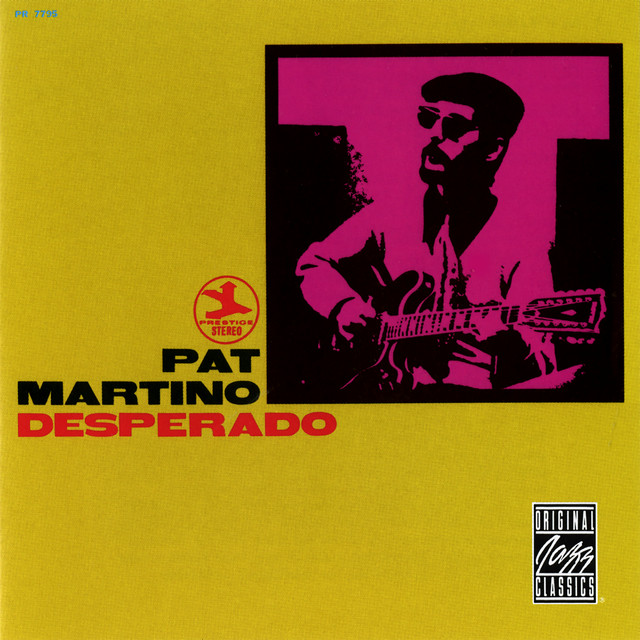
Also in the early 70's Pat recorded "Desperado", using a 12 string guitar on all the tracks. The guitar was a Univox that looks like an ES335. It was another pawn shop instrument and was bought as a gift by his wife. It cost $80. Pat re-strung the guitar with unison on the first, second, third and fourth strings and left the fifth and sixth as single strings. That amount of pressure caused the neck to bend and when he came to record "Desperado" the strings were 1/4" off the fingerboard. He only used that guitar once for the session!
Also referenced here: http://www.vintageguitar.com/2962/pat-martino/
Didn’t you play a 12-string electric briefly in the early 1970s? The 12-string was a birthday gift from my first wife. It was another pawn shop guitar, only this time the guitar cost $80 (laughs)! It looked like a Gibson ES-335, but I think it was a Univox. In respect for her gift, I used it on Desperado (Prestige, 1970). I re-strung the guitar as a regular six-string with unisons on the first, second, third and fourth strings, I left the fifth and sixth as single strings. That much pressure caused the neck to bend. The strings were almost a quarter of an inch off the fingerboard at the time of the sessions. I used that guitar once, just for that record.
Find it on:


When did you get back into playing? I didn’t get back into a relationship with the guitar until ’83. At that point, Tommy Gumina approached me and asked to endorse a solidbody he had just designed for Polytone. I used and endorsed that guitar, and Polytone amps, for about a year and a half.
Find it on:
-m.webp?v=1784891784)
What amplifiers have you used over the years? Keep in mind, there’s a difference between my relationships with all of these realities than most guitar players. In my case whatever comes up from social opportunity is useful. I adapt to it. If a Roland JC-120 is available to me, it’s because Tom Glenn from Roland Corporation, a good friend and former student, had one shipped to me as a gift. And therefore that’s what I used. Finally, the more active I became and have become, the more difficult it became to depend on personal items. For years I relied on riders to make instruments available on the road. I came to find out that in most cases Fender amplifiers and Roland JC-120s were the most available and I specified a second amp in case the first one was damaged. When this proved unreliable I was open to change for practical purposes.
Find it on:


What is your current setup? I use a Gibson Pat Martino Custom or Standard and the Acoustic Image Clarus amp. I recorded Live at Yoshi’s with the black Standard. I recorded the new album, Think Tank, with both. In the studio, I use the Clarus direct, as a preamp, into the board. There’s a direct out on the unit which bypasses effects as well as the Clarus itself, which I use for more authenticity and personal identity.
Find it on:

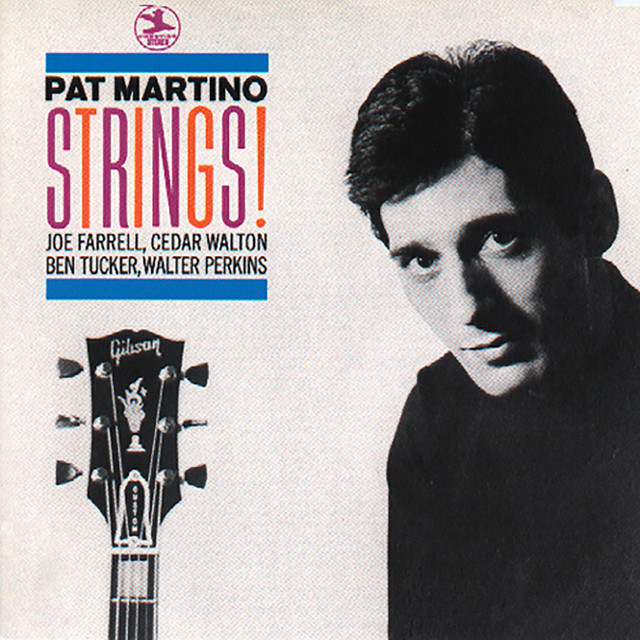
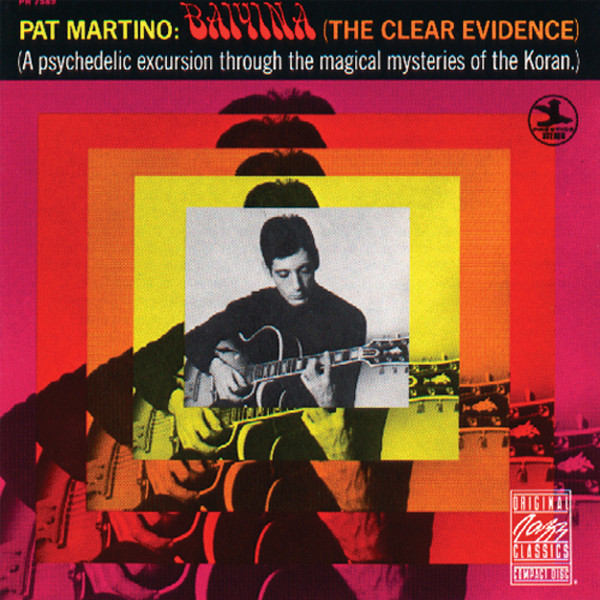
That was the guitar on the cover of 1967’s Strings and ’68’s Baiyina? Yes. I used that guitar until I met (luthier) Sam Koontz; bless his soul, he’s no longer with us. He came and heard me play, and told me he wanted to build an instrument for me as a gift through respect. He did so. He built that guitar with an oval sound hole, very much like a Howard Roberts model, and a floating pickup. It had a door that would slide over the oval hole; closing off the top and cutting the feedback. I used that guitar on The Visit (1972) and on the live album (Pat Martino/Live, 1972).
This protype custom build guitar would later be named the Koontz SK-3 model as seen here. https://www.worthpoint.com/worthopedia/koontz-sk3-carved-archtop-110680972
Find it on:

This was a gold top Les Paul with white soap-bar pickups? That’s right. Within six months we exchanged it for a Les Paul Custom, the black beauty “fretless wonder. ” When we were first in Wurlitzer’s I saw and wanted that one, but my father said, “You’re not good enough yet. “ He wanted you to strive and work for it… That’s it exactly. Was that Les Paul Custom the one you played in the first phase of your professional career? Yes, I played it for many years.
Find it on:


Do you use the Richard Raezer speaker cabinets whenever possible? The Raezer’s Edge cabinets are tremendous. They are well-made and beautiful; they are also precise and clear. The only problem is that they aren’t available in the middle of nowhere.
Find it on:

How did you begin playing guitar? When I was about 11 my father helped a favorite cousin, Joey Azzara, get a guitar. He wanted to be a guitar player. I was envious and got on a campaign to have my father buy me a guitar. He bought me a $10 guitar from a pawn shop when I was 12. It was really a little wooden item that resembled a guitar, a children’s toy. He said, “If you can play something on this, I might get you a guitar.” And I did. Within six weeks, he took me to Wurlitzer’s music store on Chestnut Street in Philadelphia. It no longer exists. My father bought me a Gibson Les Paul Standard, the gold painted model. This was in 1956. This was a gold top Les Paul with white soap-bar pickups? That’s right.
Find it on:

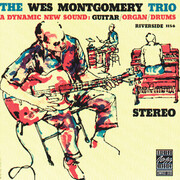
In regard to your sound could you tell us about the succession of instruments you’ve played in your career? Well, my Les Paul Custom was stolen in 1965. I was performing with Jack McDuff at The Showboat, a club that no longer exits. The next day we were due to open in Chicago on the South Side. Our entire van was stolen between the dates, all the instruments were lost. When I got to Chicago, Jack McDuff took me to a pawn shop and purchased a cheap guitar. In fact, it was so cheap I had to use a matchbook to hold the pickup to the body under the strings, otherwise it would have fallen into the guitar! I used that for one night. The following day I called home and borrowed some money from the family. I went out in Chicago and bought a Gibson ES-175. It was like the one pictured on Wes Montgomery’s second album, The Incredible Jazz Guitar. From that point forward I began to use carved-top hollow-body guitars.
Find it on:


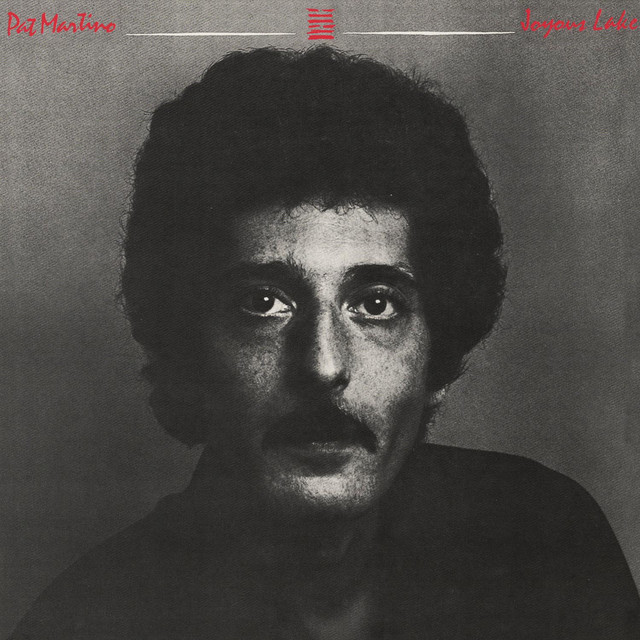
Starbright had a lot of different sounds. It was a truly eclectic fusion album with acoustic and electric tones, distortion and clean tones, and synthesizers. Starbright had so many idiomatic suggestions in terms of material and sounds that we had to have a board meeting at Warner Brothers to figure out how to market it. They asked me, “Exactly what do you want to do?” That’s how the Joyous Lake band came about. Warner Brothers wanted a definite image to market. I was with Gibson at the time. They notified me that they had just come up with an L5-S, a solidbody L5 model, that wasn’t on the market yet. Gibson asked if I wanted to use it. And I did. That’s when I really got back into a playing solidbody guitar again.
Find it on:

When did you get back into playing? I didn’t get back into a relationship with the guitar until ’83. At that point, Tommy Gumina approached me and asked to endorse a solidbody he had just designed for Polytone. I used and endorsed that guitar, and Polytone amps, for about a year and a half. At that time, I performed again for the first time; professionally, as opposed to locally in small rooms. I went back to New York City to play the Bottom Line, using the Polytones. At that concert (luthier) Abe Rivera came backstage and told me he would love to build an instrument for me, as a gift. And he did. I named it Scepter, like a regal wand. That was the second time that I committed myself to a solidbody guitar. Is that the carved guitar seen on the cover of the 1987 album Return and the videotape performance in Legends of Jazz Guitar? Yes, but it weighed a ton! The Rivera guitar was made of exotic woods that were extremely heavy, and it had pearl inlay. It was a beautiful guitar, though… a work of art. Wasn’t that your primary guitar in the ’90s? Yes, for many years.
Find it on:

Monday, Nov 30, 2015 Tour promo shot of Pat posing with his Gibson Custom Pat Martino signature model
Find it on:

Amps: Acoustic Image Clarus Head – Into a Mesa Boogie 4×12 – his current amp Roland JC-120 Fender Twin Reverb
Find it on:


Pat Martino Live @ Birdland March 18th, 2011 Snippet - Round Midnight
Lucas Garzoli Published on Mar 20, 2011
Playing his signature Benedetto
Find it on:

Is that when you were teaching at G.I.T.? Didn’t you also use an Ovation acoustic? Yes. At the same time, Ovation wanted me to try the Adamas. They asked if I would endorse it, and I was happy to. That’s the guitar you see on the cover of Linear Expressions.
Find it on:

Amps:
Acoustic Image Clarus Head – Into a Mesa Boogie 4×12 – his current amp Roland JC-120 Fender Twin Reverb
Find it on:


That was quite a transition, from solid bodies to big hollow bodies… When I began to get serious about archtops and to adjust to the instrument and its physical demands, I went from the 175 to a Johnny Smith model.
Find it on:

Didn’t you also play a Gibson ES-335-12 on other records in that period, like the Barry Miles’ White Heat album? Yeah, I’m not sure where I got that guitar. Looking back, I guess the 335 brought me closer to using a solidbody guitar (via a semi-solid). Physically, my muscles had to adapt to the proportions of the guitar, and the thinner body. Not long after, I got involved with Starbright (1976).
Find it on:

Pat using a typical backline: Acoustic Image Clarus 2R paired with a backline Marshall 1960A slant cab.
I saw him use the same rig in Seattle at Jazz Alley.
Find it on:
This is a community-built gear list for Pat Martino.
- Find relevant music gear like Guitars, Amplifiers, Effects Pedals, Software Plugins and VSTs, Keyboards and Synthesizers, Instruments, and other instruments and add it to Pat Martino.
- The best places to look for gear usage are typically on the artist's social media, YouTube, live performance images, and interviews.
- To receive email updates when Pat Martino is seen with new gear, follow the artist.
-
Added to Equipboard on by
 violao
GearIQ 6201
-
Updated
Discography
Album Credits
-
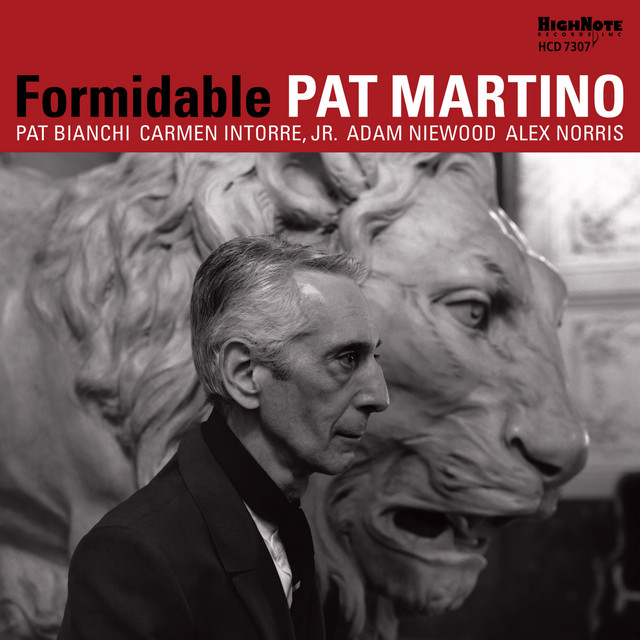
Pat Martino · 2017
Producer -
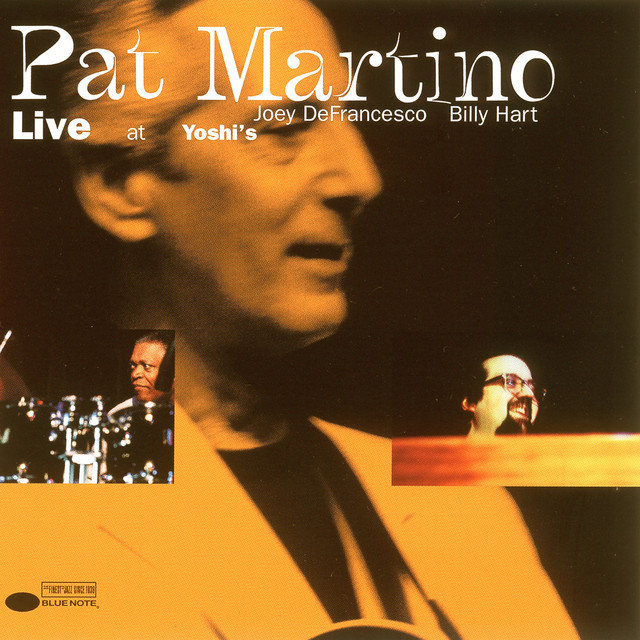
Pat Martino · 2001
Producer -
Pat Martino · 1997
Producer -
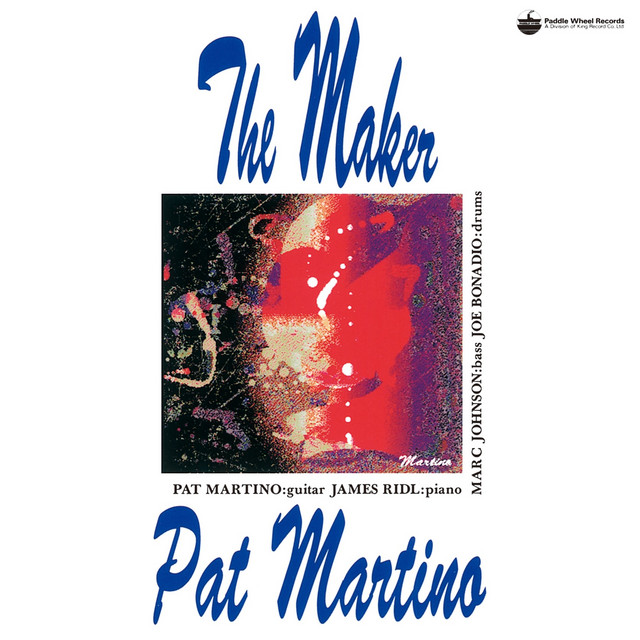
Pat Martino · 1995
Producer