
By Gear Experts
Table of Contents

Equipboard
Equipboard is the world's largest community of artists and their gear. Read our review process.
We are reader-supported. When you buy through links on our site, we may earn an affiliate commission. Learn more.
Guitar tablature is a simple but effective form of musical notation used to represent the strings and frets of a guitar. Learning how to read guitar tabs allows guitarists of all levels, especially beginners, to play songs without the need to read standard sheet music.
In this guide, we'll explore what guitar tabs are, how to read them, and how to interpret the various symbols, strumming patterns, and fingerpicking techniques found in them.
What Are Guitar Tabs?
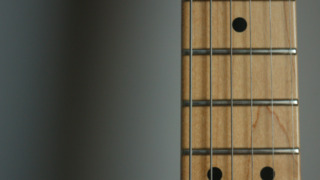
Guitar tabs visually represent the neck of the guitar and its strings. Instead of using traditional music notation, which can be complex and require years of study, tabs offer a more accessible way for beginners to start playing.
Each line of a tab represents one of the guitar strings, and the numbers on the lines indicate the frets to pluck on those strings.
Here is an example of a simple tab:
e|----------------
B|----------------
G|--2-------------
D|--2-------------
A|--0-------------
E|----------------
In this example:
- The six horizontal lines represent the six strings of the guitar. The top line is the high E string *(thinnest string), and the bottom line is the *low E string (thickest string).
- The numbers indicate which fret to play on each string. A 0 means to play the string open (without pressing any fret).
- The G string and the D string have the number 2, which means that you have to press the 2nd fret on these strings, while the A string has a 0, which means that it is played open.
- The tablatures are read from left to right, and each number corresponds to a note to be played in that order.
Getting Familiar with Tablature Symbols
Although guitar tabs are primarily numbers that represent frets, they also include a variety of symbols that indicate different playing techniques. Let's look at some of the most common symbols.
Hammer hits (h): This is when you play a note and immediately press a fret higher with another finger to produce a second note without touching the string again. It is written as:
e|----------------
B|----------------
G|--2h4-----------
D|----------------
A|----------------
E|----------------
Here, you play the 2nd fret and then hammer-on at the 4th fret without plucking the string again.
Pull-offs (p): The opposite of a hammer-on, a pull-off involves playing a note and then releasing your finger to let a lower note sound at the fret.
It is written as
e|----------------
B|----------------
G|--4p2-----------
D|----------------
A|----------------
E|----------------
Play the 4th fret and release it to sound the 2nd fret.
Slides (/ or ): Slides consist of sliding your finger from fret to fret without lifting it. Sliding up the fretboard (towards a higher pitch) is written with a slash /, while sliding down (towards a lower pitch) is shown with a backslash.
For example
e|----------------
B|----------------
G|--2/4-----------
D|--2\0-----------
A|----------------
E|----------------
Bends (b): Bends require you to push the string up or down to raise its pitch. The amount you bend the string (usually half a step or a full step) is indicated in the tab, such as 7b9 (bend the note at the 7th fret until it matches the pitch of the 9th fret).
Vibrato (~): This wavy line after a note indicates vibrato, a slight bending and release of the string to create a shaking or trembling effect.
e|----------------
B|--5~------------
G|----------------
D|----------------
A|----------------
E|----------------
Palm Muting (PM): This consists of resting the side of the hand on the strings near the bridge to produce a muffled sound. It is indicated as PM in the tab:
e|----------------
B|----------------
G|----------------
D|--2-2-2-2-------
A|--2-2-2-2-------
E|-0-0-0-0-0--PM---
Strumming Patterns and Rhythms
Strumming patterns are often a mystery to beginning guitarists when using tablature, since the rhythm is not always explicitly written out. However, some guitar tabs include upstrokes (↑) and downstrokes (↓), which show the strumming direction.
A strumming pattern may look like this:
e|----------------
B|----------------
G|----------------
D|--2----2---2---- (↓) downstroke
A|--2----2---2---- (↑) stroke upward
E|--0----0---0----
To master strumming, it is important to listen to the song and feel the rhythm. Many beginners start with basic patterns, such as alternating downstrokes and upstrokes, before progressing to more complex patterns.
Fingerpicking Techniques
Fingerpicking involves plucking the strings with your fingers instead of using a pick. This technique allows for more intricate playing, especially useful on folk, classical or acoustic guitar. Fingerpicking patterns are often notated in guitar sheet music indicating which strings to pluck in sequence.
A basic fingerpicking pattern might be as follows:
e|--------0---------
B|------0---0-------
G|----0-------0-----
D|-----------------
A|--3---------------
E|-----------------
In this example, you are plucking the strings individually, starting on the high E string and moving toward the low A string. The fingering patterns vary greatly, but the tabs clearly show which strings to pluck and in what order.
Limitations of Guitar Tablature
Note Duration and Dynamics
While guitar tablature is a fantastic tool for quickly learning songs, it does have some limitations. One of the main drawbacks is that tablature doesn’t convey information about note duration or dynamics (such as volume or emphasis). Unlike standard music notation, which provides clear instructions on how long to hold each note and how loud or soft to play, tablature simply tells you which frets and strings to play. As a result, beginners may need to rely on recordings or standard notation to understand the timing and feel of a piece. Listening to the song while following along with the tabs can help bridge this gap, but it requires a keen ear and attention to detail.
Complex Rhythms and Music Theory in Tabs
Another limitation of guitar tablature is that it doesn’t always accurately represent complex rhythms. While strumming patterns or fingerpicking sequences can be notated to some extent, intricate rhythms, syncopation, or odd time signatures can be difficult to capture in simple tab format. For more complex pieces, it may be necessary to refer to standard notation or develop a stronger understanding of rhythmic patterns through practice and listening.
Additionally, guitar tabs don’t offer insight into music theory concepts like scales, chord progressions, or harmony. They show you where to place your fingers, but they don’t explain why certain notes or chords are played together. For guitarists looking to dive deeper into songwriting, improvisation, or advanced musicianship, learning music theory alongside tabs can provide a much richer understanding of the instrument and music as a whole.
In short, while tablature is an incredibly useful tool for learning guitar, it’s important to recognize its limitations and supplement your practice with other learning methods when needed.
Tips for Beginners
- Start simple: Choose easy songs with basic chords and practice reading the tabs next to them.
- Practice technique: Focus on mastering one technique at a time, such as hammer-ons, pull-offs or slides, before combining them.
- Listen to the song: Tabs can give you the notes, but the rhythm and feel come from listening. Play along with the recordings to get the right rhythm.
- Use online resources: Websites like Ultimate Guitar and YouTube tutorials are invaluable when learning to play songs with tablature.
- Be patient: Reading tablature is much easier than traditional music notation, but it takes practice. Keep practicing and soon you'll be playing your favorite songs.
History of Guitar Tablature
The history of guitar tablature is surprisingly long and dates back to the Renaissance. It was first used for lute music, a guitar-like instrument, around the 14th century in Europe. At that time, tablature was written with letters and numbers. The concept of using a visual representation of the strings and frets was an intuitive solution for musicians who did not read standard notation.
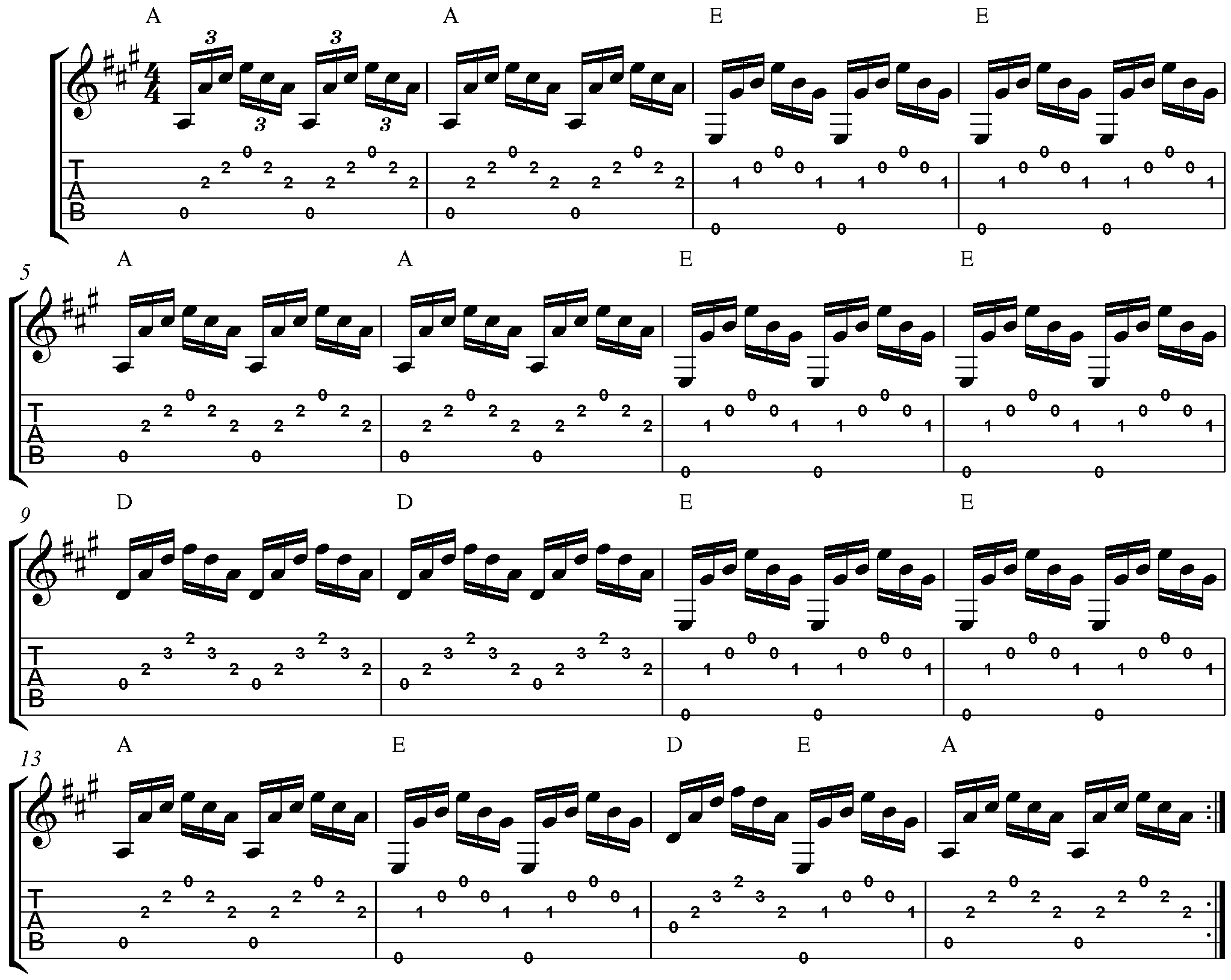
As the popularity of guitars grew, especially during the 20th century with the rise of rock, folk and blues, tablature was adapted to modern use. In the 1990s, the Internet further popularized tablature with websites such as Ultimate Guitar and Songsterr, which allowed guitarists to share and learn music from each other. Today, tablature is essential for guitarists of all genres and levels.
Conclusion
Learning how to read guitar tabs is an essential skill for any beginning guitarist. By understanding how to interpret the numbers and symbols, mastering strumming and fingering techniques, and appreciating the history behind the tabs, you'll be well on your way to playing your favorite songs.
The simplicity of guitar tabs opens up a world of music to everyone from amateurs to professional musicians, making guitar more accessible than ever. Keep practicing and soon you'll be playing tabs like a pro!
About the authors
Juan Spinelli is a multi-instrumentalist musician, but more of a guitarist than anything else. Based in Buenos Aires, Argentina, he started playing at a very early age and learned various instruments such as flute, clarinet, percussion, didjeridoo, cavaquinho, bass and more. Today, he also works as a music producer and sound engineer, collaborating in several projects in his city and with artists from all over the world. Read more





.jpg)