.jpeg?v=1783110732)
Roger Waters
Genre
Genre
Roger Waters' Gear


Roger played through the Hiwatt Custom 200 bas amp DR201, during the 2017 - 2018 Us + Them World Tour.
Find it on:


Roger played through the Hiwatt Full Range SE41115 Bass Cabinet, during the 2017 - 2018 Us + Them World Tour.
Find it on:

Waters uses Seymour Duncan Quarter Pound precision bass pickups in his signature bass.
Find it on:


Like the many other guitar players in the late '70s and early '80s, Roger Waters used Ovation "hi-tech" acoustic guitars in the studio as well as for the live performances. Ovation guitars featured semi-parabolic body made of synthetic composite material, called Lyrachord, instead of more traditional wood. Ovations reached the height of their popularity in the '80s, where they were more often seen on stage than any other acoustic guitars. Their synthetic bowl, use of preamps, onboard equalization and piezo pickups were particularly attractive to live acoustic musicians who battled feedback problems from the high volumes needed in live venues.
Find it on:

Aside from the solid body telecaster SBT-21, the Mirage Pro electric acoustic, the J28 acoustic jumbo bodied guitar, and the signature RW300 model, this Washburn WP-80 was another Washburn guitar Roger Waters used in his solo career. He played it in 1987 during the Radio KAOS tour on Powers That Be. (See Guitar section for more information on Roger's guitars.)
His black Washburn WP-80 is a Gibson Les Paul-style electric guitar featuring two humbucker pickups, rosewood fingerboard, volume and tone controls, and four switches (suggesting that this guitar offered a wide variety of pickup combinations).
Find it on:

In 1977, Roger Waters, along with the band, transitioned from using Binson Echorec 2 units to MXR M-113 Digital Delay devices. These rackmount digital delays typically featured a 320 ms delay chip, with an expansion model offering up to 1.28 seconds of delay. While specific details about Waters' setup aren't mentioned, it's noted that David Gilmour's rig included two MXR Digital Delay units and two upgraded MXR Digital Delay System II units, highlighting the band's integration of advanced delay effects during that period. This information is sourced from Watersish.com.
Find it on:
-m.webp?v=1783177017)
vocal tracking at :30, 1:10, 2:30 - Promo video from the song Hello (I Love You) by Roger Waters and produced by James Guthrie (The Wall, DSOTM SACD, and more) for the soundtrack of the film "The Last Mimzy"
Find it on:


Roger Waters used these headphones on stage during the Wall Live tour (1980-1981) and can be seen wearing them at 0:48 in the music video for Sunset Strip
Find it on:







Used for vocal overdubs on Dark Side of the Moon, as mentioned by recording engineer Alan Parsons in this March 9, 2012 Premier Guitar interview by Mitch Gallagher.
By the time we got around to overdubs, probably the only mic I actually had set up would be a [Neumann] U 47 so that we could do vocals. I might have stuck that on it, on occasion.
Find it on:

Roger got this Stratocaster as a gift from Jonathan Wilson, and he can be seen playing it in his video for "El Derecho De Vivir En Paz"
Find it on:


Aside from his Eric Clapton signature model Bellezza Nera, Roger Waters used the Godin Multiac Spectrum SA steel string guitar during The Wall Live tour (2010 - 2012). As Roger said "I love this guitar. I use it live on Hey You." Unfortunately, this song is entirely played behind the wall so we cannot see him actualy playing it. Hey You is notable for using a high strung "Nashville" tuning so perhaps this is how Roger's Godin is tuned.
He also uses the nylon string Godin Multiac ACS-SA on Good Bye Blue Sky. The natural high-gloss version of this guitar can be seen in the hands of G. E. Smith and David Kilminster when performing Is There Anybody Out There.
Godin Multiac Spectrum SA features a mahogany body design, ebony fingerboard, Seymour Duncan Lipstick pickup in the neck, custom Godin electronics along with separate tone and volume controls for the Lipstick pickup, as well as 13-pin capabilities for computer & synth access. Roger's guitar has a Black High-Gloss color.
Godin Multiac ACS-SA features a chambered maple body, cedar top, mahogany neck, and ebony fingerboard. The engine includes individual transducer saddles powered by a customized preamp system from the RMC Pickup Company. This system produces a hexaphonic output through a 13-pin connector enabling direct access to Roland GR-Series guitar synthesizers.
Find it on:

David Gilmour and Roger Waters both used Ovations during the Animals tour (1977) and the live concert performances of The Wall (1980-81). Roger used his natural wood coloured Ovation Legend 1619-4 for Welcome to the Machine and for Mother respectively. A few years later he played Ovation Classical 1613 during his first solo tour The Pros and Cons of Hitch Hiking (1984-85).
Find it on:

Roger had been playing the sunburst Washburn RR300 during the first two year (1999-2000) of his In the Flesh tour. Washburn approached him about a Signature Limited Edition and this led to a black RW300 used during 2002 part of the same tour.
The RW300 brings together a Seymour Duncan P90 style pickup and a Fishman preamp with a piezo bridge. These pickups, in combination with the chambered mahogany body and solid spruce top, reduce the chance of feedback and give the guitar a vibrant acoustic tone.
Find it on:

Roger Waters used his both black and blue sunburst Washburn Mirage Pro guitars during Radio KAOS tour (1987) for Welcome to the Machine, Wish you were here, Mother, Final Cut and If. A few years later he also used the blue one during Wall Live in Berlin (1990) for Mother, and also Andy Fairwater Low played it during In the Flesh tour (2000) in Each Small Candle.
The Mirage Series was introduced by Washburn in 1984 as the original acoustic/electric solidbody line of guitars. It had mahagony body and neck, rosewood fingerboard with pearl dot inlay and matching headstock with three-per-side chrome diecast tuners. It also featured active electronics with piezo pickup in bridge, an exposed humbucker below the soundhole, EQ section with three knobs (Equalizer, Middle, Gain), and two knobs (Volume, Tone) and a three-way switch on the front of the guitar for separate controls.
Find it on:

In this photo of Roger Waters' rig, from this Premier Guitar article, his two Samson UR-5D Dual UHF Diversity Receivers can be seen.
Find it on:

Fishman listed Waters as one of the artists who are using this pickup system.
Find it on:

TC Electronic D-Two Multi-Tap Rhythm Delay is based on the TC 2290. The D-Two can provide up to 10 seconds of delay, features 24-bit A/D-D/A conversion and 24-bit internal processing, comes with 50 factory presets and 100 user, and provides S/PDIF digital I/O at 44.1kHz and 48kHz. 6 unique direct-access features include Spatial (provides extra-wide delay at a single keystroke), Ping-Pong (pick any 5 patterns and set the relationship between panning speed and delay tempo), Reverse (reverse delay with the flick of a key), Dynamic (sets the release time and threshold to let the input signal control level of delay), Chorus (hit a single key to instantly add chorus or flange to your delay), and Filter (increases filtering as repeats decay). With the D-Two you are able to tap actual rhythm patterns consisting of up to 10 taps directly into the unit.
On the below picture you can see the rack of delays as used on The Wall tour in 2012. The rack includes Samson PowerBrite PB10 power conditioner and Korg DTR-2000 tuner.
Find it on:

At 7:40 Waters' tech says he uses 1.0 mm dunlop picks. In the video you can see the tech holding a a black pick as he says this.
Find it on:

His signature Fender bass has SPB-3 .
Find it on:

As seen in this YouTube video: https://www.youtube.com/watch?v=9lCFaSL9aSE
Find it on:

Roger's rig for the Wall recording sessions at Britannia Row (1979) included Fender Bassman 50 amp with a matching 2x15" speaker cabinet (while for the Los Angeles sessions he used an early '60s Ampeg B18N blue Portaflex with 18" bass driver). [...] The Bassman 50 model with silverface piggyback head that Roger Waters had during the Wall sessions in London, was manufactured by Fender between 1972 - 1977. It featured 50-watt RMS power with 110-watt peak music power, dual channels with separate control on each, "deep" switch in bass channel and "bright" switch in normal channel.
Find it on:

Uses To Pick to get this classic growl tone
Find it on:


-m.webp?v=1783163789)
Roger Waters has consistently utilized the Dunlop Straplok Dual Design Strap Retainer System on his basses, as evidenced by a photograph showing the older version on his main bass guitar.
Find it on:
This is a community-built gear list for Roger Waters.
- Find relevant music gear like Microphones, Guitars, Amplifiers, Effects Pedals, Bass Guitars, Software Plugins and VSTs, Keyboards and Synthesizers, Instruments, and other instruments and add it to Roger Waters.
- The best places to look for gear usage are typically on the artist's social media, YouTube, live performance images, and interviews.
- To receive email updates when Roger Waters is seen with new gear, follow the artist.
Discography
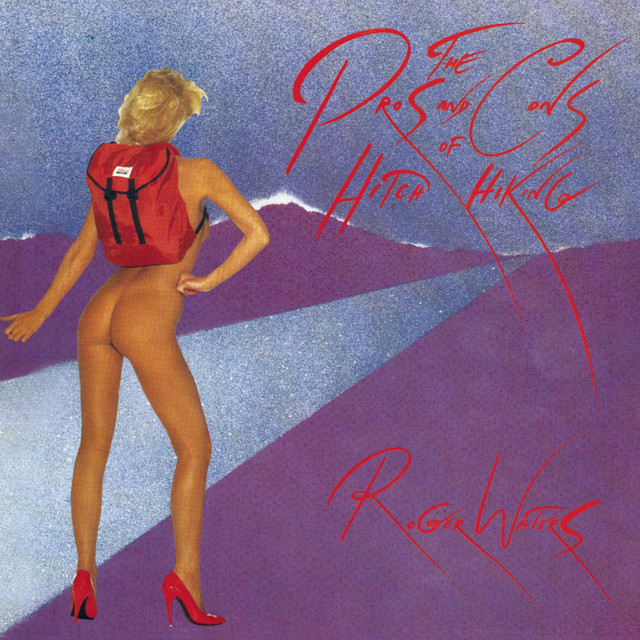
The Pros And Cons Of Hitch Hiking
1984
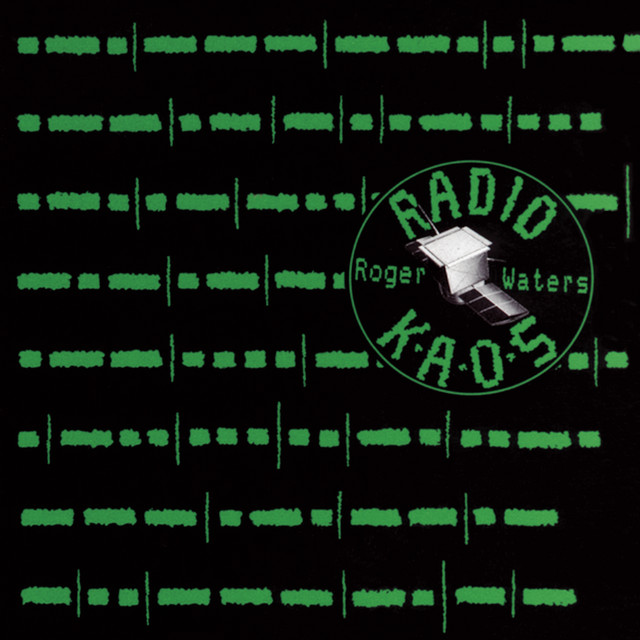
Radio K.A.O.S.
1987
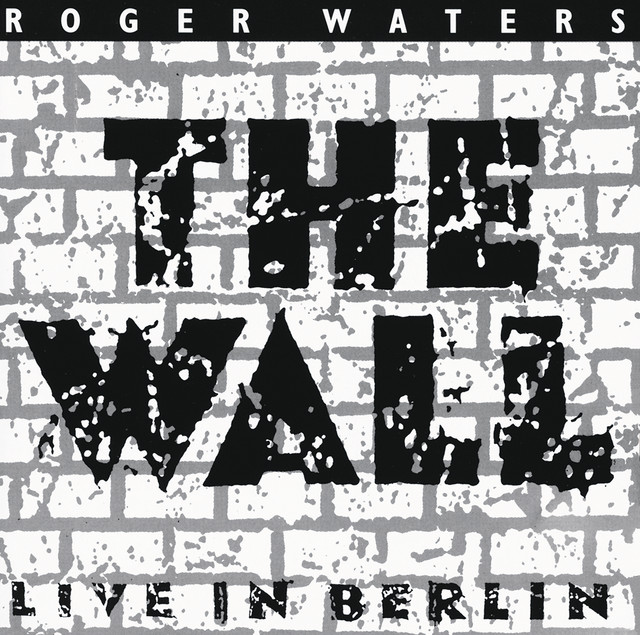
The Wall: Live In Berlin
1990
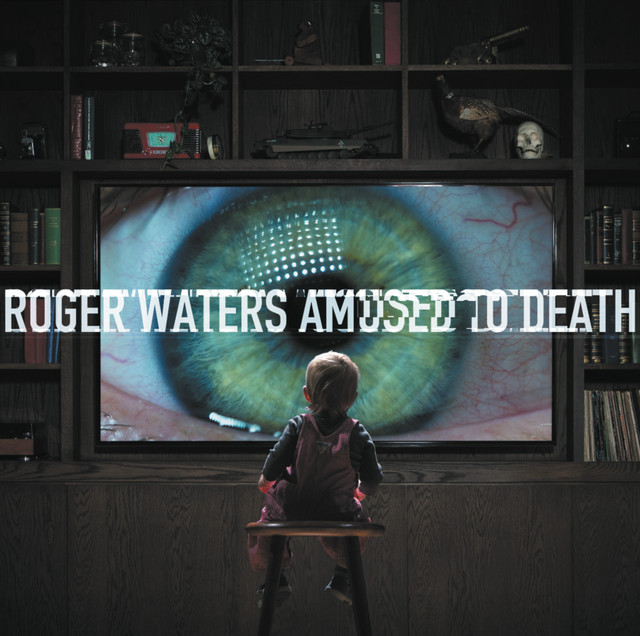
Amused to Death
1992
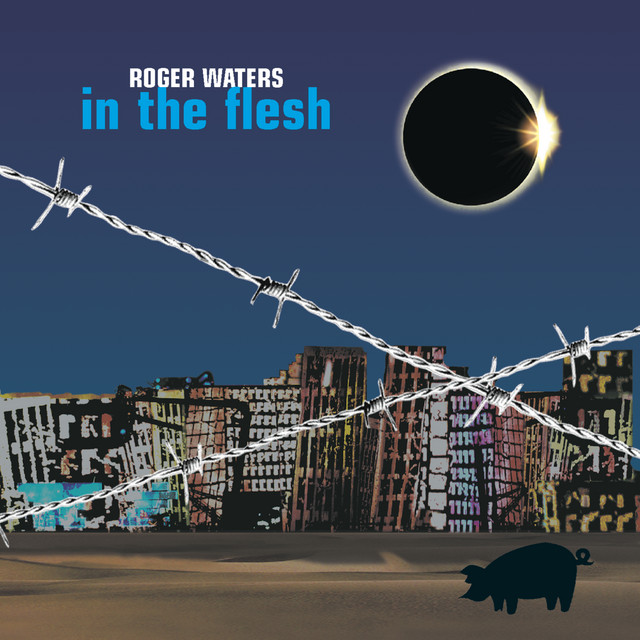
In the Flesh - Live
2000

Ca ira
2005
Tribute to Pink Floyd
2009
Roger Waters The Wall
2015

Is This The Life We Really Want?
2017
The Soldier's Tale - Narrated by Roger Waters
2018
Us + Them
2020
The Lockdown Sessions
2022
Album Credits
-
Is This the Life We Really Want? (Live From Prague May 2023)
Roger Waters · 2025
Mixing Engineer -
Wish You Were Here (Live From Prague May 2023)
Roger Waters · 2025
Mixing Engineer -
The Dark Side of the Moon Redux
Roger Waters · 2023
Producer -
Roger Waters · 2023
Producer -
Roger Waters · 2022
Producer -
Syd Barrett · 2016
Producer -

To Kill The Child / Leaving Beirut
Roger Waters · 2004
Producer -
Roger Waters · 1992
Producer -
Roger Waters · 1990
Producer -
Roger Waters · 1987
Producer -
The Pros And Cons Of Hitch Hiking
Roger Waters · 1984
Producer


.jpeg?v=1783065966)