

Pricing and availability
We compare 600+ stores and found this item at 2 stores. Prices updated .
Store
Reviews
Price




Average Price: $401
Standard/Professional
$100
$501+
Price Tier
Budget
Standard
High-end
* Product prices and availability are updated by Equipboard every 24hrs and are subject to change. Equipboard may receive compensation for purchases made at participating retailers linked on this site. This compensation does not affect what products or prices are displayed, or the order of prices listed. For more information, please refer to our affiliate disclosure.
Description
Step up your studio game with the TC Electronic D-Two, a versatile effects processor designed to enhance your sound with precision and creativity. Known for its dynamic delay effects, the D-Two offers musicians and producers a comprehensive toolset to sculpt their audio with clarity and depth. This effects processor is equipped with a range of delay-based effects, allowing you to explore everything from simple delays to intricate, rhythmic patterns.
The D-Two is particularly celebrated for its Rhythm Tap feature, which enables you to tap out a rhythm to create delay patterns that lock perfectly in sync with your music. This innovative feature is ideal for crafting rhythmic delays that add a unique percussive element to your tracks. Whether you’re working in a live performance setting or fine-tuning a studio mix, the D-Two’s intuitive interface and robust capabilities make it a go-to choice for audio professionals.
With its MIDI compatibility, the D-Two easily integrates into any setup, offering seamless control and flexibility. Its comprehensive preset library, combined with user-definable slots, ensures that you can quickly access and customize your favorite effects. Designed for those who demand precision and reliability, the TC Electronic D-Two is a trusted companion for musicians seeking to push the boundaries of their sound.
Key Features:
- Dynamic delay effects with a wide range of applications
- Rhythm Tap feature for creating synchronized delay patterns
- MIDI compatibility for seamless integration
- Comprehensive preset library with user-definable slots
- Intuitive interface for easy operation
- Ideal for both live performances and studio use
Product specs
| Brand | TC Electronic |
| Model | D-Two Multi-Tap Delay |
| Finish | Black |
| Year | 2010s |
| Categories | Delay |
FAQs
-
What is the primary function of the TC Electronic D-Two?
-
The TC Electronic D-Two is a multi-tap delay effects processor designed to add complex delay effects to audio signals, suitable for both live and studio environments.
-
Does the TC Electronic D-Two support MIDI control?
-
Yes, the TC Electronic D-Two supports MIDI control, allowing you to integrate it seamlessly with other MIDI-enabled equipment for synchronized effects management.
-
What makes the TC Electronic D-Two unique compared to other delay processors?
-
The TC Electronic D-Two stands out with its Rhythm Tap feature, which lets users tap in a rhythm pattern for delays, offering creative flexibility beyond standard delay times.
-
Can the TC Electronic D-Two be used in a live performance setting?
-
Yes, the TC Electronic D-Two is well-suited for live performances, providing reliable and versatile delay effects that can be easily adjusted on the fly.
-
What kind of delay effects can I expect from the TC Electronic D-Two?
-
The TC Electronic D-Two offers a range of delay effects, including multi-tap, ping-pong, and dynamic delay, allowing for intricate and varied soundscapes.
Videos

shnobel
Tc Electronic D Two Digital Delay
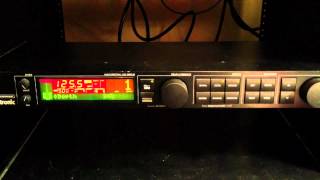
Tc Electronic D Two Digital Delay
shnobel
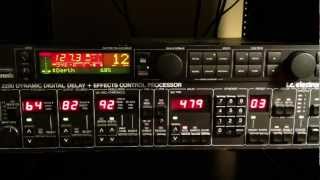
TC Electronic 2290 Vs TC Electronic D Two Digital Delay
shnobel
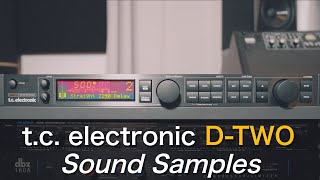
TC Electronic D-Two - All Presets | Vocals, Acoustic Guitar

Zed Marty
Matt Sorum talks about the D-Two from TC Electronic

TC Electronic
Line 6 Echo Pro vs Tc Electronic D Two
shnobel
Strymon Timeline vs TC Electronic D Two
shnobel
Boss DD-5 vs. TC Electronic D Two
shnobel
TC Electronic D Two vs TC Electronic Flashback Delay
shnobel
Skrydstrup DDL vs. TC Electronic D Two Digital Delay
shnobel
Reviews
PROS
-
Unique presets ideal for vocals and electric guitars
-
Sound quality exceeds its price point
-
Recommended by Grammy-award winning professionals
-
Features tap and ducking features for versatility
-
SPDIF in/out for tight DAW integration
-
Infinite adjustability with many usable sounds
-
Pairs well with other effects like Lexicon reverb
-
Can handle complex setups, like a second stereo wet guitar signal
CONS
-
May be considered overkill for some users' needs
Owner Insights
We analyzed real musician discussions from forums and Reddit to find what players love, question, and tweak about TC Electronic D-Two.
Features and functionality
-
The TC Electronic D-Two is noted for its unique rhythm delay feature, which is not commonly replicated by digital consoles.
Source
Comparisons
-
The D-Two's rhythm delay capability is contrasted with the TC M-One, which can perform a stereo slap and a separate repeat, making the former more specialized.
Source
Use cases and applications
-
Owners rarely use the D-Two's rhythm delay feature, suggesting it's more suited for specific needs rather than general delay applications.
Source
Value and pricing
-
The D-Two, along with models like the Yamaha SPX900 and TC M2000, are among the few budget-friendly options for quality outboard FX units.
Source
Critic Reviews
4.5 out of 5
Based on 0 Reviews and 20 Ratings
Artist usage
Add artist

David Gilmour used the TC Electronic D-Two Delay during the 2015 recording sessions for his album "Rattle That Lock," as confirmed by Bjorn on Gilmourish.


Dimebag Darrell is known to use the TC Electronic D-Two effects processor, as detailed in the "Gearheads" section on Funksheet.

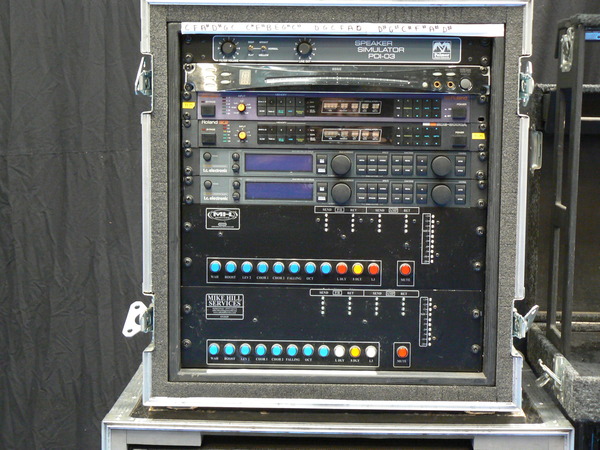
You can see in this picture two TC Electronic D-Two Delay in his rack.

This TC Electronic D2 Delay is used by Carlos Santana as his guitar tech recalls in the source.


According to TC Electronics website Robert Trujillo uses the D-Two Delay
.jpeg?v=1784510865)
.jpeg?v=1784510865)
TC Electronic D-Two Multi-Tap Rhythm Delay is based on the TC 2290. The D-Two can provide up to 10 seconds of delay, features 24-bit A/D-D/A conversion and 24-bit internal processing, comes with 50 factory presets and 100 user, and provides S/PDIF digital I/O at 44.1kHz and 48kHz. 6 unique direct-access features include Spatial (provides extra-wide delay at a single keystroke), Ping-Pong (pick any 5 patterns and set the relationship between panning speed and delay tempo), Reverse (reverse delay with the flick of a key), Dynamic (sets the release time and threshold to let the input signal control level of delay), Chorus (hit a single key to instantly add chorus or flange to your delay), and Filter (increases filtering as repeats decay). With the D-Two you are able to tap actual rhythm patterns consisting of up to 10 taps directly into the unit.
On the below picture you can see the rack of delays as used on The Wall tour in 2012. The rack includes Samson PowerBrite PB10 power conditioner and Korg DTR-2000 tuner.


Used for Albarn’s vocals on the Escape to Plastic Beach Tour, as stated by Albarn’s longtime FOH engineer Matt Butcher in this July 15, 2019 article by Entec Sound and Light.
“There are quite a few echo and delay cues, especially on Damon’s voice. I have an outboard rack with a TC D2 and a couple of Lexicon PCM81s in it, plus I’m using some of the internal effects for reverbs and delay for snare drums.
“When I was using a Midas Heritage on the first shows we did, I’d mess around with the tone generator and echo, along with guitar pedals to get some weird lo-fi effects. It was all very analogue and suited what we were doing and I’ve tried it with the D5, but I don’t really have as much time to play with these days!”


Summers also incorporated Marshall amps and a Roland guitar synthesizer into his rig. Of course, times have changed and so has Summers’ gear. For the ’07/’08 Police reunion tour, he used an elaborate two-piece Bob Bradshaw switching system, the right wing of which includes three Boss FV-500H Volume/Expression pedals, one used to control a rack-mounted Lexicon PCM 70 and two for an Eventide Eclipse, a Moogerfooger Analog Delay, and a Boss Loop Station and Chromatic Tuner. The left wing houses the main Bradshaw switching unit, plus another FV-500H and a Dunlop Cry Baby wah. Summers’ off-stage rack also contains his main Custom Audio OD100 amp and a Carvin DCM150 used to power stereo effects (each amp feeds two Mesa/Boogie Rectifier 2x12 speaker cabs), plus additional signal processors, including a T.C. Electronic TC1210 Spatial Expander/Stereo Chorus/Flanger, Bob Bradshaw V-Comp Tube Compressor, D-Two Multi-tap Rhythm Delay…

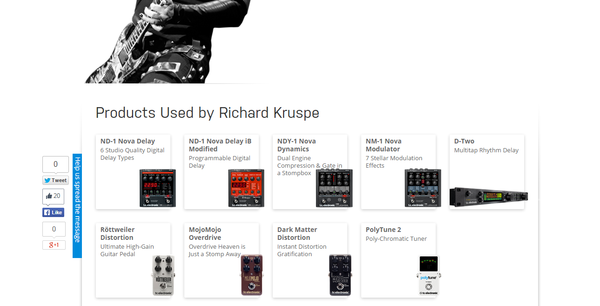
On this artist page for Richard Kruspe of Rammstein, is all of the T.C Electronic pedals he uses, among them is a TC Electronic D-Two Delay.
.png?v=1784519197)
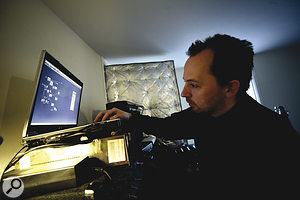
In this Sound On Sound interview, precisely on the "Jumble Sale Studio" section, a bunch of Jenkinson's gear is mentioned. Among them, the TC Electronics D-Two Delay. The item can also be seen in the photo gallery of the interview, along with other pieces in a rack (from top to bottom, TC Electronics D-Two Delay, DBX 1066, Drawmer LX-20 and the Eventide Orville). It is the 8th photo, here's a quick link to it: http://dt7v1i9vyp3mf.cloudfront.net/styles/news_large/s3/imagelibrary/S/Sq_09.jpg?3CE8TrbIbKGqUfDboUWA_6We1exoFnHv=&itok=6tgbEa6N
From the interview: "It's a ragtag collection of stuff, and there's no discernible overall 'vintage' rationale behind the collection as a whole. The most significant pieces are a Roland TR909, TB303, SH101, V?Synth XT and V?Bass 99, Neve 1073 mic pre, AKG BX15 spring reverb, TC Electronics D2 delay, DBX 1066, a self?made mechanical reverb, Tom Jenkinson's custom?made spring reverb: "The reverb uses four pairs of Accutronics type 1, 4, 8 and 9 springs. The stereo input stages incorporate a soft-clip circuit, high shelving EQ and spring selectors that send the input to a given pair of springs. There are four output stages to which the springs can be assigned. Each output stage has signal invert, volume and pan controls. The springs can be used in parallel or series, where one spring signal is fed into another. The circuit grounding uses star topology. It was used extensively on the album Hello Everything, in conjunction with my AKG BX15 and BX20 reverbs. It is clearly audible at the starts of 'Bubble Life', 'Circlewave' and 'Plotinus'.” Tom Jenkinson's custom?made spring reverb: "The reverb uses four pairs of Accutronics type 1, 4, 8 and 9 springs. The stereo input stages incorporate a soft-clip circuit, high shelving EQ and spring selectors that send the input to a given pair of springs. There are four output stages to which the springs can be assigned. Each output stage has signal invert, volume and pan controls. The springs can be used in parallel or series, where one spring signal is fed into another. The circuit grounding uses star topology. It was used extensively on the album Hello Everything, in conjunction with my AKG BX15 and BX20 reverbs. It is clearly audible at the starts of 'Bubble Life', 'Circlewave' and 'Plotinus'.” Axon AX100 MIDI bass module, MOTU 24I/O audio interface, Dynaudio Acoustics M1 monitors, Yamaha CS80, TX81Z and FS1R synths and QY700 sequencer. A huge amount of gear has also been and gone, like the Yamaha VSS80 8?bit toy keyboard sampler shown in some late '90s television footage of Jenkinson."


From an interview with the Prodigy's chief live sound engineer: "The [Roland] Dimension D is used to make the guitar big, because we've only got one guitarist and we try to make everything bigger than everything else. I've also got a [Yamaha] Rev 7 and a Rev 5. I've got them Y?split together because they've got a habit of stopping working, so one of them is usually working at any one time. They're both drum reverbs, I just run them both off the snare. Then I've got a guitar reverb, an SPX990, and a [TC Electronic] M2000 on vocals, which does harmoniser on some songs and reverbs on others. Then I've got a TC D•Two for all my more traditional delays.”


Album Usage
The TC Electronic D-Two has been featured on the following albums:
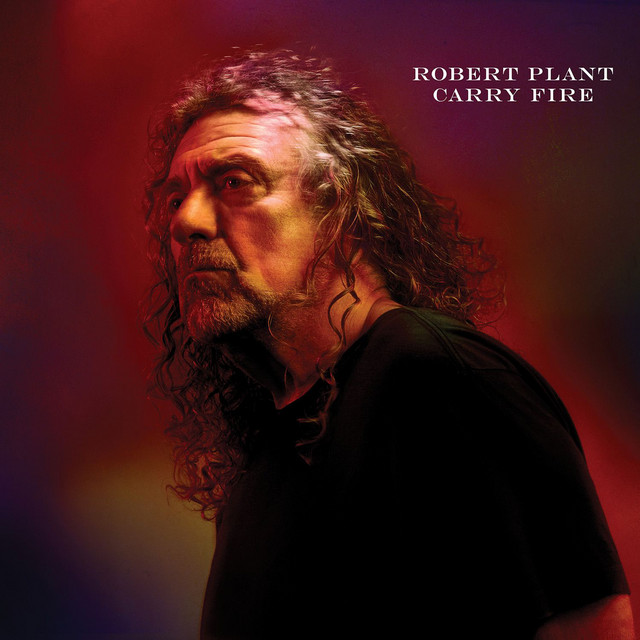
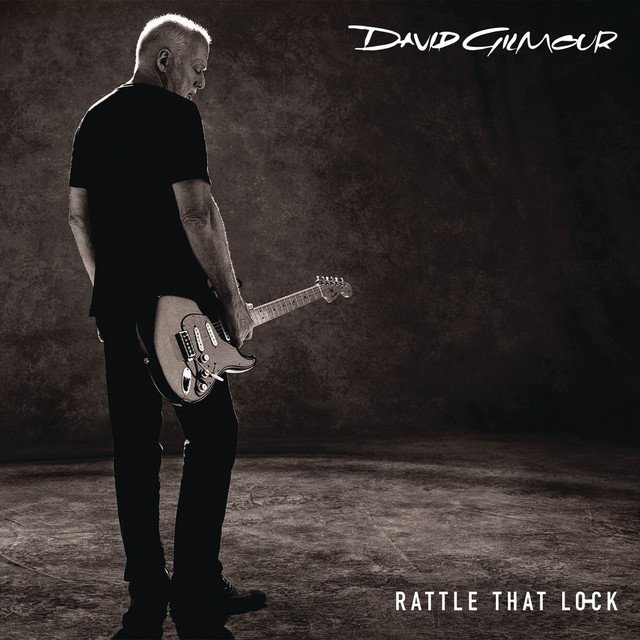

Genre Usage
Based on how artists on Equipboard use this gear, it is most commonly found in the following genres.
Used With
Based on how musicians on Equipboard use TC Electronic D-Two, it is most commonly used with the following gear.

-s.webp?v=1784585092)
-s.webp?v=1784585910)


-s.webp?v=1784586645)


More TC Electronic Effects Processors
-m.webp?v=1784386736)
$250.00 - $936.00
in Effects Processors Rank


$149.00 - $638.00
in Effects Processors Rank


$357.93
in Effects Processors Rank


$219.00 - $1,487.77
in Effects Processors Rank


$75.00 - $79.00
in Effects Processors Rank


$199.00
in Effects Processors Rank


-m.webp?v=1784551102)


-m.webp?v=1784585946)


Community setups


Similar


Most Popular Effects Processors
Most Popular Brands
-
Added to Equipboard on by
 julianwolf2
GearIQ 13060
-


