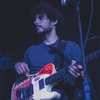
David Gilmour
Pink Floyd
David Gilmour's Gear

-m.webp?v=1785107438)
David Gilmour replaced his Uni-Vibe in 1974 and used it up until 1976 when he later switched to the Yamaha rotary and electric mistress in 1977. He would use it later on in live shows whenever he played shine on you crazy diamond
From the source article: "A MXR Phase 90 was also connected with send/returns during summer 1974."
Find it on:


David Gilmour has been known to use Dunlop Herco Flex 75 Nylon 1.01mm Guitar Picks since the 1970s during his time with Pink Floyd. In 2015, a signature version of these picks was created for Gilmour’s "On an Island" tour. This is supported by a user-uploaded photo.
Find it on:


This has been David’s main guitar for many years now. He bought it at Manny’s guitar store in New York, in May 1970 during Pink Floyd’s North American tour, because he needed a new guitar after his old one was stolen along with the rest of Pink Floyd’s rig just couple of weeks earlier. This guitar has gone through many modifications. At this moment it is fitted with the Fender 1983 C shape maple neck, 1971 Fender pickups in the neck and middle, and a SSL-1C (SSL-5 Prototype) in the bridge. Original white pickguard has been replaced with a black one, and the body which is from 1969 has been repainted black (originally sunburst). The 3-way pickup switch has been replace with 5-way switch. Here’s a short interview with David Gilmour featuring his Black Strat (www.youtube.com/watch?v=TVjFJFEQ_OU). In the mid '80s David replaced all his strats with Fender 1957 reissue models. He donated this particular guitar to Hard Rock Cafe in Dallas where it was on display until 1997 when David requested it back. It was refitted by his technician Charlie Chandler, and David used it ever since it has been played for the first time upon repair at Pink Floyd reunion in 2005. Pink Floyd’s technician Phil Taylor wrote a book about David’s iconic Black Stratocaster. You can check it here (http://www.amazon.com/gp/product/1423492706/ref=as_li_qf_sp_asin_il_tl?ie=UTF8&camp=1789&creative=9325&creativeASIN=1423492706&linkCode=as2&tag=ground09-20).
Find it on:


An interview with Phil Taylor, guitar tech working with David Gilmour for more than 20 years. Last sentence in the interview he says about the strings. "For his acoustic guitars he uses Ernie Ball Earthwood light gauge strings."
Find it on:
-m.webp?v=1785077994)
Used on his solo album About Face and Pink Floyd's A Momentary Lapse of Reason.
In a 1984 issue of Guitar Player Magazine, Gilmour said the following of his sound: "At the moment, the sound that I'm using a lot of the time is going through a Boss HM-2 Heavy Metal to a Boogie amplifier to a [MXR] DDL and then on into a regular Fender amplifier....I use a DDL on it...because I find it stops the fuzz box from from sounding like a fuzz box. It smoothes off the unpleasant, raw frequencies that you get from the fuzz box. Then you get a nice sort of sound.”
Find it on:


David Gilmour can be seen using his Gretsch Duo Jet in this 2002 performance from the Royal Festival Hall.
"I’ve got an old black Duo Jet I’ve had for a very long time. I actually used it on a couple of tracks on my first solo album in 1978. It’s quite hard to play, but it’s a real beauty, and it’s a beautiful-sounding instrument that fits perfectly for some things. I played it on “Where We Start.”" - Guitar Player interview.
Find it on:

Used as David's main amp from 1969 until 1987 and then reunited in 1994 and is still in use. According to Gilmourish, "During the Division Bell tour in 1994, David’s rig consisted of overwhelming six Hiwatt heads in two separate racks, – not mentioning all the spares he travelled with." Afterwords, he returned to using three heads.
"David is using a pair (and one extra) Hiwatt DR 103 amp heads. They are his original 1974 Hiwatts, with OLD tubes (well used but still work fine, as tested by Pete Cornish). He is running them through WEM 4x12" cabinets with Fane Crescendo speakers in one and the other has celestion 75s (clean speakers which don't sound so good alone but along with the Fanes he gets an awesome tone)." - Analogman website.
Find it on:
-m.webp?v=1785105429)
On PULSE rig, there was a Proco Rat used probably for the solos in Money
Find it on:

This small light-blue pedal can be seen on top of some of David's equipment in the first two photos of his 2001-2002 concert setup.
Used extensively throughout the 80's and 90's. Also used in solo shows when doing more recent Floyd tunes.
Find it on:

"The distinctive, gold detailed MD 409N vocal microphone was Pink Floyd's microphone of choice for vocals in the late 60s and early 70s. They can be seen using these microphones in "Live in Pompeii," along with many other recorded live performances from the 70's"
Find it on:

This replaced David's Coloursound Powerboost overdrive around the 80's. Two of these are part of his Momentary and Division bell setup in 1993 and 1994, and are still used in his solo shows.
(The source lists these as Chandler Tube Drivers.) Photo of David Gilmour's pedalboard with both Tube Drivers: http://www.kitrae.net/music/Division%20Bell%20pedals_enhanced.jpg
"I currently have two BK Butler Tube Drivers on my pedalboard, and I just use one or the other. If I need a little something more, I’ll stomp a compressor with a bit of drive onto the beginning of it, and that will turn things up another whole gear." - Guitar Player interview.
Find it on:

Documented extensively by Kit Rae in part 2 of his "David Gilmour Tone Building" subpage "Amplifiers and Speakers".
David's WEM speaker cabinets are typically loaded with Fane Crescendo 100w 12" speakers. They are a perfect speaker to blend with the Hiwatt sound, and out of all of David's gear, the Hiwatt/Crescendo combo could be said to define the core foundational tone heard in most Gilmour performances. The Crescendos have a distinct bright tone that accents the upper mid range. The sound is very detailed and cuts straight through in a band mix. The bright mid range is almost too bright with certain amps, like Marshalls, but works well with a Hiwatt and most Fender amps. It is perfect with mid-scooped pedals like the Big Muff and B.K. Butler Tube Driver.
"One of the first jobs I did in the band was to go out and buy him (Gilmour) some new Hiwatt amplifiers. I went down to Hi-Watt in Kingston (in 1974) and saw Dave Reeves and bought two 100 watt heads which are still in Dave's rack today. He had WEM 4x12 cabinets with Fane Crescendo speakers in, identical to the ones he uses now…" - Phil Taylor, Guitarist Magazine Jan 1995
"I have two new 100-watt Fender Twin Reverb heads running to two 4xl2 cabinets each-two WEM cabinets with Fane Crescendo speakers and two Marshall cabinets with Celestions." - David Gilmour, Guitar Player, Nov 1984
Fane Crescendo speakers were made by the legendary British loudspeaker company Fane throughout in the 1960s, '70s, and '80s. In the 1970s Fane made speakers for Selmer, Watkins (WEM), Simms-Watts, and Dave Reeves of Sound City and Hiwatt fame, which is likely where Pink Floyd was first introduced to them. Fane produced a massive number of speaker models with many different options, so there is not one "Fane" sound, and the Crescendos sounded very different to other Fanes. There were also several different Fane Crescendo models with various speaker frame designs and labels. The original Crescendos were 12" 100w, 15" 100w, and 18" 150w models, all available in both 8 ohm and 15-16ohm. Two common types of 12" Crescendos were made in the 1970s - type 'A' general purpose speakers, with aluminum dust caps, and type 'B' or 'B/L' for bass and organs, with plastic treated linen dust caps.
The type of 12" Crescendos David Gilmour has used since the early 1970s are type 'A', with the identification code 122326 ink stamped on the speaker frame. These had large ceramic (anisotrophic ferrite) magnets, 20,000 gauss flux density, 2" voice coils with fiberglass formers, and 3" diameter aluminum dust caps with a round, felt diffuser mounted in the center. Aluminum caps were popular with many speaker manufactureres in the 1970s. They accented more of the upper mid range than paper or cloth dust caps, adding a unique, jangly top end to the Crescendo sound. They brought out much more detail in the top end than paper or cloth, but some found the sound too harsh. They work very well with the Hiwatt frequency range however. These silver dust caps can be seen through the grille cloth in David's 1994, 2006, and 2015/16 tour speaker cabinets. It is not clear if David has always used type A Crescendos with silver dust caps, but they can be seen in several of his WEM cab photos from 1973 and 1974, so he has probably always favored this speaker. Little is known about the speakers in David's combo amplifiers, but Phil Taylor revealed in a 2015 interview (Feb 2015 Guitarist Magzine) that David also uses Fane Crescendos in his Hiwatt SA212 combo studio amp.
That Hiwatt SA212 (and, therefore, the Fane Crescendo) was also used on The Endless River, as mentioned by Phil Taylor in this February 10, 2015 Music Radar interview about the contents of Astoria and Medina.
Left to right: 1958 FENDER Tweed Twin, 1976 Yamaha RA200 Rotary speaker with Alembic preamp, 1970s Hiwatt SA212, Alessandro Redbone Special, Leslie Model G27 cab
“These were David’s main amps on The Endless River,” comments phil Taylor on the beautiful array of vintage and modern amps in the studio’s live room. “He also used the Leslie Studio 12 cab with the Allesandro Redbone Special 55-watt model.”
(...) The Hiwatt SA212 combo is a staple of Gilmour’s recording rig. powered by a brace of el34s, it is fitted with Fane crescendo drivers.
Find it on:

First seen used in August 1980 during the "Is There Anybody Out There?" Tour. It was seen on Phil Taylor's sketch on the arrangement of David Gilmour's live rig in Vernon Fitch’s “Comfortably Numb: A History of “The Wall” Pink Floyd 1978-1981”. It was used as a "FUZZ" effect with a dedicated dummy load with a remote footswitch. The switch and amp can been seen in his "About Face" Tour Rig in 1984 and was used right up until the 1989 Venice Tour. These MESA/BOOGIE Mark I heads were made-to-order and can be customized with EQ or Reverb. In David's case, his unit was a 60W rather than the 100W (the dummy load is rated up to 80W as seen), along with the a multi-voltage selector (his unit was ran at 110V as seen in Phil Taylor's sketch).
Find it on:

David started using the Uni-Vibe around 1971 for the Obscured by Clouds recordings and live performances. The Uni-Vibe was also used in the Dark Side of The Moon recordings and early in the tour. It was replaced in 1974 with an MXR Phase 90.
"You remember the old Univox Uni-Vibes? I had one built into a rack system. We even had the old logo embossed on the face plate." - Phil Taylor, David Gilmour's guitar tech.
Find it on:

Used extensively throughout David's career ever since it was purchased in 1969 along with his Hiwatt amp heads. Loaded with 4 original Fane Crescendo speakers.
Find it on:

David began using the Rivera- Designed Twin Reverb II’s in 1984 for his About Face Tour. Used on the Columbian Relief Concert in 1986 into the ‘86 White City Tour with Pete Townshend as part of the Deep End Band. David implemented the TRII’s on the first leg of the Delicate Sound of Thunder Tour in ‘87 until they were changed out for his Hiwatt DR-103’s in the ‘88 tour’s second leg.
Find it on:


Bottom left of the image, the MXR Custom Shop CSP028 Vintage Dyna Comp used by David Gilmour in the Division Bell tour can be seen.
Find it on:

Used in the Momentary Lapse of Reason Tour and the Division Bell tour alongside the MXR Dynacomp. (http://www.kitrae.net/music/David_Gilmour_Tone_Building.html#ToneBuildingPulse http://www.gilmourish.com/?page_id=156)
"Additional pedals include a Boss CS-2 Sustainer, MXR Dyna Comp, Iba- nez CP9 Compressor-Limiter, Boss Hyperfuzz, Electro-Harmonix Big Muff, two Chandler Industries Tube Drivers and three Boss Graphic Equalizers. He also operates several master volume pedals: one for his 4x12 cabinets, another one for his rotating speakers, another for his voice box and a speed control for the doppolas." - Phil Taylor, David Gilmour's guitar tech.
"After extensive tests David decided on the following list of effects to be incorporated: Boss CS-2; Pete Cornish G-2 Fuzz; EH Big Muff; Pete Cornish Soft Sustain-2; Chandler Tube Driver; Pete Cornish Tape Echo Simulator; Pete Cornish Custom Stereo Chorus using a modified Boss CE-2." - from Pete Cornish website
Find it on:

David Gilmour can be seen playing this 1954 Stratocaster guitar in this video.
"I'll use the old Number 1 once in awhile. It's a beautiful, beautiful guitar, but, you know, it's been about, and it feels quite delicate. You wouldn't want to thrash that around, especially not on the road. I actually don't like taking any of the older ones out on the road because there's always the possibility that things like that get stolen. The Strats that I do use, which are sort of early 1980s and '57 vintage Strats made in California, with one or two minor modifications to them, are so good that I'm comfortable with them and they're all I use most of the time, even in the studio." - guitar.com interview done in 2015.
Find it on:

A couple of Fender Concerts were sold at auction for $77,500 as part of Christie's The David Gilmour Guitar Collection auction. The listing has the following description:
FENDER MUSICAL INSTRUMENTS, FULLERTON, CIRCA 1982 AND 1983 A PAIR OF GUITAR AMPLIFIERS, CONCERT One bearing the serial number F332178, stamped on the chassis, the other stamped F210503 18 ½ in. (47 cm.) high, the cabinet; 23 ¾ in. (60 cm.) wide; 11 in. (28 cm.) deep
The Fender Concert amplifier was part of the II Series line produced by Fender under Paul Rivera from 1982 to 1986, among the last amplifiers to be made at Fullerton. The amps were designed with both a clean and mid-boost gain channel to compete with the Mesa Boogie Mark Series amps that were popular at the time. A stereo set up of the two Fender Concert amplifiers was first incorporated into David Gilmour’s session rig in mid-1984 and used during recording sessions at London’s AIR Studios for Paul McCartney’s 1984 soundtrack album Give My Regards to Broad Street. With his 1984 Candy Apple Red 57V Stratocaster (lot 56) fed into the two Fender Concert amps, Gilmour performed a memorable solo on the McCartney ballad No More Lonely Nights, requesting that his session fee be donated to a charity of McCartney’s choice. The Concert amps made a notable appearance at the legendary Live Aid concert in London’s Wembley Stadium on 13th July 1985 when David Gilmour performed a set as part of Bryan Ferry’s band, which included the songs Sensation, Boys and Girls, Slave to Love and a cover of John Lennon’s Jealous Guy. Numerous photographs and live film recordings exist of the performance, showing a total of four Fender Concert amplifiers stacked on top of four Fender speaker cabinets on the stage. The concert amplifiers remained in Gilmour’s session and stage rig through 1985, used during recording of Pete Townshend’s 1985 solo album White City: A Novel and for live performances with Townshend’s short-lived supergroup Deep End in October and November 1985, including a live performance on cult British television show The Tube on 11th October and two nights at London’s Brixton Academy on 1 and 2nd November in aid of Townshend’s Double O charity.
As documented on Gilmourish and on Spare Bricks, one of the Fender Concert amps was also used on A Momentary Lapse of Reason, particularly for the intro of "Sorrow".
intro; the guitar was recorded with a Big Muff into a Fender Concert combo and fed through Floyd’s Quad PA system at the LA Sports Arena.
Meanwhile, Kit Rae notes that Gilmour used four different Fender Concerts for Live Aid.
A modified version of the rig was used on July 13th, 1985 when Gilmour played a set of songs with Bryan Ferry's band for the Live Aid benefit concert in London's Wembley Stadium. Keyboardist/guitarist Jon Carin was a member of Bryan Ferry's backing band at this time, and he would later work extensively with Pink Floyd in that same period. David can be heard on Slave to Love and John Lennon's Jealous Guy. He used four Fender Concert combo amplifiers stacked on top of four Fender speaker cabinets. The lower cabs do not appear to be mic'd. As sated above, the clean channel of the Concerts sounded very much like a black face Twin Reverb.
Find it on:

David’s elaborate pedal rack as seen in his new recording studio, Medina (Hove, Brighton, UK).
"Additional pedals include a Boss CS-2 Sustainer, MXR Dyna Comp, Iba- nez CP9 Compressor-Limiter, Boss Hyperfuzz, Electro-Harmonix Big Muff, two Chandler Industries Tube Drivers and three Boss Graphic Equalizers. He also operates several master volume pedals: one for his 4x12 cabinets, another one for his rotating speakers, another for his voice box and a speed control for the doppolas." - Phil Taylor, David Gilmour's guitar tech.
Find it on:

David’s main acoustic during 2001 and 2002. One such instance of him using this guitar is on an Unplugged performance of "Wish You Were Here".
Find it on:

Here is Jimi wearing it.
Find it on:


David Gilmour has used the pitch shift Digitech Whammy since early 90s recording the Grammy-winning song Marooned from the Division Bell album. In his solo album On An Island and in the recently Pink Floyd last album Endless River, he stills uses the same pedal. Of course, he always gets the best from every effect he uses and the Whammy isn't the exception.
Find it on:

This tube preamp was based on the early silverface Fender Dual Showman Preamp stage that provides a clean sound. David has used this in conjunction with his early Leslie 144, but soon replaced it as his go-to preamp for his Yamaha RA-200R to bypass the solid-state preamp built in. This preamp is discussed in detail here on a well-known site about David's gear.
"As I mentioned, he likes his initial signal to be very clean. To achieve this he uses a mid-Seventies Alembic F2-B bass preamp and the power stage of six 100-watt Hiwatt heads. The Alembic F2-B is a very straightforward unit -- it has a bright switch, volume, bass, middle and treble controls. We, however, have altered it just a little bit. We put an extra tube in the preamp secton to give it a little more drive, lowered the impedance in the output and changed the capacitor in the bottom end to eliminate some of the lows, because it was very boomy through closed-back cabinets." - Phil Taylor, David Gilmour's guitar tech
Find it on:

In an interview with Phil Taylor, David's guitar technician. He is quoted in the article as saying : "PT: It think it's just pretty much him. He is obviously using a couple of effects, like a Big Muff and a delay, but it really is just his fingers, his vibrato, his choice of notes and how he sets his effects."
David Gilmour has been known to use the Big Muff on one of the most renowned guitar solos of all time, the solo from Comfortably Numb.
Find it on:

David first presented his black Steinberger GM-3T Transtrem on Dec. 1987 as the guest artist on Saturday Night Live. The GM-3T was used again with Brian May for the Rock Aid Armenia recording of “Smoke On The Water” in Aug. 1989. It was later sold at the Christie’s Auction in 2019.
Find it on:

Used on Gilmour's solo record About Face and its respective tour.
Find it on:

In 2019, Gilmour's White Penguin was auctioned off for $447,000 as part of Christie's The David Gilmour Guitar Collection auction with the following item description:
THE FRED GRETSCH MANUFACTURING COMPANY, BROOKLYN, CIRCA 1958 A SOLID-BODY ELECTRIC GUITAR, WHITE PENGUIN, 6134 Inlaid at the headstock with the logo Gretsch and applied at the pickguard and engraved on the tailpiece Gretsch, with hardshell case bearing a label inscribed GRETSCH 6134 WHITE PENGUIN and SERIAL NO. 1070; accompanied by a candid color snapshot of David Gilmour playing this guitar in 2001 Length of back 17 7/8 in. (45.3 cm.)
Following the release of the White Falcon, Gretsch decided to target the established solid-body electric market by producing a solid-body companion to the Falcon as they had done with the 6120 Chet Atkins. The guitar would share all the gold-plated appointments and snow white finish of the 6136, but with a body built around the Duo Jet’s 13 ½ inch wide template. It would not be hyperbole to say that White Penguins are one of the rarest American vintage guitars to exist in the market. Gretsch guitar historian Edward Ball clarifies the rarity in his research on Gretsch production numbers during the 1950s. Gretsch produced these spectacular instruments intermingled within the batch numbers used for the White Falcon. Without solid numbers, he can only estimate the total output to be, at the very most, 50 guitars. Among the pantheon of rare and collectable guitars, a 1950s White Penguin would be comparable to a 1958 Gibson Korina Flying V or Explorer or a pre-war Martin D-45. As David Gilmour had coveted a Gretsch White Penguin for some time, he jumped at the chance when longtime guitar technician Phil Taylor received a tip off from friend and guitar maker Grover Jackson. Jackson led Taylor to the Georgia based guitar dealer Tut Campbell, who managed to track one down. The White Penguin was purchased for Gilmour’s collection in July 1980 and kept for home and studio use. Gilmour told us: At some point I heard there was a sister or brother guitar to the White Falcon and set around to find one of those. It’s a lovely instrument with something all of its own. These guitars can be so similar, same make, but they sing out in a different way. I’ve played it a lot, it’s a lovely, lovely thing.
Find it on:

David Gilmour is seen here playing his Fender NOS Signature Stratocaster named "Black Cat" during the recording of "Luck and Strange".
From gilmourish.com;
"David Gilmour playing his Fender NOS Signature Stratocaster named Black Cat due to it’s custom made cat sticker. This guitar has now replaced the original Black Strat that was sold at the 2019 Christie’s auction. The Black Cat Strat was David’s main guitar for the recording sessions."
Find it on:
This is a community-built gear list for David Gilmour.
- Find relevant music gear like Guitars, Amplifiers, Effects Pedals, and other instruments and add it to David Gilmour.
- The best places to look for gear usage are typically on the artist's social media, YouTube, live performance images, and interviews.
- To receive email updates when David Gilmour is seen with new gear, follow the artist.
Discography
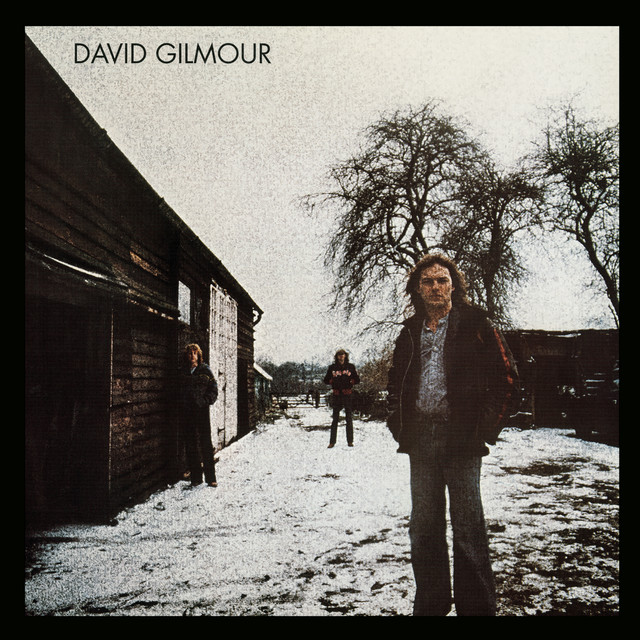
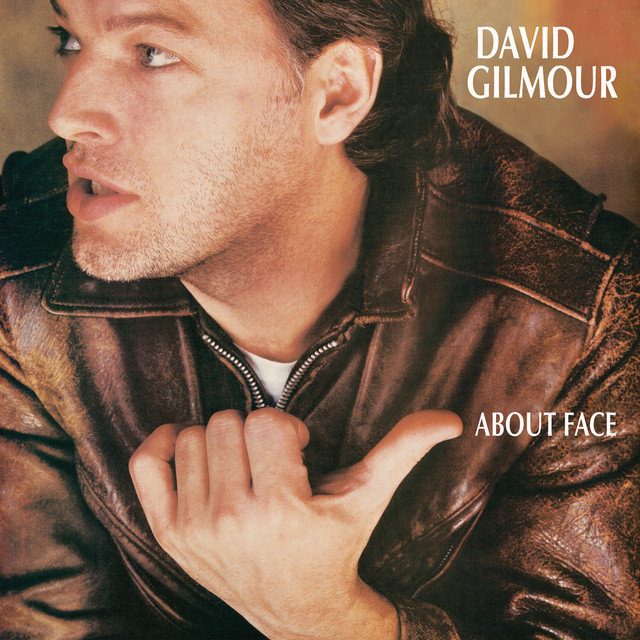
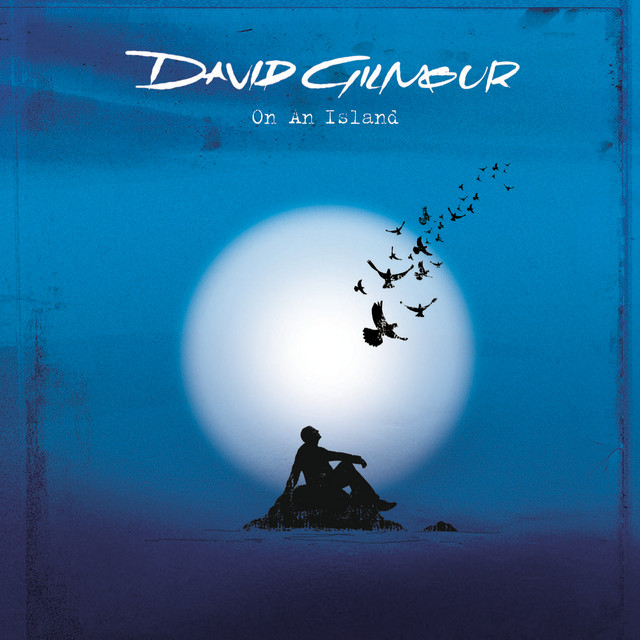

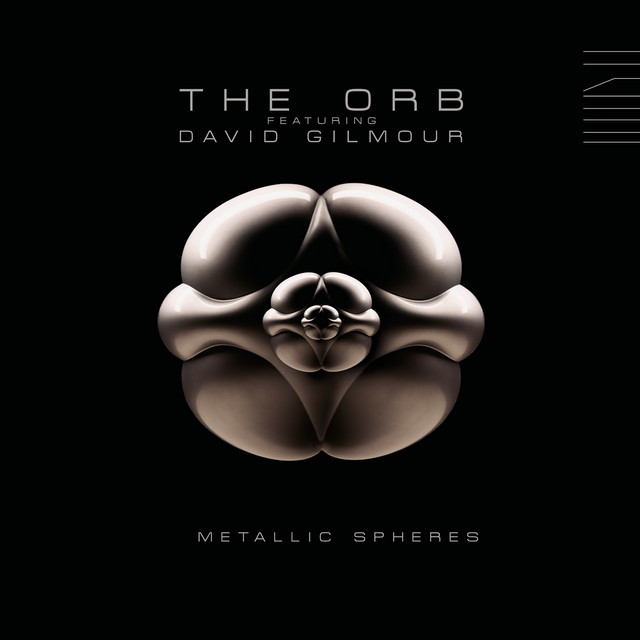
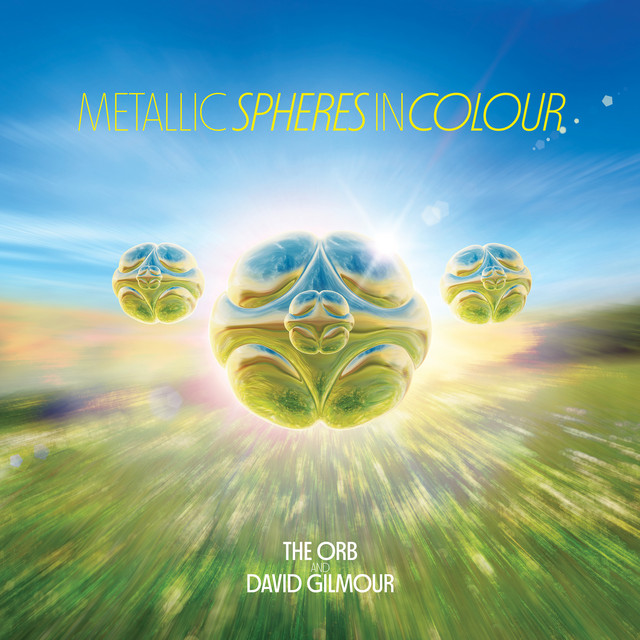
Album Credits
-

Between Two Points (Live from the Luck and Strange Concerts)
David Gilmour · 2025
Mixing Engineer Producer -

Wish You Were Here (Live from the Luck and Strange Concerts)
David Gilmour · 2025
Mixing Engineer Producer -

Luck and Strange (Live from the Luck and Strange Concerts)
David Gilmour · 2025
Mixing Engineer Producer -

Sorrow (Live from the Luck and Strange Concerts)
David Gilmour · 2025
Mixing Engineer Producer -

David Gilmour · 2025
Mixing Engineer Producer -
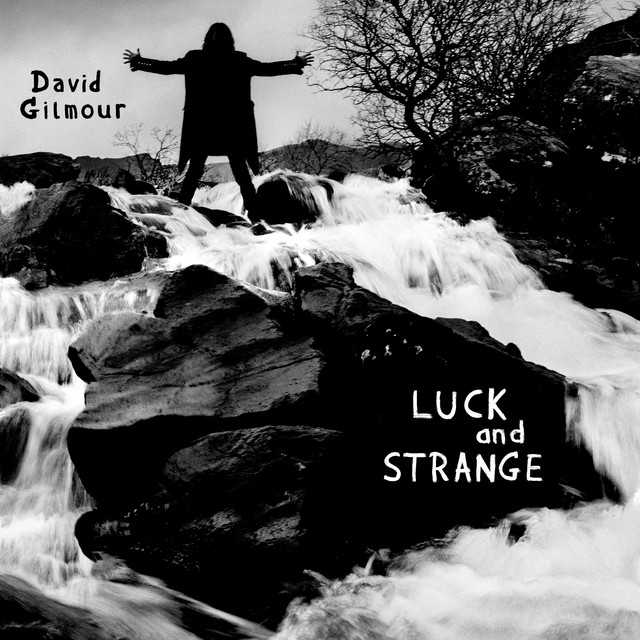
David Gilmour · 2024
Mixing Engineer Producer Programmer -
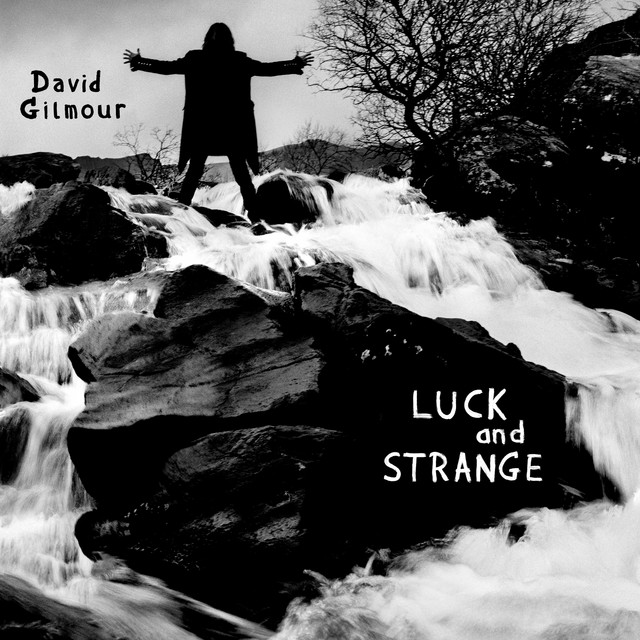
David Gilmour · 2024
Mixing Engineer Producer -
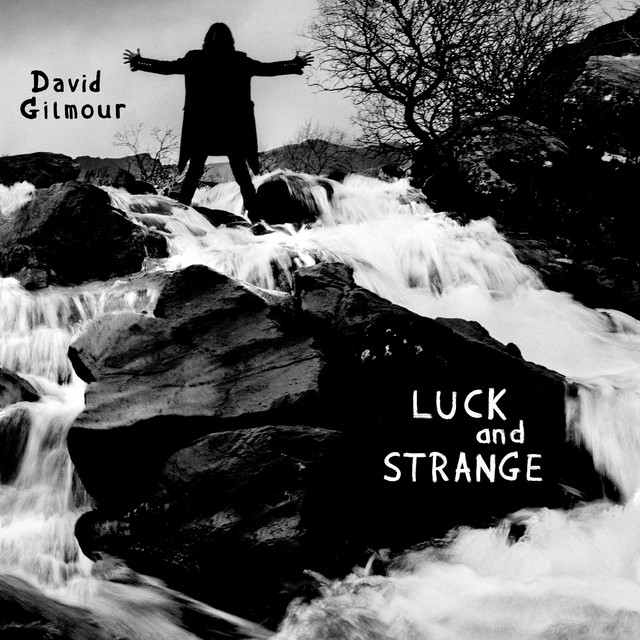
David Gilmour · 2024
Mixing Engineer Producer -
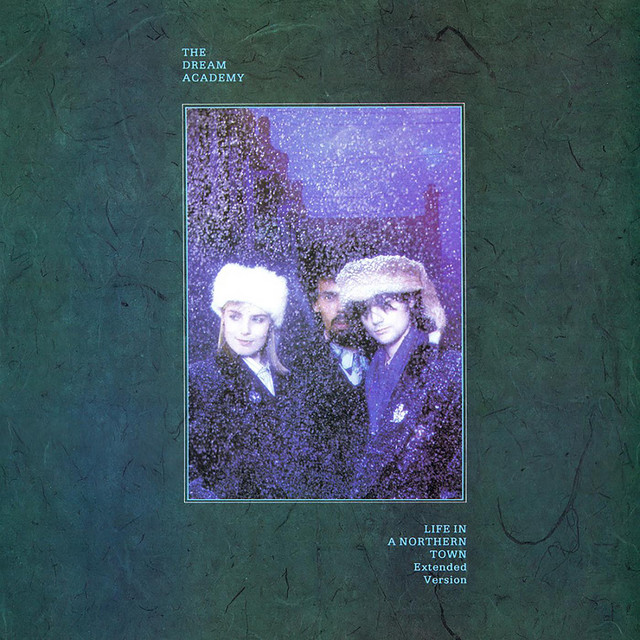
The Dream Academy · 2021
Producer -
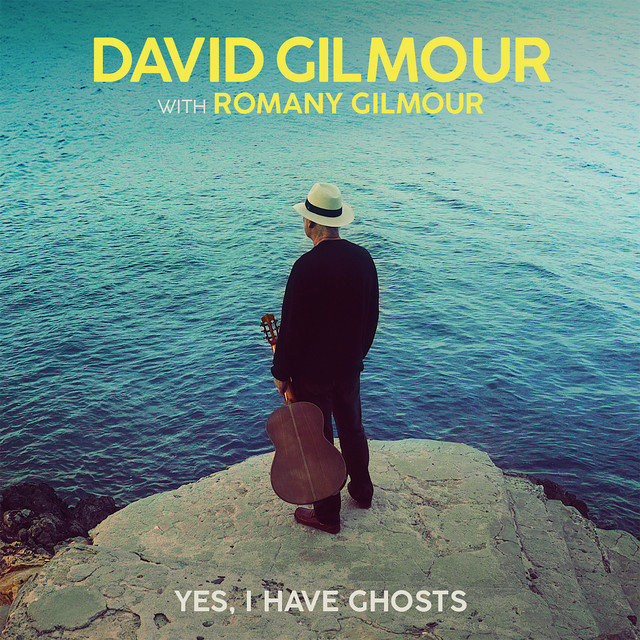
David Gilmour · 2020
Mixing Engineer Programmer -
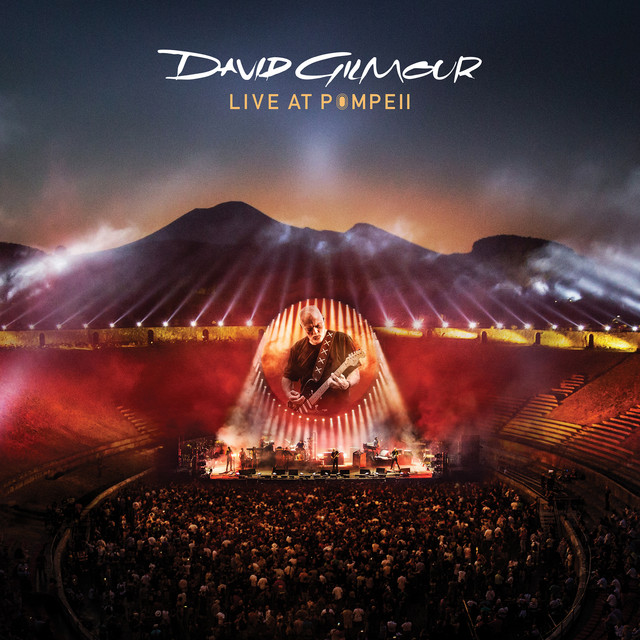
David Gilmour · 2017
Mixing Engineer Producer -
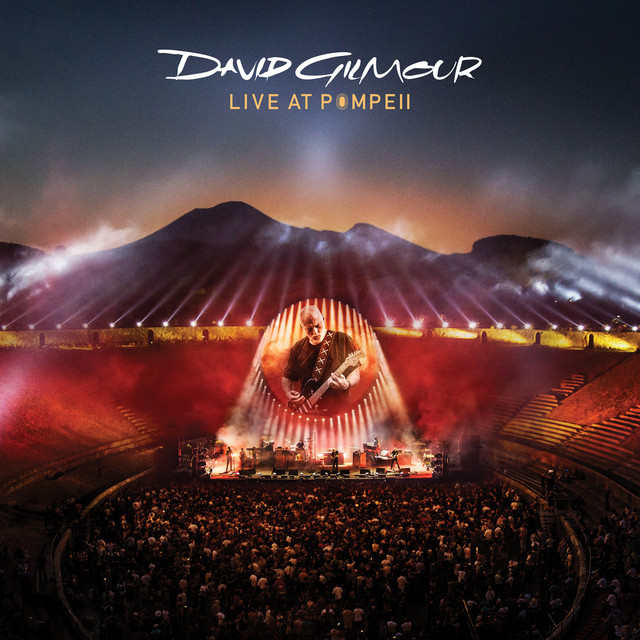
One of These Days (Live At Pompeii 2016)
David Gilmour · 2017
Mixing Engineer Producer
.jpeg?v=1785070562)

.jpeg?v=1784656821)