Stewart Copeland
Stewart Copeland's Gear


"I compose in MOTU Digital Performer, but I use Avid Sibelius to get the score ready so the musicians can read it. Sibelius is hell to use as a composition platform. People do it, but it’s insane. But [as a scoring platform], it’s like somebody turning on the lights."
Find it on:


"Stewart Copeland's kit for the 2007 Police World Tour, seen here before a show at the massive Dodger Stadium in Los Angeles."
Find it on:


His main hi-hats from 1982-1984 with The Police
Find it on:


In this photo, Stewart Copeland can be seen playing a Roland RS-505 Paraphonic string synthesizer. He used it on early 80s Police records Zenyatta Mondatta (for the organ sound in "Bombs Away", for example) and Ghost In The Machine ("Rehumanize Yourself" and "Darkness", though it may also appear on other songs too), followed by the Rumblefish soundtrack in 1984 (for which it was part of his so-called "demo station", a photo of which is included on The Police Wiki page for the soundtrack).
Find it on:

Visible in this photo of Stewart Copeland's "hotel rig" (or "suitcase studio") from around the Synchronicity tour, featured in the Police Vintage gallery section of his website. Also visible in a photo of his "Rhythmatist" writing setup (though it looks reversed) here
From Down Beat magazine May 1984 issue:
On the road Copeland figures out his new charts on his "suitcase studio" - a Yamaha HandySound HS-5O1 polyphonic mini-synth, a Casio PT2O monophonic mini-synth (that also plays chords), a BOSS Dr Rhythm, the Scholz Rockman (for studio effects), a Fostex X-15 Multi-tracker cassette recorder, Sanyo C mini-monitor speakers, and Sony headphones, plus a Fender Stratocaster for that dose of heavy metal.
Find it on:

Among other things, he was able to do this with his 13" hi-hats and the help of Tama’s innovative 1978 creation: Octobans, a set of eight (octo) 6"-diameter, single-headed drums distinguished by long, tube-like shells of varying lengths, which determined the pitch of each drum. Copeland made profuse use of, and did much to popularize, these and other similarly new products debuting at the time.
Find it on:


"The Stewart Copeland snare drum, a Tama signature model, is a faithful reproduction of the snare drum of "mysterious provenance" that Stewart used with the Police and everything else from that time period. This Copeland snare sound easily penetrates what he describes as "the dirge from the bass and the ear-piecing sounds of a guitar." That penetrating sound is the result of combining a die-cast batter hoop and a triple-flanged bottom hoop with a brass shell that is 0.5mm thicker than the standard 1mm shell.
In trying to replicate Stewart Copeland's snare drum on which he recorded all those Police hits, Tama measured the diameter and all of the specs until it came down to metallurgy--the mixture of metals metals. After many prototypes, Tama matched the sound of Copeland's original and set up production to duplicate it consistently. Now you can capture that punchy, piercing sound in your kit."
Find it on:

At 2:20, Copeland mentions that he owns a 1978 Fender Stratocaster.
Find it on:


At 2:38, Copeland mentions that he owns a Vox AC-15.
Find it on:

At 14:35 of this video, Copeland displays his Gibson SG.
Find it on:

At 13:41 Copeland mentions buying a Roland Space Echo at the store "Manny's".
Find it on:


Visible in this photo of Stewart Copeland's "hotel rig" (or "suitcase studio") from around the Synchronicity tour, featured in the Police Vintage gallery section of his website.
From Down Beat magazine May 1984 issue:
On the road Copeland figures out his new charts on his "suitcase studio" - a Yamaha HandySound HS-5O1 polyphonic mini-synth, a Casio PT2O monophonic mini-synth (that also plays chords), a BOSS Dr Rhythm, the Scholz Rockman (for studio effects), a Fostex X-15 Multi-tracker cassette recorder, Sanyo C mini-monitor speakers, and Sony headphones, plus a Fender Stratocaster for that dose of heavy metal.
Find it on:

These are Stewart's signature sticks and you can see him holding them up proudly for the camera in the picture.
Find it on:

These are Stewart's signature hats. The video shows him demonstrating them on his kit at the Sacred Grove.
Find it on:



The Getty image shows Stewart playing one of the 70 Van Zalinge Z basses. Two were purchased for the Police, one for Sting, one for Stewart.
Find it on:

At 2:40 of this video, one can see Copeland's Epiphone Mandobird resting atop a drum, next to a violin.
Find it on:

"I compose in MOTU Digital Performer, but I use Avid Sibelius to get the score ready so the musicians can read it. Sibelius is hell to use as a composition platform. People do it, but it’s insane. But [as a scoring platform], it’s like somebody turning on the lights."
Find it on:


Stewart states in this interview that he uses Vienna Symphonic Liibrary.
Find it on:
-m.webp?v=1784337309)
This article states that Stewart Copeland uses a MOTU 2408 Mk. 3 audio interface.
Find it on:

This article states that Stewart Copeland uses a Shure SM7B mic.
Find it on:

Used as an overhead mic for “Every Breath You Take”, as mentioned by producer Hugh Padgham in this March 2004 Sound on Sound interview.
"At AIR Montserrat, the dining area had a gabled ceiling and reflective wooden floor, so I recorded Stewart's drums with room mics while also close-miking the kit, similar to how I recorded Phil Collins. There was a [Shure] SM57 on the snare, [Sennheiser] 421s on the toms, Coles 4038 ribbon mics for the overheads, and [Neumann] 87s as room mics, placed about 10 to 15 feet away and compressed a little bit. Obviously, we didn't use the room sound as much as we did for Phil, but it still provided Stewart's sound with a certain liveliness.”
Find it on:



Used as a snare mic for “Every Breath You Take”, as mentioned by producer Hugh Padgham in this March 2004 Sound on Sound interview.
"At AIR Montserrat, the dining area had a gabled ceiling and reflective wooden floor, so I recorded Stewart's drums with room mics while also close-miking the kit, similar to how I recorded Phil Collins. There was a [Shure] SM57 on the snare, [Sennheiser] 421s on the toms, Coles 4038 ribbon mics for the overheads, and [Neumann] 87s as room mics, placed about 10 to 15 feet away and compressed a little bit. Obviously, we didn't use the room sound as much as we did for Phil, but it still provided Stewart's sound with a certain liveliness.”
Find it on:

His main Ride Cymbal during the Synchronicity Tour
Find it on:

Stewart Copeland can be seen playing a Kurzweil K2500 throughout this video; it appears to be the 88 key X version.
Find it on:

Stewart Copeland plays a Kurzweil K2500 throughout this video; it appears to be the 88 key X version. His computer monitor can be seen at 3:01, and several of the tracks are lableled "K2500X"
Find it on:

In a video from The Police's performance at the Oakland Coliseum on September 10, 1983, Stewart Copeland can be seen using the UFIP 7.5" Ictus Ice Bell as one of his main bells, alongside his Paiste 8" 2002 Bell, throughout the band's career.
Find it on:

Used from 1980-82 as part of his setup
Find it on:

Stewart Copeland can be seen next to an Emulator I in this photo from Home Studio Recording magazine issue, published December 1983
Find it on:
This is a community-built gear list for Stewart Copeland.
- Find relevant music gear like Microphones, Guitars, Amplifiers, Effects Pedals, Drum Sets, Cymbals, Snare Drums, Drumsticks, and other instruments and add it to Stewart Copeland.
- The best places to look for gear usage are typically on the artist's social media, YouTube, live performance images, and interviews.
- To receive email updates when Stewart Copeland is seen with new gear, follow the artist.
Discography
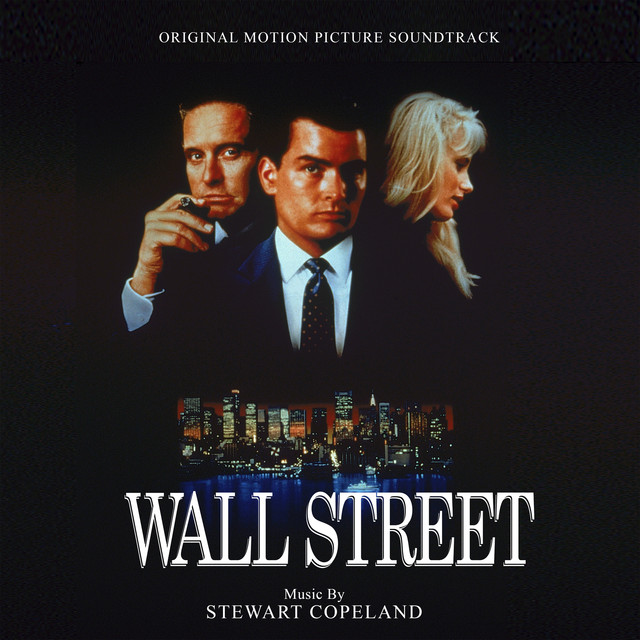
Wall Street (Original Motion Picture Soundtrack)
1987
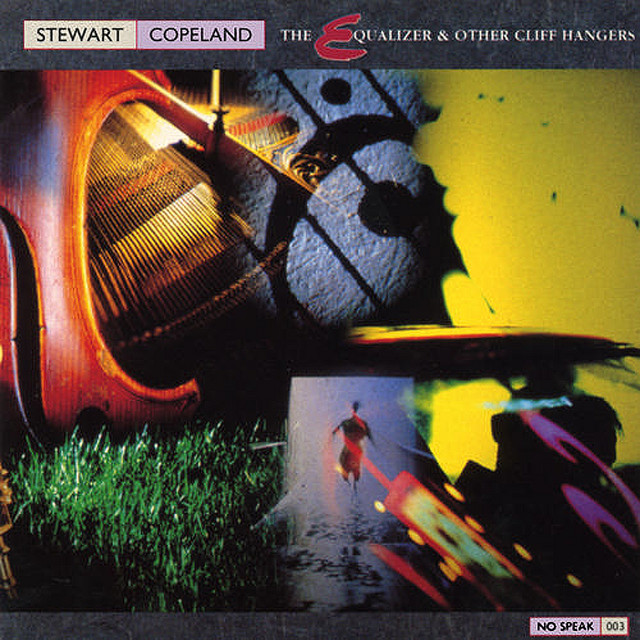
The Equalizer & Other Cliffhangers
1988
Noah's Ark
1990
Rumble Fish (Original Soundtrack)
1992
Spyro
1998
Orchestralli
2004
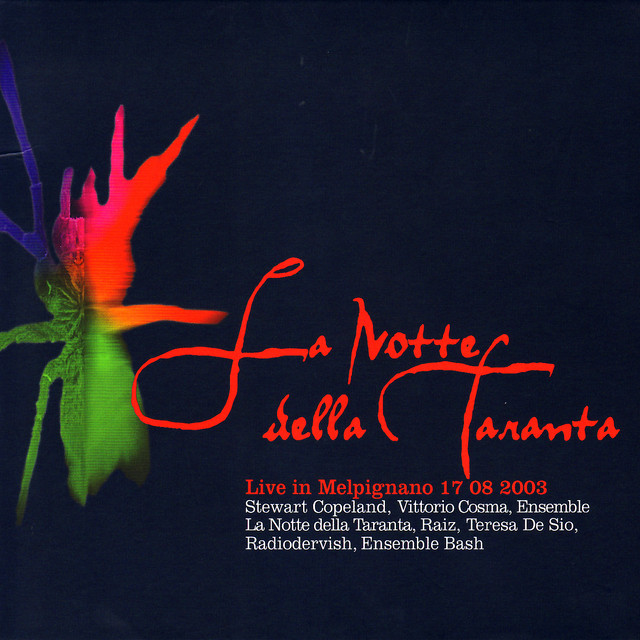
La Notte della Taranta (Live in Melpignano 17.08.2003)
2004
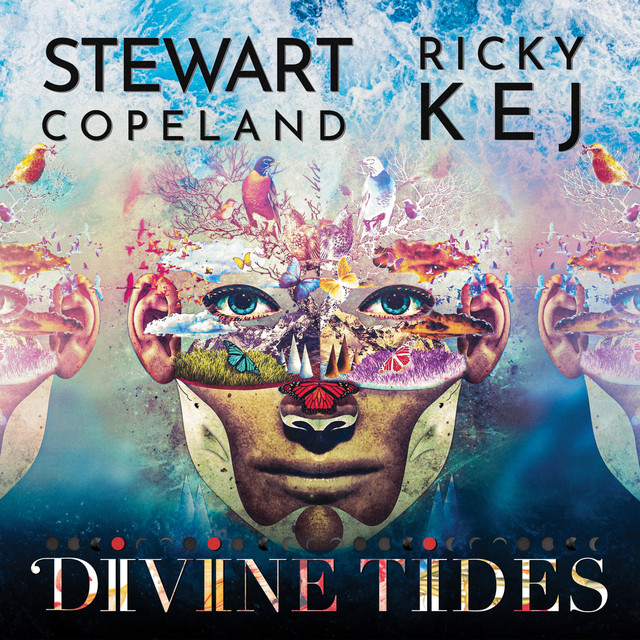
Divine Tides
2021
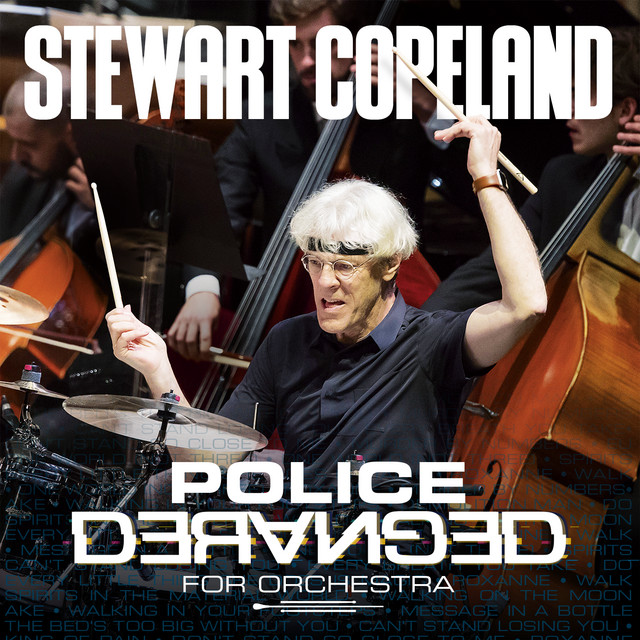
Police Deranged For Orchestra
2023
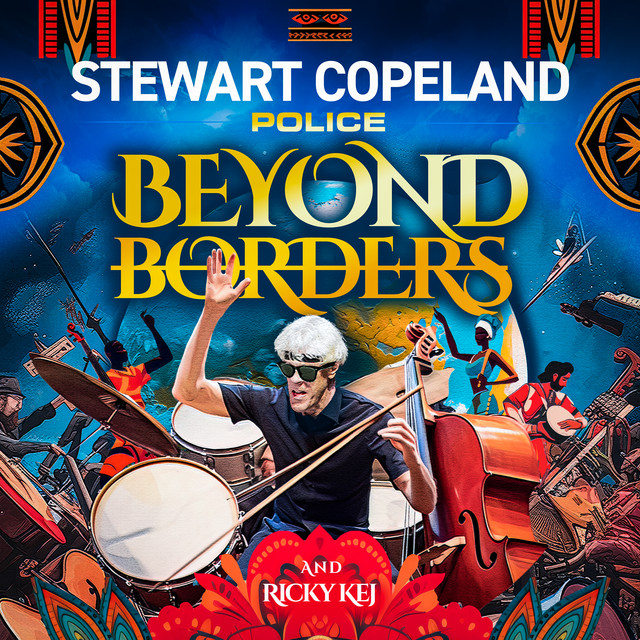
Police Beyond Borders
2023
Stewart Copeland: Wild Concerto
2025