
Adrian Belew
Genre
Credits
Genre
Credits
Adrian Belew's Gear



In this video, Adrian explains the features of his signature guitar and the ways in which he uses it. At 0:35, he says, "It simply is the best guitar that I've ever played. It makes me play better, smoother, more fluidly, faster," about the Parker FLY. At 1:25, he starts talking about the different electronics in his signature model, as opposed to the standard Parker FLY. He says, "We tried to make it the most state of the art electric guitar available today and I believe that it is."
Find it on:


-m.webp?v=1784559371)
In this image originally used as a cover shot for Guitar Player magazine, we see Belew posed with his custom-built Fender Mustang.
Find it on:


This image of the cover of the May 1982 issue of Guitar World magazine depicts Belew with his famous relic'ed Strat.
Find it on:


Adrian uses an Analogman Peppermint Fuzz pedal, according to Guitar Geek.
Find it on:
-m.webp?v=1784556109)
"I first heard a JC-120 at a casual party in L.A. in 1977. Someone was playing some chords and noodling around—not very well in fact—but the sound mesmerized me. I had never heard an amp sound so pristine and beautiful. There was a shimmering clarity to every note. Then the player turned on the actual stereo chorusing. Wow! What an incredible sound. I nearly fell off my chair! I sat there speechless until I finally asked if I could play through it. Within the first two notes I played I was madly in love with the JC-120.
To me, the stereo chorusing and vibrato were the single most beautiful guitar sounds I’d ever heard an amp produce. And I loved the way it looked: cool, modern, and unique. I was in L.A. at the time rehearsing with Frank Zappa, my first big break in the music business. I told Frank about the amp, and the next day one showed up for us to investigate. Frank liked it enough to advance me the money to buy my first JC-120. I still have it comfortably ensconced in my studio. I still love it and still record with it. Oh, and speaking of recording with it, here’s a short list of some of the records I made with my first JC-120:
Sheik Yerbouti with Frank Zappa Lodger with David Bowie Remain in Light with Talking Heads Discipline with King Crimson And that list goes on and on…
In 1979, I made my first trip to Japan as guitarist for David Bowie’s Stage tour. I was given the opportunity to visit one of Roland’s research and development facilities. And there I met the founder of Roland, Mr. Kakehashi, an incredible inventor and a sweet dear man who liked to laugh. The next year, I went back to Japan with Talking Heads, and the year after that with King Crimson. Mr. Kakehashi came to all my shows, and he and I became good friends. At a King Crimson concert in Tokyo, he noticed my tendency to create wild feedback with the JC-120.
I would go back to the JC-120 and wave the guitar in front of it in different ways and it would make a crazy oscillating sound. This was caused by overloading the chorus effect with an Electro Harmonix Big Muff and EQ, then manipulating the chorus parameters. He loved that part of the show and afterwards he asked me, “Is it expensive to do that sound?” I said, “Cheap, if you already have a Roland Jazz Chorus amp”. He laughed and thought that was great. Whenever I saw him from then on he would remind me by imitating someone swinging a guitar around.
When I think of how much Mr. K’s ideas changed modern music (and indeed my music), I am truly amazed. The Roland Jazz Chorus JC-120 has made a huge mark on the music of the last four decades and continues to do so today. There is simply nothing else like it. In my opinion, it has to be considered in the pantheon of the top three amplifiers of all time."
Find it on:

In a user-uploaded photo on BlogSpot, Adrian Belew is seen playing a Roland G-808 Guitar Synthesizer alongside Robert Fripp, who is also using a G-808.
Find it on:

Used with David Bowie and King Crimson, as gathered from multiple sources. Scrutinizing this scan of the March 1982 issue of Guitar World (HUGE props to stalhart of The Gear Page for his January 24, 2019 post), one can make out Daka-Ware knobs, the word "AC" next to "Amplifier", and the phrase "Tone Bypass". This reveals a V5 Big Muff.
Columbia Daily Spectator, Volume CVI, Number 73, 24 February 1982
Like "Elephant Talk." How do you do that?
Belew: I do that with Flanger and a Big Muff, both made by Electro-Harmonix. It's a very simple effect. I set the flanger so it goes dada-dada-dada, so it's wavering up and down. When I turn both of them on it goes (Belew emits a strange groan), real fuzzy, but when I hit a note and slide it up the neck I get the elephant sound. I have a rhinoceros guitar sound.
What kind of sound does a rhinoceros make?
Belew: Well, I wasn't very sure, so I used my imagination a little. It's on my solo album which comes out March 10, called The Lone Rhino. It's (the sound) the main song on the album. The sound of the guitar is pretty...monstrous. It was invented back in 1978, but I haven't put it on a record until now. It's a much more extensive kind of guitar sound where I have to use four or five different effects and so on and so forth I can't even do it live.
Guitar World, March 1982
[https://i.postimg.cc/NGKN9sjJ/kc-1.jpg] / [https://i.postimg.cc/ZYXw6G9T/kc-2.jpg]
Downbeat, December 1986, "Adrian Belew: Twang Bar King" by Gene Santoro
ADRIAN BELEW'S EQUIPMENT
Adrian Belew says, "I'm using four guitars now. First are the two Twang-Bar Wonderbeast guitars with artwork by Mike Goetz. Each has a different tuning — one is normal, the other has the G tuned up to A so I can get different voicings and avoid pentatonic scales. Starting off at the headstock, they have bow-and-tuning heads, thereby eliminating the need for retaining bars which stop you from being able to play in the back of the head or bend strings at the nut. They have Seymour Duncan pickups, Kahler tremolo arms, and all the guts from the Roland synthesizer. The same is true of the third guitar I use, except that the artwork is by Laurie Anderson, and that it's tuned to the same tuning as my dobro, E-B-E-E-B-E, with heavier gauge strings, the low E being a .052 and the high E being a .012. Usually I use medium-light Gibson strings, with the high E being a .010 and the low E a .042 I use Fender medium picks. The fourth guitar is my battered 1967 Stratocaster from the David Bowie period, with a broken bass pickup [laughs] and it feeds back better than any other guitar I have.
"My two amps are Roland JC-120s — I've used one on everything from 1977 on. Right now, my floor situation looks something like this — I have the GR-700, the Roland SDE-3000 delay, an Ibanez harmonizer, a Big Muff fuzztone, a Foxtone fuzztone, the Electro-Harmonix echo-flanger — which makes the wonderful metallic insect sounds on Desire — the new Roland compressor — I always use lots of compression — a Roland pitch-shifter, and the Electro-Harmonix 16-second delay, which I've had converted to do backwards tape loops."
Roland, "Adrian Belew & JC-120", July 8, 2015
In 1979, I made my first trip to Japan as guitarist for David Bowie’s Stage tour. I was given the opportunity to visit one of Roland’s research and development facilities. And there I met the founder of Roland, Mr. Kakehashi, an incredible inventor and a sweet dear man who liked to laugh. The next year, I went back to Japan with Talking Heads, and the year after that with King Crimson. Mr. Kakehashi came to all my shows, and he and I became good friends. At a King Crimson concert in Tokyo, he noticed my tendency to create wild feedback with the JC-120.
I would go back to the JC-120 and wave the guitar in front of it in different ways and it would make a crazy oscillating sound. This was caused by overloading the chorus effect with an Electro Harmonix Big Muff and EQ, then manipulating the chorus parameters. He loved that part of the show and afterwards he asked me, “Is it expensive to do that sound?” I said, “Cheap, if you already have a Roland Jazz Chorus amp”. He laughed and thought that was great. Whenever I saw him from then on he would remind me by imitating someone swinging a guitar around.
When I think of how much Mr. K’s ideas changed modern music (and indeed my music), I am truly amazed. The Roland Jazz Chorus JC-120 has made a huge mark on the music of the last four decades and continues to do so today. There is simply nothing else like it. In my opinion, it has to be considered in the pantheon of the top three amplifiers of all time.
here is the Bowie piece I wrote for the April issue of Guitar Player magazine:
"Right Track Recording was on a typically worn down part of 48th street in manhattan. from the outside it could have been a shoe repair shop. it was there on a cold night in january of 1990 I found myself standing on one side of an AKG C-24 microphone, headphones on, and about to sing the first verse of a song called "Pretty Pink Rose". on the other side of the microphone was another singer with his headphones on. it was at that very moment my mind and body chose to fully realize I was about to sing a duet with David Bowie! blood rushed to my face like an acute case of embarrassment. I felt flushed and momentarily uncertain how to make my voice sound. the long lead-in to the track began and suddenly David launched into his first line. I followed. it didn't take long before we had the song complete and we began working out an idea for backing vocals (take me to the heart, to the heart). phew! I did it.
for me David was an easy person to collaborate with. if he liked something he would be very encouraging, even excited. if he didn't like an idea he would calmly start out saying "I'm not quite sure..." there was no sense of pressure and usually a good dose of humor. we had fun together. after completing the "Pretty Pink Rose" vocals I had the engineer put up another untitled track I had recently recorded. the idea was for David to write words and perhaps record a vocal. I was very hopeful it would work out and did it ever! to my amazement David sat on the studio couch with a yellow legal pad, listening to the track over and over, sometimes instructing the engineer to go back to a certain section, and busily scribbling away. in just 30 minutes he had written the words for "Gunman", our second collaboration. he allowed me to "produce" his performance. at one point I asked if he would mind "talking" through the lyrics. it was probably an uncomfortable idea but he gracefully gave me two takes. "graceful" is a term I would use for everything to do with David Bowie.
I toured the world with David two times; two decades apart. on the first go-round in 1978-79 my guitar rig was a model of simplicity: a pedalboard with a single row of 8 off/on switches which controlled whatever stomp boxes I patched into a mixer. the stomp boxes were an MXR Dynacomp compressor, an ADA Flanger, EHX Echo Flanger, EHX Big Muff run through an MXR 10-band eq, EHX Graphic Fuzz, and a Roland DC-30 Analog Delay. I had one battered Fender Stratocaster which I played through a Roland JC-120 amp.
in 1990 I did the second, much bigger Sound and Vision Tour which included 108 shows in 27 countries. by that time my guitar set up was housed in a rack the size of a refrigerator weighing 500 pounds. there was a duplicate rack as well. the stage was a 60' by 60' metal grid, completely flat. my midigator pedalboard was flushed-mounted into the stage. my two Fender Twin amps and monitor cabinets were hung beneath the stage, facing up at me. each "refrigerator" contained massive amounts of midi-gear that included Roland GR-50 synthesizers, and Korg AC3 multi-effects processors as the main ingredients. I had a bespoke box which housed many of my older stomp boxes including a Foxx Tone Machine and some of the Electro-Harmonix gear. I played 3 Fender Stratocasters made for me by the Custom Shop. they had Lace Sensor pickups, Kahler tremelos, Bowen locking tuning keys, Roland synth pickups, custom finishes, and a ridiculously long midi cable which could stretch the width and depth of the stage.
only David and I were allowed on the huge stage. the band was closeted off in a back corner behind an opera scrim. on our first night of the tour in Quebec during one of my lengthy guitar solos while David stood in the middle of the stage watching, I ran from one side to the other back and forth like a good show-off rock guitarist is supposed to do. only when I stopped did I realize I had roped David legs together with my ridiculous midi cable! he introduced me then as "the Fred Astaire of electric guitar"!
I'd like to think that playfulness and boy-like spirit is what I brought to the Bowie shows. as I said we had a lot of laughs. on his records I was more than willing to be adventurous, which is what he wanted. he never instructed me, but instead gave me free reign to go wild. David Bowie was free-spirited, intellectually curious, utterly unique, wealthy and super-star famous, yet down to earth to those around him: an incredible person to know. I am a lucky boy."
Find it on:
-m.webp?v=1784585991)
Visible in Stompbox: 100 Pedals of the World's Greatest Guitarists, as can be seen in the quick browse video at 0:08.
Find it on:

Adrian uses a GR-30 as shown in this diagram from Guitar Geek.
Find it on:

According to this description from the back of the 1982 promotional LP "Indisciple", Belew strung his guitars at the time with Markley 10-46 strings (the .36 is likely a typographical error).
Find it on:

Visible in Stompbox: 100 Pedals of the World's Greatest Guitarists, as can be seen in the quick browse video at 0:08.
Find it on:

The footswitch for the SCC-700 is visible at the 3:27 mark of Adrian Belew: Electronic Guitar (1984).
Find it on:

Adrian uses a Keeley Compressor 2-Knob pedal, according to Guitar Geek.
Find it on:

Visible in Stompbox: 100 Pedals of the World's Greatest Guitarists, as can be seen in the quick browse video at 0:08.
Find it on:

Here's a rare live video of Adrian using a Roland G303 with Robert Fripp. During the live at Frejus in 1982, Adrian uses a Roland G303 for the song The Sheltering Sky (16:48). During King Crimson's period, Adrian rarely used a Roland G303 between 1982 and 1983, especially on the european tour
Find it on:

Visible among Belew's effects rack in Adrian Belew: Electronic Guitar (1984) at 2:53, coming into full view at 3:03. Belew also lists it in the December 1986 Downbeat interview "Adrian Belew: Twang Bar King" by Gene Santoro, where he shares that he "converted" his unit "to do backwards tape loops":
ADRIAN BELEW'S EQUIPMENT
Adrian Belew says, "I'm using four guitars now. First are the two Twang-Bar Wonderbeast guitars with artwork by Mike Goetz. Each has a different tuning — one is normal, the other has the G tuned up to A so I can get different voicings and avoid pentatonic scales. Starting off at the headstock, they have bow-and-tuning heads, thereby eliminating the need for retaining bars which stop you from being able to play in the back of the head or bend strings at the nut. They have Seymour Duncan pickups, Kahler tremolo arms, and all the guts from the Roland synthesizer. The same is true of the third guitar I use, except that the artwork is by Laurie Anderson, and that it's tuned to the same tuning as my dobro, E-B-E-E-B-E, with heavier gauge strings, the low E being a .052 and the high E being a .012. Usually I use medium-light Gibson strings, with the high E being a .010 and the low E a .042 I use Fender medium picks. The fourth guitar is my battered 1967 Stratocaster from the David Bowie period, with a broken bass pickup [laughs] and it feeds back better than any other guitar I have.
"My two amps are Roland JC-120s — I've used one on everything from 1977 on. Right now, my floor situation looks something like this — I have the GR-700, the Roland SDE-3000 delay, an Ibanez harmonizer, a Big Muff fuzztone, a Foxtone fuzztone, the Electro-Harmonix echo-flanger — which makes the wonderful metallic insect sounds on Desire — the new Roland compressor — I always use lots of compression — a Roland pitch-shifter, and the Electro-Harmonix 16-second delay, which I've had converted to do backwards tape loops."
Find it on:
-m.webp?v=1784473039)
Adrian uses a Korg MS2000 synth, according to Guitar Geek's rig diagram.
Find it on:

The Digitech Harmony Man can be seen in this video at the 11:53 mark. Belew uses this pedal to replicate the sound of multiple guitars or, according to Belew, "To pretend that I play really fast." He uses the pedal's intervals without the original guitar signal to manipulate the sound of multiple notes being played. He also worked with Digitech on the "Impossible pedal" that's based on the Harmony Man.
Find it on:

Around the time of the Power Trio, the ever-changing, always exploring Belew was experimenting with an Electro-Harmonix Flanger Hoax, a Locomofon Fuz-Fabrik, a Roland VG-99, a Boomerang looper, and an Eventide H8000 Ultra-Harmonizer.
Guitar Player, 2014.
Find it on:

According to this description from the back of the 1982 promotional LP "Indisciple", Belew's rig at the time included a Polychorus unit.
Find it on:

Seen in this video at 9:38: https://youtu.be/sv3BGqKURZ4
Find it on:


Adrian Belew uses an earlier version of the Eastwood Airline 59' Coronado, as noted by Eastwood Guitars.
Find it on:

"I must say the workmanship is stunning… beautiful metallic blue sparkle finish, a springy trem which holds tune well, and an array of plastic buttons allowing for all types of twang."
Find it on:

Visible in Stompbox: 100 Pedals of the World's Greatest Guitarists, as can be seen in the quick browse video at 0:08.
Find it on:

Pedal 10 in Stompbox: 100 Pedals of the World's Greatest Guitarists, as can be seen in the quick browse video at 0:08.
Find it on:

Visible as the label "OCT. MPX." on Belew's effects rack in Adrian Belew: Electronic Guitar (1984) at 2:36.
Find it on:

According to Guitar Geek's rig diagram, Adrian uses a Roland VG-99.
Find it on:

Visible in Adrian Belew: Electronic Guitar (1984) at 3:45, coming into full view at 3:03, with an explicit mention at 3:25
And then next to that is the foot controller for the tape loop machine. Now, I can quickly make a tape loop with this little foot controller and we'll do that later on in the program.
Find it on:

Adrian uses a Digitech Jimi Hendrix Experience pedal, as shown in this Guitar Geek rig diagram.
Find it on:

According to this Guitar Geek rig diagram, Adrian uses an Eventide TimeFactor.
Find it on:
This is a community-built gear list for Adrian Belew.
- Find relevant music gear like Microphones, Guitars, Amplifiers, Effects Pedals, Software Plugins and VSTs, Keyboards and Synthesizers, Instruments, and other instruments and add it to Adrian Belew.
- The best places to look for gear usage are typically on the artist's social media, YouTube, live performance images, and interviews.
- To receive email updates when Adrian Belew is seen with new gear, follow the artist.
Discography
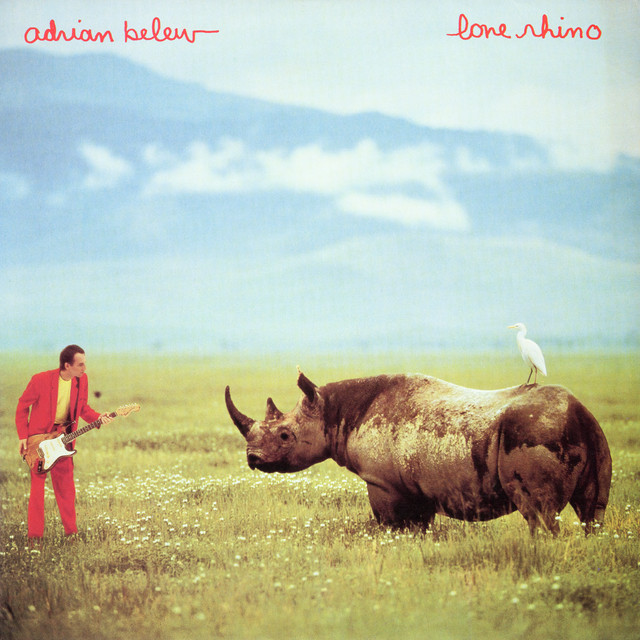
Lone Rhino
1982
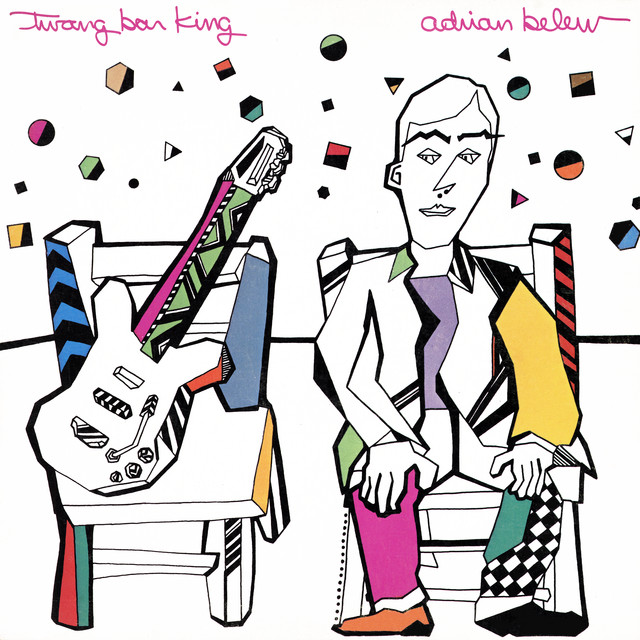
Twang Bar King
1983
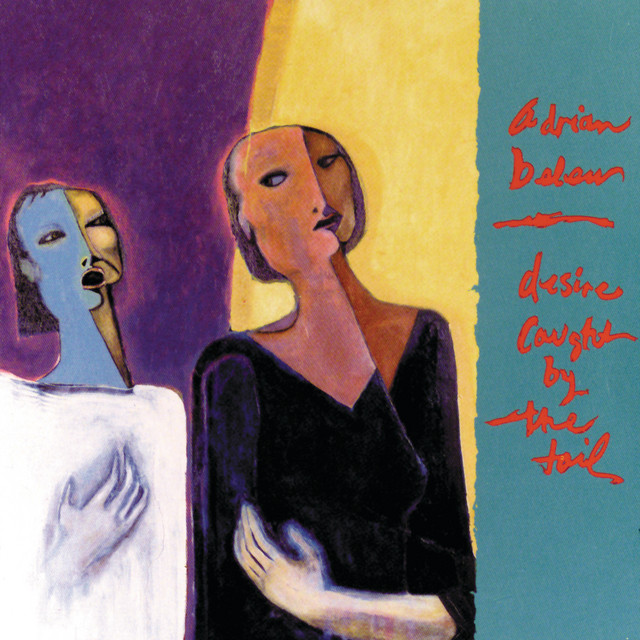
Desire Caught By The Tail
1986
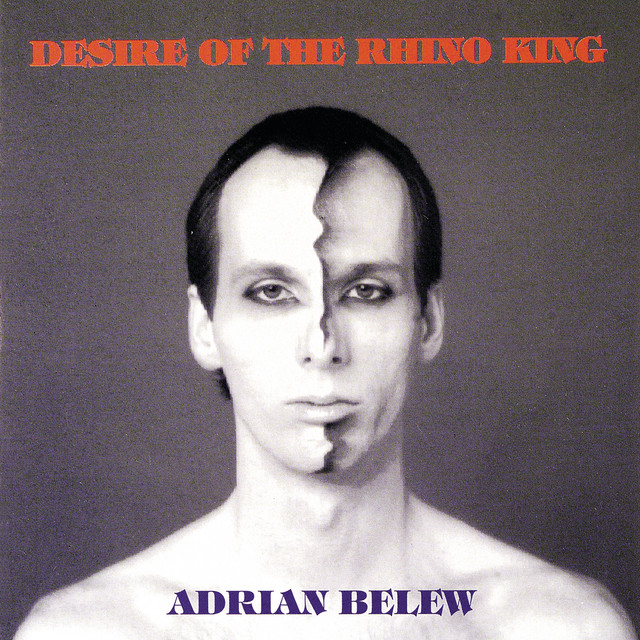
Desire Of The Rhino King
1991
Inner Revolution (US Internet Release)
1992
Salad Days
1999
Coming Attractions
2000
Side One
2005
Side Two
2005
Side Three
2006
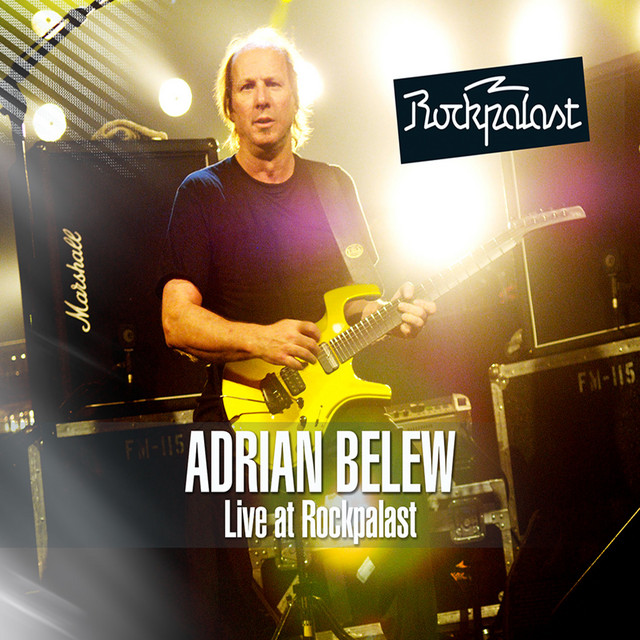
Live at Rockpalast Forum, Leverkusen, Germany 3rd November, 2008
2015
pop sided
2019
Album Credits
-
Adrian Belew · 2005
Producer -
Adrian Belew · 2005
Producer -
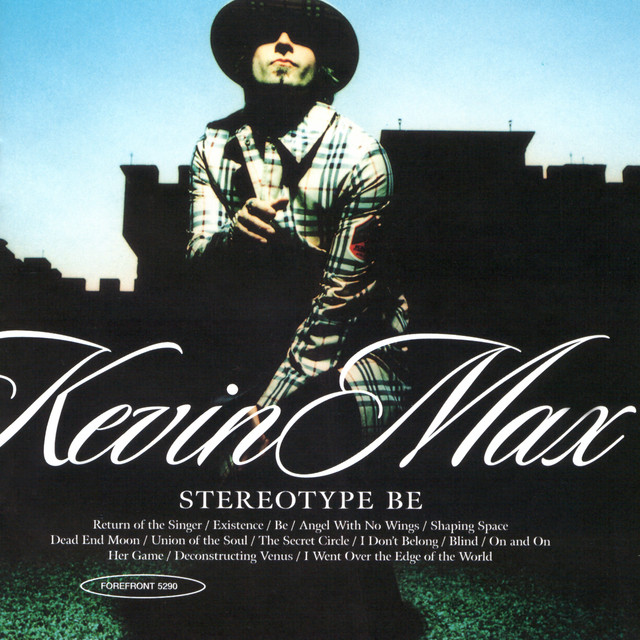
Kevin Max · 2001
Producer -
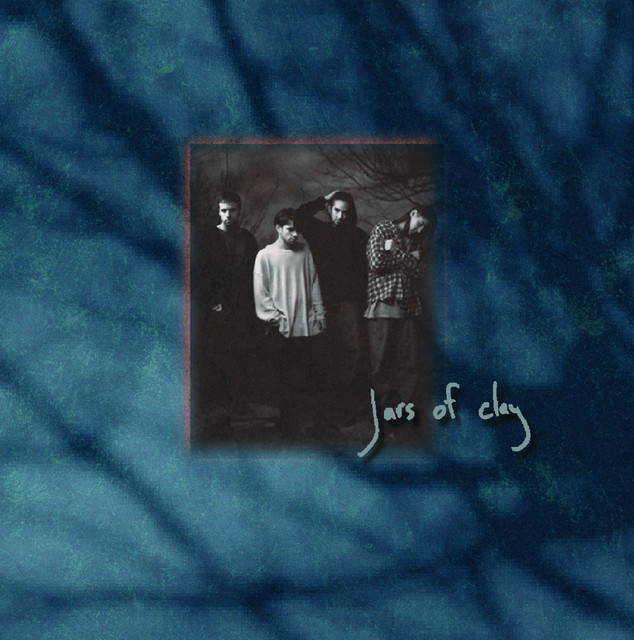
Jars of Clay · 1995
Producer -
Adrian Belew · 1991
Producer -
Adrian Belew · 1983
Producer -
Adrian Belew · 1982
Producer












.webp)