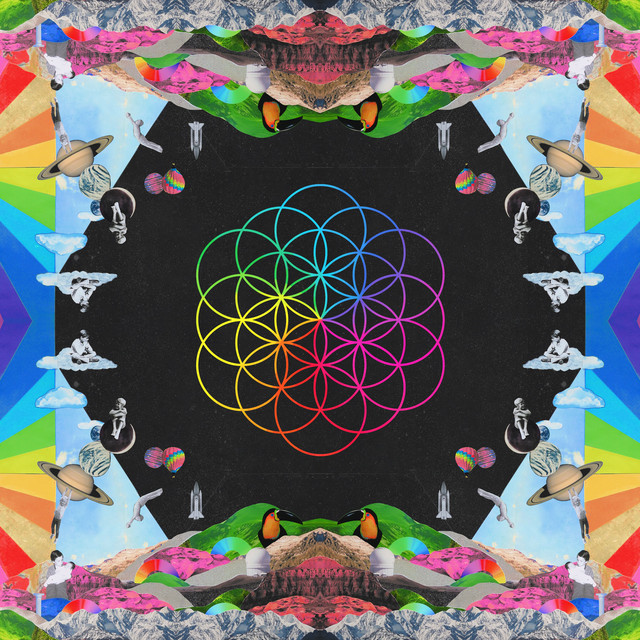
Coldplay – A Head Full of Dreams
The music gear and equipment used by the artists, producers, engineers, and more involved in the making of the 2015 album A Head Full of Dreams.
Music from A Head Full of Dreams


Gear Used On A Head Full of Dreams
Explore the instruments, equipment, software, and production tools used in the making of Coldplay – A Head Full of Dreams (2015). Click more on each item to see exactly how it was used.

Chris Martin
Roles:
Keyboards and Synthesizers used by Chris Martin on A Head Full of Dreams

Kawai K300-ATX2 Upright Hybrid Piano
This hybrid piano replaces the Yamaha DYUS1E3 used during the "Ghost Stories" era. Looking at it first glance (especially with the decoration to match with the theme of "A Head Full of Dreams"), it looks exactly like the Yamaha upright. But when the camera zooms in on Chris Martin playing it, you can see "K300-ATX2" in the top right corner, instead of "DYUS1E3". It was first used on their appearance of TFI Friday (https://www.youtube.com/watch?v=Bg4u6X7Ujtw around the 2:26 mark), and has been used since.


Guitars used by Chris Martin on A Head Full of Dreams
-m.webp?v=1785150020)
Avg price: $3,398.85
Chris Martin used the Martin D-28 throughout their A Head Full of Dreams tour; in the picture, the D-28 is seen without a pickguard with stickers in relation to their A Head Full of Dreams era

-m.webp?v=1785164397)
Avg price: $3,066.87
Chris uses the D-28 throughout their AHFOD tour; Indian rosewood on the sides of the guitar with a Sitka spruce top (which is factory stock) ; stickers are on the guitar to represent their era (AHFOD): pickguard is removed
Headphones used by Chris Martin on A Head Full of Dreams

Audio-Technica ATH-M50 Professional Studio Monitor Headphones
Avg price: $154.50
In This video you can see Chris Martin use the ever popular M50x's to track his vocals

Effects Pedals used by Chris Martin on A Head Full of Dreams

Avg price: $65.21
Visible on Martin's pedalboard in Coldplay: Live at Glastonbury 2005 starting at 7:13. The SD-1 is shown up close at 7:34.
The same pedalboard, once again to the right of Martin's piano, is visible in archive footage from the Twisted Logic Tour in Coldplay: A Head Full of Dreams at 1:18:32. An identical backup pedalboard can be seen in the background on an amp, next to Martin’s Vox MKIV Teardrop.

Microphones used by Chris Martin on A Head Full of Dreams

sE Electronics sE4400a Condenser Microphone
Avg price: $480.81
Mentioned by A Head Full of Dreams co-producer Rik Simpson in this Sound on Sound article.
“The piano we have at The Beehive is an upright Yamaha Disklavier, which has a very nice sound, and the benefit of MIDI. In general it’s the only time we use MIDI with Coldplay. If the band are recording a live take all together, there’s no way I would be able to use the piano mics, because they would have drums all over them. So I record the MIDI at the same time, and once the takes are done and the band are out of the room, I’ll record the piano on its own, playing Chris’s part back via MIDI. It’s the same performance, with a clean recording. I use two sE Electronics 4400a’s on the piano, which are the closest thing to the old [AKG] C414EBs.



Avg price: $13,443.75
Used on "Hymn for the Weekend", as mentioned by A Head Full of Dreams co-producer Rik Simpson in this Sound on Sound article.
It was very important to get the development and arrangement of the vocals right. Many of the 45 tracks are effect tracks. There’s only one lead vocal track each for the verses [LV Verse], for the bridge [LV Bridge], and the choruses [LV Chorus], and then Chris sang a number of bridge and chorus vocal overdubs. The main verse vocal has the Avid Channel Strip, which is taking out some low end, an SPL TwinTube, which adds some saturation, the UBK1 compressor adding more crunch, and the UAD Fairchild 670 and SSL E Channel. I don’t use a great deal of compression from each unit. I will just tickle it a little bit with each one, and each one adds a different characteristic. I could just add a whole load of compression from one plug–in, but like this it doesn’t sound over–compressed. The Pro–Q 2 is, again, a high–pass filter. In the sends there’s a Waves H–Delay that I recorded elsewhere, and sends to a main D–Verb and two QL Spaces aux tracks. I have different reverbs and delays for each part of the song so that the vocal sound evolves during the song.
“The main chorus lead vocal has the FabFilter Pro–Q 2 EQ, the Waves Rennaissance Vox, again the UBK1, two instances of the FabFilter Pro–DS de–esser, two instances of the UAD Pultec EQP–1A, and the FabFilter Pro–MB multi–band compressor. I like the FabFilter de–esser. I am still trying to find the ultimate de–esser, because it’s quite a hard thing to do right. I have two because one is doing high top sibilance, and the other lower stuff around 2kHz. The sends on chorus lead vocal go to aux tracks with the Waves H–Delay, the FXpansion Bloom with a lush, wide stereo delay, a small chamber from the QL Spaces plug–in, a mono delay from the UAD Echoplex, and several other delays. The sends to the delays are all automated independently, with different words getting different delays.
“One thing of note is that there also is a ‘Hope House M80’ vocal track, recorded when Chris was still using the Telefunken M80, and it’s mixed in very low. There’s also a lead-vocal double that has ‘251’ marked, indicating that Chris was also using that mic. But the main vocals were recorded using the Soyuz. There are two tracks marked ‘251 Melo Lead’ and ‘251 Melo Double’, again mixed in low. ‘Melo’ stands for Melodyne, and these tracks are raised two semitones. They were recorded in a different key for a different version of the song, and detuning them added a certain alien quality to these vocals which we really liked. At the bottom of the session are the Beyoncé vocal tracks, on which I mainly used the SSL E Channel strip, UBK1, L2, SoundToys Echo Boy, Avid ModDelay and the QL Space.”

Avg price: $247.19
Used on "Hymn for the Weekend", as mentioned by A Head Full of Dreams co-producer Rik Simpson in this Sound on Sound article.
“One thing of note is that there also is a ‘Hope House M80’ vocal track, recorded when Chris was still using the Telefunken M80, and it’s mixed in very low. There’s also a lead-vocal double that has ‘251’ marked, indicating that Chris was also using that mic. But the main vocals were recorded using the Soyuz.
(...) “A lot of the 58 recordings did end up on the album, and I think it sounds great, though I’d never comp between the Soyuz and the 58. At the beginning of the record I asked him to use Telefunken M80 as a hand-held mic. I was trying to get something that sounded better than an SM58, but later on during the sessions we went back to the SM58 because the weight of it feels more comfortable to him. The mic pre on both the 58 and the Soyuz was a UA–610, which sounds great and is a wonderful and very reliable workhorse."
Studio Equipment used by Chris Martin on A Head Full of Dreams

Universal Audio SOLO/610 Tube Preamp
Avg price: $1,123.90
Mentioned by A Head Full of Dreams co-producer Rik Simpson in this Sound on Sound article.
“With regards to vocal microphones, we have over the years tried most things on Chris [Martin],” says Rik Simpson. “For this album we wanted a clear, vibrant tone, full of humanity and life. I did shootouts between vintage Neumann U47s and U67s, and quite few new mics inspired by the 47, Telefunken 251, and so on. I can’t even recall all of them, but the Soyuz SU17 blew them all out of the water. It’s a hand-made Russian mic, very artisan, and sounds fantastic, very pure and full. Sometimes he’ll pick up a Shure SM58 because he loves holding a mic, with his vocals then sounding over the speakers. He can really get into the zone and perform like that. I’m obviously always trying to get him to sing into a more expensive, great–sounding mic, but if he’s feeling comfortable he’ll get a great performance.
“A lot of the 58 recordings did end up on the album, and I think it sounds great, though I’d never comp between the Soyuz and the 58. At the beginning of the record I asked him to use Telefunken M80 as a hand-held mic. I was trying to get something that sounded better than an SM58, but later on during the sessions we went back to the SM58 because the weight of it feels more comfortable to him. The mic pre on both the 58 and the Soyuz was a UA–610, which sounds great and is a wonderful and very reliable workhorse.
Software Plugins and VSTs used by Chris Martin on A Head Full of Dreams

Universal Audio SSL E Channel Strip Plug-In
Avg price: $62.33
Used on "Hymn for the Weekend", as mentioned by A Head Full of Dreams co-producer Rik Simpson in this Sound on Sound article.
It was very important to get the development and arrangement of the vocals right. Many of the 45 tracks are effect tracks. There’s only one lead vocal track each for the verses [LV Verse], for the bridge [LV Bridge], and the choruses [LV Chorus], and then Chris sang a number of bridge and chorus vocal overdubs. The main verse vocal has the Avid Channel Strip, which is taking out some low end, an SPL TwinTube, which adds some saturation, the UBK1 compressor adding more crunch, and the UAD Fairchild 670 and SSL E Channel. I don’t use a great deal of compression from each unit. I will just tickle it a little bit with each one, and each one adds a different characteristic. I could just add a whole load of compression from one plug–in, but like this it doesn’t sound over–compressed. The Pro–Q 2 is, again, a high–pass filter. In the sends there’s a Waves H–Delay that I recorded elsewhere, and sends to a main D–Verb and two QL Spaces aux tracks. I have different reverbs and delays for each part of the song so that the vocal sound evolves during the song.
“The main chorus lead vocal has the FabFilter Pro–Q 2 EQ, the Waves Rennaissance Vox, again the UBK1, two instances of the FabFilter Pro–DS de–esser, two instances of the UAD Pultec EQP–1A, and the FabFilter Pro–MB multi–band compressor. I like the FabFilter de–esser. I am still trying to find the ultimate de–esser, because it’s quite a hard thing to do right. I have two because one is doing high top sibilance, and the other lower stuff around 2kHz. The sends on chorus lead vocal go to aux tracks with the Waves H–Delay, the FXpansion Bloom with a lush, wide stereo delay, a small chamber from the QL Spaces plug–in, a mono delay from the UAD Echoplex, and several other delays. The sends to the delays are all automated independently, with different words getting different delays.
“One thing of note is that there also is a ‘Hope House M80’ vocal track, recorded when Chris was still using the Telefunken M80, and it’s mixed in very low. There’s also a lead-vocal double that has ‘251’ marked, indicating that Chris was also using that mic. But the main vocals were recorded using the Soyuz. There are two tracks marked ‘251 Melo Lead’ and ‘251 Melo Double’, again mixed in low. ‘Melo’ stands for Melodyne, and these tracks are raised two semitones. They were recorded in a different key for a different version of the song, and detuning them added a certain alien quality to these vocals which we really liked. At the bottom of the session are the Beyoncé vocal tracks, on which I mainly used the SSL E Channel strip, UBK1, L2, SoundToys Echo Boy, Avid ModDelay and the QL Space.”

Used on "Hymn for the Weekend", as mentioned by A Head Full of Dreams co-producer Rik Simpson in this Sound on Sound article.
It was very important to get the development and arrangement of the vocals right. Many of the 45 tracks are effect tracks. There’s only one lead vocal track each for the verses [LV Verse], for the bridge [LV Bridge], and the choruses [LV Chorus], and then Chris sang a number of bridge and chorus vocal overdubs. The main verse vocal has the Avid Channel Strip, which is taking out some low end, an SPL TwinTube, which adds some saturation, the UBK1 compressor adding more crunch, and the UAD Fairchild 670 and SSL E Channel. I don’t use a great deal of compression from each unit. I will just tickle it a little bit with each one, and each one adds a different characteristic. I could just add a whole load of compression from one plug–in, but like this it doesn’t sound over–compressed. The Pro–Q 2 is, again, a high–pass filter. In the sends there’s a Waves H–Delay that I recorded elsewhere, and sends to a main D–Verb and two QL Spaces aux tracks. I have different reverbs and delays for each part of the song so that the vocal sound evolves during the song.
“The main chorus lead vocal has the FabFilter Pro–Q 2 EQ, the Waves Rennaissance Vox, again the UBK1, two instances of the FabFilter Pro–DS de–esser, two instances of the UAD Pultec EQP–1A, and the FabFilter Pro–MB multi–band compressor. I like the FabFilter de–esser. I am still trying to find the ultimate de–esser, because it’s quite a hard thing to do right. I have two because one is doing high top sibilance, and the other lower stuff around 2kHz. The sends on chorus lead vocal go to aux tracks with the Waves H–Delay, the FXpansion Bloom with a lush, wide stereo delay, a small chamber from the QL Spaces plug–in, a mono delay from the UAD Echoplex, and several other delays. The sends to the delays are all automated independently, with different words getting different delays.
“One thing of note is that there also is a ‘Hope House M80’ vocal track, recorded when Chris was still using the Telefunken M80, and it’s mixed in very low. There’s also a lead-vocal double that has ‘251’ marked, indicating that Chris was also using that mic. But the main vocals were recorded using the Soyuz. There are two tracks marked ‘251 Melo Lead’ and ‘251 Melo Double’, again mixed in low. ‘Melo’ stands for Melodyne, and these tracks are raised two semitones. They were recorded in a different key for a different version of the song, and detuning them added a certain alien quality to these vocals which we really liked. At the bottom of the session are the Beyoncé vocal tracks, on which I mainly used the SSL E Channel strip, UBK1, L2, SoundToys Echo Boy, Avid ModDelay and the QL Space.”

Avg price: $181.00
Used on "Hymn for the Weekend", as mentioned by A Head Full of Dreams co-producer Rik Simpson in this Sound on Sound article.
It was very important to get the development and arrangement of the vocals right. Many of the 45 tracks are effect tracks. There’s only one lead vocal track each for the verses [LV Verse], for the bridge [LV Bridge], and the choruses [LV Chorus], and then Chris sang a number of bridge and chorus vocal overdubs. The main verse vocal has the Avid Channel Strip, which is taking out some low end, an SPL TwinTube, which adds some saturation, the UBK1 compressor adding more crunch, and the UAD Fairchild 670 and SSL E Channel. I don’t use a great deal of compression from each unit. I will just tickle it a little bit with each one, and each one adds a different characteristic. I could just add a whole load of compression from one plug–in, but like this it doesn’t sound over–compressed. The Pro–Q 2 is, again, a high–pass filter. In the sends there’s a Waves H–Delay that I recorded elsewhere, and sends to a main D–Verb and two QL Spaces aux tracks. I have different reverbs and delays for each part of the song so that the vocal sound evolves during the song.
“The main chorus lead vocal has the FabFilter Pro–Q 2 EQ, the Waves Rennaissance Vox, again the UBK1, two instances of the FabFilter Pro–DS de–esser, two instances of the UAD Pultec EQP–1A, and the FabFilter Pro–MB multi–band compressor. I like the FabFilter de–esser. I am still trying to find the ultimate de–esser, because it’s quite a hard thing to do right. I have two because one is doing high top sibilance, and the other lower stuff around 2kHz. The sends on chorus lead vocal go to aux tracks with the Waves H–Delay, the FXpansion Bloom with a lush, wide stereo delay, a small chamber from the QL Spaces plug–in, a mono delay from the UAD Echoplex, and several other delays. The sends to the delays are all automated independently, with different words getting different delays.
“One thing of note is that there also is a ‘Hope House M80’ vocal track, recorded when Chris was still using the Telefunken M80, and it’s mixed in very low. There’s also a lead-vocal double that has ‘251’ marked, indicating that Chris was also using that mic. But the main vocals were recorded using the Soyuz. There are two tracks marked ‘251 Melo Lead’ and ‘251 Melo Double’, again mixed in low. ‘Melo’ stands for Melodyne, and these tracks are raised two semitones. They were recorded in a different key for a different version of the song, and detuning them added a certain alien quality to these vocals which we really liked. At the bottom of the session are the Beyoncé vocal tracks, on which I mainly used the SSL E Channel strip, UBK1, L2, SoundToys Echo Boy, Avid ModDelay and the QL Space.”


Universal Audio UAD Fairchild 670 Tube Limiter Plug-In Collection
Avg price: $49.00
Used on "Hymn for the Weekend", as mentioned by A Head Full of Dreams co-producer Rik Simpson in this Sound on Sound article.
It was very important to get the development and arrangement of the vocals right. Many of the 45 tracks are effect tracks. There’s only one lead vocal track each for the verses [LV Verse], for the bridge [LV Bridge], and the choruses [LV Chorus], and then Chris sang a number of bridge and chorus vocal overdubs. The main verse vocal has the Avid Channel Strip, which is taking out some low end, an SPL TwinTube, which adds some saturation, the UBK1 compressor adding more crunch, and the UAD Fairchild 670 and SSL E Channel. I don’t use a great deal of compression from each unit. I will just tickle it a little bit with each one, and each one adds a different characteristic. I could just add a whole load of compression from one plug–in, but like this it doesn’t sound over–compressed. The Pro–Q 2 is, again, a high–pass filter. In the sends there’s a Waves H–Delay that I recorded elsewhere, and sends to a main D–Verb and two QL Spaces aux tracks. I have different reverbs and delays for each part of the song so that the vocal sound evolves during the song.
“The main chorus lead vocal has the FabFilter Pro–Q 2 EQ, the Waves Rennaissance Vox, again the UBK1, two instances of the FabFilter Pro–DS de–esser, two instances of the UAD Pultec EQP–1A, and the FabFilter Pro–MB multi–band compressor. I like the FabFilter de–esser. I am still trying to find the ultimate de–esser, because it’s quite a hard thing to do right. I have two because one is doing high top sibilance, and the other lower stuff around 2kHz. The sends on chorus lead vocal go to aux tracks with the Waves H–Delay, the FXpansion Bloom with a lush, wide stereo delay, a small chamber from the QL Spaces plug–in, a mono delay from the UAD Echoplex, and several other delays. The sends to the delays are all automated independently, with different words getting different delays.
“One thing of note is that there also is a ‘Hope House M80’ vocal track, recorded when Chris was still using the Telefunken M80, and it’s mixed in very low. There’s also a lead-vocal double that has ‘251’ marked, indicating that Chris was also using that mic. But the main vocals were recorded using the Soyuz. There are two tracks marked ‘251 Melo Lead’ and ‘251 Melo Double’, again mixed in low. ‘Melo’ stands for Melodyne, and these tracks are raised two semitones. They were recorded in a different key for a different version of the song, and detuning them added a certain alien quality to these vocals which we really liked. At the bottom of the session are the Beyoncé vocal tracks, on which I mainly used the SSL E Channel strip, UBK1, L2, SoundToys Echo Boy, Avid ModDelay and the QL Space.”


Universal Audio Pultec EQP-1A Legacy Plug-in
Used on "Hymn for the Weekend", as mentioned by A Head Full of Dreams co-producer Rik Simpson in this Sound on Sound article.
It was very important to get the development and arrangement of the vocals right. Many of the 45 tracks are effect tracks. There’s only one lead vocal track each for the verses [LV Verse], for the bridge [LV Bridge], and the choruses [LV Chorus], and then Chris sang a number of bridge and chorus vocal overdubs. The main verse vocal has the Avid Channel Strip, which is taking out some low end, an SPL TwinTube, which adds some saturation, the UBK1 compressor adding more crunch, and the UAD Fairchild 670 and SSL E Channel. I don’t use a great deal of compression from each unit. I will just tickle it a little bit with each one, and each one adds a different characteristic. I could just add a whole load of compression from one plug–in, but like this it doesn’t sound over–compressed. The Pro–Q 2 is, again, a high–pass filter. In the sends there’s a Waves H–Delay that I recorded elsewhere, and sends to a main D–Verb and two QL Spaces aux tracks. I have different reverbs and delays for each part of the song so that the vocal sound evolves during the song.
“The main chorus lead vocal has the FabFilter Pro–Q 2 EQ, the Waves Rennaissance Vox, again the UBK1, two instances of the FabFilter Pro–DS de–esser, two instances of the UAD Pultec EQP–1A, and the FabFilter Pro–MB multi–band compressor. I like the FabFilter de–esser. I am still trying to find the ultimate de–esser, because it’s quite a hard thing to do right. I have two because one is doing high top sibilance, and the other lower stuff around 2kHz. The sends on chorus lead vocal go to aux tracks with the Waves H–Delay, the FXpansion Bloom with a lush, wide stereo delay, a small chamber from the QL Spaces plug–in, a mono delay from the UAD Echoplex, and several other delays. The sends to the delays are all automated independently, with different words getting different delays.
“One thing of note is that there also is a ‘Hope House M80’ vocal track, recorded when Chris was still using the Telefunken M80, and it’s mixed in very low. There’s also a lead-vocal double that has ‘251’ marked, indicating that Chris was also using that mic. But the main vocals were recorded using the Soyuz. There are two tracks marked ‘251 Melo Lead’ and ‘251 Melo Double’, again mixed in low. ‘Melo’ stands for Melodyne, and these tracks are raised two semitones. They were recorded in a different key for a different version of the song, and detuning them added a certain alien quality to these vocals which we really liked. At the bottom of the session are the Beyoncé vocal tracks, on which I mainly used the SSL E Channel strip, UBK1, L2, SoundToys Echo Boy, Avid ModDelay and the QL Space.”

Avg price: $510.00
Used on "Hymn for the Weekend", as mentioned by A Head Full of Dreams co-producer Rik Simpson in this Sound on Sound article.
It was very important to get the development and arrangement of the vocals right. Many of the 45 tracks are effect tracks. There’s only one lead vocal track each for the verses [LV Verse], for the bridge [LV Bridge], and the choruses [LV Chorus], and then Chris sang a number of bridge and chorus vocal overdubs. The main verse vocal has the Avid Channel Strip, which is taking out some low end, an SPL TwinTube, which adds some saturation, the UBK1 compressor adding more crunch, and the UAD Fairchild 670 and SSL E Channel. I don’t use a great deal of compression from each unit. I will just tickle it a little bit with each one, and each one adds a different characteristic. I could just add a whole load of compression from one plug–in, but like this it doesn’t sound over–compressed. The Pro–Q 2 is, again, a high–pass filter. In the sends there’s a Waves H–Delay that I recorded elsewhere, and sends to a main D–Verb and two QL Spaces aux tracks. I have different reverbs and delays for each part of the song so that the vocal sound evolves during the song.
“The main chorus lead vocal has the FabFilter Pro–Q 2 EQ, the Waves Rennaissance Vox, again the UBK1, two instances of the FabFilter Pro–DS de–esser, two instances of the UAD Pultec EQP–1A, and the FabFilter Pro–MB multi–band compressor. I like the FabFilter de–esser. I am still trying to find the ultimate de–esser, because it’s quite a hard thing to do right. I have two because one is doing high top sibilance, and the other lower stuff around 2kHz. The sends on chorus lead vocal go to aux tracks with the Waves H–Delay, the FXpansion Bloom with a lush, wide stereo delay, a small chamber from the QL Spaces plug–in, a mono delay from the UAD Echoplex, and several other delays. The sends to the delays are all automated independently, with different words getting different delays.
“One thing of note is that there also is a ‘Hope House M80’ vocal track, recorded when Chris was still using the Telefunken M80, and it’s mixed in very low. There’s also a lead-vocal double that has ‘251’ marked, indicating that Chris was also using that mic. But the main vocals were recorded using the Soyuz. There are two tracks marked ‘251 Melo Lead’ and ‘251 Melo Double’, again mixed in low. ‘Melo’ stands for Melodyne, and these tracks are raised two semitones. They were recorded in a different key for a different version of the song, and detuning them added a certain alien quality to these vocals which we really liked. At the bottom of the session are the Beyoncé vocal tracks, on which I mainly used the SSL E Channel strip, UBK1, L2, SoundToys Echo Boy, Avid ModDelay and the QL Space.”

FabFilter Pro-DS De-Esser Plugin
Avg price: $195.67
Used on "Hymn for the Weekend", as mentioned by A Head Full of Dreams co-producer Rik Simpson in this Sound on Sound article.
It was very important to get the development and arrangement of the vocals right. Many of the 45 tracks are effect tracks. There’s only one lead vocal track each for the verses [LV Verse], for the bridge [LV Bridge], and the choruses [LV Chorus], and then Chris sang a number of bridge and chorus vocal overdubs. The main verse vocal has the Avid Channel Strip, which is taking out some low end, an SPL TwinTube, which adds some saturation, the UBK1 compressor adding more crunch, and the UAD Fairchild 670 and SSL E Channel. I don’t use a great deal of compression from each unit. I will just tickle it a little bit with each one, and each one adds a different characteristic. I could just add a whole load of compression from one plug–in, but like this it doesn’t sound over–compressed. The Pro–Q 2 is, again, a high–pass filter. In the sends there’s a Waves H–Delay that I recorded elsewhere, and sends to a main D–Verb and two QL Spaces aux tracks. I have different reverbs and delays for each part of the song so that the vocal sound evolves during the song.
“The main chorus lead vocal has the FabFilter Pro–Q 2 EQ, the Waves Rennaissance Vox, again the UBK1, two instances of the FabFilter Pro–DS de–esser, two instances of the UAD Pultec EQP–1A, and the FabFilter Pro–MB multi–band compressor. I like the FabFilter de–esser. I am still trying to find the ultimate de–esser, because it’s quite a hard thing to do right. I have two because one is doing high top sibilance, and the other lower stuff around 2kHz. The sends on chorus lead vocal go to aux tracks with the Waves H–Delay, the FXpansion Bloom with a lush, wide stereo delay, a small chamber from the QL Spaces plug–in, a mono delay from the UAD Echoplex, and several other delays. The sends to the delays are all automated independently, with different words getting different delays.
“One thing of note is that there also is a ‘Hope House M80’ vocal track, recorded when Chris was still using the Telefunken M80, and it’s mixed in very low. There’s also a lead-vocal double that has ‘251’ marked, indicating that Chris was also using that mic. But the main vocals were recorded using the Soyuz. There are two tracks marked ‘251 Melo Lead’ and ‘251 Melo Double’, again mixed in low. ‘Melo’ stands for Melodyne, and these tracks are raised two semitones. They were recorded in a different key for a different version of the song, and detuning them added a certain alien quality to these vocals which we really liked. At the bottom of the session are the Beyoncé vocal tracks, on which I mainly used the SSL E Channel strip, UBK1, L2, SoundToys Echo Boy, Avid ModDelay and the QL Space.”

FabFilter Pro-MB Multiband Dynamics Plugin
Avg price: $192.33
Used on "Hymn for the Weekend", as mentioned by A Head Full of Dreams co-producer Rik Simpson in this Sound on Sound article.
It was very important to get the development and arrangement of the vocals right. Many of the 45 tracks are effect tracks. There’s only one lead vocal track each for the verses [LV Verse], for the bridge [LV Bridge], and the choruses [LV Chorus], and then Chris sang a number of bridge and chorus vocal overdubs. The main verse vocal has the Avid Channel Strip, which is taking out some low end, an SPL TwinTube, which adds some saturation, the UBK1 compressor adding more crunch, and the UAD Fairchild 670 and SSL E Channel. I don’t use a great deal of compression from each unit. I will just tickle it a little bit with each one, and each one adds a different characteristic. I could just add a whole load of compression from one plug–in, but like this it doesn’t sound over–compressed. The Pro–Q 2 is, again, a high–pass filter. In the sends there’s a Waves H–Delay that I recorded elsewhere, and sends to a main D–Verb and two QL Spaces aux tracks. I have different reverbs and delays for each part of the song so that the vocal sound evolves during the song.
“The main chorus lead vocal has the FabFilter Pro–Q 2 EQ, the Waves Rennaissance Vox, again the UBK1, two instances of the FabFilter Pro–DS de–esser, two instances of the UAD Pultec EQP–1A, and the FabFilter Pro–MB multi–band compressor. I like the FabFilter de–esser. I am still trying to find the ultimate de–esser, because it’s quite a hard thing to do right. I have two because one is doing high top sibilance, and the other lower stuff around 2kHz. The sends on chorus lead vocal go to aux tracks with the Waves H–Delay, the FXpansion Bloom with a lush, wide stereo delay, a small chamber from the QL Spaces plug–in, a mono delay from the UAD Echoplex, and several other delays. The sends to the delays are all automated independently, with different words getting different delays.
“One thing of note is that there also is a ‘Hope House M80’ vocal track, recorded when Chris was still using the Telefunken M80, and it’s mixed in very low. There’s also a lead-vocal double that has ‘251’ marked, indicating that Chris was also using that mic. But the main vocals were recorded using the Soyuz. There are two tracks marked ‘251 Melo Lead’ and ‘251 Melo Double’, again mixed in low. ‘Melo’ stands for Melodyne, and these tracks are raised two semitones. They were recorded in a different key for a different version of the song, and detuning them added a certain alien quality to these vocals which we really liked. At the bottom of the session are the Beyoncé vocal tracks, on which I mainly used the SSL E Channel strip, UBK1, L2, SoundToys Echo Boy, Avid ModDelay and the QL Space.”

Avg price: $34.24
Used on "Hymn for the Weekend", as mentioned by A Head Full of Dreams co-producer Rik Simpson in this Sound on Sound article.
It was very important to get the development and arrangement of the vocals right. Many of the 45 tracks are effect tracks. There’s only one lead vocal track each for the verses [LV Verse], for the bridge [LV Bridge], and the choruses [LV Chorus], and then Chris sang a number of bridge and chorus vocal overdubs. The main verse vocal has the Avid Channel Strip, which is taking out some low end, an SPL TwinTube, which adds some saturation, the UBK1 compressor adding more crunch, and the UAD Fairchild 670 and SSL E Channel. I don’t use a great deal of compression from each unit. I will just tickle it a little bit with each one, and each one adds a different characteristic. I could just add a whole load of compression from one plug–in, but like this it doesn’t sound over–compressed. The Pro–Q 2 is, again, a high–pass filter. In the sends there’s a Waves H–Delay that I recorded elsewhere, and sends to a main D–Verb and two QL Spaces aux tracks. I have different reverbs and delays for each part of the song so that the vocal sound evolves during the song.
“The main chorus lead vocal has the FabFilter Pro–Q 2 EQ, the Waves Rennaissance Vox, again the UBK1, two instances of the FabFilter Pro–DS de–esser, two instances of the UAD Pultec EQP–1A, and the FabFilter Pro–MB multi–band compressor. I like the FabFilter de–esser. I am still trying to find the ultimate de–esser, because it’s quite a hard thing to do right. I have two because one is doing high top sibilance, and the other lower stuff around 2kHz. The sends on chorus lead vocal go to aux tracks with the Waves H–Delay, the FXpansion Bloom with a lush, wide stereo delay, a small chamber from the QL Spaces plug–in, a mono delay from the UAD Echoplex, and several other delays. The sends to the delays are all automated independently, with different words getting different delays.
“One thing of note is that there also is a ‘Hope House M80’ vocal track, recorded when Chris was still using the Telefunken M80, and it’s mixed in very low. There’s also a lead-vocal double that has ‘251’ marked, indicating that Chris was also using that mic. But the main vocals were recorded using the Soyuz. There are two tracks marked ‘251 Melo Lead’ and ‘251 Melo Double’, again mixed in low. ‘Melo’ stands for Melodyne, and these tracks are raised two semitones. They were recorded in a different key for a different version of the song, and detuning them added a certain alien quality to these vocals which we really liked. At the bottom of the session are the Beyoncé vocal tracks, on which I mainly used the SSL E Channel strip, UBK1, L2, SoundToys Echo Boy, Avid ModDelay and the QL Space.”

Used on "Hymn for the Weekend", as mentioned by A Head Full of Dreams co-producer Rik Simpson in this Sound on Sound article.
It was very important to get the development and arrangement of the vocals right. Many of the 45 tracks are effect tracks. There’s only one lead vocal track each for the verses [LV Verse], for the bridge [LV Bridge], and the choruses [LV Chorus], and then Chris sang a number of bridge and chorus vocal overdubs. The main verse vocal has the Avid Channel Strip, which is taking out some low end, an SPL TwinTube, which adds some saturation, the UBK1 compressor adding more crunch, and the UAD Fairchild 670 and SSL E Channel. I don’t use a great deal of compression from each unit. I will just tickle it a little bit with each one, and each one adds a different characteristic. I could just add a whole load of compression from one plug–in, but like this it doesn’t sound over–compressed. The Pro–Q 2 is, again, a high–pass filter. In the sends there’s a Waves H–Delay that I recorded elsewhere, and sends to a main D–Verb and two QL Spaces aux tracks. I have different reverbs and delays for each part of the song so that the vocal sound evolves during the song.
“The main chorus lead vocal has the FabFilter Pro–Q 2 EQ, the Waves Rennaissance Vox, again the UBK1, two instances of the FabFilter Pro–DS de–esser, two instances of the UAD Pultec EQP–1A, and the FabFilter Pro–MB multi–band compressor. I like the FabFilter de–esser. I am still trying to find the ultimate de–esser, because it’s quite a hard thing to do right. I have two because one is doing high top sibilance, and the other lower stuff around 2kHz. The sends on chorus lead vocal go to aux tracks with the Waves H–Delay, the FXpansion Bloom with a lush, wide stereo delay, a small chamber from the QL Spaces plug–in, a mono delay from the UAD Echoplex, and several other delays. The sends to the delays are all automated independently, with different words getting different delays.
“One thing of note is that there also is a ‘Hope House M80’ vocal track, recorded when Chris was still using the Telefunken M80, and it’s mixed in very low. There’s also a lead-vocal double that has ‘251’ marked, indicating that Chris was also using that mic. But the main vocals were recorded using the Soyuz. There are two tracks marked ‘251 Melo Lead’ and ‘251 Melo Double’, again mixed in low. ‘Melo’ stands for Melodyne, and these tracks are raised two semitones. They were recorded in a different key for a different version of the song, and detuning them added a certain alien quality to these vocals which we really liked. At the bottom of the session are the Beyoncé vocal tracks, on which I mainly used the SSL E Channel strip, UBK1, L2, SoundToys Echo Boy, Avid ModDelay and the QL Space.”

Eastwest Quantum Leap Spaces I
Used on "Hymn for the Weekend", as mentioned by A Head Full of Dreams co-producer Rik Simpson in this Sound on Sound article. The settings for the song can be viewed here.
It was very important to get the development and arrangement of the vocals right. Many of the 45 tracks are effect tracks. There’s only one lead vocal track each for the verses [LV Verse], for the bridge [LV Bridge], and the choruses [LV Chorus], and then Chris sang a number of bridge and chorus vocal overdubs. The main verse vocal has the Avid Channel Strip, which is taking out some low end, an SPL TwinTube, which adds some saturation, the UBK1 compressor adding more crunch, and the UAD Fairchild 670 and SSL E Channel. I don’t use a great deal of compression from each unit. I will just tickle it a little bit with each one, and each one adds a different characteristic. I could just add a whole load of compression from one plug–in, but like this it doesn’t sound over–compressed. The Pro–Q 2 is, again, a high–pass filter. In the sends there’s a Waves H–Delay that I recorded elsewhere, and sends to a main D–Verb and two QL Spaces aux tracks. I have different reverbs and delays for each part of the song so that the vocal sound evolves during the song.
“The main chorus lead vocal has the FabFilter Pro–Q 2 EQ, the Waves Rennaissance Vox, again the UBK1, two instances of the FabFilter Pro–DS de–esser, two instances of the UAD Pultec EQP–1A, and the FabFilter Pro–MB multi–band compressor. I like the FabFilter de–esser. I am still trying to find the ultimate de–esser, because it’s quite a hard thing to do right. I have two because one is doing high top sibilance, and the other lower stuff around 2kHz. The sends on chorus lead vocal go to aux tracks with the Waves H–Delay, the FXpansion Bloom with a lush, wide stereo delay, a small chamber from the QL Spaces plug–in, a mono delay from the UAD Echoplex, and several other delays. The sends to the delays are all automated independently, with different words getting different delays.
“One thing of note is that there also is a ‘Hope House M80’ vocal track, recorded when Chris was still using the Telefunken M80, and it’s mixed in very low. There’s also a lead-vocal double that has ‘251’ marked, indicating that Chris was also using that mic. But the main vocals were recorded using the Soyuz. There are two tracks marked ‘251 Melo Lead’ and ‘251 Melo Double’, again mixed in low. ‘Melo’ stands for Melodyne, and these tracks are raised two semitones. They were recorded in a different key for a different version of the song, and detuning them added a certain alien quality to these vocals which we really liked. At the bottom of the session are the Beyoncé vocal tracks, on which I mainly used the SSL E Channel strip, UBK1, L2, SoundToys Echo Boy, Avid ModDelay and the QL Space.”

Universal Audio UAD EP-34 Tape Echo Plugin
Used on "Hymn for the Weekend", as mentioned by A Head Full of Dreams co-producer Rik Simpson in this Sound on Sound article.
It was very important to get the development and arrangement of the vocals right. Many of the 45 tracks are effect tracks. There’s only one lead vocal track each for the verses [LV Verse], for the bridge [LV Bridge], and the choruses [LV Chorus], and then Chris sang a number of bridge and chorus vocal overdubs. The main verse vocal has the Avid Channel Strip, which is taking out some low end, an SPL TwinTube, which adds some saturation, the UBK1 compressor adding more crunch, and the UAD Fairchild 670 and SSL E Channel. I don’t use a great deal of compression from each unit. I will just tickle it a little bit with each one, and each one adds a different characteristic. I could just add a whole load of compression from one plug–in, but like this it doesn’t sound over–compressed. The Pro–Q 2 is, again, a high–pass filter. In the sends there’s a Waves H–Delay that I recorded elsewhere, and sends to a main D–Verb and two QL Spaces aux tracks. I have different reverbs and delays for each part of the song so that the vocal sound evolves during the song.
“The main chorus lead vocal has the FabFilter Pro–Q 2 EQ, the Waves Rennaissance Vox, again the UBK1, two instances of the FabFilter Pro–DS de–esser, two instances of the UAD Pultec EQP–1A, and the FabFilter Pro–MB multi–band compressor. I like the FabFilter de–esser. I am still trying to find the ultimate de–esser, because it’s quite a hard thing to do right. I have two because one is doing high top sibilance, and the other lower stuff around 2kHz. The sends on chorus lead vocal go to aux tracks with the Waves H–Delay, the FXpansion Bloom with a lush, wide stereo delay, a small chamber from the QL Spaces plug–in, a mono delay from the UAD Echoplex, and several other delays. The sends to the delays are all automated independently, with different words getting different delays.
“One thing of note is that there also is a ‘Hope House M80’ vocal track, recorded when Chris was still using the Telefunken M80, and it’s mixed in very low. There’s also a lead-vocal double that has ‘251’ marked, indicating that Chris was also using that mic. But the main vocals were recorded using the Soyuz. There are two tracks marked ‘251 Melo Lead’ and ‘251 Melo Double’, again mixed in low. ‘Melo’ stands for Melodyne, and these tracks are raised two semitones. They were recorded in a different key for a different version of the song, and detuning them added a certain alien quality to these vocals which we really liked. At the bottom of the session are the Beyoncé vocal tracks, on which I mainly used the SSL E Channel strip, UBK1, L2, SoundToys Echo Boy, Avid ModDelay and the QL Space.”

Used on "Hymn for the Weekend", as mentioned by A Head Full of Dreams co-producer Rik Simpson in this Sound on Sound article.
It was very important to get the development and arrangement of the vocals right. Many of the 45 tracks are effect tracks. There’s only one lead vocal track each for the verses [LV Verse], for the bridge [LV Bridge], and the choruses [LV Chorus], and then Chris sang a number of bridge and chorus vocal overdubs. The main verse vocal has the Avid Channel Strip, which is taking out some low end, an SPL TwinTube, which adds some saturation, the UBK1 compressor adding more crunch, and the UAD Fairchild 670 and SSL E Channel. I don’t use a great deal of compression from each unit. I will just tickle it a little bit with each one, and each one adds a different characteristic. I could just add a whole load of compression from one plug–in, but like this it doesn’t sound over–compressed. The Pro–Q 2 is, again, a high–pass filter. In the sends there’s a Waves H–Delay that I recorded elsewhere, and sends to a main D–Verb and two QL Spaces aux tracks. I have different reverbs and delays for each part of the song so that the vocal sound evolves during the song.
“The main chorus lead vocal has the FabFilter Pro–Q 2 EQ, the Waves Rennaissance Vox, again the UBK1, two instances of the FabFilter Pro–DS de–esser, two instances of the UAD Pultec EQP–1A, and the FabFilter Pro–MB multi–band compressor. I like the FabFilter de–esser. I am still trying to find the ultimate de–esser, because it’s quite a hard thing to do right. I have two because one is doing high top sibilance, and the other lower stuff around 2kHz. The sends on chorus lead vocal go to aux tracks with the Waves H–Delay, the FXpansion Bloom with a lush, wide stereo delay, a small chamber from the QL Spaces plug–in, a mono delay from the UAD Echoplex, and several other delays. The sends to the delays are all automated independently, with different words getting different delays.
“One thing of note is that there also is a ‘Hope House M80’ vocal track, recorded when Chris was still using the Telefunken M80, and it’s mixed in very low. There’s also a lead-vocal double that has ‘251’ marked, indicating that Chris was also using that mic. But the main vocals were recorded using the Soyuz. There are two tracks marked ‘251 Melo Lead’ and ‘251 Melo Double’, again mixed in low. ‘Melo’ stands for Melodyne, and these tracks are raised two semitones. They were recorded in a different key for a different version of the song, and detuning them added a certain alien quality to these vocals which we really liked. At the bottom of the session are the Beyoncé vocal tracks, on which I mainly used the SSL E Channel strip, UBK1, L2, SoundToys Echo Boy, Avid ModDelay and the QL Space.”

Will Champion
Roles:
Microphones used by Will Champion on A Head Full of Dreams
Avg price: $13,443.75
Mentioned by A Head Full of Dreams co-producer Rik Simpson in this Sound on Sound article.
“My drum-mic setup mostly consisted of the usual contenders, apart from an old STC/Coles 4012 ‘ball and biscuit’ microphone as a mono overhead that I love, and a couple of Telefunken 251s as overheads. But everything else is fairly standard. I play around with different room microphones depending on a) how many band members I am recording at the same time and b) what the song needs. I quite like Coles, which are kind of grimy and dirty, and I quite like B&K microphones which are the opposite end of the sonic spectrum, a lot more hi–fi. I have a Shure 57 on the snare, but I sometimes go for a Neumann KM84 if the song is delicate and the snare needs that tender touch. For the kick I have a Telefunken M82 dynamic microphone that is designed for a kick drum and that sounds really good. It is punchy and big but not too clanky. The AKG kick-drum mics are a little bit ‘knocky’ for my liking.

Avg price: $2,224.90
Mentioned by A Head Full of Dreams co-producer Rik Simpson in this Sound on Sound article.
“My drum-mic setup mostly consisted of the usual contenders, apart from an old STC/Coles 4012 ‘ball and biscuit’ microphone as a mono overhead that I love, and a couple of Telefunken 251s as overheads. But everything else is fairly standard. I play around with different room microphones depending on a) how many band members I am recording at the same time and b) what the song needs. I quite like Coles, which are kind of grimy and dirty, and I quite like B&K microphones which are the opposite end of the sonic spectrum, a lot more hi–fi. I have a Shure 57 on the snare, but I sometimes go for a Neumann KM84 if the song is delicate and the snare needs that tender touch. For the kick I have a Telefunken M82 dynamic microphone that is designed for a kick drum and that sounds really good. It is punchy and big but not too clanky. The AKG kick-drum mics are a little bit ‘knocky’ for my liking.

Avg price: $509.88
Mentioned by A Head Full of Dreams co-producer Rik Simpson in this Sound on Sound article.
“My drum-mic setup mostly consisted of the usual contenders, apart from an old STC/Coles 4012 ‘ball and biscuit’ microphone as a mono overhead that I love, and a couple of Telefunken 251s as overheads. But everything else is fairly standard. I play around with different room microphones depending on a) how many band members I am recording at the same time and b) what the song needs. I quite like Coles, which are kind of grimy and dirty, and I quite like B&K microphones which are the opposite end of the sonic spectrum, a lot more hi–fi. I have a Shure 57 on the snare, but I sometimes go for a Neumann KM84 if the song is delicate and the snare needs that tender touch. For the kick I have a Telefunken M82 dynamic microphone that is designed for a kick drum and that sounds really good. It is punchy and big but not too clanky. The AKG kick-drum mics are a little bit ‘knocky’ for my liking.

Avg price: $112.64
Mentioned by A Head Full of Dreams co-producer Rik Simpson in this Sound on Sound article.
“My drum-mic setup mostly consisted of the usual contenders, apart from an old STC/Coles 4012 ‘ball and biscuit’ microphone as a mono overhead that I love, and a couple of Telefunken 251s as overheads. But everything else is fairly standard. I play around with different room microphones depending on a) how many band members I am recording at the same time and b) what the song needs. I quite like Coles, which are kind of grimy and dirty, and I quite like B&K microphones which are the opposite end of the sonic spectrum, a lot more hi–fi. I have a Shure 57 on the snare, but I sometimes go for a Neumann KM84 if the song is delicate and the snare needs that tender touch. For the kick I have a Telefunken M82 dynamic microphone that is designed for a kick drum and that sounds really good. It is punchy and big but not too clanky. The AKG kick-drum mics are a little bit ‘knocky’ for my liking.

Avg price: $176.01
Uses for backing vocals on tour Head full of dreams, Music of the Spheres, Moon music.
Software Plugins and VSTs used by Will Champion on A Head Full of Dreams
Avg price: $181.00
Used for "Hymn for the Weekend", as mentioned by A Head Full of Dreams co-producer Rik Simpson in this Sound on Sound article.
Drums: FabFilter Pro–Q 2 & Pro–G; UA Little Labs VOG; Brainworx BX_refinement; Kush Audio UBK1; UA Maag EQ4; Avid D-Verb; UA SSL E Channel.

FabFilter Pro-G Gate/Expander Plugin
Avg price: $192.33
Used for "Hymn for the Weekend", as mentioned by A Head Full of Dreams co-producer Rik Simpson in this Sound on Sound article.
Drums: FabFilter Pro–Q 2 & Pro–G; UA Little Labs VOG; Brainworx BX_refinement; Kush Audio UBK1; UA Maag EQ4; Avid D-Verb; UA SSL E Channel.

Universal Audio Little Labs Voice Of God Bass Resonance Plug-In
Used for "Hymn for the Weekend", as mentioned by A Head Full of Dreams co-producer Rik Simpson in this Sound on Sound article.
Drums: FabFilter Pro–Q 2 & Pro–G; UA Little Labs VOG; Brainworx BX_refinement; Kush Audio UBK1; UA Maag EQ4; Avid D-Verb; UA SSL E Channel.

Avg price: $49.33
Used for "Hymn for the Weekend", as mentioned by A Head Full of Dreams co-producer Rik Simpson in this Sound on Sound article.
Drums: FabFilter Pro–Q 2 & Pro–G; UA Little Labs VOG; Brainworx BX_refinement; Kush Audio UBK1; UA Maag EQ4; Avid D-Verb; UA SSL E Channel.
Used for "Hymn for the Weekend", as mentioned by A Head Full of Dreams co-producer Rik Simpson in this Sound on Sound article.
Drums: FabFilter Pro–Q 2 & Pro–G; UA Little Labs VOG; Brainworx BX_refinement; Kush Audio UBK1; UA Maag EQ4; Avid D-Verb; UA SSL E Channel.

Brainworx Plugin Alliance Mäag Audio EQ4
Avg price: $1,138.94
Used for "Hymn for the Weekend", as mentioned by A Head Full of Dreams co-producer Rik Simpson in this Sound on Sound article.
Drums: FabFilter Pro–Q 2 & Pro–G; UA Little Labs VOG; Brainworx BX_refinement; Kush Audio UBK1; UA Maag EQ4; Avid D-Verb; UA SSL E Channel.
Universal Audio SSL E Channel Strip Plug-In
Avg price: $62.33
Used for "Hymn for the Weekend", as mentioned by A Head Full of Dreams co-producer Rik Simpson in this Sound on Sound article.
Drums: FabFilter Pro–Q 2 & Pro–G; UA Little Labs VOG; Brainworx BX_refinement; Kush Audio UBK1; UA Maag EQ4; Avid D-Verb; UA SSL E Channel.

Used for "Hymn for the Weekend", as mentioned by A Head Full of Dreams co-producer Rik Simpson in this Sound on Sound article.
Drums: FabFilter Pro–Q 2 & Pro–G; UA Little Labs VOG; Brainworx BX_refinement; Kush Audio UBK1; UA Maag EQ4; Avid D-Verb; UA SSL E Channel.

Jonny Buckland
Roles:
Guitars used by Jonny Buckland on A Head Full of Dreams

Squier Classic Vibe 50's Stratocaster (Duplicate)
Avg price: $349.08
For the A Head Full of Dreams album, Johnny has begun using this Squier Stratocaster in television performances of the song "Adventure Of A Lifetime". It can be seen thoughtout this video.
-m.webp?v=1785164853)
Avg price: $2,235.00
In this photo we see Jonny playing an aged white Nash JM-63 Jazzmaster with a stunning maple neck and fretboard. Jonny’s been a fan of Bill Nash guitars for some time now, but only began visibly using their Jazzmaster models on 2016’s “A Head Full of Dreams” tour
Microphones used by Jonny Buckland on A Head Full of Dreams

Avg price: $865.88
Mentioned by A Head Full of Dreams co-producer Rik Simpson in this Sound on Sound article.
“I’ll record acoustic guitars with two small–diaphragm condensers — Telefunken M60s or Neumann KM84s — pointing at the 12th fret at a 45–degree angle, and possibly an ambient mic; something crusty like a Coles 4038 is good. Electric guitar cabinets have an SM57 and a Royer on them, and the bass cabinet an SM7. I always take DIs of the bass and electric guitar as well, just in case I want to later embellish these and play them through an amp again."
Avg price: $2,224.90
Mentioned by A Head Full of Dreams co-producer Rik Simpson in this Sound on Sound article.
“I’ll record acoustic guitars with two small–diaphragm condensers — Telefunken M60s or Neumann KM84s — pointing at the 12th fret at a 45–degree angle, and possibly an ambient mic; something crusty like a Coles 4038 is good. Electric guitar cabinets have an SM57 and a Royer on them, and the bass cabinet an SM7. I always take DIs of the bass and electric guitar as well, just in case I want to later embellish these and play them through an amp again."
Software Plugins and VSTs used by Jonny Buckland on A Head Full of Dreams
Avg price: $181.00
Used on "Hymn for the Weekend", as mentioned by A Head Full of Dreams co-producer Rik Simpson in this Sound on Sound article.
“The guitars have the Soundtoys PanMan to give them some movement, and also some corrective EQ from the Pro–Q 2, and the UAD SSL E Channel strip, which is one of my go–to plug–ins, because it sounds so similar to the original SSL, a desk I was brought up on. There’s also an eBow guitar hook at the end of the song that has the Wavesfactory TrackSpacer plug–in, which side–chains the guitar to the vocal, so it clears the space when the vocal is present.
Universal Audio SSL E Channel Strip Plug-In
Avg price: $62.33
Used on "Hymn for the Weekend", as mentioned by A Head Full of Dreams co-producer Rik Simpson in this Sound on Sound article.
“The guitars have the Soundtoys PanMan to give them some movement, and also some corrective EQ from the Pro–Q 2, and the UAD SSL E Channel strip, which is one of my go–to plug–ins, because it sounds so similar to the original SSL, a desk I was brought up on. There’s also an eBow guitar hook at the end of the song that has the Wavesfactory TrackSpacer plug–in, which side–chains the guitar to the vocal, so it clears the space when the vocal is present.

Avg price: $59.00
Used on "Hymn for the Weekend", as mentioned by A Head Full of Dreams co-producer Rik Simpson in this Sound on Sound article.
“The guitars have the Soundtoys PanMan to give them some movement, and also some corrective EQ from the Pro–Q 2, and the UAD SSL E Channel strip, which is one of my go–to plug–ins, because it sounds so similar to the original SSL, a desk I was brought up on. There’s also an eBow guitar hook at the end of the song that has the Wavesfactory TrackSpacer plug–in, which side–chains the guitar to the vocal, so it clears the space when the vocal is present.

Guy Berryman
Roles:
Bass Guitars used by Guy Berryman on A Head Full of Dreams

Both Guy and Johnny have been using Nash Guitar's recently. Guy has been using a Nash PB-63 while touring A Head Full of Dreams and during the Everyday Life gigs. He has one Candy Apple Red one as well as a custom painted one while touring Everyday Life.
Software Plugins and VSTs used by Guy Berryman on A Head Full of Dreams
Eastwest Quantum Leap Spaces I
Used on "Hymn for the Weekend", as mentioned by A Head Full of Dreams co-producer Rik Simpson in this March 2016 Sound on Sound interview.
"The ‘KEGuyEndProphet’ track is a Prophet 12 played by Guy [Berryman] and it has an EastWest Quantum Leap Spaces reverb on it, which is one of my favourites."