
Pricing and availability
We compare 600+ stores and found this item at 5 stores. Prices updated .
Store
Reviews
Price





Price History
Based on price data from 3 merchants for "Universal Audio SSL E Channel Strip Plug-In". Prices shown reflect NEW condition. Tracking began Apr 2, 2026.
* Product prices and availability are updated by Equipboard every 24hrs and are subject to change. Equipboard may receive compensation for purchases made at participating retailers linked on this site. This compensation does not affect what products or prices are displayed, or the order of prices listed. For more information, please refer to our affiliate disclosure.
Description
Transform your digital audio workstation into a legendary console with the Universal Audio SSL E Channel Strip Plug-In. This formidable tool captures the iconic sound of the SSL 4000 E console, renowned for its role in crafting timeless records. Now available as a UAD Native plug-in, it provides unmatched precision in EQ, dynamics control, and compression, infusing your tracks with the classic British warmth and punch. Whether you're polishing vocals or adding depth to a drum mix, the Jensen-transformer-based preamps and VCA compressor deliver unparalleled sonic character.
The plug-in features dual EQ options, offering both the Type E 242 black-knob and 001 brown-knob EQs. These provide flexible tonal shaping capabilities, from musical and intuitive adjustments to precise, surgical tweaks. With UA’s Unison technology, users can enjoy real-time tracking with authentic SSL-modeled preamps on Apollo interfaces, ensuring that your mixes stand out with clarity and presence.
No Apollo? No problem. UAD-2 users can also harness the SSL E Channel Strip’s full console emulation, delivering professional-grade sound without the need for additional hardware. Explore a range of creative possibilities with its dynamic routing and side-chaining features, letting you sculpt your audio landscape with precision.
Key Features:
- Emulates iconic SSL 4000 E console channel strip
- Available as UAD Native plug-in (AAX/AU/VST)
- Comprehensive EQ with Type E black-knob and brown-knob options
- Features classic VCA compressor for dynamic control
- Compatible with UAD-2 and Apollo interfaces
- Unison technology for authentic preamp emulation
- Dynamic routing and side-chaining capabilities
Product specs
| Software Type | SSL 4000 Series Bundle |
| Platform | Mac, PC |
| Upgrade/Full | Full |
| Download/Boxed | Download |
| Bit Depth | 64-bit |
| Format | AAX, AU, VST3 (UAD Native), UAD DSP |
| Authorization Type | iLok Account Required (UADx Native version) |
| Hardware Requirements - Mac | Intel Core 2 Duo or higher, 4GB RAM minimum |
| Hardware Requirements - PC | Intel Core 2 Duo / AMD Athlon 64 X2 or higher, 4GB RAM minimum |
| OS Requirements - Mac | macOS 10.15 or later |
| OS Requirements - PC | Windows 10 or later |
FAQs
-
What type of EQs are featured in the Universal Audio SSL E Channel Strip Plug-In?
-
The plug-in features the iconic Type E 242 "black knob" and 001 "brown knob" EQs, which are vintage-modeled for authentic SSL 4000 E console sound.
-
Is the Universal Audio SSL E Channel Strip Plug-In compatible with my DAW?
-
This plug-in is compatible with AAX, AU, and VST3 formats, making it suitable for most major DAWs like Pro Tools, Logic Pro, and Ableton Live.
-
What are the system requirements for the Universal Audio SSL E Channel Strip Plug-In?
-
For Mac, you'll need macOS 10.15 or later with at least an Intel Core 2 Duo and 4GB RAM. For PC, Windows 10 or later is required, with similar hardware specifications.
-
Does the Universal Audio SSL E Channel Strip Plug-In require any special authorization?
-
Yes, it requires an iLok account for authorization, especially for the UADx Native version.
-
Can the Universal Audio SSL E Channel Strip Plug-In be used with Apollo interfaces?
-
Yes, it features Unison preamp technology, which is specifically designed to integrate seamlessly with Apollo interfaces.
Videos

Universal Audio
5-Minute UAD Tips: SSL 4000 E Series Channel Strip
5-Minute UAD Tips: SSL 4000 E Series Channel Strip
Universal Audio
UAD SSL 4000 E Channel Strip Collection
Universal Audio
Mixing Huge Drums with the UAD SSL 4000 E Channel Strip Plugin - Joe Chiccarelli
Universal Audio
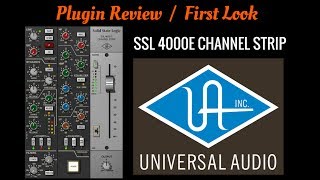
Universal Audio SSL4000E Channel Strip - Plugin review - HomeRecordingMadeEasy.com

Home Recording Made Easy
Reviews
Owner Insights
We analyzed real musician discussions from forums and Reddit to find what players love, question, and tweak about Universal Audio SSL E Channel Strip Plug-In.
Comparisons
-
UAD SSL is favored for drums and aggressive tones over Waves, Plugin Alliance, and SSL's own version, noted for its midrange magic and glue effect.
Source -
The Brainworx SSL is praised for its fast loading times and simplicity, but users often prefer the compression on the native SSL version.
Source -
Owners find that the Brainworx version lacks the depth and compression quality of the SSL Native and UAD versions, despite its affordability and ease of use.
Source
Software and compatibility
-
UAD's version now available natively, addressing previous concerns about DSP limitations with Apollo hardware.
Source -
Some users report needing to manually apply a coupon code during checkout to access native upgrade pricing, indicating potential issues with automated system notifications.
Source -
Users mention contacting support for recent purchases to potentially obtain complimentary updates, highlighting the importance of communication with customer service for favorable outcomes.
Source
Use cases and applications
-
The UAD SSL is preferred as a mixing tool over a Unison preamp, particularly effective for rhythm guitars and drums.
Source
User experience
-
Owners report difficulty using the plugin efficiently due to high DSP usage; it becomes impractical when paired with other DSP-heavy plugins.
Source -
While the UAD SSL E is favored for its accuracy, some users report that it can be too bright for their taste, requiring additional EQ adjustments.
Source -
Some users who only owned one of the UAD SSL plugins received both native versions for $10, suggesting inconsistencies in the upgrade pricing structure.
Source
Features and functionality
-
The UAD SSL maps to the UC1 controller, providing enhanced integration and control, though users hope for future Luna console and summing extensions.
Source -
SSL Native Channel Strip 2 offers zero latency, which is a notable advantage over Waves EV2 for those prioritizing real-time processing.
Source -
The UAD SSL E is noted for its brighter tone compared to other SSL emulations, which some users find advantageous for specific mixing needs.
Source
Value and pricing
-
SSL Native plugins frequently go on sale during holiday seasons, offering both the channel strip and bus compressor for around $50.
Source -
Owners express frustration over having to pay a fee for native versions, especially when they initially paid a premium for the UAD-2 plugins, feeling it's an unfair additional cost.
Source
5.0 out of 5
Based on 0 Reviews and 4 Ratings
Artist usage
Add artist

Used on "Hymn for the Weekend", as mentioned by A Head Full of Dreams co-producer Rik Simpson in this Sound on Sound article.
“The guitars have the Soundtoys PanMan to give them some movement, and also some corrective EQ from the Pro–Q 2, and the UAD SSL E Channel strip, which is one of my go–to plug–ins, because it sounds so similar to the original SSL, a desk I was brought up on. There’s also an eBow guitar hook at the end of the song that has the Wavesfactory TrackSpacer plug–in, which side–chains the guitar to the vocal, so it clears the space when the vocal is present.

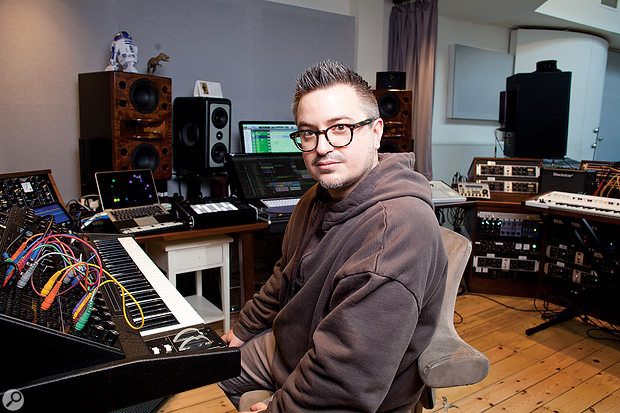
Used on "Hymn for the Weekend", as mentioned by A Head Full of Dreams co-producer Rik Simpson in this Sound on Sound article.
It was very important to get the development and arrangement of the vocals right. Many of the 45 tracks are effect tracks. There’s only one lead vocal track each for the verses [LV Verse], for the bridge [LV Bridge], and the choruses [LV Chorus], and then Chris sang a number of bridge and chorus vocal overdubs. The main verse vocal has the Avid Channel Strip, which is taking out some low end, an SPL TwinTube, which adds some saturation, the UBK1 compressor adding more crunch, and the UAD Fairchild 670 and SSL E Channel. I don’t use a great deal of compression from each unit. I will just tickle it a little bit with each one, and each one adds a different characteristic. I could just add a whole load of compression from one plug–in, but like this it doesn’t sound over–compressed. The Pro–Q 2 is, again, a high–pass filter. In the sends there’s a Waves H–Delay that I recorded elsewhere, and sends to a main D–Verb and two QL Spaces aux tracks. I have different reverbs and delays for each part of the song so that the vocal sound evolves during the song.
“The main chorus lead vocal has the FabFilter Pro–Q 2 EQ, the Waves Rennaissance Vox, again the UBK1, two instances of the FabFilter Pro–DS de–esser, two instances of the UAD Pultec EQP–1A, and the FabFilter Pro–MB multi–band compressor. I like the FabFilter de–esser. I am still trying to find the ultimate de–esser, because it’s quite a hard thing to do right. I have two because one is doing high top sibilance, and the other lower stuff around 2kHz. The sends on chorus lead vocal go to aux tracks with the Waves H–Delay, the FXpansion Bloom with a lush, wide stereo delay, a small chamber from the QL Spaces plug–in, a mono delay from the UAD Echoplex, and several other delays. The sends to the delays are all automated independently, with different words getting different delays.
“One thing of note is that there also is a ‘Hope House M80’ vocal track, recorded when Chris was still using the Telefunken M80, and it’s mixed in very low. There’s also a lead-vocal double that has ‘251’ marked, indicating that Chris was also using that mic. But the main vocals were recorded using the Soyuz. There are two tracks marked ‘251 Melo Lead’ and ‘251 Melo Double’, again mixed in low. ‘Melo’ stands for Melodyne, and these tracks are raised two semitones. They were recorded in a different key for a different version of the song, and detuning them added a certain alien quality to these vocals which we really liked. At the bottom of the session are the Beyoncé vocal tracks, on which I mainly used the SSL E Channel strip, UBK1, L2, SoundToys Echo Boy, Avid ModDelay and the QL Space.”


seen at 3:25 Uses this plugin to emulate going straight into a mixing desk instead of a guitar amp, like the funk guitarists from the 70s and 80s.
.jpg?v=1784733415)
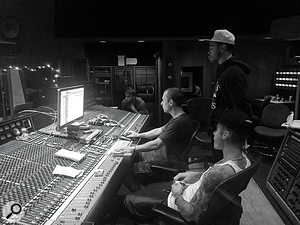
Used on Purpose, as stated by mix engineers Josh Gudwin and Andrew Wuepper in this May 2016 Sound on Sound interview about the mixing of the title track and others. An image of the settings for "JB COMP4.dp1.07" can be found here.
Gudwin picks out a few other interesting tracks, beginning with a vocal track named ‘vcls’. “That track contains a vocal sample that Blood made of Justin’s vocal. I’m just touching that with the LFO Tool for a bit of pumping, I take out some high frequencies with the Pro-Q 2, and then use the SoundToys Microshift for a slight pitch-shift/chorusing effect. ‘Sry1V’ below that is the vinyl sound in the track. ‘$JBU’ is the main lead vocal bus, on which I have the UAD 1176, Waves De-Esser, Manley Massive Passive, Metric Halo Channel Strip. The sends are to the generic aux tracks at the bottom of the sesion: verb, ping-pong delay, Dimension D. Below the lead vocal bus is the print track of a Bricasti outboard.”
Wuepper: “There are two tracks called ‘Bric’ around the main vocal bus; the one above is the print from the Bricasti effect that was used on the percussion, and the one below is the print of the Bricasti reverb on the vocal. Next are Josh’s vocal delays. Putting delays on audio snippets [ie. copying short vocal clips to new tracks and applying delays as inserts, rather than automating a send from the main vocal track] is a pretty interesting way of doing things. I’ve not seen anyone else do this, but it makes it easier for Josh to manipulate these delays and to go deeper into the effect. He can really fine tune the delay times and decay lengths and so on. Sometimes the feedback you get with plug-ins can act a little weird, and this approach allows him to have more control.”
Gudwin: “The five green tracks are all vocal throws and delays. I don’t like to automate delay throws via aux tracks. The top green track is the master track for the delays, ‘JB Throw All’, and it has a compressor and an SPL Vitalizer. The ‘1147’ delay track has the UAD Cooper Time Cube, with a quick ping-pong-y flutter delay that I use to widen, and the track called ‘1167’ has a basic eighth-note delay from the Echo Boy. The ‘A’ insert is Auto-Tune, but it’s not working on these tracks. When needed, our vocal tuning is normally done by Chris ‘Tek’ O’Ryan in Melodyne. I sometimes do it myself, if I have the time do it, in the stand-alone version.
“The blue vocal tracks below the vocal delay tracks are the main lead vocal comp tracks, and on many of them I have the UAD SSL Channel Strip, UAD LA-2A, and the Waves C6 multiband compressor, and sometimes also the Pro-Q 2 EQ. The ‘DLYP’ track has a delay pan effect, with the SoundToys Primal Tap delay and Panman auto-panner, SSL Channel Strip and the P&M Vinylizer. ‘White’ and ‘Master’ are printed reverbs recorded in two rooms at Henson. They are my main plug-in vocal reverbs, and the green tracks below are pitched with the Elastic Audio X-Form [in Pro Tools] and effected with the Waves H-Compressor for a pumping effect. I pitched the reverbs up an octave or two, and I mixed them in very low. The ‘PCM’ and ‘PC1’ tracks are prints from ping-pong delays from the Lexicon PCM42 outboard.
“Justin’s backing vocal tracks all go to the group track called ‘JBG1’, on which I have a Waves De-esser, an SSL Channel and the C6 multiband compressor, plus there are a number of delays and reverbs via the sends. Trevon’s backing vocals all go to ‘JBTR’, which has similar effects. I wanted to fill the song up a bit more, and sometimes it’s not the most enjoyable process for an artist to sing all these background parts. Plus a different vocalist will add a different texture to the song, as long as it complements the lead vocal and the record. As I mentioned, Julia added her vocals during the final mix in New York, and her group track also has the De-esser, SSl Channel and C6. Right at the bottom are some effects tracks, with the Dimension D and group delay throws, and so on.
(...) 'Love Yourself'
(...) Next are Justin’s vocals, with I overdubbed in New York. Almost all the regular vocal tracks have the UAD SSL Channel, LA2 and the Waves C6 multiband compressor. These three plug-ins work great on his vocals, so I tend to stick with them. Each of the vocal tracks has slightly different settings from them. They all go to Justin’s lead vocal bus above them, which has the FabFilter Pro-DS de-esser and the Pro-2 EQ. Justin’s lead vocals also go through the Bricasti, and the effect is printed. My own four backing vocals went through a vocal bus on which I had the SSL Channel, and a compressor, but they didn’t do much, nor did the sends. These vocals are very much in the background, I just wanted to add some texture really quickly. Finally, at the top of the session everything went through a Master track, on which I had the UAD SSL channel, mainly for compression set to mid-attack and auto-release — without drums you don’t need the slow attack and quick release — a Massey EQ, boosting 100Hz and 16kHz, a FabFilter Pro-L for level, and the Sonnox Oxford Inflator to add some sheen.”
'What Do You Mean?'
(...) “There were a few more complicated vocal effects, like the ‘JG FX’ track, on which I used the Vitalizer doing some spatial expanding, a UAD Fatso to thicken it up, and I then cut some low mids with an EQ, and used a de-esser. This effect track gave more depth to the vocal and made him sound more like an angel! Underneath that are two ‘Radio’ tracks [which sound like they could have come straight from Peter Gabriel’s ’80s Fairlight experiments]. I used Auto-Tune to pitch the vocals up, and then put on a SoundToys AlterBoy, which changed the formant, and then I’m filtering 350Hz and below.
“Below the ‘radio’ tracks are all my vocal delay tracks, in green as usual, with the bus for all delay throws at the top. One delay track, ‘Splaater’, is a flutter delay with Auto-Tune and the Cooper Time Cube, and the other two have the Waves H-Delay and SoundToys Echo Boy. They’re both quarter-note delays, but with different feels. Below the delay tracks are some ad lib tracks, and all the actual lead vocals, pulled out over several tracks. Most of them have my regular trio of UAD SSL Channel, LA2 and Waves C6 plug-ins, and all vocals are sent to the ‘JB Buss’, on which I have the FabFilter DS de-esser, a Manley EQ doing light cuts at 330Hz, 560Hz and 3kHz, and then a whole bunch of sends to my regular aux tracks at the bottom: a hall reverb, a plate reverb, a light quarter-inch delay, a light ping-pong delay and a Dimension D.
“Further down are four Justin backing vocal tracks, which go to a bus above them, ‘JBG1’, on which I have the SSL Channel, boosting highs and cutting lows and doing some heavy compression, a UAD 33609 compressor, and then the Waves Enigma [phaser/flanger] on a Mutron setting, adding some sweeping sounds. The sends are once again hall and plate reverbs, a quarter-note and a ping-pong delay and a UAD Roland Dimension D. Once Justin had decided to go with my rough mix, I spent another half hour on it, doing some EQ adjustments, and that was it.”

Used for "Hymn for the Weekend", as mentioned by A Head Full of Dreams co-producer Rik Simpson in this Sound on Sound article.
Drums: FabFilter Pro–Q 2 & Pro–G; UA Little Labs VOG; Brainworx BX_refinement; Kush Audio UBK1; UA Maag EQ4; Avid D-Verb; UA SSL E Channel.

Used for Beyoncé's feature on Coldplay's "Hymn for the Weekend", as mentioned by A Head Full of Dreams co-producer Rik Simpson in this Sound on Sound article.
At the bottom of the session are the Beyoncé vocal tracks, on which I mainly used the SSL E Channel strip, UBK1, L2, SoundToys Echo Boy, Avid ModDelay and the QL Space.”

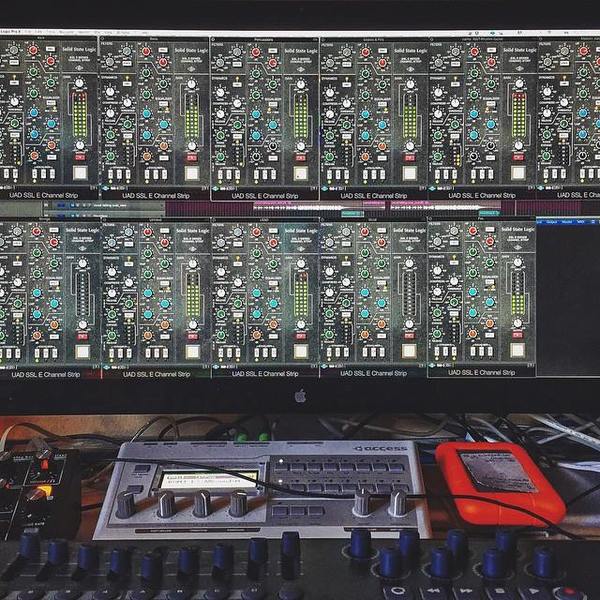
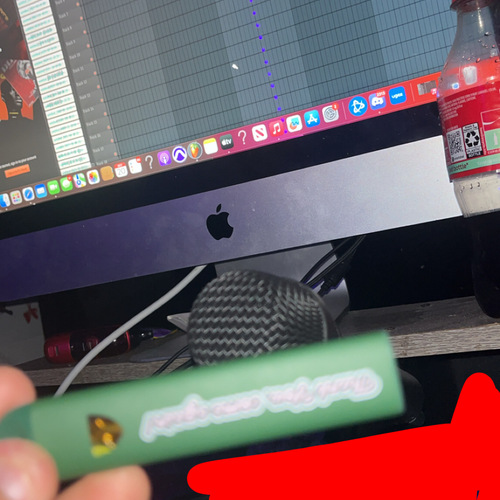
in this picture you can see a lot of SSL E running on Davids monitor


Used for the vocals on "Intro", as stated by Kirk mix engineer Kevin "Black Pearl" McCloskey in this December 2019 Sound on Sound interview. An image of the settings can be found here.
"Typically, my processing on vocals here is EQ-compression, EQ-compression, EQ-compression and so on. When vocals are recorded well, I don't have to do that, but in this case, because of the hotel room sound, I had to do many corrections. Because speed was of the essence, I just added more plug-ins as I encountered issues — I did not have the time to go into settings of plug-ins already there. The plug-ins on the vocal busses, with a number of variations, start with the Waves DeEsser, and then the UAD SSL-E Channel strip, thinning things out, and the Waves CLA76 knocking off 3dB to flatten peaks, as they did not track with a compressor. I also use the Avid EQ7, and the Waves MV2 compressor, which acts more like an expander."

The guitars have the Soundtoys PanMan to give them some movement, and also some corrective EQ from the Pro–Q 2, and the UAD SSL E Channel strip, which is one of my go–to plug–ins, because it sounds so similar to the original SSL


Album Usage
The Universal Audio SSL E Channel Strip Plug-In has been featured on the following albums:
Genre Usage
Based on how artists on Equipboard use this gear, it is most commonly found in the following genres.
Used With
Based on how musicians on Equipboard use Universal Audio SSL E Channel Strip Plug-In, it is most commonly used with the following gear.



-s.webp?v=1784815476)


Community setups
Show yoursSimilar
Add recommendation1 alternative for Universal Audio SSL E Channel Strip Plug-In, curated by the Equipboard community.

$39.99 - $172.00
More Universal Audio Channel Strip Plugins

$38.00 - $39.00
in Channel Strip Plugins Rank


$39.00 - $149.00
in Channel Strip Plugins Rank


$38.00 - $99.00
in Channel Strip Plugins Rank

$28.00 - $29.00
in Channel Strip Plugins Rank

$39.00
in Channel Strip Plugins Rank

$37.00 - $149.00
in Channel Strip Plugins Rank

$39.00 - $149.00
in Channel Strip Plugins Rank


in Channel Strip Plugins Rank


in Channel Strip Plugins Rank

$29.00 - $199.00

$29.00 - $49.00


$37.00 - $149.00
in Channel Strip Plugins Rank


.jpg?v=1784758771)
$39.99 - $172.00
in Channel Strip Plugins Rank


$79.00 - $399.00
in Channel Strip Plugins Rank


$33.00 - $34.99
in Channel Strip Plugins Rank


$37.00 - $39.99
in Channel Strip Plugins Rank


$91.00 - $249.00
in Channel Strip Plugins Rank


$33.00 - $34.99
in Channel Strip Plugins Rank


$39.99 - $40.00
in Channel Strip Plugins Rank


$49.00 - $216.00
in Channel Strip Plugins Rank


$39.99 - $149.00
in Channel Strip Plugins Rank


$39.99 - $172.00
in Channel Strip Plugins Rank

$39.99 - $172.00
in Channel Strip Plugins Rank

$99.00 - $169.00
in Channel Strip Plugins Rank


$37.00 - $79.00
in Channel Strip Plugins Rank


$99.00 - $199.99
in Channel Strip Plugins Rank

$37.00 - $39.99
in Channel Strip Plugins Rank


$19.99 - $159.00
in Channel Strip Plugins Rank

$19.99 - $75.00
in Channel Strip Plugins Rank


$37.00 - $39.99
in Channel Strip Plugins Rank

$33.00 - $34.99
in Channel Strip Plugins Rank


$29.99 - $34.99
in Channel Strip Plugins Rank


$29.99 - $34.99
in Channel Strip Plugins Rank


$181.00 - $199.00
in Channel Strip Plugins Rank
Accessories & Related Items


Gear Guides





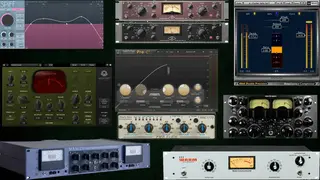


Most Popular Channel Strip Plugins
Most Popular Brands