This page about Avid D-Verb is a stub. You can help improve it:


Pricing and availability


* Product prices and availability are updated by Equipboard every 24hrs and are subject to change. Equipboard may receive compensation for purchases made at participating retailers linked on this site. This compensation does not affect what products or prices are displayed, or the order of prices listed. For more information, please refer to our affiliate disclosure.
Description
Elevate your audio production with the Avid D-Verb, a versatile reverb plugin designed to enhance any musical track with depth and dimension. Whether you're working on a lush orchestral piece or a tight rock mix, the D-Verb offers a variety of reverb types to suit your creative needs. This plugin is crafted to integrate seamlessly within your digital audio workstation, ensuring that your workflow remains uninterrupted as you explore its vast capabilities.
The Avid D-Verb is renowned for its simplicity and efficiency, providing a user-friendly interface that allows quick adjustments and fine-tuning. With options ranging from halls and chambers to plates and non-linear effects, the D-Verb ensures that you have the right atmosphere for every project. Its low-latency operation makes it an ideal choice for both studio and live performance settings, keeping your sound crisp and clear without any delay.
Perfect for both beginners and seasoned audio engineers, the D-Verb is compatible with various formats and works smoothly with Avid’s Pro Tools software. Its lightweight design ensures that it won’t bog down your system, allowing more freedom to layer multiple instances and explore complex soundscapes without performance issues.
Key Features:
- Supports multiple reverb types: halls, rooms, plates, and more
- Low-latency operation suitable for live and studio use
- User-friendly interface for quick adjustments
- Seamlessly integrates with Avid Pro Tools
- Lightweight design ensures efficient performance
- Compatible with AAX, VST, and AU formats


Reviews
Owner Insights
We analyzed real musician discussions from forums and Reddit to find what players love, question, and tweak about Avid D-Verb.
Features and functionality
-
D-Verb is known for its bright, mid-rangey default setting that allows it to cut through mixes effectively, especially in pop music contexts.
Source -
It's noted for its utility in recording situations where low latency is critical, often used to provide vocalists with reverb during tracking sessions.
Source -
D-Verb defaults to -4 dB gain, which users often adjust to 0 dB for consistent volume levels when used directly on the mix bus.
Source -
The default send levels in setups using D-Verb are typically set to -inf, which may need adjustment depending on the desired mix balance.
Source
Comparisons
-
D-Verb's simplicity and ability to sit well in dense mixes is likened to simpler reverbs, offering contrast to richer, more complex reverb options like the Lexicon 480.
Source
User experience
-
Long-time users appreciate its low CPU usage and ease of dialing in, making it a go-to reverb plugin for quick and effective results.
Source -
Despite its reputation as a stock plugin, D-Verb has been part of the pop music sound for decades, contributing to its ongoing popularity in professional settings.
Source
Use cases and applications
-
The plugin is frequently used in non-linear mode to subtly push elements back in a mix without overwhelming them with reverb.
Source -
It's common to use D-Verb on an aux send, maintaining the dry signal's amplitude, and thus adding a wet signal to the overall output.
Source -
Some mixing engineers, like Andrew Wade, apply D-Verb directly on the lead vocal mix bus, adjusting the default -4 dB gain to 0 dB for optimal results.
Source
Critic Reviews
Based on 0 Reviews and 0 Ratings
Artist usage
Add artist
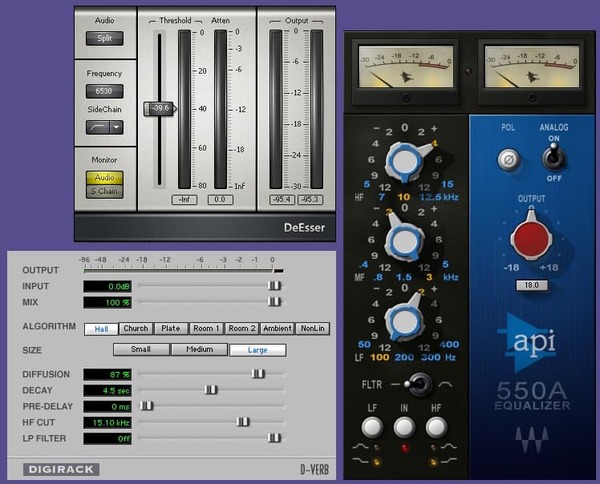
Used on vocals for Morning Phase, as stated in this May 4, 2014 Audio Technology interview with mix engineer Tom Elmhirst.
Elmhirst: “I love the Orban plug-in, and now also have a real Orban. But I didn’t use a lot of spring reverb on this album, because it had a different kind of sound. As I said earlier, the D-Verb Mark 1 was quite a big part of this record. Beck is a big fan of that plug-in, as am I. It’s very transparent. I probably EQ-ed it a bit on the way back in, and particularly on the vocals I used very long reverb settings, in some cases as long as 11 to 12 seconds. The other two plug-ins I used on the vocals are the Waves De-esser and a bit of brightening from the Waves API 550a.”

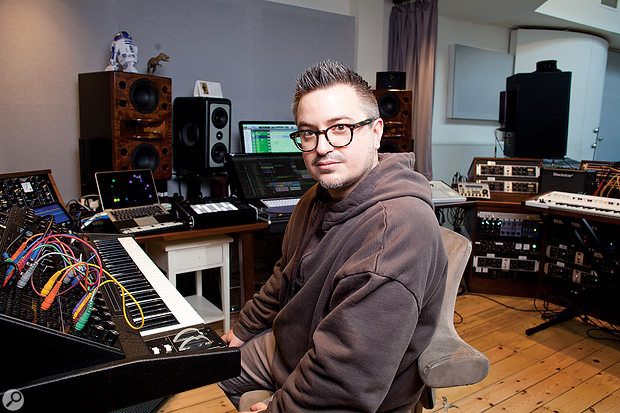
Used for "Hymn for the Weekend", as mentioned by A Head Full of Dreams co-producer Rik Simpson in this Sound on Sound article.
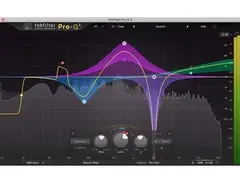
Drums: FabFilter Pro–Q 2 & Pro–G; UA Little Labs VOG; Brainworx BX_refinement; Kush Audio UBK1; UA Maag EQ4; Avid D-Verb; UA SSL E Channel.


Used on "Apeshit", as stated by producer Stuart White in this September 2018 Sound on Sound interview.
The first four aux tracks feature SoundToys effects, namely Little Microshift, two EchoBoy delays, and a delay from the Little PrimalTap. Next are a Hall Reverb aux and a Church Reverb aux, both using Waves’ RVerb, an EMT plate from Audio Ease’s Altiverb, four aux tracks with the Waves H-Delay and various other plug-ins on them as well, and four more reverb auxes with the Avid Revibe II, two Avid D-Verbs and another RVerb.
White: “I use the Little Microshift in pretty much every mix, with the left-right micro pitch-shift effect that’s similar to the classic effect in the Eventide H3000 shift where you pitch one side down six cents and one side up six cents to create width. It’s a good way to get your vocals wider without them being out of phase. It thickens up vocals, and is kind of like a doubler. I do quite a lot of filtering on some of the EchoBoy delays, for example with the Waves REQ, and I am adding colour with the SoundToys Devil-Loc, which is great if you want to colour the delay so it is separate from the main vocal, and compress it with the UAD LA3A and mix that in to taste.”
(...) Beyoncé’s lead vocal tracks consist of three aux tracks, four ‘dirty’ and eight ‘clean’ audio tracks. The audio tracks only have the EQ3 on the inserts and a few of them have a send to the Church Reverb. All White’s processing is done on the three aux tracks. “All lead vocals are sent to the ‘B Aux’ track and the ‘B Parra Aux’ tracks. On the former I have the McDSP DS 555 de-esser. I use the Waves de-esser the most, but in this particular track, because I wanted to compress her voice really hard, I felt that the 555 would work the best. I am rolling off until 6144Hz into what it is detecting; it’s like a side-chain filter. The FabFilter Pro-DS is doing a little more gentle look-ahead de-essing.
“After that there’s some pretty heavy EQ from the EQ3, with a high-pass at 142Hz, a 9dB cut at 244Hz and a 2dB cut at 3kHz. My cut at 244Hz is because she is singing in this husky, low voice, so there’s not a lot of energy in that. I get the energy from the RComp compression, and the EQs, including from the SSL E-Channel, are there to make her sit in the track, rather than making it sound filtered. I love the RComp, mainly because it doesn’t sound like compression to me. The SSL E-Channel adds a bit more compression, and the [Crane Song] Phoenix II Tape Emulation is really cool because while it doesn’t actually sound like tape, it smoothes out transients in a signal just like much analogue equipment does. It enables me to get a fatter vocal sound that again makes the vocal sit in the mix. The final EQ3 has a notch at 3.2kHz to take out some harshness. I also have sends to the Verb aux track, which are the D-Verb and [Waves] H-Reverb, and the Delay 1-4 aux, with the EchoBoy.
The other aux track, ‘B Parra Aux’, is a parallel compression track, with the RCompressor and the CLA 76, which I mixed in low. Both these aux tracks then go to the ‘LD ALL Aux’, on which I’m doing some more surgery with the McDSP AE400 [dynamic EQ], which allows you to set a threshold, just like on a compressor. It’s like turning a volume knob down on a frequency the moment it gets out of control. Finally, there’s the Waves C4, for some control, to keep the vocal even. This track has a lot of energy, so this is an example of using compression for energy, mood and attitude. I also worked a long time to get the compression on Bey’s breaths to pump on the beat. I wanted her breaths to be another percussive element in the track, and getting the attack and release on the compressor right was key to getting that feel and pumping effect.”
Five of the 22 Beyoncé ad lib, backing and harmony vocals below her lead vocals also go to the above-mentioned aux tracks, while the rest have their own signal chains. These audio tracks are sent to several aux tracks, often with tons of plug-ins, and all aux vocal tracks in the end get sent to the ‘Voc All’ group aux right at the top of the session, which has an RCompressor, with ratio at 10:1. There are more group aux tracks, like ‘TrackAux’, ‘FX Voc Aux’, ‘FX’ and ‘Music Aux’, which all get sent to the ‘All Aux’. This in turn gets sent to the ‘no limiter’ mix print track, and finally there’s a Stereo Master track.


Used on "APESHIT", as stated by producer Stuart White in this September 2018 Sound on Sound interview.
The first four aux tracks feature SoundToys effects, namely Little Microshift, two EchoBoy delays, and a delay from the Little PrimalTap. Next are a Hall Reverb aux and a Church Reverb aux, both using Waves’ RVerb, an EMT plate from Audio Ease’s Altiverb, four aux tracks with the Waves H-Delay and various other plug-ins on them as well, and four more reverb auxes with the Avid Revibe II, two Avid D-Verbs and another RVerb.
White: “I use the Little Microshift in pretty much every mix, with the left-right micro pitch-shift effect that’s similar to the classic effect in the Eventide H3000 shift where you pitch one side down six cents and one side up six cents to create width. It’s a good way to get your vocals wider without them being out of phase. It thickens up vocals, and is kind of like a doubler. I do quite a lot of filtering on some of the EchoBoy delays, for example with the Waves REQ, and I am adding colour with the SoundToys Devil-Loc, which is great if you want to colour the delay so it is separate from the main vocal, and compress it with the UAD LA3A and mix that in to taste.”
(...) Jay-Z’s part consists of just two tracks, one lead, and one ad-lib, with an additional ‘reverse’ track, and a ‘jay clean’ track. White: “The main lead vocal track has the SSL E0-channel, Waves C4 multiband compressor for some control, FabFilter Pro-Q2 EQ, with a few notches, and McDSP AE400. Where Jay raps ‘Tell the Grammy’s fuck that 0 for 8 shit / have you ever seen a crowd goin’ apeshit?’, you can hear some stuff in the background, which is another example of me adding flair and energy. That actually comes from the third ‘Voice Sample’ track further up the session, on which I have some automated plug-ins, the ReVibe, Waves S1 Imager, and filter sweep from the EQ3. It’s subtle, but it gives you a little ear candy.”


Talking about reverb in the coontrol freak section, he says "I actually use a very regular reverb, the D-Verb [Avid's bundled plug-in]."


Used on SZA's vocals for "All the Stars", as stated by producer Matt Schaeffer in this May 2018 Sound on Sound interview.
There are 12 SZA vocal audio tracks in total: two for the main hook, one second verse lead track, and nine verse backing tracks, which in fact provide emphasis and overdubs of single words. All SZA audio tracks have the Antares Auto-Tune 8.1 plug-in, the two hook tracks each also have the FabFilter Pro-Q2 equaliser, and the main SZA verse track also has a de-esser, while the backing vocals have two instances of the Waves RVerb and one of the same company’s H-Delay. Apart from Auto-Tune, most of the processing is done on the ‘SZA ?’ aux, to which all SZA audio tracks are sent.
Schaeffer: “The inserts of the sum track for SZA’s vocals consist of the EQ3 seven-band, Waves RComp, UAD Pultec EQP1A, UAD 1176E, Waves De-Esser, UAD LA2A, another Waves De-Esser, the Pro-Q2, yet another Waves De-Esser and the SoundToys MicroShift. The De-Essers affect 11400Hz, 15032Hz and 2000Hz respectively. I like stacking de-essers set to different frequencies. It works like narrow multiband compression. Sometimes I will in fact use a multiband compressor, like the Waves C4, but if the vocals have very specific harsh frequencies, I prefer to use several de-essers. They also are helpful as I like boosting high frequencies in vocals; here, the EQP1A boosts 16kHz. The EQ3 has a high-pass at 216Hz and cuts at 695Hz, and the Q2 lowers the high end to some degree. When a frequency bothers me, I usually sweep through [with a band set temporarily to boost] to find the frequency and then I cut. The MicroShift provides a little extra width and a slight ambience with the delay parameter, without actually making the vocal sound too stereo.
“The sends go to auxes called ‘SZA Verb’ and ‘DVerb’, both of which have the DVerb and EQ3 seven-band, two ‘SZA Delays’ with the Waves H-Delay, and the ‘SZA Chamber’, which has the Waves RVerb and again the EQ3 seven-band. I put an EQ after the reverb, because I don’t like too much low end in reverb. You get a cleaner sound by taking it out, and you make space for actual instruments to take up that spectrum. The delays are both set to eighth note, and one of them is set to ping-pong delay and also is automated to only come in on certain places.”


Used for vocals on "Sum 2 Prove", as stated by mix engineer Tillie in this June 2020 Sound on Sound interview.
"All Lil Baby's vocals go through an aux track," says Tillie, "on which I have the Waves DeEsser, Avid EQ3 7-band, Waves SSL Channel and Compressor, Waves RCompressor, UAD J37 and the FabFilter Pro‑DS de-esser. There are two sends to reverb aux tracks and one to a half–note delay. The Waves DeEsser is there because I felt the vocal was too bright. The EQ3 has a pretty involved curve, with a low cut at 69.8Hz, notches at 184.7Hz and 425.2Hz, and me adding at 2kHz and high end at 5.37kHz, because I wanted some more presence. The SSL Compressor is not doing much, it's just there for vibe. I do the actual compression with the RCompressor.
"The J37 adds analogue vibe — it's one of my favourite plug–ins on vocals. It really brings them to life. I did all the heavy lifting with the first de-esser, and the Pro‑DS is just to catch anything that's the result of the EQ curve that I added. There's also a Vocal Parallel aux with the Softube Tube‑Tech CL‑1B to add more body and a bit of beef. I think that compressor just makes everything sound better. It gives you a different tonal character.
"The first send goes to the Verb aux track, which has the DVerb, set to a Large Hall, and an EQ3 7-band, taking out low end below 100Hz. The second send goes to the Verb 2 aux, with the Waves RVerb, the Waves REQ, again rolling off low end, and the Waves S1 Stereo Imager. I use the Imager on my reverbs probably 75 percent of the time. My style of mixing is very wide, so I tend to spread out my instruments and my effects, and I place things in different places in the stereo mix. I always like to add width and depth, so you can feel things and they are not necessarily right up in your face. But I leave the vocals to be the centre point of the mix."

Used for Quavo and Offest's features on Beyoncé and Jay-Z's "Apeshit", as stated by producer Stuart White in this September 2018 Sound on Sound interview. An image of the settings can be found here.
The first four aux tracks feature SoundToys effects, namely Little Microshift, two EchoBoy delays, and a delay from the Little PrimalTap. Next are a Hall Reverb aux and a Church Reverb aux, both using Waves’ RVerb, an EMT plate from Audio Ease’s Altiverb, four aux tracks with the Waves H-Delay and various other plug-ins on them as well, and four more reverb auxes with the Avid Revibe II, two Avid D-Verbs and another RVerb.
White: “I use the Little Microshift in pretty much every mix, with the left-right micro pitch-shift effect that’s similar to the classic effect in the Eventide H3000 shift where you pitch one side down six cents and one side up six cents to create width. It’s a good way to get your vocals wider without them being out of phase. It thickens up vocals, and is kind of like a doubler. I do quite a lot of filtering on some of the EchoBoy delays, for example with the Waves REQ, and I am adding colour with the SoundToys Devil-Loc, which is great if you want to colour the delay so it is separate from the main vocal, and compress it with the UAD LA3A and mix that in to taste.”
(...) “The Migos vocals came in as seven audio tracks, with the Avid D-Verb on each of them. Putting a D-Verb on a track before EQ is not something I normally do, but it sounded great. So I adjusted them a bit, but otherwise left them as they were. The tracks also came in with the Aux track above, and the EQ3, with a high pass at 60Hz and notches at 430Hz and 1.41kHz and a high boost, the Waves API 2500 compressor, the RComp, the Waves Q10 EQ, following a slightly similar curve to the EQ3, the Waves De-esser, the Waves Aphex Aural Exciter, and the Avid Dyn3 expander/gate. I added the EQ3, with another high-pass filter at 144Hz, and the RComp, with a ratio of 10:1.”

Used for vocals on "ESSKEETIT", as outlined by producer CBMIX in this May 31, 2018 Genius Deconstructed interview at 4:05.
So, the vocals, I actually recorded them through an aux track. The plugin chain for the vocals is the RComp, SSL Channel Strip, and a de-esser [pulls up Dynamics III De-esser]. There's literally, absolutely no EQ on the vocal at all. It was just a proper vocal tone, I had the mic set up right, I had him on the mic right. I'll solo the lead vocal of the hook. That's dry. With the delay and reverb, it kind of makes it a little more spacey, but it's very low and very subtle. Here's my delay setting. It's a H-Delay. Super low feedback, super filtered. My reverb setting is just a D-Verb, 1.7 decay time. I put a one-band EQ to take out some of the mud of the reverb afterwards. Used for vocals on "ESSKEETIT", as outlined by producer CBMIX in this May 31, 2018 Genius Deconstructed interview at 4:05.
So, the vocals, I actually recorded them through an aux track. The plugin chain for the vocals is the RComp, SSL Channel Strip, and a de-esser [pulls up Dynamics III De-esser]. There's literally, absolutely no EQ on the vocal at all. It was just a proper vocal tone, I had the mic set up right, I had him on the mic right. I'll solo the lead vocal of the hook. That's dry. With the delay and reverb, it kind of makes it a little more spacey, but it's very low and very subtle. Here's my delay setting. It's a H-Delay. Super low feedback, super filtered. My reverb setting is just a D-Verb, 1.7 decay time. I put a one-band EQ to take out some of the mud of the reverb afterwards.

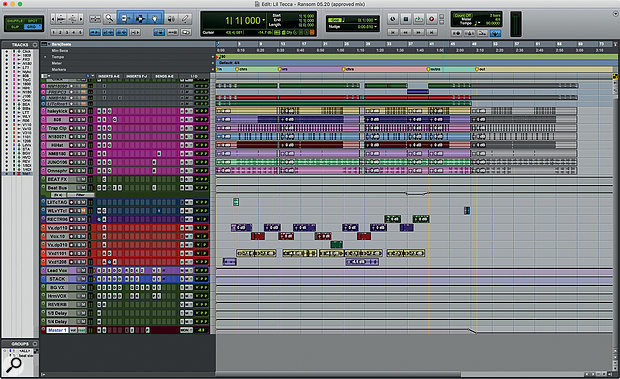
Used on vocals for "Ransom", as mentioned by mix engineer Joseph Colmenero in this November 2019 Sound on Sound interview.
"Many of the plug-ins on the vocal tracks came with the session. The vocal audio tracks all have Antares Auto-Tune Pro because the session came with Auto-Tune Live, and I didn't have my licence with me, so I put Auto-Tune Pro on. Without seeing the Live plug-in I had to use my ears to make sure that the settings were exactly right. They had recorded Tecca's vocals with Auto-Tune on, playing Auto-Tune like an instrument.
"All audio tracks go to the LeadVox bus, on which there is a stack of plug-ins. Again many of them came with the session. The chain starts with the Waves Q6 EQ, the FabFilter Pro-C2 compressor, then a Waves SSL Channel, two Waves De-Essers, a Waves RVox used as a noise gate, the SoundToys Decapitator for vibe, and a Waves C4 to bang down some peak frequencies. There's a track with distant ad-libs that goes to the Harmony Vox aux, which has some similar plug-ins, and adds a D-Verb for some extra reverb. There are sends on the vocal busses to the reverb aux, with the Waves RVerb, and delay quarter-note aux, with the Waves H-Delay. I also have the Avid EQ7 before the reverb, to take out the low end and high end. You don't want to have esses all over your reverb. The other two aux tracks that I did not use are part of the producer's template."


Used on Cardi B's vocals for "Bodak Yellow", as mentioned by mix engineer Evan LaRay in this February 2018 Sound on Sound interview.
In his mix of ‘Bodak Yellow’, Evan LaRay used almost identical vocal chains on two auxiliary busses. The ‘Vox 1’ chain includes FabFilter’s Pro-DS de-esser and Waves’ C4 multiband compressor, plus the Waves CLA Vocals plug-in and SoundToys’ Decapitator saturation processor.
The main ‘Hook’ and ‘Verse’ vocal tracks have similar plug-in chains, incorporating the EQ3 seven-band, Waves CLA-76 and Waves De-esser, though the ‘Hook’ also has FabFilter’s Timeless 2 delay. LaRay explains, “The EQ on the ‘Hook’ has a high-pass, around 100Hz, and I’m also cutting 3dB at 300Hz, because the vocal sounded a bit muddy, and again 3dB at 4kHz, because there was a piercing frequency there. The CLA keeps the peaks in check, and the de-esser again takes some higher frequencies out, at 4270Hz, and the Timeless is another favourite plug-in. I think in general the FabFilter plug-ins are extremely dope. I wanted the ‘Hook’ vocal to stand out from the ‘Verse’ vocal, so I used a stereo delay preset, and then tweaked that. The presets on the FabFilter plug-ins are pretty good: you just run through all of them and then choose the best one. In this case I lowered the width and the wet value of the stereo delay preset, and that sounded good and gave the hook its own space. The three plug-ins on the ‘Verse’ track do pretty much the same.
“The ‘Inout’ tracks that are below the ‘Hook’ and the ‘Verse’ are vocal doubles. They are words or lines we use for emphasis and additional power on these lines and words. They come from one of her original vocal takes, which I just cut and cleaned up. Both ‘Inout’ tracks have the Waves RCompressor, just containing these words and lines so they don’t overwhelm the ‘Hook’ or the ‘Verse’ vocal, and then the FabFilter Pro-Q2, taking out some high frequencies, again to make sure it doesn’t clash with the leads, and also cutting below 200Hz. And there’s a delay on these tracks to put them in a slightly different space from the lead vocal tracks.
“In addition to the two ‘Inout’ tracks, both the ‘Hook’ and the ‘Verse’ tracks are also accompanied by an ‘Ad Libs’ track, which were some ad libs Cardi had recorded with Mike over at Krematorium. Mike had also set up a separate aux track for these ad libs, which is ‘Vox2’, and I liked that and kept two of the plug-ins he had on that: the [Avid] Sansamp for some distortion and the SoundToys Panman. I then added the D-Verb and the [Waves] CLA Vocals. I adore the CLA Vocals. I use it on every track I work on. When I don’t use it, the vocals sound completely different. I’d love to know what exactly it does! Finally, the inserts have the Waves L1, just to control the peaks.
“The other tracks — ‘EXF1’, ‘EXF2’, ‘EXF3’ and ‘EXF4’, are because I prefer to create a new track if I want to have a specific effect on specific words or phrases. I prefer doing that to automating the effects on a track. Automation is great, but I tend to only do volume automation. So I copy audio to another track, and then put the effect on that, and in this case I created four different effects tracks with four different delays. ‘EFX1’ is the main one, and has the same three plug-ins as the Verse tracks — EQ3 three-band, CLA76 and Waves De-esser — just with the EQ3 cutting more of the high frequencies. Then there’s an eighth-note ping-pong delay from the Waves H-Delay, and then a D-Verb set to ‘hall’ with 7s decay and a 15ms pre-delay. ‘EFX2’ has another H-Delay delay, ‘EFX3’ the Timeless 2 delay, and ‘EFX4’ again has the H-Delay plus a D-Verb.”
All the main vocal audio tracks go to LaRay’s ‘Vox1’ aux group track. This, he explains, has “A FabFilter Pro-DS de-esser, then the Waves RCompressor controlling the peaks, the Waves C4 multiband compressor boosting the high end and containing the lows in her voice, so it doesn’t cut through too much, and Waves CLA Vocals. Again, it’s really making my vocals sound good. I push the Pitch fader to stereo, spank it on the compressor, also push up the treble to brighten it up, turn the reverb down to ‘tight’, and lower the delay by 9dB because my own quarter delay is my main vocal delay, and it sounds great. There’s also a SoundToys Decapitator, to add more harmonic distortion, and then there’s the Waves RVox. That was supposed to be the final plug-in on the insert, but then I realised the vocal was still peaking too much once she began rapping loudly, so I put on the L1 [limiter] to control that.”
The ‘special sauce’ in Evan LaRay’s mixes comes from a parallel aux channel containing a blend of compression, saturation, EQ and other processors. Key ingredients are Waves’ PuigChild compressor and PuigTech equaliser.
The ‘Vox1’ and ‘Vox2’ tracks also each have a Trim plug-in on an insert, and sends to the ‘Verb’ aux and to the ‘ELR’ (LaRay’s initials) track. “I put the Trim on all my tracks at the end of the vocals, and at the end of the beat, because the vocals actually began distorting in places. These two tracks were too hot, and I wanted to make sure they had a good level before going to the ‘Sub Print’ track. I have the ‘ELR’ aux track in every session. It’s most of all parallel compression, but I also always try out new things with distortion, exciters and things like that, and I label that ‘ELR’. In this case it really is the ‘ELR’ track that makes the vocals cut through the mix.
“The compression on the ‘ELR’ track comes from the Waves PuigChild 670, which is a great compressor, and it’s compressing a lot, so the vocal stays right there in the middle. The signal is then going to the PuigTech EQP-1A, which is boosting some low end to add some warmth to the vocals, and some 5kHz, and then the Waves Aphex Vintage Aural Exciter, set to AX Mix 6, for some added crispness and clarity, then the EQ3 seven-band to control the low mids, and another De-Esser cutting 4398Hz, to finalise the vocal sound. The L1 also helps keep the vocals in the same place. Finally, the ‘Verb’ send on the ‘Vox1’ and ‘Vox2’ tracks goes to the ‘Verb’ aux, which has the Waves RVerb, and that pretty much glues everything together.”

Used for Quavo and Offest's features on Beyoncé and Jay-Z's "Apeshit", as stated by producer Stuart White in this September 2018 Sound on Sound interview. An image of the settings can be found here.
The first four aux tracks feature SoundToys effects, namely Little Microshift, two EchoBoy delays, and a delay from the Little PrimalTap. Next are a Hall Reverb aux and a Church Reverb aux, both using Waves’ RVerb, an EMT plate from Audio Ease’s Altiverb, four aux tracks with the Waves H-Delay and various other plug-ins on them as well, and four more reverb auxes with the Avid Revibe II, two Avid D-Verbs and another RVerb.
White: “I use the Little Microshift in pretty much every mix, with the left-right micro pitch-shift effect that’s similar to the classic effect in the Eventide H3000 shift where you pitch one side down six cents and one side up six cents to create width. It’s a good way to get your vocals wider without them being out of phase. It thickens up vocals, and is kind of like a doubler. I do quite a lot of filtering on some of the EchoBoy delays, for example with the Waves REQ, and I am adding colour with the SoundToys Devil-Loc, which is great if you want to colour the delay so it is separate from the main vocal, and compress it with the UAD LA3A and mix that in to taste.”
(...) “The Migos vocals came in as seven audio tracks, with the Avid D-Verb on each of them. Putting a D-Verb on a track before EQ is not something I normally do, but it sounded great. So I adjusted them a bit, but otherwise left them as they were. The tracks also came in with the Aux track above, and the EQ3, with a high pass at 60Hz and notches at 430Hz and 1.41kHz and a high boost, the Waves API 2500 compressor, the RComp, the Waves Q10 EQ, following a slightly similar curve to the EQ3, the Waves De-esser, the Waves Aphex Aural Exciter, and the Avid Dyn3 expander/gate. I added the EQ3, with another high-pass filter at 144Hz, and the RComp, with a ratio of 10:1.”
Album Usage
The Avid D-Verb has been featured on the following albums:
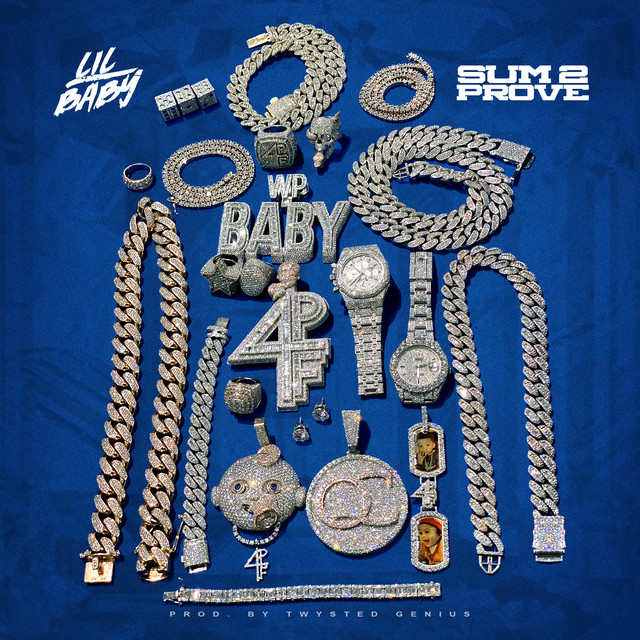
Sum 2 Prove
Lil Baby (2020)

Old Town Road (Remix)
Billy Ray Cyrus & Lil Nas X & Mason Ramsey (2019)

We Love You Tecca
Lil Tecca (2019)
Black Panther The Album Music From And Inspired By
Kendrick Lamar & SZA (2018)
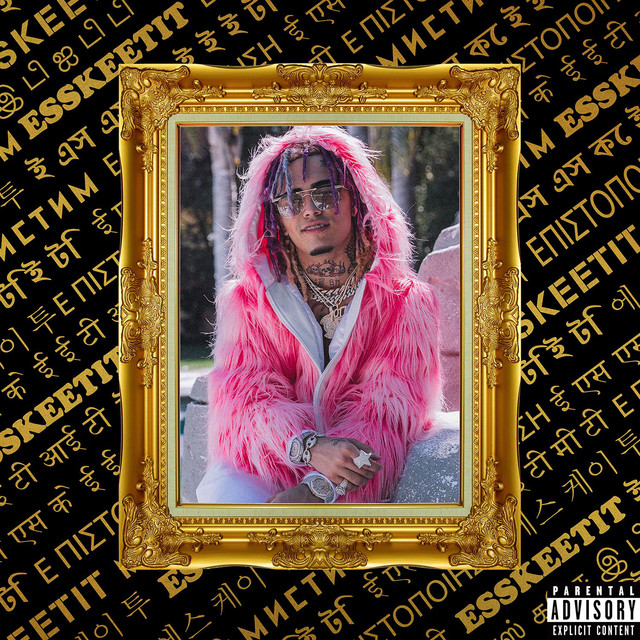
Esskeetit
Lil Pump (2018)

Bodak Yellow (feat. Kodak Black)
Cardi B & Kodak Black (2017)

A Head Full of Dreams
Coldplay (2015)
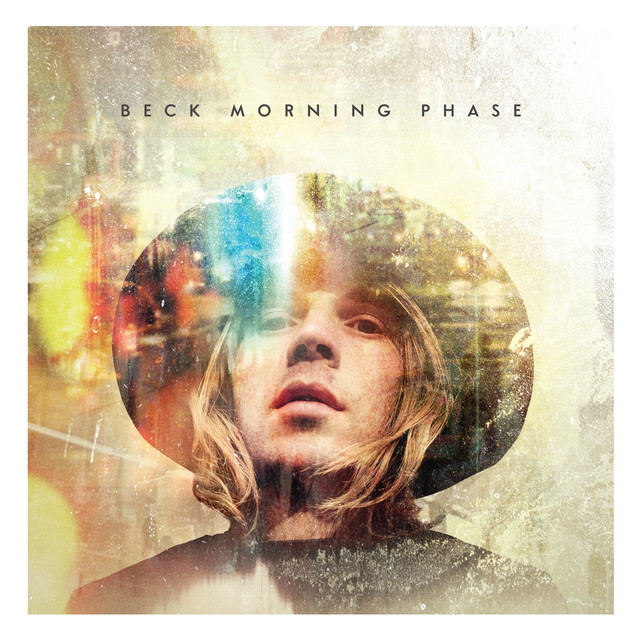
Morning Phase
Beck (2014)
Genre Usage
Based on how artists on Equipboard use this gear, it is most commonly found in the following genres.
Used With
Based on how musicians on Equipboard use Avid D-Verb, it is most commonly used with the following gear.




-s.webp?v=1784383270)
More Avid Reverb Plugins


$37.00 - $349.00
in Reverb Plugins Rank


$29.99 - $49.00
in Reverb Plugins Rank


$179.00 - $199.00
in Reverb Plugins Rank


$37.00 - $39.99
in Reverb Plugins Rank


$0.00
in Reverb Plugins Rank


$33.00 - $39.99
in Reverb Plugins Rank


$149.00
in Reverb Plugins Rank


-m.webp?v=1783581851)

$75.00 - $282.00
in Reverb Plugins Rank


$29.99 - $30.00
in Reverb Plugins Rank

$58.00 - $69.00
in Reverb Plugins Rank


$139.00 - $149.00
in Reverb Plugins Rank


$62.00 - $69.00
in Reverb Plugins Rank

$0.00
in Reverb Plugins Rank

$49.00 - $199.00
in Reverb Plugins Rank


$47.00 - $49.00
in Reverb Plugins Rank

$0.00
in Reverb Plugins Rank

$37.00 - $39.99
in Reverb Plugins Rank


$95.00 - $99.00
in Reverb Plugins Rank


$29.00 - $38.00
in Reverb Plugins Rank

$34.99
in Reverb Plugins Rank


$99.00
in Reverb Plugins Rank


$33.00 - $39.99
in Reverb Plugins Rank


$94.00 - $99.00
in Reverb Plugins Rank

$93.00 - $99.00
in Reverb Plugins Rank

$47.00 - $199.00
in Reverb Plugins Rank

$69.00 - $169.00
in Reverb Plugins Rank
-m.webp?v=1784332693)

$99.00 - $104.00
in Reverb Plugins Rank

$99.00
in Reverb Plugins Rank


$32.00 - $249.00
in Reverb Plugins Rank


$43.00 - $45.00
in Reverb Plugins Rank


$59.00
in Reverb Plugins Rank

$59.00
in Reverb Plugins Rank


$68.00 - $299.00
in Reverb Plugins Rank

$29.99 - $94.00
in Reverb Plugins Rank
Community setups


Similar


Gear Guides








Most Popular Reverb Plugins
Most Popular Brands
-
Added to Equipboard on by
 eyeseeofficial
GearIQ 161592
-


