
Pricing and availability
We compare 600+ stores and found this item at 1 store. Prices updated .
Store
Reviews
Price




Average Price: $1,615
High-end/Boutique
$100
$501+
Price Tier
Budget
Standard
High-end
* Product prices and availability are updated by Equipboard every 24hrs and are subject to change. Equipboard may receive compensation for purchases made at participating retailers linked on this site. This compensation does not affect what products or prices are displayed, or the order of prices listed. For more information, please refer to our affiliate disclosure.
Description
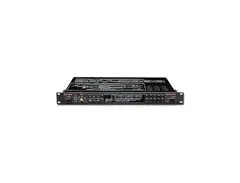
The Roland SRV-2000 MIDI Digital Reverb is a classic piece of studio recording gear, revered for its 12-bit processing technology, which delivers a rich, vintage sound that many modern digital effects struggle to replicate. A favorite among audio professionals since its release, this effects processor is a testament to Roland's commitment to innovation and quality. Its robust MIDI implementation allows seamless integration into any studio setting, providing precise control over reverb parameters through MIDI commands. Whether you're looking to add depth to your recordings or seeking that authentic 80s reverb sound, the SRV-2000 is equipped to handle a wide array of audio tasks.
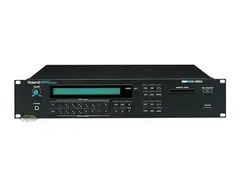
The SRV-2000 offers a variety of reverb types, from room and hall to plate and spring simulations, making it versatile enough for any genre or recording situation. Its user-friendly interface features an intuitive LCD display, enabling easy access to the unit's numerous settings and presets. The inclusion of both balanced and unbalanced inputs and outputs ensures compatibility with a wide range of audio equipment, making it a flexible tool for any studio setup.
Key Features:
- 12-bit processing technology for authentic vintage sound
- Comprehensive MIDI implementation for detailed parameter control
- Multiple reverb types including room, hall, plate, and spring
- Intuitive LCD display for easy navigation and setup
- Balanced and unbalanced inputs and outputs for versatile connectivity
- Durable construction for reliable performance in studio environments
Product specs
| Brand | Roland |
| Model | SRV-2000 MIDI Digital Reverb |
| Finish | Black |
| Year | 1980s |
| Categories | Reverb |
FAQs
-
What are the standout features of the Roland SRV-2000 MIDI Digital Reverb?
-
The Roland SRV-2000 offers high-quality digital reverb with MIDI control, allowing for precise adjustments and integration with other MIDI-enabled gear. It features multiple reverb algorithms, making it versatile for various studio applications.
-
How does the Roland SRV-2000 compare to modern digital reverbs?
-
While the SRV-2000 may lack some of the advanced features of modern reverbs, it is renowned for its warm, vintage digital sound and robust build quality, making it a favorite for those seeking classic 1980s reverb tones.
-
Is the Roland SRV-2000 suitable for live performance setups?
-
Yes, the Roland SRV-2000 can be integrated into live setups, especially due to its MIDI capabilities, which allow real-time control and presets switching during performances.
-
Can the Roland SRV-2000 be used with other MIDI devices?
-
Absolutely, the SRV-2000 is equipped with MIDI functionality, allowing it to communicate and be controlled by other MIDI devices, enhancing its flexibility in both studio and live environments.
-
What type of reverb algorithms does the Roland SRV-2000 offer?
-
The SRV-2000 includes several reverb algorithms, such as hall, room, and plate, each offering unique characteristics suitable for different audio processing needs.
Videos

Espen Kraft
Roland SRV-2000 Reverb | Instant vintage mojo
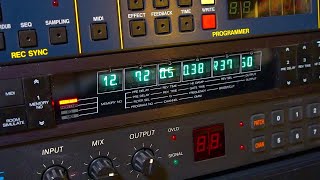
Roland SRV-2000 Reverb | Instant vintage mojo
Espen Kraft
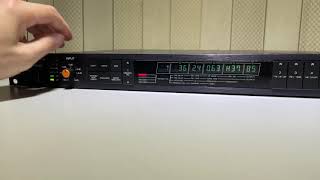
Roland SRV-2000 Digital Reverb

Rec Gear Demos
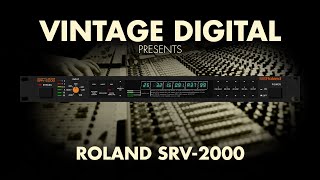
Roland SRV-2000

Vintage Digital
Reviews
PROS
-
Great sounding reverb, ideal for snare drums
-
Capable of creating very '80s sounding effects
-
Can be tweaked to produce warm reverb tones
-
Durable build quality, described as "built like a tank"
-
Versatile, suitable for drums, vocals, guitar, and synthesizers
-
Intuitive interface with easy patch saving
-
Unique grainy quality adds charm to sound
CONS
-
Generates white noise, inherent to its early generation digital design
-
Reverb tones can appear grainy
-
Requires deep rack space for installation
-
Presets may need significant tweaking for optimal use
Owner Insights
We analyzed real musician discussions from forums and Reddit to find what players love, question, and tweak about Roland SRV-2000 MIDI Digital Reverb.
Features and functionality
-
The Roland SRV-2000 is noted for its 80's dense and bright reverbs, providing a nostalgic sound that appeals to those familiar with its era.
Source -
The SRV-2000 is often paired with Lexicon Model 200 and Yamaha SPX-90 in studio setups, highlighting its compatibility with other vintage digital effects.
Source
Use cases and applications
-
This reverb unit is often appreciated for its distinct sound, but it's mentioned that it doesn't get used frequently, suggesting it may suit niche applications or specific stylistic needs.
Source -
The SRV-2000 was frequently used for special effects in conjunction with Alesis MIDIVerbs, suggesting a niche role in creating unique soundscapes.
Source -
It's noted that the SRV-2000 is typically employed during mixdown rather than tracking, emphasizing its role in post-production processes.
Source
Comparisons
-
While the Roland SRV-2000 is valued for its vintage sound, it's compared to the newer Roland SRV-330, which alternates between sounding great and thin, signaling variability in quality.
Source
User experience
-
Some users retain the Roland SRV-2000 for nostalgic reasons, indicating its value may be more sentimental or specific to achieving a retro sound palette.
Source -
Owners describe the SRV-2000 as a reliable workhorse for adding depth to snare and room mics, particularly valued in genres like gospel, Latin, and indie rock.
Source -
The SRV-2000 was part of a standard reverb arsenal in commercial studios alongside physical plate reverbs, indicating its professional-grade reputation during its prime usage era.
Source
4.0 out of 5
Based on 3 Reviews and 4 Ratings

41031
Not Roland's best reverb but good bang for buck
There are pretty much 2 affordable 1u roland reverbs worth using. The srv330 and this one. The srv3030 is awful, it's not a worthy successor to the 330. I think tje 2000 was meant to be a cheapie but it's really pretty nice. The 2000 isn't as lush as the 330 but it has a grainy quality that can be charming. It can be really good on drums and particularlyshines on snare when you're treating a snare separately. The presets need a lot of tweaking but the interface is intuitive and storing your own patches is a snap. Definitely worth the price if admission if you already have fancier processors.

27261
I owned an SRV3030 for all of 2 days. It was so not to my taste, and I was so unable to get anything useful out of it, that I sent it back to Zzounds or wherever I had purchased it (on clearance discount) and never thought about it again until I read this.

141

Artist usage
Add artist

During the Fire Garden tour, Vai used 2 reverbs in his effects rack.

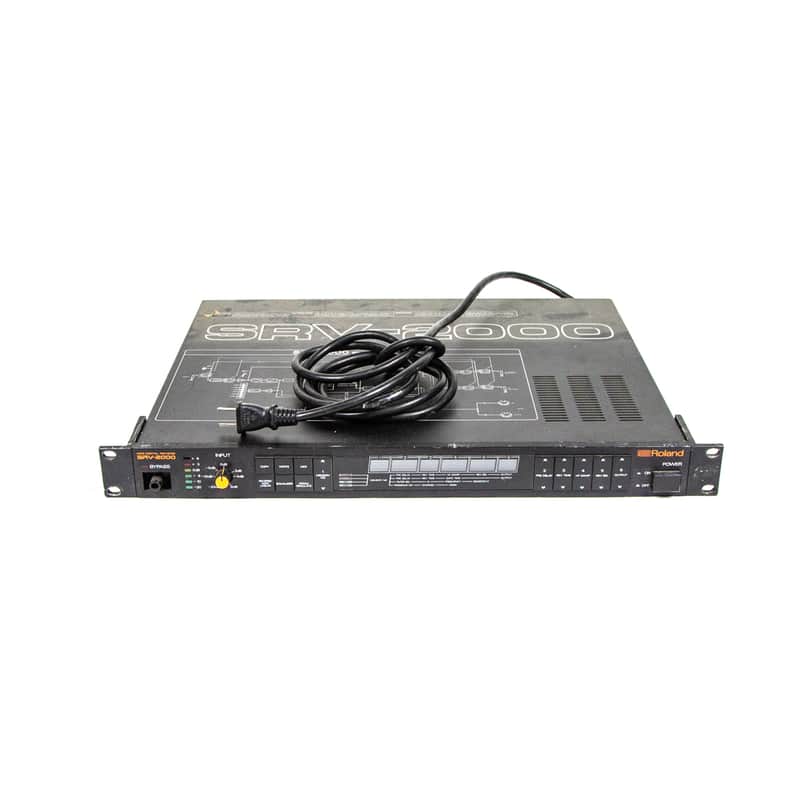
This Roland SRV-2000 is owned by Billy Corgan

"Interviewer: How did Bob's Place get put together? Did you buy your gear all at once or over time?
Mascis: At first I bought a house and then I started buying stuff. I had a couple things like some API graphic EQs I bought. I had Roland SRV 2000 reverb that I liked to use on the snare drum — those were my first two things I had. But when I got the house I decided that I should get some gear and start recording there. I never thought I would have a recording studio. It's like having your office at home — it always seemed like a bad idea, but then I realized that I couldn't deal with studios anymore and paying that much money and stuff. So I bought the 24-track machine that was the big thing to buy. I bought a couple of more things like mic pres and stuff."

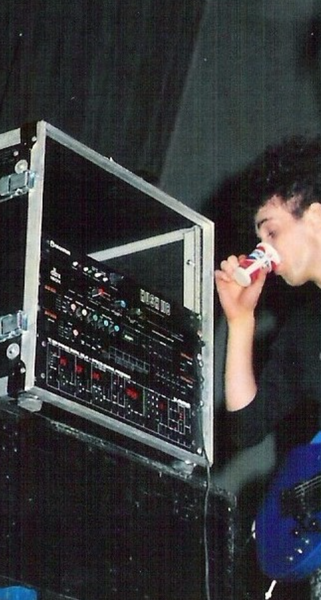
Rack de Cerati en Soda (año 1987). Podemos ver que entre el SDE-1000 y el 2290 se encuentra el SRV-2000. En la página oficial del estudio Unísono, dentro del PDF de equipos que tiene el mismo, podemos ver que figura en la lista (sección "Additional Gear")

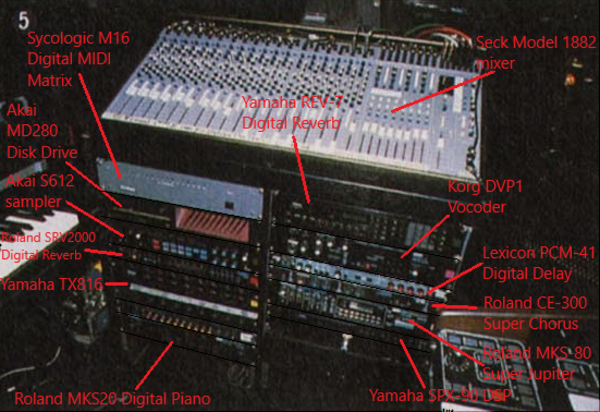
In a 1986 issue of Japanese Keyboard Magazine, there are multiple photographs of Tony Banks' rig from the Invisible Touch tour. Among these images is a picture showcasing Tony's rack synths and effects, where the Roland SRV2000 Digital Reverb can be seen under the Akai S612 sampler.
.jpg?v=1784640200)

Used for the lead vocals on "Angel Dance", as stated by tracking and mixing engineer in this Mike Poole in this December 2010 Sound on Sound article.
Vocals: Urei 1178, API 550, LT Sound CLX, Roland SRV2000 & RE501, AMS RMX16, TC Electronic D•Two.
"I had the Urei 1178 compressor and the API 550 EQ on Robert's vocal, along with a parallel channel that was even more compressed. So any time he hit a low note that sounded a little muddy and needed some more clarity, I pushed up the parallel channel. There's also an effects send channel with the LT Sound CLX on it, which is a Dbx VCA compressor with a good de?esser in it, and that was used as the send to any effects devices. As a side note, all the little slices you see on the screenshot were not performance edits, but mostly me trying to get the sibilance right. I often take out little clicks and pops and also 'esses' or 'effs' out manually. A de?esser will hit everything in a technical?sounding way, and sometimes you may want to retain the emotive way a certain 'ess' or 'eff' is expressed, but only precisely change the gain, just to correct recording artifacts. 'Angel Dance' is one of the few tracks on which Robert's scratch [tracking] vocal didn't make up the largest component of the final vocal track. On this song, he re?sang the vocals later, and I think he did two passes and we used mostly one, with a few lines from the other pass thrown in. For reverb on his vocals, I used the SRV2000 long reverb and a little bit of RMX16; for delay, either the D•Two or an RE501. I used very little reverb on the tracks on the album in general, apart from on Robert's vocals and the backing vocals. The other ambience you hear may have been a long delay from the 501 or PCM42 or any of the room mics.”


Klaus Schulze utilizes three Roland SRV-2000 MIDI Digital Reverbs in his setup, as detailed on the "Klaus Schulze's Instruments" page.


"For effects, I use an old Roland SRV2000 and three Yamaha D1500 delays."


Per "Rock This Town" publication, special issue 1991:
In 1991, the setup was as follows: [Rock This Town special issue 1991]
Sound studio: Analog Synths: Roland System 100/100M/101 (+Roland Midi interface MPU-101);YAMAHA CS-40M (in the Take One video); Oberheim Matrix 1000; Digital Synths: Yamaha DX-7 (2); Ensonic VFX; Roland DDR30; Yamaha tg77; Korg Wavestation; Sequencer: Atari 1040 (Sequ. Cubase 2.0); Samplers: AkaiS9000 (2); AkaiS1000 (8Mg + Hard Drive Mfile 44); AkaiS1000PB (4Mg); Emulator II; akai 1100, e-mu Procussion, roland s-10 for live use @ the mixing desk; Effects: Lexicon 480L; Yamaha SPX90 II (2); Roland SRV-2000; Roland SDE-3000; Alesis Midiverb II; Alesis Quadraverb; ART DRX; spx 1000 (x2); Eventide h3000 se; Mixing: Table TAC Scorpion 32/16; Recorder TASCAM MS16 tracks; Recorder DAT Luxman; Speakers Yamaha NS 10M pro ATC SCM50; QUAD ampli (for NS-10M); Diverse: compressor/limiter, noise gate, parametric eq. Live: Backline: Akai S9000; Roland DDR30; Simons & Roland Pads; Emulator II; TASCAM238 8
Graphic Studio: Commodore Amiga 2500 (6Mg + Hard Drive 40Mg); Commodore Amiga 500; Digitizer SNAPSHOT; Camera Sony CCD V-200E; Laserprint NEC Silentwriter LC890; Monitor NEC Multisync 2A.

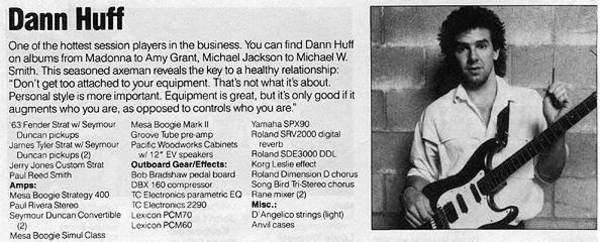
This 1988 Article states he was using a Roland SRV-2000 Reverb.


Daniel Miller is listed as using the Roland SRV-2000 MIDI Digital Reverb in his studio setup, as detailed in his interview with Sound on Sound.

Album Usage
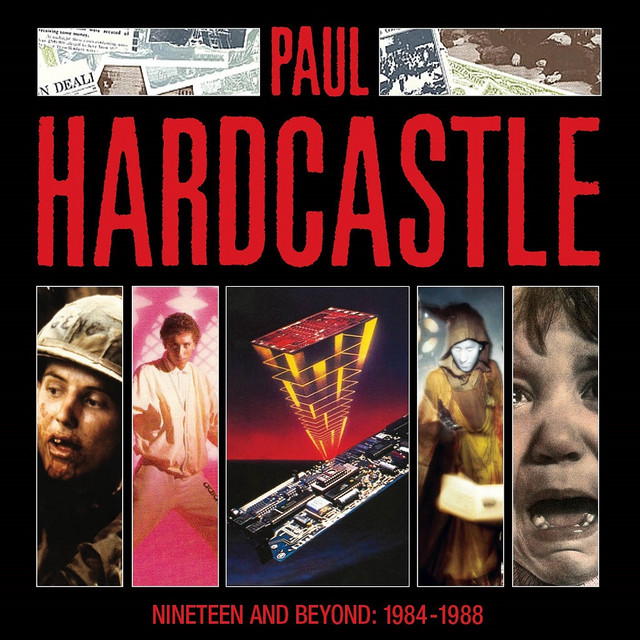
The Roland SRV-2000 MIDI Digital Reverb has been featured on the following albums:
Genre Usage
Based on how artists on Equipboard use this gear, it is most commonly found in the following genres.
Used With
Based on how musicians on Equipboard use Roland SRV-2000 MIDI Digital Reverb, it is most commonly used with the following gear.




-s.webp?v=1784876486)
-s.webp?v=1784559385)

Community setups
Show yours
More Roland Effects Processors

$1,450.00
in Effects Processors Rank


$1,650.00
in Effects Processors Rank


$330.00 - $414.00
in Effects Processors Rank


$1,799.00
in Effects Processors Rank


-m.webp?v=1784818783)
$80.00
in Effects Processors Rank


$125.00
in Effects Processors Rank


.png?v=1784895999)


-m.webp?v=1784336053)


Accessories & Related Items


Similar


Gear Guides








Most Popular Effects Processors
Most Popular Brands
-
Added to Equipboard on by
 ssquires
GearIQ 2008
-


