Table of Contents

Equipboard
Equipboard is the world's largest community of artists and their gear. Read our review process.
We are reader-supported. When you buy through links on our site, we may earn an affiliate commission. Learn more.
Our Picks

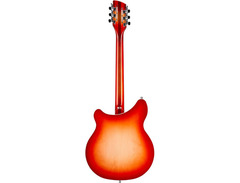
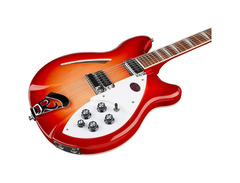
Rickenbacker 360/12 12-String Hollowbody
Best for Classic Electric 12-String Tone: The quintessential electric 12-string that defined an era with its unmistakable chime and sustain.
Read more


Taylor 612ce Maple/Spruce Grand Concert Acoustic-Electric Guitar
Best Premium Acoustic-Electric: A concert-sized masterpiece offering exceptional playability and versatile tones suitable for both stage and studio.
Read more

Martin Grand J-16 12-string Acoustic Electric Guitar
Best Traditional Acoustic: A modern classic combining Martin's legendary craftsmanship with contemporary features for superior projection and comfort.
Read more
Gibson Custom 1965 Non-reverse Firebird V 12-string Electric Guitar
Best Premium Electric: A revival of a rare classic offering distinctive tones and aesthetics for players seeking something beyond the standard 12-string palette.
Read more
Martin D-X2E 12-string Acoustic-electric Guitar
Best Sustainable Acoustic: An environmentally conscious instrument that doesn't compromise on Martin's legendary tone and playability.
Read more
Reverend Airwave 12-String Guitar
Best Contemporary Electric: A forward-thinking design that combines vintage-inspired jangle with modern playability and versatility.
Read more
D'Angelico Premier Fulton LS 12-string Acoustic-Electric Guitar
Best Value Acoustic-Electric: An impressively crafted instrument offering premium features and playability at a mid-tier price point.
Read moreThe unmistakable shimmer and fullness of a 12-string guitar has defined some of rock and folk's most iconic moments. From the crystalline intro of The Byrds' "Mr. Tambourine Man" to the lush acoustic textures of Led Zeppelin's "Over the Hills and Far Away," these instruments bring a magical richness that regular six-strings simply cannot match.
What makes 12-string guitars special is their unique stringing pattern, with six pairs of strings (courses) that create a natural chorus effect through octave doubling. The lower four string pairs (E, A, D, G) combine a standard-tuned string with another tuned an octave higher, while the higher two pairs (B, E) use strings tuned to the same pitch. This arrangement produces that signature shimmery, jangly sound that can transform ordinary chord progressions into lush sonic landscapes.
We'll explore top-tier acoustic and electric options across various price points, focusing on real-world playability, tone characteristics, and how each instrument might serve different musical styles. Whether you're chasing the classic jangle of George Harrison or aiming to create your own innovative soundscapes, we've got you covered with the best 12-string guitars available in 2025.
Best 12-String Guitars Overall (Flagship Picks)
Let's examine the crème de la crème of 12-string guitars. These flagship models represent the pinnacle of craftsmanship, tone, and playability, setting the standard that all other 12-strings aspire to match.
Rickenbacker 360/12 12-String Hollowbody
4.5 (49)
The Jangle King






Average Price: $2,924
High-end/Boutique
$400
$1501+
Budget
Standard
High-end
- Iconic jangle sound unmatched by other guitars, ideal for 60s music enthusiasts
- Beautiful finishes like Fireglo and Mapleglo add visual appeal
- High-quality construction with meticulous craftsmanship
- Lightweight design reduces strain on shoulder and back
- See 6 more
- Narrow neck can make chording difficult for those with larger fingers
- Setup issues like high string action and buzzing may require professional assistance
- Difficult and time-consuming restringing process due to bridge and tailpiece design
- Vintage pickup sound requires aftermarket modifications for specific tones
- See 3 more
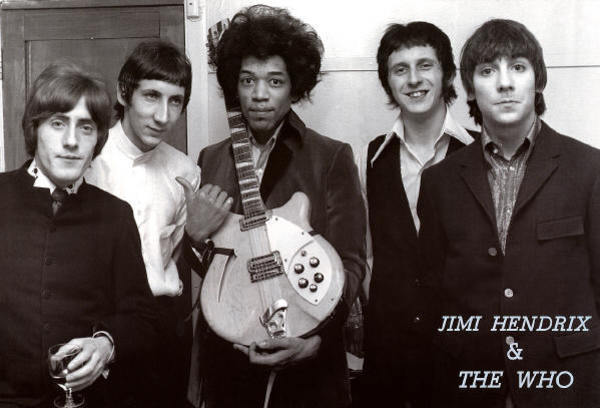
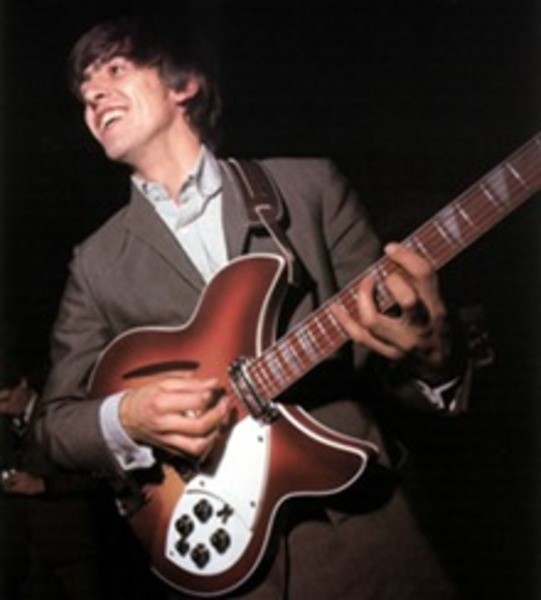
This semi-hollow masterpiece catapulted to fame in the hands of George Harrison and Roger McGuinn, becoming the sonic foundation of folk-rock and influencing countless artists since.
Sound Character
The 360/12's tone is nothing short of iconic. Its unique configuration, with the octave strings placed before the fundamental strings (opposite to most 12-strings), creates that immediately recognizable bright, chiming quality that cuts through any mix. The semi-hollow construction adds warmth and resonance while the famous "Rick-O-Sound" stereo capability allows for creative signal routing possibilities that can create immersive stereo landscapes.
Build and Playability
Rickenbacker maintains traditional construction methods for the 360/12, including the distinctive maple body with a gloss finish that complements its iconic double-bound styling. The slim neck profile might surprise first-time players, as it's considerably more manageable than many other 12-strings, making complex chord voicings more accessible. However, the shorter 24.75" scale length and relatively narrow spacing does require some adjustment for those with larger hands.
Best Applications
The 360/12 excels in jangly, arpeggiated playing where clarity and shimmer are paramount. It's particularly well-suited for folk-rock, power pop, and psychedelic styles, though its versatility extends far beyond these genres. In recording situations, the Rickenbacker 12 often needs little processing, as its natural compression and distinctive harmonic content sit perfectly in a mix without fighting for space.
See how artists use this






.png?v=1784600207)


Taylor 612ce Maple/Spruce Grand Concert Acoustic-Electric Guitar
5.0 (1)
12-String Acoustic Excellence


Average Price: $3,316
High-end/Boutique
$200
$1001+
Budget
Standard
High-end
- Exceptional wood and finish quality enhances aesthetic appeal
- 12-fret design improves reach for barre chords
- Perfectly set up action for smooth playability
- Sensitive and responsive electronics for versatile sound output
- See 4 more
The 12-string Taylor 612ce represents the perfect marriage of tradition and innovation, delivering a playing experience that defies the typically cumbersome nature of acoustic 12-strings while producing tones of remarkable clarity and balance.
Design and Construction
Taylor's grand concert body provides a more comfortable alternative to larger dreadnoughts without sacrificing projection. The combination of Sitka spruce top and figured maple back and sides creates a balanced tonal palette with clear definition. Taylor's V-Class bracing system truly shines in the 12-string format, enhancing sustain while improving intonation across the entire fingerboard - a crucial benefit for any 12-string.
Playability and Feel
What sets the 612ce apart from many competitors is its exceptional playability. The slender neck profile and comfortable string spacing make transitioning from a 6-string remarkably painless. The ebony fingerboard provides a smooth playing surface, while the cutaway design grants easy access to upper frets that are often difficult to reach on other 12-strings.
Electronics and Live Performance
Taylor's Expression System 2 electronics capture the guitar's natural voice faithfully, with sensors that respond intelligently to different playing dynamics. This translates to exceptional amplified performance that requires minimal EQ adjustments, making the 612ce a reliable companion for stage work. The onboard controls are discreet yet effective, allowing subtle tweaks without distracting from the instrument's elegant aesthetic.
See how artists use this






Martin Grand J-16 12-string Acoustic Electric Guitar
Acoustic Heritage

Average Price: $2,418
High-end/Boutique
$200
$1001+
Budget
Standard
High-end
The 12-string Martin Grand J-16 represents the pinnacle of traditional acoustic craftsmanship updated with modern playability enhancements. This jumbo-bodied instrument delivers the authoritative voice and heirloom quality that Martin is known for.
Tone and Projection
The Grand J-16's jumbo body produces massive sound with impressive dynamic range. Bass notes resonate with piano-like clarity while the midrange remains articulate and the trebles shimmer without harshness. The solid Sitka spruce top and solid East Indian rosewood back and sides create a harmonically rich sound that's equally at home with delicate fingerpicking or powerful strumming. The tone naturally occupies the sonic space that would normally require multiple instruments, making it ideal for solo performers.
Construction Details
Martin's scalloped X-bracing system is calibrated specifically for the demands of 12 strings, providing structural integrity while allowing the top to vibrate freely. The gloss finish on the body contrasts beautifully with the satin-finished neck, which prevents the stick that can plague some gloss-neck instruments. The hardened ebony bridge and compensated bone saddle ensure optimal string transfer and intonation.
Comfort and Access
Despite its size, ergonomic considerations like the thoughtfully shaped neck profile and the Performing Artist taper make the Grand J-16 more approachable than its dimensions might suggest. The high-performance neck joint provides excellent upper fret access without compromising the traditional Martin aesthetic or structural integrity.
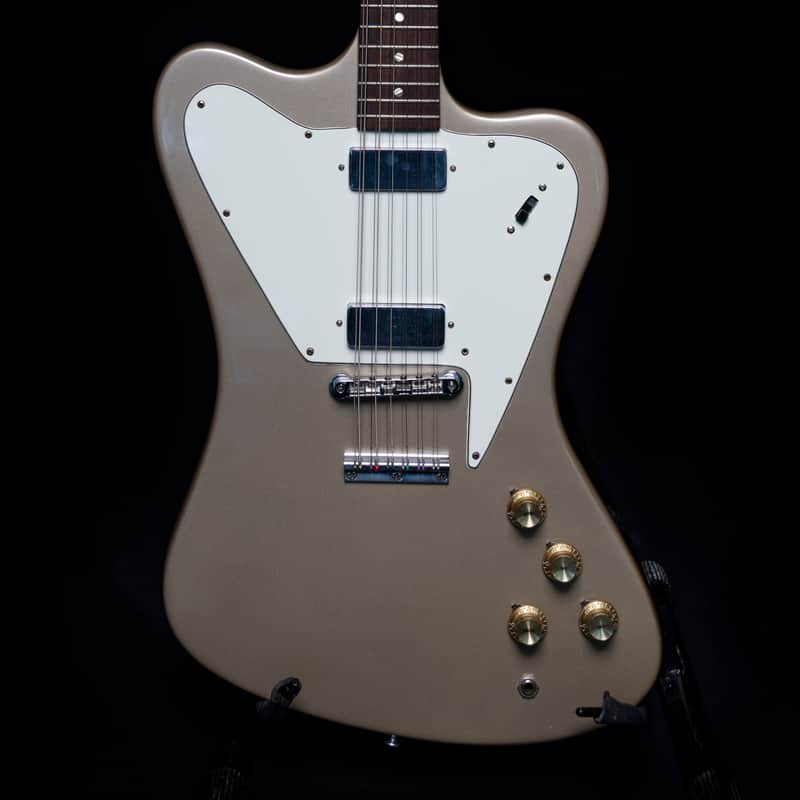
Gibson Custom 1965 Non-reverse Firebird V 12-string Electric Guitar
Vintage Electric Inspiration

Average Price: $5,619
High-end/Boutique
$400
$1501+
Budget
Standard
High-end
The Gibson Custom 1965 Non-reverse Firebird V 12-string resurrects a rare historical model, combining vintage mojo with modern reliability in a package that stands apart from more common 12-string designs.
Distinctive Voice
Unlike the jangle-focused Rickenbacker, the Firebird 12-string delivers a thicker, more midrange-focused tone that leans toward rock and blues territories while maintaining the shimmering quality inherent to 12-strings. Mini-humbuckers provide a unique tonal character that sits between single-coil brightness and humbucker warmth, with excellent definition even under high gain settings. The longer scale length compared to many Gibson models contributes to improved string tension balance, which is particularly beneficial for maintaining clear note separation in a 12-string context.
Design and Aesthetics
The non-reverse Firebird body shape offers excellent balance despite its asymmetrical design, and provides good upper fret access without compromising comfort. Available in period-correct finishes like Aqua Mist, this instrument makes a striking visual statement that matches its sonic distinctiveness. The Maestro Vibrola tailpiece adds vibrato capabilities rarely found on 12-strings, opening creative possibilities for expressive playing.
Craftsmanship
Gibson Custom Shop's attention to detail is evident throughout this instrument. The mahogany neck and body provide rich resonance, while the bound rosewood fingerboard offers a luxurious playing surface. Hardware quality is exceptional, with Kluson-style tuners providing reliable tuning stability - a critical factor for any 12-string, but especially important on a vibrato-equipped model like this.


Martin D-X2E 12-string Acoustic-electric Guitar
Acoustic Eco-Friendly Excellence

Average Price: $717
Standard/Professional
$200
$1001+
Budget
Standard
High-end
- Excellent sound and sustain, likened to "butter"
- Comparable to high-end Martins at a fraction of the price
- Smooth, low action and comfortable playability
- Durable, quality construction that lasts for decades
- See 6 more
- Some issues with high action upon delivery
- Occasional buzzing above the 10th fret
- Reports of a small crack in the bridge
- Neck is slightly neck-heavy due to solid mahogany construction
The Martin D-X2E 12-String represents Martin's commitment to sustainability while maintaining the essential qualities that players expect from this storied brand. It delivers rich, balanced tone with modern features at a more accessible price point than Martin's all-solid-wood offerings.
Innovative Materials
Martin's eco-conscious approach incorporates high-pressure laminate (HPL) back and sides with a striking Brazilian rosewood pattern that provides both visual appeal and sonic benefits. The solid Sitka spruce top ensures authentic resonance and projection, while the innovative materials used in construction make this instrument less susceptible to humidity changes than traditional all-wood guitars - a significant advantage for a 12-string, which already presents tuning challenges.
Sound and Responsiveness
The D-X2E produces the warm, balanced tone that Martin dreadnoughts are known for, with the added shimmer and chorus effect that defines the 12-string experience. The solid spruce top provides excellent dynamic response, allowing the guitar to articulate everything from delicate fingerpicking to vigorous strumming with clarity and definition. The bass response is particularly impressive for an instrument at this price point, creating a solid foundation for the doubled higher strings to dance above.
Modern Features
The built-in Fishman MX electronics provide natural amplified sound with minimal fuss, featuring simple volume and tone controls that preserve the guitar's clean aesthetic. The proprietary neck shape offers comfortable playability that will feel familiar to Martin enthusiasts but remains accessible to players coming from other brands. The Richlite fingerboard provides smooth playability while contributing to the instrument's environmental sustainability.
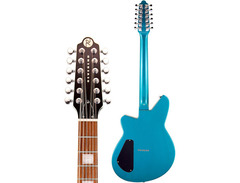
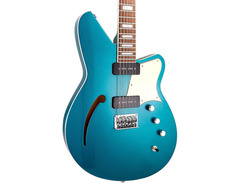
Reverend Airwave 12-String Guitar
4.0 (1)
Modern Electric Classic

Average Price: $1,208
Standard/Professional
$400
$1501+
Budget
Standard
High-end
- Designed specifically as a 12-string guitar, not adapted from existing models
- Comfortable neck with wider profile allows easy access to upper frets
- Locking tuners enhance tuning stability and ease string changes
- Adjustable saddles for precise intonation, including for octave strings
- See 6 more
- Lacks locking strap pins, which may be a minor inconvenience
- Offset body design can cause neck heaviness when seated without a strap
- Color may differ from promotional photos, potentially affecting aesthetic preference
The Reverend Airwave 12-string has quickly earned a reputation as an exceptional alternative to more established models, offering thoughtful design features and versatile tones at a competitive price point. This instrument demonstrates that innovation in the 12-string electric guitar space is still very much alive.
Innovative Design Features
Reverend's korina body provides excellent resonance and sustain while maintaining a comfortable weight. The proprietary Rail Hammer pickups were specifically designed to capture the full spectrum of a 12-string's complex harmonics, from chiming highs to articulate lows. The pin-lock tuners represent a significant advancement for 12-string stability, dramatically reducing the tuning frustration that has traditionally plagued these instruments.
Playing Experience
The Airwave's medium C-shaped neck profile strikes an excellent balance between comfort and stability, providing enough substance to support the tension of twelve strings without feeling unwieldy. The 12" fingerboard radius facilitates both chord work and single-note playing, making this perhaps one of the most versatile 12-string electrics available. The bass contour control allows players to dial back the low-end for classic jangle tones or boost it for fuller sounds, essentially providing multiple tonal characters in one instrument.
Unique Voice
While clearly capable of delivering the classic electric 12-string sound, the Airwave carves out its own sonic identity with increased midrange presence and exceptional string-to-string clarity. It excels with both clean tones and moderate overdrive, maintaining definition even when effects are added. The Airwave particularly shines in band contexts where it can add harmonic complexity without getting lost in the mix.
See how artists use this




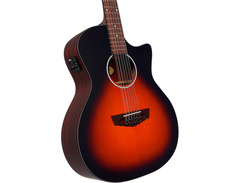
D'Angelico Premier Fulton LS 12-string Acoustic-Electric Guitar
Perfect 12-String Introduction

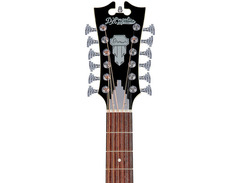
Average Price: $263
Standard/Professional
$200
$1001+
Budget
Standard
High-end
- Rich, full-bodied sound from 12 strings
- Excellent built-in pickup and tuner system
- Easy to play, even for a 12-string
- Stable, solid tuners that maintain tuning
- See 5 more
- Action may be higher than some prefer, requires minor adjustment
- No case included with purchase
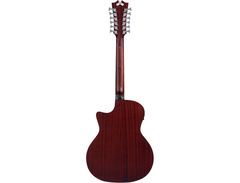
The D'Angelico Premier Fulton LS 12-string demonstrates that "budget-friendly" doesn't have to mean "entry-level." This grand auditorium-sized acoustic-electric delivers exceptional quality and features typically found on much more expensive instruments.
Sound Character
The Fulton LS produces a balanced, articulate tone with excellent projection and clarity. The layered sapele back and sides paired with a solid spruce top create warm mids and sparkling highs without the muddiness that can plague some 12-strings. The grand auditorium body shape provides the perfect middle ground between intimate response and room-filling volume, making this guitar versatile enough for various playing styles and settings.
Comfort and Playability
D'Angelico has taken special care to address the playability challenges often associated with 12-strings. The slim C-shaped mahogany neck and ovangkol fingerboard provide a comfortable playing experience, while the slightly reduced scale length decreases string tension without compromising tone - a significant benefit for beginners still building hand strength. The soft C body shape incorporates a Venetian cutaway that provides easy access to higher frets, expanding the instrument's versatility.
Electronics and Appointments
The onboard Fishman pickup system delivers natural amplified tone with simple, intuitive controls. The distinctive D'Angelico headstock and stairstep tuners add visual flair while providing smooth, reliable tuning. The bone nut and saddle enhance sustain and contribute to superior intonation, addressing a common pain point with many 12-string guitars in this price range.
What to Know Before Buying a 12-String Guitar
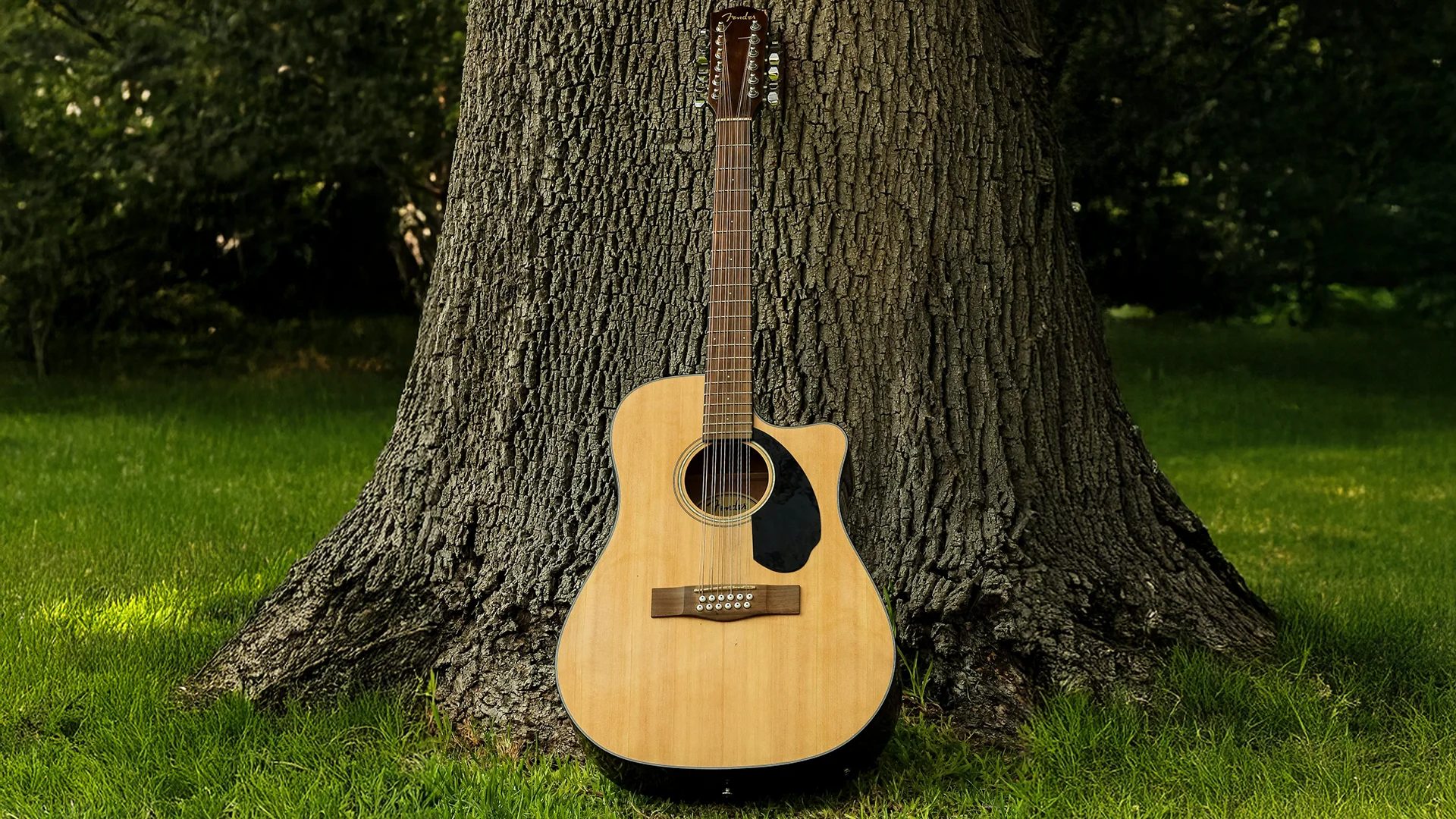
Purchasing a 12-string guitar requires special considerations beyond those of standard 6-string instruments. Understanding these unique aspects will help you make an informed decision and avoid common pitfalls that new 12-string owners often encounter. This section breaks down the essential factors to consider before making your investment.
Physical Considerations and Playability
The most immediate difference you'll notice with a 12-string is the wider neck required to accommodate twice the number of strings. This increased width can be challenging for players with smaller hands or those accustomed to sleeker 6-string necks. Neck profiles vary significantly between brands and models, with some offering surprisingly comfortable C-shapes while others feature more substantial profiles that provide stability at the expense of speed.
String tension is another crucial factor that affects playability. Twelve-string guitars exert substantially more tension on the neck than their six-string counterparts, which directly impacts how the guitar feels to play. Some manufacturers address this by using slightly shorter scale lengths (24.75" instead of 25.5") or by designing their instruments to be played with lighter gauge strings or in alternate tunings.
Fingerboard radius also significantly impacts the 12-string experience. Flatter radiuses (around 14" to 16") generally make chord playing more comfortable across all twelve strings, while more curved radiuses might feel more familiar to players coming from traditional 6-strings but can make full barre chords more challenging.
Maintenance and String Considerations
Owning a 12-string means committing to a more involved maintenance routine. String changes take approximately twice as long as on a 6-string, and proper intonation can be more difficult to achieve and maintain. Plan on spending more time on basic upkeep and consider budgeting for professional setups more frequently, especially with acoustic models.
Humidity control becomes even more critical with 12-strings, as the increased tension can amplify the effects of wood movement. A small investment in a humidity control system can prevent costly repairs and maintain playability, particularly for acoustic models.
When selecting strings, remember that 12-strings benefit from specific formulations designed for their unique demands. While it might be tempting to use two sets of your favorite 6-string strings, dedicated 12-string sets offer optimized gauges for the octave pairs that balance tension properly across the neck.
Recording and Performance Considerations
In recording situations, 12-strings present both opportunities and challenges. Their naturally rich, chorus-like sound can create a lush foundation for compositions, but can also consume significant frequency real estate in a mix. When recording, experiment with microphone placement. Sometimes positioning slightly off-center can capture the complex harmonics more effectively than traditional placement.
For live performance with acoustic-electric 12-strings, onboard electronics quality becomes particularly important. The complex overtones of a 12-string can quickly turn muddy through inadequate pickups or preamps. Look for systems specifically voiced for 12-strings or those offering separate string pair controls for more precise EQ options.
Electric 12-strings benefit greatly from appropriate amplification choices. While they can certainly work through standard guitar amps, they particularly shine through clean channels with ample headroom.
Tips for Playing a 12-String
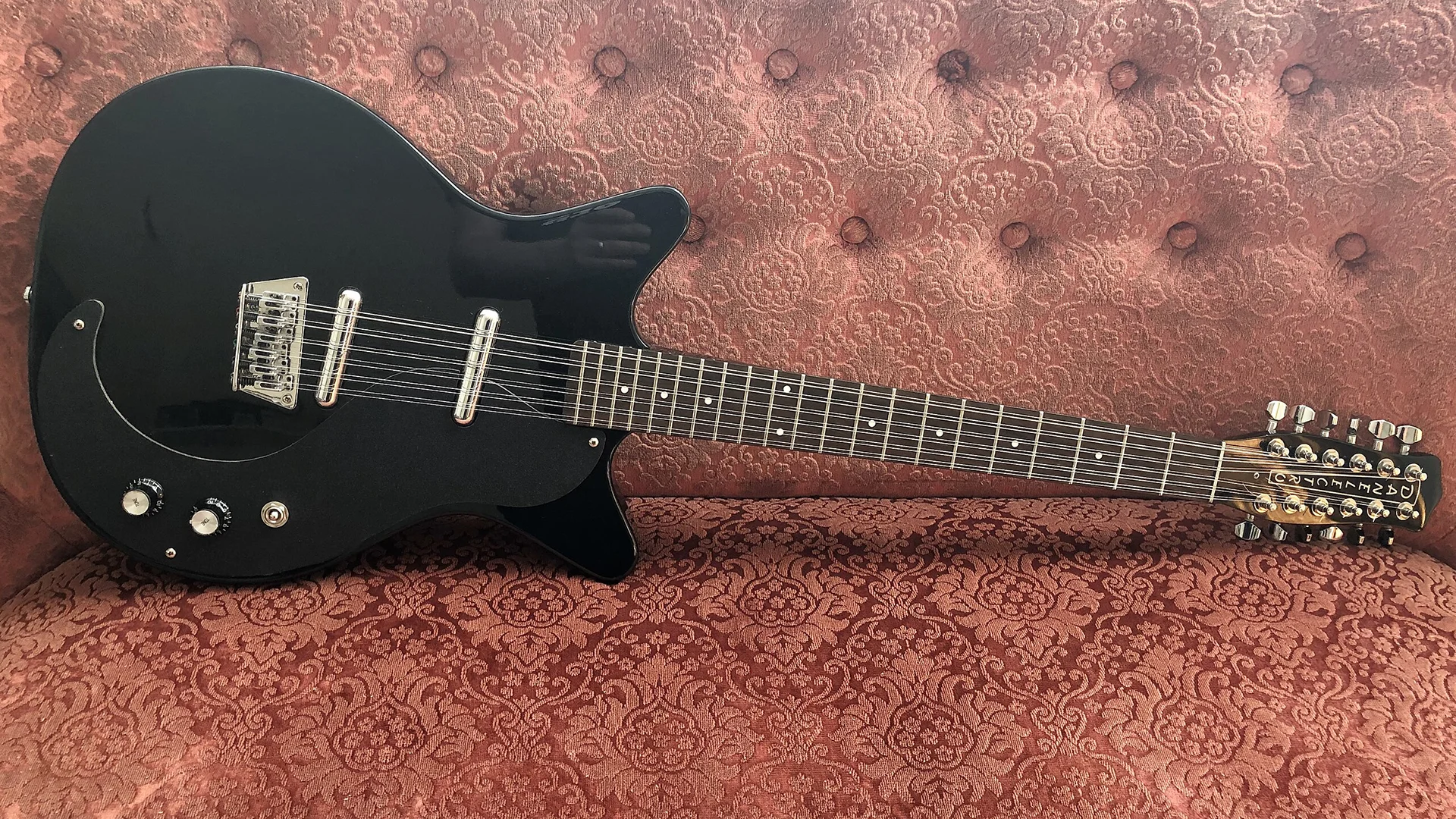
Mastering a 12-string guitar requires some adaptation of standard playing techniques and an understanding of approaches that highlight the instrument's unique characteristics. These practical tips will help you get the most out of your 12-string and avoid common frustrations that can diminish the experience.
Tuning Strategies
Tuning twelve strings accurately presents an obvious challenge, but several approaches can make this process less daunting. Digital tuners with specific 12-string modes can simplify the process by distinguishing between the fundamental and octave strings. When tuning manually, tune the fundamental (lower) string first, then its paired octave string, working through each pair methodically.
Many experienced 12-string players tune their instruments slightly below standard pitch (often a half-step or even a whole step down) to reduce string tension. This approach not only makes the guitar more comfortable to play but also reduces strain on the neck and can enhance resonance by allowing the top to vibrate more freely. Experiment with different tuning pitches to find the sweet spot where playability and tone are optimally balanced for your specific instrument.
Alternative tunings can produce spectacular results on 12-strings. Open tunings like DADGAD or open G can create rich drones and simplify fingerings for certain types of music.
Playing Techniques
Adapting your right-hand technique can dramatically improve your 12-string sound. Using a slightly heavier pick (around 1mm) provides better control when striking twelve strings instead of six. Experiment with pick angle and attack. A slight angle often produces a smoother sound across string pairs than a perfectly perpendicular approach.
Fingerstyle techniques require some adjustment on 12-strings. Traditional fingerpicking patterns remain effective, but you might need to use slightly more decisive finger placement to cleanly articulate individual string pairs. Many fingerstyle players find that growing slightly longer nails on the right hand helps with clean string pair separation.
Strumming techniques that work well on 6-strings might need refinement for 12-strings. A lighter touch often produces better results than aggressive strumming, allowing the natural chorus effect of the paired strings to shine through.
Practical Performance Tips
Using a capo effectively can transform your 12-string experience, particularly on acoustic models. Placing a capo at the second or fourth fret often brings the guitar to life by increasing string tension enough to create more shimmer without making the instrument harder to play. Quality capos designed specifically for 12-strings distribute pressure more evenly across the wider fingerboard.
Managing signal chain for electric 12-strings requires some consideration. Compression pedals can help even out the complex dynamics of doubled strings, creating more consistent output for both clean and overdriven sounds. Time-based effects like chorus or modulated delay can enhance the natural 12-string shimmer, but applied subtly to avoid muddiness.
For recording and performance, microphoning techniques specific to 12-strings can capture their full harmonic content. For acoustic 12-strings, experiment with mic positions slightly off-center from the soundhole to better capture the complex interplay between fundamental and octave strings.
FAQ Section
Are 12-string guitars harder to play than 6-strings?
12-string guitars do present additional challenges compared to standard 6-strings. The wider neck accommodating twice the strings requires some adjustment in left-hand technique, and the increased tension demands slightly more finger strength. However, many of these challenges can be mitigated by choosing an instrument with good setup, using lighter gauge strings, and possibly tuning down a half-step to reduce tension.
How often do 12-string guitars need to be tuned?
12-string guitars typically require more frequent tuning than 6-strings due to the increased tension and number of strings. New strings may need several tuning sessions before they stabilize. Environmental factors like temperature and humidity changes affect 12-strings more dramatically than their 6-string counterparts. Quality tuning machines make a significant difference, with higher-end sealed tuners providing much better stability.
Can I use a 12-string guitar for lead playing?
While 12-strings are predominantly associated with rhythm and chord work, they can absolutely be used for lead playing with some adaptations. Single-note runs require more precise finger placement to avoid inadvertently muting paired strings. Bending techniques need more finger strength and control due to effectively bending two strings simultaneously. Many players find that lead passages played on a 12-string have a distinctive chorus-like quality that can be musically compelling in the right context, particularly for melodic lines in folk, country, and certain rock styles.
What's the difference between 6-string and 12-string sound?
The primary sonic difference comes from the doubling of strings, with the lower four pairs (E, A, D, G) featuring a regular string paired with another tuned an octave higher, while the B and high E pairs use two strings tuned to the same pitch. This arrangement creates a natural chorus effect and harmonic richness that a 6-string cannot produce. Chords sound fuller and have a shimmering quality, while arpeggios gain a cascading, harp-like character. The 12-string sound occupies more sonic space with enhanced overtones, making it excellent for creating textural foundations but potentially challenging to place in dense arrangements.
Do I need a special amp for electric 12-strings?
While you don't necessarily need a dedicated amp for a 12-string electric, certain amp characteristics complement these instruments better than others. Amps with extended high-frequency response and ample headroom allow the characteristic shimmer of a 12-string to come through clearly. Clean channels generally showcase the complex harmonic content better than high-gain settings.
How long does it take to change strings on a 12-string?
String changes on 12-strings typically take about twice as long as on 6-strings for experienced players. First-time 12-string string changes might take considerably longer as you familiarize yourself with the process. String winders can significantly speed up the process. Budget approximately 30-45 minutes for your first few string changes, though this time will decrease with experience.
Conclusion: Finding Your Perfect 12-String
The 12-string guitar offers a unique voice that can transform your playing and songwriting with its lush, shimmering quality. Whether you're looking to recreate the iconic jangle of classic records or forge your own sonic path, there's never been a better selection of 12-string guitars available at various price points.
For those seeking the absolute pinnacle of 12-string craftsmanship, flagship models like the Rickenbacker 360/12 deliver the quintessential electric jangle that defined an era, while the Taylor 612ce and Martin Grand J-16 offer acoustic excellence with premium features and playability. The Gibson Custom 1965 Non-reverse Firebird V 12-string stands out for players seeking something beyond the standard 12-string aesthetic and sound.
For environmentally conscious players, the Martin D-X2E 12-String delivers eco-friendly construction without compromising that legendary Martin tone. The Reverend Airwave 12-string represents the evolution of electric 12-string design with modern features and versatile tones.
Those new to the 12-string world or working with budget constraints will find the D'Angelico Premier Fulton LS 12-string offers impressive quality and features at an accessible price point.
Remember that finding the right 12-string involves considering your playing style, physical comfort, and sonic goals. The best instrument for you balances these factors while inspiring your creativity. Pair your new 12-string with appropriate accessories like a quality capo, suitable picks, and perhaps a dedicated tuner to maximize your experience.
The distinctive sound of a 12-string guitar continues to captivate musicians and listeners alike, adding textural depth and harmonic complexity that can elevate compositions across virtually all genres. Whether used for adding sparkle to recordings, creating lush sonic foundations, or standing alone in solo performance, the right 12-string guitar opens up creative possibilities that simply aren't available with conventional 6-strings.
Top Ranked Extended Range Guitars on Equipboard

$2,299.00 - $3,599.00
4.5 (49)
4.5 (49)

$549.00 - $629.00
4.5 (30)
4.5 (30)


About the authors

S. Jino is an accomplished multi-instrumentalist and music producer based in Kolkata, India, distinguished by his self-taught mastery and unique blend of technical acumen and musical performance. His extensive experience was forged through hands-on dedication, starting with the full restoration of a broken guitar. Jino's capabilities span keyboards, pedals, and advanced digital production, reflecting a comprehensive skill set developed independently. As a significant contributor to the music scene, Jino regularly performs with worship bands and college ensembles. He has also established himself as a reliable and authoritative professional in freelance mixing, mastering, and original music creation. Inspired by the innovative sounds of Brian May and David Gilmour, and influenced by Kolkata's vibrant metal community, Jino is committed to the intricate art of vintage gear restoration and the continuous exploration of music and technology fusion. His current professional setup, featuring a meticulously restored nameless guitar, a Fender Player Strat, and a Boss Katana 50. Read more











.webp)