Chris Squire's Gear



In this January 8, 2020 article by Guitar World highlighting Squire's life and career, a segment is featured on his choice and usage of Basses over his career.
"Driving through the sound"
"Chris Squire recorded or performed with more than a dozen basses in his career, but he is most closely associated with the cream-colored 1964 Rickenbacker with which he created his signature style. Although many refer to it as a 4001, it was actually an RM1999 (serial number DC127), imported to the United Kingdom by Rose Morris, Rickenbacker’s official British importer in the early 1960s. Build-wise, it was identical to the 4001S, with dot fingerboard inlays, no body binding, and a single output."
"Squire’s Rickenbacker, which he bought from his employer Boosey & Hawkes in 1965, had a Fireglo finish, similar to Fender’s sunburst. When the flower-power era arrived, Squire covered the instrument with flowery wallpaper, but he soon tired of the look and had a guitar tech remove it, which required shaving and sanding."
"Chris covered the bass again, this time with silver reflective paper, and when he got bored of that, he asked the same tech to remove it. The tech applied a cream lacquer and suggested that Squire leave it that way."
"After being sanded twice, the bass was lighter, and Squire would later say that this was a factor in its unique, bright sound. None of his other Rickenbackers—including the limited-edition 1991 4001CS signature model that was a virtual replica— sounded like Squire’s cream bass."
"The instrument held up fairly well, until a stage accident required Squire to bring it to luthier Michael Tobias for repair."
"'The work was done in the mid to late ’80s,' recalls Tobias. 'If I remember correctly, the peghead had been broken off more than once. When I got the bass, it was hanging by a thread, and there was almost no glue surface left. The break was almost straight through under the nut. Because of the way Rickenbacker cut out the trussrod access, there wasn’t much area to re-bond. I got a new rod system from Rickenbacker and made a scarf joint so there’d be some area to glue. I recreated the original peghead with the proper wood, attached it, shaped it to the existing neck profile, and matched the paint.'"
"One of the RM1999’s notable quirks was its weak bridge pickup, which had a lower output and 'tinny sound,' as Chris described it. 'It was actually dead,' says Tobias. 'I installed a new pickup from Rickenbacker, but Chris didn’t like it, so I put the old pickup back in. It would pick up a little from the working pickup and make some sound, but not on its own.'”
"Other basses in Squire’s arsenal included Fender Telecaster and Jazz Basses, a 4-string Chris designed with luthier Jim Mouradian, and an Electra MPC 4-string. Squire also played Lakland and Yamaha 4-strings, a Ranney 8-string, and several models Tobias built for him. Perhaps the oddest bass Squire played, was a triple-neck made by Wal, given to him by Rick Wakeman. Used on the Yes song “Awaken,” it featured doubled A, D, and G strings on top, a fretted 4-string in the middle, and a fretless 4 on the bottom."
"Squire, who felt that certain effects were better matched with neck or bridge pickups, rewired his Rickenbacker with stereo outputs in the early ’70s. Onstage, he used a boatload of vintage effects, including Maestro Fuzz-Tone, TC Electronic Stereo Chorus Flanger, TC Nova Reverb, Boss OC-3 Super Octave, Mu-Tron III, and custom-made tremolo pedals. He played Moog Taurus bass pedals, eventually triggering samples from an E-Mu ESI2000 sampler."
"Squire’s string of choice was a standard-gauge set of Rotosound Swing Bass roundwounds. He nearly always played with a Herco heavy-gauge pick, attacking his strings either in front of or behind the bridge pickup, depending on the brightness he wanted. His picking technique was also unique: By holding the pick just barely in front of his thumb, he would hit the string first with the pick and then with his thumb a millisecond later. Squire said that the string’s harmonic was more pronounced because of 'more contact with the human body.'"
"Chris used several rigs over the years, including Sunn amps and cabinets, Ampeg SVT-2 PROs, Ampeg 8x10 cabs, and a pair of Clair Brothers custom 6x12 cabinets built with each speaker pointed in a different direction, so that when they were laid flat Chris could easily hear himself wherever he was onstage. His original Marshall 100-watt amp and 4x12 cabinet, however, was a mainstay."
Find it on:


On Rotosound's official website, they list the RS66LD Swing Bass strings as the strings Chris Squire used throughout his career. They noted "Sometimes we will make up Chris’s custom extra long scale Swing Bass strings!"
Find it on:


Chris Squire says about the Fender Jazz in this video for Premier Guitars (5:30), "I've used that quite a bit on Yes recordings over the years... it's on 'Parallels'..."
Find it on:


At 13:00, Chris's bass tech Richard points out two Marshall bass heads, that judging by the facing and controls, are early Super Bass's. The lower one is said to be from 1965 and the other is a back up that has apparently never needed to be used. After this it's said that he blends the Marshall with an Ampeg SVT 2, which Richard points out could be for clean tone and the Marshall for dirty tone. When asked about the ratio of blend between the two he says "it varies by bass actually, the levels of them, they're kinda equal but they have to change each time he changes the bass".
Find it on:

In this rundown, Chris's bass tech describes the unit as a 'Maestro fuzz box' at 15:56, although with controls such as brass volume, bass volume and sensitivity and the unusual layout of the knobs down the right hand side of the pedal it must be an original Brassmaster from the 60's
Find it on:

At 6:28 of this "Rig Rundown" with Premier Guitar, Chris shows us his triple neck bass guitar. In this accompanying article "Premier" writes that he uses this beast on the song "Awaken".
Find it on:

Squire's official site states that he uses an MPC Electra Bass live with Yes. A clear picture of this bass in this video is shown at 0:38.
Find it on:

According to the official Yes website, bassist Chris Squire played a Gibson EB-1 bass guitar.
Full article here.
Find it on:

In this image, Chris Squire can be seen playing a Gibson Thunderbird Non-Reverse.
Find it on:



"Squire, who felt that certain effects were better matched with neck or bridge pickups, rewired his Rickenbacker with stereo outputs in the early ’70s. Onstage, he used a boatload of vintage effects, including Maestro Fuzz-Tone, TC Electronic Stereo Chorus Flanger, TC Nova Reverb, Boss OC-3 Super Octave, Mu-Tron III, and custom-made tremolo pedals. He played Moog Taurus bass pedals, eventually triggering samples from an E-Mu ESI2000 sampler."
Find it on:

In this Rig Rundown article, it is stated that Squire uses a Mouradian bass, pictured here.
Find it on:

The Rickenbacker RM1999 was the British Import equivalent to the 4001 with notable differences being the lack of binding, and dot inlays instead of the triangle inlays. The RM, like with other 60s British Import Rickenbackers, stands for Rose Morris.
Find it on:

Squire's official site states that Chris uses a Ranney bass. In this video, the bass can be seen at 0:59.
Find it on:

Richard Davis, Squire's guitar tech, states, "Actually, Chris used two bass pedal sounds in the 70's. One being the original Moog Taurus Pedals and the other being an old Italian electronic organ supplemental pedal board that was made by Dutron. Nowadays, Chris' original blend of these two instruments have been sampled and are played from an EMU sampler," on Squire's website.
Find it on:

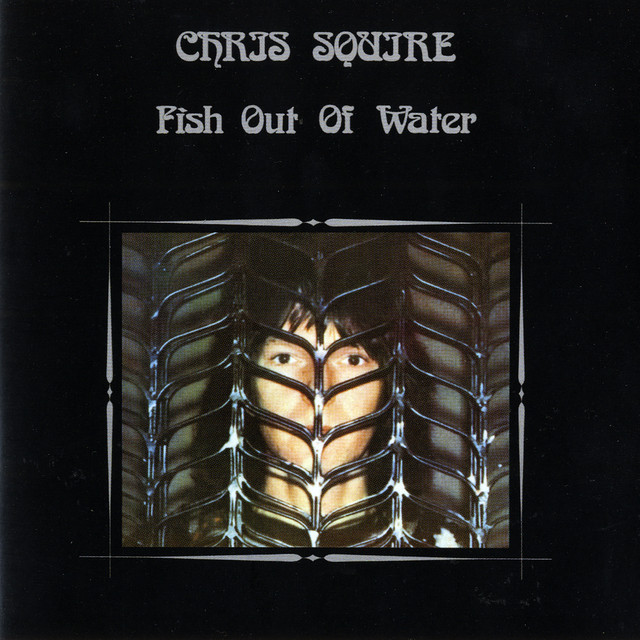
Chris Squire's Rickenbacker 4001 "Fish Out of Water" Custom bass is featured in photos on his official site's Tech Notes section.
Find it on:

Chris Squire has used the Lakland Bob Glaub Signature Series Bass Guitar, as shown in a user-uploaded photo on Imgur.
Find it on:

In the Relayer Tour Programme from 1975, Chris Squire lists his instrumentation. "Instruments: ... Ampeg 4 string stand up electric..."
Find it on:

At 2:47 of this acoustic performance of "Roundabout" by Yes, Squire can be seen with a fretless version of the Martin BCPA-4.
Find it on:

Squire can be seen in this photo with a Gibson Les Paul Triumph Bass among his other basses.
Find it on:

At 16:18 a Mutron iii+ can clearly be seen on Chris's pedalboard.
Find it on:

Further down on this page, in the touring programs, it is mentioned that Squire owned a Gibson Ripper.
Find it on:

At :54 of this Steve Hackett performance, Squire can be seen playing a Spector Coda 5.
Find it on:

In this '70s concert photo, Squire can be seen playing his original Wal Triple-Neck Bass, before he had the Kid's Guitars replica made.
The bottom-neck is a 4-String fretless Bass, the middle-neck is a 4-String standard Bass, and the top-neck is a T-style guitar that Squire modded into a short scale, 3-rows-of-2, 6-String Octave Bass.
Find it on:

Chris Squire previously used the Ampeg SVT-II bass amplifier head before transitioning to the SVT 2-Pro model. This is evidenced by a user-uploaded photo on Radioswissclassic.
Find it on:

According to the official Yes website, bassist Chris Squire owned a Danelectro Longhorn 6 string bass while playing with Yes.
Full article here.
Find it on:

Squire can be seen playing a Carvin LB-76A in this photo.
Find it on:

Richard Davis, Squire's guitar tech, states, "Chris’s rig…Marshall 100 watt head with a Marshall 4 x 12 speaker cabinet (over there), Two Ampeg SVT-2 Pro heads, Two SVT- 8 x10 speaker cabinets, an SWR amplifier head for the Bass Pedals, and an SWR 2 x 15 speaker cabinet," on Squire's website.
Find it on:

Squire can be seen in a photo on this page with a Guild Jet Star II behind him.
Find it on:

It is stated on Squire's official site that he used Dewtron Mister Bassman bass pedals.
Find it on:

"Squire, who felt that certain effects were better matched with neck or bridge pickups, rewired his Rickenbacker with stereo outputs in the early ’70s. Onstage, he used a boatload of vintage effects, including Maestro Fuzz-Tone, TC Electronic Stereo Chorus Flanger, TC Nova Reverb, Boss OC-3 Super Octave, Mu-Tron III, and custom-made tremolo pedals. He played Moog Taurus bass pedals, eventually triggering samples from an E-Mu ESI2000 sampler."
Find it on:
This is a community-built gear list for Chris Squire.
- Find relevant music gear like Microphones, Bass Guitars, Amplifiers, Effects Pedals, Software Plugins and VSTs, Keyboards and Synthesizers, Instruments, and other instruments and add it to Chris Squire.
- The best places to look for gear usage are typically on the artist's social media, YouTube, live performance images, and interviews.
- To receive email updates when Chris Squire is seen with new gear, follow the artist.
Discography








.webp)