Adrian Belew
Genre
Credits
Genre
Credits
Adrian Belew's Studio Equipment


"Radial makes products no one else has thought to make and builds them better than anyone else can." - he was featured on Radial's website, as well as JDI and JDV products assigned to his name.
Find it on:


Acquired through his manager, as mentioned by Juan Alderete in this March 20, 2019 Instagram post.
The doctor @lasynthco to the rescue on this one of maybe 50 made @ehx rack synths. I used one on Cryptonesia and wished I owned it but @infrasonicsound wouldn’t sell me it. I know @jamiestillman has one because @realkidkoala found one in Seattle and told me to buy it but my funds were tied up in another gear purchase at the time. Distortion Felix Manny introduced me to them back in the early 90’s because he sold one to @davidbowie manager for @theadrianbelew and then he had another that he sold to @u2 for The Edge. #pedalsandeffects #ehxfacts
Find it on:


Adrian Belew utilizes a Roland FC-300 MIDI Foot Controller, as shown in his 2010 rig diagram on Guitargeek.
Find it on:

According to this Premier Guitar Rig Rundown at (20:11), "Belew uses a 50-watt Atomic Reactor active wedge to monitor the more straightforward tones from his Fractal Audio Axe-Fx Ultra, while he routes aural “snippets” and other loops from his laptop through a Bose L1 portable loudspeaker system."
Find it on:

Belew uses a Liquid Foot+ 12 MIDI foot controller to send all the data and program changes for his very demanding live show.
Find it on:

According to this description from the back of the 1982 promotional LP "Indisciple", Belew's rig at the time included a DC-30 unit.
Find it on:

Featured in this January 1, 2017 Facebook post.
the components inside the rack are: an Axe-Fx Ultra, a Boss GP-10, a Moto UltraLite MK-3, a Shure in-ear transmitter, and a Keeley compressor. on the floor: 3 Boss EV-5 pedals, a Liquid Foot 12+ midi controller, and a Digitech Harmony Man.
Find it on:

Adrian uses a Samson 16-Channel mixer, according to Guitar Geek's rig diagram.
Find it on:

According to Guitar Geek's rig diagram, Adrian uses a ProCo Rack D.I.
Find it on:



Around the time of the Power Trio, the ever-changing, always exploring Belew was experimenting with an Electro-Harmonix Flanger Hoax, a Locomofon Fuz-Fabrik, a Roland VG-99, a Boomerang looper, and an Eventide H8000 Ultra-Harmonizer.
Guitar Player interview, 2014.
Find it on:

A 13-pin jack connects his guitar to a Roland VG-99 V-Guitar System. From there, the signal is split, with one side hitting a MOTU UltraLite Mk3 Hybrid audio interface that feeds the front-of-house mix, Belew’s in-ear monitors, and the Bose L1.
Find it on:

You can clearly see the QuNeo behind Adrian Belew's audio engineer, in the right side of the picture, next to the iPad. Check the video for more details: https://youtu.be/vy7fjfmsV9o
Find it on:

Visible among Belew's effects rack in Adrian Belew: Electronic Guitar (1984) at 2:41.
Find it on:

Visible among Belew's effects rack in Adrian Belew: Electronic Guitar (1984) at 2:41. He also lists it in the December 1986 Downbeat interview "Adrian Belew: Twang Bar King" by Gene Santoro:
ADRIAN BELEW'S EQUIPMENT
Adrian Belew says, "I'm using four guitars now. First are the two Twang-Bar Wonderbeast guitars with artwork by Mike Goetz. Each has a different tuning — one is normal, the other has the G tuned up to A so I can get different voicings and avoid pentatonic scales. Starting off at the headstock, they have bow-and-tuning heads, thereby eliminating the need for retaining bars which stop you from being able to play in the back of the head or bend strings at the nut. They have Seymour Duncan pickups, Kahler tremolo arms, and all the guts from the Roland synthesizer. The same is true of the third guitar I use, except that the artwork is by Laurie Anderson, and that it's tuned to the same tuning as my dobro, E-B-E-E-B-E, with heavier gauge strings, the low E being a .052 and the high E being a .012. Usually I use medium-light Gibson strings, with the high E being a .010 and the low E a .042 I use Fender medium picks. The fourth guitar is my battered 1967 Stratocaster from the David Bowie period, with a broken bass pickup [laughs] and it feeds back better than any other guitar I have.
"My two amps are Roland JC-120s — I've used one on everything from 1977 on. Right now, my floor situation looks something like this — I have the GR-700, the Roland SDE-3000 delay, an Ibanez harmonizer, a Big Muff fuzztone, a Foxtone fuzztone, the Electro-Harmonix echo-flanger — which makes the wonderful metallic insect sounds on Desire — the new Roland compressor — I always use lots of compression — a Roland pitch-shifter, and the Electro-Harmonix 16-second delay, which I've had converted to do backwards tape loops."
Find it on:

In the magazine International Musician And Recording World from June 1990 we can read :
"Belew's rack is a serious affair - and there are two of them in case one goes down: "There's the GP8 and GS6 ganged together, the GP8 is very noisy and the GS6 has the ability to quiet that down. The G96 also has stereo delays and choruses, and has several guitar sounds that I like that I developed - they sort of sound like Vox amplifiers. There's a Roland pitch shifter, which is a mini rack device. The only thing I use that for is backwards guitar. The two A3s have a variety of sounds that I like, they're very warm sounding units and have modulated delays that actually sound like a double guitar."
Find it on:

Belew lists the SDE-3000 among his "floor situation" equipment in the December 1986, Downbeat interview "Adrian Belew: Twang Bar King" by Gene Santoro.
ADRIAN BELEW'S EQUIPMENT
Adrian Belew says, "I'm using four guitars now. First are the two Twang-Bar Wonderbeast guitars with artwork by Mike Goetz. Each has a different tuning — one is normal, the other has the G tuned up to A so I can get different voicings and avoid pentatonic scales. Starting off at the headstock, they have bow-and-tuning heads, thereby eliminating the need for retaining bars which stop you from being able to play in the back of the head or bend strings at the nut. They have Seymour Duncan pickups, Kahler tremolo arms, and all the guts from the Roland synthesizer. The same is true of the third guitar I use, except that the artwork is by Laurie Anderson, and that it's tuned to the same tuning as my dobro, E-B-E-E-B-E, with heavier gauge strings, the low E being a .052 and the high E being a .012. Usually I use medium-light Gibson strings, with the high E being a .010 and the low E a .042 I use Fender medium picks. The fourth guitar is my battered 1967 Stratocaster from the David Bowie period, with a broken bass pickup [laughs] and it feeds back better than any other guitar I have.
"My two amps are Roland JC-120s — I've used one on everything from 1977 on. Right now, my floor situation looks something like this — I have the GR-700, the Roland SDE-3000 delay, an Ibanez harmonizer, a Big Muff fuzztone, a Foxtone fuzztone, the Electro-Harmonix echo-flanger — which makes the wonderful metallic insect sounds on Desire — the new Roland compressor — I always use lots of compression — a Roland pitch-shifter, and the Electro-Harmonix 16-second delay, which I've had converted to do backwards tape loops."
Find it on:





Used in the 1990s, as known from the following:
adrianbelew.net, Discography, "inner revolution"
the guitar parts for This Is What I Believe In rely on a Roland GR-50 guitar synthe. with it I could pitch each string to have a different harmony note mixed with the original note of each string. thereby creating some very unique chords and running figures reminiscent of the style robert fripp and I played in the 80’s crimson.
Facebook, Adrian Belew, November 14, 2021 & adrianbelew.net, Discography, "here"
trivia points for Here:
[...]
•the ethereal sounds in Fly were made with a Roland GR-50 guitar synth. the song was written and recorded with a dobro (picture 4) tuned to DADDAD. I used a koto (picture 5) for the harp-like glissandos. the long low notes at the very end are my voice being manipulated.
Facebook, Adrian Belew, November 21, 2021 & adrianbelew.net, Discography, "the experimental guitar series volume 1: guitar as orchestra"
trivia points for Guitar As Orchestra:
•having released 4 pop-ish records in a row I was due to make a 180 degree turn. by this time I had worked extensively with 3 different guitar synth models (Roland gr-700, gr-50, and gr-1) and written a library of several hundred sounds. they weren’t samples, they were programs created by long late night experimentation. I felt it was time for someone to build an orchestra using only guitar.
•you can’t imagine the first-time thrill of playing my guitar and having it sound like a piano. a whole new universe appeared!
•having listened to this record for the first time in many years I was surprised at how ahead of its time it truly was. some of the better pieces would still make good film score material today. IMHO
•there really isn’t much in the way of trivia points since the whole record, be it tympani, harp, piano, or bassoon is guitar synthesizer. even the “audience applause” at the beginning was made with a guitar synth. so instead I will reprint here some of the liner notes from the record:
Find it on:

Adrian Belew uses the RJM Music Mastermind GT-16, as seen in the Premier Guitar Rig Rundown video for the King Crimson BEAT Tour.
Find it on:
This is a community-built gear list for Adrian Belew.
- Find relevant music gear like Microphones, Guitars, Amplifiers, Effects Pedals, Software Plugins and VSTs, Keyboards and Synthesizers, Instruments, and other instruments and add it to Adrian Belew.
- The best places to look for gear usage are typically on the artist's social media, YouTube, live performance images, and interviews.
- To receive email updates when Adrian Belew is seen with new gear, follow the artist.
Discography
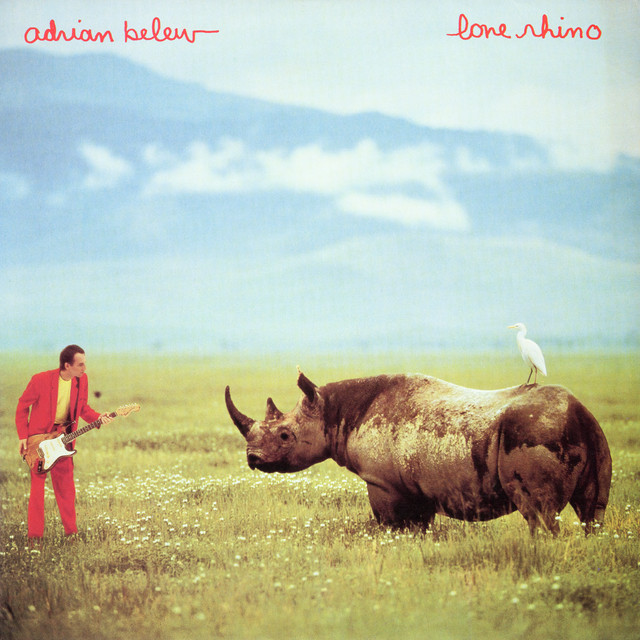
Lone Rhino
1982
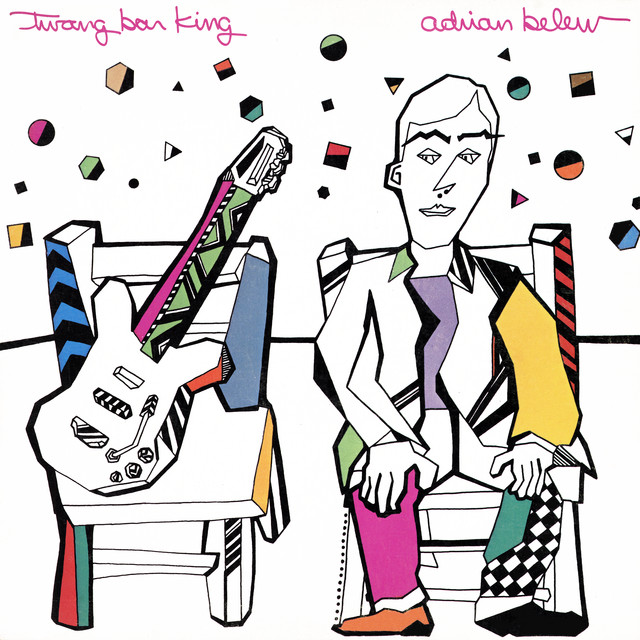
Twang Bar King
1983
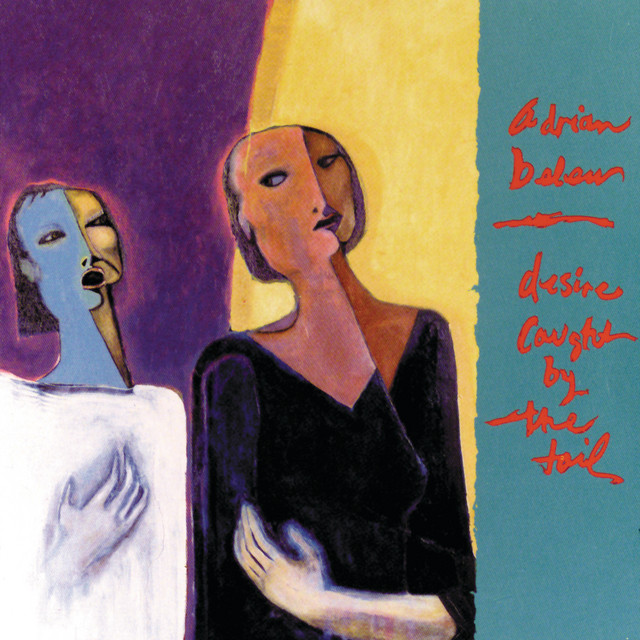
Desire Caught By The Tail
1986
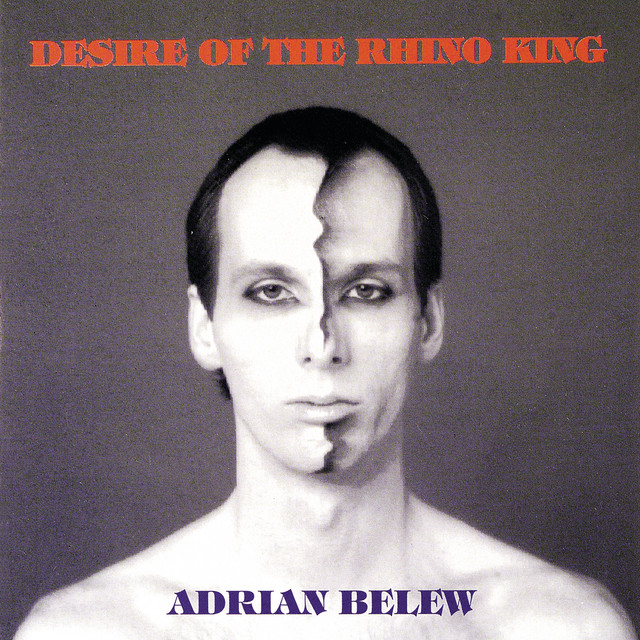
Desire Of The Rhino King
1991
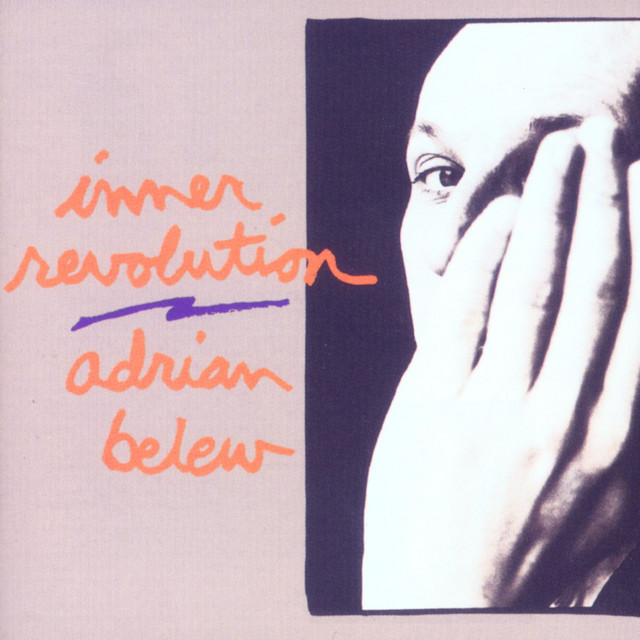
Inner Revolution (US Internet Release)
1992
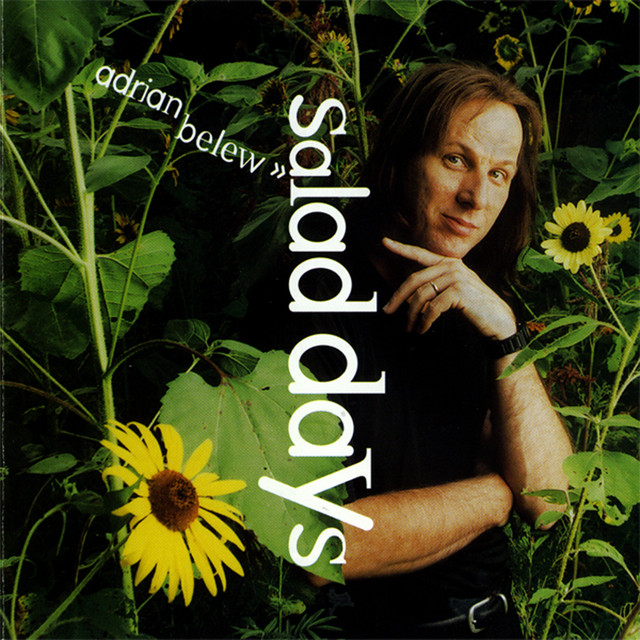
Salad Days
1999
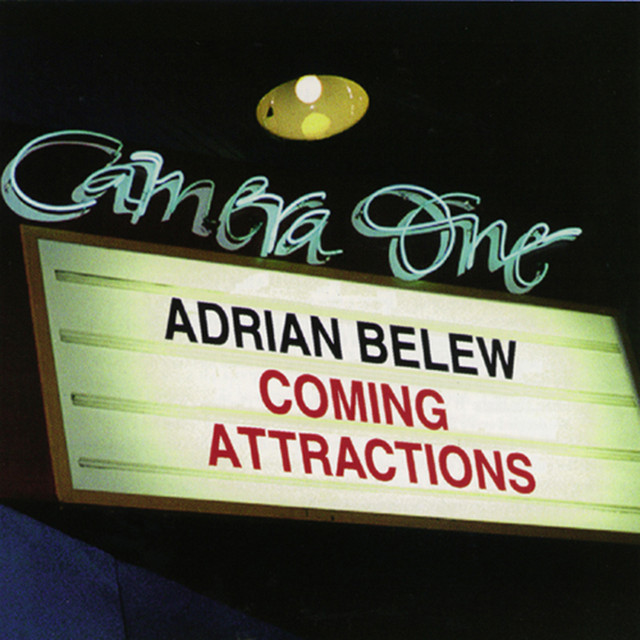
Coming Attractions
2000
Side One
2005
Side Two
2005
Side Three
2006
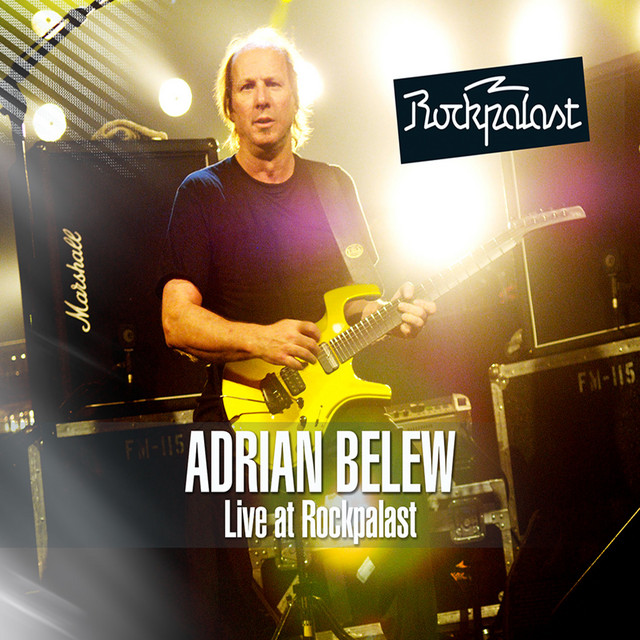
Live at Rockpalast Forum, Leverkusen, Germany 3rd November, 2008
2015

pop sided
2019
Album Credits
-
Adrian Belew · 2005
Producer -
Adrian Belew · 2005
Producer -
Kevin Max · 2001
Producer -
Jars of Clay · 1995
Producer -
Adrian Belew · 1991
Producer -
Adrian Belew · 1983
Producer -
Adrian Belew · 1982
Producer