



Pricing and availability
We compare 600+ stores and found this item at 10 stores. Prices updated .
Store
Reviews
Price









Average Price: $250
Standard/Professional
$119
$300+
Price Tier
Budget
Standard
High-end
Price History
Based on price data from 7 merchants for "Radial JDI". Prices shown reflect NEW condition. Tracking began Apr 2, 2026.
* Product prices and availability are updated by Equipboard every 24hrs and are subject to change. Equipboard may receive compensation for purchases made at participating retailers linked on this site. This compensation does not affect what products or prices are displayed, or the order of prices listed. For more information, please refer to our affiliate disclosure.
Description
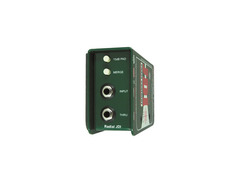
Introducing the Radial JDI, a top-of-the-line passive direct box that delivers uncompromised sound quality and reliability in all environments. This professional-grade DI box is equipped with a premium Jensen transformer, ensuring pristine and accurate sound capture of your instruments.
The Radial JDI MK3 is known for its near-zero phase and harmonic distortion, providing a natural tone that faithfully captures the full range of any instrument. Its frequency response is exceptionally flat, preserving the original highs, lows, and everything in between. This makes the JDI MK3 an ideal choice for both live performances and studio applications where maintaining tonal integrity is crucial.
Built to withstand high input levels and extreme conditions, the JDI MK3 features a robust 14-gauge welded steel construction and a durable baked enamel finish. Its protective bookend design shields switches from damage, and an internal skeletal frame protects sensitive components from external stress. This rugged design allows for worry-free use on stages and in challenging environments.
The JDI MK3 is built for flexibility. With its input pad, polarity reverse, and ground lift switches, it can adapt to any setup for optimal performance. Its input pad reduces the signal by 15dB to prevent overloading connected equipment, while the polarity reverse inverts pin 2 and 3 of the XLR output. The ground lift disconnects pin 1 to eliminate ground loops altogether. These features provide the versatility to interface with virtually any audio system or instrument.
Key Features:
- Premium Jensen JT-DBE transformer for optimal isolation and low phase distortion
- Near-zero phase and harmonic distortion for accurate tone capture
- Rugged 14-gauge welded steel construction for durability
- Input pad, polarity reverse, and ground lift switches for maximum flexibility
- High input level handling without overloading connected equipment
- Protective bookend design to shield switches and connectors from damage
- Merge function to combine 2 line signals to 1x XLR out
- Exceptional signal handling and high common mode noise rejection.
Owner's manual
Radial JDI User ManualProduct specs
| Type | Passive DI |
| Channels | 1 |
| Inputs | 1 x 1/4" |
| Outputs | 1 x XLR, 1 x TS thru |
| Height | 2" |
| Width | 3.5" |
| Depth | 5.5" |
| Weight | 2.2 lbs. |
FAQs
-
What is the primary function of the Radial JDI direct box?
-
The Radial JDI is designed to convert high-impedance instrument signals to low-impedance, balanced signals, allowing for long cable runs without noise or signal loss, making it ideal for live and studio settings.
-
Is the Radial JDI suitable for both passive and active instruments?
-
Yes, the Radial JDI is a passive DI box and is particularly well-suited for use with active instruments like keyboards and basses, as it can handle high-output signals without distortion.
-
Does the Radial JDI require any external power source?
-
No, the Radial JDI is a passive direct box and does not require any external power source or batteries to operate.
-
What type of transformer is used in the Radial JDI?
-
The Radial JDI is equipped with a Jensen transformer, known for its high-quality signal conversion and minimal distortion, ensuring clear and accurate sound reproduction.
-
Can the Radial JDI be used for re-amping purposes?
-
Yes, the Radial JDI can be used in reverse to convert low-impedance mic-level signals back to high-impedance instrument-level signals, making it suitable for re-amping applications.
Videos

SpectreSoundStudios
Do you need a Direct Box? - Test Results!

Do you need a Direct Box? - Test Results!
SpectreSoundStudios
Radial Engineering JDI Passive Direct Box | Reverb Demo Video

Reverb
Radial JDI Passive Direct Box Review Demo with worship leader Jared Stepp

pastorjaredstepp
Reviews
PROS
-
Offers a clean, transparent sound without coloration, maintaining instrument's true tone.
-
Handles high-output pickups without distortion, ensuring sound clarity at all levels.
-
Built like a tank, ensuring durability for live gigs and studio use.
-
Jensen transformer inside provides superior sound quality, especially with vintage equipment.
-
Passive design requires no external power, simplifying setup and reducing potential failure points.
-
Reduces noise and eliminates ground loops, improving overall sound quality.
-
Features a merge function for combining stereo inputs into a mono output.
-
Versatile for various instruments and multimedia applications, from guitars to drum machines.
-
Low noise floor and excellent dynamic range enhances performance in different settings.
-
Highly recommended for both live and studio applications by professionals and amateurs alike.
CONS
-
Merge function reportedly less effective compared to some other DI boxes.
-
Some treble loss noted when used with certain effects or EQ pedals.
-
Older units may experience issues with phantom power on the channel.
-
Foam pad and jack nuts may wear or loosen over time.
Owner Insights
We analyzed real musician discussions from forums and Reddit to find what players love, question, and tweak about Radial JDI.
Features and functionality
-
The Radial JDI is a passive DI box that requires no power, making it versatile for guitars, synths, and other instruments without altering their tone.
Source -
The JDI can handle up to +21 dBu without distortion, making it suitable for high-output instruments like active bass guitars and keyboards.
Source -
The JDI's Jensen transformer is praised for maintaining a flat midband frequency response, which is crucial for users seeking a transparent signal in live applications.
Source
Use cases and applications
-
Ideal for live gigs, allowing you to split the instrument signal to both a mixer and an amp, ensuring consistent performance regardless of venue equipment quality.
Source -
The Radial JDI is preferred for passive sources with active pickups, while active DIs like the J48 are recommended for passive pickups to achieve a hotter signal.
Source -
For acoustic instruments, Radial's high impedance DIs like the PZ-DI are recommended to improve sound quality over standard DIs, particularly for violins and mandolins.
Source
User experience
-
Owners note that the JDI is transparent in operation; it doesn't alter the sound, which is its intended design as a utility piece rather than a tone-shaping device.
Source -
Owners have commented that the JDI is a workhorse, with one user mentioning they've had it for over four years without issues.
Source -
One owner noted the JDI's ability to eliminate buzz issues that persisted with cheaper DI boxes, indicating superior noise shielding and build quality.
Source -
Some users report a noticeable difference in signal quality with the JDI when used on large rigs exceeding 100k watts, highlighting its performance in substantial live sound environments.
Source
Comparisons
-
Users suggest that for those seeking tone modification, alternatives like the SansAmp or MXR Bass Preamp offer preamp capabilities and EQ options not present in the JDI.
Source -
Users have compared the JDI favorably against high-end DIs like the REDDI and ZOD, noting that while those have extra "mojo," the JDI holds up impressively well.
Source -
Some users found the JDI superior to the ProDI, especially in terms of sound quality when tested with acoustic guitars, noting a more pleasant high end.
Source -
The JDI is often compared to the Pro D2, with users indicating that the Jensen transformer in the JDI offers superior bandwidth and signal accuracy, especially for quieter sources with extended high frequencies.
Source
Software and compatibility
-
With interfaces that provide Hi-Z inputs, the JDI's function might be redundant, as these inputs already accommodate high impedance signals effectively.
Source
5.0 out of 5
Based on 4 Reviews and 11 Ratings

10741
Best bang for the buck DI box, a must-have for any self-respecting studio engineer.
I've done tons of studio recordings starting from 2018 up until now, and if there's one critical studio gear that I cannot live without, it would be a DI box. This allows you to split your guitar signal into your regular amp tone and a DI tone where you're recording your raw guitar sound into a line-level signal, giving you tons of opportunities to reamp your guitar sound however your heart desires.
The Radial JDI is a fantastic piece of gear that I'd recommend to any and all studio engineers. It's a passive DI box, meaning you don't need to use a power supply to use the DI box, and it features a solid Jensen transformer inside the DI box. Pretty amazing stuff. The sound quality of the DI box is great too, as I get the full clarity of my guitar pickups being recorded into my DAW.
When I need to record DI guitar tracks, I reach for the Radial JDI.




114
Great
Tank construction. Simple and straight. Jensen transformer. Best tone.
Artist usage
Add artist
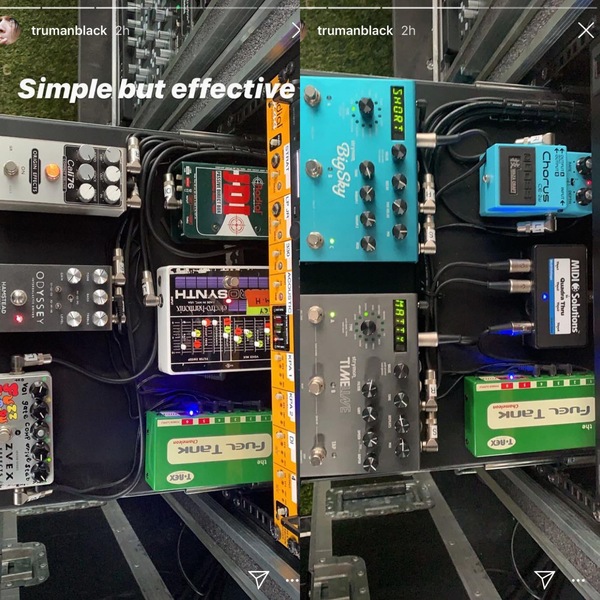
From Matty's May 29th 2019 instagram story.

In his streaming and home recording signal path, matt uses a radial jdi direct box to go to his laptop. He uses this to bring his direct guitar signal straight to the interface without any processing. this is so he can have the clean signal incase any reamping is needed to be done later on


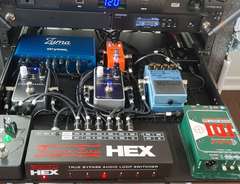
Shuman's pedalboard features a Palmer Triage amp selector, a Radial Engineering JDI direct box, a Korg tuner, three Way Huge stomps—an Angry Troll, a Swollen Pickle, and a Supa-Puss—a Jim Dunlop volume pedal, and a footswitch to activate an offstage Moog unit.


"I have found that with the Radial JDI direct box, my bass comes through extremely clean, very quiet, and with a smooth transparent low end. I use my Radial DI for everything."


"Radial makes products no one else has thought to make and builds them better than anyone else can." - he was featured on Radial's website, as well as JDI and JDV products assigned to his name.


Sweetwater's website lists this as part of Frank's gear


"The Radial J series DI's are easily the most reliable & consistent DI products available to the touring artist. Not only do they deliver a clean signal, they also seem to provide a unique warmth which is essential to The National's sound." - Dessner about Radial JDI.

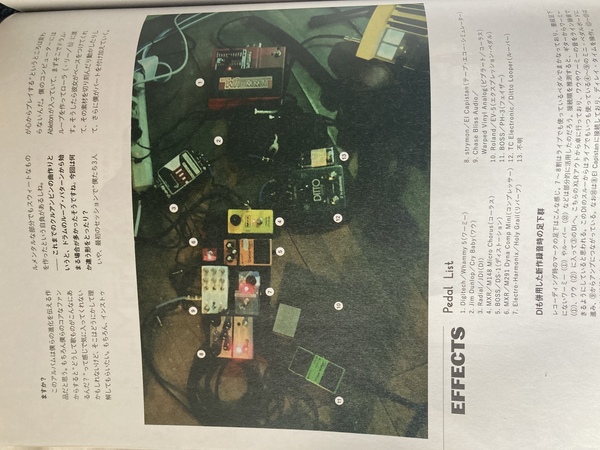
Radial JDI is in this photo. (From "Guitar Magazine", Aug 2020)


She uses both versions - the passive box and the stereo version .


He uses the "passive direct box" version of JDI (you can notice by the switches on front)


According to the article "RockView Rig Rundown with Skillet" by RockView Live, John Cooper uses the Radial JDI.

Album Usage
The Radial JDI has been featured on the following albums:

Genre Usage
Based on how artists on Equipboard use this gear, it is most commonly found in the following genres.
Used With
Based on how musicians on Equipboard use Radial JDI, it is most commonly used with the following gear.


-s.webp?v=1784559379)
-s.webp?v=1784586384)
Community setups
Show yours


Similar
Add recommendation2 alternative and related items for Radial JDI, curated by the Equipboard community.

$749.99

More Radial Direct Boxes

$111.57 - $144.00
in Direct Boxes Rank

.png?v=1784519118)


$223.16 - $268.00
in Direct Boxes Rank


$200.00 - $259.99
in Direct Boxes Rank


$185.96 - $219.00
in Direct Boxes Rank
.png?v=1784510866)


$137.61 - $177.00
in Direct Boxes Rank


$225.00 - $259.99
in Direct Boxes Rank

$125.00 - $349.99
in Direct Boxes Rank


$115.29 - $134.99
in Direct Boxes Rank


$223.16 - $275.50
in Direct Boxes Rank


$111.57 - $134.99
in Direct Boxes Rank


$219.00 - $275.50
in Direct Boxes Rank


$424.01 - $515.00
in Direct Boxes Rank


$81.82 - $95.00
in Direct Boxes Rank


$92.98 - $113.00
in Direct Boxes Rank

$81.82 - $95.00
in Direct Boxes Rank


$230.60 - $268.00
in Direct Boxes Rank


$333.00 - $379.00
in Direct Boxes Rank


$249.99
in Direct Boxes Rank


$349.62 - $399.99
in Direct Boxes Rank


$1,124.32 - $1,899.99
in Direct Boxes Rank


$259.99 - $266.00
in Direct Boxes Rank

$249.99 - $289.99
in Direct Boxes Rank

$64.15 - $99.00
in Direct Boxes Rank


$371.93 - $419.99
in Direct Boxes Rank

$260.35 - $299.99
in Direct Boxes Rank


$424.01 - $515.00
in Direct Boxes Rank


$230.60 - $419.00
in Direct Boxes Rank


$499.99
in Direct Boxes Rank


$111.57 - $134.99
in Direct Boxes Rank


$329.99 - $372.00
in Direct Boxes Rank

$193.40 - $242.50
in Direct Boxes Rank


$1,029.99 - $1,150.00
in Direct Boxes Rank


$78.10 - $85.00
in Direct Boxes Rank


$1,779.99 - $1,899.99
in Direct Boxes Rank


Accessories & Related Items


-s.webp?v=1784586260)


-s.webp?v=1784585797)




Gear Guides








Most Popular Direct Boxes
Most Popular Brands
-
Added to Equipboard on by
Mmuzik4machinesGearIQ 359
-


