
Chris Martin
lead singer of Coldplay
Role
Genre
Group
Credits
Role
Genre
Group
Credits
Chris Martin's Compressor Plugins


Used on "Hymn for the Weekend", as mentioned by A Head Full of Dreams co-producer Rik Simpson in this Sound on Sound article.
It was very important to get the development and arrangement of the vocals right. Many of the 45 tracks are effect tracks. There’s only one lead vocal track each for the verses [LV Verse], for the bridge [LV Bridge], and the choruses [LV Chorus], and then Chris sang a number of bridge and chorus vocal overdubs. The main verse vocal has the Avid Channel Strip, which is taking out some low end, an SPL TwinTube, which adds some saturation, the UBK1 compressor adding more crunch, and the UAD Fairchild 670 and SSL E Channel. I don’t use a great deal of compression from each unit. I will just tickle it a little bit with each one, and each one adds a different characteristic. I could just add a whole load of compression from one plug–in, but like this it doesn’t sound over–compressed. The Pro–Q 2 is, again, a high–pass filter. In the sends there’s a Waves H–Delay that I recorded elsewhere, and sends to a main D–Verb and two QL Spaces aux tracks. I have different reverbs and delays for each part of the song so that the vocal sound evolves during the song.
“The main chorus lead vocal has the FabFilter Pro–Q 2 EQ, the Waves Rennaissance Vox, again the UBK1, two instances of the FabFilter Pro–DS de–esser, two instances of the UAD Pultec EQP–1A, and the FabFilter Pro–MB multi–band compressor. I like the FabFilter de–esser. I am still trying to find the ultimate de–esser, because it’s quite a hard thing to do right. I have two because one is doing high top sibilance, and the other lower stuff around 2kHz. The sends on chorus lead vocal go to aux tracks with the Waves H–Delay, the FXpansion Bloom with a lush, wide stereo delay, a small chamber from the QL Spaces plug–in, a mono delay from the UAD Echoplex, and several other delays. The sends to the delays are all automated independently, with different words getting different delays.
“One thing of note is that there also is a ‘Hope House M80’ vocal track, recorded when Chris was still using the Telefunken M80, and it’s mixed in very low. There’s also a lead-vocal double that has ‘251’ marked, indicating that Chris was also using that mic. But the main vocals were recorded using the Soyuz. There are two tracks marked ‘251 Melo Lead’ and ‘251 Melo Double’, again mixed in low. ‘Melo’ stands for Melodyne, and these tracks are raised two semitones. They were recorded in a different key for a different version of the song, and detuning them added a certain alien quality to these vocals which we really liked. At the bottom of the session are the Beyoncé vocal tracks, on which I mainly used the SSL E Channel strip, UBK1, L2, SoundToys Echo Boy, Avid ModDelay and the QL Space.”
Find it on:





Mentioned by FOH engineer Dan Green in this AudioTechnology magazine article about the Ghost Stories Tour.
AT: Could you run me through Chris Martin’s vocal chain?
DG: It starts with a Shure SM58 radio mic which he just loves singing into — the sound and the weight is just right for him. It goes to the Neve 1073 500 series module, and into a channel on the SD7. Then I just use a little bit of channel EQ to clean up the low end, to avoid pumping the compressor unnecessarily — the stage volume is blisteringly loud up there from PA spill, so there’s always going to be some low-end filtering. And then it goes into one of the Waves Puigchild 660 plug-ins. From there, into a Waves H EQ for some general EQ’ing. I really like that EQ for its visual feedback — the spectrum analyser is really handy to quickly pinpoint any frequencies that are poking out or not quite right. Then it finishes with the Waves C6 multiband compressor, which is the most incredible plug-in. I really rely on the C6 for the sound of Chris’s voice because when he’s getting into his low register, his voice is very bassy. But I find if I take some of those overpowering low frequencies out with a regular EQ, when he goes up to his falsetto voice, it sounds a bit thin. With the C6, because it’s a dynamic EQ, as soon as he hits his falsetto voice, all of those rich lows return. Effects-wise, I’ve got an old TC 2290 delay which is MIDI’d up to be part of my snapshot automation. I really like it because it’s hands-on. Saying that, after it’s set up the only control I touch is the tap tempo button. Finally, I have a Bricasti M7 reverb, which I prefer to a Lexicon for its character.
The PuigChild 670 comes in a bundle with the 660. The 660 VST is actually just the left stereo processor of the 670.
Find it on:


Mentioned by FOH engineer Dan Green in this AudioTechnology magazine article about the Ghost Stories Tour.
AT: Could you run me through Chris Martin’s vocal chain?
DG: It starts with a Shure SM58 radio mic which he just loves singing into — the sound and the weight is just right for him. It goes to the Neve 1073 500 series module, and into a channel on the SD7. Then I just use a little bit of channel EQ to clean up the low end, to avoid pumping the compressor unnecessarily — the stage volume is blisteringly loud up there from PA spill, so there’s always going to be some low-end filtering. And then it goes into one of the Waves Puigchild 660 plug-ins. From there, into a Waves H EQ for some general EQ’ing. I really like that EQ for its visual feedback — the spectrum analyser is really handy to quickly pinpoint any frequencies that are poking out or not quite right. Then it finishes with the Waves C6 multiband compressor, which is the most incredible plug-in. I really rely on the C6 for the sound of Chris’s voice because when he’s getting into his low register, his voice is very bassy. But I find if I take some of those overpowering low frequencies out with a regular EQ, when he goes up to his falsetto voice, it sounds a bit thin. With the C6, because it’s a dynamic EQ, as soon as he hits his falsetto voice, all of those rich lows return. Effects-wise, I’ve got an old TC 2290 delay which is MIDI’d up to be part of my snapshot automation. I really like it because it’s hands-on. Saying that, after it’s set up the only control I touch is the tap tempo button. Finally, I have a Bricasti M7 reverb, which I prefer to a Lexicon for its character.
Find it on:

Used on "Hymn for the Weekend", as mentioned by A Head Full of Dreams co-producer Rik Simpson in this Sound on Sound article.
It was very important to get the development and arrangement of the vocals right. Many of the 45 tracks are effect tracks. There’s only one lead vocal track each for the verses [LV Verse], for the bridge [LV Bridge], and the choruses [LV Chorus], and then Chris sang a number of bridge and chorus vocal overdubs. The main verse vocal has the Avid Channel Strip, which is taking out some low end, an SPL TwinTube, which adds some saturation, the UBK1 compressor adding more crunch, and the UAD Fairchild 670 and SSL E Channel. I don’t use a great deal of compression from each unit. I will just tickle it a little bit with each one, and each one adds a different characteristic. I could just add a whole load of compression from one plug–in, but like this it doesn’t sound over–compressed. The Pro–Q 2 is, again, a high–pass filter. In the sends there’s a Waves H–Delay that I recorded elsewhere, and sends to a main D–Verb and two QL Spaces aux tracks. I have different reverbs and delays for each part of the song so that the vocal sound evolves during the song.
“The main chorus lead vocal has the FabFilter Pro–Q 2 EQ, the Waves Rennaissance Vox, again the UBK1, two instances of the FabFilter Pro–DS de–esser, two instances of the UAD Pultec EQP–1A, and the FabFilter Pro–MB multi–band compressor. I like the FabFilter de–esser. I am still trying to find the ultimate de–esser, because it’s quite a hard thing to do right. I have two because one is doing high top sibilance, and the other lower stuff around 2kHz. The sends on chorus lead vocal go to aux tracks with the Waves H–Delay, the FXpansion Bloom with a lush, wide stereo delay, a small chamber from the QL Spaces plug–in, a mono delay from the UAD Echoplex, and several other delays. The sends to the delays are all automated independently, with different words getting different delays.
“One thing of note is that there also is a ‘Hope House M80’ vocal track, recorded when Chris was still using the Telefunken M80, and it’s mixed in very low. There’s also a lead-vocal double that has ‘251’ marked, indicating that Chris was also using that mic. But the main vocals were recorded using the Soyuz. There are two tracks marked ‘251 Melo Lead’ and ‘251 Melo Double’, again mixed in low. ‘Melo’ stands for Melodyne, and these tracks are raised two semitones. They were recorded in a different key for a different version of the song, and detuning them added a certain alien quality to these vocals which we really liked. At the bottom of the session are the Beyoncé vocal tracks, on which I mainly used the SSL E Channel strip, UBK1, L2, SoundToys Echo Boy, Avid ModDelay and the QL Space.”
Find it on:


This is a community-built gear list for Chris Martin.
- Find relevant music gear like Microphones, Guitars, Amplifiers, Effects Pedals, Pianos, Keyboards and Synthesizers, and other instruments and add it to Chris Martin.
- The best places to look for gear usage are typically on the artist's social media, YouTube, live performance images, and interviews.
- To receive email updates when Chris Martin is seen with new gear, follow the artist.
Album Credits
-
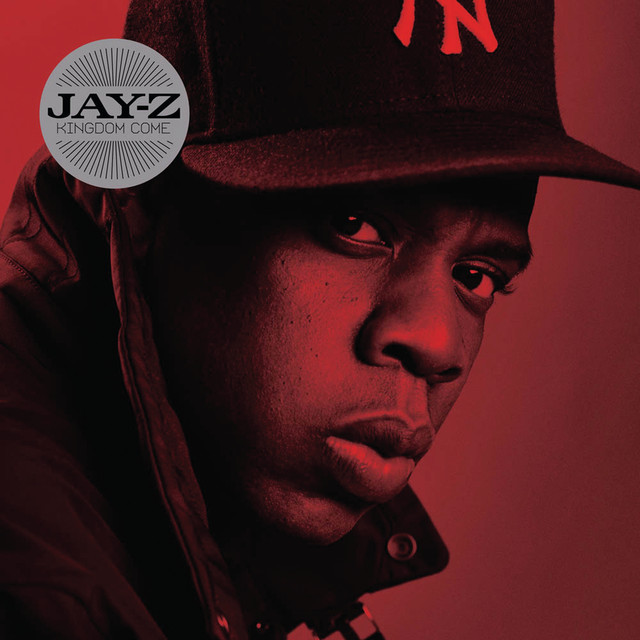
Jay-Z · 2006
Producer







.webp)