
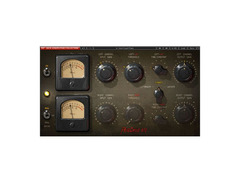

Pricing and availability
We compare 600+ stores and found this item at 5 stores. Prices updated .
Store
Reviews
Price


Price History
Based on price data from 4 merchants for "Waves PuigChild Compressor 660 & 670". Prices shown reflect NEW condition. Tracking began Apr 2, 2026.
* Product prices and availability are updated by Equipboard every 24hrs and are subject to change. Equipboard may receive compensation for purchases made at participating retailers linked on this site. This compensation does not affect what products or prices are displayed, or the order of prices listed. For more information, please refer to our affiliate disclosure.
Description
Step into the world of legendary sound with the Waves PuigChild Compressor 660 & 670, a plugin that brings the iconic warmth and character of the Fairchild compressors directly to your DAW. This meticulously crafted emulation captures the essence of Jack Joseph Puig's cherished Fairchild units, renowned for shaping the dynamics of hits from artists like U2 and John Mayer. With its vintage-style dynamics processing, the PuigChild offers a faithful reproduction of the original's single push-pull amplification stages and high control voltages, delivering that sought-after analog warmth.
Designed with both precision and artistry, this plugin includes a selection of presets curated by Jack Joseph Puig himself, providing instant access to coveted sounds used by top producers. Enhance your audio with the integrated Mid-Side processing, offering superior stereo imaging for a modern twist on classic tones. Whether you're mixing vocals, guitars, or mastering entire tracks, the PuigChild 660 & 670 ensures your music remains compelling and true to its roots.
Key Features:
- Emulation of the legendary Fairchild 660/670 compressors
- Developed in collaboration with Jack Joseph Puig
- Integrated Mid-Side processing for enhanced stereo imaging
- Includes an extensive collection of presets by Jack Joseph Puig
- Faithfully reproduces the sound of single push-pull amplification stages
- Ideal for vocals, instruments, and mastering applications
Product specs
| Software Type | Dynamics |
| Platform | Mac, PC |
| Upgrade/Full | Full |
| Download/Boxed | Download |
| Bit Depth | 64-bit |
| Format | AAX Native, AudioSuite, VST, AU, SoundGrid |
| Hardware Requirements - Mac | Intel Core i7 or higher (M1 support), 8GB RAM minimum |
| Hardware Requirements - PC | Intel Core i5 / AMD Quad-core or higher (AVX required), 8GB RAM minimum |
| OS Requirements - Mac | macOS 10.15.7 or later |
| OS Requirements - PC | Windows 10 or later (21H2), 64-bit |
FAQs
-
What makes the Waves PuigChild Compressor 660 & 670 unique compared to other compressors?
-
The Waves PuigChild Compressor 660 & 670 emulates the legendary Fairchild compressor, known for its warm, smooth characteristics and historical use on countless hit records. It offers both mono and dual-channel options, providing versatile compression and limiting capabilities.
-
Is the Waves PuigChild Compressor 660 & 670 compatible with my DAW?
-
Yes, the Waves PuigChild Compressor 660 & 670 is compatible with major DAWs, supporting AAX Native, AudioSuite, VST, AU, and SoundGrid formats, making it versatile for various production environments.
-
What are the system requirements for running the Waves PuigChild Compressor on a Mac?
-
To run the Waves PuigChild Compressor on a Mac, you need macOS 10.15.7 or later, an Intel Core i7 or higher (M1 support), and a minimum of 8GB RAM.
-
Can the Waves PuigChild Compressor 660 & 670 be used for mastering?
-
Yes, the Waves PuigChild Compressor 660 & 670 is suitable for mastering, offering precise control over dynamics with its classic Fairchild compressor emulation, making it ideal for adding warmth and character to final mixes.
-
Does the Waves PuigChild Compressor 660 & 670 work on Windows computers?
-
Yes, it works on Windows computers that meet the minimum requirements: Windows 10 (21H2) or later, Intel Core i5 / AMD Quad-core or higher (AVX required), and at least 8GB RAM.
Videos

Waves Audio
Jack Joseph Puig on the PuigChild 660/670 Compressor
Jack Joseph Puig on the PuigChild 660/670 Compressor
Waves Audio
Mixing With Mike Plugin of the Week: Waves PuigChild 670

Mixing With Mike
How to use Waves PuigChild 670 for Mid-Side Master Compression

Andrei Martinez Agras
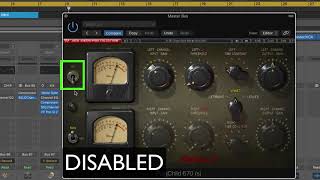
Could This Be the Master Bus Compressor You've Been Looking For All Your Life?

Eli Krantzberg
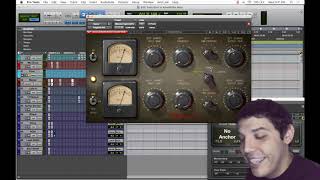
How To Use: Wave PuigChild Compressor 660 & 670 @MattMontanez

Matt Montanez (mattMONTANEZ)

Waves PuigChild 660 & 670 Compressor and Limiter - AES 2011

soundpurestudios
Reviews
PROS
-
Fattens up drum recordings for a fuller sound
-
Excels in controlling transients for even mixes
-
Simplifies setups by reducing the need for multiple plugins
-
Adds noticeable stereo field expansion
-
Increases volume without compromising clarity
-
Works well on various instruments including vocals and guitars
-
Provides a distinctly non-neutral, character-rich compression
-
Ideal for Rock, Blues, and Country genres
-
Highly recommended for budget-conscious musicians seeking quality
CONS
-
May require post-compression EQ adjustments due to low-end reduction
-
Perceived as less effective compared to some Sonox and Fabfilter plugins
Owner Insights
We analyzed real musician discussions from forums and Reddit to find what players love, question, and tweak about Waves PuigChild Compressor 660 & 670.
Comparisons
-
UAD Fairchild is noted for its richer sound compared to Waves PuigChild, making it a preferred choice for many users.
Source -
Overloud Comp670 and Acustica Midnight are highlighted as favorites over Waves, offering distinct emulations with unique tonal characteristics.
Source -
The IK Multimedia and Avid versions are suggested as alternatives, with the IK version noted for its precision and fidelity to original unit sounds.
Source
Use cases and applications
-
Fairchild compressors are favored for vintage vocals and dark, slow bus compression, providing saturation that can be "place and forget" for vocals and drums.
Source
Features and functionality
-
The Fairchild's ability to dull high frequencies is either loved or disliked, depending on the user's preference for vintage sound characteristics.
Source -
The new Fairchild plugin includes a "mix" knob for parallel processing, a high-pass filter for sidechain, and additional headroom and balance controls for enhanced versatility.
Source
Critic Reviews
5.0 out of 5
Based on 1 Review and 9 Ratings

Artist usage
Add artist

Mentioned by FOH engineer Dan Green in this AudioTechnology magazine article about the Ghost Stories Tour.
AT: Could you run me through Chris Martin’s vocal chain?
DG: It starts with a Shure SM58 radio mic which he just loves singing into — the sound and the weight is just right for him. It goes to the Neve 1073 500 series module, and into a channel on the SD7. Then I just use a little bit of channel EQ to clean up the low end, to avoid pumping the compressor unnecessarily — the stage volume is blisteringly loud up there from PA spill, so there’s always going to be some low-end filtering. And then it goes into one of the Waves Puigchild 660 plug-ins. From there, into a Waves H EQ for some general EQ’ing. I really like that EQ for its visual feedback — the spectrum analyser is really handy to quickly pinpoint any frequencies that are poking out or not quite right. Then it finishes with the Waves C6 multiband compressor, which is the most incredible plug-in. I really rely on the C6 for the sound of Chris’s voice because when he’s getting into his low register, his voice is very bassy. But I find if I take some of those overpowering low frequencies out with a regular EQ, when he goes up to his falsetto voice, it sounds a bit thin. With the C6, because it’s a dynamic EQ, as soon as he hits his falsetto voice, all of those rich lows return. Effects-wise, I’ve got an old TC 2290 delay which is MIDI’d up to be part of my snapshot automation. I really like it because it’s hands-on. Saying that, after it’s set up the only control I touch is the tap tempo button. Finally, I have a Bricasti M7 reverb, which I prefer to a Lexicon for its character.
The PuigChild 670 comes in a bundle with the 660. The 660 VST is actually just the left stereo processor of the 670.


In this "Breaking The Mix Rules" interview we can see that he mentioned that billie has the PuigChild 670 plugin on an insert for some compression for the recording process of the album "When We All Fall Asleep, Where Do We Go?"


In an Instagram photo, Timmy Trumpet's left monitor displays the Waves PuigChild Compressor 660 & 670, indicating his use of this plugin.


In this video at 1:52 we can see Waves PuigChild 660


The PuigChild 670 was used on Cardi B's vocals for "Bodak Yellow", as mentioned by mix engineer Evan LaRay in this February 2018 Sound on Sound interview. The "ELR" settings can be found here.
In his mix of ‘Bodak Yellow’, Evan LaRay used almost identical vocal chains on two auxiliary busses. The ‘Vox 1’ chain includes FabFilter’s Pro-DS de-esser and Waves’ C4 multiband compressor, plus the Waves CLA Vocals plug-in and SoundToys’ Decapitator saturation processor.
The main ‘Hook’ and ‘Verse’ vocal tracks have similar plug-in chains, incorporating the EQ3 seven-band, Waves CLA-76 and Waves De-esser, though the ‘Hook’ also has FabFilter’s Timeless 2 delay. LaRay explains, “The EQ on the ‘Hook’ has a high-pass, around 100Hz, and I’m also cutting 3dB at 300Hz, because the vocal sounded a bit muddy, and again 3dB at 4kHz, because there was a piercing frequency there. The CLA keeps the peaks in check, and the de-esser again takes some higher frequencies out, at 4270Hz, and the Timeless is another favourite plug-in. I think in general the FabFilter plug-ins are extremely dope. I wanted the ‘Hook’ vocal to stand out from the ‘Verse’ vocal, so I used a stereo delay preset, and then tweaked that. The presets on the FabFilter plug-ins are pretty good: you just run through all of them and then choose the best one. In this case I lowered the width and the wet value of the stereo delay preset, and that sounded good and gave the hook its own space. The three plug-ins on the ‘Verse’ track do pretty much the same.
“The ‘Inout’ tracks that are below the ‘Hook’ and the ‘Verse’ are vocal doubles. They are words or lines we use for emphasis and additional power on these lines and words. They come from one of her original vocal takes, which I just cut and cleaned up. Both ‘Inout’ tracks have the Waves RCompressor, just containing these words and lines so they don’t overwhelm the ‘Hook’ or the ‘Verse’ vocal, and then the FabFilter Pro-Q2, taking out some high frequencies, again to make sure it doesn’t clash with the leads, and also cutting below 200Hz. And there’s a delay on these tracks to put them in a slightly different space from the lead vocal tracks.
“In addition to the two ‘Inout’ tracks, both the ‘Hook’ and the ‘Verse’ tracks are also accompanied by an ‘Ad Libs’ track, which were some ad libs Cardi had recorded with Mike over at Krematorium. Mike had also set up a separate aux track for these ad libs, which is ‘Vox2’, and I liked that and kept two of the plug-ins he had on that: the [Avid] Sansamp for some distortion and the SoundToys Panman. I then added the D-Verb and the [Waves] CLA Vocals. I adore the CLA Vocals. I use it on every track I work on. When I don’t use it, the vocals sound completely different. I’d love to know what exactly it does! Finally, the inserts have the Waves L1, just to control the peaks.
“The other tracks — ‘EXF1’, ‘EXF2’, ‘EXF3’ and ‘EXF4’, are because I prefer to create a new track if I want to have a specific effect on specific words or phrases. I prefer doing that to automating the effects on a track. Automation is great, but I tend to only do volume automation. So I copy audio to another track, and then put the effect on that, and in this case I created four different effects tracks with four different delays. ‘EFX1’ is the main one, and has the same three plug-ins as the Verse tracks — EQ3 three-band, CLA76 and Waves De-esser — just with the EQ3 cutting more of the high frequencies. Then there’s an eighth-note ping-pong delay from the Waves H-Delay, and then a D-Verb set to ‘hall’ with 7s decay and a 15ms pre-delay. ‘EFX2’ has another H-Delay delay, ‘EFX3’ the Timeless 2 delay, and ‘EFX4’ again has the H-Delay plus a D-Verb.”
All the main vocal audio tracks go to LaRay’s ‘Vox1’ aux group track. This, he explains, has “A FabFilter Pro-DS de-esser, then the Waves RCompressor controlling the peaks, the Waves C4 multiband compressor boosting the high end and containing the lows in her voice, so it doesn’t cut through too much, and Waves CLA Vocals. Again, it’s really making my vocals sound good. I push the Pitch fader to stereo, spank it on the compressor, also push up the treble to brighten it up, turn the reverb down to ‘tight’, and lower the delay by 9dB because my own quarter delay is my main vocal delay, and it sounds great. There’s also a SoundToys Decapitator, to add more harmonic distortion, and then there’s the Waves RVox. That was supposed to be the final plug-in on the insert, but then I realised the vocal was still peaking too much once she began rapping loudly, so I put on the L1 [limiter] to control that.”
The ‘special sauce’ in Evan LaRay’s mixes comes from a parallel aux channel containing a blend of compression, saturation, EQ and other processors. Key ingredients are Waves’ PuigChild compressor and PuigTech equaliser.
The ‘Vox1’ and ‘Vox2’ tracks also each have a Trim plug-in on an insert, and sends to the ‘Verb’ aux and to the ‘ELR’ (LaRay’s initials) track. “I put the Trim on all my tracks at the end of the vocals, and at the end of the beat, because the vocals actually began distorting in places. These two tracks were too hot, and I wanted to make sure they had a good level before going to the ‘Sub Print’ track. I have the ‘ELR’ aux track in every session. It’s most of all parallel compression, but I also always try out new things with distortion, exciters and things like that, and I label that ‘ELR’. In this case it really is the ‘ELR’ track that makes the vocals cut through the mix.
“The compression on the ‘ELR’ track comes from the Waves PuigChild 670, which is a great compressor, and it’s compressing a lot, so the vocal stays right there in the middle. The signal is then going to the PuigTech EQP-1A, which is boosting some low end to add some warmth to the vocals, and some 5kHz, and then the Waves Aphex Vintage Aural Exciter, set to AX Mix 6, for some added crispness and clarity, then the EQ3 seven-band to control the low mids, and another De-Esser cutting 4398Hz, to finalise the vocal sound. The L1 also helps keep the vocals in the same place. Finally, the ‘Verb’ send on the ‘Vox1’ and ‘Vox2’ tracks goes to the ‘Verb’ aux, which has the Waves RVerb, and that pretty much glues everything together.”


Album Usage
The Waves PuigChild Compressor 660 & 670 has been featured on the following albums:

![Waves PuigChild Compressor 660 & 670 as heard on Bodak Yellow (feat. Messiah) [Latin Trap Remix] by Cardi B (2017)](https://images.equipboard.com/uploads/album/image/658146/bodak-yellow-feat-messiah-latin-trap-remix.jpg)

Genre Usage
Based on how artists on Equipboard use this gear, it is most commonly found in the following genres.
Used With
Based on how musicians on Equipboard use Waves PuigChild Compressor 660 & 670, it is most commonly used with the following gear.


-s.webp?v=1784815462)

-s.webp?v=1784815394)


Similar
Add recommendation2 alternative and related items for Waves PuigChild Compressor 660 & 670, curated by the Equipboard community.


More Waves Compressor Plugins
-m.webp?v=1784815394)
$32.00 - $34.99
in Compressor Plugins Rank


-m.webp?v=1784815428)
$32.00 - $34.99
in Compressor Plugins Rank


$35.99 - $39.99
in Compressor Plugins Rank


$37.00 - $39.99
in Compressor Plugins Rank


$37.00 - $39.99
in Compressor Plugins Rank


-m.webp?v=1784815468)
$39.99
in Compressor Plugins Rank


$33.00 - $34.99
in Compressor Plugins Rank

.jpg?v=1784758771)

$37.00 - $39.99
in Compressor Plugins Rank


$33.00 - $34.99
in Compressor Plugins Rank

.jpg?v=1784733415)


$35.99 - $39.99
in Compressor Plugins Rank


$33.00 - $34.99
in Compressor Plugins Rank


-m.webp?v=1784815390)
$33.00 - $39.99
in Compressor Plugins Rank


$33.00 - $34.99
in Compressor Plugins Rank


$33.00 - $34.99
in Compressor Plugins Rank


$33.00 - $34.99
in Compressor Plugins Rank


$29.99
in Compressor Plugins Rank

$33.00 - $39.99
in Compressor Plugins Rank


$33.00 - $82.50
in Compressor Plugins Rank


$33.00 - $34.99
in Compressor Plugins Rank


$39.99 - $149.00
in Compressor Plugins Rank


$29.00 - $29.99
in Compressor Plugins Rank


$29.99 - $34.99
in Compressor Plugins Rank


$33.00 - $35.99


$191.00 - $199.00


$144.00 - $199.00
in Compressor Plugins Rank


$133.00 - $149.00
in Compressor Plugins Rank

$144.00 - $199.00
in Compressor Plugins Rank

-m.webp?v=1784815355)
$139.00 - $149.00
in Compressor Plugins Rank


$47.00 - $49.00
in Compressor Plugins Rank
.jpeg?v=1784733415)


$39.99 - $149.00
in Compressor Plugins Rank


$69.00
in Compressor Plugins Rank

$39.00 - $1,549.00
in Compressor Plugins Rank


$89.00
in Compressor Plugins Rank
Accessories & Related Items


-s.webp?v=1784815428)


-s.webp?v=1784815390)
-s.webp?v=1784785869)
-s.webp?v=1784815468)




-s.webp?v=1784785458)



Community setups


Gear Guides



.webp)




Most Popular Compressor Plugins
Most Popular Brands
-
Added to Equipboard on by
Ppatrick_eliteGearIQ 333
-