David Gilmour
Pink Floyd
David Gilmour's Gear


David Gilmour used the Pete Cornish Board V3, known as "The Wall Board," during the recording sessions for "The Wall," as detailed on Gilmourish.
Find it on:


David Gilmour scholar Bjørn Riis notes that the 6121 was used during the 1993 sessions for The Division Bell, particularly for the track that would become "Nervana" from The Endless River, featuring photographic evidence.
David employed a number of guitars for the 1993 Division Bell/Endless River sessions. Here at the Olympic Studios playing a Gretsch 6121 during Nervana and a ’52 Telecaster for Allons-y.
In 2019, Gilmour's 6121 was auctioned off for $175,000 as part of Christie's The David Gilmour Guitar Collection auction. The item description confirms its use during the recording of The Division Bell and The Endless River, particularly for "Nervana".
THE FRED GRETSCH MANUFACTURING COMPANY, BROOKLYN, 1957 A SOLID-BODY ELECTRIC GUITAR, CHET ATKINS, 6121 Inlaid at the headstock with the logo Gretsch and applied at the pickguard, along with Chet Atkins, the control cavity cover inscribed 23490, with original hardshell case bearing a label inscribed GRETSCH 6121 ORANGE - CHET ATKINS #23490 SERIAL NO. DG1067; accompanied by the original sales invoice from Gruhn Guitars, Inc. to Pink Floyd, dated 26th June 1978, a letter from Dave Gilman to Pink Floyd, dated 27th June 1978, confirming that the instrument had been placed on hold, a facsimile air waybill addressed to Pink Floyd, dated 11th July 1978, a shipping invoice from Dacair Service Limited to Britannia Row Leasing Ltd., dated 27th July 1978, a handwritten note on a Pink Floyd headed compliments slip reading Dear Vic, Please find enclosed the invoices for the two guitars that should be arriving shortly, Phil, a facsimile repair receipt from Charlie Chandler’s Guitars, Middlesex to David Gilmour Music Ltd., dated 27th July 2009, a handwritten note to David Gilmour by guitar technician Phil Taylor on a sheet of Astoria headed notepaper outlining the repair and modification work performed on the guitar, and a color screenshot of David Gilmour playing this guitar at Olympic Studios, London, circa July 1993 [not illustrated] Length of back 17 7/8 in. (45.3 cm.)
The 6121 is the solid-body companion to Gretsch’s famous hollow-body guitar the 6120 Chet Atkins (lot 40). Purchased by David Gilmour from Gruhn Guitars, Nashville, Tennessee, in June 1978, the guitar has seen a good deal of studio use, notably during recording sessions for Pink Floyd’s 1994 album The Division Bell at Gilmour’s Astoria houseboat studio and Olympic Studios, London, circa July 1993. Between 2013 and 2014, material from the 1993 recording sessions for The Division Bell was revisited and reworked with 21st Century digital technology and supplemented with new material for the last Pink Floyd album The Endless River. Studio footage exists of Gilmour playing the 6121 during a 1993 jam session at Olympic that would become the instrumental Nervana, the third and final bonus track on the deluxe edition of The Endless River. Following a distorted intro, Gilmour plays a heavy metal riff and ends with a two-minute solo on the Gretsch 6121. Released in November 2014 as a tribute to keyboardist Richard Wright, who had passed away in 2008, the predominantly instrumental album debuted at number one in the UK, France, Germany, Portugal, Ireland, the Netherlands, Belgium, New Zealand, and Canada.
Find it on:

The EMS Synthi A is a synthesizer which uses exactly the same electronics as the VCS 3, but rehoused in a Spartanite briefcase. Instead of routing signals using patch cables, as a Moog did, it uses a patch matrix with resistive pins. The 2700 ohm resistors soldered inside the pin vary in tolerance - 5% variance and later 1%. The pins have different colours: the 'red' pins have 1% tolerance and the 'white' have 5%, while the 'green' pins are attenuating pins having a resistance of 68,000 ohms.
The later Synthi AKS incorporated an early digital 256 event KS (Keyboard Sequencer) sequencer in the lid, input provided by a capacitance sensitive Buchla like keyboard.
Perhaps its most prominent use is in Pink Floyd's "On the Run" from their 1973 album The Dark Side of the Moon, as well as the introduction to The Alan Parsons Project's "I Robot." Along with Klaus Schulze and Tangerine Dream, other frequent users of the instrument include Tim Blake & Miquette Giraudy of Gong, Richard Pinhas of Heldon, Merzbow, Thomas Lehn, Cor Fuhler and Alva Noto.
From Wikipedia's page on the EMS VCS3
Find it on:

This guitar has a ash body painted in brown sunburst with white binding, rosewood fingerboard and a white pickguard. At one point a Gibson Hambucker was mounted in the neck but was later replaced with a single-coil pickup.
Find it on:


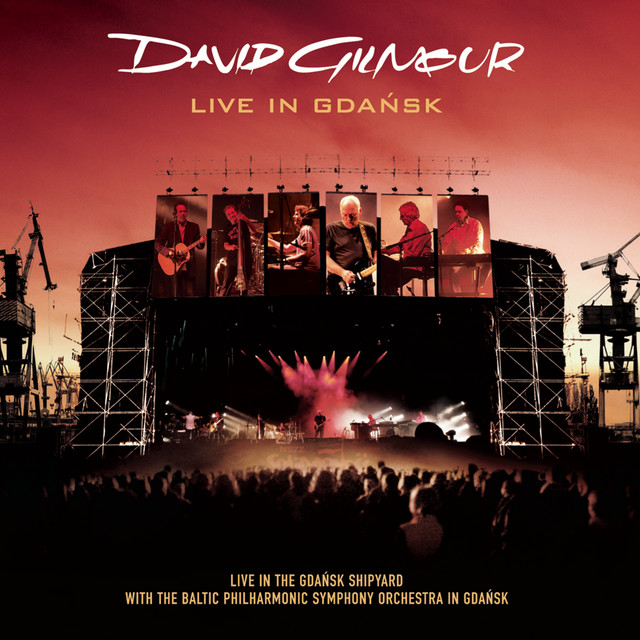
In January 2007 David, Guy Pratt, Richard Wright and Steve DiStanislao recorded a brief jam session at David’s farm in Sussex. On the piece Jam #166 featured on the Live in Gdansk DVD David is seen using a Rickenbacker A-22 “frying pan” lap steel.
Find it on:
-m.webp?v=1769756728)
David Gilmour can be seen playing a Cümbüs most cleary at 0:12 of this live performance of his song "Then I Close My Eyes"
Find it on:

David’s elaborate pedal rack as seen in his new recording studio, Medina (Hove, Brighton, UK).
Find it on:

David’s elaborate pedal rack as seen in his new recording studio, Medina (Hove, Brighton, UK).
Find it on:

Gilmour used this pedal on "Rattle That Lock" tour, according to Gilmourish website.
Find it on:

At minute 33:29, David Gilmour the King Alfred Leisure Centre to check the equipment they're going to use for a tour. There are some knew pedals, like the Electric Mistress and the Big Muff as well. The Boss FA-1 FET amplifier is clearly shown there.
Find it on:

Visible on the pedal shelf of Gilmour's studio, Medina.
Find it on:

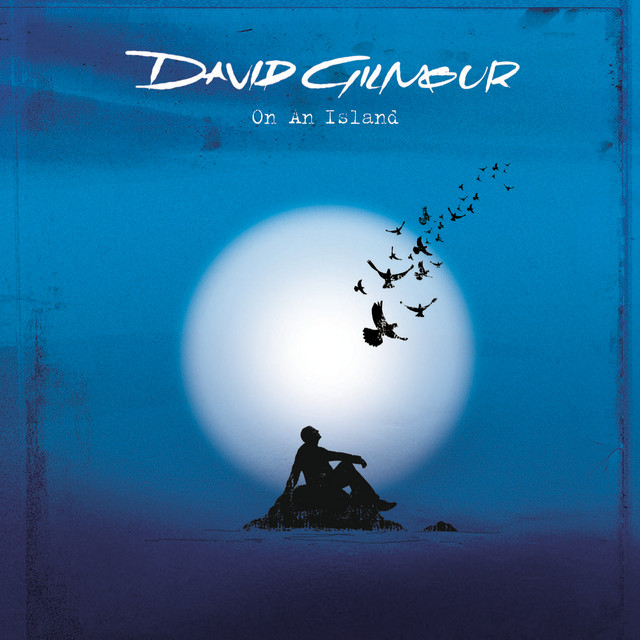
Used for Gilmour's vocals on On An Island, as mentioned by sound engineer Andy Jackson in this July 2006 Sound on Sound article.
"Actually, it's very straightforward — voice — nice microphone, nice mic amp, nice compressor. There you go. For reverbs I tend to be old-school and use an EMT plate. I had a couple of plates and a Lexicon Hall — that was our palette. The vocal chain starts with that Sony tube mic with the heatsink on the side, the C800G, and it is the most fantastic microphone. We have a couple of those, one in the studio and one for David to use at home, which is another reason his demos sounded so good. That feeds an old Neumann V72 mic preamp and then EAR EQs and compressors like the ones I use here in my mastering system. I would compress his voice but only fairly gently with a tickle of 2:1, then maybe do that again on the mix. That's with the exception of the rock songs of course, which were completely mashed in a Fairchild! The thing is, David makes my life easy — stick him on the phone and he sounds great! He is not a difficult person to record — great technique and a great voice."
Despite the EAR EQ model going unspecified, Tape Op #46 features an interview with Gilmour's guitar tech Phil Taylor about Astoria, where On An Island would be recorded, in which he mentions the 825Q.
Find it on:

Used for On An Island, in addition to Pro Tools, as mentioned by producer Phil Manzanera in this July 2006 Sound on Sound article.
Work began in May 2004 and continued for six months at Gilmour's home studio and Manzanera's Gallery Studio, where he has a Euphonix desk and a Pro Tools setup, but works mainly in Logic. (...) "I also made up an ambient track for 'Red Sky At Night', with children's voices and other sounds, while 'Take A Breath' has underwater sounds and a bell, plus the sound of something being thrown in the water. I may also have some dolphin and whale sounds. I've always enjoyed doing things like that, and with Pro Tools and Logic it's become so much easier to do. Basically, the album ended up with sound effects all over the place."
Given that Logic Pro 6 was released in March 2004 and Logic Pro 7 was released on September 24, 2004, Manzanera would have owned Logic Pro 6, the latest version of the DAW in May 2004, at the time of On An Island's recording.
Find it on:

Used for vocals with Pink Floyd for an unspecified session, as mentioned by producer William Wittman in this November 16, 2006 R / E / P forum post.
The only Floyd session I ever saw, they had U-47fets set up for vocals.
Given Wittman's career, the U47 FET could have been used on any session from The Final Cut to The Division Bell, which overlaps with the beginning of sound engineer Andy Jackson's work with Gilmour. In fact, a U47 is mentioned by Jackson in this interview from Vol. 6, #7 of Resolution Magazine.
Well David's very easy, he sounds good on anything, he sound pretty good on a 58, but it's the Sony C800G with the heat sink, horribly expensive, but they're fantastic. I've tried lots of things, and it's really good, it has an openness and a size. We've done all sorts of things over the years, 67, 47, I had him on a Brauner for a while — they all work, he's got a good voice and good technique, so it's not that difficult.
Find it on:


Used on The Endless River, as mentioned by guitar tech Phil Taylor in this February 10, 2015 Music Radar interview about the contents of Astoria.
Left to right: 1958 FENDER Tweed Twin, 1976 Yamaha RA200 Rotary speaker with Alembic preamp, 1970s Hiwatt SA212, Alessandro Redbone Special, Leslie Model G27 cab
“These were David’s main amps on The Endless River,” comments phil Taylor on the beautiful array of vintage and modern amps in the studio’s live room. “He also used the Leslie Studio 12 cab with the Allesandro Redbone Special 55-watt model.”
Find it on:



Mentioned by guitar tech Phil Taylor in this February 10, 2015 Music Radar interview about the contents of Astoria.
“I don’t know the exact date of this Fender Lap Steel Deluxe. But if David is playing slide now, it’s usually on this. He doesn’t play ‘stand-up’ with a slide on his finger, he just doesn’t do it. The Fender is easier to sit down with and play.”
Find it on:

David Gilmour mentioned auctioning his Rickenbacker 360 V64 1991, expressing his hope that the proceeds would support charitable causes through his foundation. This statement, featured on The Worley Gig, highlights his connection to this guitar.
Find it on:

David Gilmour played Comfortably Numb on this guitar https://youtu.be/01sxL5BcEpQ
Find it on:

These are David's Signature Strings with GHS Boomers. Strings sized 10-48 for his Stratocasters. Strings sized 10.5-50 for his Les Pauls.
Find it on:


The lap steel guitar that was used in "High Hopes" and "Shine On You Crazy Diamond parts VI -VII" during the 2001/2002 shows.
Find it on:

David is seen both with and playing the Fender 1000, decades apart.
Find it on:

A clear shot of Gilmour playing a Stingray Fretless bass can be seen at 0:15 in this video.
Find it on:

David Gilmour used the Sovtek Civil War Big Muff in the Pulse Tour in combination with the B.K. Tube Overdrive to créate a new distortion sound that still uses in recent records.
Find it on:

David Gilmour uses the Source Audio Programmable EQ, as shown in a Facebook photo from David Gilmour Equipment, where it is positioned below his Tube Drivers.
Find it on:

David’s elaborate pedal rack as seen in his new recording studio, Medina (Hove, Brighton, UK).
Find it on:

David’s elaborate pedal rack as seen in his new recording studio, Medina (Hove, Brighton, UK).
Find it on:


Photo evidence of Gilmour using the Origin Effects SlideRIG CD on tour. Also a video on Later... Live with Jools Holland shows the pedal in the background.
Find it on:


David Gilmour used the MXR M-151 Delay System II in his 1994 Pink Floyd stage rig, as detailed on the Petecornish website.
Find it on:

Gilmour uses this Strat Presence Control on his Red Strat in conjunction with EMG SA pickups. The SPC boosts the pickup's Midrange and gives the guitar a fatter, almost hum bucker sound.
Find it on:

Gilmour can be seen in this photo playing a Jaydee Roadie II Fretless Bass.
Find it on:
This is a community-built gear list for David Gilmour.
- Find relevant music gear like Guitars, Amplifiers, Effects Pedals, and other instruments and add it to David Gilmour.
- The best places to look for gear usage are typically on the artist's social media, YouTube, live performance images, and interviews.
- To receive email updates when David Gilmour is seen with new gear, follow the artist.
Discography
Album Credits
-

Between Two Points (Live from the Luck and Strange Concerts)
David Gilmour · 2025
Mixing Engineer Producer -

Wish You Were Here (Live from the Luck and Strange Concerts)
David Gilmour · 2025
Mixing Engineer Producer -

Luck and Strange (Live from the Luck and Strange Concerts)
David Gilmour · 2025
Mixing Engineer Producer -

Sorrow (Live from the Luck and Strange Concerts)
David Gilmour · 2025
Mixing Engineer Producer -

David Gilmour · 2025
Mixing Engineer Producer -
David Gilmour · 2024
Mixing Engineer Producer Programmer -
David Gilmour · 2024
Mixing Engineer Producer -
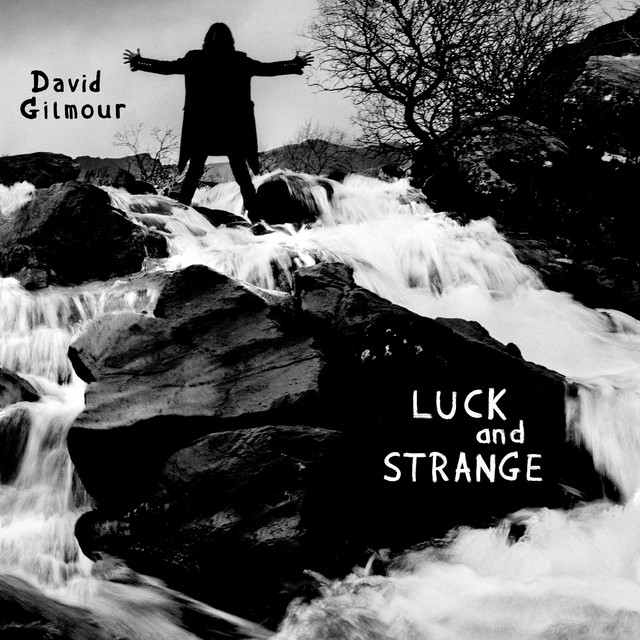
David Gilmour · 2024
Mixing Engineer Producer -
The Dream Academy · 2021
Producer -
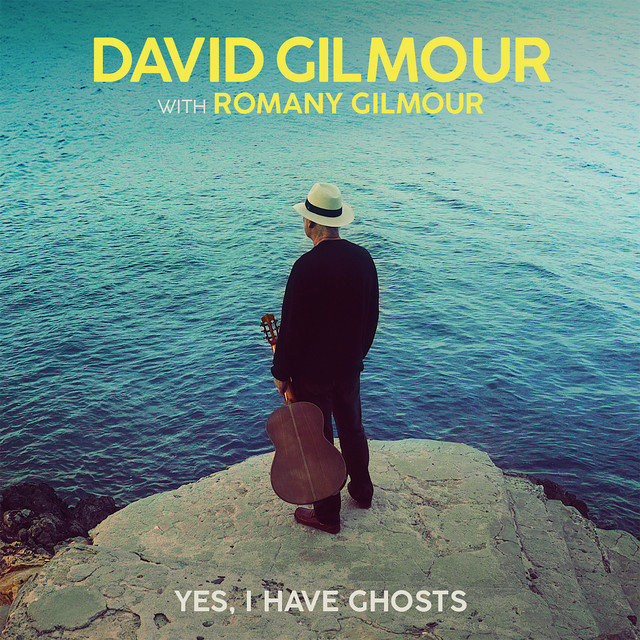
David Gilmour · 2020
Mixing Engineer Programmer -
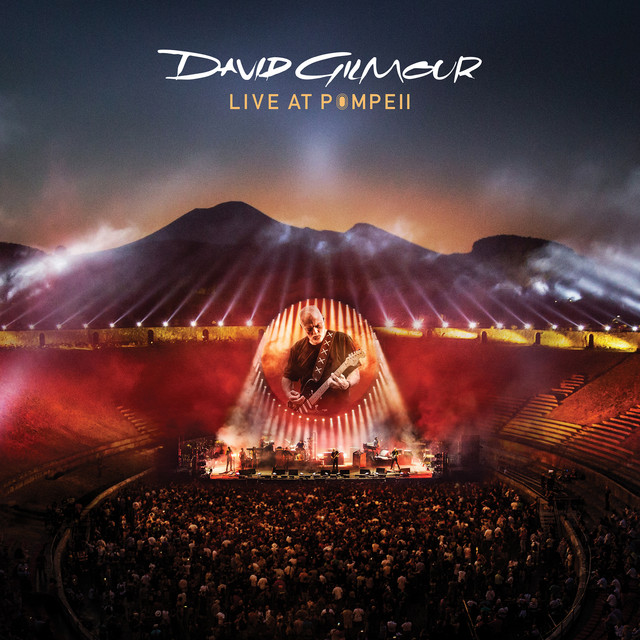
David Gilmour · 2017
Mixing Engineer Producer -
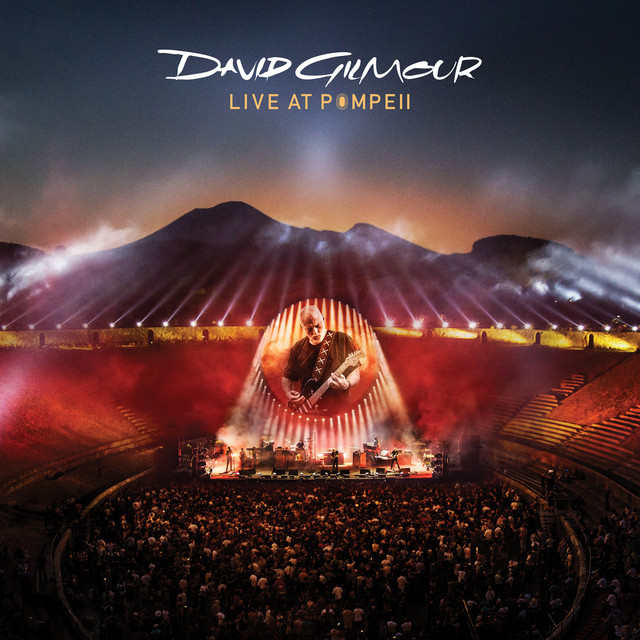
One of These Days (Live At Pompeii 2016)
David Gilmour · 2017
Mixing Engineer Producer
.jpeg?v=1783110732)

.jpeg?v=1783065966)