Jack White
rock & blues multi‐instrumentalist, The White Stripes, Third Man Records
Genre
Credits
Genre
Credits
Jack White's Gear


In this picture, Jack White is using the DiPinto Mach IV, Red with White Stripes, live in 2002.
Find it on:


At 0:15 of this Later...with Jools Holland video, White can be seen playing this cherry red Gibson bass on the song "My Doorbell".
Find it on:

Jack White uses the AEA R44CX Ribbon Microphone in the studio, as seen in the YouTube video "Jack White - Temporary Ground" by rugr8ful2.
Find it on:


At 2:49 in the video, you can see that Jack White using an EB-2D. Although this is technically part of the EB-2 family of basses, the 2D can be distinguished from other models of the EB-2 by the presence of a mini humbucker in the bridge position.
Find it on:

In this picture, Jack is playing a Silvertone 1429. The first three letters of the Silvertone logo on the headstock and the knob from the neck-pickup tone control are missing.
Find it on:

White detailed his surprising gear switcheroo in an interview with Rolling Stone, where he cited an interview with Eddie Van Halen as the reason for the change.
“[Eddie] said, 'I wanted something that doesn't fight me,'” said White.
“I was like, 'Those are the magic bad words that I completely disagree with. And that's why I'm picking his guitar.'”
The interview goes on to say that White sent his engineer Joshua Smith out to buy a Wolfgang, along with a 5150 amp, after which White apparently played a number of Van Halen covers - that we’d love to see.
Find it on:


Used on the album 'Lazarettto'. "I recorded Jack’s vocals mainly with a Shure SM57. Sometimes we used a Neumann U47, as well as an RCA 77D and a Shure SM7, and I often pushed his vocals hard through an 1176(...)"
Find it on:
-m.webp?v=1782658655)
From the "Big Muff Users and Their Pedalboards" section of Kit Rae's Big Muff Page:
"Shown above: Jack White's NYC reissue Big Muff Pi Big Muff Pi (this first version was manufactured 2000-2001) from a November 2001 gig, with a Digitech Whammy-Wah. (...) His Digitech Whammy-Wah (later switched to a Digitech Whammy) was used for an octave-up effect. 'In my small pedal chain it’s the whammy first, then the Big Muff. What I like about the Whammy pedal is that it can raise my guitar an octave and what I like about the Big Muff is that it’s just distortion. I have them in that order because it’s not high-pitched distortion, but high pitch with distortion'"
Find it on:

During his appearance on "Live From Here" Jack can be seen playing a National Style 1 tricone resonator guitar. There is somewhat of a closeup at around the 3:40 mark in the video of "Carolina Drama."
Find it on:
-m.webp?v=1783177050)
White with Gibson EDS-1275.
Find it on:

The Analog Man website talks about this custom pedal for Jack White saying, "We also made him two like this for his tour with the Raconteurs in 2006."
Find it on:

According to the Premier Guitar's 2019 interview, White uses the Boss TU-3 tuner.
Find it on:

Used on the album 'Lazarettto'. "I recorded Jack’s vocals mainly with a Shure SM57. Sometimes we used a Neumann U47, as well as an RCA 77D and a Shure SM7, and I often pushed his vocals hard through an 1176(...)"
Find it on:


Used on the Elephant Tour for vocals, as stated by monitor engineer Matthew Kettle in this July 1, 2003 Mix Online interview.
The three vocals mics used by Jack are all Sennheiser Evolution 8651s. Kettle feels that the mics are well- suited to Jack's style of performance because they combine a great deal of gain before feedback with the open sound of a condenser mic. “[Jack] will work out howthe mic works so he can get weird off-axis and distance EQ effects,” Kettle explains. “He's very creative with all of his gear, and he'll take the idiosyncrasies of something and take advantage of it. He uses an effected mic that he likes to control on stage. He likes it to have this giant kind of vintage plate sound on it for a cavernous effect.”
Find it on:

Used for the guitar on Icky Thump, as stated by recording and mixing engineer Joe Chiccarelli in this October 2007 Sound on Sound interview.
“The Trident at Blackbird Studio D was used for monitoring, and also some guitar microphones, plus most of the room microphones. Some room mics went through an API 512, and a few through a crazy old RCA OP6 tube preamp. Most of the other close mics went through various Neve 1073, Brent Averill API 312 and Chandler TG2 preamps. Jack loves the sound of ribbon microphones, so we used a lot of them, on guitar amps, vocals, and as room mics: Coles 4038, Royer 121, AEA R84. I would have six to 10 room mics up, and would chose a stereo pair from them."
(...) “For the song ‘Icky Thump’ I had the Royer and an AEA on Jack’s two guitar amps, and a couple of U67s for room ambience. In a few cases I used the Shure SM7 guide vocal mic. Ribbons are prone to overloading, so we blew out four Coles mics on the guitar amps. Luckily Jack had several Coles 4038’s with him! The guitar mics went through Neve and Chandler preamps, and then always through an API 550A EQ, and then an 1176. The Univox sounded great acoustically in the room and was miked with a U87 across the room, going into a Chandler TG2 preamp and then some slight compression with an LA2A."
This is restated by Chiccarelli in this October 1, 2007 Mix Online interview.
The Twin was one of two amps that Jack White used, the other being a rare Silvertone piggyback amp. Chiccarelli used an assortment of ribbon mics on the amps, including an AEA R84, a Royer 121 and a Coles. He would also put a Neumann 67 back in the room for ambient tracks. As far as outboard gear, Neve 1073 preamps and UREI 1176 compressor/limiters were typically used, with a Fairchild compressor also being employed occasionally.
Find it on:

In the video, Jack White showcases his drum kit, featuring the Paiste Signature Fast Crash 18" cymbal.
Find it on:

Jack White commissioned the B3 GUYS for custom Hammond A-100 Organ and Leslie 3300 during the 2007 White Stripes World Tour.
Find it on:

As the source points out, Jack White used this guitar in the Raconteurs rehearsal.
Find it on:

Used to record the album 'Lazaretto' : "[Acoustic guitars] would go into the 1073, usually with a bit of 1176 compression."
Find it on:

Used on "I'm Slowly Turning Into You" and "You Don't Know What Love Is (You Just Do What You're Told)", as stated by recording and mixing engineer Joe Chiccarelli in this October 1, 2007 Mix Online interview.
A pair of songs — “I'm Slowly Turning Into You” and “You Don't Know What Love Is (You Just Do as You're Told)” — show off Jack White's B3 talents. Chiccarelli miked the B3's Leslie with a tube U47 on the bottom and a pair of KM84s on top. He also had a U67 in the room to capture some of the organ's ambience. “Sometimes we took a direct out of the organ and sent that through a guitar amp to get a little more edge and bite,” he adds.
Find it on:
-m.webp?v=1783177017)
Used for the Univox J series organ on "Icky Thump", as stated by recording and mixing engineer Joe Chiccarelli in this October 2007 Sound on Sound interview.
"The synthesizer was an old 1959 Univox that he found in New Zealand. It’s a suitcase synth with a speaker built into it, no DI. It’s very reedy, very mid-rangy, and it sounded so good in the room that the ambience you hear on it is just the room ambience." (...) “I probably didn’t do much to that, because I liked the way it sounded on tape. So it was just a matter of balancing the level.” (...) "The Univox sounded great acoustically in the room and was miked with a U87 across the room, going into a Chandler TG2 preamp and then some slight compression with an LA2A."
This is restated by Chiccarelli in this October 1, 2007 Mix Online interview.
While the Stripes sound has its foundation in a guitar and drum combination, there were a handful of songs on Icky Thump that included some new instrument choices. For instance, the title track features a vintage Univox synthesizer that Jack White purchased in New Zealand. The keyboard doesn't have a direct out like most keyboards; it has a built in speaker, so Chiccarelli put an 87 about five feet away from it. “It had so much personality that you didn't want to put a mic inches away from it — you really wanted to capture how it sounded in the room.”
Find it on:

Used on the room mics for Icky Thump, as stated by recording and mixing engineer Joe Chiccarelli in this October 2007 Sound on Sound interview.
“The Trident at Blackbird Studio D was used for monitoring, and also some guitar microphones, plus most of the room microphones. Some room mics went through an API 512, and a few through a crazy old RCA OP6 tube preamp. Most of the other close mics went through various Neve 1073, Brent Averill API 312 and Chandler TG2 preamps. Jack loves the sound of ribbon microphones, so we used a lot of them, on guitar amps, vocals, and as room mics: Coles 4038, Royer 121, AEA R84. I would have six to 10 room mics up, and would chose a stereo pair from them."
Find it on:

Used on Icky Thump, as stated by recording and mixing engineer Joe Chiccarelli in this October 2007 Sound on Sound interview.
“The Trident at Blackbird Studio D was used for monitoring, and also some guitar microphones, plus most of the room microphones. Some room mics went through an API 512, and a few through a crazy old RCA OP6 tube preamp. Most of the other close mics went through various Neve 1073, Brent Averill API 312 and Chandler TG2 preamps. Jack loves the sound of ribbon microphones, so we used a lot of them, on guitar amps, vocals, and as room mics: Coles 4038, Royer 121, AEA R84. I would have six to 10 room mics up, and would chose a stereo pair from them."
Find it on:


Used to record Icky Thump, as stated by recording and mixing engineer Joe Chiccarelli in this October 2007 Sound on Sound interview.
“Jack and Meg are big supporters of the analogue format, and he’s a big believer in the old-school approach: punch it in, no comping. If you don’t like a vocal take, just erase it and redo it. He has a Studer A80 eight-track recorder at home, and we used a Studer A827 with a 16-track head, and Emtec 900 2-inch tape, 30ips, no Dolby. I recorded pretty hot, because I wanted the stuff to have an extra little bit of distortion, and more edge and lots of tape compression. These things became part of the sound. I also had to make sure my levels were consistent, so when I spliced something in, it didn’t become unmixable and out of control.”
Find it on:

He is now using the Third Man Records version of the Mantic Flex
Jack White is a master of weaving ugly-duckling sounds into pop music’s vernacular. So it’s little wonder why he saw the appeal in Mantic’s excellent phase-locked loop (PLL) mayhem generator, the Flex. This new version is co-branded with Mantic and the name of White’s Third Man Records. But it marks a return to the design origins of the Flex, which has since evolved into a more complex variant called the Flex Pro. The Third Man version is the only way to get the original, simpler Flex. But while “simple” may be a useful descriptor for the relative number of controls, it does little to describe the many bizarre and demented tones and textures this circuit generates.
We did use it on some songs. I used it a couple of times on my last solo record, too. I want to be careful not to use it too much, but it’s kind of irresistible because it does so many interesting things. (...) I start the song ["Sunday Driver"] off with it, actually. Live onstage, I have to give that to Dean Fertita. He has to play the Mantic on that song, because I can’t do the other arpeggio-sounding octave thing on the guitar at the same time. I overdubbed both of those when we recorded. Brendan is playing something totally different as well. That song’s got a lot of guitars on it.
Find it on:

In this video, Jack White shows the viewers his drum kit.
Find it on:





It was just sort of two types of guitars. I had an army of guitars for this Raconteurs album and for the touring. The most guitars I’ve ever taken with me on the road. I almost don’t know why, except for how many different tones and ideas that we tried out in the studio. It’s sort of these new Telecasters and these golden Gibsons. The Gibsons were given to me as a present by Gibson. There was some Grammy event that was sponsored by them, and they said, “Pick out any guitar you want!” I said well, I usually only play Gibson acoustic guitars. I didn’t really know what to pick. I saw this Fort Knox gold Les Paul in their catalog, and I thought that’s crazy, it’s so gold! I wonder if they’d make me one of those with a maple neck. I didn’t know if they’d do that or not. They were nice enough to do that. They gave me the Flying V with the maple neck as, like, a second guitar, as a present. That was really kind of them. I like the number three, so I said, I wonder if you could make me another one: the Firebird Gold with the Fort Knox maple neck? So I had those three guitars.
Find it on:

Featured on the official ZVEX artist page.
Jack White uses a Tremolo Probe and a Woolly Mammoth
Find it on:

At 8:20 we can see Jack White and Ben Blackwell talking about the Teac A-2340SX tape recorder. It was Jack White's first multitrack recorder.
Find it on:
This is a community-built gear list for Jack White.
- Find relevant music gear like Microphones, Guitars, Amplifiers, Effects Pedals, Drum Sets, Cymbals, Snare Drums, Drumsticks, Pianos, Keyboards and Synthesizers, and other instruments and add it to Jack White.
- The best places to look for gear usage are typically on the artist's social media, YouTube, live performance images, and interviews.
- To receive email updates when Jack White is seen with new gear, follow the artist.
Discography

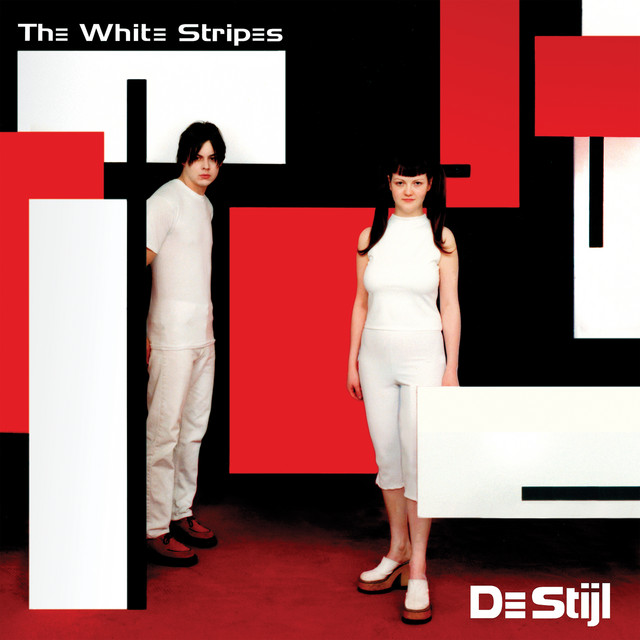
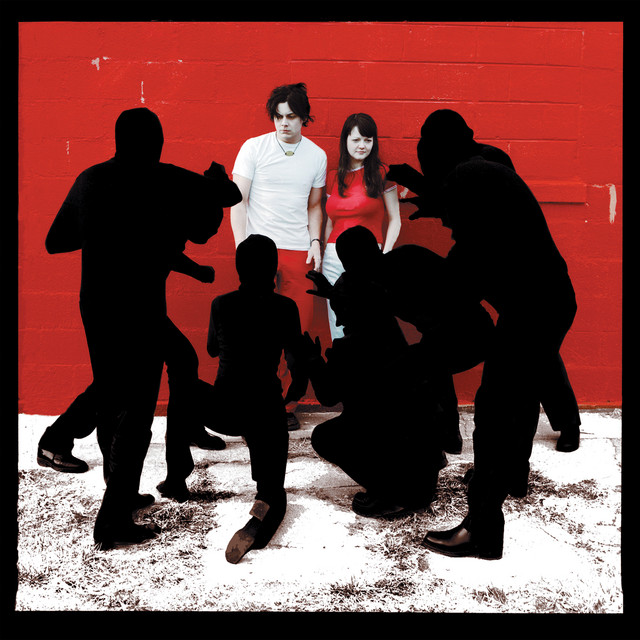
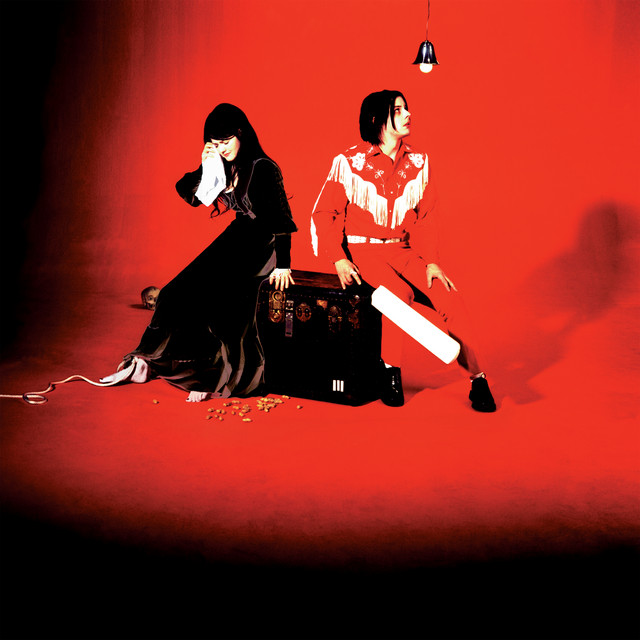
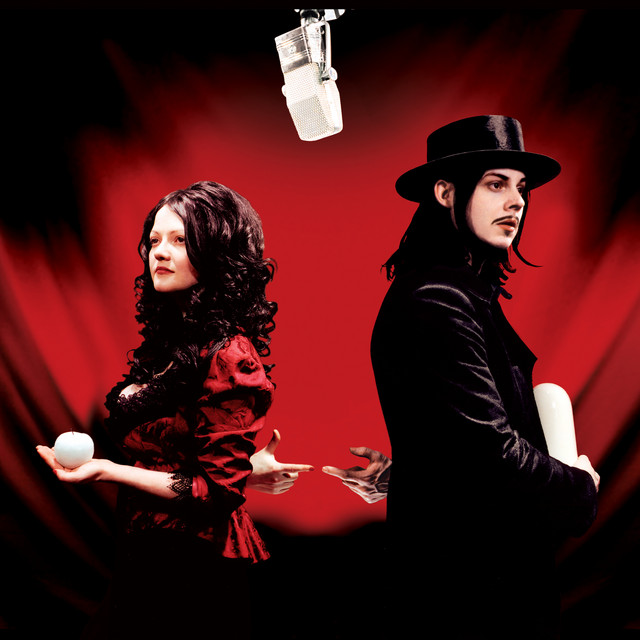
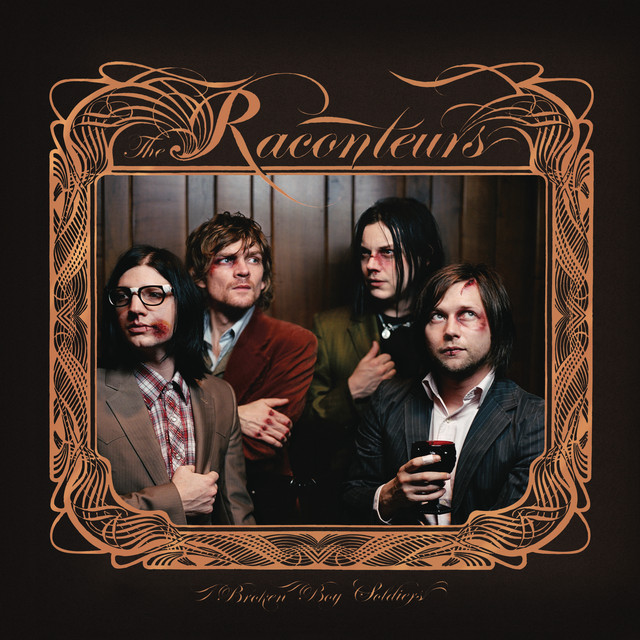
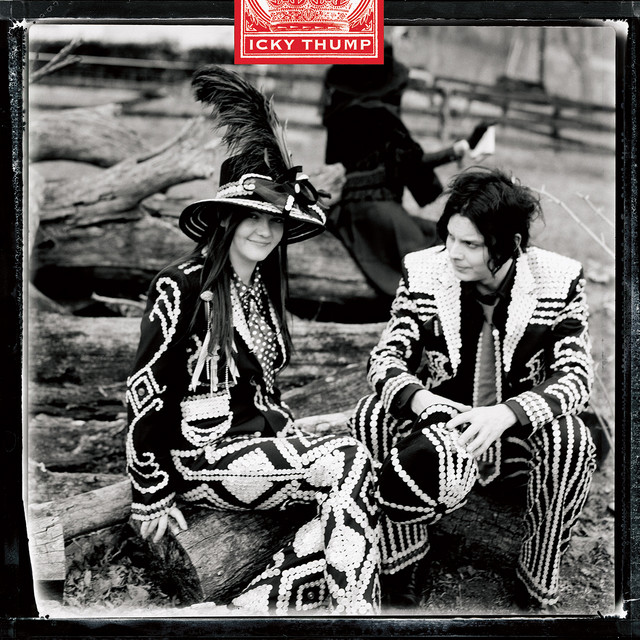

Album Credits
-

Jack White & Jack White · 2024
Mixing Engineer Producer -

Jack White & Jack White · 2022
Engineer Mixing Engineer Producer -
Jack White & Jack White · 2022
Engineer Mixing Engineer Producer -

Jack White & Jack White · 2018
Engineer Mixing Engineer Producer -
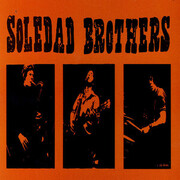
Soledad Brothers · 2017
Recording Engineer -
Killer Diller Blues (Music from The American Epic Sessions)
Alabama Shakes · 2017
Producer -
Jack White & Jack White · 2017
Producer -
Producer
-
Justice League (Original Motion Picture Soundtrack)
Danny Elfman · 2017
Mixing Engineer Producer -

Beyoncé · 2016
Producer -
You Are The Sunshine Of My Life
Jack White & Jack White · 2016
Producer -
Jack White & Jack White · 2014
Mixing Engineer Producer