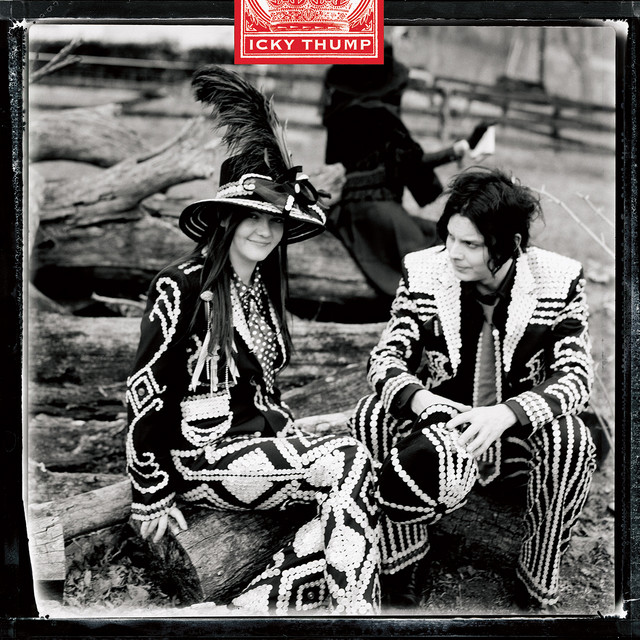
The White Stripes & Jack White & Jack White – Icky Thump
The music gear and equipment used by the artists, producers, engineers, and more involved in the making of the 2007 album Icky Thump.
Music from Icky Thump
Artists on Icky Thump

Gear Used On Icky Thump
Explore the instruments, equipment, software, and production tools used in the making of The White Stripes & Jack White & Jack White – Icky Thump (2007). Click more on each item to see exactly how it was used.

Jack White
Roles:
Guitars used by Jack White on Icky Thump

Avg price: $4,012.11
"Yeah, I played a Gibson L1 [on The White Stripes’ album Icky Thump]. That’s the Robert Johnson model. I have one from 1915. There are clips of me using that one all over the place on the last tour. We just put a surface-mounted pickup on it, one of those you tape on, like they use on a violin. It was hard to pull off live. But we do have songs where Meg wouldn’t play so loud and it would be okay. I love that guitar a lot. It’s probably my favorite."


Keyboards and Synthesizers used by Jack White on Icky Thump

Avg price: $800.00
Jack White can be seen with a Moog Little Phatty at 1:12 and 2:14 in this live performance of "Icky Thump" by The White Stripes.

Dubreq Stylophone (original 1968)
"Detroit’s famous duo features Stylophone sounds throughout the song 'Icky Thump,' the title track of their 2007 album. The track showcases the Stylophone with a wild and dissonant solo. Always a fan of retro musical instruments, Jack White is also credited for playing the Stylophone on the album Consolers of The Lonely by the Raconteurs."

Jennings Organ Company Univox J6
Used on "Icky Thump", as stated by mix engineer Joe Chiccarelli to Sound on Sound and Mix Online (both October 2007). After years of the particular model being unspecified, the synth was featured in this April 15, 2019 Instagram post by The Raconteurs, which revealed that White purchased the instrument at Bungalow Bill's Music Store.
Sound on Sound October 2007
“The synthesizer was an old 1959 Univox that he found in New Zealand. It’s a suitcase synth with a speaker built into it, no DI. It’s very reedy, very mid-rangy, and it sounded so good in the room that the ambience you hear on it is just the room ambience."
While the Stripes sound has its foundation in a guitar and drum combination, there were a handful of songs on Icky Thump that included some new instrument choices. For instance, the title track features a vintage Univox synthesizer that Jack White purchased in New Zealand. The keyboard doesn’t have a direct out like most keyboards; it has a built in speaker, so Chiccarelli put an 87 about five feet away from it. “It had so much personality that you didn’t want to put a mic inches away from it — you really wanted to capture how it sounded in the room.”
@theraconteurs Instagram, April 15, 2019
Jack reunites with the man who sold him the Univox Synthesizer that Jack used with The White Stripes on the song Icky Thump. #theraconteurs #jackwhite #univoxsynth #bungalowbillsmusicstore
Microphones used by Jack White on Icky Thump

Avg price: $1,255.50
Used for the guitar on Icky Thump, as stated by recording and mixing engineer Joe Chiccarelli in this October 2007 Sound on Sound interview.
“The Trident at Blackbird Studio D was used for monitoring, and also some guitar microphones, plus most of the room microphones. Some room mics went through an API 512, and a few through a crazy old RCA OP6 tube preamp. Most of the other close mics went through various Neve 1073, Brent Averill API 312 and Chandler TG2 preamps. Jack loves the sound of ribbon microphones, so we used a lot of them, on guitar amps, vocals, and as room mics: Coles 4038, Royer 121, AEA R84. I would have six to 10 room mics up, and would chose a stereo pair from them.
(...) “For the song ‘Icky Thump’ I had the Royer and an AEA on Jack’s two guitar amps, and a couple of U67s for room ambience. In a few cases I used the Shure SM7 guide vocal mic. Ribbons are prone to overloading, so we blew out four Coles mics on the guitar amps. Luckily Jack had several Coles 4038’s with him! The guitar mics went through Neve and Chandler preamps, and then always through an API 550A EQ, and then an 1176. The Univox sounded great acoustically in the room and was miked with a U87 across the room, going into a Chandler TG2 preamp and then some slight compression with an LA2A.
“Jack is very particular about his vocal sound, and it’s one of the things on the album that we really took a lot of time for. He is very sensitive to what he hears in the headphones, and he wanted something that gave him juice and was exciting to sing to. So every song had a different mic/preamp/compressor setup. Most of his vocals were recorded through an old RCA 77DX mic, but for some of them I used the Shure SM7 guide vocal mic. On the title song Jack’s vocals were recorded with a Telefunken U47, going into a Neve 1073 preamp and then into an 1176 compressor.”
This is restated by Chiccarelli in this October 1, 2007 Mix Online interview.
The Twin was one of two amps that Jack White used, the other being a rare Silvertone piggyback amp. Chiccarelli used an assortment of ribbon mics on the amps, including an AEA R84, a Royer 121 and a Coles. He would also put a Neumann 67 back in the room for ambient tracks. As far as outboard gear, Neve 1073 preamps and UREI 1176 compressor/limiters were typically used, with a Fairchild compressor also being employed occasionally.
Chiccarelli was careful with the track's loudness. “I don't record extra-hot levels to tape,” he explains. “I like to have headroom and the openness, so stuff was not overly distorted to tape. I prefer having the transience left intact, and if I need to overdrive something, I'll do it with an outboard box.”


Avg price: $10,397.13
Used for the vocals on "Icky Thump", as stated by recording and mixing engineer Joe Chiccarelli in this October 2007 Sound on Sound interview.
“Jack is very particular about his vocal sound, and it’s one of the things on the album that we really took a lot of time for. He is very sensitive to what he hears in the headphones, and he wanted something that gave him juice and was exciting to sing to. So every song had a different mic/preamp/compressor setup. Most of his vocals were recorded through an old RCA 77DX mic, but for some of them I used the Shure SM7 guide vocal mic. On the title song Jack’s vocals were recorded with a Telefunken U47, going into a Neve 1073 preamp and then into an 1176 compressor.”
This is restated by Chiccarelli in this October 1, 2007 Mix Online interview.
Most of the vocals were recorded on a RCA 77DX ribbon microphone, but a U47 and an old Altec 633 salt shaker mic were also pressed into service. Processing, depending on the track, included a Telefunken V76 tube preamp, an 1176, an LA-3A, a Fairchild and a Chandler Limited EMI TG2 compressor. “Sometimes the vocal went through a guitar amp, sometimes through a Neve module with a preamp turned all the way up,” he says. “He's great about working the distortion, knowing how to sing to a certain microphone. He knows how to back way off and come way in when he needs to. The vocal is different on every single song.
“There was no vocal comping,” Chiccarelli continues. “If he didn't like a line, we'd erase it and redo it. It was totally old school, like you're down to track 15 and that's the lead vocal track so make the performance count. A couple of songs were tricky, but he's really good about diving in and working really hard to get the stuff to be what he wants. He's fearless and that's a quality I always look for in an artist.”

-m.webp?v=1785077870)
Avg price: $3,582.88
Used for the Univox J series organ on "Icky Thump", as stated by recording and mixing engineer Joe Chiccarelli in this October 2007 Sound on Sound interview.
"The synthesizer was an old 1959 Univox that he found in New Zealand. It’s a suitcase synth with a speaker built into it, no DI. It’s very reedy, very mid-rangy, and it sounded so good in the room that the ambience you hear on it is just the room ambience." (...) “I probably didn’t do much to that, because I liked the way it sounded on tape. So it was just a matter of balancing the level.” (...) "The Univox sounded great acoustically in the room and was miked with a U87 across the room, going into a Chandler TG2 preamp and then some slight compression with an LA2A."
This is restated by Chiccarelli in this October 1, 2007 Mix Online interview.
While the Stripes sound has its foundation in a guitar and drum combination, there were a handful of songs on Icky Thump that included some new instrument choices. For instance, the title track features a vintage Univox synthesizer that Jack White purchased in New Zealand. The keyboard doesn't have a direct out like most keyboards; it has a built in speaker, so Chiccarelli put an 87 about five feet away from it. “It had so much personality that you didn't want to put a mic inches away from it — you really wanted to capture how it sounded in the room.”


Avg price: $1,526.88
Used for the guitar on Icky Thump, as stated by recording and mixing engineer Joe Chiccarelli in this October 2007 Sound on Sound interview.
“The Trident at Blackbird Studio D was used for monitoring, and also some guitar microphones, plus most of the room microphones. Some room mics went through an API 512, and a few through a crazy old RCA OP6 tube preamp. Most of the other close mics went through various Neve 1073, Brent Averill API 312 and Chandler TG2 preamps. Jack loves the sound of ribbon microphones, so we used a lot of them, on guitar amps, vocals, and as room mics: Coles 4038, Royer 121, AEA R84. I would have six to 10 room mics up, and would chose a stereo pair from them."
(...) “For the song ‘Icky Thump’ I had the Royer and an AEA on Jack’s two guitar amps, and a couple of U67s for room ambience. In a few cases I used the Shure SM7 guide vocal mic. Ribbons are prone to overloading, so we blew out four Coles mics on the guitar amps. Luckily Jack had several Coles 4038’s with him! The guitar mics went through Neve and Chandler preamps, and then always through an API 550A EQ, and then an 1176. The Univox sounded great acoustically in the room and was miked with a U87 across the room, going into a Chandler TG2 preamp and then some slight compression with an LA2A."
This is restated by Chiccarelli in this October 1, 2007 Mix Online interview.
The Twin was one of two amps that Jack White used, the other being a rare Silvertone piggyback amp. Chiccarelli used an assortment of ribbon mics on the amps, including an AEA R84, a Royer 121 and a Coles. He would also put a Neumann 67 back in the room for ambient tracks. As far as outboard gear, Neve 1073 preamps and UREI 1176 compressor/limiters were typically used, with a Fairchild compressor also being employed occasionally.
-m.webp?v=1785078306)
Avg price: $344.43
Used for vocals on Icky Thump, as stated by recording and mixing engineer Joe Chiccarelli in this October 1, 2007 Mix Online interview.
Most of the vocals were recorded on a RCA 77DX ribbon microphone, but a U47 and an old Altec 633 salt shaker mic were also pressed into service. Processing, depending on the track, included a Telefunken V76 tube preamp, an 1176, an LA-3A, a Fairchild and a Chandler Limited EMI TG2 compressor. “Sometimes the vocal went through a guitar amp, sometimes through a Neve module with a preamp turned all the way up,” he says. “He's great about working the distortion, knowing how to sing to a certain microphone. He knows how to back way off and come way in when he needs to. The vocal is different on every single song."

Altec 633A Salt Shaker Microphone
Used for vocals on Icky Thump, as stated by recording and mixing engineer Joe Chiccarelli in this October 1, 2007 Mix Online interview.
Most of the vocals were recorded on a RCA 77DX ribbon microphone, but a U47 and an old Altec 633 salt shaker mic were also pressed into service. Processing, depending on the track, included a Telefunken V76 tube preamp, an 1176, an LA-3A, a Fairchild and a Chandler Limited EMI TG2 compressor. “Sometimes the vocal went through a guitar amp, sometimes through a Neve module with a preamp turned all the way up,” he says. “He's great about working the distortion, knowing how to sing to a certain microphone. He knows how to back way off and come way in when he needs to. The vocal is different on every single song."
The mic is Chicarelli's, being used on Chris Botti's A Thousand Kisses Deep and for this Tape Op review of Groove Tubes' VIPRE. In all three sources, Chicarelli does not specifcy whether the 633 is the A version or the C version. However, given the fame of the A version over the C version, one can suppose that Chiccarelli is referring to the A version.
Studio Equipment used by Jack White on Icky Thump

Avg price: $2,819.08
Used extensively on Icky Thump, as stated by recording and mixing engineer Joe Chiccarelli in this October 2007 Sound on Sound interview.
“The Trident at Blackbird Studio D was used for monitoring, and also some guitar microphones, plus most of the room microphones. Some room mics went through an API 512, and a few through a crazy old RCA OP6 tube preamp. Most of the other close mics went through various Neve 1073, Brent Averill API 312 and Chandler TG2 preamps. Jack loves the sound of ribbon microphones, so we used a lot of them, on guitar amps, vocals, and as room mics: Coles 4038, Royer 121, AEA R84. I would have six to 10 room mics up, and would chose a stereo pair from them.
(...) “For the song ‘Icky Thump’ I had the Royer and an AEA on Jack’s two guitar amps, and a couple of U67s for room ambience. In a few cases I used the Shure SM7 guide vocal mic. Ribbons are prone to overloading, so we blew out four Coles mics on the guitar amps. Luckily Jack had several Coles 4038’s with him! The guitar mics went through Neve and Chandler preamps, and then always through an API 550A EQ, and then an 1176. The Univox sounded great acoustically in the room and was miked with a U87 across the room, going into a Chandler TG2 preamp and then some slight compression with an LA2A."
This is restated by Chiccarelli in this October 1, 2007 Mix Online interview.
Most of the vocals were recorded on a RCA 77DX ribbon microphone, but a U47 and an old Altec 633 salt shaker mic were also pressed into service. Processing, depending on the track, included a Telefunken V76 tube preamp, an 1176, an LA-3A, a Fairchild and a Chandler Limited EMI TG2 compressor. “Sometimes the vocal went through a guitar amp, sometimes through a Neve module with a preamp turned all the way up,” he says. “He's great about working the distortion, knowing how to sing to a certain microphone. He knows how to back way off and come way in when he needs to. The vocal is different on every single song."


Teletronix LA-2A Leveling Amplifier
Avg price: $5,431.17
Used for the vocals and guitar on Icky Thump, as stated by recording and mixing engineer Joe Chiccarelli in this October 2007 Sound on Sound interview.
- Vocals: Teletronix LA2A, Roland Space Echo, echo chamber, Neve 8078 EQ
“Jack always wanted more distortion on the vocals! The main vocal effect is a distorted slap echo, which I recorded: I overloaded the tape machine. When you severely overload something, it squashes the waveform so much that it almost sounds like a different instrument. Instead of being a delay of the original signal, it becomes its own sound and adds a vibe to the track. When it came to the mix, Jack wanted still more distortion on the vocals and more edge, so I overloaded an LA2A compressor, setting the output to 80. This meant that I was getting the distortion from the last tube stage of the compressor, which creates a really beautiful distortion.
“I also added some Roland Space Echo spring reverb to the vocals during the mix, and ran the vocals through the echo chamber. Any reverb that I used on the album would have been dark-sounding, and in a lot of cases I made it mono as well. In the case of ‘Icky Thump’ I’d pan a mono reverb left behind the vocal that was panned left, and the other mono reverb was panned right behind the vocal that was panned right. Both were panned at about three quarters. I might also have rolled some top end off the distortion, just to get rid of any ugly harmonics.
“I was actually reluctant to use all that vocal distortion during the mix, but again, I had to trust him. One thing I have learned is when you work with great artists you have to put yourself in their hands, trust them and go with the flow. Sometimes the engineer in me would say ‘Oh no, I can’t print all that distortion,’ but then the music fan would go: ‘It sounds great, it’s exciting, who cares?’”
(...) “For the song ‘Icky Thump’ I had the Royer and an AEA on Jack’s two guitar amps, and a couple of U67s for room ambience. In a few cases I used the Shure SM7 guide vocal mic. Ribbons are prone to overloading, so we blew out four Coles mics on the guitar amps. Luckily Jack had several Coles 4038’s with him! The guitar mics went through Neve and Chandler preamps, and then always through an API 550A EQ, and then an 1176. The Univox sounded great acoustically in the room and was miked with a U87 across the room, going into a Chandler TG2 preamp and then some slight compression with an LA2A."

Used for the guitar and vocals on Icky Thump, as stated by recording and mixing engineer Joe Chiccarelli in this October 2007 Sound on Sound interview.
- Main guitars: Neve 8078 EQ, Universal Audio 1176, echo chamber, Neve 33609
“I don’t think I compressed the main guitar any further in the mix; all compression was added while tracking, probably an 1176. The guitars were mainly about balances and rides, and making sure the guitar line cut through, so I added some mid-range at the console. The song has an instrumental guitar chorus instead of a vocal chorus, so it was really important that it spoke. I multed the guitar out to two sets of faders, and one of them I EQ’d very mid-rangy and compressed with a Neve 33609 to get a slightly different tone. Every time the guitar riff came up the automation would switch to these faders. It made the melody pop out a little more. I also definitely used the live room in Studio A to add some ambience.”
- Vocals: Teletronix LA2A, Roland Space Echo, echo chamber, Neve 8078 EQ
“Jack always wanted more distortion on the vocals! The main vocal effect is a distorted slap echo, which I recorded: I overloaded the tape machine. When you severely overload something, it squashes the waveform so much that it almost sounds like a different instrument. Instead of being a delay of the original signal, it becomes its own sound and adds a vibe to the track. When it came to the mix, Jack wanted still more distortion on the vocals and more edge, so I overloaded an LA2A compressor, setting the output to 80. This meant that I was getting the distortion from the last tube stage of the compressor, which creates a really beautiful distortion.
“I also added some Roland Space Echo spring reverb to the vocals during the mix, and ran the vocals through the echo chamber. Any reverb that I used on the album would have been dark-sounding, and in a lot of cases I made it mono as well. In the case of ‘Icky Thump’ I’d pan a mono reverb left behind the vocal that was panned left, and the other mono reverb was panned right behind the vocal that was panned right. Both were panned at about three quarters. I might also have rolled some top end off the distortion, just to get rid of any ugly harmonics."

Avg price: $4,342.71
Used for the guitar on Icky Thump, as stated by recording and mixing engineer Joe Chiccarelli in this October 2007 Sound on Sound interview.
- Main guitars: Neve 8078 EQ, Universal Audio 1176, echo chamber, Neve 33609
“I don’t think I compressed the main guitar any further in the mix; all compression was added while tracking, probably an 1176. The guitars were mainly about balances and rides, and making sure the guitar line cut through, so I added some mid-range at the console. The song has an instrumental guitar chorus instead of a vocal chorus, so it was really important that it spoke. I multed the guitar out to two sets of faders, and one of them I EQ’d very mid-rangy and compressed with a Neve 33609 to get a slightly different tone. Every time the guitar riff came up the automation would switch to these faders. It made the melody pop out a little more. I also definitely used the live room in Studio A to add some ambience.”

Avg price: $1,150.67
Used for the guitar on "Icky Thump", as stated by recording and mixing engineer Joe Chiccarelli in this October 2007 Sound on Sound interview.
“For the song ‘Icky Thump’ I had the Royer and an AEA on Jack’s two guitar amps, and a couple of U67s for room ambience. In a few cases I used the Shure SM7 guide vocal mic. Ribbons are prone to overloading, so we blew out four Coles mics on the guitar amps. Luckily Jack had several Coles 4038’s with him! The guitar mics went through Neve and Chandler preamps, and then always through an API 550A EQ, and then an 1176. The Univox sounded great acoustically in the room and was miked with a U87 across the room, going into a Chandler TG2 preamp and then some slight compression with an LA2A."

Avg price: $1,450.00
Used for the vocals on Icky Thump, as stated by recording and mixing engineer Joe Chiccarelli in this October 2007 Sound on Sound interview.
- Vocals: Teletronix LA2A, Roland Space Echo, echo chamber, Neve 8078 EQ
“Jack always wanted more distortion on the vocals! The main vocal effect is a distorted slap echo, which I recorded: I overloaded the tape machine. When you severely overload something, it squashes the waveform so much that it almost sounds like a different instrument. Instead of being a delay of the original signal, it becomes its own sound and adds a vibe to the track. When it came to the mix, Jack wanted still more distortion on the vocals and more edge, so I overloaded an LA2A compressor, setting the output to 80. This meant that I was getting the distortion from the last tube stage of the compressor, which creates a really beautiful distortion.
“I also added some Roland Space Echo spring reverb to the vocals during the mix, and ran the vocals through the echo chamber. Any reverb that I used on the album would have been dark-sounding, and in a lot of cases I made it mono as well. In the case of ‘Icky Thump’ I’d pan a mono reverb left behind the vocal that was panned left, and the other mono reverb was panned right behind the vocal that was panned right. Both were panned at about three quarters. I might also have rolled some top end off the distortion, just to get rid of any ugly harmonics."
This Space Echo is specified to be an RE-201 by the official Blackbird Studio audio rental rack gear list.

Urei Universal Audio 1176LN Rev. H Limiting Amplifier
Avg price: $3,034.86
Used for the guitar on Icky Thump, as stated by recording and mixing engineer Joe Chiccarelli in this October 1, 2007 Mix Online interview.
The Twin was one of two amps that Jack White used, the other being a rare Silvertone piggyback amp. Chiccarelli used an assortment of ribbon mics on the amps, including an AEA R84, a Royer 121 and a Coles. He would also put a Neumann 67 back in the room for ambient tracks. As far as outboard gear, Neve 1073 preamps and UREI 1176 compressor/limiters were typically used, with a Fairchild compressor also being employed occasionally.
Chiccarelli was careful with the track's loudness. “I don't record extra-hot levels to tape,” he explains. “I like to have headroom and the openness, so stuff was not overly distorted to tape. I prefer having the transience left intact, and if I need to overdrive something, I'll do it with an outboard box.”

-m.webp?v=1784333964)
Lexicon M93 Prime Time Digital Delay Processor
Avg price: $129.00
Used for the solo guitar on "Icky Thump", as stated by by recording and mixing engineer Joe Chiccarelli in this October 2007 Sound on Sound interview.
- Solo guitar: Lexicon Prime Time, room ambience, punch-ins
“I widened the guitar a little because it was a mono track. So I put a short delay on it with the Prime Time and also blended some room ambience back in. The solo guitar sounds deliberately very much like the Univox. The idea was to make people go ‘What is going on? Is that a guitar or a synth?’ Part of the effect was achieved during recording, when Jack asked me to punch in and out as he was playing, so that bits of the solo were clipped, making the notes sound more synthetic. Jack was very specific about how short he wanted the phrases. At first I was puzzled, but as always I trusted him, and sure enough, he was right, it was a really clever effect.”
The lack of specification suggests the original M93.

Part of White's home studio, as stated by recording and mixing engineer Joe Chiccarelli in this October 2007 Sound on Sound interview about the production of Icky Thump.
“Jack and Meg are big supporters of the analogue format, and he’s a big believer in the old-school approach: punch it in, no comping. If you don’t like a vocal take, just erase it and redo it. He has a Studer A80 eight-track recorder at home, and we used a Studer A827 with a 16-track head, and Emtec 900 2-inch tape, 30ips, no Dolby."

Avg price: $10,449.86
Used to record Icky Thump, as stated by recording and mixing engineer Joe Chiccarelli in this October 2007 Sound on Sound interview.
“Jack and Meg are big supporters of the analogue format, and he’s a big believer in the old-school approach: punch it in, no comping. If you don’t like a vocal take, just erase it and redo it. He has a Studer A80 eight-track recorder at home, and we used a Studer A827 with a 16-track head, and Emtec 900 2-inch tape, 30ips, no Dolby. I recorded pretty hot, because I wanted the stuff to have an extra little bit of distortion, and more edge and lots of tape compression. These things became part of the sound. I also had to make sure my levels were consistent, so when I spliced something in, it didn’t become unmixable and out of control.”

Urei Teletronix LA-3A Leveling Amplifier
Avg price: $4,100.00
Used for vocals on Icky Thump, as stated by recording and mixing engineer Joe Chiccarelli in this October 1, 2007 Mix Online interview.
Most of the vocals were recorded on a RCA 77DX ribbon microphone, but a U47 and an old Altec 633 salt shaker mic were also pressed into service. Processing, depending on the track, included a Telefunken V76 tube preamp, an 1176, an LA-3A, a Fairchild and a Chandler Limited EMI TG2 compressor. “Sometimes the vocal went through a guitar amp, sometimes through a Neve module with a preamp turned all the way up,” he says. “He's great about working the distortion, knowing how to sing to a certain microphone. He knows how to back way off and come way in when he needs to. The vocal is different on every single song."
The lists of compressors on Blackbird Studios' rental website specifies the Urei iteration.
Studio Gear used by Jack White on Icky Thump

Avg price: $854.39
Used on the room mics for Icky Thump, as stated by recording and mixing engineer Joe Chiccarelli in this October 2007 Sound on Sound interview.
“The Trident at Blackbird Studio D was used for monitoring, and also some guitar microphones, plus most of the room microphones. Some room mics went through an API 512, and a few through a crazy old RCA OP6 tube preamp. Most of the other close mics went through various Neve 1073, Brent Averill API 312 and Chandler TG2 preamps. Jack loves the sound of ribbon microphones, so we used a lot of them, on guitar amps, vocals, and as room mics: Coles 4038, Royer 121, AEA R84. I would have six to 10 room mics up, and would chose a stereo pair from them."

Avg price: $5,999.99
Used on the room mics for Icky Thump, as stated by recording and mixing engineer Joe Chiccarelli in this October 2007 Sound on Sound interview.
“The Trident at Blackbird Studio D was used for monitoring, and also some guitar microphones, plus most of the room microphones. Some room mics went through an API 512, and a few through a crazy old RCA OP6 tube preamp. Most of the other close mics went through various Neve 1073, Brent Averill API 312 and Chandler TG2 preamps. Jack loves the sound of ribbon microphones, so we used a lot of them, on guitar amps, vocals, and as room mics: Coles 4038, Royer 121, AEA R84. I would have six to 10 room mics up, and would chose a stereo pair from them."

Avg price: $860.00
Used on Icky Thump, as stated by recording and mixing engineer Joe Chiccarelli in this October 2007 Sound on Sound interview.
“The Trident at Blackbird Studio D was used for monitoring, and also some guitar microphones, plus most of the room microphones. Some room mics went through an API 512, and a few through a crazy old RCA OP6 tube preamp. Most of the other close mics went through various Neve 1073, Brent Averill API 312 and Chandler TG2 preamps. Jack loves the sound of ribbon microphones, so we used a lot of them, on guitar amps, vocals, and as room mics: Coles 4038, Royer 121, AEA R84. I would have six to 10 room mics up, and would chose a stereo pair from them."

DJ Setup used by Jack White on Icky Thump

BASF/RMG/EMTEC Studio Master 900 Maxima (1/2")
Used to record Icky Thump, as stated by recording and mixing engineer Joe Chiccarelli in this October 2007 Sound on Sound interview.
“Jack and Meg are big supporters of the analogue format, and he’s a big believer in the old-school approach: punch it in, no comping. If you don’t like a vocal take, just erase it and redo it. He has a Studer A80 eight-track recorder at home, and we used a Studer A827 with a 16-track head, and Emtec 900 2-inch tape, 30ips, no Dolby. I recorded pretty hot, because I wanted the stuff to have an extra little bit of distortion, and more edge and lots of tape compression. These things became part of the sound. I also had to make sure my levels were consistent, so when I spliced something in, it didn’t become unmixable and out of control.”

Meg White
Roles:
Drum Sets used by Meg White on Icky Thump

Avg price: $2,757.50
In this pic, you can see Meg playing the (i believe to be) "Downbeat" edition of the Classic Maple Kit. She can be seen playing this kit in the recorded preformances in both 2005 and 2007. The only difference between the two kits from 2005 and 2007 is that they have different bass drum skins. Also, in the book "Pictures From Icky", there's a pic of the regular version of the kit. We can easily come to the conclusion that Meg used that kit for recording "Icky Thump".
Studio Gear used by Meg White on Icky Thump
Avg price: $5,999.99
Used on the room mics for Icky Thump, as stated by recording and mixing engineer Joe Chiccarelli in this October 2007 Sound on Sound interview.
“The Trident at Blackbird Studio D was used for monitoring, and also some guitar microphones, plus most of the room microphones. Some room mics went through an API 512, and a few through a crazy old RCA OP6 tube preamp. Most of the other close mics went through various Neve 1073, Brent Averill API 312 and Chandler TG2 preamps. Jack loves the sound of ribbon microphones, so we used a lot of them, on guitar amps, vocals, and as room mics: Coles 4038, Royer 121, AEA R84. I would have six to 10 room mics up, and would chose a stereo pair from them."
Avg price: $854.39
Used on the room mics for Icky Thump, as stated by recording and mixing engineer Joe Chiccarelli in this October 2007 Sound on Sound interview.
“The Trident at Blackbird Studio D was used for monitoring, and also some guitar microphones, plus most of the room microphones. Some room mics went through an API 512, and a few through a crazy old RCA OP6 tube preamp. Most of the other close mics went through various Neve 1073, Brent Averill API 312 and Chandler TG2 preamps. Jack loves the sound of ribbon microphones, so we used a lot of them, on guitar amps, vocals, and as room mics: Coles 4038, Royer 121, AEA R84. I would have six to 10 room mics up, and would chose a stereo pair from them."

Avg price: $3,867.50
Used on Icky Thump, as stated by recording and mixing engineer Joe Chiccarelli in this October 2007 Sound on Sound interview.
“The close mic setup for recording the drums was pretty standard: Shure SM57 on the snare, AKG D12 and Neumann U47 on the kick, a pair of ribbon Coles 4038s or Neumann U67s as overheads. I often fed the drums into a reverb chamber, or would overdrive the preamps, or fed them through a guitar amp. The preamps we used for the drums were the 1073 and a Neve BCM10."
Microphones used by Meg White on Icky Thump

Avg price: $625.41
Used for the bass drum on Icky Thump, as stated by recording and mixing engineer Joe Chiccarelli in this October 2007 Sound on Sound interview.
“The close mic setup for recording the drums was pretty standard: Shure SM57 on the snare, AKG D12 and Neumann U47 on the kick, a pair of ribbon Coles 4038s or Neumann U67s as overheads. I often fed the drums into a reverb chamber, or would overdrive the preamps, or fed them through a guitar amp. The preamps we used for the drums were the 1073 and a Neve BCM10."
This is restated by Chiccarelli in this October 1, 2007 Mix Online interview.
As far as miking Meg White's kit, Chiccarelli kept things straight ahead: An AKG D-12 on the kick and a U47 as an overhead run through a Fairchild compressor. It was rare that he miked the snare, but when he did it was a U47 through a Fairchild. When she used a bigger kit, Chiccarelli put a 57 on the snare top and a Sennheiser 441 on the bottom. The toms were not miked, but he used an assortment of mics as overheads and in the room. “I set up a lot of different room mics, maybe eight,” Chiccarelli explains. “Depending on the song, I could go smaller, tighter and punchier, or wide and open. Sometimes, I would use old funky cheap mics as room mics and distort them. Other times, it was a pair of Coles, maybe combined with a pair of 87s far up in the room. We did things with drums like pumping them through the reverb chamber or pumping them through guitar amps.”

Avg price: $16,111.00
Used for the bass drum on Icky Thump, as stated by recording and mixing engineer Joe Chiccarelli in this October 2007 Sound on Sound interview.
“The close mic setup for recording the drums was pretty standard: Shure SM57 on the snare, AKG D12 and Neumann U47 on the kick, a pair of ribbon Coles 4038s or Neumann U67s as overheads. I often fed the drums into a reverb chamber, or would overdrive the preamps, or fed them through a guitar amp. The preamps we used for the drums were the 1073 and a Neve BCM10."
This is restated by Chiccarelli in this October 1, 2007 Mix Online interview, which adds that the microphone was also used for the snare as an overhead.
As far as miking Meg White's kit, Chiccarelli kept things straight ahead: An AKG D-12 on the kick and a U47 as an overhead run through a Fairchild compressor. It was rare that he miked the snare, but when he did it was a U47 through a Fairchild. When she used a bigger kit, Chiccarelli put a 57 on the snare top and a Sennheiser 441 on the bottom. The toms were not miked, but he used an assortment of mics as overheads and in the room. “I set up a lot of different room mics, maybe eight,” Chiccarelli explains. “Depending on the song, I could go smaller, tighter and punchier, or wide and open. Sometimes, I would use old funky cheap mics as room mics and distort them. Other times, it was a pair of Coles, maybe combined with a pair of 87s far up in the room. We did things with drums like pumping them through the reverb chamber or pumping them through guitar amps.”

Avg price: $112.64
Used for the snare drum on Icky Thump, as stated by recording and mixing engineer Joe Chiccarelli in this October 2007 Sound on Sound interview.
“The close mic setup for recording the drums was pretty standard: Shure SM57 on the snare, AKG D12 and Neumann U47 on the kick, a pair of ribbon Coles 4038s or Neumann U67s as overheads. I often fed the drums into a reverb chamber, or would overdrive the preamps, or fed them through a guitar amp. The preamps we used for the drums were the 1073 and a Neve BCM10."
This is restated by Chiccarelli in this October 1, 2007 Mix Online interview.
As far as miking Meg White's kit, Chiccarelli kept things straight ahead: An AKG D-12 on the kick and a U47 as an overhead run through a Fairchild compressor. It was rare that he miked the snare, but when he did it was a U47 through a Fairchild. When she used a bigger kit, Chiccarelli put a 57 on the snare top and a Sennheiser 441 on the bottom. The toms were not miked, but he used an assortment of mics as overheads and in the room. “I set up a lot of different room mics, maybe eight,” Chiccarelli explains. “Depending on the song, I could go smaller, tighter and punchier, or wide and open. Sometimes, I would use old funky cheap mics as room mics and distort them. Other times, it was a pair of Coles, maybe combined with a pair of 87s far up in the room. We did things with drums like pumping them through the reverb chamber or pumping them through guitar amps.”

Avg price: $7,560.29
Used for overheads on Icky Thump, as stated by recording and mixing engineer Joe Chiccarelli in this October 2007 Sound on Sound interview.
“The close mic setup for recording the drums was pretty standard: Shure SM57 on the snare, AKG D12 and Neumann U47 on the kick, a pair of ribbon Coles 4038s or Neumann U67s as overheads. I often fed the drums into a reverb chamber, or would overdrive the preamps, or fed them through a guitar amp. The preamps we used for the drums were the 1073 and a Neve BCM10."

Avg price: $1,295.81
Used as a room mic on Icky Thump, as stated by recording and mixing engineer Joe Chiccarelli in this October 2007 Sound on Sound interview.
“The close mic setup for recording the drums was pretty standard: Shure SM57 on the snare, AKG D12 and Neumann U47 on the kick, a pair of ribbon Coles 4038s or Neumann U67s as overheads. I often fed the drums into a reverb chamber, or would overdrive the preamps, or fed them through a guitar amp. The preamps we used for the drums were the 1073 and a Neve BCM10."
This is restated by Chiccarelli in this October 1, 2007 Mix Online interview.
As far as miking Meg White's kit, Chiccarelli kept things straight ahead: An AKG D-12 on the kick and a U47 as an overhead run through a Fairchild compressor. It was rare that he miked the snare, but when he did it was a U47 through a Fairchild. When she used a bigger kit, Chiccarelli put a 57 on the snare top and a Sennheiser 441 on the bottom. The toms were not miked, but he used an assortment of mics as overheads and in the room. “I set up a lot of different room mics, maybe eight,” Chiccarelli explains. “Depending on the song, I could go smaller, tighter and punchier, or wide and open. Sometimes, I would use old funky cheap mics as room mics and distort them. Other times, it was a pair of Coles, maybe combined with a pair of 87s far up in the room. We did things with drums like pumping them through the reverb chamber or pumping them through guitar amps.”

Avg price: $1,189.06
Used for the snare drum on Icky Thump, as stated by recording and mixing engineer Joe Chiccarelli in this October 1, 2007 Mix Online interview.
As far as miking Meg White's kit, Chiccarelli kept things straight ahead: An AKG D-12 on the kick and a U47 as an overhead run through a Fairchild compressor. It was rare that he miked the snare, but when he did it was a U47 through a Fairchild. When she used a bigger kit, Chiccarelli put a 57 on the snare top and a Sennheiser 441 on the bottom. The toms were not miked, but he used an assortment of mics as overheads and in the room. “I set up a lot of different room mics, maybe eight,” Chiccarelli explains. “Depending on the song, I could go smaller, tighter and punchier, or wide and open. Sometimes, I would use old funky cheap mics as room mics and distort them. Other times, it was a pair of Coles, maybe combined with a pair of 87s far up in the room. We did things with drums like pumping them through the reverb chamber or pumping them through guitar amps.”
Avg price: $3,582.88
Used as a room mic on Icky Thump, as stated by recording and mixing engineer Joe Chiccarelli in this October 1, 2007 Mix Online interview.
As far as miking Meg White's kit, Chiccarelli kept things straight ahead: An AKG D-12 on the kick and a U47 as an overhead run through a Fairchild compressor. It was rare that he miked the snare, but when he did it was a U47 through a Fairchild. When she used a bigger kit, Chiccarelli put a 57 on the snare top and a Sennheiser 441 on the bottom. The toms were not miked, but he used an assortment of mics as overheads and in the room. “I set up a lot of different room mics, maybe eight,” Chiccarelli explains. “Depending on the song, I could go smaller, tighter and punchier, or wide and open. Sometimes, I would use old funky cheap mics as room mics and distort them. Other times, it was a pair of Coles, maybe combined with a pair of 87s far up in the room. We did things with drums like pumping them through the reverb chamber or pumping them through guitar amps.”
Studio Equipment used by Meg White on Icky Thump

Used on Icky Thump, as stated by recording and mixing engineer Joe Chiccarelli in this October 2007 Sound on Sound interview.
“The close mic setup for recording the drums was pretty standard: Shure SM57 on the snare, AKG D12 and Neumann U47 on the kick, a pair of ribbon Coles 4038s or Neumann U67s as overheads. I often fed the drums into a reverb chamber, or would overdrive the preamps, or fed them through a guitar amp. The preamps we used for the drums were the 1073 and a Neve BCM10."

Avg price: $3,046.25
Used for the drum submix of "Icky Thump", as stated by recording and mixing engineer Joe Chiccarelli in this October 2007 Sound on Sound interview.
- Drums: Neve 8078 EQ, APSI EQ, Chandler TG1, API 2500, Chandler Zener Limiter and Curve Bender EQ
“The moment I heard Meg play that drum beat during tracking I knew that this song would call for a big, heavy drum sound, so I had to scramble to get the drums sounding as big as possible. I might have added some low end, perhaps 80Hz, to the kick, some mid around 4k to the snare, and some air, 15k or so, to the overheads. Adding 4k gave the snare some more crack and made it cut through better. I also used an old APSI graphic EQ on the kick drum — settings -2 at 35Hz, +2 at 75, and +4 at 3.5k. APSI was a ’70s offspring from API. I may also have added some bottom to the overheads with a Chandler Curve Bender, which has great low end. I loved it so much, I ended up buying one. In terms of the mix, in most cases the room microphones were not really processed.
“As far as compression is concerned, I applied a couple of drum submix compressors, probably API 2500 and Chandler Zener. On other songs I also sometimes used the SPL Transient Designer and sometimes an [Empirical Labs] Distressor. I set the API to fast attack and fast release, to get a bit of a pop to the snare, and blended that back in with the original. The Chandler has more of a round, warm, vintage sound. I set it to heavy limiting with a fast release, and blended that in to give the drums more character. I would say that the compressors were used on this album to make a statement, so I wasn’t shy of using extreme settings. I also may have sent the snare via loudspeakers to Studio A’s live room and blended that in to give more ambience.”

Chandler Limited EMI TG12345 Curve Bender Equalizer
Avg price: $7,403.80
Used for the overhead mics on "Icky Thump", as stated by recording and mixing engineer Joe Chiccarelli in this October 2007 Sound on Sound interview.
- Drums: Neve 8078 EQ, APSI EQ, Chandler TG1, API 2500, Chandler Zener Limiter and Curve Bender EQ
“The moment I heard Meg play that drum beat during tracking I knew that this song would call for a big, heavy drum sound, so I had to scramble to get the drums sounding as big as possible. I might have added some low end, perhaps 80Hz, to the kick, some mid around 4k to the snare, and some air, 15k or so, to the overheads. Adding 4k gave the snare some more crack and made it cut through better. I also used an old APSI graphic EQ on the kick drum — settings -2 at 35Hz, +2 at 75, and +4 at 3.5k. APSI was a ’70s offspring from API. I may also have added some bottom to the overheads with a Chandler Curve Bender, which has great low end. I loved it so much, I ended up buying one. In terms of the mix, in most cases the room microphones were not really processed.
“As far as compression is concerned, I applied a couple of drum submix compressors, probably API 2500 and Chandler Zener. On other songs I also sometimes used the SPL Transient Designer and sometimes an [Empirical Labs] Distressor. I set the API to fast attack and fast release, to get a bit of a pop to the snare, and blended that back in with the original. The Chandler has more of a round, warm, vintage sound. I set it to heavy limiting with a fast release, and blended that in to give the drums more character. I would say that the compressors were used on this album to make a statement, so I wasn’t shy of using extreme settings. I also may have sent the snare via loudspeakers to Studio A’s live room and blended that in to give more ambience.”

Chandler Limited EMI TG12413 Zener Limiter
Avg price: $5,312.71
Used for the drum submix of "Icky Thump", as stated by recording and mixing engineer Joe Chiccarelli in this October 2007 Sound on Sound interview.
- Drums: Neve 8078 EQ, APSI EQ, Chandler TG1, API 2500, Chandler Zener Limiter and Curve Bender EQ
“The moment I heard Meg play that drum beat during tracking I knew that this song would call for a big, heavy drum sound, so I had to scramble to get the drums sounding as big as possible. I might have added some low end, perhaps 80Hz, to the kick, some mid around 4k to the snare, and some air, 15k or so, to the overheads. Adding 4k gave the snare some more crack and made it cut through better. I also used an old APSI graphic EQ on the kick drum — settings -2 at 35Hz, +2 at 75, and +4 at 3.5k. APSI was a ’70s offspring from API. I may also have added some bottom to the overheads with a Chandler Curve Bender, which has great low end. I loved it so much, I ended up buying one. In terms of the mix, in most cases the room microphones were not really processed.
“As far as compression is concerned, I applied a couple of drum submix compressors, probably API 2500 and Chandler Zener. On other songs I also sometimes used the SPL Transient Designer and sometimes an [Empirical Labs] Distressor. I set the API to fast attack and fast release, to get a bit of a pop to the snare, and blended that back in with the original. The Chandler has more of a round, warm, vintage sound. I set it to heavy limiting with a fast release, and blended that in to give the drums more character. I would say that the compressors were used on this album to make a statement, so I wasn’t shy of using extreme settings. I also may have sent the snare via loudspeakers to Studio A’s live room and blended that in to give more ambience.”
Used on "Icky Thump", as stated by recording and mixing engineer Joe Chiccarelli in this October 2007 Sound on Sound interview.
- Drums: Neve 8078 EQ, APSI EQ, Chandler TG1, API 2500, Chandler Zener Limiter and Curve Bender EQ
“The moment I heard Meg play that drum beat during tracking I knew that this song would call for a big, heavy drum sound, so I had to scramble to get the drums sounding as big as possible. I might have added some low end, perhaps 80Hz, to the kick, some mid around 4k to the snare, and some air, 15k or so, to the overheads. Adding 4k gave the snare some more crack and made it cut through better. I also used an old APSI graphic EQ on the kick drum — settings -2 at 35Hz, +2 at 75, and +4 at 3.5k. APSI was a ’70s offspring from API. I may also have added some bottom to the overheads with a Chandler Curve Bender, which has great low end. I loved it so much, I ended up buying one. In terms of the mix, in most cases the room microphones were not really processed.
“As far as compression is concerned, I applied a couple of drum submix compressors, probably API 2500 and Chandler Zener. On other songs I also sometimes used the SPL Transient Designer and sometimes an [Empirical Labs] Distressor. I set the API to fast attack and fast release, to get a bit of a pop to the snare, and blended that back in with the original. The Chandler has more of a round, warm, vintage sound. I set it to heavy limiting with a fast release, and blended that in to give the drums more character. I would say that the compressors were used on this album to make a statement, so I wasn’t shy of using extreme settings. I also may have sent the snare via loudspeakers to Studio A’s live room and blended that in to give more ambience.”

Avg price: $1,465.78
Used on Icky Thump, as stated by recording and mixing engineer Joe Chiccarelli in this October 2007 Sound on Sound interview.
“As far as compression is concerned, I applied a couple of drum submix compressors, probably API 2500 and Chandler Zener. On other songs I also sometimes used the SPL Transient Designer and sometimes an [Empirical Labs] Distressor. I set the API to fast attack and fast release, to get a bit of a pop to the snare, and blended that back in with the original. The Chandler has more of a round, warm, vintage sound. I set it to heavy limiting with a fast release, and blended that in to give the drums more character. I would say that the compressors were used on this album to make a statement, so I wasn’t shy of using extreme settings. I also may have sent the snare via loudspeakers to Studio A’s live room and blended that in to give more ambience.”

Chandler Limited EMI TG1 Abbey Road SE Limiter
Avg price: $4,255.86
Used on "Icky Thump", as stated by recording and mixing engineer Joe Chiccarelli in this October 2007 Sound on Sound interview.
- Drums: Neve 8078 EQ, APSI EQ, Chandler TG1, API 2500, Chandler Zener Limiter and Curve Bender EQ
“The moment I heard Meg play that drum beat during tracking I knew that this song would call for a big, heavy drum sound, so I had to scramble to get the drums sounding as big as possible. I might have added some low end, perhaps 80Hz, to the kick, some mid around 4k to the snare, and some air, 15k or so, to the overheads. Adding 4k gave the snare some more crack and made it cut through better. I also used an old APSI graphic EQ on the kick drum — settings -2 at 35Hz, +2 at 75, and +4 at 3.5k. APSI was a ’70s offspring from API. I may also have added some bottom to the overheads with a Chandler Curve Bender, which has great low end. I loved it so much, I ended up buying one. In terms of the mix, in most cases the room microphones were not really processed.
“As far as compression is concerned, I applied a couple of drum submix compressors, probably API 2500 and Chandler Zener. On other songs I also sometimes used the SPL Transient Designer and sometimes an [Empirical Labs] Distressor. I set the API to fast attack and fast release, to get a bit of a pop to the snare, and blended that back in with the original. The Chandler has more of a round, warm, vintage sound. I set it to heavy limiting with a fast release, and blended that in to give the drums more character. I would say that the compressors were used on this album to make a statement, so I wasn’t shy of using extreme settings. I also may have sent the snare via loudspeakers to Studio A’s live room and blended that in to give more ambience.”
Avg price: $10,449.86
Used to record Icky Thump, as stated by recording and mixing engineer Joe Chiccarelli in this October 2007 Sound on Sound interview.
“Jack and Meg are big supporters of the analogue format, and he’s a big believer in the old-school approach: punch it in, no comping. If you don’t like a vocal take, just erase it and redo it. He has a Studer A80 eight-track recorder at home, and we used a Studer A827 with a 16-track head, and Emtec 900 2-inch tape, 30ips, no Dolby. I recorded pretty hot, because I wanted the stuff to have an extra little bit of distortion, and more edge and lots of tape compression. These things became part of the sound. I also had to make sure my levels were consistent, so when I spliced something in, it didn’t become unmixable and out of control.”
DJ Setup used by Meg White on Icky Thump
BASF/RMG/EMTEC Studio Master 900 Maxima (1/2")
Used to record Icky Thump, as stated by recording and mixing engineer Joe Chiccarelli in this October 2007 Sound on Sound interview.
“Jack and Meg are big supporters of the analogue format, and he’s a big believer in the old-school approach: punch it in, no comping. If you don’t like a vocal take, just erase it and redo it. He has a Studer A80 eight-track recorder at home, and we used a Studer A827 with a 16-track head, and Emtec 900 2-inch tape, 30ips, no Dolby. I recorded pretty hot, because I wanted the stuff to have an extra little bit of distortion, and more edge and lots of tape compression. These things became part of the sound. I also had to make sure my levels were consistent, so when I spliced something in, it didn’t become unmixable and out of control.”