.jpg?v=1783173164)
Keith Richards
Rolling Stones guitarist
Keith Richards' Gear


Find it on:


“Goodnight Irene” features a truly historic Keef guitar: his 1963 Harmony 1270 12-string acoustic, heard on classic Stones tracks from the Sixties such as “Good Times Bad Times,” “Play with Fire,” “Not Fade Away” and "Tell Me.” - Pierre de Beauport (Richards' long time guitar tech) in an interview with Guitarworld.com
Find it on:
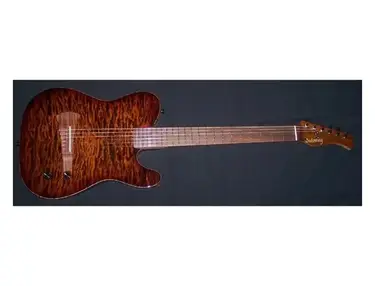
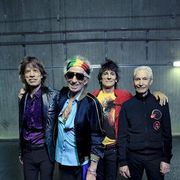
Can be seen with him in this photo, He used them on the Steel Wheels tour, including on “Paint It Black” and “Ruby Tuesday”.
Find it on:

In this video Keef can be seen playing a Gibson Les Paul TV Model
Find it on:


Find it on:

In a live performance of "Love Hurts" with Norah Jones in 2004, Keith Richards can be seen using a Sunrise Pickup, as shown in the YouTube video.
Find it on:

In this picture, one of a famous series taken backstage at Madison Square Garden, Keith can be seen playing a National Style 0 resonator guitar. The solid headstock (as opposed to a slotted headstock), as well as the 14th fret (as opposed to 12th fret) neck joint place it as a late 1930s model. Keith used this guitar when performing "Prodigal Son" (from Beggar's Banquet) live. Photos exist (http://alldylan.com/wp-content/uploads/2012/09/rolling-stones.jpg) of Jagger and Richards performing the song during a pair of concerts at Madison Square garden that yielded most of the material for the live album Get Yer Ya-Ya's Out - though the song did not make the final cut for the album.
Find it on:


In this photo, Keith is seen holding a Jesselli guitar, custom made from him. The New York Times mentions that Jesselli made a custom guitar for Keith.
Find it on:


Fishman stated that the Stone are using the Matrix pickup system on acoustic guitars.
Find it on:



Richards can be seen playing a Travis Bean TB2000 bass in this photo.
Find it on:

Keith (or account manager) posted a picture of the guitar being used by Keith Richards.
Find it on:

Keith and Mick Taylor used a Harmony Sovereign H1260 live during 1971 shows.
Find it on:

This article from NME tells the story of Keith's 1952 Gibson Southern Jumbo.
Richards is said to have been so incensed after walking in the room to find Wood jamming on the guitar that he decided to shoot a hole in it.
An official listing statement claims: “Richards asked where Wood got the guitar from, and Wood said he borrowed it from Mick Jagger."
Richards was so mad that they took his guitar that he grabbed it, sandwiched it between two pillows, took out a gun and shot it. The guitar not only still has the hole, but also has remnants from one of the foam pillows used to silence it.
He used this guitar during every single live performance of ‘Shine a Light’ during the tour, and his use and love for the guitar are heavily documented in the Stones’ Totally Stripped documentary.
Find it on:


In this Instagram post, Keith Richards plays a Gibson Flying V backstage with the caption:
Backstage at Hyde Park with Gibson Korina Flying V! On to Amsterdam. see you there !
Find it on:

In this excerpt from his autobiography Life, Keith Richards talks about using a green MXR reverb-echo pedal on Some Girls:
What a lot of Some Girls was down to was this little green box I used, this MXR pedal, a reverb-echo. For most of the songs on there, I’m using that, and it elevated the band and it gave it a different sound.
Based on the description, this is likely a 1970s MXR MX-118 Analog Delay.
Find it on:

Keith Richards can be seen playing Gibson S-1 in this photo.
Find it on:

Playing Höfner 1960s 500/5 President bass in this post.
Find it on:
-m.webp?v=1783177232)
In the official music video for Rain Fall Down, Keith is seen playing a Gibson ES – 330, originally thought to be his Ebony ES – 335 you can see that it is minus the Bigsby, and has different pick ups to the 335 .
Find it on:

In this photo from google images you can see Keith Richards using a Harmony Meteor H70 which he used predominantly in the early days of the Rolling Stones.
Find it on:

Keith Richards utilized the Vox Foundation Bass head to record the bassline for "Sympathy for the Devil" in 1968. This piece of equipment, paired with his Fender Precision Bass, was instrumental in crafting bass lines for The Rolling Stones during that period. Evidence of this can be observed in a video documenting the studio session for "Sympathy for the Devil," which provides visual confirmation of Richards using the Vox Foundation Bass head. This source, provided by the author Jesahel in a music video compilation, offers a clear view of the gear in use during the recording process.
Find it on:

Keith Richards began using various MXR pedals starting in 1977. According to Ted Newman Jones, the Stones' guitar tech in the 1970s, both Richards and Ronnie Wood owned about 10 MXR guitar pedals. The MXR M-108 Ten Band Graphic Equalizer Pedal is the only MXR graphic equalizer mentioned in the book "Rolling Stones Gear," suggesting this is the one Richards used.
Find it on:

Keith Richards uses a Shure SM7B microphone for his vocals, as seen in the official video for "I'm Waiting For The Man" (Lou Reed Cover) directed by Jane Rose and edited by Don Fleming on YouTube.
Find it on:

Keith Richards used the Gibson ES-175 Electric Guitar during a live performance of the song "Slipping Away" in 1995 as part of the Totally Stripped Tour. This is substantiated by a video titled "Rolling Stones 'Slipping Away' (live) Totally Stripped 1995," uploaded by Rolling Stones A.R. on YouTube, which captures the performance at Paradiso Amsterdam.
Find it on:


Keith Richards is confirmed to use the Fender Twin Reverb Silverface amplifier, as evidenced by a studio photograph showing the distinct JBL logo on the amp's right corner. Additionally, this amplifier can be seen atop his Ampeg SVTs during the renowned Marquee Club performance.
Find it on:


Keith Richards used this Gibson ES-335 TDSV on the 1969 US Tour and can be heard on the "Get Yer Ya-Ya's Out" album as well as on "Sticky Fingers", "Exile on Main Street" and many other Stones albums
Find it on:

Keith Richards confirmed his use of the Fender "High-Powered" Tweed Twin (1958-1959) amplifier in a Facebook post from September 1, 2017, where he captioned a photo with, "Some of my Fender high power tweed twin amps ... road ready!"
Find it on:

Keith Richards is confirmed to use the Martin D-12-20 guitar during live performances, as evidenced by the 2006 concert at the Beacon Theatre where he played "As Tears Go By," documented in the YouTube video titled "The Rolling Stones - As Tears Go By (Shine a Light 2008) Full HD" uploaded by Алексей Рощупкин. Additionally, he used the same guitar on the 2015 Sticky Fingers tour while performing "You Gotta Move."
Find it on:

Keith Richards is seen using the Positive Grid Spark amplifier while trying out his custom shop V guitar
Find it on:

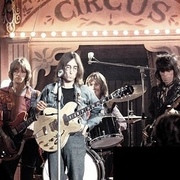
Keith Richards used the Triumph Electronics Silicon 100W Lead and Bass Amplifier while performing as the bassist for The Dirty Mac, a supergroup that included John Lennon and Eric Clapton, during The Rolling Stones Rock and Roll Circus in 1968. This is evidenced by the official music video "Yer Blues" by The Dirty Mac, directed by Michael Lindsay-Hogg and produced by ABKCO Music & Records.
Find it on:
This is a community-built gear list for Keith Richards.
- Find relevant music gear like Microphones, Guitars, Amplifiers, Effects Pedals, and other instruments and add it to Keith Richards.
- The best places to look for gear usage are typically on the artist's social media, YouTube, live performance images, and interviews.
- To receive email updates when Keith Richards is seen with new gear, follow the artist.
Discography
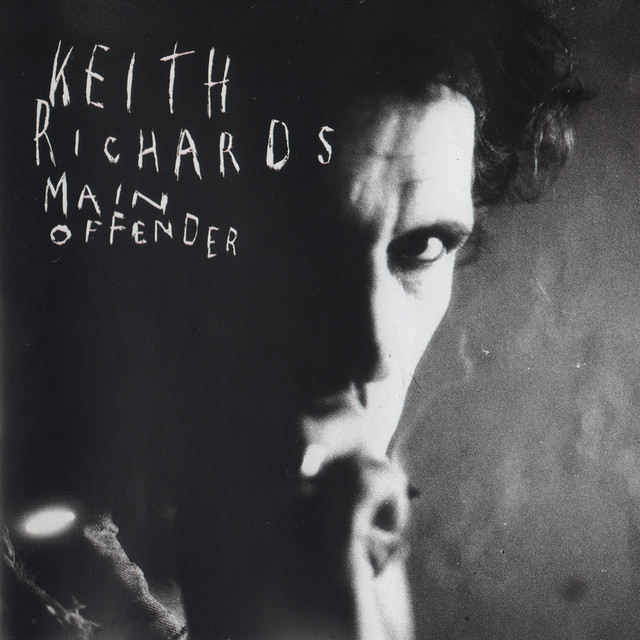
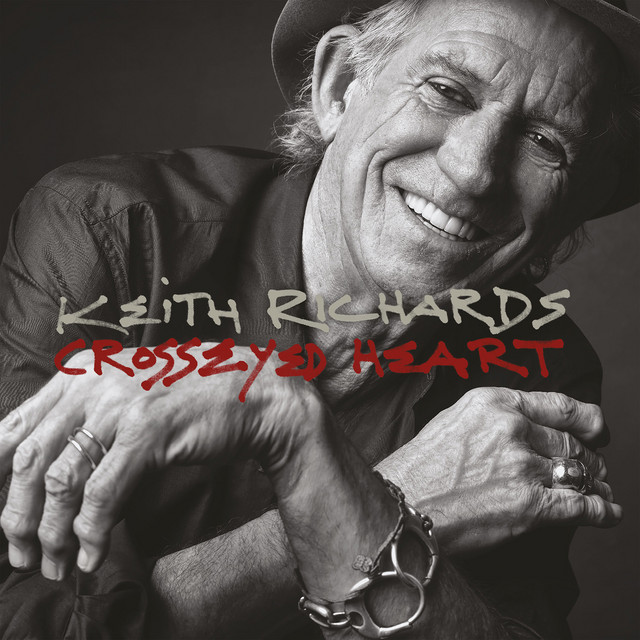
Album Credits
-
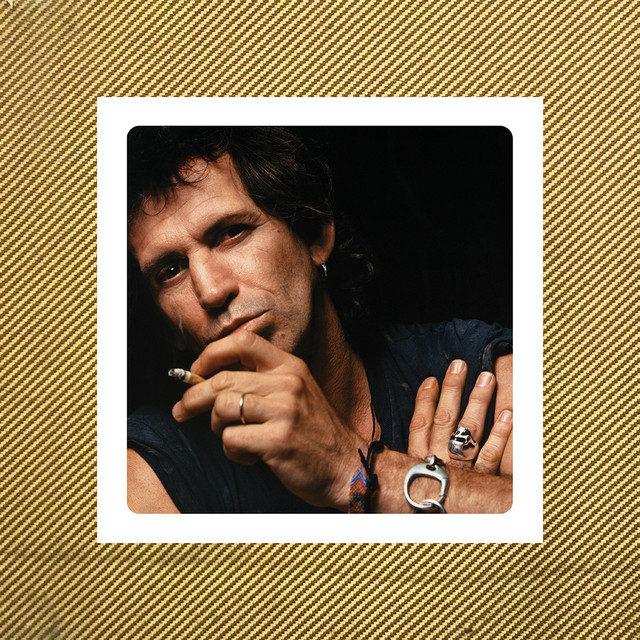
Keith Richards · 2019
Producer -
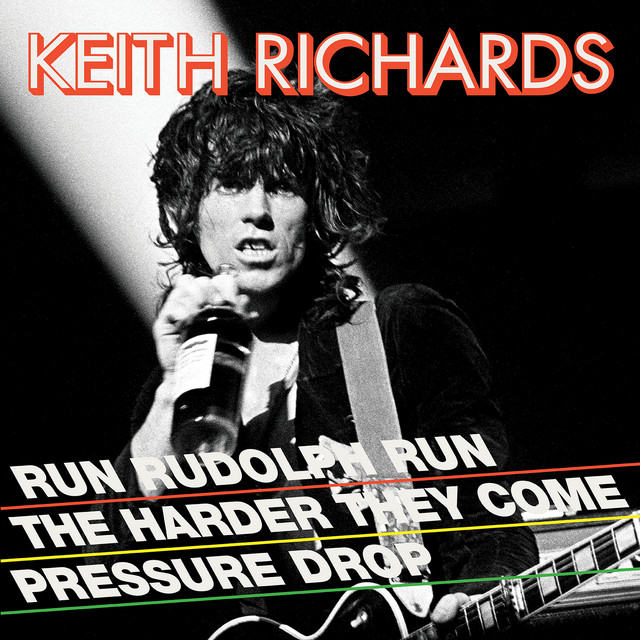
Keith Richards · 2018
Producer -
Keith Richards · 1988
Producer -
Chris Farlowe · 1966
Producer