Liam Howlett
Role
Genre
Group
Credits
Role
Genre
Group
Credits
Liam Howlett's Gear


Korg ES-1 - Electribe S Rhythm Production Sampler Liam's comment: "I've used the ES-1 on stage and I've used the ER-1 on a couple of tracks on the new album. The ER-1 doesnt require much processing or EQing - it sounds f**king great straight out of the box. "
Sample and go! The ELECTRIBE·S is a new type of sampler that doesn't simply play back a recorded sound - it lets you aggressively process the samples to create your own signature sound. Play any sound or phrase in and use the pitch, filter and effects knobs to drastically alter the sample.
Slice loops with Time Slice Chop a sampled phrase or sound into pieces with the ELECTRIBE·S' Time Slice function. Time Slice detects the attacks of each part within a loop (e.g., bass drum, snare, and hi-hat), so that these parts can be massaged separately. You can also use the knobs to modify the tone of a phrase processed by Time Slice, creating complex patterns from a simple loop or phrase.
Realtime resampling With the resampling function, you can apply effects to a previously-recorded sample and then resample the result. You can even resample while modifying parameters such as pitch in realtime, and create even more new sounds with absolutely no deterioration in audio quality.
Instant rhythm creation Assign sampled sounds to up to ten parts, then use the step sequencer to create rhythm patterns. The step sequencer's sixteen pads divide a measure (or two measures) into sixteen parts. You decide where you want each sound to play by touching the desired keypads to create a pattern. And with the touch of a button you can add rolls or reverse playback for each part, so you can easily create highly complex rhythms that used to take ages to program in.
Add and change effects with the Motion Sequence function You're in complete control of sound alteration. With the Motion Sequence function, every tweak of a knob can be recorded as part of the rhythm pattern. Alter your tone at will on each part using one of the following parameters: pitch, filter, level, or pan. Then, with the Motion Sequence assign effect on/off, roll, and reverse playback for each part (all three can be recorded per part). Plus you can apply an Effect Motion Sequence (a motion sequence for effect parameters) and a Delay Motion Sequence to the entire pattern.
Radical sample processing In addition to a master delay effect, you get a built-in effects processor with eleven types of effects, that can be switched on/off for each part. The eleven types include basic effects such as Reverb and Flanger/Chorus, as well as unique effects like Decimator, Isolator, and Resonant Filter. Effect parameters can be edited using the knobs, and knob movements can be used as part of the rhythm pattern in the form of a Motion Sequence. The sound processed by the effects can also be sampled again. The internal memory of the ELECTRIBE·S can hold 128 user patterns. Combine up to 256 patterns/steps to create a song, which can be stored in one of sixteen internal song memories.
Store your data with Smart Media The ELECTRIBE·S provides a Smart Media slot for storing data. 3.3 V Smart Media ranging from 4 MB to 64 MB can be used to store your own sampled sounds, patterns and songs. The ELECTRIBE·S can also load AIFF and WAV files via Smart Media, allowing you to take advantage of sampled data stored on your computer.
The word is in The ELECTRIBES kick ass. Their thick, meaty analog sounds are making their own unique contribution to global mayhem. But we're not done with our radical donation to the rhythmic revolution. Introducing the ELECTRIBE·S, a sampler with a sound that is as fat and gritty as ever. And in true ELECTRIBE fashion, the ELECTRIBE·S is packed with tweakable knobs for extreme sound editing, and sixteen pad keys to program rhythm patterns and break beats.
Used:
Before Always Outnumbered was finished Liam told in several interviews that he has been using Electribes and the new album is going to be sounding quite electronic. Anyway all tracks were binned before the actual new album was released.
Find it on:


"The original hip-hop drum machine. That is fat! I'm really into the hip-hop scene, and did a lot of research into the equipment they used to get that real heavy sound. A guy from our record company went to New York and got this for me for my birthday; it was a really good present. It's so nice, just for single drum hits." – Liam Howlett, from a 1996 interview with Sound On Sound.
Find it on:


Liam Howlett of The Prodigy uses the Roland Gaia SH-01 Synthesizer, as detailed on Theprodigy.info. The Gaia SH-01 is a versatile 37-note virtual analog synthesizer, featuring three oscillators per voice and over 20 waveforms. It offers a substantial sound with 64-voice polyphony, making it ideal for creating layered effects like distortion, flanger, and delay. This lightweight, compact synthesizer is designed for portability, running on AC or battery power, and includes hands-on controls for intuitive sound shaping.
Find it on:


Liam Howlett of The Prodigy uses the Arturia MicroBrute during live performances, as shown in a photo posted on the band's official Facebook page.
Find it on:


"I had loads of analogue gear: Roland Jupiter 8 and 6s, and a Minimoog," Liam says, in this article.
Find it on:

"The Prodigy sound owes a lot to Mackie because I've been using their stuff for years. The first mixer I ever bought was a Mackie CR1604, which I got when I was a teenager, and I've now got a 32:8 analogue eight-buss console that I love because it gives us our distinctive Prodigy sound. It's a desk that lends itself to being driven very hard. It has a naturally warm sound that allows you to push the channels as far as they'll go. Part of the appeal of The Mews was that it had a 32:8, so I immediately felt at home."
Find it on:
-m.webp?v=1784818708)
Roland SH-101 About:
This piece was one of the essential live synths in 90's in Liam's setup. Later Liam replaced this silver baby to red Clavia Nord Lead in his setup. But you can still sometimes see this machine on top of the first synth rack on live setup.
Specifications:
Polyphony : Monophonic Oscillators : 1 VCO (Independent levels for Saw, Square / Pulse / PWM and Sub-Oscillator) LFO : Triangle, Square, Random and Noise Waveforms VCF : Resonant, Self-Oscillating LPF, Mod by EG, LFO anKYBD Tracking VCA : ADSR, Mod by EG or Gate Arpeg/Seq : Digital Sequencer up to 100 steps Record / Playback Arpeggiator Patterns : Up, Down, Up/Down Keyboard : 32 keys Control : CV / Gate
Gear info:
The Roland SH-101 is a monophonic bass synthesizer, featuring a 2 1/2 octave 32-note (F-C) keyboard in a light, plastic case. This synth was released in the era just after analog synths like the Moog, ARP, Sequential Circuits, etc. It's siblings include the SH1, SH2, SH3a, SH5, SH7 and SH09. Probably does not sound as FAT as a Moog or ARP. It was designed as a strap-on synth with an optional modulation attachment that stuck out like a guitar neck. It can run on batteries. The SH-101 was pre-MIDI, but it has CV (1 volt/octave cv) and gate inputs in the back. It's sound lies somewhere between the TB-303 and a Juno bass sound. It has a lot of simple but cool features. You can control the VCF, pitch, LFO or all from the pitch bender. It has a white noise generator, arpeggiator with up, down and up/down patterns and a simple real-time sequencer. The LFO offers random, sine, square or noise waveforms. And normal or auto portamento effects give you that elastic bass sound.
There are external clock inputs for the sequencer and arpeggiator, CV/GATE inputs and outputs and a CV hold pedal. The SH-101 also features a very primitive arpeggiator and sequencer as well as portamento. There are also two exclusive versions available.. one is blue and one is red. Other artists that have been using this: Orbital, Future Sound of London, Überzone, The Prodigy, 808 State, The Grid, Cirrus, Eat Static, Jimmy Edgar, Apollo 440, Devo, Union Jack, Luke Vibert, Dirty Vegas, Josh Wink, the Crystal Method, Aphex Twin, Astral Projection, Les Rythmes Digitales, Sense Datum, Squarepusher, Sascha Konietzko of KMFDM/MDFMK, Freddy Fresh, Lab-4, Nitzer Ebb, the Chemical Brothers and many more.
Liam: "We do a totally live bit on stage where we hook up the SH-101 to the 909 using the trigger input and have a little jamming session on stage. That's quite interesting!"
Release date: 1983 Type: Analogue synthesizer
Used:
Used live in Funky Shit and Poison. (With this machine Liam usually played the Relase Yo' Delf - riff between Poison part1 and part2 in live gigs).
Find it on:

-m.webp?v=1784559449)
"The Prophecy is one of the few things that produces big distortion as far as a ready-to-run synth goes. It's at its best on stage, though I've used it on just about every track on the new album so far. The programming is so open, it's great for resonant sweeps, and the ribbon is quite handy. You can also record filter changes over MIDI onto the Mac. There are so many different things you can do with it. It's not the type of keyboard I'd go to to start a song with -- it's better for distortion and feedback sounds. It's a shame it's only monophonic -- it's got some good string sounds." – Liam Howlett in a 1996 interview with Sound On Sound.
Find it on:

"I had loads of analogue gear: Roland Jupiter 8 and 6s, and a Minimoog," Liam says, in this article.
Find it on:
-m.webp?v=1784455238)
"Yeah, I couldn't live without it. If Reason hadn't come along I would probably still be in my studio, depressed, going 'aww bloody 'ell, don't know what I'm gonna do', you know? I don't want to pat Propellerhead on the back too much, but... Reason has literally changed my life, getting me back in the studio and enjoying it all again. It's taken the monotony out of music making and put it into a format where music should be these days - no big deal, just something that should be fun to do. Creation is always painful, but this is the least painful way I know of." - Liam Howlett.
Find it on:

"This Razor synth is something real different... dead easy to use and above all, attacks the eardrums in a proper way, sharp as fok!"
Find it on:


This synth is Liam's current live favourite and he is using it in every show most of the time messing with it and making different effects and synth sounds to top of the tracks
Find it on:

Roland TR-707 Rythm Composer The Roland TR-707 Rhythm Composer is a programmable digital sampling drum machine built by the Roland Corporation, beginning in 1984. The TR-707 was a staple in early house music, particularly with acid house. Because the TR-707 offers a limited number of instruments sampled at 12 bits, its sound is considered dated by modern standards. However, it is still in use because of its versatility in synchronizing with other hardware and its fully featured interface, comparable to that of high-end Roland drum machines such as the TR-808 and TR-909.
Used:
Liam has told that this machine was used to produce drums for Invaders Must Die single. He has probably used it also in many more older tracks too.
Find it on:

Liam Howlett, the driving force behind The Prodigy, utilizes the Arturia Prophet V plugin, which is a versatile synthesizer software combining the Prophet 5, Prophet VS, and Prophet Hybrid. This plugin is known for its rich sound and extensive features, including a modulation matrix and over 400 presets. According to The Prodigy info site, this software is part of Howlett's setup, showcasing its integration into his electronic music production.
Find it on:


‘Arturia mini brute’ is used on ‘Timebomb zone’ from the album ‘No Tourists’ by The Prodigy . Intro bass sound and throughout the tune.
Find it on:

"I've always been a beats man and this percussion hits big and hard. The effects side of it, specifically the distortion is very special -it's the cinematic width and sound that makes it very different to anything else out there."
Find it on:

This one has been travelling with Liam in his live rig since 2009.
Analog Factory is a powerful, yet extremely easy to use virtual instrument. Loaded with 3500 legendary sounds (instead of 2000 in the first version) carefully selected from the Arturia Classic Synths, Analog Factory provides the contemporary musician with a broad, versatile and instantly striking sonic palette. It is also a very versatile instrument: all sounds are dramatically modifiable, which makes this software stand apart from any sample-based collection of sounds.
Find it on:

Liam Howlett of The Prodigy utilizes three Drawmer LX20 Stereo Compressors in his studio setup. Known for their versatility, these compressors are designed to meet the demands of both small and large studio environments. The LX20 features a soft knee compression, an expander to reduce low-level noise, and a stereo linking option, offering precise control over dynamics. This information is detailed on The Prodigy .info website, which provides insight into the gear used by the band.
Find it on:

Liam Howlett, the driving force behind The Prodigy, utilizes the Korg KONTROL49 49-Key MIDI/USB Controller, as detailed on Theprodigy.info. This advanced MIDI keyboard controller is known for its intuitive design and versatility, featuring 40 assignable control elements, including a Vector Joystick and velocity-sensitive trigger pads. These features allow for dynamic interaction with softsynths, MIDI modules, and digital audio workstations, making it an essential tool in Howlett's music production setup.
Find it on:

Liam Howlett of The Prodigy is known to use the Morley Dual Bass Wah pedal, as detailed by The Prodigy .info. This pedal features a switchless design, allowing users to engage Wah mode simply by stepping on it and returning to bypass by stepping off. It offers two foot-selectable Wah modes: Traditional Wah and Funk Wah. The LEVEL knob adjusts Wah output in either mode, while the "Clear-Tone" buffer circuit preserves the guitar tone and signal level. Housed in cold-rolled steel with dual LED indicators and an easy-access battery compartment, this pedal is versatile for use with bass guitars, 7-string guitars, detuned guitars, and keyboards.
Find it on:

Liam Howlett of The Prodigy uses the Oberheim TVS-1 Two Voice synthesizer, a pioneering polyphonic synth first introduced in 1974. Known for its distinct analog sound, it features two voices, each with two VCOs, a lowpass filter, and a mini sequencer. This versatile instrument, produced from 1975 to 1979, is detailed on Theprodigy.info, highlighting its role in Howlett's gear lineup.
Find it on:

Liam Howlett includes the Roland MC-303 Groovebox in his gear list, as documented by The Prodigy .info.
Find it on:
-m.webp?v=1784386708)
Liam Howlett of The Prodigy utilizes the Roland MC-505 Groovebox, as detailed on The Prodigy .info. This high-performance groovebox is known for its 64-voice polyphony, advanced sound controls, and innovative D-Beam Controller, providing dynamic effects and sound manipulation. It features 714 dance music patterns and 512 sounds, including iconic drum and synth sounds like the TB-303 and TR-808, making it ideal for creating cutting-edge electronic music.
Find it on:

Liam Howlett, of The Prodigy, has been linked to the Roland SP-808 GrooveSampler, as noted on The Prodigy.info site. While Liam typically prefers vintage gear from before 1980, the SP-808 offers modern features that could complement his setup. This device is a versatile sampling and recording workstation, ideal for remix artists and DJs, boasting professional-quality phrase sampling, a hard disk audio recorder with 8 tracks, and a host of onboard effects. Released in 1998, it includes innovative features like a dual D-Beam Controller and can store 64 minutes of audio on removable 100MB Zip disks.
Find it on:

Manufactured: 1981-1985 Type: Monophonic Analogue synthesizer
Gear info:
As you can see it comes from the same period and genre as the Roland SH-101 and Moog Prodigy. A very fat sounding synth with arpeggiator and a simple sequencer. It has a good modulation section, some say it's the best thing about the synth. It is remarkably stable in tune once it has warmed up after about 15 minutes. Shouldn't be a problem finding a Pro-One, it's one of the most common monosynths.
Used:
Liam has used this one in live sets. If you have got the Electronic Punks video you can spot this one easily.
Find it on:

hermionic Culture Vulture Stereo Liam Howlett was the very first customer to purchase a Phoenix compressor and Culture Vulture distortion from Unity Audio before the company established their distributor and dealer networks.
Liam Howlett from The Prodigy gets presented with his Culture Vulture Limited EditionOriginally designed as a "distortion box" to simulate distortion in valve amps it has found lots of uses beyond this. Some owners use them on drum loops, vocals, piano sounds and even across entire tracks (it is a stereo unit).
Predominant distortion can be changed from even to odd harmonics with a simple switch.
“Thermionic Culture has always been an important part of The Prodigy’s sound. The new Limited Edition Culture Vulture takes it to a new level of sonic devastation.” Key Features
Warm sounds gently or create a noise like a 200 watt guitar stack with all the drivers slashed. Independent channel operation
Odd or Even harmonic distortion, or combination of both. All valve design free from solid state additives. High impedance line input or instrument inputs. 4 & 7 kHz filters Overdrive & bypass switches
Culture Vulture Specifications:
Max output level (MOL): +20dBV Distortion: 0.2% to 99.9%. Noise: Variable better than 75dB below M. O. L at most settings Input Impedance: 30k Output Impedance: 2.5k ohm ( should ideally drive a 10k input impedance ) Frequency response: >1dB variation over 10Hz to 25kHz ( actually +/- 1.75dB over 50Hz to 15kHz at low distortion ) Used
You can clearly hear the Culture Vulture in action on the bass line in Thunder.
Find it on:


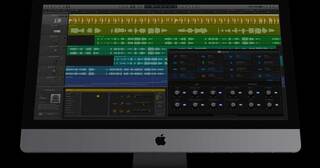
Liam Howlett uses Apple MacBook Pro computers during live performances and for music production, as seen in a post on the official Instagram account of The Prodigy after their Sydney gig.
Find it on:
This is a community-built gear list for Liam Howlett.
- Find relevant music gear like Studio Equipment, Software Plugins and VSTs, Headphones, and other instruments and add it to Liam Howlett.
- The best places to look for gear usage are typically on the artist's social media, YouTube, live performance images, and interviews.
- To receive email updates when Liam Howlett is seen with new gear, follow the artist.
-
Added to Equipboard on by
 adamfiregate
GearIQ 2048
-
Updated
Album Credits
-
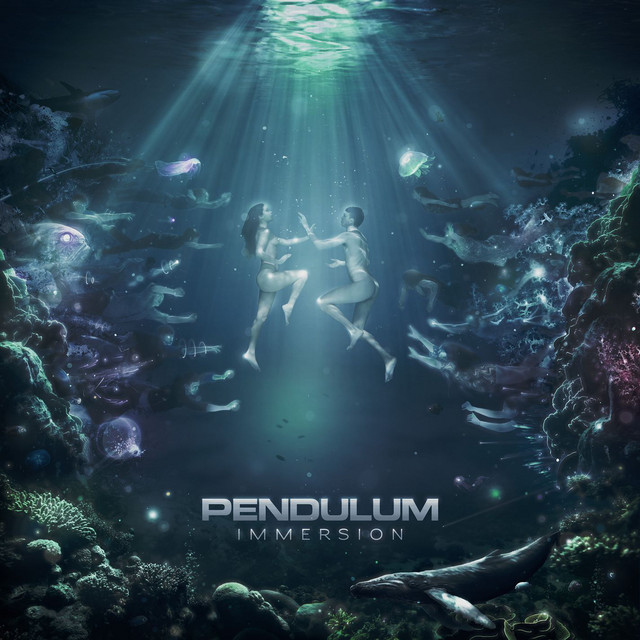
Pendulum · 2010
Producer