Manny Marroquin
Manny Marroquin's Gear


Larrabee Studio 2 Equipment List
CONSOLE SSL 9080 XL K-Series Console PROTOOLS Digidesign Pro Tools HD3 Accel MONITORS Main Monitor System - George Augsberger cabinets with (2) TAD 15" Woofers, (1) TAD horn and (1) TAD Tweeter per cabinet. Sub-System - (2) Crown Sub-18 Subwoofer cabinets driven by a Bryston 10B Sub Low active Crossover and (1) Crown I-Tech 12000 Series power Amp. Nearfield Monitor System - Yamaha NS-10M Studio Monitors powered by a Bryston 4B amplifier. Alternate Speakers Accommodated - Three more switchable nearfield speaker feeds are available for alternate speaker system monitoring.
Find it on:





Rather than put it straight on his mix buss, Marroquin started off using the Fusion on stereo keyboard tracks, then guitars.
“Because I am still on the big SSL - so not in the box – I've been using Fusion as an insert,” he says. “I have got to tell you, I just loved what I heard. It's like having a chain of three or four different plugins all in one. And if like so many people, you are working in the box, you can just put it across part of your stereo buss chain, which is great, because it's got an EQ, it's got a Vintage Drive, a spreader – it's just a very versatile box, and one of my favourite toys right now!”
Fusion can really improve the stereo image of a sound, Marroquin reveals: “I have been using it on a lot of synths – especially if they're playing a melodic line, because Fusion allows me to control how wide I want it to be: I can EQ it very quickly, I can add filters to it; I can make it so that it fits perfectly in the mix, and it's still punchy. I am sure I can use it on a lot of other things, too – on backing vocals for R&B records, I know this will sound delicious.
“It'll also work as a great sweetener, so you can make your mixes super-wide using this box; and SSL have done such a great job too, as it's so simple. Some mixers will do a whole song, and at the very end, they'll just slap on that final EQ or compressor, or a tiny little bit of air at the end of the mix; not to master, but to give it that extra 5%. And this is perfect for that. If you're in the box, put Fusion on bypass, have it in your chain, then towards the end of your mix, just pop it in, and wait for the whole mix to pop out, man!”
“I have got to tell you, I just loved what I heard. It's like having a chain of three or four different plugins all in one. And if like so many people, you are working in the box, you can just put it across part of your stereo buss chain, which is great, because it's got an EQ, it's got a vintage drive, a spreader – it's just a very versatile box, and one of my favourite toys right now!” Manny Marroquin
Find it on:


"He used a Sony C800 condenser microphone to take advantage of the Sony's higher sensitivity under the circumstances, but running it through his usual signal chain of a Neve 1073 EQ and a Tube-tech CL1B compressor straight into Pro Tools."
Find it on:


He used a Sony C800 condenser microphone to take advantage of the Sony's higher sensitivity under the circumstances, but running it through his usual signal chain of a Neve 1073 EQ and a Tube-tech CL1B compressor straight into Pro Tools.
Find it on:

Marroquin finds that creating stems as he mixes makes for more efficient mixes later on. Based on an audio post-production methodology, he'll create submixes of guitars, drums, percussion, keys and even background vocals. The key, says Marroquin, is to compress these stems, rather than the overall stereo mix. "I'll send individual elements, like the kick and snare, to their own compressors," he explains. "I'll put them on separate busses and send them to a Fairchild 670
Find it on:


"One of the hardest things to do is to get rid of sibilance using only EQ without affecting the presense of the vocal," he says. "It's an art. I use a Dbx 902 de-esser, which is one of the best-sounding de-essers out there. But it only has one frequency per curve. So I do the de-essing using the SSL EQs through a side-chain. They allow you to really key in on the affected frequencies.
Find it on:


Marroquin also worked on singer Pink's first album, produced in 1997 by Babyface and the hip-hop team Presidential Campaign. The record, which spawned the minor hit 'Most Girls', was "Pink before she was Pink", he says, as the singer was developing both a persona and a performance style. In keeping with her own sharp edges, Marroquin used a combination of pro reverbs, including an AMS and Lexicon 480L and 224XL units, and the clangy spring reverb from a Fender guitar amp. "Hip-hop can tend to have very little reverb, and what there is is short," he says. "When I get kind of off-the-wall records, I like to play with spring reverbs. They're cool-sounding. You can make it short and tight with a gate and it adds tone and depth to the sound without washing it out. I also EQ the reverb return. I listen for the frequency where the reverb matches the input signal and tweak that. When you have one thing in a crowded mix you really want to bring out but adding EQ would make it sound too harsh, put it through a spring reverb. They're noisy, but thank God for gates."
Find it on:

Marroquin also worked on singer Pink's first album, produced in 1997 by Babyface and the hip-hop team Presidential Campaign. The record, which spawned the minor hit 'Most Girls', was "Pink before she was Pink", he says, as the singer was developing both a persona and a performance style. In keeping with her own sharp edges, Marroquin used a combination of pro reverbs, including an AMS and Lexicon 480L and 224XL units, and the clangy spring reverb from a Fender guitar amp. "Hip-hop can tend to have very little reverb, and what there is is short," he says. "When I get kind of off-the-wall records, I like to play with spring reverbs. They're cool-sounding. You can make it short and tight with a gate and it adds tone and depth to the sound without washing it out. I also EQ the reverb return. I listen for the frequency where the reverb matches the input signal and tweak that. When you have one thing in a crowded mix you really want to bring out but adding EQ would make it sound too harsh, put it through a spring reverb. They're noisy, but thank God for gates."
Find it on:

Marroquin also worked on singer Pink's first album, produced in 1997 by Babyface and the hip-hop team Presidential Campaign. The record, which spawned the minor hit 'Most Girls', was "Pink before she was Pink", he says, as the singer was developing both a persona and a performance style. In keeping with her own sharp edges, Marroquin used a combination of pro reverbs, including an AMS and Lexicon 480L and 224XL units, and the clangy spring reverb from a Fender guitar amp. "Hip-hop can tend to have very little reverb, and what there is is short," he says. "When I get kind of off-the-wall records, I like to play with spring reverbs. They're cool-sounding. You can make it short and tight with a gate and it adds tone and depth to the sound without washing it out. I also EQ the reverb return. I listen for the frequency where the reverb matches the input signal and tweak that. When you have one thing in a crowded mix you really want to bring out but adding EQ would make it sound too harsh, put it through a spring reverb. They're noisy, but thank God for gates."
Find it on:

Marroquin picked up a Grammy nomination for Cher's 'Love One Another', which, like all Cher records, required vocals very far out in front. "The problem with that is that it's easy for the vocals to get separated from the rest of the track," he cautions. "What I would do is add tube compression to the vocal. That adds warmth on the low end, around 150Hz, better than EQ can give you there. With Cher, she already has a lot of low-mid tone to her voice, so I would go to the high-mids with an Avalon 2055 equaliser and add a little there."
Find it on:

The Duality Delta 72 was the first to be deployed at Larrabee, with the Delta 48 replacing the 4000G.
“We were conscious about power, and the Duality made sense, as you plug it in and go, and we don't have to worry about old tech that would slow down the workflow,” Marroquin explains.
The [Delta] 72 currently resides in studio six, while the 48 is now in studio four – which is where the old 4000G used to be.
Find it on:

"“When I EQ, I’m looking to do something creative rather than just ‘clean up.’ That’s when I go for one of my six go-to EQs: SSL 9080 XL K for its high and low pass filters; Quad 8 or Neve 1073 for the low end; Quad 8 or Motown for lows/low mids; Motown, 1073 and API 550B for mids/high mids; and Avalon 2055 for its silky high end. Waves and I captured the best of each of my favorite EQs – and put them together this easy-to-use plugin.” —Manny Marroquin"
Find it on:

Manny Marroquin uses the Brainworx bx_hybrid. In a 2014 interview with Mix With The Masters (Q&A #9), at 5:04 , when asked what he uses for imaging, he mentions using a Brainworx hybrid.
"What I use across my stereo bus for imaging is the Brainworx hybrid. It's just taste. I don't like my mixes too wide, because then the centre information disappears. And I like punchy mixes too. It's a little bit of this, it's a bit of that. Make sure when you do anything with wideners/imaging spreaders that your centre stuff doesn't disappear with your bass, your kick, your snare, your vocal. All that stuff is going to impact your mix. Anything that's wide is going to give you texture, how big something is. Also remember that your punchiness will disappear every time you add something like that"
"So I use the hybrid. A lot of the times in pop music, a lot of these synths are so wide already, so I wouldn't use as much. If there's some type of width I'm looking for, I tend to go straight for the hybrid. There's a lot of plugins that can do that. I just happen to like the hybrid."
Find it on:

In this 2013 Audio Technology article featuring Manny Marroquin, there is a screenshot of the settings used for the Neve 1073, 1176 LN, Distressor, and the api 2500.
Find it on:

In this 2013 Audio Technology article featuring Manny Marroquin mixing Linkin Park's , there is a screenshot of the settings used for the Neve 1073, 1176 LN, Distressor, and the api 2500.
"There’s also an API 2500 compressor on the heavy guitars. Most synth and guitar tracks also had SSL desk compression and EQ."
Find it on:

In a 2014 interview with AudioTechnology, Manny Marroquin mentioned he used the Neve 33609 Compressor when mixing Burn It Down by Linkin Park:
"The outboard was an Avalon 2044 compressor going into a Neve 1073 EQ on the kick and the snare, which came up on Channels 4, 5, & 6 on the board. I also added parallel compression on all the drums, using the Neve 33690 compressor and the Pultec EPQ-1A, to add more punch."
Find it on:

In this Mix With the Masters Q&A video from 2014, at 8:31, Manny Marroquin mentions he uses the Kramer PIE in his vocal chain:
"In the box, I tend to go, depending on the sound, I may go for the Kramer PIE, I love the sound of that one. Even the R Compressor, and maybe an SSL Channel to EQ some of that"
"For the most part, my sound is the Tube-Tech, Avalon, and 902"
Find it on:


In a 2013 AudioTechnology article, Manny Marroquin mentions using an Ampex ATR-102 with one-inch tape for a tape delay effect on lead vocals:
"There were similar effects on Mike’s vocals. I also printed Chester’s lead vocals to an Ampex ATR-102 with one-inch tape for a tape delay effect, and brought it back into the session, which is why it has the Time Delay plug-in on it. In addition, I have the Brigadier pedal on some backing vocals, and I set up a reverb and two delay effect tracks in ProTools, using the Reverb One and Waves Super Tap delay. I had these effects mainly on the vocals."
Find it on:
This is a community-built gear list for Manny Marroquin.
- Find relevant music gear like Studio Equipment, Microphones, Studio Monitors, Mixers, DAWs, Software Plugins and VSTs, Headphones, and other instruments and add it to Manny Marroquin.
- The best places to look for gear usage are typically on the artist's social media, YouTube, live performance images, and interviews.
- To receive email updates when Manny Marroquin is seen with new gear, follow the artist.
-
Added to Equipboard on by
 pkennethk
Gear IQ 26904
-
Updated
Album Credits
-

Maroon 5 · 2025
Engineer -
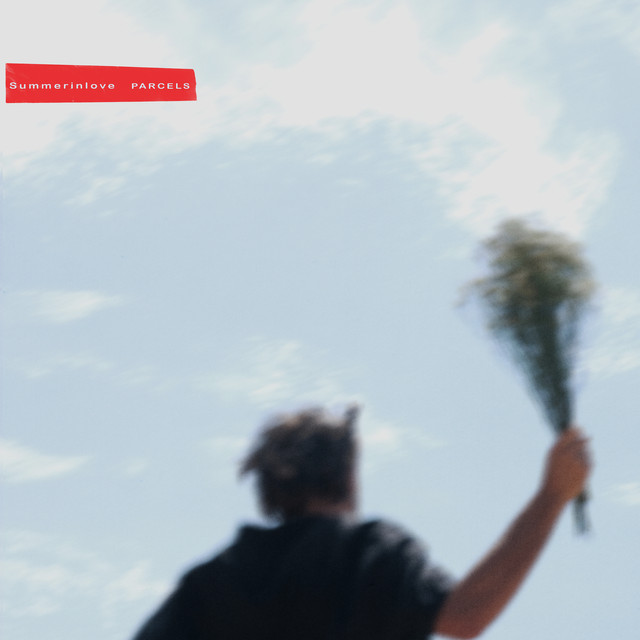
Parcels · 2025
Mixing Engineer -

Parcels · 2025
Mixing Engineer -
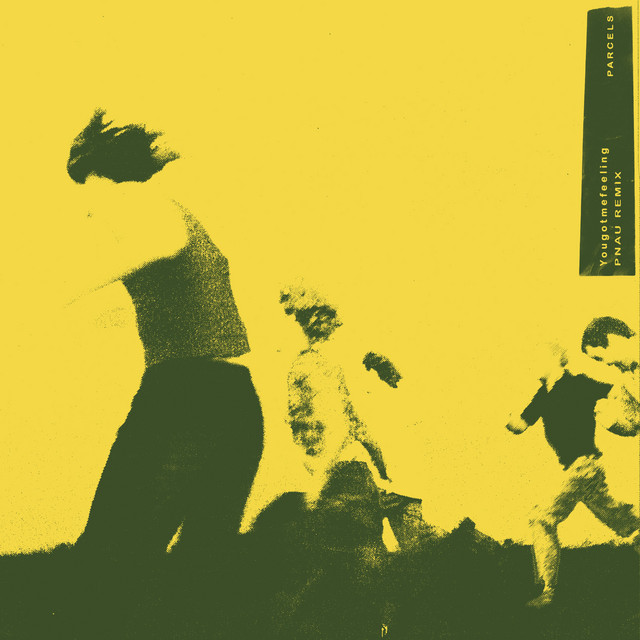
Pnau & Parcels · 2025
Mixing Engineer -
Björk & Rosalía & Yves Tumor · 2025
Mixing Engineer -
Hayley Williams · 2025
Mixing Engineer -
Hayley Williams · 2025
Mixing Engineer -
Hayley Williams · 2025
Mixing Engineer -
Hayley Williams · 2025
Mixing Engineer -
Hayley Williams · 2025
Mixing Engineer -
Hayley Williams · 2025
Mixing Engineer -
Hayley Williams · 2025
Mixing Engineer