

Pricing and availability
We compare 600+ stores and found this item at 7 stores. Prices updated .
Store
Reviews
Price




Average Price: $4,343
High-end/Boutique
$100
$501+
Price Tier
Budget
Standard
High-end
Price History
Based on price data from 5 merchants for "AMS Neve 33609". Prices shown reflect NEW condition. Tracking began Apr 2, 2026.
* Product prices and availability are updated by Equipboard every 24hrs and are subject to change. Equipboard may receive compensation for purchases made at participating retailers linked on this site. This compensation does not affect what products or prices are displayed, or the order of prices listed. For more information, please refer to our affiliate disclosure.
Description
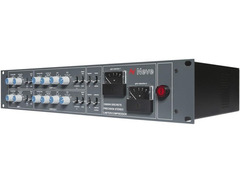
Step into the world of iconic sound with the Neve 33609, a signal processor that has become a staple in studios worldwide. This discrete Class-A design compressor/limiter is revered for its exceptional warmth and ability to enhance mixes with unmatched clarity. Drawing inspiration from its 1970s roots, the 33609 offers a compelling blend of vintage character and modern functionality. Whether you're smoothing out vocals or adding punch to your drum tracks, its versatility shines through.
The Neve 33609 is equipped with independent compressor and limiter sections on each channel, allowing for flexible signal processing. Its handwired Neve transformers not only ensure premium quality but also preserve the rich analog tone that Neve is celebrated for. The unit can be used in stereo or dual-mono, providing a dynamic range of applications from tracking to mixdown. The compressor offers a variety of ratio settings and recovery times, while the limiter features a brickwall style with adjustable recovery options. This combination delivers a cohesive sound, gluing your mix together while maintaining the integrity of individual tracks.
Perfect for music recording, mastering, post-production, or broadcast applications, the Neve 33609 is more than just a stereo buss compressor. It's a versatile tool that elevates your recordings to a higher sonic standard, making it an essential asset for any studio aiming for professional-grade results.
Key Features:
- Discrete Class-A design for low-distortion performance
- Handwired Neve transformers for authentic analog warmth
- Independently selectable limiter and compressor
- Brickwall-style limiter with variable recovery times and auto modes
- Versatile compressor with multiple ratio and recovery settings
- Fast and slow attack options
- Pre-limiter gain makeup control
- Usable in stereo or dual-mono modes
Product specs
| Type | Diode-Bridge Compressor/Limiter |
| Number of Channels | 2 |
| Controls | Threshold, Ratio, Attack, Recovery |
| Threshold | Limit: +4dBu to +15dBu, Compress: -20dBu to +10dBu |
| Ratio | 1:5:1 to 6:1 |
| Frequency Response | 20Hz-20kHz (±0.5dB) |
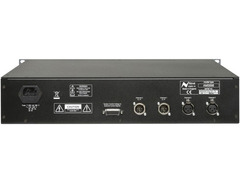
| Inputs | 2 x XLR |
| Outputs | 2 x XLR |
| Sidechain I/O | 1 x 15-pin (tandem control voltage) |
| Rack Spaces | 2U |
| Power Source | Standard IEC AC cable |
| Height | 3.5" |
| Depth | 10" |
| Width | 19" |
| Weight | 11 lbs. |
FAQs
-
What type of compression does the AMS Neve 33609 use?
-
The AMS Neve 33609 is a diode-bridge compressor/limiter, known for its smooth and musical compression characteristics.
-
How many channels does the AMS Neve 33609 have?
-
The AMS Neve 33609 features two channels, making it ideal for stereo applications or dual-mono use.
-
What are the main controls available on the AMS Neve 33609?
-
The AMS Neve 33609 offers controls for threshold, ratio, attack, and recovery, allowing precise shaping of compression and limiting.
-
Does the AMS Neve 33609 have sidechain capabilities?
-
Yes, the AMS Neve 33609 includes a sidechain I/O via a 15-pin connector for tandem control voltage.
-
Is the AMS Neve 33609 suitable for mastering?
-
Yes, the AMS Neve 33609 is highly regarded for mastering due to its transparent compression and wide frequency response from 20Hz to 20kHz.
Videos

John Browne
The legendary Ams Neve 33609 compressor/limiter
The legendary Ams Neve 33609 compressor/limiter
John Browne
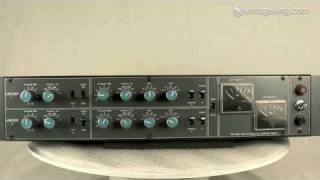
Vintage Neve 33609 Compressor/Limiter | VintageKing.com

Vintage King
Reviews
PROS
-
Dual independent processors offer both limiting and compression in one unit
-
Crafted in the UK, ensuring high-quality build and sound fidelity
-
Versatile use for vocals, mixing, and mastering with a polished sound output
-
Functions as two completely independent mono processors for flexibility
-
Provides exceptional headroom for a wide dynamic range
-
Adds a 'glue' effect to mixes, making tracks sound cohesive
-
Warm, natural sound expansion without specific settings
-
Clean and clear sound under technical conditions, warm saturation under extreme conditions
-
Suitable for a variety of applications, including out-of-the-box mixing and mastering
CONS
-
Limited attack speed settings, which might not suit all mixing preferences
Owner Insights
We analyzed real musician discussions from forums and Reddit to find what players love, question, and tweak about AMS Neve 33609.
Comparisons
-
The Neve 33609 is described as adding too much color with less low-end punch compared to SSL, making it tighter-sounding and suited for specific genres.
Source
Use cases and applications
-
Neve 33609 is preferred for tracking to add flavor to individual tracks, while SSL is favored for mixbus duties for its versatility.
Source
Features and functionality
-
Neve 33609 has a fast attack characteristic that cannot be altered, impacting its suitability for certain mixes.
Source
Critic Reviews
5.0 out of 5
Based on 0 Reviews and 1 Rating
Artist usage
Add artist

Used for the guitar on Icky Thump, as stated by recording and mixing engineer Joe Chiccarelli in this October 2007 Sound on Sound interview.
- Main guitars: Neve 8078 EQ, Universal Audio 1176, echo chamber, Neve 33609
“I don’t think I compressed the main guitar any further in the mix; all compression was added while tracking, probably an 1176. The guitars were mainly about balances and rides, and making sure the guitar line cut through, so I added some mid-range at the console. The song has an instrumental guitar chorus instead of a vocal chorus, so it was really important that it spoke. I multed the guitar out to two sets of faders, and one of them I EQ’d very mid-rangy and compressed with a Neve 33609 to get a slightly different tone. Every time the guitar riff came up the automation would switch to these faders. It made the melody pop out a little more. I also definitely used the live room in Studio A to add some ambience.”

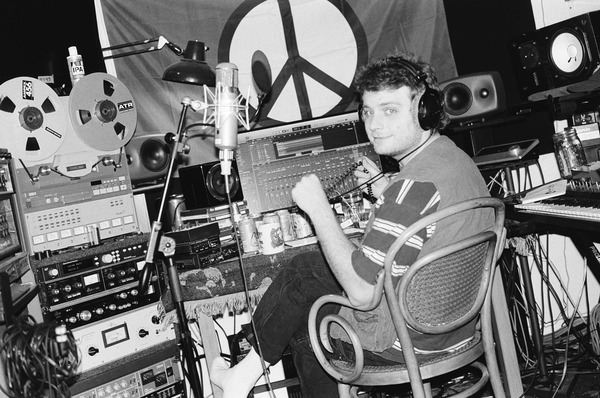
In Macs Homestudio you can see part of a Neve 33609 down below the LA2A at the very bottom to the left.


Used on Shiftlett's guitar for "The Pretender", as stated by mix engineer Rich Costey in this March 2008 Sound on Sound interview.
"In the case of 'The Pretender' I had a couple of Urei 1176 compressors on Dave's guitar, to pump them up a bit and make them sound more aggressive whilst barely compressing. I had the Gates Sta-Level compressor on the clean guitar in the intro, with quite a lot of compression and a very slow recovery, plus a 33609 with a very short recovery time on Chris' rhythm guitars, to beef them up a little bit. I worked hard to make the octave guitars in the last chorus stick out. I ended up EQ'ing them with the 550a, in addition to the console, to make them cut through this formidable army of rhythm guitars. The rest was just rides. The stereo phase and flange guitars used in the track already had those effects on them."


Mentioned by mixing engineer Michael Brauer as being used on "Violet Hill" in this Sound on Sound interview about the production of Viva la Vida & Death and All of His Friends. It is visible in this photo from the same interview.
"In addition to all the above effects, all tracks went through my ABCD multi–bus compression system [see 'Brauerize TheMix' box]. 'A' consists of a Neve 33609 going into a Pultec P1A3S EQ; 'B' is is almost always a Distressor going into my Avalon E55 EQ; 'C' is the Pendulum ES8 tube limiter; 'D' at the time was my Inward Connection stereo tube limiter (but currently it's the [TF Pro] Edward The Compressor P8). So the bass and drums went through B, the guitars went through C — sometimes I'll send guitars through A and C, or I'll send them to C and then send them to a mono compressor return, whichever excites them the best — the keyboards went through A, and the backing vocals through A and D. I did not put the lead vocals through my multi–bus system. I stopped doing that three years ago. Instead they went through these five compressors, the Federal, Gates, Fairchild, 1176 and Distressor.

Used for the drums on Echoes, Silence, Patience & Grace, as stated by mix engineer Rich Costey in this March 2008 Sound on Sound interview.
Drums: Quad 8 310, Pultec EQP1, API 550a, Neve 33609, API 2500, Lexicon 960, Urei 1176, Smart C2, SPL Transient Designer, room mics
"I had just gotten some Quad 8 310 EQs before I began the Foo Fighters project, and I found that cranking the s[**]t out of the mid-range with the Quads helped the drums quite a lot. On most of the album the bass and snare drum went through the Quad 8s, with severe amounts of mid-range added. Quad 8 grew out of Electrodyne and was very popular in the 1970s, particularly with film companies. I obtained some channels that came out of the Motown Sunrise console and they're basically three bands of EQ and a mic pre and output level, and the Q gets tighter as you push it up. The Quad 8s are a little bit rounder and warmer-sounding than similar API modules. I also used the Pultec EQP1 and API 550a on the bass drum.
"I had a bunch of different side-chain compressors on the drums that would change from song to song. On some songs it would be the Smart C2, medium ratio and fast recovery, on others the Neve 33609, the Urei 1176, the API 2500 or the Empirical Labs Distressor, and the SPL Transient Designer on toms. You can use the SPL to lengthen the sound of the toms. I don't compress all the drums at the same time, I'll compress individual parts and mix the compressed sound in with the natural sound of the drums. There was relatively little compression implemented on the drums in this song, because the band didn't care for it. They wanted the drums to sound more raw.
"Throughout the album mix I might have used a bit of Lexicon 960 on the drums for reverb, but the room mics — amongst them a heavily compressed foldback microphone — were so good that I tended to use those. I tend to like room mics that are on the darker side. If they're too bright, you can't turn them up very loud because you then also get all kinds of messy cymbal noises. One other thing to note is the drums that come in after the intro of the song. When the whole band is slamming accents like that, you want to make the drums sound very aggressive, and this meant pushing room mics, pushing compression mics and so forth. As I said, there were a lot of rides."

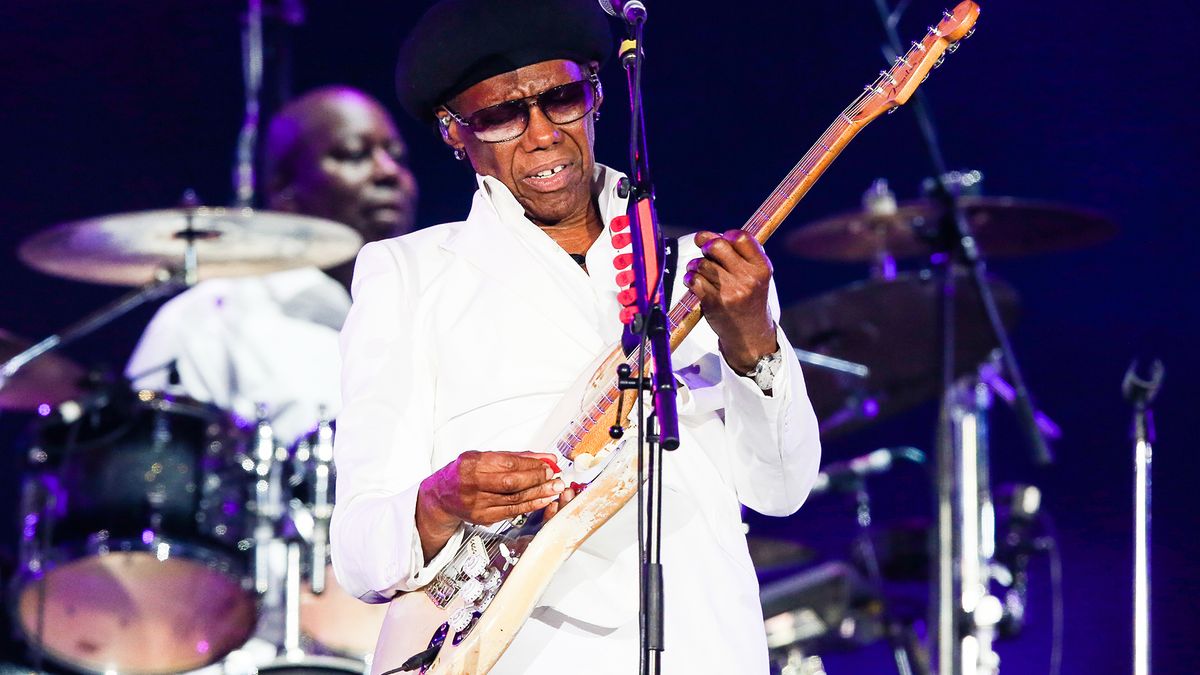
Used for C'est Chic, particularly on "Le Freak", as stated by this February 3, 2020 Guitar World article.
The Neve console’s 31102 mic preamp/EQ channel strip generously reduces bass (to provide extra room for Bernard Edwards’ booty-shaking bass low-end thump), while a miked Deluxe Reverb recorded simultaneously on a second track mixed below the direct track preserves body.
(...) Original gear
Guitar: 1960 Fender Stratocaster with maple 1959 neck and hardtail bridge (neck pickup only), Master Volume: 10, Neck Tone: 10
Direct input: Neve 8068 console with 31102 channel strips (Mic Preamp Level: -30dB, High Frequency: 12kHz, HF Level: +6dB, Mid Frequency: 4.8kHz, MF level: +4dB, Hi Q: On, Low Frequency: 220Hz, LF Level: -6dB, High Pass Filter: 160Hz, Low Pass Filter: off)
Amp: c. 1968-77 Fender Deluxe Reverb (Normal Channel input 1, Volume: 4, Treble: 7, Bass: 5) with Oxford 12K5 12-inch speaker
Effects (outboard): Neve 33609 compressor (settings unknown), Pultec EQP 1A3 2-Band EQ (settings unknown)
Strings/Tuning: D’Addario XL120 .009-.042/Standard
Pick: Fender Thin

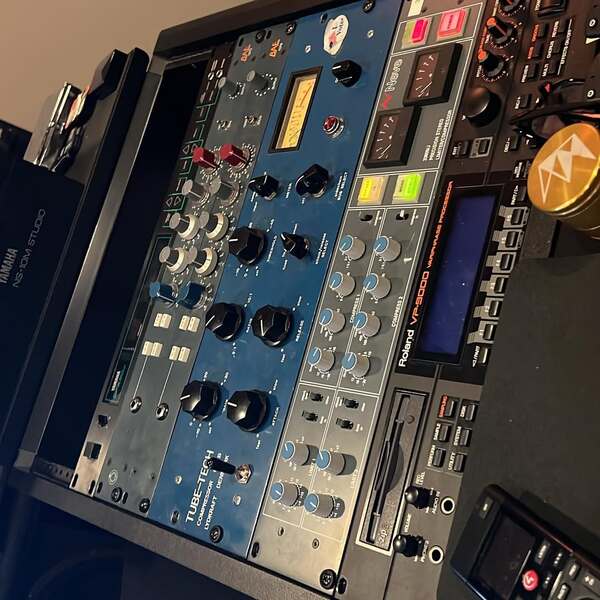
The Real Mike Dean uses the AMS Neve 33609, as confirmed by a post on his Instagram account. On February 14, 2022, he shared a photo with the caption: "Little new sauce for D2 mixing. @analogrofficial with the 33609."


Used for the stereo mix of Mule Variations, as stated by producer Jacquire King in this interview from issue 9 of Audio Technology Magazine.
"I also used a Neve 33609 for bus compression over the stereo mix."


Clay Parton is confirmed to use the AMS Neve 33609, as evidenced by a post on Duster's official Instagram account, which features the equipment with the caption: "we didn’t have anything this nice in the olden days so what the fuck are we even doing but hey want to talk about weirdo equipment meow ok."


Amy Winehouse used the Neve 33609 while working on her album Frank, as documented in an article on Reverb.


Used on T-Pain's vocals for "Low", as stated by mixer Fabian Marasciullo in this Sound on Sound interview.
"The rest was done outside of the box. I used the Neve desk for EQ, and on the hook, ie. on T–Pain, I had a Neve 33609. On Flo I had a matched stereo pair of Distressors. I would have a hundred Distressors if I could. I use them on everything, vocals, drums, bass, guitars. They are just magical. Finally, I sent all the vocals through a Dolby 740. It's an old Dolby unit that was made for film music. It acts like a compressor, but it's an EQ. You can set it so that when the guy sings harder, he sounds a bit brighter. It's a really interesting device, and it gives me a glistening on the voice that no other EQ can give me."


Used for vocals on Anthem of the Peaceful Army, as stated by mix engineer Al Sutton in this January 2019 Sound on Sound interview.
(...) "As I mentioned earlier, I recorded lead vocals with the U67, but did not send that through the API. Like for the bass I instead used the Acme Audio MTP?66 pre, and then a Neve 33609 for some compression and an Original Motown EQ if EQ was needed. MTP stands for Motown Tube Direct Preamp, and the Acme is a unit that I built, and sell. Motown used to have a small, five-channel input box, called the Motown Five Channel Guitar Direct Amplifier, that's coveted by tons of people, and the Acme is a single-channel version of that, with a mic pre added. I got all the schematics from Mike McLean, who was the chief maintenance engineer at Motown during the 1960s, and who did a great job in designing it. You can hear it on all Motown stuff, particularly guitars and bass from 1966 on. The Acme MTP?66 is all-tube, and the preamp sounds really open, with a classic fixed-gain design on the mic pre and DI."
Album Usage
The AMS Neve 33609 has been featured on the following albums:

Anthem Of The Peaceful Army
Greta Van Fleet (2018)

Viva La Vida or Death and All His Friends
Coldplay (2008)
Violet Hill
Coldplay (2008)
Echoes, Silence, Patience & Grace
Foo Fighters (2007)
Icky Thump
The White Stripes & Jack White & Jack White (2007)

Frank
Amy Winehouse (2003)
Mule Variations (Remastered)
Tom Waits (1999)
C'est Chic (2018 Remaster)
CHIC (1978)
Genre Usage
Based on how artists on Equipboard use this gear, it is most commonly found in the following genres.
Used With
Based on how musicians on Equipboard use AMS Neve 33609, it is most commonly used with the following gear.


More AMS Neve Effects Processors


$3,599.00 - $4,900.00


-m.webp?v=1784991531)
$6,884.53


.jpg?v=1784894312)


$1,700.00 - $2,675.00


$3,599.00 - $4,850.00

$1,150.00 - $1,490.00

$2,588.00 - $9,405.00


$2,588.00 - $12,328.27


$1,500.00
in Effects Processors Rank


-m.webp?v=1784991531)
$599.00
in Effects Processors Rank


$194.00
in Effects Processors Rank


Accessories & Related Items


-s.webp?v=1785190068)


Community setups


Similar


Gear Guides








Most Popular Effects Processors
Most Popular Brands
-
Added to Equipboard on by
 eyeseeofficial
GearIQ 161640
-


