

Pricing and availability
We compare 600+ stores and found this item at 4 stores. Prices updated .
Store
Reviews
Price




Average Price: $91,648
High-end/Boutique
$100
$501+
Price Tier
Budget
Standard
High-end
Price History
Based on price data from 3 merchants for "Fairchild 670 Compressor-Limiter". Prices shown reflect NEW condition. Tracking began Apr 2, 2026.
* Product prices and availability are updated by Equipboard every 24hrs and are subject to change. Equipboard may receive compensation for purchases made at participating retailers linked on this site. This compensation does not affect what products or prices are displayed, or the order of prices listed. For more information, please refer to our affiliate disclosure.
Description
Step into a world of vintage audio excellence with the Fairchild 670 Compressor-Limiter, a legendary piece that has shaped the sound of countless iconic recordings. Revered for its 20-tube, dual-channel vacuum tube design, this meticulously handcrafted re-creation offers the same warmth and depth that made the original an industry heavyweight. Its reputation for delivering creamy, natural-sounding dynamics control is unmatched, making it a coveted tool for professional engineers and audiophiles alike.
The Fairchild 670 is engineered for unparalleled versatility, featuring a unique control set that allows for both dual-mono and stereo operations. Its handwired point-to-point circuitry ensures low distortion and noise, making it ideal for high-fidelity audio applications. The compressor's program-dependent nature gently manages dynamic range, transitioning from a low ratio on small peaks to a robust limiting effect on louder signals, ensuring your mix maintains clarity and punch.
Whether you're mastering for vinyl or crafting a modern digital masterpiece, the Fairchild 670 provides the flexibility to optimize mid-side processing and stereo imaging. Its selection of six time constants for attack and release times lets you tailor the compression curve to perfectly fit your material. With the Fairchild 670 in your studio, every instrument and vocal track will shine with the smooth, buttery sound that has become synonymous with classic analog recordings.
Key Features:
- Dual-mono and stereo operation
- Handwired point-to-point construction
- Tube-driven amplification with 20 tubes
- Custom-designed transformers
- 6 selectable attack/release time constants
- Threshold, compression, and makeup gain controls
- VU limiting metering
Product specs
| Brand | Fairchild |
| Model | 670 Compressor / Limiter |
| Finish | Bronze |
| Year | 1960s |
| Made In | United States |
| Categories | Compressors and Limiters |
FAQs
-
What makes the Fairchild 670 Compressor-Limiter unique compared to other compressors?
-
The Fairchild 670 is renowned for its vintage tube circuitry and variable mu design, which deliver a warm, smooth compression ideal for mastering and mix bus applications. Its intricate time constant settings allow for precise control over attack and release times, making it a staple in high-end studios.
-
Is the Fairchild 670 suitable for both mixing and mastering?
-
Yes, the Fairchild 670 is highly versatile and suitable for both mixing and mastering. Its ability to provide gentle compression and rich harmonic character makes it ideal for adding warmth and cohesion to mixes and masters alike.
-
How does the Fairchild 670 handle stereo sources?
-
The Fairchild 670 is designed for stereo operation, featuring dual channels that can be linked for precise stereo imaging. This makes it an excellent choice for processing stereo buses and adding uniform compression across both channels.
-
What are the typical applications for the Fairchild 670 Compressor-Limiter?
-
The Fairchild 670 is commonly used on mix buses, vocals, and orchestral recordings to achieve a polished, cohesive sound. Its legendary tone and dynamic control make it a go-to for professional engineers seeking vintage warmth and character.
-
Can the Fairchild 670 be used for modern music production?
-
Absolutely, the Fairchild 670's timeless sound quality and dynamic range control make it suitable for both vintage and contemporary music production. Its ability to add warmth and depth is valued in modern genres, from pop to electronic music.
Videos

Doctor Mix
The Fairchild 670 Compressor In Action
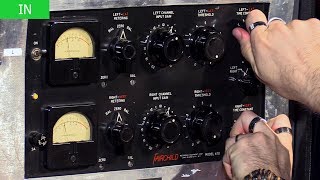
The Fairchild 670 Compressor In Action
Doctor Mix
The original FAIRCHILD compressor is BACK!

Kohle Audio Kult
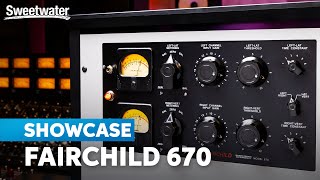
Fairchild 670: The Undisputed Heavyweight of 2-channel Compression Returns

Sweetwater
AES 2023 — Fairchild Model 670 2-channel Tube Limiter & Compressor
Sweetwater
Reviews
Owner Insights
We analyzed real musician discussions from forums and Reddit to find what players love, question, and tweak about Fairchild 670 Compressor-Limiter.
Features and functionality
-
The Fairchild 670 acts as a high-ratio compressor with a program-dependent ratio, adjusting the compression based on input signal strength.
Source -
The Fairchild 670's Time Constant settings range significantly, with options like #4 offering an attack of 0.8 ms and a release of 5 sec for varied sonic impacts.
Source
Comparisons
-
Unlike digital limiters like RVox, the Fairchild 670 does not function as a brick-wall limiter, being more akin to analog compression.
Source -
The Fairchild 670's attack speed, ranging from 0.8 to 0.2 milliseconds, is slower than models like the 1176, making it less effective for capturing fast peaks.
Source -
Similar vari-mu compressors like the Manley Vari-Mu and SPL Iron are alternative options for those seeking similar tonal characteristics to the Fairchild 670.
Source -
In contrast to the LA-2A's optical cell gain reduction, the Fairchild 670 utilizes a vari-mu approach with tube-based gain control, offering a different tonal character.
Source
Use cases and applications
-
The Fairchild 670 is recommended at the end of a vocal chain or bus for subtle compression, rather than on individual vocals.
Source -
It's noted that the Fairchild 670 can be effective on electric guitar tracks, maintaining transient integrity while adding tube warmth.
Source -
The Fairchild 670 may not be ideal for hip hop/pop mastering due to its tendency to reduce low-end presence, which can be crucial for those genres.
Source
5.0 out of 5
Based on 0 Reviews and 1 Rating
Artist usage
Add artist
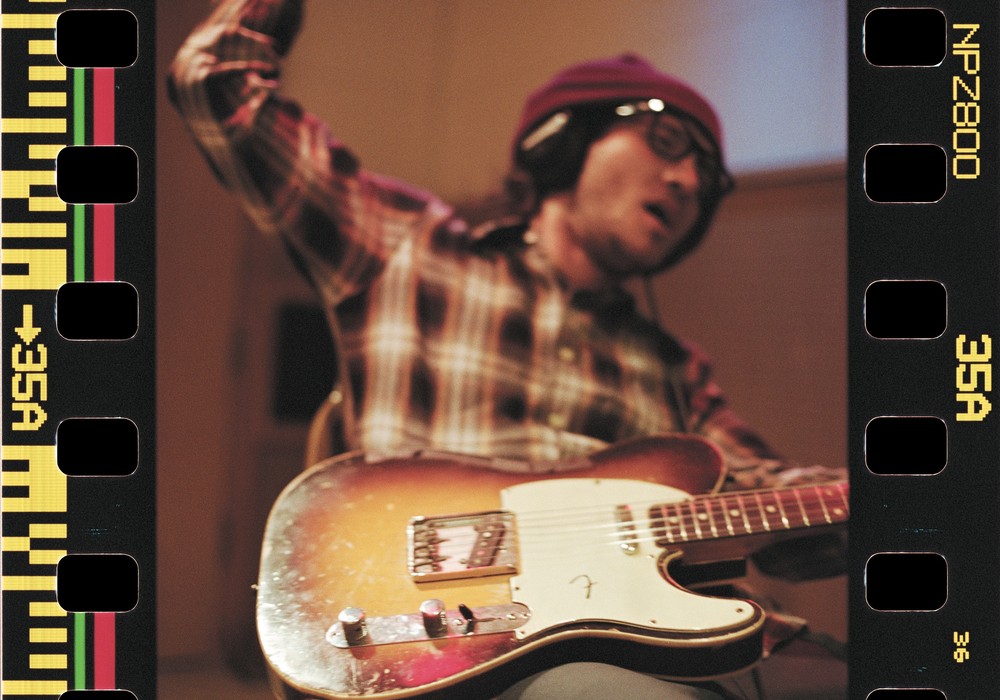
In this article: ''One bedroom is filled with a vintage API console, a huge Doepfer modular analog synth, and an effects rack with a Fairchild 670, Pultecs, 1176s and vintage Neve and UA modules.''

Used for vocals on "a couple of songs" from Continuum, as stated by recording engineer Chad Franscoviak in this October 1, 2006 Mix Online interview.
For Mayer's vocal chain, Franscoviak says that most of the songs were recorded with a Neumann U47. For a couple of songs, he sang into a Neumann M269c, and on “I'm Gonna Find Another You,” which was recorded at Royal Studios in Memphis, he sang into Al Green's RCA 77 ribbon mic. From there, the chain included a Neve sidecar stocked with 1073 mic pre's and then a UREI silver-face 1176. “On a couple of songs, we did experiment with splitting his vocals into two channels — one of them would be kind of a clean and one of them would be kind of a gritty — and we would take the second channel and put it through a Fairchild 670 and really crush it,” Franscoviak explains. “Then we would either blend it together or choose one or the other for the mix.
“[Mayer] loves hearing his vocals really compressed, so he can be as dynamic as he wants to and it always sounds present to him,” he continues. “He likes way too much reverb when he's tracking, and then when we proceed into the mix, it will be reeled in a little bit. Generally, I will compress lightly going to tape or Pro Tools, and then in Pro Tools cream it with usually the Renaissance Vox.”

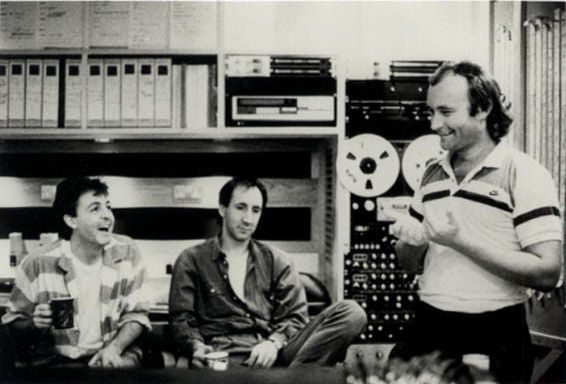
Paul McCartney is associated with the Fairchild 670 Compressor-Limiter, as mentioned in the Hog Hill Mill Blog's "Outboard" post.

In the YouTube interview "KERWIN FROST TALKS TO MAC DEMARCO," the Fairchild 670 Compressor-Limiter is visible behind a green chair, indicating its presence in Mac DeMarco's studio setup.


Geddy Lee uses the Fairchild 670 Compressor-Limiter, as confirmed by Richard Chycki during the recording of Rush's "Caravan." Chycki stated, "The fourth and last channel is what we call the ‘stun channel’. This is an Orange AD200 MKIII 200‑Watt bass head that’s cranked to the hilt and going through an 8x10 cabinet. This is miked up with a Sennheiser 421, through a Neve 1073 and into the other side of the Fairchild 670." This information was provided by Sound On Sound.


During the recording of Channel Orange, Frank Ocean's vocals were tracked using the Fairchild 670 Compressor-Limiter, as well as the CL1B, by producer Malay. This information is verified by a discussion on the Gearspace forum specifically addressing the production techniques employed on Channel Orange.

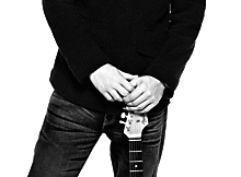
Used on John Mayer's Continuum, as stated by recording engineer Chad Franscoviak in this October 1, 2006 Mix Online interview. It was the same unit used for Mayer's vocals.
For Mayer's vocal chain, Franscoviak says that most of the songs were recorded with a Neumann U47. For a couple of songs, he sang into a Neumann M269c, and on “I'm Gonna Find Another You,” which was recorded at Royal Studios in Memphis, he sang into Al Green's RCA 77 ribbon mic. From there, the chain included a Neve sidecar stocked with 1073 mic pre's and then a UREI silver-face 1176. “On a couple of songs, we did experiment with splitting his vocals into two channels — one of them would be kind of a clean and one of them would be kind of a gritty — and we would take the second channel and put it through a Fairchild 670 and really crush it,” Franscoviak explains. “Then we would either blend it together or choose one or the other for the mix.
(...) Jordan's assortment of drums — which seemed to be endless, Franscoviak says with a laugh — were miked fairly conventionally: an AKG D 112, an RE20, a 421 or a Beyer M88 on the kick; snares got 57s on top and bottom; M88s on the toms; an AKG 451 on hi-hats; and on overheads, he either used a U67 or U87.
The only trick that Franscoviak used, which he fully admits stealing from Joe Ferla, was putting a Coles 4038 ribbon mic directly over the center of the kit, parallel to the ground and as close in as possible without impeding Jordan's playing. “I generally compressed the snot out of that and I would run it through a Fairchild,” he says. “That's a really interesting trick because you have all of your tight sounds, but you add that 4038 and it makes everything more exciting.”
He also put a U47 about 18 inches off the ground and four to seven feet in front of the kick drum for a very specific sound. “At some point, we were going to hit that low-end waveform just right and it was going to fill that kick drum out,” Franscoviak explains. “I would compress it a lot with an 1176, a lot harder than the overhead, because I wanted that low end to be there for every hit.”


Used on the rooms mics for Only by the Night, as stated by producer Jacques King in this December 2008 Sound on Sound interview.
"I had half a dozen mics up for the room sound: a Neumann U67, M49, AKG C12, RCA 44, and/or a Royer SF12 in the echo chamber. I'd leave the door to the echo chamber open so the sound of the drums was happening in there as well, and I'd move the room mics around to get the sound that I wanted for a particular song. I would then bus different combinations to the two room tracks, depending on the song. In the case of 'Sex On Fire' I used a U67 and an RCA 44 for Room 1, and an RCA4 4 and an SF12 for Room 2. Some of these mics went through Neve preamps, some through an old RCA tube mic that Blackbird customised. The combination of room mics was bussed through a Fairchild 670."


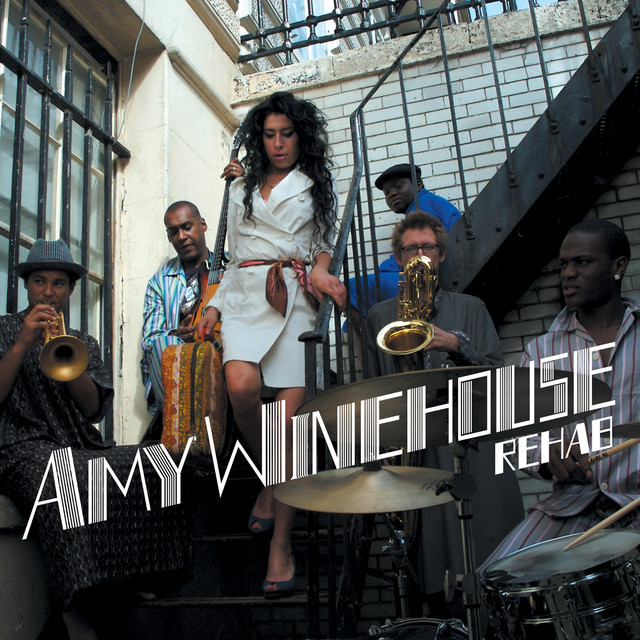
Used for Winehouse's lead vocals on "Rehab", as stated by mix engineer Tom Elmhirst in this August 2007 Sound on Sound interview.
Lead vocals
- Urei 1176 blackface compressor, Pultec EQ, Fairchild compressor/limiter, McDSP F2 Filterbank, Waves Q10 Paragraphic EQ, Waves De-esser, Great British Spring reverb, EMT plate reverb.
"I am not a techno snob, I'll use whatever I can to make a great record. Simple as that. I do try to keep compression and EQ analogue, unless it's EQ to notch out specific frequencies, in which case plug-ins are more precise and effective. Amy is a very dynamic singer. She has a lot of bite in her voice, but I wanted it to sound warm and not take your head off. I often use the Renaissance Q10 EQ for radical reductive EQ'ing, and you can see this in the settings I used on Amy's voice. I'm cutting four frequencies by 18dB; in two cases, 465 and 917, with a Q of 100! That's a really heavy notch. At 3107Hz the Q is only 13.7, so that's quite wide. Taking off 18dB here is enormous, but that's what it was.
"There were specific frequencies in Amy's lead voice [the track labelled 'AmC'], that were bugging me. It may be due to hundreds of things, perhaps to do with the microphone that was used on the day. Don't get me wrong, it was not a bad vocal sound, but she does have some hard frequencies in her voice. There are a few tracks on the album that I did not mix [instead they were mixed by Gary 'G Major' Noble], and you can hear on them what she sounds like without the EQ I applied. I also use McDSP's Filterbank F2, probably shelving around 40Hz, and the Waves De-esser cuts around 5506Hz. Amy is not hugely sibilant. The threshold here is 22, which is not that high for me. There would probably be no more than 3dB of de-essing.
"In addition, I was also filtering with a Pultec outboard EQ and on the board as well. The outboard chain on Amy's vocal was Pultec, going into a Urei 1176 blackface compressor, going into a Fairchild compressor. On the Pultec I was probably adding around 12k, just to brighten it up a little bit, adding air. The Urei will have been set with a very fast attack and a super-fast release, doing perhaps 10dB of compression, while the Fairchild will have had a very slow release. I can't quite explain what this does, but in my head the Urei will catch anything that jumps out, while the Fairchild will pick up the slack and keep a more constant hold of the vocal -- ie. smooth things out. During the mix I'll be constantly playing with these two compressors; it's not something I set up and then leave. How hard the signal coming from the Urei hits the Fairchild affects the sound a lot.
"The vocals had a spring reverb which would have been tracked when they recorded Amy, at Chung King Studios in New York. I also recorded an EMT plate on the vocals at Metropolis. You can see both at the bottom of the Edit screen. I spent a lot of time on the vocal, and I would regularly come back to it. Late in the evening of the first day of mixing 'Rehab' I would have the vocal pretty much in the track all the time, and after that I'd constantly be tweaking it a little bit. I don't just do it and leave it. You're getting constantly closer to the final mix, but it's not immediate."
Although the Fairchild model goes unspecified in the Sound on Sound interview, it is specified in a September 2010 Electronic Musician interview covering Mark Ronson's Record Collection, the pertinent fragment of which survives online via Soundgas pages here and here.
I used a lot of external reverbs: a Fairchild 670, old spring reverbs, and a couple 1970s Pioneer Reverberation Amplifier Model SR-202s. They’re old home hi-fi units; they’re not normal! I am not a fan of digital reverb, so I have a few springs I really like... Spring reverb was a big part of the Winehouse record, and it’s in Mark’s sound as well. I use two or three different springs on a track and even on the vocal.

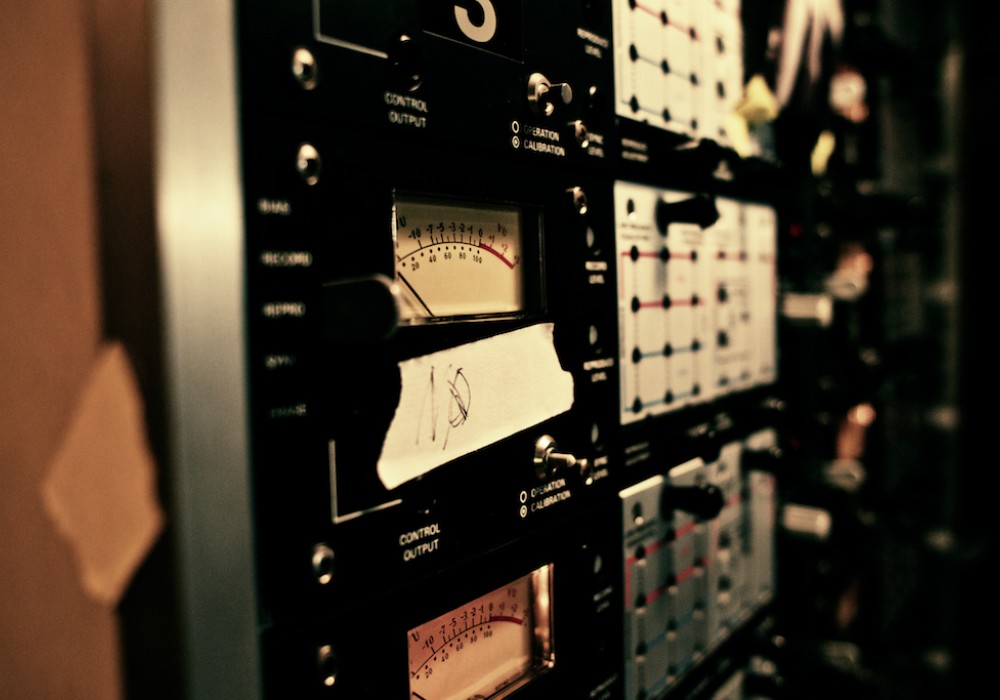
"The room I mix in a lot has two Fairchild 670s"


Marroquin finds that creating stems as he mixes makes for more efficient mixes later on. Based on an audio post-production methodology, he'll create submixes of guitars, drums, percussion, keys and even background vocals. The key, says Marroquin, is to compress these stems, rather than the overall stereo mix. "I'll send individual elements, like the kick and snare, to their own compressors," he explains. "I'll put them on separate busses and send them to a Fairchild 670

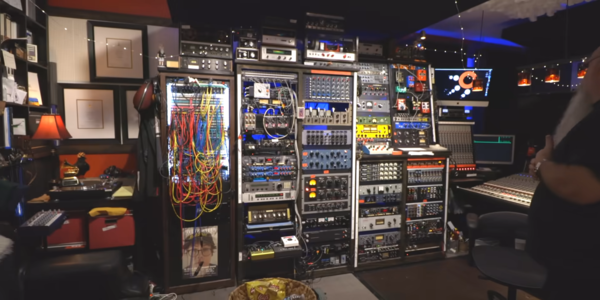
Renowned producer and engineer Vance Powell utilizes the Fairchild 670 Compressor-Limiter to infuse warmth and character into his tracks. This classic piece of studio gear is known for adding harmonics and punch to vocals and drums, thanks to its tube-driven gain control and advanced sections. A user-uploaded photo confirms Powell's use of this iconic equipment in his setup.
Album Usage
The Fairchild 670 Compressor-Limiter has been featured on the following albums:



Genre Usage
Based on how artists on Equipboard use this gear, it is most commonly found in the following genres.
Used With
Based on how musicians on Equipboard use Fairchild 670 Compressor-Limiter, it is most commonly used with the following gear.


-s.webp?v=1784818699)


-s.webp?v=1784818695)

Similar
Add recommendation6 alternative and related items for Fairchild 670 Compressor-Limiter, curated by the Equipboard community.

$20,000.00
A "recreation", as described in the official product description: http://www.anthonydemarialabs.com/products.html
Four years to develop, 16 vacuum tubs along with eight custom transformers is truly a faithful recreation of the original and stands alone.

$2,915.21 - $3,067.74
A more affordable clone of the Fairchild 670, that makes it easy to rotate tubes to achieve different sounds.

$11,999.00
A retro looking, fully featured clone of the Fairchild 670, with expanded controls.

$2,999.00 - $9,599.00
Heritage Audio's vintage style take on the Fairchild 670.

$29,500.00 - $32,590.00
A modern day replica of the Fairchild 670, sold under the Fairchild name.

$1,238.00 - $1,599.00
A 500 series stereo compressor, inspired by the 670.
More Fairchild Effects Processors

$19,500.00 - $23,990.00

.jpeg?v=1784660163)

$29,500.00 - $32,590.00


$19,500.00 - $23,990.00

$1,500.00
in Effects Processors Rank


-m.webp?v=1784559394)
$640.00
in Effects Processors Rank


$189.00
in Effects Processors Rank


$1,799.00
in Effects Processors Rank


$1,549.00
in Effects Processors Rank


$1,999.00
in Effects Processors Rank


$749.99 - $833.00
in Effects Processors Rank


$136.00
in Effects Processors Rank


$1,450.00
in Effects Processors Rank


$3,799.00 - $4,985.00
in Effects Processors Rank


-m.webp?v=1784815383)
$40.00 - $2,999.00
in Effects Processors Rank

$5,777.00 - $6,999.00
in Effects Processors Rank
.jpg?v=1784733415)


$1,153.00 - $2,635.00
in Effects Processors Rank


.jpg?v=1784637724)

$3,568.46 - $4,750.00
in Effects Processors Rank


$892.41 - $1,799.95
in Effects Processors Rank


$220.00
in Effects Processors Rank

$850.00
in Effects Processors Rank


$69.95
in Effects Processors Rank


$199.99 - $300.00
in Effects Processors Rank


-m.webp?v=1784818739)
$320.00
in Effects Processors Rank


$419.99 - $1,179.99
in Effects Processors Rank


$749.99 - $4,999.00
in Effects Processors Rank


$1,650.00
in Effects Processors Rank

$2,999.00 - $3,250.00
in Effects Processors Rank


$629.99 - $849.00
in Effects Processors Rank


$35.70 - $199.00
in Effects Processors Rank


-m.webp?v=1784818824)
$309.37 - $936.00
in Effects Processors Rank

$2,555.00 - $3,225.00
in Effects Processors Rank

-m.webp?v=1784818777)
$450.00 - $699.00
in Effects Processors Rank


$4,999.00 - $8,037.96
in Effects Processors Rank


$999.00
in Effects Processors Rank

.jpg?v=1784792382)


$138.00
in Effects Processors Rank


$1,338.62
in Effects Processors Rank


$202.50 - $599.99
in Effects Processors Rank


$361.46
in Effects Processors Rank


$66.00
in Effects Processors Rank


Accessories & Related Items


-s.webp?v=1784815383)


-s.webp?v=1784819651)


Community setups


Gear Guides








Most Popular Effects Processors
Most Popular Brands
-
Added to Equipboard on by
 jayskye
GearIQ 2667
-


