
Matt Berry
Matt Berry's Gear


Matt talks about owning the original MS20 and now the new MS20 mini
Find it on:


Matt is seen playing the Fender in his music video for “Medicine”.
Find it on:


Matt Berry discusses his use of the Arturia Vox Continental V, noting that when he ran it through an amp with similar characteristics, he couldn't distinguish it from the original. This insight is featured in Arturia's overview of the product.
Find it on:





On the back of the Witchazel album is a list of instruments used which says
Find it on:


-m.webp?v=1783781980)
In a YouTube video by Korg, Matt Berry discusses his use of the Korg MS-20 synthesizer.
Find it on:


Listed on the back cover of Witchazel and visible in this photo used for the back cover of Music for Insomniacs and the back cover of Music for Insomniacs Part IV. It is also mentioned in this December 2020 Sound on Sound interview.
Among Berry’s workhorse synths are his Minimoogs, Korg MS‑20, Prophet 6, ARP Odyssey and Solina, and Roland Jupiter‑4. Meanwhile, in the newer analogue synth department, he’s the proud owner of both Korg’s ARP 2600 FS and KMR’s Antonus 2600, along with the Arturia MatrixBrute. His latest acquisition is a Roland Jupiter‑X, which he clearly loves.
Find it on:

In a YouTube interview titled "Matt Berry - Home Studio Interview," Matt Berry's studio features the AKG Acoustics BX 5 Stereo Reverb Unit, highlighting its role in his recording setup.
Find it on:

Visible in this May 18, 2015 Amber Creative Ltd interview posted to Facebook and YouTube and in this picture from this December 2020 Sound on Sound interview.
For preamps, Berry uses a Neve 1073DPA and a Joe Meek VC1Q Studio Channel, along with his UA Apollo. For his main microphones, he generally chooses between a Neumann U87 and a Rode K2.
Find it on:


Visible in this May 18, 2015 Amber Creative Ltd interview posted to Facebook and YouTube.
Find it on:

You can see the unit in this video of Matt's studio
Find it on:

Visible in this May 18, 2015 Amber Creative Ltd interview posted to Facebook and YouTube at 0:50, and in this picture from this December 2020 Sound on Sound interview.
Matt Berry’s Sequential Prophet‑6, Roland Jupiter‑4, Moog Voyager 08 and Yamaha SK15
Find it on:

In this video Matt Berry can be seen both with the Rickenbacker 360 FG in the background, and playing it.
https://youtu.be/mLVNAek4ri0?t=36 can be seen at multiple points but I've linked to 36 seconds.
Find it on:

Matt Berry prominently uses the Rickenbacker 4001 Fireglo bass, notably on his album "The Blue Elephant," as mentioned in an article by Charlotte Krol on NME.
Find it on:

Mentioned in this November 20, 2015 The Big Issue interview. It was used for “Chic Tweetz”, as specified in the YouTube video description.
The Big Issue, November 20, 2015, "Matt Berry Interview: My Organ Obsession..."
The first time I saw an organ as the lead instrument was The Doors. Ray Manzarek plays so brilliantly, that was a huge influence. So I have a Vox Continental that The Doors and Elvis Costello used; an Italian Farfisa that Jimmy Destri from Blondie plays.
"Chic Tweetz" YouTube video description
Matt Berry-visionary sonic midwife, who birthssoundscapes from another dimension, then lovingly guides their graceful fall to earth atop the gentle whisper of his pulsating, ancient organ (Vox continental organ). & also inner monologue vocal
Find it on:

Mentioned in this March 7, 2011 Roland & Boss TV interview at 4:59. It can also be seen in this picture used for the back cover of Music for Insomniacs.
So, I've got a Promars now, but that's just from seeing them, you know, on like, Top of the Pops as a kid... and a Jupiter-4, I haven't got a Jupiter-8... But yeah, you know, I love their keyboards.
Find it on:

Mentioned in this March 7, 2011 Roland & Boss TV interview at 4:59. It can also be seen in this picture used for the back cover of Music for Insomniacs and this picture from this December 2020 Sound on Sound interview and the back cover of Music for Insomniacs Part IV.
So, I've got a Promars now, but that's just from seeing them, you know, on like, Top of the Pops as a kid... and a Jupiter-4, I haven't got a Jupiter-8... But yeah, you know, I love their keyboards.
Find it on:

Mentioned in this November 20, 2015 The Big Issue interview.
I had been looking for a 1971 Eminent 310 Unique since I was 15. It was the first to have a string section, and about 80 per cent of Jean Michel Jarre’s Oxygène LP was played on one. It has the most luscious string sound ever. One came up for sale a year ago and I got my people on it to make sure no one else bought it.
Find it on:

Mentioned in this March 7, 2011 Roland & Boss TV interview at 8:58.
[Berry] I just gotta say before... the Fender Reverb pedal, the Boss one, is amazing and...
[Interviewer] The Deluxe Reverb one?
[Berry] Yeah, yeah, yeah and the other one... the '63 one. Yeah, it sounds like real, you know, spring reverb, well done.
[Interviewer] Wow, I didn't ask him to say that either.
[Berry] No, no, no, no, you know, where credit's due. It's good, it's a decent pedal. I've put synths through it, I've put, you know, sort of guitars through it, obviously and, I kind of thought I don't know how this is gonna, this isn't gonna sound like a, you know, spring reverb, 'cause it's [shapes small Boss enclosure with hands], and it did! It was great.
Find it on:

Mentioned in this March 7, 2011 Roland & Boss TV interview at 8:58. it is also pictured in this December 2020 Sound on Sound interview.
[Berry] I just gotta say before... the Fender Reverb pedal, the Boss one, is amazing and...
[Interviewer] The Deluxe Reverb one?
[Berry] Yeah, yeah, yeah and the other one... the '63 one. Yeah, it sounds like real, you know, spring reverb, well done.
[Interviewer] Wow, I didn't ask him to say that either.
[Berry] No, no, no, no, you know, where credit's due. It's good, it's a decent pedal. I've put synths through it, I've put, you know, sort of guitars through it, obviously and, I kind of thought I don't know how this is gonna, this isn't gonna sound like a, you know, spring reverb, 'cause it's [shapes small Boss enclosure with hands], and it did! It was great.
Find it on:

Two can be seen on the back cover of Music for Insomniacs Part IV, while one is visible in this photo used for the back cover of Music for Insomniacs.
Find it on:

Mentioned in this May 4, 2020 Twitter post and this December 2020 Sound on Sound interview.
Twitter, May 4, 2020
Phew. Roland Jupiter X is exactly what I wanted it to be. All the major Roland polysynths (convincingly) under one roof. Praise be.
Sound on Sound, December 2020, "Matt Berry"
Among Berry’s workhorse synths are his Minimoogs, Korg MS‑20, Prophet 6, ARP Odyssey and Solina, and Roland Jupiter‑4. Meanwhile, in the newer analogue synth department, he’s the proud owner of both Korg’s ARP 2600 FS and KMR’s Antonus 2600, along with the Arturia MatrixBrute. His latest acquisition is a Roland Jupiter‑X, which he clearly loves.
“It’s gorgeous,” he enthuses. “I’ve got a Juno‑6 and I thought, ‘There’s no way this thing is going to be able to do that stuff and the kind of Jupiter‑8 stuff.’ But it honestly does. I can’t tell the difference. It is basically like having all those early Junos and Jupiters in one synth. I know that sounds like some cod advertising speak, but it is… and that’s what I wanted.”
Find it on:

Visible in this photo used for the back cover of Music for Insomniacs and the back cover of Music for Insomniacs Part IV.
Find it on:
-m.webp?v=1783781961)
Two can be seen on the back cover of Music for Insomniacs Part IV, while one is visible in this photo used for the back cover of Music for Insomniacs.
Find it on:

Visible in this photo used for the back cover of Music for Insomniacs and the back cover of Music for Insomniacs Part IV. It is also mentioned in this December 2020 Sound on Sound interview.
Around the same time, Berry began collecting then‑unfashionable analogue synths, picking them up incredibly cheaply through classified ads. “I got a [Yamaha] CS‑60 for 200 quid,” he marvels. “I got a CS‑10 and a load of analogue synths. What was always quite funny was that there’d be things like ‘Jupiter‑8. Will swap for a DX7’. You think, ‘Well, you fucking wouldn’t do that now.’
“But for me it was amazing. I wanted analogue synths because I’d seen Jean‑Michel Jarre surrounded by these keyboards that had loads of knobs, dials and sliders. That was the coolest sound. I didn’t think there was anything cool about a DX7.”
Find it on:

Visible in this photo used for the back cover of Music for Insomniacs and mentioned in this December 2020 Sound on Sound interview.
Among Berry’s workhorse synths are his Minimoogs, Korg MS‑20, Prophet 6, ARP Odyssey and Solina, and Roland Jupiter‑4. Meanwhile, in the newer analogue synth department, he’s the proud owner of both Korg’s ARP 2600 FS and KMR’s Antonus 2600, along with the Arturia MatrixBrute. His latest acquisition is a Roland Jupiter‑X, which he clearly loves.
“It’s gorgeous,” he enthuses. “I’ve got a Juno‑6 and I thought, ‘There’s no way this thing is going to be able to do that stuff and the kind of Jupiter‑8 stuff.’ But it honestly does. I can’t tell the difference. It is basically like having all those early Junos and Jupiters in one synth. I know that sounds like some cod advertising speak, but it is… and that’s what I wanted.”
Find it on:

One is visible in this October 2, 2010 photo from Future Music and this photo used for the back cover of Music for Insomniacs, while two can be seen on the back cover of Music for Insomniacs Part IV. It is also mentioned in this December 2020 Sound on Sound interview.
Berry had in the ’90s also collected similarly unfashionable drum machines. “One of the first things that I wanted was a Korg Mini Pops [7] because of Jean‑Michel Jarre,” he recalls. “And I got two of those, for like, 100 quid. And I got a [Roland] CR‑78 [CompuRhythm] for, I think, £250. ’Cause back then no one wanted that. It was this big sort of wooden box, it wasn’t portable and it kind of looked like a microwave, I suppose, compared to small drum machines then.” The appeal for him of these beatboxes, he says, was the warmth of the sounds. “Yeah, they’ve got natural compression and stuff. You don’t need to add a lot. They kind of have all their warmth.”
Find it on:

Visible in this photo used for the back cover of Music for Insomniacs and the back cover of Music for Insomniacs Part IV.
Find it on:

Mentioned in this December 2020 Sound on Sound interview.
Further remote instruction from Oldfield came when the multi‑instrumentalist appeared on Blue Peter in 1979, in a section filmed showing him multi‑layering, on 24‑track tape, his version of the show’s theme tune. “To then see him on Blue Peter,” Berry says, “where you actually saw him build it track‑by‑track, I had more of an understanding.”
Berry’s sole instrument at the time was a domestic Hammond organ, which his parents had bought him. To emulate Oldfield, he bought a Tascam 424 Portastudio and began layering up his own recordings, using the Hammond’s basic beatbox and feeding its various flute, strings and oboe sounds through cheap guitar effects pedals.
Find it on:

Mentioned in this December 2020 Sound on Sound interview.
Further remote instruction from Oldfield came when the multi‑instrumentalist appeared on Blue Peter in 1979, in a section filmed showing him multi‑layering, on 24‑track tape, his version of the show’s theme tune. “To then see him on Blue Peter,” Berry says, “where you actually saw him build it track‑by‑track, I had more of an understanding.”
Berry’s sole instrument at the time was a domestic Hammond organ, which his parents had bought him. To emulate Oldfield, he bought a Tascam 424 Portastudio and began layering up his own recordings, using the Hammond’s basic beatbox and feeding its various flute, strings and oboe sounds through cheap guitar effects pedals.
“They weren’t even Boss,” Berry points out. “They were Orion, and I had a stereo delay and a flanger. By that point I was obsessed with Oxygène by Jean‑Michel Jarre — mainly that string sound that I know now is a phased string sound. I thought that was an expensive keyboard that could make that sound. I didn’t realise it was a string synthesizer that was effected by a cheap guitar pedal. If I’d have found that out a lot earlier, my search would’ve been complete at age 14 or whatever.
Find it on:
This is a community-built gear list for Matt Berry.
- Find relevant music gear like Microphones, Guitars, Amplifiers, Effects Pedals, Pianos, Keyboards and Synthesizers, and other instruments and add it to Matt Berry.
- The best places to look for gear usage are typically on the artist's social media, YouTube, live performance images, and interviews.
- To receive email updates when Matt Berry is seen with new gear, follow the artist.
-
Added to Equipboard on by
 harrymatcham
GearIQ 297
-
Updated
Discography

Witchazel
2011
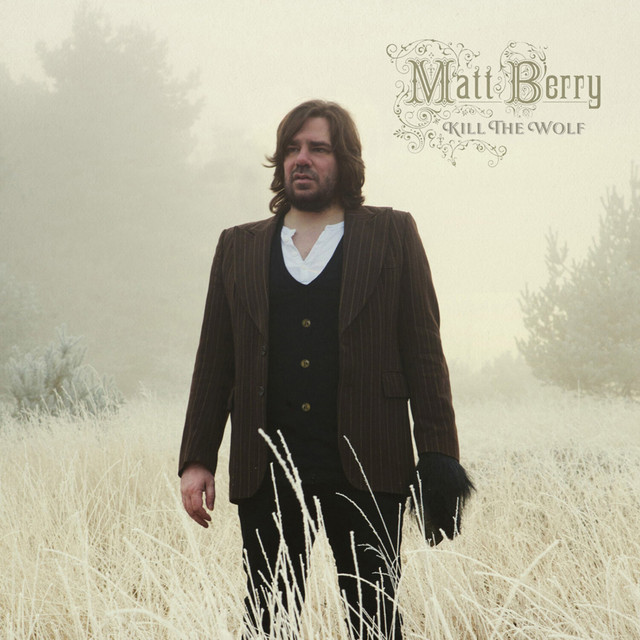
Kill the Wolf
2013
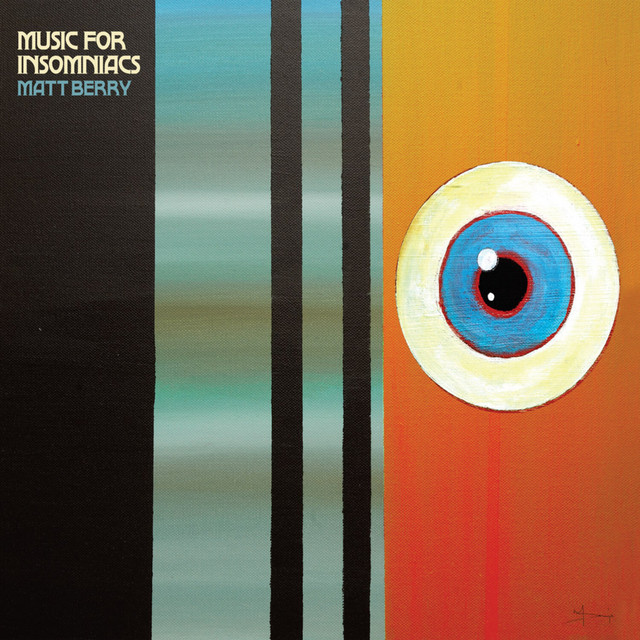
Music for Insomniacs
2014
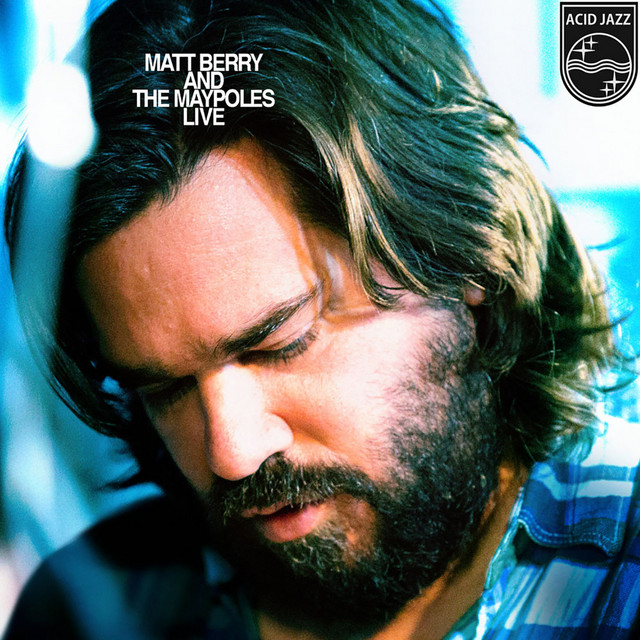
Matt Berry and the Maypoles Live
2015
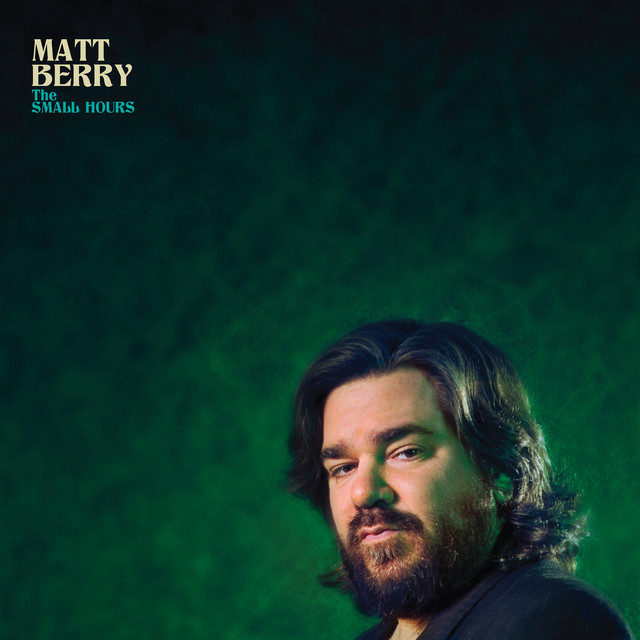
The Small Hours
2016
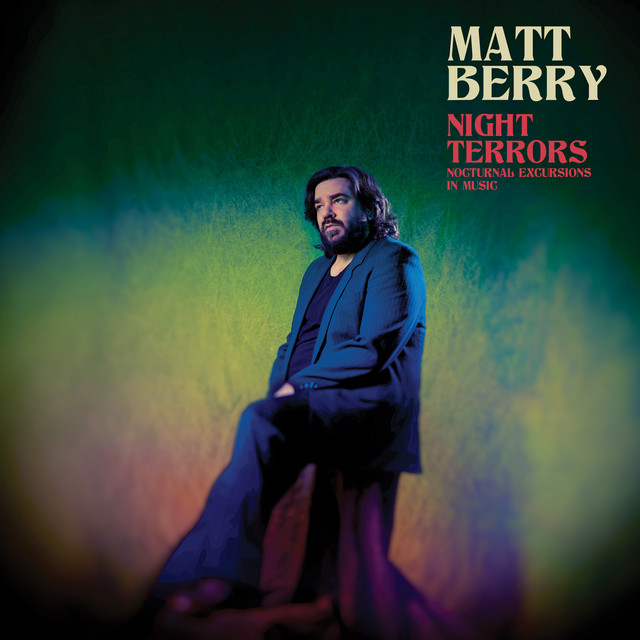
Night Terrors
2017

Television Themes
2018
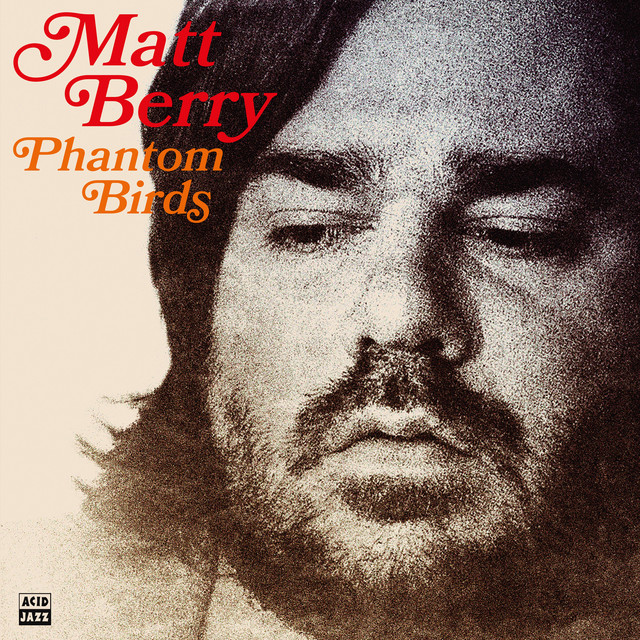
Phantom Birds
2020
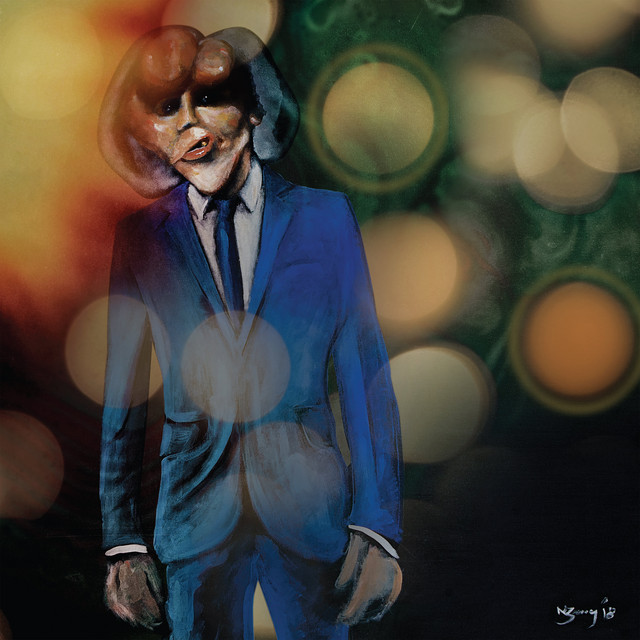
The Blue Elephant
2021
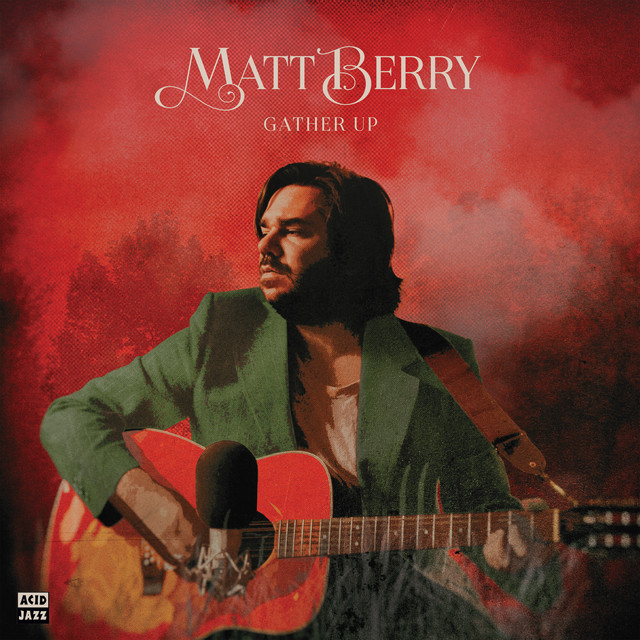
Gather Up (Ten Years On Acid Jazz)
2021
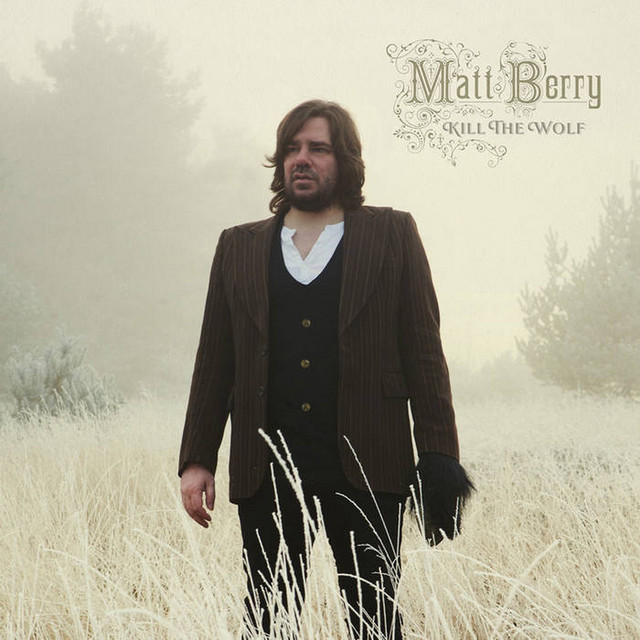
Kill The Wolf (10th Anniversary Deluxe)
2023
Simplicity
2023







.webp)


