

Pricing and availability
We compare 600+ stores and found this item at 1 store. Prices updated .
Store
Reviews
Price




Average Price: $377
High-end/Boutique
$100
$276+
Price Tier
Budget
Standard
High-end
* Product prices and availability are updated by Equipboard every 24hrs and are subject to change. Equipboard may receive compensation for purchases made at participating retailers linked on this site. This compensation does not affect what products or prices are displayed, or the order of prices listed. For more information, please refer to our affiliate disclosure.
Description
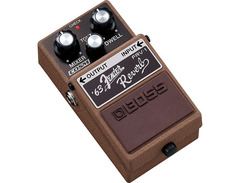
Dive into the magical world of reverberations with the Boss FRV-1 '63 Fender Reverb, a compact yet powerful pedal that captures the iconic Fender spring reverb without the high price or complexity of an original tank. Boasting a vintage aesthetic, this pedal utilizes COSM technology to deliver that dense, room-filling reverb that has become synonymous with genres like surf rock, country, and grunge. It's simple, it's efficient, and it's ready to bring that classic tonal magic to your rig.
Key Features:
- Compact design for easy integration into your gear setup
- Utilizes COSM technology for accurate reproduction of classic Fender spring reverb
- Retro-inspired aesthetic for an authentic vintage vibe
- Straightforward controls for easy operation
- Ideal for creating the lush, room-filling reverb associated with surf rock, country, and grunge genres.
Product specs
| Brand | Boss |
| Model | FRV-1 '63 Fender Reverb |
| Finish | Brown |
| Year | 2009 - 2025 |
| Made In | Taiwan |
| Categories | Reverb Pedals |
FAQs
-
What type of reverb does the Boss FRV-1 emulate?
-
The Boss FRV-1 emulates the classic '63 Fender Spring Reverb, known for its rich, lush sound that is ideal for surf rock, rockabilly, and blues.
-
Is the Boss FRV-1 suitable for both electric guitar and bass guitar?
-
Yes, the Boss FRV-1 can be used with both electric guitar and bass guitar, providing a vintage spring reverb sound that complements a variety of music styles.
-
Does the Boss FRV-1 require a specific type of power supply?
-
The Boss FRV-1 requires a standard 9V DC power supply, similar to many other effects pedals, making it easy to integrate into your existing pedalboard setup.
-
How does the Boss FRV-1 compare to a real Fender spring reverb unit?
-
The Boss FRV-1 digitally emulates the sound of a '63 Fender Spring Reverb, offering a compact and reliable alternative with similar tonal characteristics, though purists may note subtle differences in response and warmth.
-
Can the Boss FRV-1 be used in a live performance setting?
-
Yes, the Boss FRV-1 is designed for both studio and live performance use, providing consistent and reliable spring reverb effects in a durable pedal format.
Videos

ProGuitarShopDemos
Boss FRV-1 Fender Reverb
Boss FRV-1 Fender Reverb
ProGuitarShopDemos
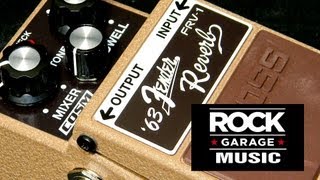
BOSS Fender FRV-1 '63 Reverb Pedal

intheblues
BOSS FRV-1 '63 Fender Reverb introduction

BOSSchannel
![Video thumbnail for FRV-1 Fender® Reveb [BOSS Sound Check] by BOSSchannel](https://img.youtube.com/vi/NVo-stvk_QE/mqdefault.jpg)
FRV-1 Fender® Reveb [BOSS Sound Check]
BOSSchannel
Is this BOSS pedal worth $420?

60 Cycle Hum

Legends of Tone: Dick Dale

zZounds
Boss FRV-1 Fender '63 Reverb Pedal Review

PMTVUK
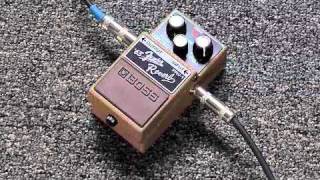
Boss FRV1 Fender Reverb Demo

Phil Vickman
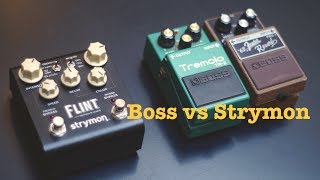
Strymon vs Boss - Doctor Guitar #135

Budda Guedes
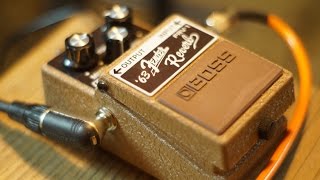
Boss FRV1 - Doctor Guitar #40
Budda Guedes
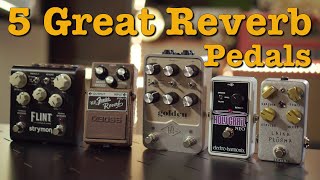
5 Great Reverb Pedals for Spring reverb effect - Doctor Guitar EP262
Budda Guedes
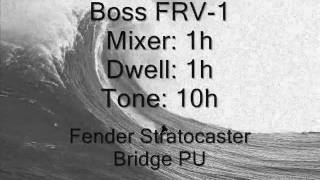
Boss FRV-1 Reverb Pedal Review for Surf Guitar

TheSurfergirls
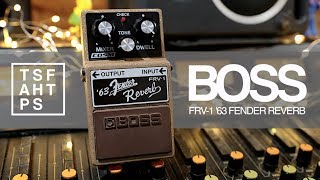
Boss Legend Series - FRV-1 Fender '63 Spring Reverb

TheSuperFunAwesomeHappyTimePedalShow
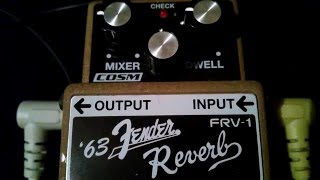
Boss FRV-1 testing for surf

The Man With No Name
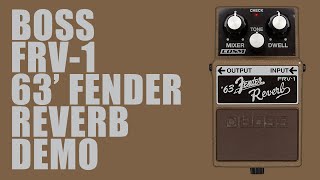
Boss - FRV-1 63' Fender Reverb - Demo

Ryan Lutton
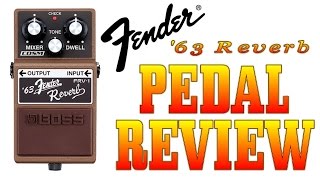
Boss Fender '63 Reverb FRV 1 PEDAL REVIEW

The Return
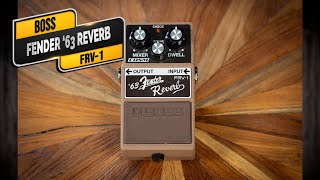
Boss FRV1 Fender 63 Reverb Pedal - VGW

Vintage Guitar Workshop
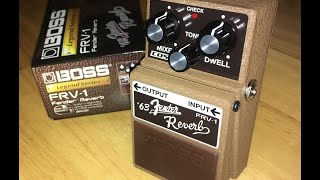
Ultimate Spring Reverb Shoot Out - Episode 3: Boss FRV-1 - Stratocaster And Les Paul Demo

Tri Pedal Reviews
Boss FRV-1 '63 Fender Reverb demo

Depotgear
Pedal Boss FRV-1 Fender Reverb 63 - O Reverb de Mola em forma Pedal!

José Negrin

Boss FRV-1 Reverb Revealed: Achieving the Iconic Surf Sound

Andy Knight Guitarist
BOSS FRV-1 Fender Reverb Demo | Guitar Prof Blog

guitarprof
1963 Fender Reverb Unit VS Boss 63 Reverb FRV-1 Pedal & Twin Reverb Amp

Wayne Parenteau
Boss '63 Fender Reverb - FRV1 | Pedal Demo & Review | No Talking

MTJ Guitars
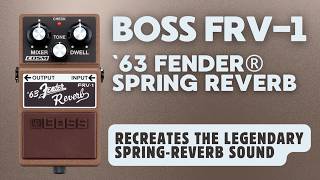
Boss | FVR-1 Fender Reverb Pedal Demo

ChrisPedalDemos
Boss Fender Reverb FRV-1

JB Musical
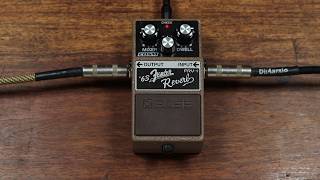
Boss FRV-1 Fender '63 Reverb

Wall of Sound
Reviews
PROS
-
Emulates the '63 Fender tank reverb closely
-
Versatile and lush sound compared to real springs
-
Collectible due to Boss-Fender partnership
-
Authentic mechanical reverb sound for live and studio
-
Simple control layout for easy use
-
Warm, organic tones with good balance
-
Ideal for blues and 60s surf music
-
Durable and pedalboard friendly
CONS
-
Considered a "one trick pony" compared to other reverb pedals
-
Sound may be too bright for some, requiring adjustment
-
Not suited for very long reverb sounds
-
Discontinued, potentially harder to find
Owner Insights
We analyzed real musician discussions from forums and Reddit to find what players love, question, and tweak about Boss FRV-1 '63 Fender Reverb.
Comparisons
-
The FRV-1 is compared to the Vanamps Sole Mate and SurfyBear, with SurfyBear preferred for its sound quality.
Source -
Owners note the FRV-1 has a stronger drip than the Strymon Flint, whose spring setting is considered less impressive.
Source -
While it has been surpassed by newer pedals, the FRV-1 retains a reputation as a solid spring reverb.
Source
Use cases and applications
-
Known for producing a pronounced "drip" sound, the FRV-1 is favored for surf music styles.
Source
User experience
-
Users highlight that the FRV-1 was overlooked initially but later gained popularity for its superior spring reverb algorithms.
Source
Features and functionality
-
The pedal is praised for emulating the sound of old outboard reverb tanks, especially when used in front of an amp without an effects loop.
Source
Value and pricing
-
Discontinuation has driven second-hand prices up to 200€, with some listings even reaching 250€.
Source -
Despite high prices, some owners recall buying used units for as low as $80 before the pandemic.
Source -
Featured appearances in JHS videos have contributed to inflated market prices, reflecting the pedal's enduring popularity.
Source
Critic Reviews
4.5 out of 5
Based on 7 Reviews and 53 Ratings

449
Expensive - Good
I've used this review title before because I feel similarly about this pedal. This should not be the price it is but its good and effective to tour with.
287
Gorgeous and super drippy reverb
This is one of the best spring reverb ever made. It's super drippy and sounds awesome for blues. It's not as high fidelity as the Strymon Flint or the El Capistan but it has a vintage esque to it which is great. Most people will keep the TONE really low as it may sound really bright but it will kill the lush reverb and kills the sparkle too. I normally keep the Mixer below 9 o clock while the tone around 3 to 4 and dwell below 11. This sounds really good with blues . For more modern sounding reverb, I would use the Walrus Fathom instead. I love the simple control layout and the classic look to it. Such a bummer Boss decided to discontinue this pedal.

The best compact spring reverb pedal there is
Soundwise it captures the original Fender Springtank Unit from the 60s perfectly, I do not have the direct experience for comparison but that's what many say on the net. It takes some time to get to know the conrtols but then you can have the most authentic spring reverb sounds. The surfy bear might be a little more versatile and better in sound quality, but that thing is a pedalboard on its own. If you can grab one of these, do it. You won't need nor want another spring reverb ever again.

222
Best Reverb Pedal I've Ever Owned
The FRV-1 is the most realistic Fender spring reverb pedal I've ever heard/have. The COSM technology successfully recreates the spring drip whilst being a very simply pedal with a mixer knob, tone knob and dwell knob. Very good for recreating the 60s sound of many bands. It's that good I've sacrificed other kinds of effects due to having to have this and a RV-6/Holy Grail Max on my board as it's too good to take off. Not good for very long reverbs hence the other pedals, but for that authentic spring sound, it's the best you can have besides the real thing.

459
Very Good Pedal
Classic Fender reverbs are warm and lush, and recreating such organic tones can be a difficult one for solid-state units to pull off. Here, though, the FRV-1 twangs in spades, with everything from a subtle enhancement all the way to full-on Dick Dale madness faithfully at your boot tips; even the 'pop' caused by pick attack is recreated.
As long as you balance the tone with your dry amp signal, you'll get a huge amount from this pedal. It's a compromise but, for general gigging and recording, this is as authentic as it's likely to get.

137
Good Reverb pedal
The classic fender reverb in a stompbox size. As always boss provides you with a pedalboard friendly pedal.

Artist usage
Add artist

"He runs two pedalboards, one for acoustic and one for electric. The acoustic board consists of an Ernie Ball volume pedal, Boss FRV-1 reverb, TU-2 tuner and a Radial Tonebone PZ-Pre acoustic preamp. Electric-wise, there’s a Menatone King of the Britains, Electro-Harmonix HOG, Digitech Jamman, Electro-Harmonix Deluxe Memory Man and MXR 10-Band Graphic EQ, all powered by a Dunlop DC Brick. It’s an impressive selection and one that ensures Cornell’s acoustic shows are so much more than just, well, acoustic."


At 0:46 in video from 2010 tour in Russia.
Full routing
Boss Chromatic Tuner T-Rex Luxury Drive booster
then the signal goes to the pedalboard, apparently to
Overdrives/distortions:
* Ibanez Tube Screamer TS808
* Digitech Bad Monkey Tube Overdrive
* T-Rex Møller
Chorus/Phasers/Flangers:
* T-Rex Twister Chorus & Flange above
Reverbs/Delays:
* Boss FRV-1 '63 Fender Reverb by his side
* Boss Digital Reverb RV-5 below
* Electro Harmonix Holy Grail reverb by his side
* Line6 DL-4 Delay Modeler outside the pedalboard
Amp switcher: * Tonebone Radial JX-2 Switchbone AB amp switcher + booster
As he seems to select which amp he goes to (there's the both option too; maybe he just uses it as a final boost for both amps), I imagine he doesn't use the effects loop of the amps, or maybe the reverb/delays part goes through the effects loop of only one of the amps?
After going crazy I found this great work by a japanese that saved me from searching the Holy Grail (don't think I'd had identified it) and the Delay:



Brittany Howard discloses her gear in this 2015 interview

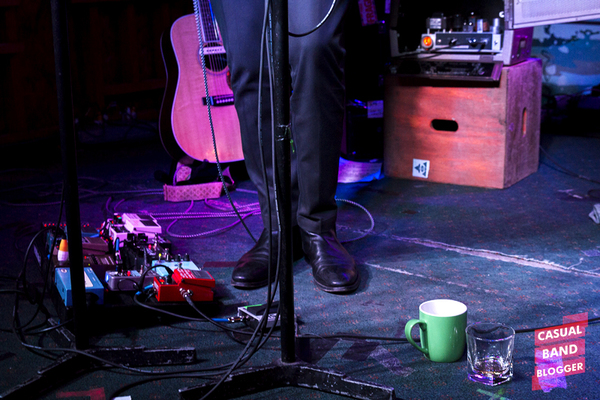
In this photo of Cam's solo pedalboard, a Boss FRV-1 '63 Fender Reverb pedal can be seen behind the mic stand.


Someone posted a photo in which he is shown on stage stepping on Boss FRV-1. Pretty interesting considering this is digital pedal emulating sound of the very old Fender unity from the 60s. However in my opinion it is even better than the analog unit.


The Boss FRV-1 can be seen at the top left corner of Steve's pedalboard throughout the video.

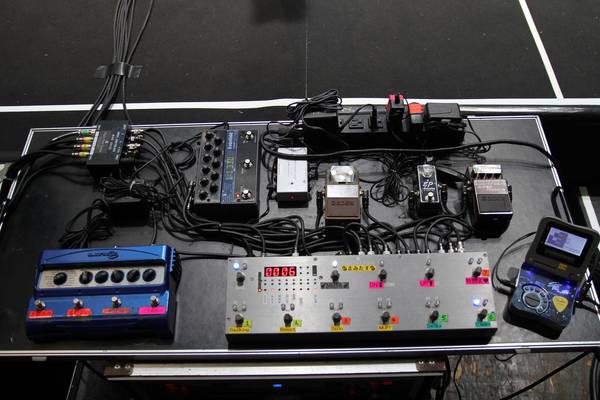
Mami Sasazaki utilizes the Boss FRV-1 '63 Fender Reverb pedal, managed by her technician, Motchy. This pedal is known for recreating the iconic 1963 Fender Reverb sound through COSM technology, as shown in the provided image from Imgur.

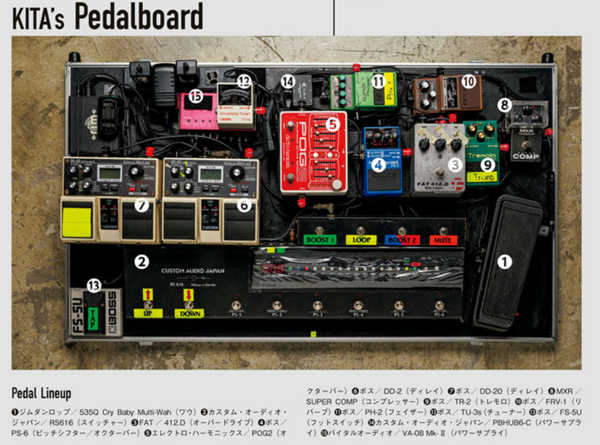
A picture on Guitar Magazine, January 2019 issue, shows Kita's pedalboard circa 2018.

Nick Harmer uses the Boss FRV-1 on his pedalboard, dialed quite high to get a very washy sound.

In this video starting at 6:57, Aaron discusses his pedalboard. A Boss FRV-1 can be clearly seen.


I can tell you that he sounded great at the 9:30 Club last night with a pedalboard full of Boss pedals and an Ibanez delay. All powered by a (wait for the collective gasp from the Gear Page folks) a One Spot.
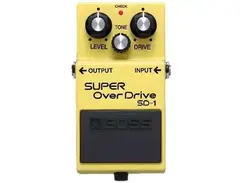
Here's the list: Boss TU-2 Tuner Boss SD-1 Super Overdrive Boss RC-20XL Loop Station Boss FRV-1 Fender 63' Reverb Pedal Ibanez AD9 Delay
Album Usage
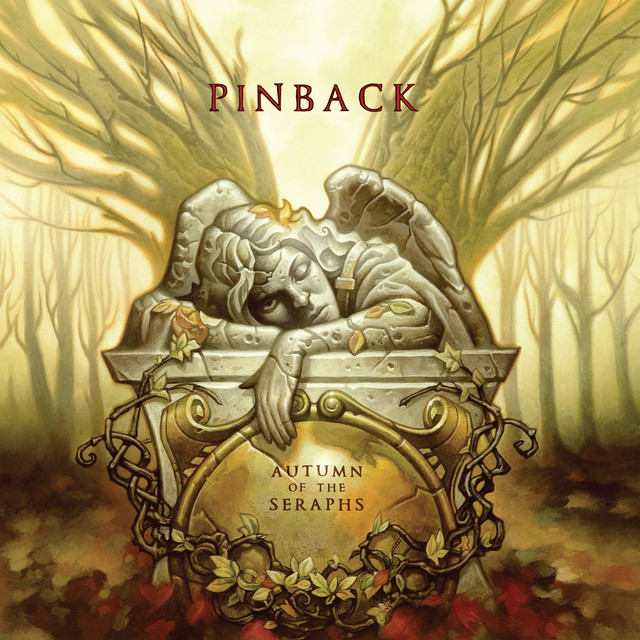
The Boss FRV-1 '63 Fender Reverb has been featured on the following albums:


Genre Usage
Based on how artists on Equipboard use this gear, it is most commonly found in the following genres.
Used With
Based on how musicians on Equipboard use Boss FRV-1 '63 Fender Reverb, it is most commonly used with the following gear.


-s.webp?v=1785063627)

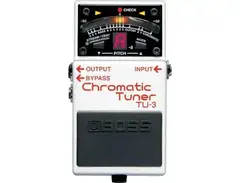
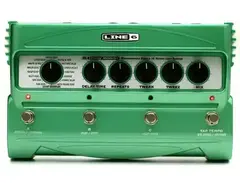
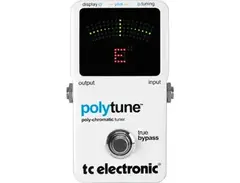

Community setups
Show yours

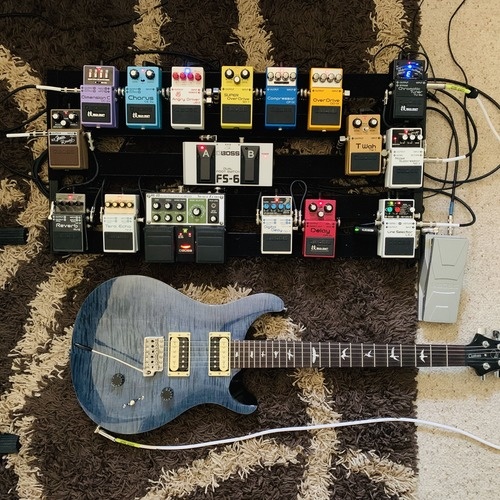
More Boss Reverb Effects Pedals
-m.webp?v=1785077864)
$101.00
in Reverb Effects Pedals Rank


$140.72 - $163.50
in Reverb Effects Pedals Rank


$94.00
in Reverb Effects Pedals Rank


$329.99 - $411.00
in Reverb Effects Pedals Rank


-m.webp?v=1785077936)
$140.00
in Reverb Effects Pedals Rank


$182.75 - $296.99


$18.48 - $80.00
in Reverb Effects Pedals Rank


-m.webp?v=1785077894)
$325.00 - $379.00
in Reverb Effects Pedals Rank


-m.webp?v=1785107419)
$439.00 - $479.00
in Reverb Effects Pedals Rank


$209.00 - $235.99
in Reverb Effects Pedals Rank
.jpeg?v=1785065168)


$399.00 - $499.00
in Reverb Effects Pedals Rank


$69.00 - $149.99
in Reverb Effects Pedals Rank


$50.00
in Reverb Effects Pedals Rank


$182.00 - $219.99
in Reverb Effects Pedals Rank


$122.00 - $129.99
in Reverb Effects Pedals Rank

$219.00
in Reverb Effects Pedals Rank


$120.00
in Reverb Effects Pedals Rank


$105.00 - $149.99
in Reverb Effects Pedals Rank


$120.00
in Reverb Effects Pedals Rank


$227.91
in Reverb Effects Pedals Rank


$111.00 - $137.90
in Reverb Effects Pedals Rank


$119.99 - $219.99
in Reverb Effects Pedals Rank


$225.00 - $257.00
in Reverb Effects Pedals Rank

.jpg?v=1785070565)


$219.00 - $234.00
in Reverb Effects Pedals Rank


$145.00
in Reverb Effects Pedals Rank


$145.00 - $185.10
in Reverb Effects Pedals Rank


$179.00 - $209.00
in Reverb Effects Pedals Rank


$169.99 - $222.00
in Reverb Effects Pedals Rank


-m.webp?v=1785078204)
$446.49 - $499.00
in Reverb Effects Pedals Rank


$148.12
in Reverb Effects Pedals Rank


$144.00 - $176.00
in Reverb Effects Pedals Rank


$199.00
in Reverb Effects Pedals Rank


$199.00 - $253.00
in Reverb Effects Pedals Rank


$299.00 - $333.00
in Reverb Effects Pedals Rank
.jpeg?v=1785070563)


$94.00
in Reverb Effects Pedals Rank


$179.99 - $299.99
in Reverb Effects Pedals Rank


$159.99
in Reverb Effects Pedals Rank


$89.00
in Reverb Effects Pedals Rank


$181.00 - $199.95
in Reverb Effects Pedals Rank


$195.00 - $344.00
in Reverb Effects Pedals Rank
Accessories & Related Items




-s.webp?v=1785077859)


Similar


Gear Guides





.jpg)
Most Popular Reverb Effects Pedals
Most Popular Brands
-
Added to Equipboard on by
BbenjaminwsGearIQ 62
-


