Nancy Wilson
guitarist/singer of “Heart”
Role
Group
Credits
Role
Group
Credits
Nancy Wilson's Gear



Used on Jupiters Darling, as stated in this November 7, 2015 Julien's auction listing page for the instrument.
A vintage Gibson K-1 Mandocello circa 1918, serial number 47181. The headstock reads "The Gibson" in mother-of-pearl. Nancy Wilson used this guitar to record some of the tracks from Heart's 2004 Jupiters Darling album. Accompanied by a color photograph of Wilson holding the guitar, signed "[heart] Nancy Wilson" in black marker, and a hardshell case.
PROVENANCE From the Collection of Nancy Wilson
Find it on:


Nancy uses a Fishman Aura pickup system, according to Premier Guitar's rig rundown, at 25:50.
Find it on:


"I can string this thing in like 3 minutes," Nancy's guitar tech says, showing her Gibson SG, with a Bigsby Vibramate on it, at 28:26.
Find it on:


At 35:56 in this rig rundown, Nancy's Voodoo Lab Pedal Power can be seen.
Find it on:

Nancy's Budda Zenman Overdrive pedal can be seen at 35:38 in this video.
Find it on:

Wilson's guitar tech mentions her Way Huge Swollen Pickle pedal at 35:35 in this rig rundown.
Find it on:

"In the July 2013 issue of Premier Guitar magazine, Nancy, described as a “Goddess of Rhythm,” talks about the journey and her gear. EHX is proud that Nancy uses a Holy Grail reverb and Small Stone phase shifter."
Find it on:



"I don’t use a lot of pedals, but my go-to’s are an MXR Custom Audio Electronics Boost/Line Driver, a Way Huge Swollen Pickle Jumbo Fuzz, an Electro-Harmonix Holy Grail reverb, and a ToadWorks Howard Leese Signature Barracuda flanger."
Find it on:

Gifted to Wilson by Heart bandmate Roger Fisher, as stated on Ten Effects' page for the Barracuda, which was based on bandmate Howard Leese's second unit. It is revealed that Fisher’s commissioned units were slightly different than the base circuit in this November 10, 2008 The Gear Page comment by ToadWorks (user virtualtoad).
Official Product Page
When I first met Howard Leese, it wasn't very far into our conversation that my inner geek came out, and compelled me to ask all the fanboy questions that (I can only assume) he had heard a million times... and of course, the first question was 'what flanger did you guys use on Barracuda?'
The answer was surprising. A few of the details are murky, but after having spoken with all the principals involved, it goes something like this: In 1976, Roger Fisher asked (then) Heart equipment tech Rick Erickson to build an electronic flanging effect, based on a circuit that was originally featured in Popular Electronics. Four units were built, one each for Roger, Howard, Nancy Wilson, and Rick kept one for himself. The same flanger was used on another Heart classic, Mistral Wind.
The Gear Page
Yeah, we're working directly with Howard. He demoed the first prototype for us at NAMM in January, he'll be back at our booth again this coming January.
It was electronic. The original unit was made by Heart's amp tech. It was based on a design Roger Fisher found in a magazine (Popular Science, I think). The original isn't an exact copy of that circuit, he made some interesting modifications.
4 units were made - One each for Roger, Howard, and Nancy, and then the tech kept one for himself.
Erickson himself posted on the same thread two days later (as user Rick E.), clarifying that he actually made a separate rack effect based on the P-1220-M. This was the original PFL-1 Pro Flanger.
For the record, the flanger in question which I built for Roger, Howard and Nancy were branded:
ERICKSON AUDIO RESEARCH PFL-1 PRO-FLANGER.
Why has this never been mentioned????
[4 units were made - One each for Roger, Howard, and Nancy, and then the tech kept one for himself.]
There were more than that made, I did several for local lesser known musicians, (at the time) including one for Michael Wilton of Queensryche.
*[But I felt that the rest of you who have read this thread should know THE TRUTH.]
The truth? You can't haanndle the truth!
*[I have Howard's original unit.]
No, you have Howard's second unit, built in 1985. His first flanger was built around late '79 or early 1980, around the time Roger found himself removed from his own band. I have Howard's first one - found it at a local music store many years ago. Not sure how it got there, but once I opened it up I recognized the build. (These were all one-of-a-kind builds, or prototypes) btw - Howard did not own one of these flangers when the tracks for Barracuda were cut. Roger had the only one, and it was a line level device that ran through the added-on effects loop of his Music Man amp. Just to add to the confusion - Michael Fisher once told me he wasnt sure which Flanger ended up on the record, as they also had some 7.5 (Studio Standard Rack Size) Studio Flangers from MXR at the time. To me, the record sounds like the original Flanger I was involved in building for Roger, but I never did hear the MXR Roger did indeed use his custom built Flanger live however.
*[Whether he is just keeping it a secret, or if he simply doesn't quite remember, I don't know which.]
Roger called me at ~1:00AM the morning of that Guitar Player magazine interview to ask me - "What kind of equipment do I have?" In the interview he mentions Floyd Rose, Mike Lull, Randy Hansen, and then he is quoted as saying "Oh yeah - I just had a new effects rack built... Period! No mention of WHO built the new exciting effects rack... In all fairness it could have been the magazine editor who left my name on the cutting room floor, but it would be nice, just once, to get credit for my part in this historic band, from someone besides myself.
*[but i am one of MANY MANY people that feel that Roger kinda got the SHAFT, and has largely been forgotten about as far as his guitar work and creative input in this early Heart records....]
I kinda feel the same about my contributions to Roger's sound, as well as his stage equipment. I keep hearing about this tech who made these innovative modifications, and at the ripe old age of 21 mind you. Now I hear a company is reverse engineering my work and planning to market it, and although we had a conversation several years ago about this project, I have yet to hear from them about how they plan to compensate me for my work (Intellectual Property) they are admittedly copying. Would love to hear from them about this Im not dead yet .
Here's some pictures of several of the flangers I have built. The top unit is/was Howard's #1, the middle one was built for Michael Wilton, the bottom one is mine.
[http://img.photobucket.com/albums/v326/ampdog/EAR%20PFL-1/001_PFL1_FrontWM.jpg]
[http://img.photobucket.com/albums/v326/ampdog/EAR%20PFL-1/002_PFL1_LeftWM.jpg]
[http://img.photobucket.com/albums/v326/ampdog/EAR%20PFL-1/003_PFL1_RightWM.jpg]
[http://img.photobucket.com/albums/v326/ampdog/EAR%20PFL-1/004_PFL-1_Foot_SwitchWM.jpg]
Rick Erickson
(Erickson Audio/Erickson Audio Research)
Aviator Audio
Edmonds, WA
Shameless self promotion!!!!
Check out my company at:
Check out my myspace page at: www.myspace.com/rick_erickson
Check out my band at:
ToadWorks responded the next day in two posts:
I was done with this thread - it's too negative, and I don't think it benefits anyone. However, I feel it's important to add one more nugget of 'truth'.
Rick, we didn't copy anything. After looking at the circuit in the unit Howard gave us, we decided it was unbuildable - slightly kludgy, chock full of obsolete and/or unobtainable components, intertwined with a whole bunch of electronic switching, 22V power supply, and a (very necessary) noise gate. That's not a criticism, it's just alot of stuff that we didn't want to deal with. In addition, in our first conversation, you told me that it COULDN'T be copied, that the MN3001 BBD chip was essential to the sound. I didn't buy that, but that's what you said. In any event, we wanted to replicate the sound, and trying to replicate that circuit simply wasn't an option (even our website says that it replicates the SOUND, not the CIRCUIT).
So, we started from scratch - new LFO, new BBD, new clock, a differential signal path, power supply, op-amps - the circuit we built only resembles your circuit in that they are both analog flangers, and as such have certain unavoidable characteristics - but that's where the circuit similarity ends. If you don't believe me, we're just over in Spokane - you have an open invitation to visit our shop and look at the schematic and prototypes, after which I expect you to publically state that we very clearly did not copy your circuit - hell, we couldn't have even if we wanted to. All we did was listen to it, and make something that sounded similar.
Now, regarding your compensation - normally I wouldn't discuss this in open fora, but since you brought it up - in open fora - I'll respond. I called you because Howard suggested it, and because I thought that having you involved at some level would add to the provenance of the completed unit. In our second - and last - conversation, I asked what level of involvement you would be willing to commit to. You responded by saying "first I have to know what's in it for me." To punctuate that, you said - and I quote - "look, you need ME". That's when I decided there was no place for you in this project. I don't mean that unkindly, but that's an attitude I can't work with.
Guys, this is just a guitar pedal. It's not a cure for cancer, it's not going to make anyone a million dollars, and it's not going to diminish in any way Rick's or Roger's contributions to music. And by all means, have Rick build you a flanger - it will sound cool, and you will be happy.
Lastly, take a look at our prices - American made products, at those prices - you do the math. No one involved in making our flanger (or any of our products) is doing it for the money - we're doing it because it's a cool sounding flanger, and because it's a fun challenge... but quite frankly this petty, 30-year old baggage is taking all the fun out of it. We've gone to great expense to design and market a NEW circuit that sounds like an old one. We shouldered all of the financial burden, took all the risk, did all the work. That's a fact. If anyone who has, or thinks they have an interest in anything we are doing, has anything else to discuss, our phone number is on the website - but I'm not going to discuss it here.
Sometimes its best to keep one's mouth shut.
Amazing work for a 21 year old.... But... Unless I'm reading something wrong...
If the flangers are from 79 or so, there's no more "intellectual property" to discuss here. Any patents would have run by now. (Interestingly enough, any connection to the flanger being used on the record is now in question also, anyone find one of these mxr units?)
So it sounds like this is sour grapes that TW was able to duplicate the sound and over the several years of time, no effort has been made by the original manufacturer to compete.
Am I missing something here?
Now what we SHOULD be seeing instead of a lot of smack talk is TWO great products!
C'mon people, can't we all get along?
Erickson posted again on November 19, 2008 to offer more history.
Yeah - I'm still here...
(...) Regarding the Flanger's Blend control - that was a blend between the internal sweep oscillator and the manual sweep control. I prefer a hard switch, but that was an experimental control. I didn't find it very useful. The flanger I built was used on "Mistral Wind" and "Sleep Alone" as well as Barracuda in the live shows. I know Roger used his in Manual Sweep mode for the D&B tour opening song"Cook with Fire". I'm pretty sure it is the one on the original Barracuda track - it nails the sound. As for Toadworks - I'm not miffed that they are building a flanger that attempts to nail the sound of the original, I just took offence that I was not getting credit for the work I did on achieving that sound. I am not the only one who added improvements to the circuit, but I am the one who built the ones they used on stage. I consider the changes I engineered made it my circuit as much as the guy who put a tube stage in front of a Fender Twin Reverb and called it a "Boogie" could claim that was his invention... I had received the blessing of the person who wrote the original article and designed the original kit, John Roberts, to "do whatever I wanted" with his original circuit. He also encouraged the folks at Loftech who he said were also making a Flanger based on his designs. I'll be publishing this story on the Aviator Audio website soon. We are in the process of re-designing our website. www.aviatoraudio.com
The June 1976 issue of Popular Electronics features an article about a DIY flanger/phaser-capable delay unit kit with parts from Phoenix Systems: the P-1220 (a complete outline of the parts and circuitry is included). Mono and stereo versions are specified in the magazine (the P-1220-M and the P-1220-S, respectively), ambiguating the version used as the circuit basis, but the mono version can be determined from the old ToadWorks product page for the Barracuda.
The circuit is a modern interpretation of the original custom unit, with a few exciting changes:
- Designed around modern components
- Stereo Output
- Manual sweep control via Expression Pedal
- Addition of Level and Depth controls
- Uses 9V DC power
- Improved noise floor
- Superior construction
Find it on:

You can see Nancy play a black V with white pickguard on the Ann & Nancy Wilson + Foo Fighters Letterman performance (can be seen on the video from 0:37 and forward).
Find it on:
-m.webp?v=1783176995)
Listed on Wilson's Reverb.com shop in 2022.
This MiniMoog Voyager is Owned by Nancy Wilson of Heart
Serial: SS1894 Apart from some light scratches here and here, this keyboard is pretty dang clean and in great working condition! There is some black gaff tape covering all the jacks aside from the MIDI section and the mono output. This can be removed. Overall, an awesome instrument in very good condition. IEC cable not included. Flight case included in road-worn but good condition.
Find it on:

Listed on Wilson's Reverb.com shop in 2022.
This Roland Super JX-10 is Owned by Nancy Wilson of Heart
Serial: 640320 There are some scratches, scuffs and tape residue all throughout this unit. The interior of the flight case is very worn and has left the instrument covered in lots of dust/foam debris, though this can be cleaned and the foam can be replaced. The keys are generally a bit dirty to the touch and could use a clean. The enclosure of the keyboard is a bit loose/wiggly feeling, but it feels solid nonetheless. The second to last highest G and B keys occasionally do not respond to being played. There seems to be some intermittent volume swells and dips, and when the volume fader is turned down all the way it still plays very quietly. Some of the buttons don't respond at first press. This is likely just a sign of not being played in a while. Overall, this keyboard is a really cool piece with some awesome sounds but it would certainly benefit from a professional tune-up, and the road case interior could use some TLC to prevent the keyboard from picking up more dust. The keyboard takes an old school two-prong IEC cable, which is not included and will need to be sourced separately. Flight case in road-worn but protective condition included. The keyboard is AC 117V, 50/60Hz, 28W.
Find it on:
-m.webp?v=1781358147)
Listed on Wilson's Reverb.com shop on 2022.
This Ovation DS778 Elite Long Neck is Owned by Nancy Wilson of Heart
Serial: 619574 There are some very light scratches and scuffs on the top of the guitar that are only really visible if you're looking closely. This guitar has clearly been well maintained over the years. The electronics all function as intended, but the sliders/pots are a tad scratchy so they could benefit from a cleaning. We tested this with a 9V battery, but it is not included in the sale.
Nut Width: 1-11/16"
Neck Thickness 1st Fret: .885"
Neck Thickness 10th Fret: .924"
Scale Length: 24.75"
Find it on:
-m.webp?v=1781358359)
Listed on Wilson's Reverb.com shop in 2022.
This Ovation 1759 Custom Legend is Owned by Nancy Wilson of Heart
Serial: 395940 There are a few dings on the top of the body as well as on the back of the neck. There is a fairly noticeable surface crack on the bout of the body as well. The pearl binding has a few tiny cracks here and there but nothing too major. The color of the guitar has yellowed quite a bit with age. This guitar has a very beautiful and ornate rosette, bridge, and pearl binding. The electronics function, however we tested this with a new battery and the original battery has tape around it and is firmly stuck in the compartment (we did not feel it was necessary to try to pry it out at this time. It will come out, but we wanted to leave this for a luthier). There is a piece of gaff tape on the back of the body and we are unsure whether this is to secure the back cover, as we did not remove it. The EQ on the side of the guitar is taped, likely to prevent the settings from being nudged and or adjusted by accident.
Nut Width: 1-7/8"
Neck Thickness 1st Fret: .850"
Neck Thickness 9th Fret: .946"
Scale Length: 25"
Find it on:

Listed on Wilson's Reverb.com shop in 2022.
This Les Paul Special TV Yellow is Owned by Nancy Wilson of Heart
Serial: 6 5163 There are scratches and dings all throughout the body as well as some paint chipping. The neck and headstock also have some small scuffs, scratches, and finish checking. The sides of the fretboard have some paint wearing down. The hardware is fairly tarnished. The guitar plays great and the pickup sounds awesome.
Nut Width: 1-11/16"
Neck Thickness 1st Fret: .897"
Neck Thickness 12th Fret: .964
Scale Length: 24.5"
CONTAINS BRAZILLIAN ROSEWOOD DOMESTIC SHIPPING ONLY
Find it on:

Purchased from David Petschulat ca. 1981, as relayed by Petschulat in his April 2021 Mini Les Paul newsletter (copied in this Van Halen Gear Timeline page). It was listed on Wilson's Reverb.com shop in 2022, noting its appearance on the back cover of Heart's Greatest Hits / Live.
Van Halen Gear Timeline, "Mini Les Paul"
Below is information from David’s April 2021 Newsletter.
[...] I finished that first guitar, which is a monstrosity, but the second one I sold to Nancy Wilson of Heart. Then I sold one to Dave Hlubek of Molly Hatchet. Then Jackson Browne. Then Mick Jones of Foreigner. Howard Leese, Steve Morse. It was exciting. In the summer of 1981 I finished little #13 – a small Les Paul with a bird’s eye maple top, my “Flying P” logo, and a doggone tiny little amp and speaker stuffed inside of it.
Reverb.com, "Petschulat Custom Baby Les Paul Owned by Nancy Wilson of Heart"
This Petschulat Custom Baby Les Paul is Owned by Nancy Wilson of Heart
Only one of several made according to Wilson. “It’s very teeny tiny. It was on stage with me, and Howard Lee has had one too. It’s also the star of the cover of Heart’s album Greatest Hits Live.”
Very rare and tiny guitar! There is some finish checking on the top of the guitar as well as the headstock and neck. There are various other small dings and scratches on the back. The hardware is pretty tarnished with age as well. There are a handful of lacquer cracks on the binding of the neck as well as by the nut. Everything about this guitar, aside from it being mini, functions as any other guitar would. Comes with a small custom case.
Nut Width: 1 19/31"
Neck Thickness 1st Fret: .769"
Neck Thickness 12th Fret: .938"
Scale Length: 17"
Find it on:

Listed on Wilson's Reverb.com shop in 2022.
This Gibson ES-140T is Owned by Nancy Wilson of Heart
Serial: 535219 This is a SMALLER guitar. It may be hard to tell from the photos, but this is not a full size guitar. There is a decent amount of finish checking as well as a good amount of buckle rash on the back. The headstock also has a good amount of paint chipping. Overall, the cosmetic condition of the guitar is pretty solid. The hardware is fairly tarnished. The original tuners have been replaced and you can see the original holes on the back of the headstock. The sides of the fretboard near the neck joint appear to have a lot of chipping. The electronics function and the guitar plays nicely, however it definitely needs some new strings as the current ones are old and rough feeling.
Nut Width: 1-37/64"
Neck Thickness 1st Fret: .843"
Neck Thickness 12th Fret: .921"
Scale Length: 22.75"
CONTAINS BRAZILIAN ROSEWOOD DOMESTIC SHIPPING ONLY
Find it on:

Listed on Wilson's Reverb.com shop in 2022.
This Les Paul Jr. Double Cutaway is Owned by Nancy Wilson of Heart
Serial: N/A There are a good amount of scuffs and scratches as well as checking (which is actually fairly difficult to see at first glance) throughout the body, neck, and headstock. The tuning pegs were replaced at some point. There is also a handful of paint chipping on the sides. You can faintly see hues of red on the side of the fretboard by the dots and by the bottom strap button, indicating the original color of this guitar.
Nut Width: 1-11/16"
Neck Thickness 1st Fret: .858"
Neck Thickness 12th Fret: .963"
Scale Length: 24.5"
CONTAINS BRAZILLIAN ROSEWOOD DOMESTIC SHIPPING ONLY
Find it on:

Fender Telecaster Custom Electric Guitar
Solid Body Electric GuitarsListed on Wilson's Reverb.com shop in 2022.
This Fender Telecaster Custom is Owned by Nancy Wilson of Heart
Serial: 579632 There is a lot of checking in the finish. There are also a good amount of dings, dents, scratches and paint chipping throughout. The hardware is fairly tarnished. The input jack has a coating of rust. The back of the neck has some small scratches and dings, but overall it's still very comfortable and glossy. The gloss on the edges of the fingerboard is fairly consistently worn to the bare wood, but this is more of a visual thing and not so much felt or noticed while playing. The guitar could benefit from a fretboard clean but it feels great and has a nice low action, very easy to play. These are all signs of this guitar getting plenty of use. The electronics do function, however there seem to be some issues with the input jack as the signal intermittently cuts in and out and you have to find the sweet spot by wiggling the cable. The volume/tone knobs also seem to be inconsistently effecting the sound and this will also need to be addressed. Namely, the volume/tone knobs are effected very quickly after being turned up from zero, and they sound dimed at about 8 instead of 10. From 8-10, the volume/tone decreases a bit. These are likely super easy fixes by a tech. This guitar comes with a hardshell case that was actually for a Kramer guitar.
Nut Width: 1-39/64"
Neck Thickness 1st Fret: .843"
Neck Thickness 12th Fret: .901"
Scale Length: 25.5"
Find it on:


Listed on Wilson's Reverb.com shop in 2022.
This TV Jones Spectra Sonic Supreme is Owned by Nancy Wilson of Heart
This guitar was frequently used to play “Barracuda” live.
Serial: 12 0119 There is a good amount of scratches on the body with a few small dings here and there as well as some light paint chipping. The hardware is fairly tarnished. The neck and headstock also have some slight cosmetic flaws but nothing too bad. The guitar plays nicely with a pretty low action. All of the electronics function as intended.
Nut Width: 1-45/64"
Neck Thickness 1st Fret: .810"
Neck Thickness 12th Fret: .945"
Scale Length: 24.5"
Find it on:

Listed on Wilson's Reverb.com shop in 2022.
This Les Paul Special Double Cutaway is Owned by Nancy Wilson of Heart
Serial: 9 9277 There are chips, scratches, and checking throughout the finish. The pickguard was removed at some point and the outline can be clearly seen in the finish. The pickguard is no longer with the guitar at all. The back cavity cover plate has been removed leaving the electronics exposed. The hardware is fairly tarnished. The input jack is a bit scratchy and will likely have to be cleaned and or resoldered. Overall, the guitar could benefit from a general setup and cleaning as the frets are a bit grimey and the pots are scratchy. There are dings and chips on the headstock, some of which have been touched up with black paint. The tuners have been replaced and you can see the outline of where the old ones existed as well as the original screw holes. A brass nut has been installed. There appears to have been a neck break, as you can see the refinish job at the heel of the neck. The neck break must have been pretty extensive because in between the fretboard and neck pickup there is a strip of plastic nailed to the body almost as if to conceal something. Below the neck pickup there has also been a chunk of wood set in the body. All of this is likely related to the repair. After all of this is said and done, the guitar still functions great and the electronics sound fantastic! After all, these types of breaks are quite common with these older Gibsons.
Nut Width: 1-11/16"
Neck Thickness 1st Fret: .885"
Neck Thickness 12th Fret: .981"
Scale Length: 24.5"
Find it on:

A Taylor 810 equipped with an early Bill Lawrence FT-145 pickup was listed on Wilson's Reverb.com shop in 2022.
This Taylor 810 is Owned by Nancy Wilson of Heart
Serial: 1326 There are dings, dents, and scratches all over the guitar. There are some scuffs on the back that appear to mostly come off when buffed, however we will leave these here for the buyer to determine whether they want the mojo! The neck is in pretty good condition feel-wise, but does show signs of use. Other than having some pretty old strings, the guitar plays pretty well but would feel even greater from a simple setup. Solid player all in all! Comes with a cheap old chipboard case. The nut looks to possibly have a wood shim underneath it to raise the action. The pickup is set by glue in the sound hole. The electronics function as intended.
Nut Width: 1-45/64"
Neck Thickness 1st Fret: .776"
Neck Thickness 10th Fret: .842"
Scale Length: 25.25"
Find it on:

A Taylor 810 equipped with an early Bill Lawrence FT-145 pickup was listed on Wilson's Reverb.com shop in 2022.
This Taylor 810 is Owned by Nancy Wilson of Heart
Serial: 1326 There are dings, dents, and scratches all over the guitar. There are some scuffs on the back that appear to mostly come off when buffed, however we will leave these here for the buyer to determine whether they want the mojo! The neck is in pretty good condition feel-wise, but does show signs of use. Other than having some pretty old strings, the guitar plays pretty well but would feel even greater from a simple setup. Solid player all in all! Comes with a cheap old chipboard case. The nut looks to possibly have a wood shim underneath it to raise the action. The pickup is set by glue in the sound hole. The electronics function as intended.
Nut Width: 1-45/64"
Neck Thickness 1st Fret: .776"
Neck Thickness 10th Fret: .842"
Scale Length: 25.25"
Find it on:

Listed on Wilson's Reverb.com shop in 2022.
This Gibson J160 is Owned by Nancy Wilson of Heart
Serial: 980740 There is a TON of checking all throughout the finish. There are also a ton of scratches, scuffs and dings pretty much everywhere you look. There is a sizeable crack on the heel of the guitar that was likely caused by the installation of a strap button. This being said, the strap button has a solid feel. Tons of mojo on this one. The single pickup is a bit noisy (it is a single coil after all), but it does function and sounds pretty cool.
Nut Width: 1-35/64"
Neck Thickness 1st Fret: .800"
Neck Thickness 10th Fret: .921"
Scale Length: 24.5"
CONTAINS BRAZILIAN ROSEWOOD DOMESTIC SHIPPING ONLY
Find it on:

Listed on Wilson's Reverb.com shop in 2022.
This Alvarez JY8412 12 String is Owned by Nancy Wilson of Heart
Serial: 68558 There are a few small scuffs and scratches here and there but overall this guitar is pretty dang clean. The lacquer where the strings enter the body is chipping from the tension (small little chips immediately in line with the string holes that are hard to see unless you look close). Our guess is that this is likely common with these guitars. There are also some small dents on the top behind the bridge pins. This guitar is in really great shape cosmetically, and aside from just needing a fresh set of strings, it feels and plays very nice. The electronics function as intended.
Nut Width: 1-53/64"
Neck Thickness 1st Fret: .807"
Neck Thickness 10th Fret: .902"
Scale Length: 25"
Find it on:

Nancy can be seen with an AD30 behind her. She used it during the Bad Company performance at the Rock & Roll Hall of Fame (2025).
Find it on:

Fender Stratocaster Electric Guitar
Solid Body Electric GuitarsIn this image, Nancy Wilson can be seen playing a 1965 Strat in Candy Apple Red.
Find it on:

In the video titled "Heart's Nancy Wilson Rig Rundown with Ryan Wariner & Ryan Waters," at 0:15, guitarist Nancy Wilson is seen on stage with host John Bohlinger discussing her 1963 Fender Telecaster in Lake Placid Blue, as documented by Premier Guitar on YouTube.
Find it on:

In the video titled "Heart's Nancy Wilson Rig Rundown with Ryan Wariner & Ryan Waters" by Premier Guitar, at the 13:11 mark, guitarist Nancy Wilson showcases a Takamine P6NC (Brown Sunburst) BSB Acoustic Guitar, confirming its inclusion in her guitar collection.
Find it on:

In a video published by Premier Guitar, Nancy Wilson's guitar tech, Nathan McMurdo, confirms at 16:14 that they utilize the Budda Superdrive 30 Series II Head with her guitars. McMurdo provides a visual demonstration of this amplifier at 22:27 in the same video.
Find it on:
This is a community-built gear list for Nancy Wilson.
- Find relevant music gear like Guitars, Amplifiers, Effects Pedals, and other instruments and add it to Nancy Wilson.
- The best places to look for gear usage are typically on the artist's social media, YouTube, live performance images, and interviews.
- To receive email updates when Nancy Wilson is seen with new gear, follow the artist.
Discography
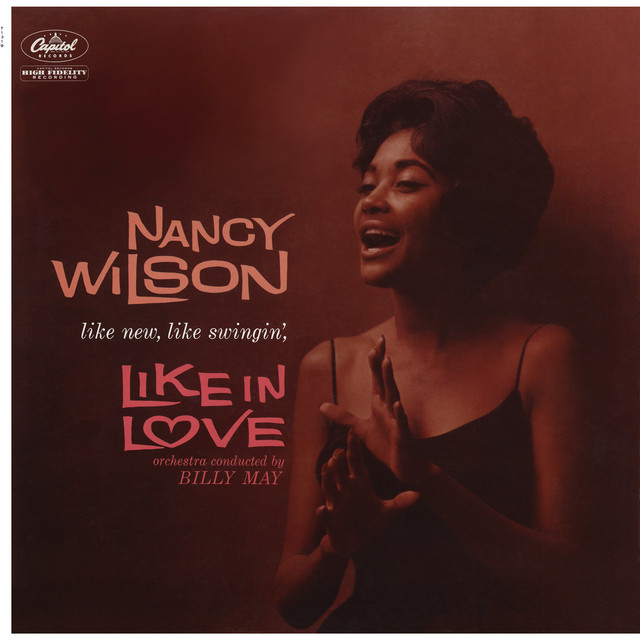
Like In Love
1960
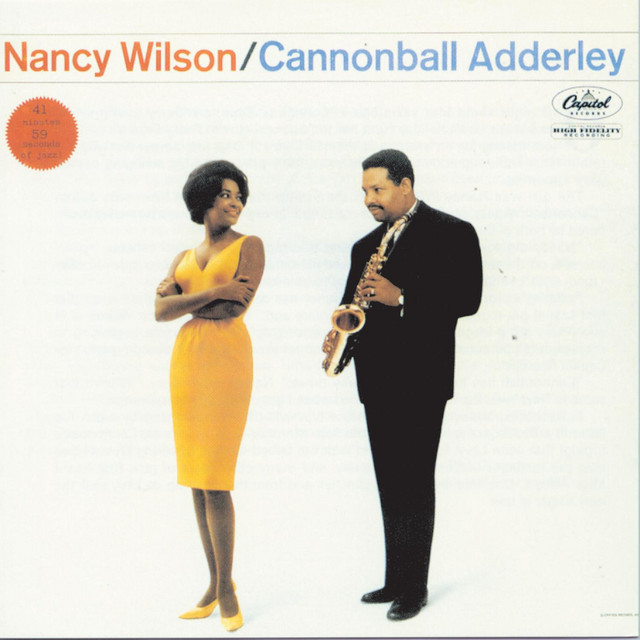
Nancy Wilson/Cannonball Adderley
1962
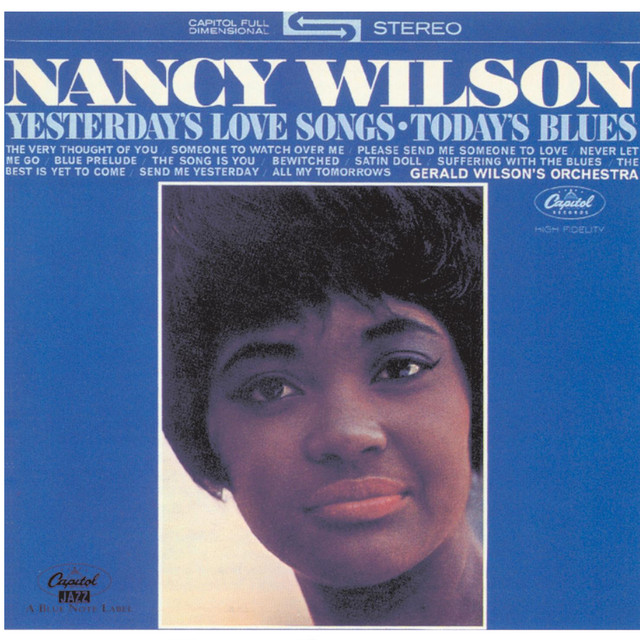
Yesterday's Love Songs, Today's Blues (Expanded Edition)
1963
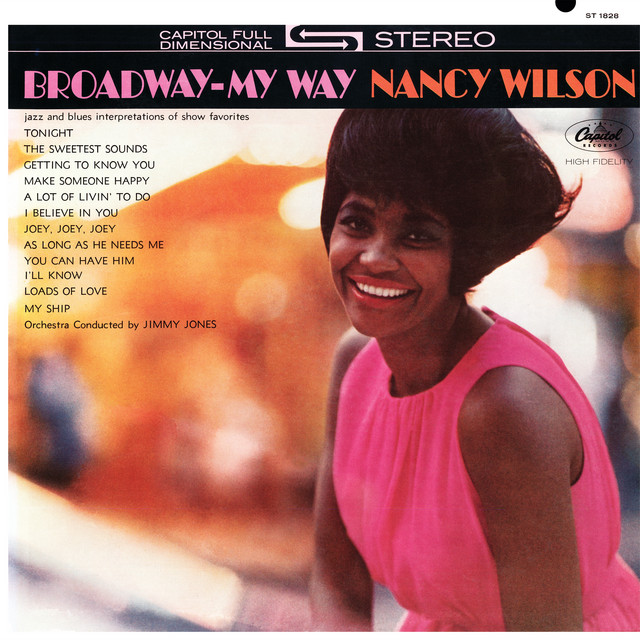
Broadway - My Way
1963
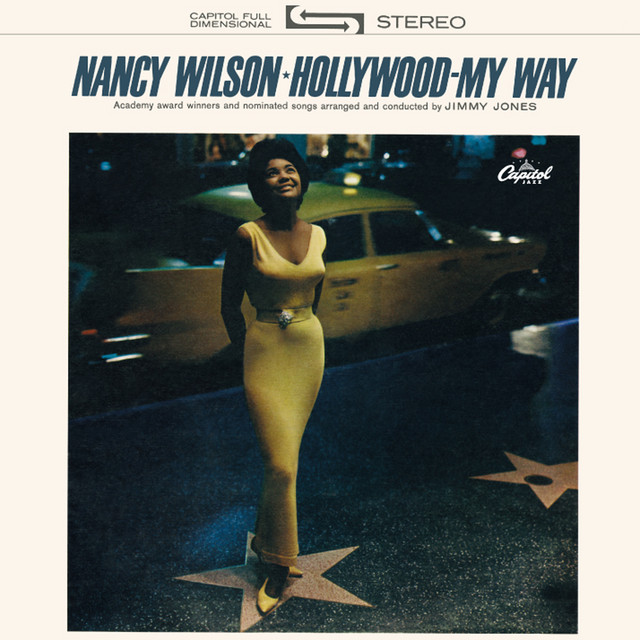
Hollywood - My Way (Expanded Edition)
1963
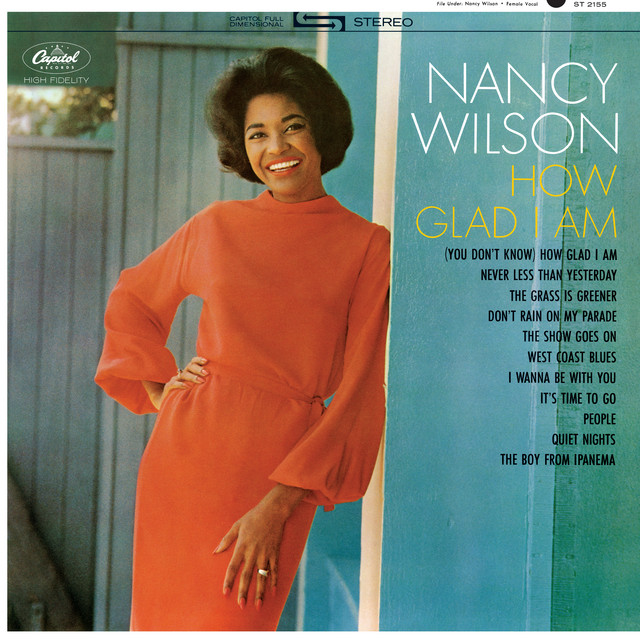
How Glad I Am
1964
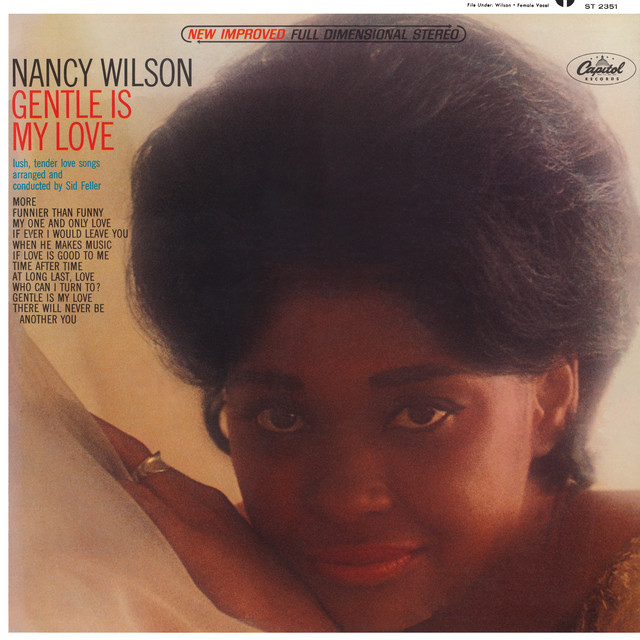
Gentle Is My Love
1965
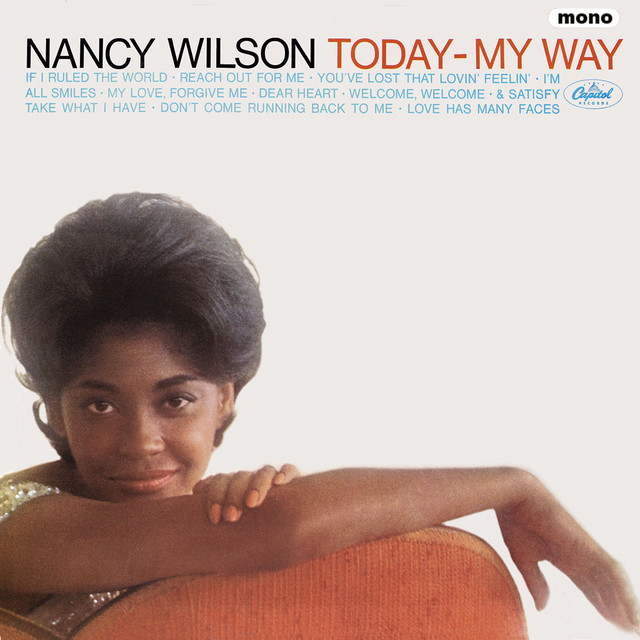
Today - My Way (Mono / Expanded Edition)
1965
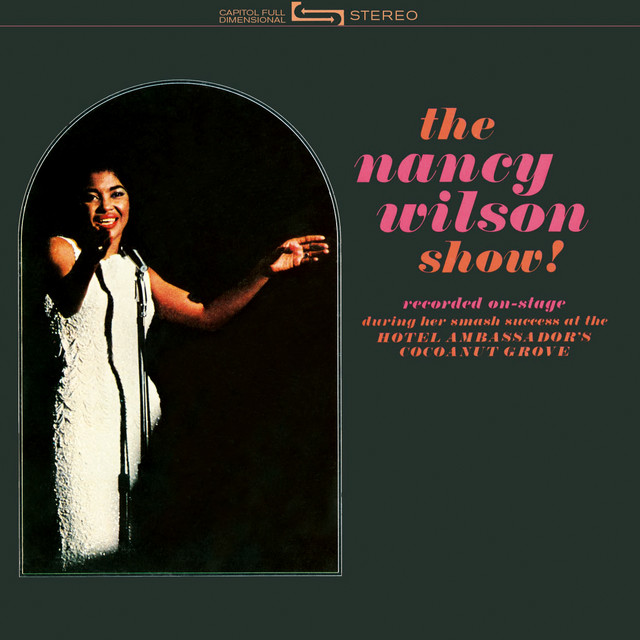
The Nancy Wilson Show
1965
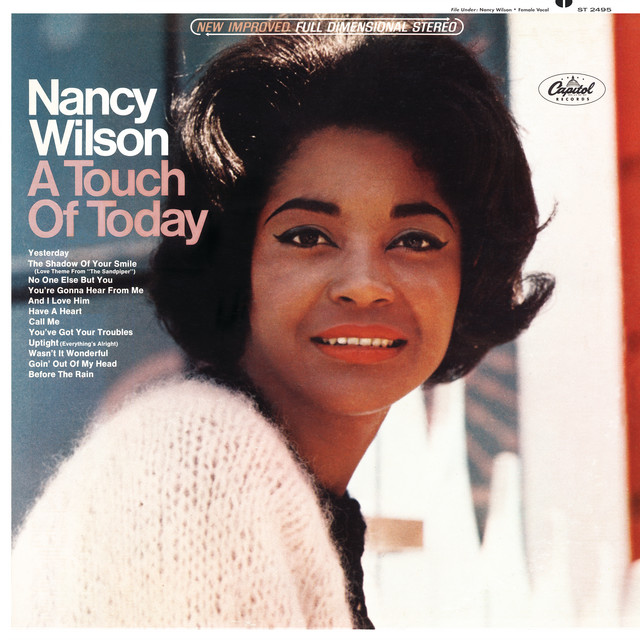
A Touch Of Today
1966
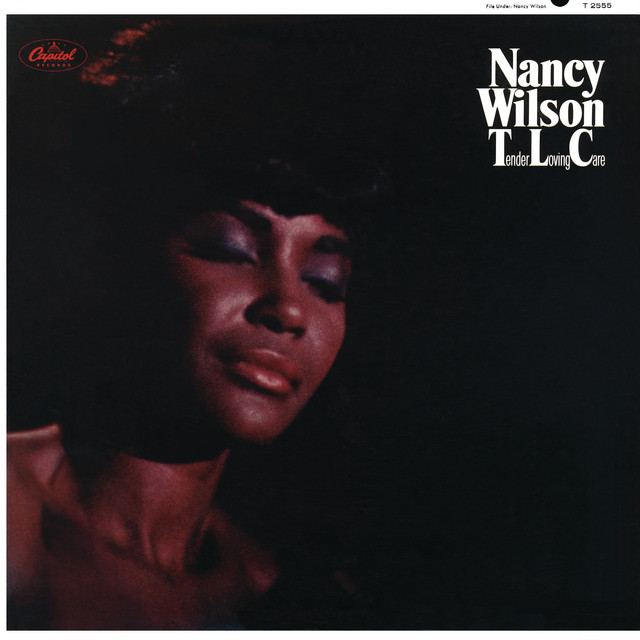
Tender Loving Care
1966
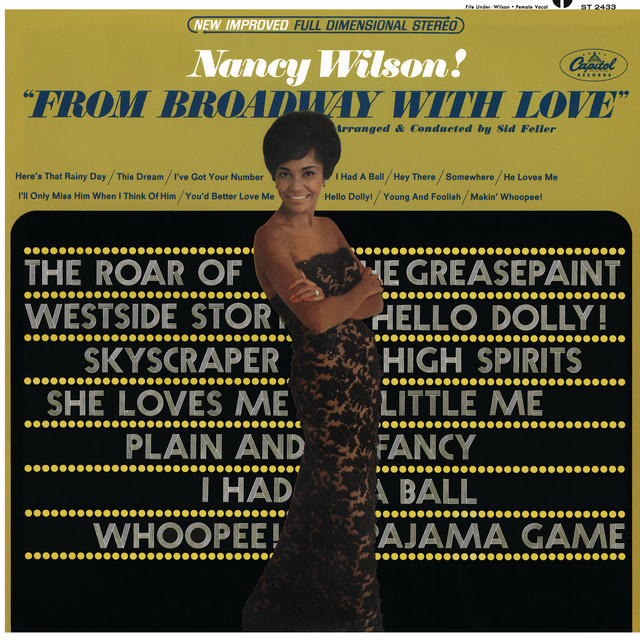
From Broadway With Love
1966
Album Credits
-

Stillwater · 2023
Producer