Richard Devine
Genre
Group
Genre
Group
Richard Devine's Modular Synthesizers


Richard Devine uses the Cwejman VCA-4MX, a quad VCA mixer consisting of four individual voltage controlled amplifiers. It is seen racked amid the array of synths he has at his North Carolina-based studio. An image of it can be seen in the video (10:20). Devine had this to say regarding his arsenal of modular synths: "It’s become like this kinda nonstop sorta… I don’t know how to describe it. It’s just a really inspirational area that I’ve been sorta researching and playing around with, to generate new sounds and sequencing ideas and I’ve been recording nonstop actually since I’ve been using this system."
More on the Cwejman VCA-4MX: http://www.cwejman.net/vca-4mx.htm
Find it on:


Richard Devine uses the Cwejman MMF-1, a multi-mode filter. It is seen racked amid the array of synths he has at his North Carolina-based studio. An image of it can be seen in the video (10:20). Devine had this to say regarding his arsenal of modular synths: "It’s become like this kinda nonstop sorta… I don’t know how to describe it. It’s just a really inspirational area that I’ve been sorta researching and playing around with, to generate new sounds and sequencing ideas and I’ve been recording nonstop actually since I’ve been using this system."
More on the Cwejman MMF-1: http://www.cwejman.net/mmf-1.htm
Find it on:

The item can be seen 8:15 into this video
Find it on:

Richard's first patch with the Mutable Instruments Frames, Tides, and Peaks modules (BoC Inspired), sequenced by the Intellijel Metropolis.
Find it on:

Richard Devine bought this modular synth from the late legend, Tim Adams and has this to say about the unit: “This was one of my first modular synths that I have, fully modular synth… He (Tim Adams) took on the idea of the Moog System 55-35 series - you got your three voltage control oscillators (saw, square, triangle, sine outputs), sync switches, mixer section, voltage control filter section, mixer section again, and VCAs, lag processor, balance modulator, multiples bank, multiple triggers bank too, envelope generative section, two 16-step sequencers split into 8 sequencers and you can run-stop-synch them… This was built long before the Euro rack craze was coming out. I've gotten lot of great sounds with this and it has a nice beefy interesting sound quality to it. I constantly go back to using this all the time."
Find it on:

Richard Devine is mentioned on the official Birdkids product page for his use of the ᵀʰᵉBateleur VCO, praised for its rich sound and versatility in FM synthesis.
Find it on:

Quoted on the official product page.
Wave and Wavefront are an incredibly awesome package for controlling your modular in a very expressive way.
Find it on:


Richard Devine uses the Doepfer A-149-1 Quantized/Stored Random Voltages which generates four different analog random control voltages that are generated in different ways. It is seen racked amid the array of synths he has at his North Carolina-based studio. An image of it can be seen in the video (10:22). Devine had this to say regarding his arsenal of modular synths: "It’s become like this kinda nonstop sorta… I don’t know how to describe it. It’s just a really inspirational area that I’ve been sorta researching and playing around with, to generate new sounds and sequencing ideas and I’ve been recording nonstop actually since I’ve been using this system."
More on the Doepfer A-149-1 Quantized/Stored Random Voltages
Find it on:


Richard Devine uses the Doepfer A-140 ADSR Envelope Generator, an envelope generator, and, since it puts out control voltages, counts as one of the modulation devices in a modular system. It is seen racked amid the array of synths he has at his North Carolina-based studio. An image of it can be seen in the video (10:20). Devine had this to say regarding his arsenal of modular synths: "It’s become like this kinda nonstop sorta… I don’t know how to describe it. It’s just a really inspirational area that I’ve been sorta researching and playing around with, to generate new sounds and sequencing ideas and I’ve been recording nonstop actually since I’ve been using this system."
More on the Doepfer A-140 ADSR: http://www.doepfer.de/a140.htm
Find it on:

Richard Devine uses the Cwejman VCO-2RM Dual Oscillator. It is seen racked amid the array of synths he has at his North Carolina-based studio. An image of it can be seen in the video (10:19). Devine had this to say regarding his arsenal of modular synths: "It’s become like this kinda nonstop sorta… I don’t know how to describe it. It’s just a really inspirational area that I’ve been sorta researching and playing around with, to generate new sounds and sequencing ideas and I’ve been recording nonstop actually since I’ve been using this system."
More on the Cwejman VCO-2RM: http://www.cwejman.net/vco-2rm.htm
Find it on:

The Zeroscillator is a full-featured electronic-music-quality analog VCO capable of linear frequency modulation through zero hertz and into negative frequencies. It is pictured in this YouTube video (10:25), and Richard Devine mentions, "It’s become like this kinda nonstop sorta… I don’t know how to describe it. It’s just a really inspirational area that I’ve been sorta researching and playing around with, to generate new sounds and sequencing ideas and I’ve been recording nonstop actually since I’ve been using this system."
Find it on:

In this Vine post titled "Telharmonic Plonky Test", Richard Devine is using the Make Noise Telharmonic.
Find it on:

The Sampler-Modul can be seen 8:28 into this video
Find it on:

The item can be seen 10:26 into this video
Find it on:

"First patch experiment using the Mutable Instruments Braids Macro oscillator running in "PLUK" mode. Emulating the sound of raw plucked strings that change with the timbre control via damping, and the color knob changing the plucking position. MakeNoise Rene sending out CV notes to the 1-v/oct input and Gate triggers to the Braids trigger input. The output is then running into the Phonogene for light processing. Liquid drum percussion sequencing by three gate trigger outputs from the Grids module. Trigger one going into the Mungo g0. Trigger two going to the DPO for the lower end kick drum emulation. Final output running lightly through a eventide space pedal."
Find it on:

In this video Richard Devine can be seen using the Mutable Instruments Frames module.
Find it on:

In this video Richard Devine can be seen using the Mutable Instruments Tides module. This module is Mutable Instruments’ unique take on the looping AD envelope generator – pushing this well-known trope to unknown territories.
Find it on:

"Audio recording of my first patch with the new MakeNoise "Mysteron" Voltage Controlled Digital Waveguide and Erbe-Verb Voltage Controlled DSP Reverb."
Find it on:

Richard Devine can be seen adjusting a setting on the Make Noise Phonogene from 01:16 to 01:38 in this video.
Find it on:

In this video, the Tiptop Audio Z-DSP can be seen on the bottom row of the upright rack.
Find it on:

0:00-0:02 top left of Richard's video, you can see the CV modulation / CV processing module.
Find it on:


0:00-0:15 center Big Black Part of the instrument René is the world's only Cartesian Sequencer for music synthesizers. Named for the French philosopher & mathematician René Descartes, it uses his Cartesian coordinate system to unlock the analog step sequencer from the shackles of linearity.
Find it on:

0:00-0:15 top right of modular pitch and delay effect module
Find it on:

In his Vimeo video titled "MakeNoise Mysteron - Retrometabolism," Richard Devine demonstrates a patch inspired by the "Industrial Guitar Tones" from the Mysteron manual, showcasing his use of the Make Noise Mysteron modular synthesizer.
Find it on:

Richard Devine uses the Wiard Wogglebug, a random voltage generator, originally designed by Grant Richter of Wiard Synthesizers and features "smooth" and "stepped" fluctuating random voltage sources pioneered by Don Buchla within the Model 266 "Source of Uncertainty." It is seen racked amid the array of synths he has at his North Carolina-based studio. An image of it can be seen in the video (10:22). Devine had this to say regarding his arsenal of modular synths: "It’s become like this kinda nonstop sorta… I don’t know how to describe it. It’s just a really inspirational area that I’ve been sorta researching and playing around with, to generate new sounds and sequencing ideas and I’ve been recording nonstop actually since I’ve been using this system."
Find it on:

Richard Devine uses the Cwejman PH-4, a generator with four signal outputs with its main feature of controlling four identical modulated devices. It is seen racked amid the array of synths he has at his North Carolina-based studio. An image of it can be seen in the video (10:20). Devine had this to say regarding his arsenal of modular synths: "It’s become like this kinda nonstop sorta… I don’t know how to describe it. It’s just a really inspirational area that I’ve been sorta researching and playing around with, to generate new sounds and sequencing ideas and I’ve been recording nonstop actually since I’ve been using this system."
More on the Cwejman MMF-1: http://www.cwejman.net/ph-4.htm
Find it on:

In a studio tour video by MusicRadar Tech, Richard Devine showcases his use of the Cwejman NS-4, a true analogue noise generator with four noise/random signal outputs. The NS-4 is visible among his extensive modular synthesizer setup in his North Carolina studio at the 10:20 mark. Devine describes his modular synth collection as an "inspirational area" for generating new sounds and sequencing ideas, highlighting the continuous creative exploration it facilitates.
Find it on:

Richard Devine uses the Cwejman D-LFO, a multi-function dual LFO. It is seen racked amid the array of synths he has at his North Carolina-based studio. An image of it can be seen in the video (10:20). Devine had this to say regarding his arsenal of modular synths: "It’s become like this kinda nonstop sorta… I don’t know how to describe it. It’s just a really inspirational area that I’ve been sorta researching and playing around with, to generate new sounds and sequencing ideas and I’ve been recording nonstop actually since I’ve been using this system."
More on the Cwejman D-LFO: http://www.cwejman.net/d-lfo.htm
Find it on:

Richard Devine has said about the Highly Liquid Bend Station: “A strange device… this is another one of my favorites that I use a lot on design projects… also works with parallel connection cables. You can also clock this with MIDI sync… it’s a sequencing glitch station. You patch with these banana-style cables. You can sequence the bends in real-time. So as you’re experimenting, trying different banana patch cable points, you can sequence them all in time, and you get some pretty wild results with this thing. I have my TR-707 and a CZ-101 I use those together and you get this really strange, almost granular, ummm… it’s hard to describe. It’s not your typical sort of bent sound because you come up with such odd combinations with it very quickly… it’s become a really fun, generative playground of weird noises.”
Find it on:
This is a community-built gear list for Richard Devine.
- Find relevant music gear like Pianos, Keyboards and Synthesizers, Microphones, Software Plugins and VSTs, Instruments, Studio Equipment, Headphones, Studio Monitors, Mixers, DAWs, and other instruments and add it to Richard Devine.
- The best places to look for gear usage are typically on the artist's social media, YouTube, live performance images, and interviews.
- To receive email updates when Richard Devine is seen with new gear, follow the artist.
-
Added to Equipboard on by
 simfonik
Gear IQ 2532
-
Updated
Discography

Album Credits
-

BT · 2015
Producer Programmer -

Crank High Voltage (Original Motion Picture Soundtrack)
Mike Patton & Mike Patton · 2009
Programmer -
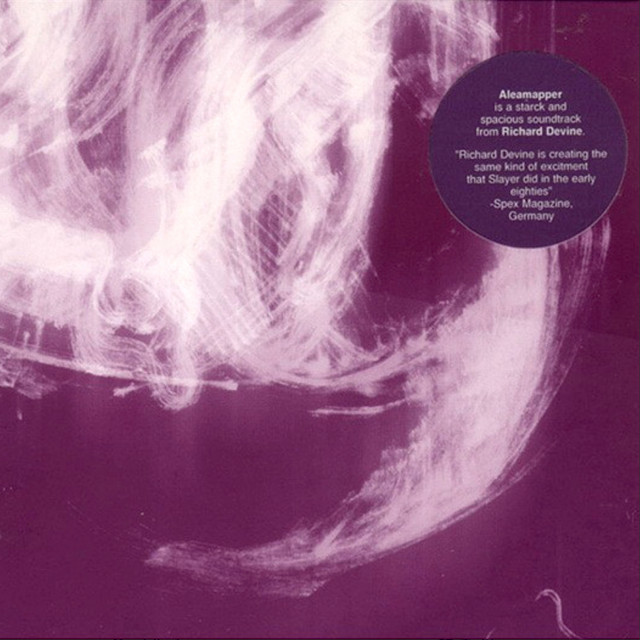
Richard Devine · 2000
Engineer Producer Programmer