
Rory Gallagher
Irish guitarist and songwriter
Genre
Group
Credits
Genre
Group
Credits
Rory Gallagher's Gear


Find it on:


This article comes from the June 1978 issue of the Dutch publication Music Maker.
Rory Gallagher: “When I play “Cradle of Rock”, for instance, I don't know if you are familiar with that one, or “Jacknife Beat” I use the Stratocaster with the regular tuning and Fender Rock’n Roll light gauge strings. Playing something like “Bullfrog Blues” I use the Telecaster on which the strings will have the following thicknesses: 013, 015, 020 etc. In any case, thicker strings which produce a richer sound. If I could, I would like to use even thicker strings, but sometimes I tune the guitar in A or E and I use a capo for playing higher tunings. On the acoustical guitar, I take the tuning down to D or G. In that case, I use medium bronze earthwood strings. I always use rough wound strings, and also for playing slide. I know that Lowell George of Little Feat combines ground bass strings with other high strings”.
Find it on:


According to this Music Radar article says "Rory’s ’68 Martin D-35 was used on tracks such as Just The Smile from his first solo album, and shows signs of age." It mentions that Rory used this guitar on Deuce, Live in Europe, and Rory Gallagher.
Find it on:


Chris Eccleshall was Rory Gallaghers guitar technician for a while and made him various instruments including the Electric Mandolin.
Find it on:

Donal Gallagher: Rory had written the track ‘Philby’ about the Cold War and was keen to have some mysterious Eastern flavour on the track. The answer lay in having the sitar guitar to get a kind of balalaika effect, but Coral had only made 50 of these guitars and we only knew where 5 of them were. Fortunately Pete Townsend had one so we rented it from him for the sessions, which Rory loved. After the recordings we were due to go on tour and Rory was faced with the problem of duplicating the sound in a live setting. Of course Pete was happy to hire us the same one but it would have been very expensive considering how long Rorys tours were. As it turned out I was in the US for a few days and I picked up a flyer for a guitar trading company in New Jersey. The had a Coral on sale for $1500, which worked out much cheaper than hiring one for a whole tour.
source: http://www.rorygallagher.com/#/archives/guitars/coral_sitar
In the video Rory Gallagher is performing at Rockpalast in 1982, playing the song Philby.
Find it on:

Pictured on Gallagher's official website's "Effects / Pedals" page and mentioned in an interview in an August 1991 Guitar for the Practicing Musician interview with Vivian Campbell.
VIVIAN: You get a tremendous tone for a single-coil Strat. Are you using any kind of distortion device between the guitar and the amp?
RORY: I've got a Boss Graphic EQ.
VIVIAN: Is that a little 6 band?
RORY: Yeah, one of the real old green ones. And I've got a DOD analog. They're back on the amps, and that's set at the minimum setting, just for a little bit of slap-back. I've got a Dyna-comp, which is on all the time, to drive the songs from the leads. It's not for effect. It's a form of compression and I have it at a setting where the compression's really low on it. I usually use a Tube Screamer, which broke down on me. Last night I was using a Boss overdrive. I use them for some solos, not all solos. I was against using them for years. If I was doing a solo, I had to look at the monitor guy to turn it up and all this. So I keep close to the natural sound. I have a brown Boss octave thing.
VIVIAN: I heard that last night. You sounded like Prince! He uses that a lot.
RORY: I've got a Boss flanger, as opposed to a chorus, which I use sparingly, I use that only in “Shadow Play” and “Moon Child,” and one other song. That's my talk on technology. I have a Vox wah-wah which I did use for one or two gigs, but purely to click it on for slide solos. I used it in the studio, for some solos as well. I don't use it on-stage, because even as it is, I try to keep it simple, within reason.
Find it on:

In a live performance of "Shadow Play" at Montreux in 1979, Rory Gallagher can be seen using an Ampeg VT-22 amplifier, as shown in the YouTube video by Phil.
Find it on:

While in the band Taste, Rory used this 1968 Selmer Alto sax on their 1970 album "On the Boards"
Find it on:

In the Dailymotion video titled "Rory Gallagher - Bullfrog Blues," filmed in 1980, Rory Gallagher can be seen using a Stramp Amp 2100A guitar amplifier head. This amplifier, not widely recognized, appears to resemble a plexi-style amp, similar to models from Laney or Simms-Watts from the 1970s.
Find it on:

Pictured on Gallagher's official website's "Effects / Pedals" page and mentioned in a couple of interviews archived on RoryON!!.
"I use the Boss FET pedal which, although a transistor, has been designed to sound as much like a valve as possible. It still can't beat the old Dallas Rangemaster that was doing the rounds in the 'sixties though. The company's now gone bust so they're like gold dust if you can find one. I have a couple but they've corroded with use. They used to be lethal. They'd not only boost the bass and treble, but give you a couple of extra watts as well!
Guitar for the Practicing Musician, August 1991 interview with Vivian Campbell
VIVIAN: You get a tremendous tone for a single-coil Strat. Are you using any kind of distortion device between the guitar and the amp?
RORY: I've got a Boss Graphic EQ.
VIVIAN: Is that a little 6 band?
RORY: Yeah, one of the real old green ones. And I've got a DOD analog. They're back on the amps, and that's set at the minimum setting, just for a little bit of slap-back. I've got a Dyna-comp, which is on all the time, to drive the songs from the leads. It's not for effect. It's a form of compression and I have it at a setting where the compression's really low on it. I usually use a Tube Screamer, which broke down on me. Last night I was using a Boss overdrive. I use them for some solos, not all solos. I was against using them for years. If I was doing a solo, I had to look at the monitor guy to turn it up and all this. So I keep close to the natural sound. I have a brown Boss octave thing.
VIVIAN: I heard that last night. You sounded like Prince! He uses that a lot.
RORY: I've got a Boss flanger, as opposed to a chorus, which I use sparingly, I use that only in “Shadow Play” and “Moon Child,” and one other song. That's my talk on technology. I have a Vox wah-wah which I did use for one or two gigs, but purely to click it on for slide solos. I used it in the studio, for some solos as well. I don't use it on-stage, because even as it is, I try to keep it simple, within reason.
Find it on:

Pictured on Gallagher's official website's "Effects / Pedals" page and mentioned in an interview in an August 1991 Guitar for the Practicing Musician interview with Vivian Campbell.
RORY: I've got a Boss flanger, as opposed to a chorus, which I use sparingly, I use that only in “Shadow Play” and “Moon Child,” and one other song. That's my talk on technology. I have a Vox wah-wah which I did use for one or two gigs, but purely to click it on for slide solos. I used it in the studio, for some solos as well. I don't use it on-stage, because even as it is, I try to keep it simple, within reason.
Find it on:

According to this Music Radar article "Rory used the National resonator (left) for some thrilling slide work on his cover of Tony Joe White’s As The Crow Flies on the much-loved Irish Tour ’74 album. Likewise, the Esquire (right) also began to find favour around that time, again for slide work." It mentions that this guitar was used on Rory's 1974 Irish tour.
Find it on:


Pictured on Gallagher's official website's "Effects / Pedals" page and mentioned in a couple of interviews archived on RoryON!!.
"Echo units are indispensable, however. I always have a small delay on one of my amps, like a Memory Man or a DOD, but if you want anything like that authentic Rock 'n' Roll sound, then you have to have tape echo. The Copicat is great for that, but you can also set it with a very shallow delay and it can compensate for dead halls.
Guitar for the Practicing Musician, August 1991 interview with Vivian Campbell
VIVIAN: You get a tremendous tone for a single-coil Strat. Are you using any kind of distortion device between the guitar and the amp?
RORY: I've got a Boss Graphic EQ.
VIVIAN: Is that a little 6 band?
RORY: Yeah, one of the real old green ones. And I've got a DOD analog. They're back on the amps, and that's set at the minimum setting, just for a little bit of slap-back. I've got a Dyna-comp, which is on all the time, to drive the songs from the leads. It's not for effect. It's a form of compression and I have it at a setting where the compression's really low on it. I usually use a Tube Screamer, which broke down on me. Last night I was using a Boss overdrive. I use them for some solos, not all solos. I was against using them for years. If I was doing a solo, I had to look at the monitor guy to turn it up and all this. So I keep close to the natural sound. I have a brown Boss octave thing.
VIVIAN: I heard that last night. You sounded like Prince! He uses that a lot.
RORY: I've got a Boss flanger, as opposed to a chorus, which I use sparingly, I use that only in “Shadow Play” and “Moon Child,” and one other song. That's my talk on technology. I have a Vox wah-wah which I did use for one or two gigs, but purely to click it on for slide solos. I used it in the studio, for some solos as well. I don't use it on-stage, because even as it is, I try to keep it simple, within reason.
Find it on:

Find it on:

Pictured on Gallagher's official website's "Effects / Pedals" page and mentioned in an interview in an August 1991 Guitar for the Practicing Musician interview with Vivian Campbell.
VIVIAN: You get a tremendous tone for a single-coil Strat. Are you using any kind of distortion device between the guitar and the amp?
RORY: I've got a Boss Graphic EQ.
VIVIAN: Is that a little 6 band?
RORY: Yeah, one of the real old green ones. And I've got a DOD analog. They're back on the amps, and that's set at the minimum setting, just for a little bit of slap-back. I've got a Dyna-comp, which is on all the time, to drive the songs from the leads. It's not for effect. It's a form of compression and I have it at a setting where the compression's really low on it. I usually use a Tube Screamer, which broke down on me. Last night I was using a Boss overdrive. I use them for some solos, not all solos. I was against using them for years. If I was doing a solo, I had to look at the monitor guy to turn it up and all this. So I keep close to the natural sound. I have a brown Boss octave thing.
VIVIAN: I heard that last night. You sounded like Prince! He uses that a lot.
RORY: I've got a Boss flanger, as opposed to a chorus, which I use sparingly, I use that only in “Shadow Play” and “Moon Child,” and one other song. That's my talk on technology. I have a Vox wah-wah which I did use for one or two gigs, but purely to click it on for slide solos. I used it in the studio, for some solos as well. I don't use it on-stage, because even as it is, I try to keep it simple, within reason.
Find it on:
-m.webp?v=1783177044)
Find it on:

Find it on:

Find it on:
-m.webp?v=1783204782)
This article comes from the June 1978 issue of the Dutch publication Music Magazine.
Rory Gallagher: “I have a MXR phase 90 which I mess around with, on some of my records I have sometimes used the effect with accompaniment work. Furthermore, I have a wah-wah, but that I only monkey about a bit at home. It’s not bad, but on stage I don’t use it. The only other effect device I have is a Powerbooster.”
Find it on:

Pictured on Rory Gallagher's official website, which notes its mention (albeit under the misremembered name "Boss BD-1") in an interview for the July 29, 1989 issue of Sounds.
If you get them set just right they can inspire your playing, but I don't use that many effects. About the first one I got was the Boss BD-1 [sic DB-5] Driver, which I still use. It’s a big green box (rather like the old Boss CE-1) with three settings: Distortion, Fuzz, and a third which is almost straight -a plain graphic and overall volume boost, which is the setting best suited to me. It can really change the character of your guitar.
Find it on:

Featured on this page of Gallagher's estate's official website.
Rory played this 12 string acoustic in the 1990s. Here’s a clip of him playing it and explaining the similarities between American blues and Irish music on Rory’s last TV session in 1994 on UTV.
Find it on:

he used a Gibson SG later in his career but also in Taste. Altough it definetly wasnt his main guitar
Find it on:


In his Facebook official page, posted on10 july 2022, we can see Rory at studio playing with a Fender Vibrolux Amp. Nomis Studios, London, 11 july 1989. Photo by Odile Nöel.
Find it on:

In this video Rory plays a blonde Fender American Telecaster with a Humbucker in the Neck position. See 51:38.
Find it on:

From 0:45 onward, a white Herco heavy gauge pick can be seen between Gallagher's fingers throughout this October 6, 1976 interview for WDR. At 2:10, we can vaguely see the circular grip-logo. At 3:06, the interviewer asks Gallagher about his hybrid picking technique:
[Interviewer]: "You use what you call a plectrum, what do you call these things?"
[Rory Gallagher]: "A Plectrum, yeah..."
[Interviewer]: "But you use your fingers too?"
[Gallagher]: "Yeah, fingers as well."
[Interviewer]: "Can you show? for our viewers who are playing guitar... what you do with the plectrum?"
[Playing]
[Gallagher]: "The best way to play is with a Thumbpick on here and two metal picks sometimes I play like [inaudible], normally I play it with a plectrum because there so much electric there, there's so much electric guitar that I get so used to this style, I stick with it."
Gallagher subsequently specified the grey Herco 75 in the February 1985 issue of Guitarist and the August 1991 issue of Guitar for the Practicing Musician.
Guitarist, February 1985, "Rory Gallagher" by Bob Hewitt
I use Herco grey picks, which are a hard, heavy nylon type. I sometimes use the serrated grip for solo parts. For acoustic I prefer a tortoiseshell for crispness.
Guitar for the Practicing Musician, August 1991, "The Wearing of the Blues" by Vivian Campbell
VIVIAN: What kind of picks do you use?
RORY: Charcoal Herco grey picks. I guess they're called 75 or something.
Find it on:

Rory Gallagher's official website states:
Rory’s Stratocaster was modified extensively over the years. In an attempt to make a comprehensive and intelligible list of all the changes, we’ll deal with each mod separately, and try to follow a chronological line of approach where possible.
Pickups in Rory’s Strat
Rory’s Strat, of course, was shipped from the factory with three single-coil pickups. On average, a pickup that came from Fender factory in 1961 measured 6.19 kOhms. Fender used a .0029″ diameter wire, and hand-wound the magnets for a total of 8119 turns (again, on average). This is all based on Seymour Duncan’s extensive research (available at Vintage Fender Guitar Pickup Spec Info) and should serve as something to aim at if you’re in the market for a vintage sounding pickup.
These original pickups remained in Rory’s Stratocaster until early to mid-1970s. Around that time, two of the pickups were damaged due to moisture, while the third one, the one in the middle position, remained functional.
"I sweat a lot when I play and over the years the body’s absorbed a lot of moisture. I’ve often thought that it’s come to the end of its life. Recently two pickups packed up together, they just cut out when I was playing. I was terrified that I wouldn’t be able to get new pick-ups to sound the same, but fortunately, they matched perfectly."
-International Musician and Recording World, April 1975
Changes over the years would include the pick-ups — the treble and bass pick-ups blew within a week of each other, so the middle pick-up is the only original one.
The Guitar Collectors No.1, Rory Gallagher by Eamonn Percival, April 1977
In the interviews Rory, unfortunately, does not mention which particular model of pickups he ended up replacing the originals with. He did, however, most likely use stock Fender pickups from around that time period.
Interesting to note here is that from around 1975, the plastic cover on the bridge pickup seemed to have been brand new – while the other two were already yellow-ish and aged, the bridge pickup cover was clear white. So for one reason or another, the neck pickup didn’t get a new cover while the bridge pickup did – even though they both died at the same time.
Photo source: Youtube/Rory Gallagher – Karussell Special Volkshaus (Zurich-Suiza) – 1980
The pickups remained in this configuration (at least based on photographic evidence; they could’ve been changed/rewound, but we wouldn’t know about it) until around July 1982. At that time, the bridge pickup was again changed, but this time it styled a black plastic cover. The photo below, showing the new bridge pickup, was taken at the Hot Press Music Festival at Punchestown Racecourse, Kildare, on July 18, 1982. The same configuration can also be seen on the footage from the Rockpalast gig, filmed at Loreley, Germany, on August 28, 1982.
-(Part of the Independent Newspapers Ireland/NLI Collection). (Photo by Independent News and Media/Getty Images)
This new pickup could’ve been the same one that was fitted on the Fender Lead Series guitars from 1979 to 1981. This is mostly based on a quote from Rory – where he stated that he installed a Fender Hot X100 in the bridge at some point, but since there’s no such thing as a “Hot X100”, it is likely that he was referring to the Fender Lead II X1 pickup – and from the fact that these pickups were most often shipped with black plastic covers.
"With the Strat, I changed the lead pick-up for one of Fender’s hot x100 jobs, and I’ve tried the Fat Strat (referring to DiMarzio FS-1) pick-up as well, but I always come back to the original."
-February 1985 issue of Guitarist Magazine
However, it is also possible that this black pickup was taken directly from Rory’s 1979 Anniversary Stratocaster, which did indeed have black pickup covers. It is of course also possible that the black pickup was something completely different.
From this point on, the saga about the pickups becomes even more based on pure guesswork. The black bridge pickup was gone by 1984 (see footage at Ulster Hall Belfast, on January 4, 1984), and this means that either only the cover was changed, or that the old pickup altogether was gone and replaced with a different one. Furthermore, over the years, Rory would continually state that he has done numerous changes to the pickups, but not until years late would we get a glimpse of the actual pickups inside Rory’s Stratocaster.
"The pickups have all been rewound or replaced you can’t expect them to go on forever, but they try!"
-Rory Gallagher’s Stratocaster – Vintage Classic
Sometime in the early to mid-2000s, Kent Armstrong was contacted by Rory’s brother Donal and nephew Daniel about recreating the pickups in Rory’s 1961 Fender Stratocaster. Kent opened the guitar, inspected the pickups, and concluded that two of them were stock Fenders, and the third was a Fat Strat pickup from DiMarzio.
"His most famous 1961 Strat had two mid-70s Fender pickups in it and an early DiMarzio FS-1 in the bridge."
-ToneQuest Report July-August 2013 p.24
However, one thing that is important to mention, the pickup in the bridge could possibly be a Fender X-1 (thanks Ingemar). Rory did state in the past that he preferred it over the FS-1 (see the quote a few paragraphs above), and if you look at that pickup, you’ll notice a yellow wire soldiered to it. To our knowledge, DiMarzio FS-1 pickups had no yellow wires, even the early models, while Fender’s X-1 did indeed have one.
-Photo credit: Coveyj/Wikipedia
The other explanation could be that the person who installed the pickup simply snapped the original wires, and soldered new ones onto it, one of which was incidentally yellow. This does seem more likely because originally, the wires would be soldered on top of the bobbin and then pushed through the hole to the bottom, while on Rory’s Strat, they were soldered directly on the bottom. Also, both the neck and the middle pickup have wires that are not original to them.
Another clue pointing towards this being DiMarzio FS-1 as opposed to Fender X-1 is that the pickup on Rory’s Strat had staggered poles, while at least to our knowledge, X-1s that were fitted on Lead II models had flat poles.
Photo of Rory’s 1961 Fender Stratocaster, showing staggered poles on the pickup.
-Credit: Pat Graham.
The reason for pointing all this out is that if this is indeed correct, it would mean that even though Rory stated that he tried the FS-1, but ended up going back to a Fender pickup – sometime between 1985 and 1996, he changed his mind about the DiMarzio FS-1, and about using Fender factory pickups exclusively.
Moving on from that, and regarding the neck and the middle pickups – the dates that Kent gave upon inspection do match the time period when the original pickups went bad, so it is possible that the middle and neck pickups are the same ones he had ever since the original went bad, circa 1975. It is of course also possible that the pickups were changed several times, and it has been said by Rory that they’ve all been re-wound, so even if they are the original Fender, their sound has been somewhat altered.
The neck pickup specifically, seems to have a plastic bobbin, with protruding screw holes. To our knowledge, these were fitted on the 70s Reissue Strats – on both the American Vintage and the Classic Series models made in Mexico. If you happen to know anything more about these, please be sure to leave a comment below.
About the middle pickup – it is interesting that even though the original 1961 middle pickup was fully functional in the 70s when Rory replaced the two that failed, he did eventually get rid of that one too. The reason could be the same as with the others (pickup going bad at some point), or Rory simply wanted to experiment with the sound. The pickup that is seen on the photograph of Rory’s Strat linked a few paragraphs above appears to be a standard grey-bottom 70s Fender single-coil.
Find it on:



Rory Gallagher's official website states:
Rory’s Stratocaster was modified extensively over the years. In an attempt to make a comprehensive and intelligible list of all the changes, we’ll deal with each mod separately, and try to follow a chronological line of approach where possible.
Pickups in Rory’s Strat
Rory’s Strat, of course, was shipped from the factory with three single-coil pickups. On average, a pickup that came from Fender factory in 1961 measured 6.19 kOhms. Fender used a .0029″ diameter wire, and hand-wound the magnets for a total of 8119 turns (again, on average). This is all based on Seymour Duncan’s extensive research (available at Vintage Fender Guitar Pickup Spec Info) and should serve as something to aim at if you’re in the market for a vintage sounding pickup.
These original pickups remained in Rory’s Stratocaster until early to mid-1970s. Around that time, two of the pickups were damaged due to moisture, while the third one, the one in the middle position, remained functional.
"I sweat a lot when I play and over the years the body’s absorbed a lot of moisture. I’ve often thought that it’s come to the end of its life. Recently two pickups packed up together, they just cut out when I was playing. I was terrified that I wouldn’t be able to get new pick-ups to sound the same, but fortunately, they matched perfectly."
-International Musician and Recording World, April 1975
Changes over the years would include the pick-ups — the treble and bass pick-ups blew within a week of each other, so the middle pick-up is the only original one.
The Guitar Collectors No.1, Rory Gallagher by Eamonn Percival, April 1977
In the interviews Rory, unfortunately, does not mention which particular model of pickups he ended up replacing the originals with. He did, however, most likely use stock Fender pickups from around that time period.
Interesting to note here is that from around 1975, the plastic cover on the bridge pickup seemed to have been brand new – while the other two were already yellow-ish and aged, the bridge pickup cover was clear white. So for one reason or another, the neck pickup didn’t get a new cover while the bridge pickup did – even though they both died at the same time.
Photo source: Youtube/Rory Gallagher – Karussell Special Volkshaus (Zurich-Suiza) – 1980
The pickups remained in this configuration (at least based on photographic evidence; they could’ve been changed/rewound, but we wouldn’t know about it) until around July 1982. At that time, the bridge pickup was again changed, but this time it styled a black plastic cover. The photo below, showing the new bridge pickup, was taken at the Hot Press Music Festival at Punchestown Racecourse, Kildare, on July 18, 1982. The same configuration can also be seen on the footage from the Rockpalast gig, filmed at Loreley, Germany, on August 28, 1982.
-(Part of the Independent Newspapers Ireland/NLI Collection). (Photo by Independent News and Media/Getty Images)
This new pickup could’ve been the same one that was fitted on the Fender Lead Series guitars from 1979 to 1981. This is mostly based on a quote from Rory – where he stated that he installed a Fender Hot X100 in the bridge at some point, but since there’s no such thing as a “Hot X100”, it is likely that he was referring to the Fender Lead II X1 pickup – and from the fact that these pickups were most often shipped with black plastic covers.
"With the Strat, I changed the lead pick-up for one of Fender’s hot x100 jobs, and I’ve tried the Fat Strat (referring to DiMarzio FS-1) pick-up as well, but I always come back to the original."
-February 1985 issue of Guitarist Magazine
However, it is also possible that this black pickup was taken directly from Rory’s 1979 Anniversary Stratocaster, which did indeed have black pickup covers. It is of course also possible that the black pickup was something completely different.
From this point on, the saga about the pickups becomes even more based on pure guesswork. The black bridge pickup was gone by 1984 (see footage at Ulster Hall Belfast, on January 4, 1984), and this means that either only the cover was changed, or that the old pickup altogether was gone and replaced with a different one. Furthermore, over the years, Rory would continually state that he has done numerous changes to the pickups, but not until years late would we get a glimpse of the actual pickups inside Rory’s Stratocaster.
"The pickups have all been rewound or replaced you can’t expect them to go on forever, but they try!"
-Rory Gallagher’s Stratocaster – Vintage Classic
Sometime in the early to mid-2000s, Kent Armstrong was contacted by Rory’s brother Donal and nephew Daniel about recreating the pickups in Rory’s 1961 Fender Stratocaster. Kent opened the guitar, inspected the pickups, and concluded that two of them were stock Fenders, and the third was a Fat Strat pickup from DiMarzio.
"His most famous 1961 Strat had two mid-70s Fender pickups in it and an early DiMarzio FS-1 in the bridge."
-ToneQuest Report July-August 2013 p.24
However, one thing that is important to mention, the pickup in the bridge could possibly be a Fender X-1 (thanks Ingemar). Rory did state in the past that he preferred it over the FS-1 (see the quote a few paragraphs above), and if you look at that pickup, you’ll notice a yellow wire soldiered to it. To our knowledge, DiMarzio FS-1 pickups had no yellow wires, even the early models, while Fender’s X-1 did indeed have one.
-Photo credit: Coveyj/Wikipedia
The other explanation could be that the person who installed the pickup simply snapped the original wires, and soldered new ones onto it, one of which was incidentally yellow. This does seem more likely because originally, the wires would be soldered on top of the bobbin and then pushed through the hole to the bottom, while on Rory’s Strat, they were soldered directly on the bottom. Also, both the neck and the middle pickup have wires that are not original to them.
Another clue pointing towards this being DiMarzio FS-1 as opposed to Fender X-1 is that the pickup on Rory’s Strat had staggered poles, while at least to our knowledge, X-1s that were fitted on Lead II models had flat poles.
Photo of Rory’s 1961 Fender Stratocaster, showing staggered poles on the pickup.
-Credit: Pat Graham.
The reason for pointing all this out is that if this is indeed correct, it would mean that even though Rory stated that he tried the FS-1, but ended up going back to a Fender pickup – sometime between 1985 and 1996, he changed his mind about the DiMarzio FS-1, and about using Fender factory pickups exclusively.
Moving on from that, and regarding the neck and the middle pickups – the dates that Kent gave upon inspection do match the time period when the original pickups went bad, so it is possible that the middle and neck pickups are the same ones he had ever since the original went bad, circa 1975. It is of course also possible that the pickups were changed several times, and it has been said by Rory that they’ve all been re-wound, so even if they are the original Fender, their sound has been somewhat altered.
The neck pickup specifically, seems to have a plastic bobbin, with protruding screw holes. To our knowledge, these were fitted on the 70s Reissue Strats – on both the American Vintage and the Classic Series models made in Mexico. If you happen to know anything more about these, please be sure to leave a comment below.
About the middle pickup – it is interesting that even though the original 1961 middle pickup was fully functional in the 70s when Rory replaced the two that failed, he did eventually get rid of that one too. The reason could be the same as with the others (pickup going bad at some point), or Rory simply wanted to experiment with the sound. The pickup that is seen on the photograph of Rory’s Strat linked a few paragraphs above appears to be a standard grey-bottom 70s Fender single-coil.
Find it on:

Listed on the official website of Rory Gallagher, which quotes some information about the guitar from the May 2019 issue of Guitarist.
1961 Kay
K1962 Value Leader
Rory was wide-ranging in his tastes in guitars and was often drawn to instruments by budget American guitar brands that were found in the hands of bluesmen in the 50s and 60s. Such is the case with this Kay K1962 Value Leader electric, an affordable model that was available in single-, double- and triple pickup variants and featured a single cutaway and semi-hollow body, accounting for its light weight. The wooden bridge is made of maple and the controls, handily marked with ‘V’ and ‘T’ letters for volume and tone, are mounted on an angular metal plate that Kay sometimes mirrored on the top half of the Two-Tone Sunburst body as well.
Guitarist Magazine, May 2019
Find it on:

Used for Gallagher's contributions to Rattlesnake Guitar: The Music Of Peter Green (namely his covers of "Leaving Town Blues" and "Show Biz Blues"), as featured on this page of Gallagher's official website.
Rory gave serious consideration to guitar oddities and used them as valid musical tools. If they had a sound or a vibe he liked, they got played. Such was the case with this Japanese-made 1965 Teisco TRG-1 with a built-in speaker, which was used on his final studio recordings; a Peter Green tribute album called Rattlesnake Guitar: The Music of Peter Green [1995].
This guitar could be used as a normal guitar, or you could rock out somewhat by using the internal transistorized amplifier powered by dual 9-volt batteries. This setup provided you with a big 1/2 watt into the 3-inch speaker.
The Teisco branded versions of these guitars had double cutaways and bore the model numbers TRG-1 and TRE-100.
Find it on:

"One of the earliest Guyatone solid body electric guitars. In the 1960s, Rory used a small Guyatone LG-50H as a slide guitar on stage a few times, but he soon exchanged it for a Telecaster. In 1974 when he visited Japan for concert tour, he looked for his old small Guyatone model. And he found similar black Guyatone at local music store when he returned to Ireland. This Guyatone LG-60B may be the one. The headstock on early models, with three tuning pegs per side, was changed to the more Fender-esque six-in-a-line tuners for the export market."
Find it on:
This is a community-built gear list for Rory Gallagher.
- Find relevant music gear like Microphones, Guitars, Amplifiers, Effects Pedals, and other instruments and add it to Rory Gallagher.
- The best places to look for gear usage are typically on the artist's social media, YouTube, live performance images, and interviews.
- To receive email updates when Rory Gallagher is seen with new gear, follow the artist.
Discography
Rory Gallagher (Remastered 2017)
1971
Deuce (Remastered 2017)
1971
Live! In Europe (Remastered 2017)
1972
Blueprint (Remastered 2017)
1973
Tattoo (Remastered 2017)
1973
Irish Tour ‘74 (Live / Remastered 2017)
1974
Against The Grain (Remastered 2017)
1975
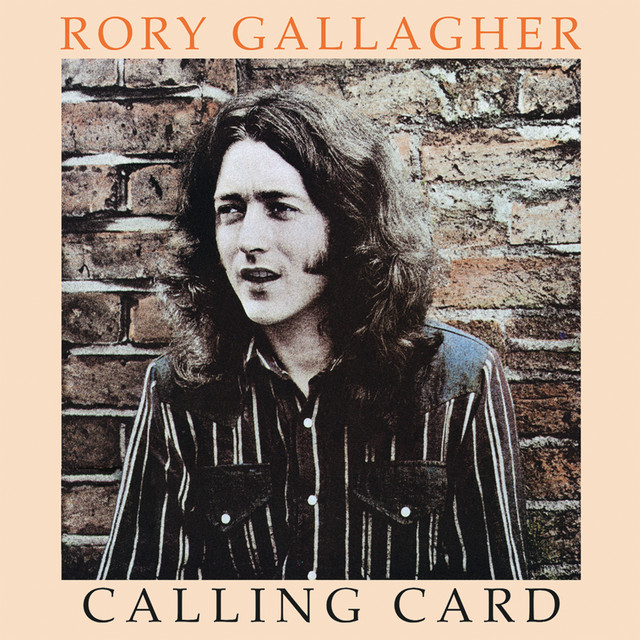
Calling Card (Remastered 2017)
1976
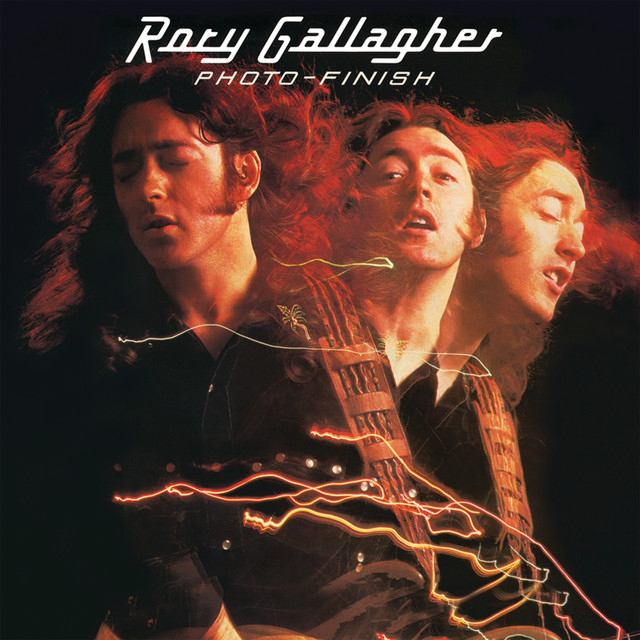
Photo Finish (Remastered 2017)
1978
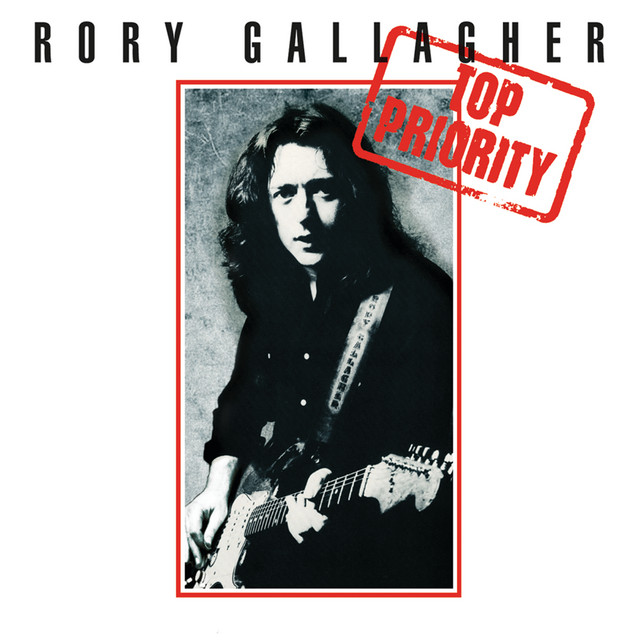
Top Priority (Remastered 2017)
1979
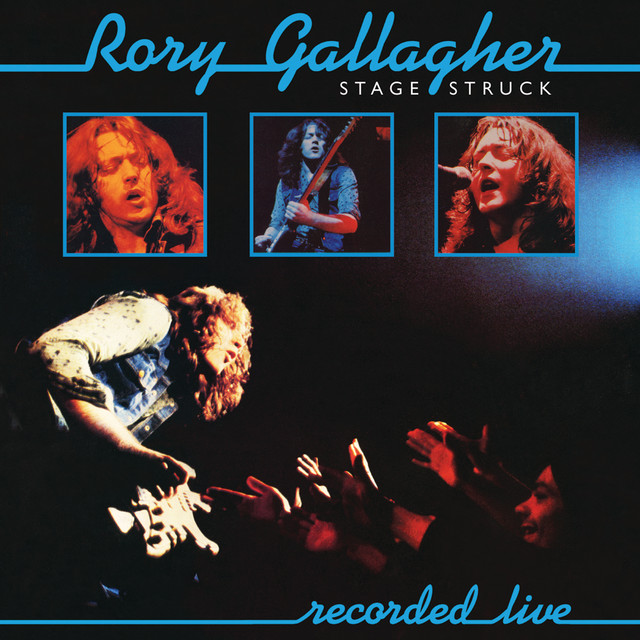
Stage Struck (Live / Remastered 2017)
1980
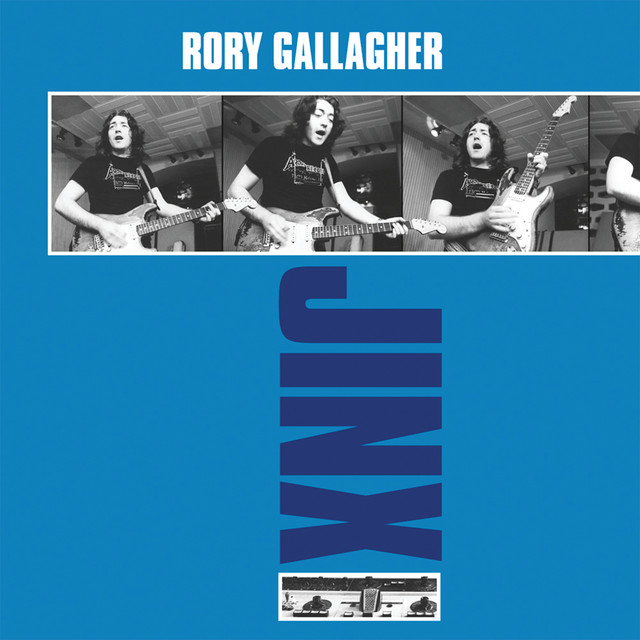
Jinx (Remastered 2017)
1982
Album Credits
-
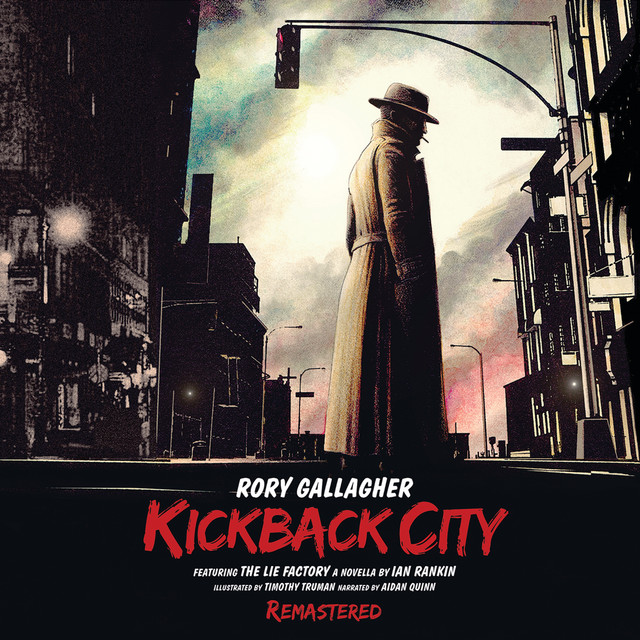
Rory Gallagher · 2013
Producer








.webp)
