Wayne Kramer
former MC5 guitarist
Role
Genre
Group
Credits
Role
Genre
Group
Credits
Wayne Kramer's Gear


Well, back in the day, I had one of the first Fuzz-Tones. It must have been ’65 or ’66. That was the Maestro, and I was kind of underwhelmed with it. I thought it was a nice sound effect, but it didn’t really light a fire under me. I found I got a better sound by turning the amp up all the way. That natural harmonic tube distortion—that’s the sound I wanted.
Find it on:


I had traded the Silvertone for a Fender Esquire, which is the same as a Telecaster except it had one pickup.
Find it on:


Finally, we got the manager to spring for another bank loan and I got a Gibson ES-335, and Fred Smith got a Gretsch Tennessean, and the bassist, a Fender Precision.
Find it on:



“I used the Wayne Kramer Stratocaster and a Fender Hot Rod Deville; that was it. I didn’t use any effects. The Strat has such a classic tone that’s very reliable, and the Hot Rod Devilles are just terrific-sounding, so I didn’t have to think about the gear too much; I was more concerned with what I was trying to play.”
Find it on:

Along with an Epiphone Wilshire and an oddball Dan Armstrong Lucite model, the Strat became one of his main stage guitars in the late ’60s.
Find it on:

In an interview with Vintage Guitar® magazine, Wayne Kramer shares that he traded his Gibson 335 for a Gibson 1959 Les Paul Junior Electric Guitar after being inspired by Jeff Beck. Unfortunately, this guitar was later stolen after a gig, as were many of his guitars.
Find it on:


Wayne Kramer is pictured with a Gibson Les Paul SG Custom 3-Pickup in a Pinterest post by Dr_Gonzo.
Find it on:


Signature strat modeled after his heavily modified strat used in the days of the MC5
Find it on:

In the early days of the MC5, Kramer went through a Fender Esquire, a Gretsch Duo Jet, a Gibson ES-335, and a ’57 Les Paul (which he might have stayed with for good if it hadn’t been stolen), but eventually he landed on the Strat, which he “hot-rodded” with a middle humbucker for extra oomph on his solos.
Find it on:

By then we were involved with John Sinclair and the White Panthers, and we started to see Marshall amps coming over from England. Cream played them; we knew Jimi Hendrix used them because we had opened for him. So we bought a load of the original 100-watt Super Lead heads. We got six of them and two 200-watt bass heads. They were terrific-sounding amplifiers, but incredibly inconsistent; we blew them up regularly. You might get two or three shows out of them and then they’d go up in smoke. We’d have two sets of Marshalls with us on the road and one set in the shop all the time.
Find it on:

Fred Smith and I got 100-watt Vox Super Beatle amplifiers. Before the Beatles they were just called AC-100s. They were really great; nothing in America had 100 watts. The biggest amps were Fender Dual Showmans at 65 watts with two 15? speakers. The Super Beatles were 100 watts with four 12? speakers and two high-frequency horns mounted in a tubed frame cabinet you could tilt back. It was a huge piece of machinery and very intimidating because it was black. We had two of them; a T60, the transistor bass amplifier with a 15? and 12? speaker and two Vox columns for our PA system with six or eight 10? speakers mounted on chrome stands that went on each side of the stage. In those days, that was the state-of-the-art PA system; there was no such thing as monitors or side-fills.
Find it on:

So I got a DigiTech RP500, which is a multi-effects unit. This has the Whammy in it, along with every other effect that’s known to man—fuzz tones, delay, backwards chorus—you know, everything in one place. I won’t be bending over wriggling any cords, and I can pre-program it for the set I’m playing. And I’m using it now on the road.
Find it on:

Gibson Firebird V non reverse. Then I started playing a Firebird, then a Stratocaster, and I stuck with those for a long time.
Find it on:

I also played a Telecaster and one lucite Dan Armstrong that sounded pretty good.
Find it on:
-m.webp?v=1784153027)
Used in his signature stratocaster
Find it on:
-m.webp?v=1784099497)
I also played a Telecaster and one lucite Dan Armstrong that sounded pretty good.
Find it on:

Boss VE-20 Vocal Performer is on his pedalboard in this post. He seems to have used the VE-20 in his later live performances.
Find it on:

Boss BD-2 Blues Driver is on his pedalboard in this post.
Find it on:

here's an old photo of a very young Wayne Kramer with a Silvertone 1420. WAY before MC5 lol
Find it on:

In this ‘Vintage Guitar’ article, originally from December 1998, Wayne Kramer says “I used a Big Muff distortion pedal and used that during the “Kick Out the Jams” era, since the wah-wah pedal hadn’t been perfected yet.”
‘Kick Out the Jams’ was recorded October 30 and October 31, 1968. It was released in February of 1969. “Kick Out the Jams” the single was released in March, 1969. The only Electro-Harmonix Big Muff available (in 1969) was the “Triangle” Muff. No “Ram’s Head” Muff existed until 1973. Therefore it is chronologically impossible that Wayne Kramer played a “Ram’s Head” during the “Kick Out the Jams” era. Moreover, the MC5 broke up in 1972 and since the “Ram’s Head” Big Muff didn’t exist until 1973, the “Triangle” Muff is the only Big Muff Wayne Kramer could possibly have been referring to having played during the entirety of MC5.
Find it on:

This Premier Guitar article from November 29, 2018 indicates that Wayne Kramer’s signature Strat is “based on a ’67 or ’68 Strat with a rosewood fingerboard…”
There is a difference between some of the tuners on some of the Strats made in 1967 and 1968 versus those made in 1969. Along with subtle changes from earlier years, these differences allowed Fender to narrow Kramer’s guitar down to a ‘67 or ‘68 Strat but heavy modifications prevented further accuracy.
Find it on:
This is a community-built gear list for Wayne Kramer.
- Find relevant music gear like Guitars, Amplifiers, Effects Pedals, and other instruments and add it to Wayne Kramer.
- The best places to look for gear usage are typically on the artist's social media, YouTube, live performance images, and interviews.
- To receive email updates when Wayne Kramer is seen with new gear, follow the artist.
Discography
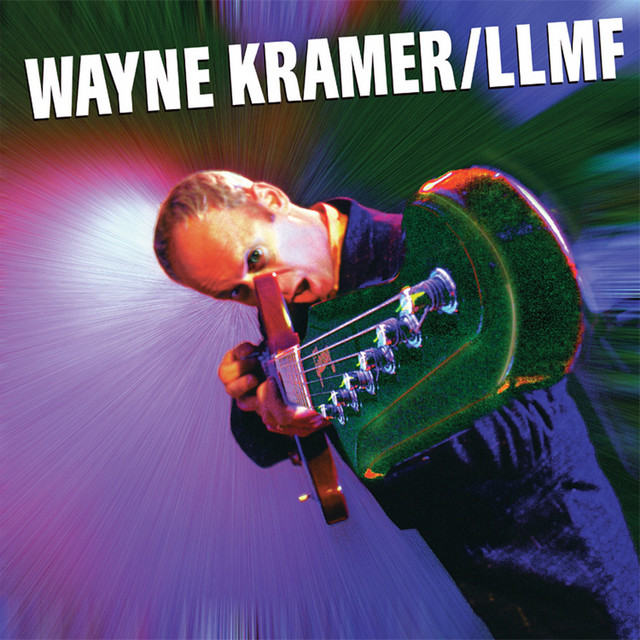

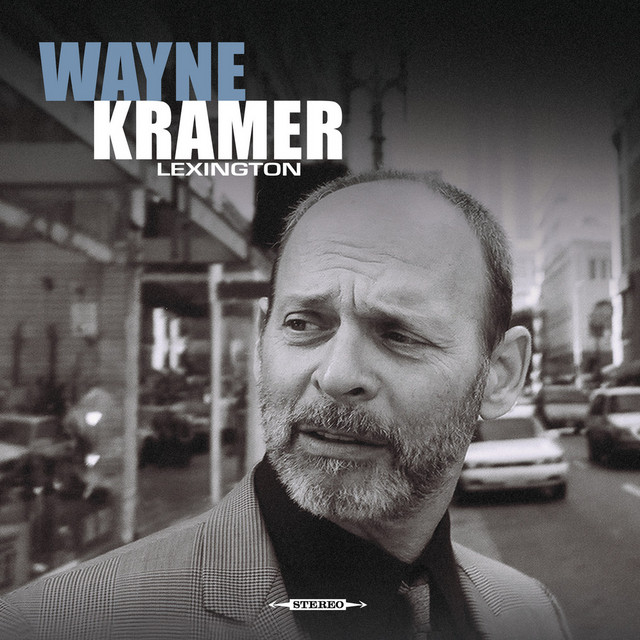
Album Credits
-
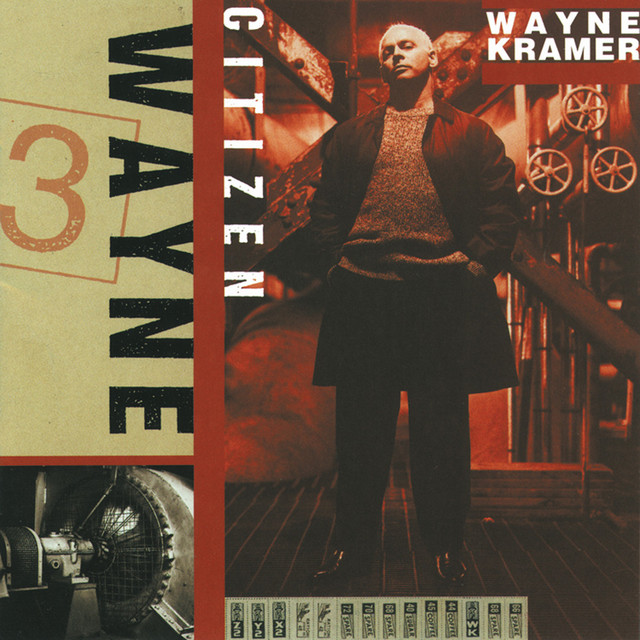
Wayne Kramer · 1997
Mixing Engineer Producer Recording Engineer
.jpeg?v=1784159849)
.jpeg?v=1784159849)