


Pricing and availability
We compare 600+ stores and found this item at 4 stores. Prices updated .
Store
Reviews
Price




Average Price: $59
Budget/Beginner
$60
$181+
Price Tier
Budget
Standard
High-end
Price History
Based on price data from 4 merchants for "Maestro Fuzz-Tone". Prices shown reflect NEW condition. Tracking began Apr 2, 2026.
* Product prices and availability are updated by Equipboard every 24hrs and are subject to change. Equipboard may receive compensation for purchases made at participating retailers linked on this site. This compensation does not affect what products or prices are displayed, or the order of prices listed. For more information, please refer to our affiliate disclosure.
Description
Step back into the golden age of rock 'n' roll with the Maestro Fuzz-Tone FZ-M, a fuzz effects pedal that revives the legendary sound of the original 1962 FZ-1. Iconic for its role in the Rolling Stones' "Satisfaction," this pedal brings the past screaming into the present, offering both vintage and modern fuzz tones for today's discerning guitarists.
The FZ-M retains the all-analog charm of its predecessor, enhanced with a versatile Mode toggle switch. Flip between the classic FZ-1 inspired fuzz that slices through the mix with precision, and a thicker, more contemporary fuzz that adds depth and warmth to your sound. The straightforward 3-knob layout ensures that you can dial in your desired tone without a fuss. Use the Attack knob to dictate your fuzz levels, sculpt your sound with the Tone control, and push your output with the Level knob, which can exceed unity gain for those moments when you need to break through the noise.
True bypass switching ensures your signal remains pristine when the pedal is disengaged, while the vintage Maestro logo lights up with colorful LEDs, making sure you always know when your fuzz is in full effect. Built to withstand the rigors of the road, this stompbox is not just a tool but a piece of music history ready to inspire your next hit.
Key Features:
- Controls: Attack, Tone, Level
- True-bypass footswitch with Classic/Modern mode toggle
- LED indicators in the Maestro logo
- All-analog signal processing
- Powered by 9V battery or 9VDC power supply
Product specs
| Pedal Type | Fuzz |
| Analog/Digital | Analog |
| Inputs | 1 x 1/4" (instrument) |
| Outputs | 1 x 1/4" |
| Bypass Switching | True Bypass |
| EQ | Tone Control |
| Controls | Attack |
| Power Source | 9V DC power supply (sold separately) |
| Batteries | 1 x 9V |
| Power Usage | 5.5mA |
| Height | 2.5" |
| Width | 3.45" |
| Depth | 5.04" |
| Weight | 1.3 lbs. |
FAQs
-
What type of power supply does the Maestro Fuzz-Tone FZ-M require?
-
The Maestro Fuzz-Tone FZ-M requires a 9V DC power supply, which is sold separately. It can also be powered by a 9V battery.
-
Is the Maestro Fuzz-Tone FZ-M suitable for bass guitar?
-
Yes, the Maestro Fuzz-Tone FZ-M can be used with bass guitars, offering a classic fuzz tone that enhances both guitar and bass performances.
-
What kind of bypass switching does the Maestro Fuzz-Tone FZ-M feature?
-
The Maestro Fuzz-Tone FZ-M features true bypass switching, ensuring that your tone remains unaffected when the pedal is turned off.
-
How does the attack control on the Maestro Fuzz-Tone FZ-M affect the sound?
-
The attack control on the Maestro Fuzz-Tone FZ-M adjusts the intensity and texture of the fuzz effect, allowing you to tailor the sound from subtle to aggressive.
-
What are the main dimensions of the Maestro Fuzz-Tone FZ-M?
-
The Maestro Fuzz-Tone FZ-M measures 2.5" in height, 3.45" in width, and 5.04" in depth, with a weight of 1.3 lbs, making it compact and portable for pedalboards.
Videos

New Falconer Records
Maestro Fuzz-Tone (by Gibson) in 2022: Is it any good? 'Cos it's not cheap!
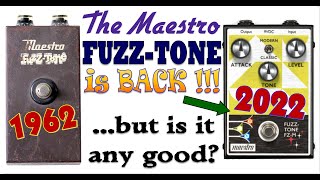
Maestro Fuzz-Tone (by Gibson) in 2022: Is it any good? 'Cos it's not cheap!
New Falconer Records
Reviews
Owner Insights
We analyzed real musician discussions from forums and Reddit to find what players love, question, and tweak about Maestro Fuzz-Tone.
Features and functionality
4.5 out of 5
Based on 0 Reviews and 7 Ratings
Artist usage
Add artist.png?v=1784159848)

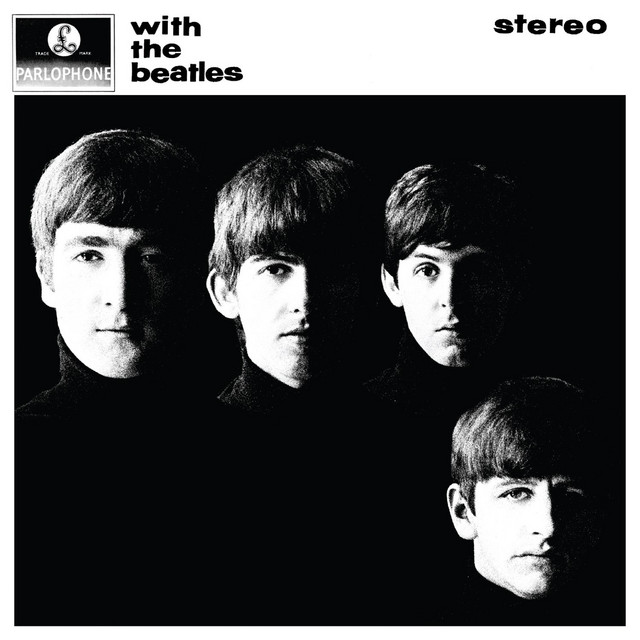
George Harrison used the Maestro Fuzz-Tone pedal during the recording sessions for the first two Beatles albums, including "With the Beatles." This information is detailed in the PMT Online article, "The Beatles Effects Pedals Guide."

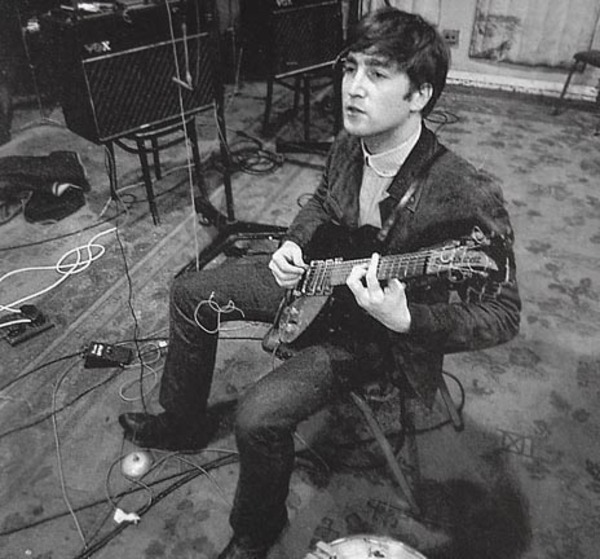
According to This article from Dolphin Music, "One of the first fuzzboxes invented was the Maestro Fuzztone, and the Beatles have used it. It can be seen on some photographs that seem to be dated from the 1963-1964 days."

At 2:14 minute mark, Maestro Fuzz Tone can be seen in Corgan's stompland.
.jpg?v=1784161268)

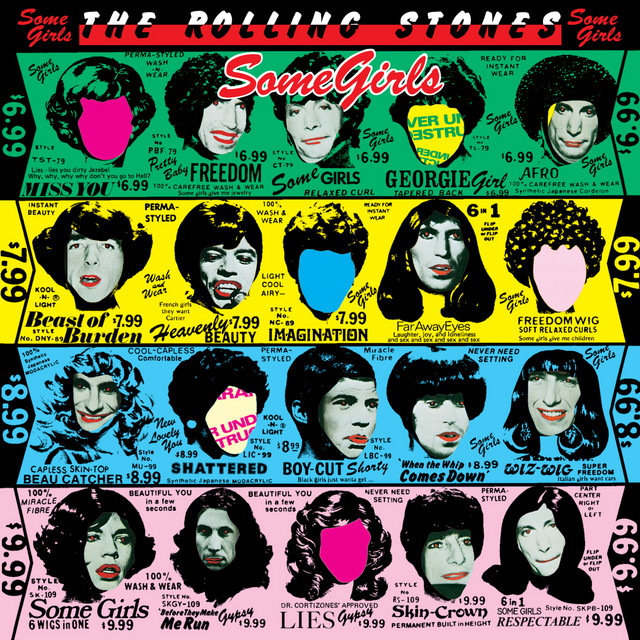
In this article, Richards says, “It was down to one little foot pedal, the Gibson [owners of the Maestro brand] fuzz tone [sic]… I’ve only ever used foot pedals twice [the other being an XR delay on Some Girls]… effects are not my thing. I just go for quality of sound… “I was imagining horns, trying to imitate their sound to put on the track later when we recorded. I’d already heard the riff in my head, the way Otis Redding did it later, thinking this is gonna be the horn line. But we didn’t have any horns, and I was only going to lay down a dub. The fuzz tone came in handy so I could give a shape to what the horns were supposed to do. But the fuzz tone had never been heard before anywhere, and that’s the sound that caught everybody’s imagination.”


Billy Gibbons talks about the Maestro Fuzz-Tone as one his first pedals, citing it as a pivotal starting point, in this video starting at 5:00.

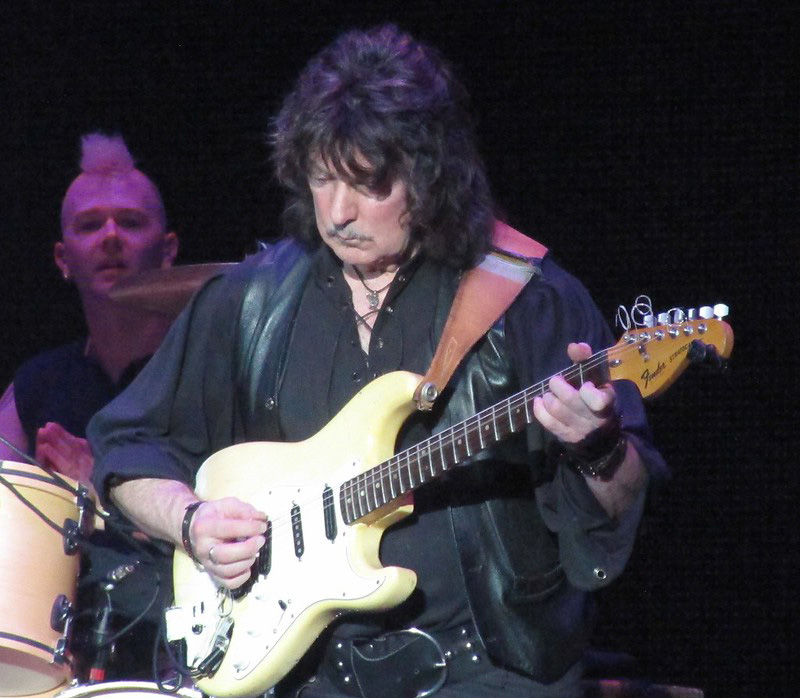
According to an article on Guitar Lobby titled "Ritchie Blackmore Guitars & Gear (2022 Update)," Ritchie Blackmore used the Maestro Fuzz-Tone during the 1960s.


"Squire, who felt that certain effects were better matched with neck or bridge pickups, rewired his Rickenbacker with stereo outputs in the early ’70s. Onstage, he used a boatload of vintage effects, including Maestro Fuzz-Tone, TC Electronic Stereo Chorus Flanger, TC Nova Reverb, Boss OC-3 Super Octave, Mu-Tron III, and custom-made tremolo pedals. He played Moog Taurus bass pedals, eventually triggering samples from an E-Mu ESI2000 sampler."


In an interview published on MusicRadar (http://www.musicradar.com/news/guitars/interview-robby-krieger-on-the-doors-la-woman-jim-morrison-and-skrillex-527068), Robby says: "...I had a Maestro Fuzztone, which I used..."
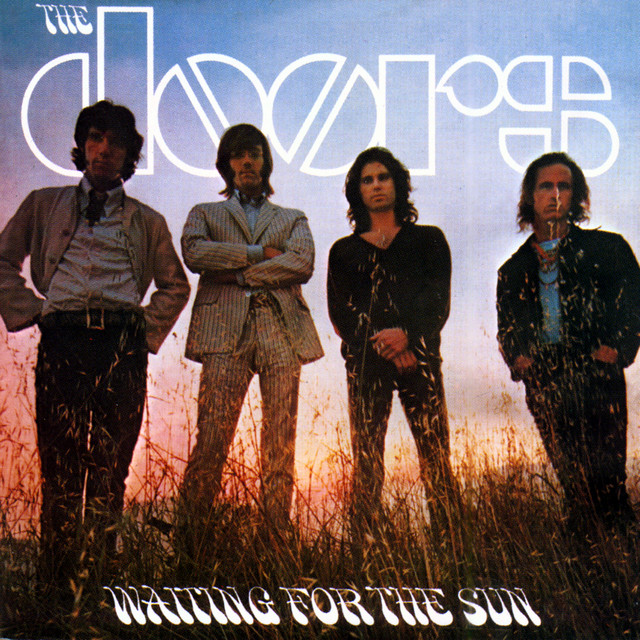
In an interview with Guitar World in 2008, Krieger talks about how this pedal was used on "Waiting for the Sun".
It might have just been a Gibson Maestro fuzztone, or it might have bee n these Acoustic amps we had with a built-in fuzz. Actually, I think it was a combination of those things. But there definitely was some heavy fuzz on that stuff—maybe too heavy.
Stompbox: 100 Pedals of the World’s Greatest Guitarists specifies it to be an FZ-1, as can be seen in this teaser image.


At 5:06 of the video, producer Ludwig Göransson explains that he uses the Maestro Fuzz-Tone on the guitar track of "Redbone."


Christian Bland's pedalboard live at Lollapalooza 2012


Well, back in the day, I had one of the first Fuzz-Tones. It must have been ’65 or ’66. That was the Maestro, and I was kind of underwhelmed with it. I thought it was a nice sound effect, but it didn’t really light a fire under me. I found I got a better sound by turning the amp up all the way. That natural harmonic tube distortion—that’s the sound I wanted.


In the Tumblr post "Gear'n'things from Asbury Park — Steve Van Zandt’s Gear," it's noted that Steven Van Zandt has mentioned using the Maestro Fuzz-Tone in interviews. While he hasn't incorporated it into any Bruce Springsteen setups, the Fuzz-Tone, originally manufactured in the 1960s, may have been used by Van Zandt in the 1970s or he might employ a modern pedal that replicates its iconic sound.
Album Usage
The Maestro Fuzz-Tone has been featured on the following albums:

Genre Usage
Based on how artists on Equipboard use this gear, it is most commonly found in the following genres.
Used With
Based on how musicians on Equipboard use Maestro Fuzz-Tone, it is most commonly used with the following gear.


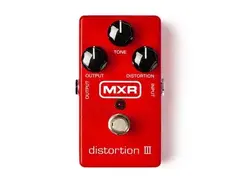


-s.webp?v=1784041057)


Community setups
Show yours
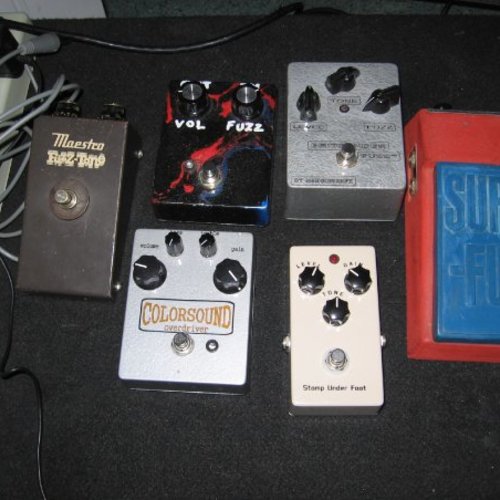
Similar
Add recommendation2 alternative and related items for Maestro Fuzz-Tone, curated by the Equipboard community.

$59.00 - $59.99
This all-analog pedal boasts a Mode toggle switch that provides two pedals in one functionality for increased sonic versatility with both an FZ-1 inspired fuzz sound and a thicker, more modern fuzz tone. Its 3-knob control layout gives you intuitive control. The Attack knob controls the amount of fuzz. The Tone control lets you adjust the timbre from bright and raspy to warm and wooly and anywhere in between. Use the Level control to set the output volume; it can go way beyond unity gain when desired. The true bypass footswitch triggers the LED lights in the bugles in the Maestro logo when it’s on, so you’ll always know when the effect is active.
-m.webp?v=1784127457)
$334.33
More Maestro Fuzz Effects Pedals
$59.00 - $59.99


-m.webp?v=1784155981)
$179.00 - $209.00
in Fuzz Effects Pedals Rank


$149.99
in Fuzz Effects Pedals Rank


$75.00 - $96.20
in Fuzz Effects Pedals Rank


$220.00 - $249.00
in Fuzz Effects Pedals Rank

.jpeg?v=1784159848)


$179.00
in Fuzz Effects Pedals Rank


$296.00
in Fuzz Effects Pedals Rank


$89.00 - $168.00
in Fuzz Effects Pedals Rank


$199.00 - $229.00
in Fuzz Effects Pedals Rank


$95.00 - $99.00
in Fuzz Effects Pedals Rank

$159.00 - $181.00
in Fuzz Effects Pedals Rank


$83.00 - $101.60
in Fuzz Effects Pedals Rank


$179.00 - $220.00
in Fuzz Effects Pedals Rank


$85.00 - $108.90
in Fuzz Effects Pedals Rank


$79.00 - $108.90
in Fuzz Effects Pedals Rank


$300.00
in Fuzz Effects Pedals Rank

$75.00 - $87.10
in Fuzz Effects Pedals Rank


$59.00 - $83.50
in Fuzz Effects Pedals Rank


-m.webp?v=1784156132)
$169.00 - $179.99
in Fuzz Effects Pedals Rank


$249.00 - $299.00
in Fuzz Effects Pedals Rank


$95.00 - $2,006.00
in Fuzz Effects Pedals Rank
-m.webp?v=1784155815)
$88.81 - $111.00
in Fuzz Effects Pedals Rank


$219.00 - $399.00
in Fuzz Effects Pedals Rank


$199.00
in Fuzz Effects Pedals Rank


$98.51 - $129.00
in Fuzz Effects Pedals Rank


$159.20 - $209.00
in Fuzz Effects Pedals Rank


.jpeg?v=1784159848)

$179.00 - $189.00
in Fuzz Effects Pedals Rank


-m.webp?v=1784127859)
$179.00 - $488.85
in Fuzz Effects Pedals Rank


-m.webp?v=1784127519)
$269.00 - $349.00
in Fuzz Effects Pedals Rank


$269.00
in Fuzz Effects Pedals Rank


$20.90 - $105.70
in Fuzz Effects Pedals Rank


$299.99
in Fuzz Effects Pedals Rank

Accessories & Related Items


-s.webp?v=1784113591)
-s.webp?v=1784128184)
-s.webp?v=1784155340)


-s.webp?v=1784153154)






Gear Guides



.jpg)



Most Popular Fuzz Effects Pedals
Most Popular Brands
-
Added to Equipboard on by
 danmelum
GearIQ 150
-


