

Pricing and availability
We compare 600+ stores and found this item at 1 store. Prices updated .
Store
Reviews
Price




Average Price: $1,300
High-end/Boutique
$60
$181+
Price Tier
Budget
Standard
High-end
* Product prices and availability are updated by Equipboard every 24hrs and are subject to change. Equipboard may receive compensation for purchases made at participating retailers linked on this site. This compensation does not affect what products or prices are displayed, or the order of prices listed. For more information, please refer to our affiliate disclosure.
Description
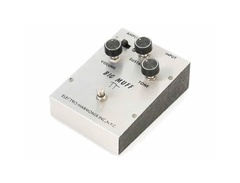
The Electro-Harmonix EH-3003 "Triangle" Big Muff Pi V1 is a classic fuzz effect pedal, revered for its iconic all-metal finish and distinct design. The easy-to-read black lettering and triangle formation knobs make it a standout in the world of guitar pedals. This model, being the earliest version, holds a special place among musicians and collectors alike, making it not just a tool, but also a valuable piece of music history.
Key Features:
- Distinct all-metal finish casing
- Triangular knob formation
- A classic among fuzz effect pedals
- Part of the first production run between 1971-1984
- Reissued since 1996, retaining its original charm and functionality.
Product specs
| Brand | Electro-Harmonix |
| Model | Big Muff Pi V1 (Triangle) |
| Finish | Metal |
| Year | 1969 - 1973 |
| Made In | United States |
| Categories | Fuzz Pedals and Effects |
| Pedal Format | Standard |
FAQs
-
What tones can I expect from the Electro-Harmonix Triangle Big Muff Pi V1?
-
The Triangle Big Muff Pi V1 is known for its creamy, sustaining fuzz tones with a distinct midrange presence. It delivers a smooth, violin-like sustain that is ideal for classic rock and psychedelic music.
-
Is the Triangle Big Muff Pi V1 suitable for both guitar and bass?
-
Yes, the Triangle Big Muff Pi V1 works well with both electric guitar and bass, providing a thick, saturated fuzz sound that enhances the low-end frequencies without losing definition.
-
How does the Triangle Big Muff Pi V1 differ from other Big Muff versions?
-
The Triangle Big Muff Pi V1, named for its triangular knob layout, offers a more balanced tone compared to later versions, with a smoother midrange and a unique harmonic richness that sets it apart.
-
What power supply does the Triangle Big Muff Pi V1 require?
-
The original Triangle Big Muff Pi V1 operates on a 9V battery. If using a power supply, ensure it matches the specifications of vintage pedals to avoid potential damage.
-
Is the Electro-Harmonix Triangle Big Muff Pi V1 easy to use for beginners?
-
Yes, the Triangle Big Muff Pi V1 is straightforward to use, featuring simple knob controls for volume, tone, and sustain, making it accessible for beginners looking to explore classic fuzz sounds.
Videos

JHS Pedals
Electro-Harmonix (EHX) Rarest Pedals!
Electro-Harmonix (EHX) Rarest Pedals!
JHS Pedals
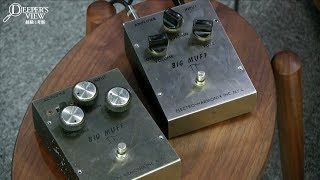
Electro-Harmonix BIG MUFF〜V1トライアングル編【デジマート DEEPER’S VIEW 〜経験と考察〜 Vol.05】

digimartnet

V1 "Triangle" Big Muff Comparison

Kit Rae
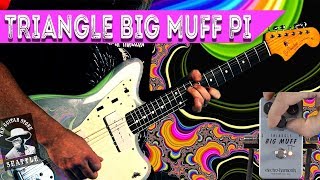
Electro-Harmonix Triangle Big Muff Pi Fuzz Pedal

Quimper Sound Records and Guitars
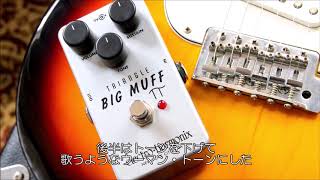
electro-harmonix Triangle Big Muff Pi (字幕入り)

キョーリツコーポレーション公式チャンネル
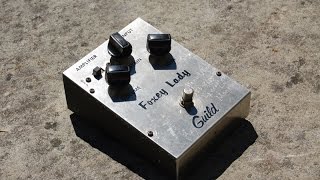
Guild Foxey Lady (EHX Triangle Big Muff)

devnulljp
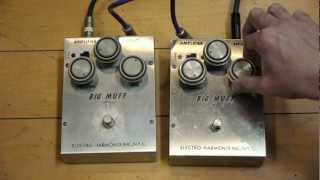
Electro-Harmonix BIG MUFF π Triangle Knob

effeken
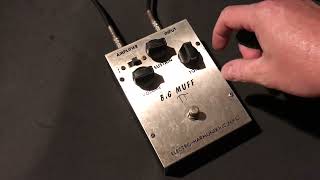
Electro Harmonix Big Muff Pi V1 Triangle Model SPT 87 103 Transistors

Pacific Drive - Vintage Guitars and Pedals
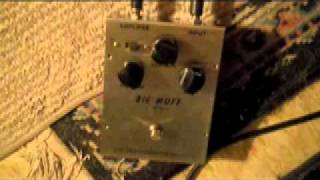
2N5133 muff.mov

jermsfuzz
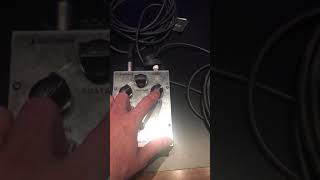
Rare triangle Big Muff Prototype. Most expensive big Muff ever sold.

Make Believe Studios
Reviews
PROS
-
Vintage model delivers richer, creamier tone
-
Exceptional sustain, especially with bass frequencies
-
Higher gain than other Big Muff models
-
Enhanced tone when used with a Tubescreamer
CONS
Owner Insights
We analyzed real musician discussions from forums and Reddit to find what players love, question, and tweak about Electro-Harmonix EH-3003 "Triangle" Big Muff Pi V1.
Comparisons
-
The op-amp version, known for its raw tone, bypasses the tone circuit entirely, contrasting with the Russian version's strong low-end.
Source
Mods and upgrades
-
Running the Triangle Big Muff into a tube screamer or EQ pedal can enhance band mix clarity, preventing it from being drowned out.
Source
User experience
-
Owners often pair the NYC Big Muff with a Green Rhino MK2 to enhance mid-range presence while maintaining smooth, sustained characteristics.
Source
Use cases and applications
5.0 out of 5
Based on 0 Reviews and 4 Ratings
Artist usage
Add artist

Electro-Harmonix founder and CEO Mike Matthews reported seeing Hendrix's Big Muff with his own eyes in 1969. There are multiple interviews in which he states this, but the most complete account was sent to Kit Rae for his Big Muff Pi Page's "Jimi Hendrix Big Muff" section.
Since the issue of Hendrix using a Big Muff had stirred up so much controversy over the years, Electro-Harmonix founder Mike Matthews put down in writing everything he could recall about it and sent it to me as I was writing this article. Here is his full story about Jimi and the Big Muff (Mike originally recollected this around 2007 for a Japanese magazine article).
"Back in 1969...we plunged into production (on the version 1 Big Muff) and I brought the very first units up to Henry, the boss at Manny’s Music Store on 48th Street, NYC. About a week later, I stopped by at Manny’s to buy some cables, and Henry yelled out to me "Hey Mike, I sold one of those new Big Muff’s to Jimi Hendrix."
Now let me tell you a little history of me and Jimi. Back in the mid 60s I was a concert promoter. I had the Isley Brothers, Coasters, Drifters, Cadillacs, Lovin’ Spoonful, Young Rascals, Byrds, Turtles, Shirelles....and many more acts. I booked Chuck Berry for two nights, and was looking forward to this gig ...especially because Chuck traveled alone and the promoter had to get the back up band. I decided to play keyboards, and got some buddies of mine who mostly did Chuck Berry covers to back up Chuck. A week before the gig, that agent who sold me Chuck called me and said "Hey Mike, I need you to do me a favor and book another band.... I can give you one that will play three nights for $600." I said "Bob I don’t need another band. The crowd is coming to see Chuck Berry and I’d just be spending another $600 for nothing." Bob said "Please, I need this favor. You can have them for three nights for only $500, and they have a guy that can play guitar with his teeth." I figured, ok, and booked them, and in the future Bob owed me the next favor. The name of this band was Curtis Knight & the Squires.
When Chuck played, and me and my guys backed him up, I was a little burnt out after the first set and went to check to see how much money came in so far at the gate. Curtis Knight’s band was now playing and I didn't pay much attention until my guitarist that backed up Chuck, Steve Knapp, came running up to me and said "Hey Mike, you gotta catch this guitar player. He’s a gas." Well, that guitar player was Jimmy James. His style at the time was strictly loose R&B. We became best friends and I snuck out of my day gig several times a week, as a computer salesman for IBM, to go to his hotel room where we rapped music talk. Jimmy was quiet dude, and lived in a rundown narrow hotel room with no private toilet. He usually had his hair set with pink hair curlers.
One night I went to see him play with Curtis at a club in the upper west side called the Lighthouse. Now, Curtis Knight was a real gangster. Mainly a pimp, running a big operation. At that gig Jimmy hung with me at the breaks and told me "Mike I gotta get away from this dude. I wanna form my own band and headline it." I said "Jimmy, if you’re going to be the front man, then you have to sing." Jimmy said "Yeah, that’s the problem. I can’t sing." I said "If you really wanna sing, all you gotta do is practice and you’ll be cool. Look at Mick Jagger and Bob Dylan. they can’t sing but they can phrase their asses off and project dynamite soul." Jimmy said "Yeah, you got a good point. I’ll work on it."
Soon Jimmy formed his own band, The Blue Flame (June 1966). I went to catch them at the café Au Go Go in Greenwich Village. Sitting with me was my friend Bobby Colomby, who later on was a co-founder and drummer with Blood Sweat & Tears. He invited Eric Clapton to sit with us. Jimmy and The Blue Flames were dynamite ...still playing a loose blues style. At the break we all went across the street for some grub. The only thing Clapton kept saying again and again and again was "I just can’t believe how good this guy is. I just can’t believe it."(Editors note - A few months later Clapton would meet Jimmy (then Jimi Hendrix) for the first time on October 1st 1966, when Jimi played Killing Floor with him on stage at Central London Polytechnic, the first public performance by Cream)
Shortly after, I heard Jimmy ran off to England with the manager of the Animals (Chaz Chandler), who dug him. The rest is history, and it was in England that Jimmy became Jimi Hendrix and quickly developed his super unique electric space style. I was fortunate enough to see The Experience when they first came to New York City. Jimi called me up and said "Hey Mike come on down, I’m playing at xxxx (I forgot the name of this small club). Dynamite! (Editors note - This would have been the Scene Club on June 3rd and 4th,1967, the New York debut of The Experience.)
Whenever Jimi went into a recording studio in New York City, he invited me to hang out. I did this at three different studios, with the last one being Electric Ladyland, the one he funded and owned. Long story...Well here’s the rub. When Jimi invited me to hang at studio # 2, ( I forgot the name ) I went down to show him a new device I was working on. It was a 4 inch ceramic cased speaker that I screwed into the body of a guitar. It had small power amp. So, some portion of the guitar signal was bled into this little power amp and into the screwed in speaker which made the guitar vibrate and easy to get instant hot sustain. I took it to ask Jimi what he thought of it. When I walked into the studio, there on the floor, plugged into his guitar and amp, was the Big Muff. I told Jimi I made these and he said he just bought it at Manny’s and I said yeah, Henry told me. I then showed Jimi the guitar with the screwed in speaker with feedback circuit. He tried it and said "Hey Mike, I think you’ve got something here." (Editors note - Mike has said at other times that he showed Jimi an early version of the distortion-free sustainer, but I think those are two different occasions)
Now WHY did I tell you this whole story? Well, some time in the late 70s, a guitar magazine writer that interviewed me asked me "When did Electro-Harmonix come out with the Big Muff?" Not thinking too much about this I blurted out around 1971. Well, it was really 1969. Over the years, Hendrix purists took this 1971 date and said, Jimi couldn’t have used the Big Muff because he was gone by this time. Well, I wanted you to know the real facts."
You will note that Mike said this was in 1969, so I did some digging. Electric Lady Studios was not used until June 15th 1970, but Mike said it was not that location, but the second studio Jimi recorded in for the 1969 sessions. The three Manhattan recording studios Jimi was recording in were the Record Plant, Olmstead Sound Studios, and The Hit Factory. Jimi recorded in the Record Plant and Olmstead March-May, spread across thirteen days. In late August there were three days of sessions at the Hit Factory, then there were three days of sessions in November and three days in December at the Record Plant. I have been told by one Big Muff owner that he bought his perf board Big Muff in "late 1969" when he first saw it for sale in NYC. Mike says he saw his Big Muff when he visited with Jimi in the second studio, either the Record Plant or the Hit Factory. Both were in the same neighborhood. This would have occurred between August and December 1969, which is roughly when I have determined the first Big Muff was on the market.
Though I have found little printed documentation of this other than owners receipts, I have received lots of verification over the years from Big Muff owners and sellers that the V1 Big Muff was available in early 1970, and a few people have told me they purchased their early perf board versions in NYC in late 1969. In 1967 and 1968, Rick Derringer and the McCoys were the house band at a New York City club called the Scene. The Scene was well known to be frequented by many guitar legends who recorded and performed in NYC, including Jimi Hendrix. He was friends with Rick and jammed with him there often. As I noted above, Mike Matthews said the first time he saw the Jimi Hendrix Experience perform was at this same club. Interestingly, musician Johnny Winter broke up his old band in early May 1970 and began playing with a new new lineup, The McCoys (who recorded Hang on Sloopy). An original Big Muff owner contacted me to verify he had acquired his V1 Big Muff from one of the members of The McCoys at the Orlando Pop Festival in May 1970. The McCoys were Randy Zehringer on drums, Randy Hobbs on bass, and Rick Derringer on guitar. The same Rick Derringer who jammed with Jimi regularly at the scene. That is just one of several accounts I have heard that indicates the Big Muff was being used by musicians in this period.
If Jimi bought a Big Muff as Henry from Manny's recollected, and had one in the studio in 1969 as Mike recollected, this easily fits into a window of almost 18 months before Jimi's death. But memories may get a bit dodgy or foggy about events that occurred over 30-40 years in the past, and it may be easier to recall a significant event more so that the exact date the event occurred. Heck, I can't remember exact year I bought certain pedals within the last ten years or so. So, for the sake of argument lets say it was only available in May 1970 (the earliest receipt date I have seen) that is still around four months, giving Jimi plenty of time to have bought and used one in the studio.
The legend that Jimi's well known tone came from the Big Muff would not be an accurate statement however. An Electro-Harmonix brochure from 1977, shown below, makes the claim that the Big Muff was the pedal Jimi Hendrix relied on for his “electric-lady” sound. This was likely more of a reference to the Electric Lady Studios, not the record, but E-H was no doubt trying to capitalize on the Hendrix fame with this association, as had been done previously with the E-H pedals named "Axis" and "Foxey Lady". Although it is probably not the best pedal to use for most Hendrix tones, the Big Muff was certainly inspired by the Hendrix fuzz tone, as Mike Matthews has stated several times, and it does get you into similar fuzz tones at the right settings with a Stratocaster and certain amps. Whether or not any recordings exist of Jimi using it, we will probably never know. None of my research has turned up any actual syudio photos of documentation. If Jimi did use one, it would be on one of the songs recorded in those last few months in 1969 through 1970. Songs Jimi recorded in those sessions were Midnight, Trash Man, Ships Passing in the Night, Ezy Ryder, Hear My Train a Comin, Keep on Groovin, Freedom, With the Power of God, Earth Blues, Bleeding Heart, Message from Nine to the Universe (Earth Blues and Message to Love joined), Message to Love, Lover Man, Message To The Universe, Izabella, Burning Desire, Easy Blues, Beginnings, Machine Gun, Sky Blues Today, Mastermind, Room Full Of Mirrors, Stepping Stone, Dolly Dagger, Them Changes, and Power of Soul.
Unfortunately there are no studio records or photos that have ever surfaced to verify its use, so the Hendrix Big Muff mystery will have to remain a mystery. It would have been interesting to hear what sounds Jimi would have recorded with this pedal, or the later versions, had he lived.


Per this page from the meticulously researched database about Gilmour's sound, a triangle Big Muff was added to Gilmour's board for a European leg of his 2006 On An Island tour. The site offers the theory that it was used during the 'funky' part of echoes in conjunction with the T-Rex Replica to get a really aggressive sound with tonnes of space.

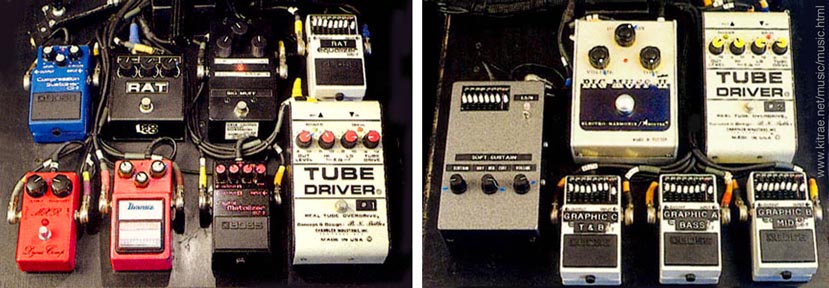
"Purchased a Triangle Big Muff in August of 1971 in New York, but it is unknown if he ever recorded with one."

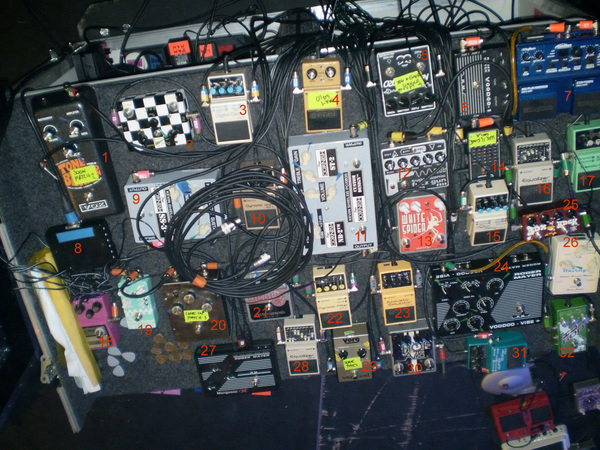
Visible in this ca. 2008 photo featured in this August 2011 Effects Bay article.

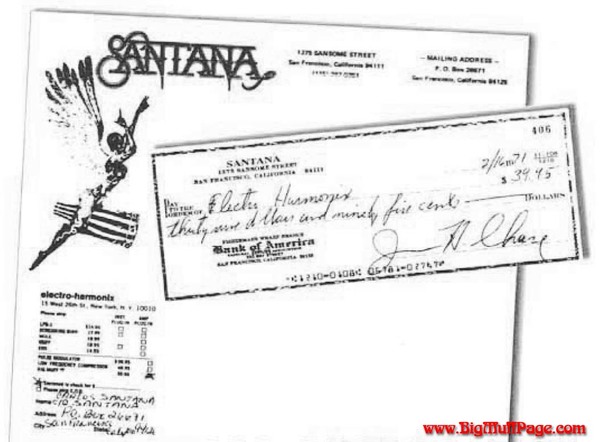
From "The Big Muff Pi - A History Of All Versions - Part 1" section of Kit Rae's Big Muff Page:
"Shown below is a reciept and check from Carlos Santana for the V1 Big Muff he purchased in '71 (thanks to Mike Matthews for the scan)"


Mentioned in this January 1986 Guitar Player interview (transcribed on the website of interviewer Tom Mulhern) and visible on page 16 of the March 1982 issue of Guitar World. It is specified on page 17.
Guitar Player January 1981. "Frippertronics - A mini-interview with Robert Fripp"
I generally use a small pedalboard with a volume, wah-wah and fuzz. It never really mattered what types they were, except the volume pedal I used was the cheapest one, the first one I ever bought, in 1967. And until Roland out volume pedals in 1981, which are now the best I've found, I had to use the original one, which had a good on/off sweep. The Roland volume pedals let you adjust the on and off range. All of my electronic equipment is built into rack mounted modules by Tony Arnold of Arny's Shack. It's all custom equipment. He takes a small effect, builds it into a rack-mounting module, and slots it in. Besides the Roland Space Echo, I also have am Ibanez digital delay. The specific kinds of fuzz boxes I've used are Electro-Harmonix Big Muffs and Foxey Ladys, which were good – the old ones. You can't get fuzz boxes like that anymore; I've tried. All you can come up with, if you're lucky, are the old ones. Tony Arnold is planning to take a number of old buzz box circuits and put them all in one module with a switching rank, so you can switch around to any one of five or six traditional, old circuits. You can then go to Big Muff to Foxey Lady to Burns Buzzaround to Color-Sound and so on.
Guitar World, March 1982, "The Gear of the Crimson King"
ROBERT FRIPP—
Clockwise from left
a—Roland GR-300 control panel
b—Foxx Tone Machine
c—Pete Cornish pedalboard with vintage Electro-Harmonix Big Muff, volume, and Cry Baby Wah
d—A/DA Harmony Synthesizer
e—Proprietary pedalboard with Roland FX (SP-1, DS-1, CE-1)


Steve Howe states in this interview, on the topic of the Yes song "Sad Night at the Airfield"; "It starts with me using a late ‘60s Electro-Harmonix Big Muff which coupled up well with my volume pedal."


The Triangle Big Muff Pi can be seen in the bottom left next to the Big Muff Pi in the corner.


Mentioned in this October 28, 2009 Gearspot interview.
Ik heb ook een '72 triangle EHX Big Muff die erg goed is.


Interview from Guitar.Com "Always A Guitar Player" by Scott Tribble
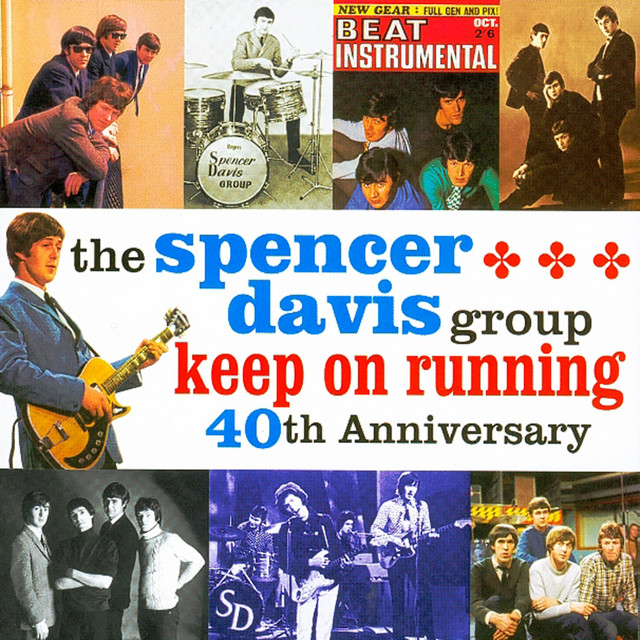
Guitar.com: Some people cite the Spencer Davis Group's "Keep on Running" as the first song recorded with a separate distortion pedal, as opposed to just overdriving the amp. Is that indeed how you did it? If so, to your knowledge, were you the first to do that on record
Winwood: That is indeed how we did it. I think [the fuzz box] was called a Big Muff. I'm not sure that we were the first to do that on record. We just went to the music shop and picked up these gadgets and tried them out— it sounded good for that song.

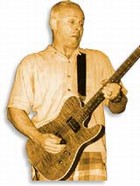
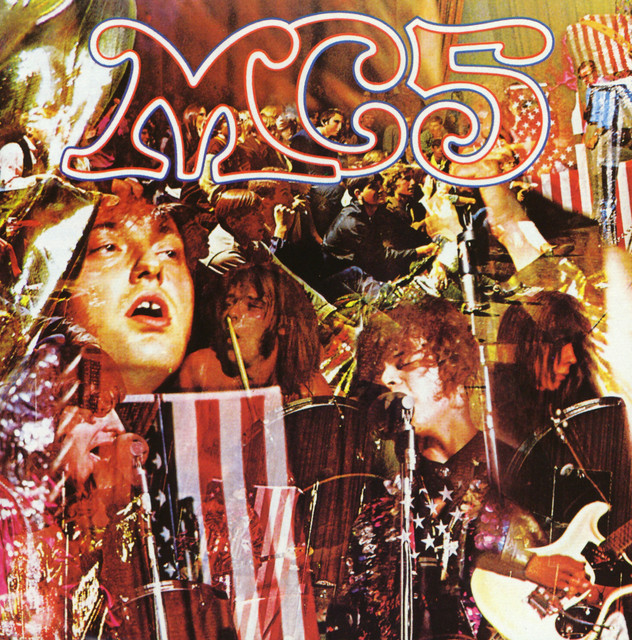
In this ‘Vintage Guitar’ article, originally from December 1998, Wayne Kramer says “I used a Big Muff distortion pedal and used that during the “Kick Out the Jams” era, since the wah-wah pedal hadn’t been perfected yet.”
‘Kick Out the Jams’ was recorded October 30 and October 31, 1968. It was released in February of 1969. “Kick Out the Jams” the single was released in March, 1969. The only Electro-Harmonix Big Muff available (in 1969) was the “Triangle” Muff. No “Ram’s Head” Muff existed until 1973. Therefore it is chronologically impossible that Wayne Kramer played a “Ram’s Head” during the “Kick Out the Jams” era. Moreover, the MC5 broke up in 1972 and since the “Ram’s Head” Big Muff didn’t exist until 1973, the “Triangle” Muff is the only Big Muff Wayne Kramer could possibly have been referring to having played during the entirety of MC5.


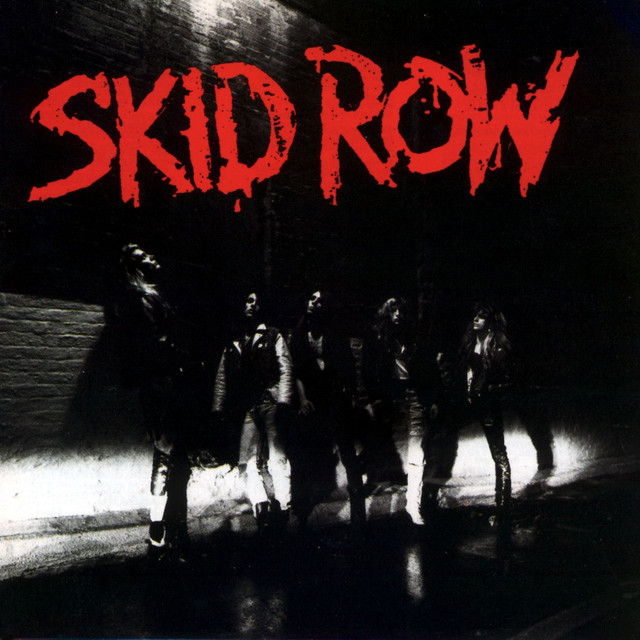
Listed on Reverb.com in 2013 by Boingosaurus Music LLC. According to the description, it was used on the eponymous Skid Row album.
For sale is a vintage and rare 1972 Electro Harmonix Triangle Knob Big Muff Pi Fuzz effects pedal. This unit sounds AMAZING. The tone of it is simply unparalleled. It works perfectly as it should, and is in good cosmetic shape with typical wear from use.
This pedal was owned by Dave "Snake" Sabo of Skid Row. He used this particular pedal on their first album (that went platinum 5 times) "Skid Row". I have documentation from Dave that will be included.
The pedal comes as pictured.
Album Usage
The Electro-Harmonix EH-3003 "Triangle" Big Muff Pi V1 has been featured on the following albums:
![Electro-Harmonix EH-3003 "Triangle" Big Muff Pi V1 as heard on Kick Out The Jams [Live] [Japan Remastered] by MC5 (1969)](https://images.equipboard.com/uploads/album/image/52504/kick-out-the-jams-live-japan-remastered.jpg)
Genre Usage
Based on how artists on Equipboard use this gear, it is most commonly found in the following genres.
Used With
Based on how musicians on Equipboard use Electro-Harmonix EH-3003 "Triangle" Big Muff Pi V1, it is most commonly used with the following gear.




Similar
Add recommendation44 alternative and related items for Electro-Harmonix EH-3003 "Triangle" Big Muff Pi V1, curated by the Equipboard community.


$400.00


More Electro-Harmonix Fuzz Effects Pedals

$169.00 - $188.20
in Fuzz Effects Pedals Rank

$189.00
in Fuzz Effects Pedals Rank


$75.00 - $96.20
in Fuzz Effects Pedals Rank


$83.00 - $101.60
in Fuzz Effects Pedals Rank


$85.00 - $108.90
in Fuzz Effects Pedals Rank


$79.00 - $108.90
in Fuzz Effects Pedals Rank


$300.00
in Fuzz Effects Pedals Rank


$75.00 - $87.10
in Fuzz Effects Pedals Rank


$59.00 - $83.50
in Fuzz Effects Pedals Rank


$95.00 - $1,999.00
in Fuzz Effects Pedals Rank


$95.00 - $99.00
in Fuzz Effects Pedals Rank

$111.00 - $150.60
in Fuzz Effects Pedals Rank


$59.49
in Fuzz Effects Pedals Rank


$84.35 - $112.50
in Fuzz Effects Pedals Rank


$95.00 - $114.30
in Fuzz Effects Pedals Rank


$189.00
in Fuzz Effects Pedals Rank


-m.webp?v=1784818768)
$36.30 - $72.60
in Fuzz Effects Pedals Rank


$102.00 - $117.90
in Fuzz Effects Pedals Rank


$75.00 - $480.00
in Fuzz Effects Pedals Rank

-m.webp?v=1784818868)


$39.60 - $99.00


$99.00 - $131.50


$75.00 - $250.00


$69.00 - $85.30

$139.00 - $174.20


$123.59 - $136.10


$39.60 - $286.00


$81.00 - $116.10


.jpeg?v=1784660163)


Accessories & Related Items



Community setups


Gear Guides
.jpg)






Most Popular Fuzz Effects Pedals
Most Popular Brands
-
Added to Equipboard on by
 ficuspatrol
GearIQ 1001
-


