volcarock

Volcarock

GearIQ 4039 Joined Jun 2017 Contributed to 20 artists

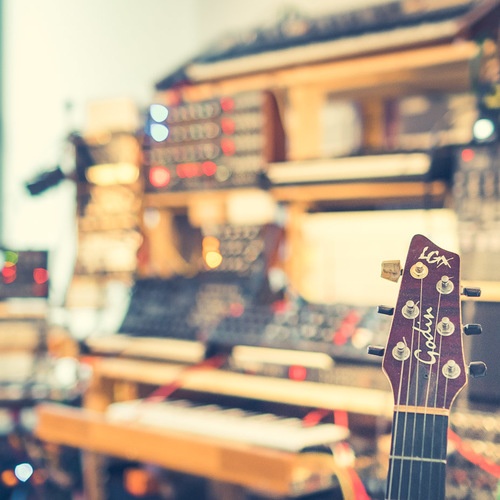
Ambient Guitar & Analog Synths LIVE & MULTITRACK MUSIC VIDEOS * Berlin School * Psychedelic * 70ies * Space Dub * Cosmic Rock * Krautrock * WATCH MY GEAR @YOUTUBE

Every rig tells a story. Start yours.

Catalog your gear, wishlist what's next, and share the setups behind your sound — free.

Create your Equipboard

Sequencer & Sampler 4

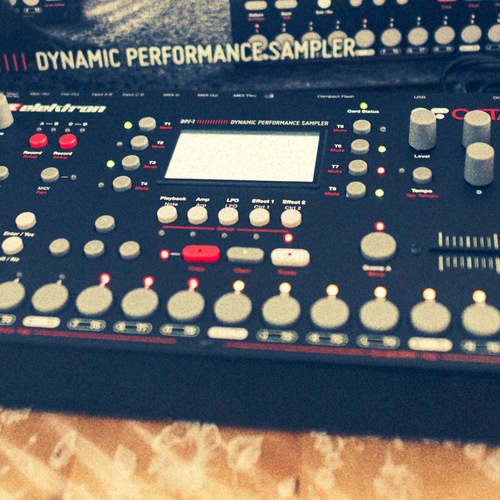
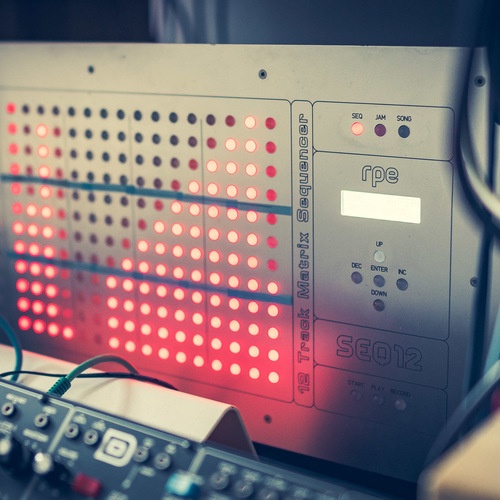
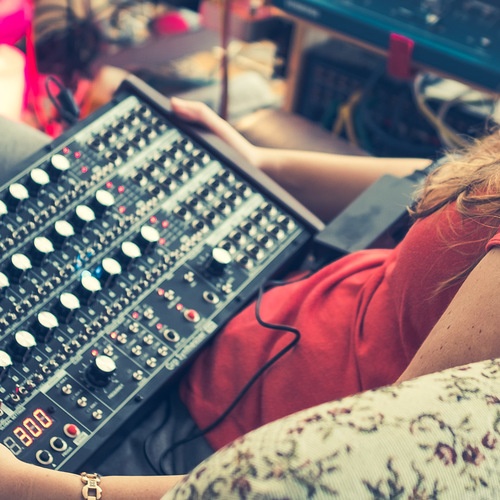
The SEQ12 was developed by RPE BERLIN and has been distributed by Mode Machines since 2018. It's by far the best and the most intuitive and easy-to-use hardware sequencer I've ever had! Roy, the developer, is always pushing for useful updates. Super is e.g. that the sequencer now also controls ratcheting. An ingenious part of live jamming, composing, arranging and remixing and all without pressing the stop button! I do not know any other hardware / step sequencer with so many sophisticated features that is so intuitive to use, and I have / had many in use, from Yamaha RM1x, electron Octatrack, analogue SOlutions Europe, Doepfer Darktime to GRP R24 synthesizer. Who wants to work computer-free gets here a fantastic control instrument, which is simple and logical to operate due to the illuminated matrix.

Synthesizer & Organ 21

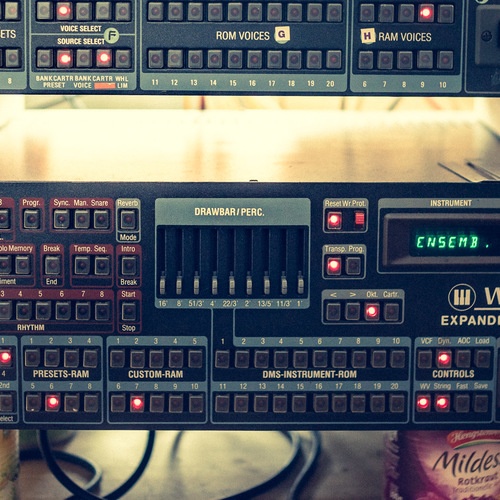
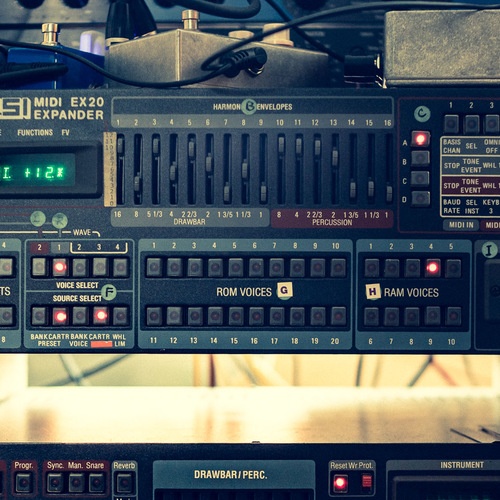
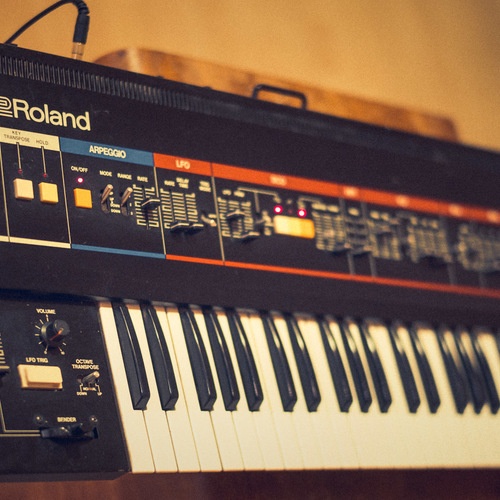
Great allround synth for pads, strings, brass. leads, bass... I did the Tubbutec Juno66 Upgrade. So it has now MIDI, Poly portamento and the DCOs can now sweetly drift like an 70s synth. I had luck, my chorus is not noisy.
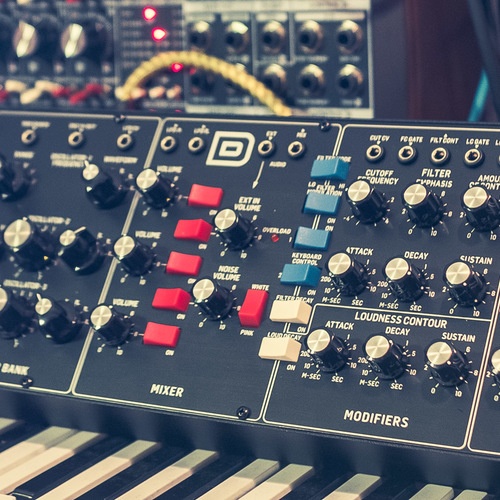
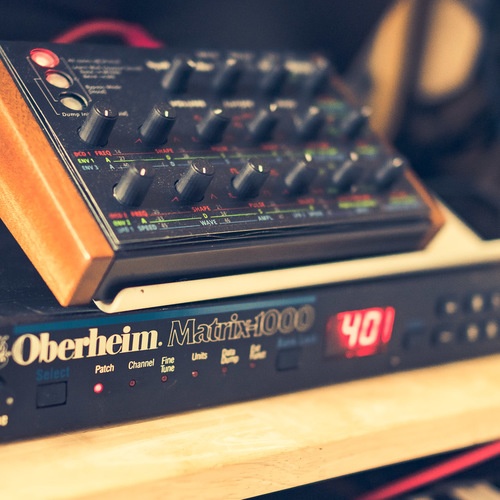
I bought my Black Matrix 1000 as a counterpart to my beloved Juno 60 a week ago. The 6-voice polyphonic rack synthesizer sounds incredibly large, analog and wide, even without FX. I love the overall warm sound. It is the opposite of some harsh-sounding modern synths (I sent the Korg Minilogue back). Adding delay, reverb or modulation effects turns the matrix into an epic analog pad, brass & string machine. For that I mainly use it. But it's also great for bass, leads, FM, FX and all other kinda analog sounds. Especially with the MOD matrix it is so easy to create very organic sounds. And even if the attack time and the LFOs are not the fastest, they are fast enough for me. When I bought it, firmware was 1.11, so I did an Eprom upgrade to 1.20 (Tauntek / Rob Grieb), where many bugfixes were fixed and the matrix can now be easily used with a MIDI controller. The Eprom also includes the important global detune of Gigli v. 1.6. With this upgrade, the Matrix 1000 no longer sounds static, the DCOs behave more like VCO. Without an external controller, the matrix 1000 is more or less an analog preset machine because no editing is possible. the real fun begins with controllers. I tweak the Obeheim Matrix 1000 with my stereoping controller. Of course, you can also use software to tweak, but I prefer real buttons. For me it is the perfect sounding analog poly! for 500 euros / 570 USD it is still relatively cheap for a vintage analog 6-voice polyphonic. And I already think about a second one for stereo operations or 12-voice polyphony :-)
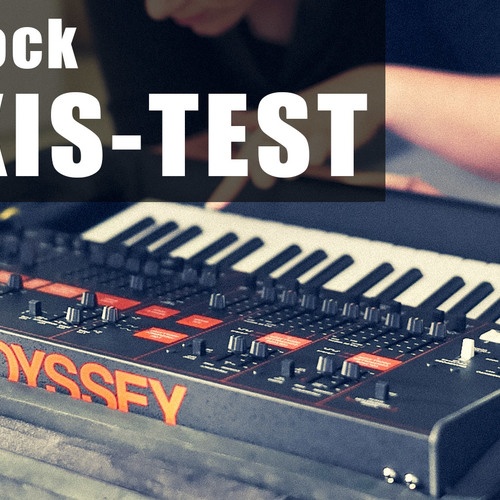
One way ahead, I'm thrilled! Duophonie expands a synth many times over classic monosynths, but in turn. An original Odyssey I had not under my fingers, so I can give no exact information about authenticity of the "original sound", but on the basis of good comparison video on the Web, you can convince yourself that even ARP is in it, where synonymous ARP draufsteht. However, I can compare it to my familiar MS-20 mini, Juno 60, Waldorf Pulse and other synths. The box rocks in the truest sense of the word and is a treat as well as haptic! Although many complain about the 86% keyboard, I like this compromise as with the MS-20 mini .. Due to the slightly smaller design, the device does not seem so bulky and also finds a good place in project studios. Alternatively, you can play it via MIDI with your favorite keyboard or sequencer. Plastic is also the housing tray. The front with the metal plate looks stable, tidy and thanks to numerous faders also clear. The big advantage over rotary encoders is, on the one hand, that you can see the sound based on the fader position and, on the other, you can operate up to 4 faders simultaneously with 4 fingers while playing with the other hand on the keyboard. The general processing quality should match that of the MS-20 mini, which is the current mid-range standard. Nice that the rear audio output next jack and XLR is available. Also implemented in jack are the inputs "Pedal" and "Portamento Footswitch". I have not yet used the rear trigger and CV inputs / outputs - due to the lack of analogue sequencer. The supplied case is convenient for safe transport, but at the beginning it is unpleasantly steamy. The 2 oscillations, each saw tooth and rectangle (both with variable pulse width) sound wonderfully organic, even with completely open filter. Much "nobler" than the MS-20 mini and less static than, for example, the DCOs of my Juno 60. Noise is filtered and unfiltered. And to boost the output or raise the level, a drive switch is available. The only drawback of the oscillators, as in the original, there is no screening for the exact pitch, only one fader for coarse and one for fine tuning and a two-octave switch. For this reason, my old guitar tuner is connected to the Odyssey by default. Although technically more or less on the level of the seventies, there are endless possibilities to create and modulate different sounds like FM, Ring or Sample & Hold. Something unusual for me is that the modulation sources are set at the modulation target. I particularly like the syncsounds, which sound much more supple than those of my Waldorf pulse. The ADSR Envelope is fast enough for most applications, the stripped-down AR a little more lame. The LFO could, as in the original, have a slightly larger area. Alternatively, Oscillation 1 can also be used as an LFO. Since there is unfortunately no way to synchronize the LFO externally to the tempo, sensitivity and endurance is required for tempo-based settings. I assume that this is easier to do with an original Odyssey with a slightly larger travel path. I really like the LP filters. All 3 filters of the different original versions were implemented, whereby I personally like the 12dB from Rev1 best. It sounds warm, fat and thins the least. The HP filter is rather rare in my use, but handy for bassless such as HiHats. The PPC (Proportional Pitch Control) are somewhat unusual at the beginning. With a little practice, however, they can be wonderfully used for expressive play. Vibrato and Bendigs up to a whole tone up or down work flawlessly. Anything beyond that requires more intensive practice. But it's fun and a welcome change from the usual pitchwheel. The nice thing about a duophonic synth like the Odyssey, it suits my playing style as a guitarist very much. Chord melodies with intervals, but also very "e-guitar-like" sounds like Sync can be implemented wonderfully. In general, thanks to the possibilities of Mouluations and Duophonie an enormous record of different sounds is possible. I like to use the Odyssey for strings and pads just as much as for percussives, FX, sick organ sounds or just big fat basses and nice singing leads. CONCLUSION Beautiful new analog synth world, who would have thought that 10 years ago. We are spoiled for choice between the new MS-20, Prophets, Moogs and Oberheims and this wonderful ARP Odyssey. In any case, the Korg ARP Odyssey is an incredibly versatile and playfully unique duophonic synth that has now been reissued in a slightly smaller version but with a simple midi and all 3 filter revisions. Once you have decided on it, you only have the choice between three different design models.
great analogue remake in the 86% format! I own the MS-20mini for a few years now. So far, I had no problems, neither with noise nor with the processing, However, I do not patch too much and use it exclusively in the studio! Nevertheless, I think that the processing of the KORG / ARP Odyssey is a tick of high quality. Regardless, I like the mostly dirty sounds, especially if you let the filter scream, the headphone output sends back into the synth or the OSC derb against each other. But the synth can not only elicit Bleeps & Blops, experimental and sick bass, he can also have very nice classic leads, especially with a natural delay / reverb The 86% keyboard is perfect for me, because I have relatively small fingers and anyway come from the guitar where different neck thicknesses / lengths are on the agenda. Personally, I do not need a 100% keyboard, but I am glad that there are no mini keys (50%)! So, if you like the MS-20 sound, you can choose between the 70s original, the original size (as a limited assembly version) of the MS-20m rack version or this 86% remake, which sounds more like 96% :-)
I'm doing Berlin School and other 70's inspired synthesizer music. Unfortunately I did not have an original Minimoog from this era between my fingers. But no matter what I set for the "Berimoog" for sounds, they immediately remind me of the sound aesthetics of my dusty vinyl collection. Everything sounds powerful, dynamic, warm and organic, lively, harmonious or even brutal. The sounds of this wonderful instrument - whether ultrafat or leisurely bass, repetitive sequences, crazy space FX sounds, lead sounds with portamento or 5th leads, or even 3 sounds (1 OSC each for fundamental / third / fifth) convince all Line. And all this already without the additional patch points to use, which offer even more modulation options. The feel is ok, of course no comparison with real tanks from this era, but still good to use for my relatively small hands. For big hands and gross motor skills, it could be too small under certain circumstances. But in terms of price, whining at a high level.
A creamy synth sound with a neat belly. I particularly like the Moog SAW, which sounds fantastic even when the filter is open. With 24dB Cascade Filter any classic Moogsweeps are possible - a dream! Had before for Moogsound the Mother 32, also a great synth, but the Minitaur has two OSC and sounds in my ears more vintage and even a tackier fat and organic, even if only operated with an OSC. The minitaur was artificially trimmed in pitch as bass synth (goes to C4). Too bad, because even as a lead sound he makes a fantastic figure. The associated software for saving and editing sounds is relatively extensive and certainly practical for one or the other. I hardly need them, because I prefer to turn on the real knobs :-) Too bad that he has no on / off switch. With optional wooden side panels he looks even more noble and even more vintage. The eye finally listens :-)
I own all 3 analog Volcas since they are available in Germany, including the Korg VOLCA BEATS Analog Drum Machine and the Korg VOLCA BASS Analog Bass Synthesizer. The Volca Keys is the only one of the 3 analogues that has Flux-mode, i. with the on-board sequencer you can use up to 4 measures (instead of 1 like the others). This is ideal for changing chords on surfaces. 3-voices in pads is of course little (1-star deduction), but with some external effects (phaser / chorus / delay and especially reverberation for the release phase) can be conjured up creamy surfaces! Because the basic sound is beautiful earthy and rough, but the filter is based on a vintage synth by Korg. By the way, the keys are paraphones and not polyphonic because the three OSCs share one filter! Since I've learned to appreciate Duophonie in the ARP Odyssey, that does not bother me much. What I also like very much are the different modes. Especially with Ringmod and Monomode you can conjure very nice drones, but also funky leads and fat basses !!! The delay is nice-to-have, absolutely sufficient for LoFi or short delays. To make it short, even if I do not use it that often anymore, for me the Keys sounds better and is more versatile than the vBass.
I am Volca User of the first hour and of all 3 analog Volcas I use this most often, And especially the kick and the hi-hats! For me the perfect warm fat bass drum, both for electro sounds, as well as to simulate a "natural" kick. I also like the analog toms, as well as Clap and the other PCM percussion sounds. The Hi Hats are especially fun when you loosen rigid 16-figure figures using triplets with the help of Motion Record and Stutter. In general, Motion Record can generate very lively grooves. This also applies to the slightly weaker snare drum, which I like to use for subtle ghost notes, as it is perfect for that. However, if you can handle soldering iron: There are numerous MODs for snare, MIDI-out, single outputs etc ... Because the biggest drawback for me and therefore a star deduction is the restriction to 16 steps at the sequencer, This can only be avoided with an external sequencer. Everything else can be done - with a bit of skill change yourself thanks to moding-friendly PCB.
The Converter + is a complex device. But easy to use once you have understood the routing. After the optimal level, input filter settings and routing have been set, you can play any external synth with a guitar or just use the internal ACO-oscillator of the Converter+ and in this way produce completely unfamiliar sounds. The tracking works surprisingly well with no noticeable latency. All in all, actually much better and easier than I remembered with the GR-33 and also better than with my Korg MS-20 mini. Of course you have to play much more accurately than usual, but overall the Converter + reacts and translates the pitch and gate signals excellently, regardless of whether it is bending, vibrato, legato or tapping. Only with the shortened sustain length in connection with vibrato is there a problem every now and then, but that is probably due to my playing style. The internal ACO (Audio Controlled Oscillator) can change continuously from square to sawtooth. It's also cool that you can mix the portion of the original signal - in my case guitar - with the ACO signal. You can do more wacky things by feeding the second sidechain input with e.g. drum sounds, experimenting with the envelope settings or using an external LFO / pedal to control parameters. There are many patch points that encourage creative experimentation.

Guitars 3

Effects Pedals 25

The Revolver DX is very unique Pedal for special FX, developed and produced by a one-man company based in Germany. It is a Micro sampler / granular texture generator pedal with 8 different working modes and a 4 seconds long sample buffer. This sounds not very long. But when I play, I only use it for very short moments in my soloing or riffs. You can make for example stuttering CD skip effect, many types of endless repeated or randomized drone sounds just to name a few of the 8 modes. But my favorite is the tape slow down and speed up FX, with guitar and also with synths. some info on the controls from the Hexe website: SPEED: depending on the working mode, this knob controls the play speed of the sample (=pitch), self retriggering rate or it's range in the randomized mode. More detailed description is shown in the table below. TIME: sample buffer maximum size, range from 20ms to 4 sec. FADE: loop fade in, instant on or fade out control. TONE: filter control for the wet (sampled) signal. Range from lowpass, through flat to highpass. EF. LEVEL: wet signal volume control. DRY: (toggle switch) adds or mutes the original (dry) signal. CAPTURE: (footswitch) used to capture a new sample or to start the automatic retriggering. ON-OFF/MODE: (footswitch) sets the pedal into bypass mode or plays the last recorded sample. Hold down to change the mode. INPUT GAIN: (internal switch) allows to adjust the input gain of the pedal to match the incoming signal level, settings: Line or Instrument.

Studio Equipment 20

Software 3

Had 74

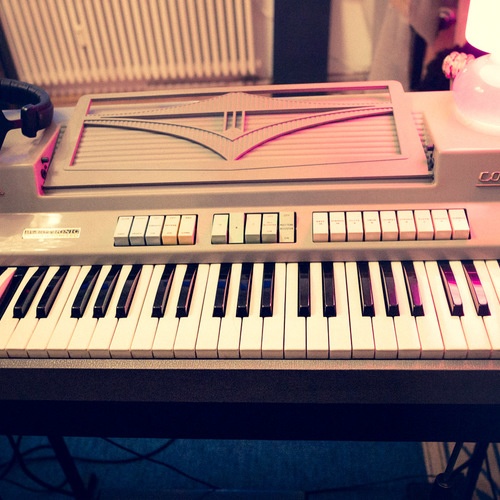
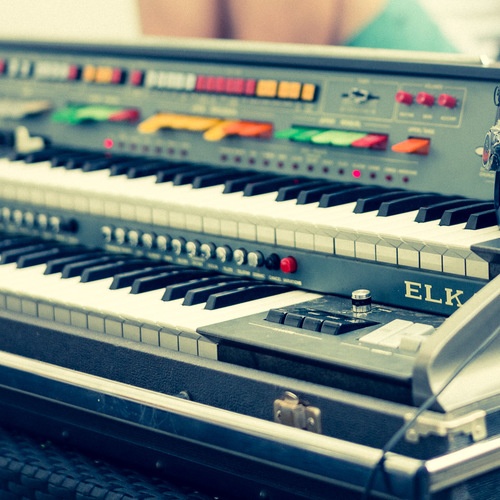
FARFISA SYNTORCHESTRA - Demo of an Italian analog string synthesizer with a mono synth section played through FX: Schulte Compact Phasing A clone/optical Krautrockphaser , analog stereo delay and digital reverb. Farfisa is well known for organs and their string machine with mono synth from the mid seventies was also used by Klaus Schulze, Manuel Göttsching / Ash Ra Tempel and Vangelis.
a quick demo of my CLAVIA NORD MODULAR RACK G1 with a few own patches at the beginning and the rest are factory presets.the beginning is with a delay and reverb, the rest without external FX.
MOOG Mother 32 Trippy Ambient Synth DEMO JAM played with keyboard & sequencer + Neunaber Wet Stereo Reverb add video of girlfriend unboxing Part 1 with keys recorded last night in my studio: MOOG Mother 32 + Neunaber Slate/Wet Stereo V2 + EHX Deluxe Memory Man TT1100 Part two with internal Sequencer was recorded at X-mas night while girlfriend was sleeping beside me: MOOG Mother 32 + Neunaber Slate/Wet Stereo Reverb V2 changed @2:25 to Echelon Tape Delay setting

Wishlist 7

Gear Photos 17

volcarock

volcarock

GearIQ 4039

volcarock

volcarock

GearIQ 4039

volcarock

volcarock

GearIQ 4039

volcarock

volcarock

GearIQ 4039

volcarock

volcarock

GearIQ 4039

volcarock

volcarock

GearIQ 4039

volcarock

volcarock

GearIQ 4039

volcarock

volcarock

GearIQ 4039

volcarock

volcarock

GearIQ 4039

volcarock

volcarock

GearIQ 4039

volcarock

volcarock

GearIQ 4039

volcarock

volcarock

GearIQ 4039

volcarock

volcarock

GearIQ 4039

volcarock

volcarock

GearIQ 4039

volcarock

volcarock

GearIQ 4039

volcarock

volcarock

GearIQ 4039

volcarock

volcarock

GearIQ 4039

Top artists 20

The artists Volcarock has added the most gear to.

Showing the top 12 of 20 artists.