


Pricing and availability
We compare 600+ stores and found this item at 10 stores. Prices updated .
Store
Reviews
Price









Average Price: $241
Budget/Beginner
$500
$1501+
Price Tier
Budget
Standard
High-end
Price History
Based on price data from 6 merchants for "Behringer Model D". Prices shown reflect NEW condition. Tracking began Apr 2, 2026.
* Product prices and availability are updated by Equipboard every 24hrs and are subject to change. Equipboard may receive compensation for purchases made at participating retailers linked on this site. This compensation does not affect what products or prices are displayed, or the order of prices listed. For more information, please refer to our affiliate disclosure.
Description
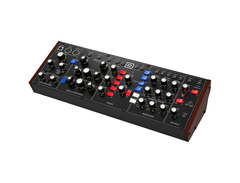
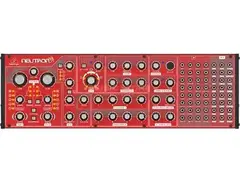
The Behringer Model D is a compact powerhouse, a reincarnation of the legendary analogue monosynth that started it all. It's packed with three punchy oscillators, a classic 24dB/octave voltage-controlled filter with resonance, envelopes, LFO, and portamento. This Eurorack-sized synth delivers fat pulsing basses, searing leads, and celestial pads, offering a world of musical expression at your fingertips.
Perhaps the standout feature of this little gem is the overdrive circuit, which adds an edgy spice to your sounds. Not only can it deliver blistering leads and belching basses, but it is also capable of eerily accurate simulations of acoustic instruments such as woodwinds, brass, and strings. With its classic VCF, this synth is the soul of subtractive synthesis, capable of deploying a universe of sonic possibilities.
The Model D is pleasing to the eye and touch as well, with old-school synth knobularity that's hard to keep your hands off. The continuous pots feel great: smooth and solid, with the perfect amount of resistance. There's also generous CV connectivity for semi-modular flexibility and interfacing with legacy gear.
Key Features:
- Three punchy-sounding voltage-controlled oscillators
- Classic 24dB voltage-controlled filter with resonance (Emphasis)
- Overdrive circuit
- Filter selectable for lowpass or highpass
- Noise generator (selectable between White and Pink Noise)
- USB-MIDI plus 5-pin DIN In and Thru
- CV connectivity
- Glide (portamento)
- External audio input
- Low-output and high-output 1/4" outs
- Behringer's 3-year warranty
Owner's manual
Behringer Model D User ManualProduct specs
| Type | Desktop Synthesizer |
| Analog/Digital | Analog |
| Polyphony | Mono |
| Oscillators | 3 x VCO |
| Waveforms | Triangle, Sawtooth, Tri-sawtooth, Square, Wide Pulse, Narrow Pulse, Reverse Sawtooth (osc 3) |
| Noise Generator | White, Pink |
| Envelope Generator | 2 x EG (attack, decay, sustain) |
| LFO | Triangle, Square wave |
| Filter | 24dB Ladder Filter, low-pass/high-pass |
| Effects Types | Overdrive circuit |
| Analog Inputs | 1 x 1/8" (external audio) |
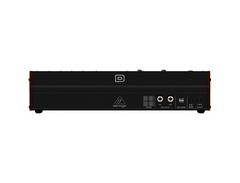
| Analog Outputs | 2 x 1/4" (main out low, high), 1 x 1/8" (main out), 1 x 1/8" (mix audio out), 1 x 1/8" (headphones) |
| MIDI I/O | In/Thru/USB |
| Other I/O | Mod Source, OSC 1V/OCT, LFO CV, LFO square, LFO sawtooth, Cut CV, FC Gate, Filter, LC Gate, Loud contour, Loud CV |
| USB | 1 x Type B |
| Power Supply | 12V DC power supply (included) |
| HP Size | 70HP |
| Height | 3.5" |
| Width | 14.7" |
| Depth | 5.4" |
FAQs
-
Is the Behringer Model D monophonic or polyphonic?
-
The Behringer Model D is a monophonic synthesizer, meaning it plays one note at a time. However, it features a 16-note Poly Chain function, allowing you to connect multiple units for up to 16-voice polyphony.
-
What kind of synthesis does the Behringer Model D use?
-
The Behringer Model D utilizes analog synthesis, inspired by the classic Moog Minimoog Model D, providing rich and warm analog tones.
-
What waveforms are available on the Behringer Model D?
-
The Behringer Model D offers a variety of waveforms, including Triangle, Sawtooth, Tri-sawtooth, Square, Wide Pulse, Narrow Pulse, and Reverse Sawtooth (oscillator 3).
-
Does the Behringer Model D have a built-in sequencer?
-
No, the Behringer Model D does not have a built-in sequencer. It focuses on delivering classic analog sounds and is often used with external sequencers or DAWs for sequencing.
-
What type of filter does the Behringer Model D use?
-
The Behringer Model D features a 24dB ladder filter, which can operate in both low-pass and high-pass modes, offering classic analog filter sounds.
-
Can the Behringer Model D be integrated with a modular synthesizer setup?
-
Yes, the Behringer Model D is Eurorack-sized and offers various CV inputs and outputs, making it suitable for integration with modular synthesizer systems.
Videos

loopop
BEHRINGER MODEL D REVIEW and 15-minute manual
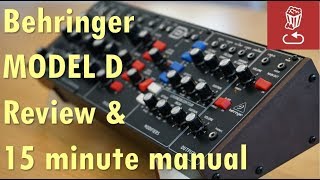
BEHRINGER MODEL D REVIEW and 15-minute manual
loopop
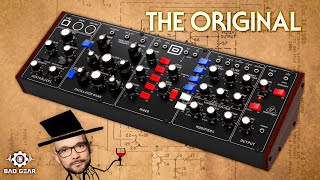
Bad Gear - Behringer Model D

AudioPilz
I reach for this analog synth bass 90% of the time

Tefty & Meems
Behringer Model D - Sound Demo 2021 (No Talking)

DYMTN
Behringer Model D - Giant Killer or Cheap Imitation?

Andertons Synths, Keys and Tech
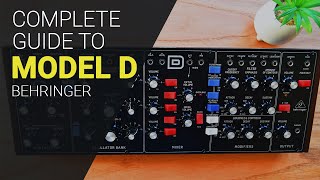
Using the Behringer Model D, complete guide tutorial.

XNB
Behringer Model D - do this first!

abominable music
100% Behringer MODEL D 70'ies Synthesizer Music 4-Track-Demo

VolcaRock
Making sounds with Behringer MODEL D for any Genre (Ambient, Techno, Synthwave, SFX)
XNB
Behringer Model D Review and Demo

Consordini
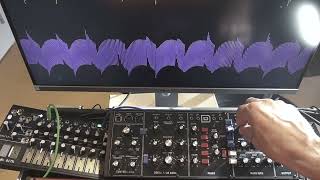
Behringer Model D : uff Deutsch (Teil 1)

Alexander Spree
Reviews
PROS
-
Faithful sound reproduction of the original Model D
-
Affordable alternative to expensive vintage synths
-
Offers aggressive and customizable sounds
-
Additional features like MIDI and extra LFO enhance versatility
-
Compact size suitable for limited spaces
-
Encourages creative patching with good results
-
Solid build quality for the price
-
Can produce both tame and aggressive tones
-
Suitable for beginners and experienced users alike
CONS
-
Knobs too close together, making adjustments tricky
-
Pitch bend range set to an octave can be impractical
-
Firmware issues affecting pitch and tuning stability
-
Some users report it goes easily out of tune
-
Limited by Eurorack module form factor for some users
-
Oscillators may become slightly out of tune over time
-
Small size may challenge users with larger hands
Owner Insights
We analyzed real musician discussions from forums and Reddit to find what players love, question, and tweak about Behringer Model D.
Comparisons
-
A recent side-by-side with a 1972 Minimoog reveals that while the Model D captures 90% of the Minimoog's sound, it lacks the depth and fullness of the vintage original.
Source -
The Model D is recognized as a simplified Minimoog clone, while the Model 15 is seen as a more versatile machine due to its extensive patch points.
Source -
The Model D is noted for its classic '70s and '80s sound, contrasting with the more vintage and refined character of the Moog Grandmother.
Source -
Owners compare the Model D to the Arturia Microfreak, noting the latter's paraphonic capability and ease of patch saving, but praising the Model D for its classic Moog sound.
Source
Use cases and applications
-
The Model D is recommended for those seeking an easy-to-use synth that sounds great in almost every setting without complex setup.
Source -
Users enjoy the Model D for its simple yet effective filter sweeps, making it a favorite for sound design experimentation.
Source -
Owners find the Model D excels as a bass or lead synth, often integrating it into most tracks for these roles.
Source
User experience
-
Some users caution against the Model D for beginners due to its ADS-style envelopes, suggesting a more intuitive ASDR envelope synth like the Behringer Pro-1.
Source -
One owner describes spending 12 continuous hours using the Model D on the first day, highlighting its engaging nature.
Source -
Some users find the lack of patch memory a hindrance for live performances, suggesting alternatives like using printed patch charts for manual recall.
Source
Features and functionality
-
The Model D is praised for its ability to quickly dial in great patches, making it ideal for beginners exploring synthesis.
Source -
The Model D includes a pre-routed output back into the filter, allowing for extra saturation by setting the Ext In Volume knob to 50% or higher.
Source -
The Model D's high-pass filter (HPF) is a valued addition, though some wish it were independently variable like on the Moog Grandmother.
Source
Software and compatibility
-
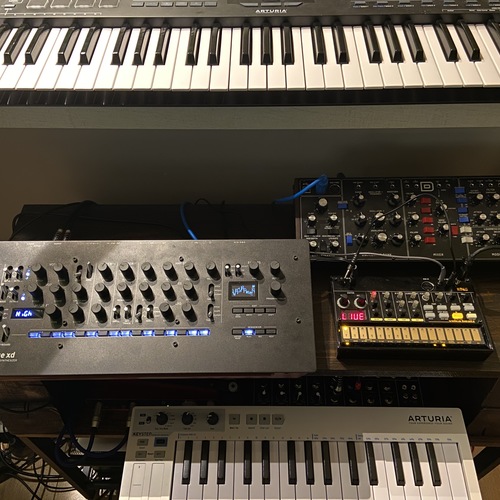
The Arturia Minilab Mk III can be effectively used as a keyboard controller for the Model D, confirming compatibility for MIDI setups.
Source
Other
-
There's an observation that the Model D oscillators at full volume can be too hot for the filter, leading to pleasant extra saturation without distortion.
Source
Build quality
-
Some users report issues with wobbly knobs, which might be due to heavy use or mishandling, as all knobs are fastened with nuts.
Source
Critic Reviews
4.5 out of 5
Based on 14 Reviews and 98 Ratings

344
A great synth to start with
This was my first ever synthesiser, starting with a good mono synth taught me alot. It sounds fantastic too, has a few modular capabilities too, so it can work with other synths too. I got mine for a great deal second hand, these are around £100 these days, which is almost too good to be true! Behringer has done there usual deal with these clones and tastefully added modern touches where necessary, bringing the classic Mini Moog into the 21st century:)
However it lacks a couple features that Behringer could implemented. PWM would have sounded amazing for an example. I can probably live without though for £100. The only problem I really have with this synth that is stopping me from buying one, is the build quality. After a couple years of light use, only been giged a couple times a year and studio usage. It developed noise issues, and the main output broke. The sad reality of these clones is that too many corners were cut in order to make them affordable. This means a 70s Mini Moog will probably last longer! I would have happily paid over twice as much for one that was more future proof.
Preferred Settings + Usage:
Tiny bit of overdrive and maybe some ADT

It's a minimoog
It's a $300 minimoog with better midi implementation, modulation options, and a smaller footprint. I don't have $5-$10k laying around for an original minimoog or even a reissue, so this is the next best thing. It's great and it's an affordable way for people like me to get that Moog sound without the price tag. I use what I can afford, no apologies.
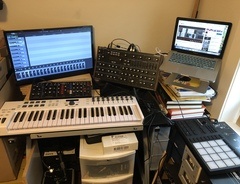
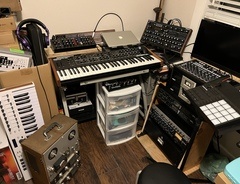

427
I'm so glad I invested in this synth!
I was skeptical of the Model D until I had a keyboard tracking session to attend at Joe Doria's home studio for an album I'm producing. Joe has lots of original classic keyboards and synths including the original Moog Minimoog Model D. When Joe showed us that the Behringer sounds just like the original I was sold on it. I've been having great fun with my Model D every day since purchasing it. The best part about it is it sounds amazing, it has a ballsy analog weight and punch to it as it should. This is the one that started my Behringer synth addiction...

4039
Analog Monster - Hardware Minimoog Sounds at Budget Price
I'm doing Berlin School and other 70's inspired synthesizer music. Unfortunately I did not have an original Minimoog from this era between my fingers. But no matter what I set for the "Berimoog" for sounds, they immediately remind me of the sound aesthetics of my dusty vinyl collection.
Everything sounds powerful, dynamic, warm and organic, lively, harmonious or even brutal. The sounds of this wonderful instrument - whether ultrafat or leisurely bass, repetitive sequences, crazy space FX sounds, lead sounds with portamento or 5th leads, or even 3 sounds (1 OSC each for fundamental / third / fifth) convince all Line. And all this already without the additional patch points to use, which offer even more modulation options.
The feel is ok, of course no comparison with real tanks from this era, but still good to use for my relatively small hands. For big hands and gross motor skills, it could be too small under certain circumstances. But in terms of price, whining at a high level.


1519
EXCELLENT CLASSIC LADDER FILTER SOUND!
This is the part for part clone of the original from Moog.
I was able to grab this for $150 from a local fellow who wound up with an entire lot of them from a collection. Mine has custom wood side panels.
I may or may not use this with clients or even on my own music but it will be a fun edition to the instruments back at my home.
There will be a photo in my gear collection.
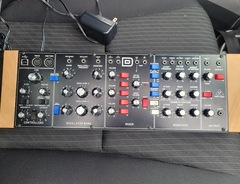
Giant sound, small package
What better sums up the review than simply saying it's a Moog in sheep's clothing? The build quality is pretty good for the price, and the layout works exactly as well as the original would. Plus the extra LFO, routing options, and pre-patched feedback are great to see. My big complaint is that it only comes as a Eurorack-based module, but there are case options on the 'net to satisfy my need.

984
solid synth, good at getting those vintage sounds, but some controls are buggy, and interface is not designed very well
as the title says, the filter acts very odd, and some of the semi modular stuff is very odd. i also wish i could set independent CV's to each osc, but it works either way. not bad, just not my go to. the tuning knob is also wayyyyy off out of the box. using a digital synth on a sine preset to tune this, i have to turn the knob almost 15* ccw to get it in tune, so it concerns me how it will age considering the tuning is only aobut -/+7 either way.
midi pass threw is very nice though, and does sound very nice once you get it going.
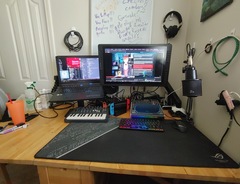
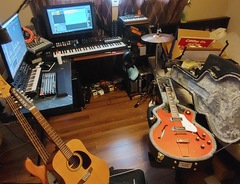

417
Minimoog Model D without the thunder
Really like the sound it has! The two drawbacks it has; 1) it goes easily out of tune, unstable oscillators. 2) The lack of power in the audio signal. Truely pales in comparison to a Moog for that. The most significant advantage of those great synths of the 70s early 80s are it's amplification / power management; ie. Sequential, Moog, Oberheim, Linn, EMU ... Otherwise the sound is pretty convincing.

1277
It's a Boog!
It sounds mostly like a Moog, but it's not a Moog. But it does good bass and stuff like a Moog. I like that it's small. It carries a big stick. It sounds just like a Moog. If it breaks I'll buy another one.

Artist usage
Add artist

At 3:06, a sideways Model D can be spotted middle left of the screen in Mac’s studio.


While this Instagram story is not public anymore, this shows Madeon using a Behringer Model D to play the bassline of his song "Imperium"
On his Goliath, there's a piece of tape with the names of his gear, and there's an input with the name "MODEL D" which combined with this clip, proves that he uses one in his studio.

.jpg)
Mike Dean recently received the complete synthesizer line-up by Behringer, also including the Model D, as shown on instagram.

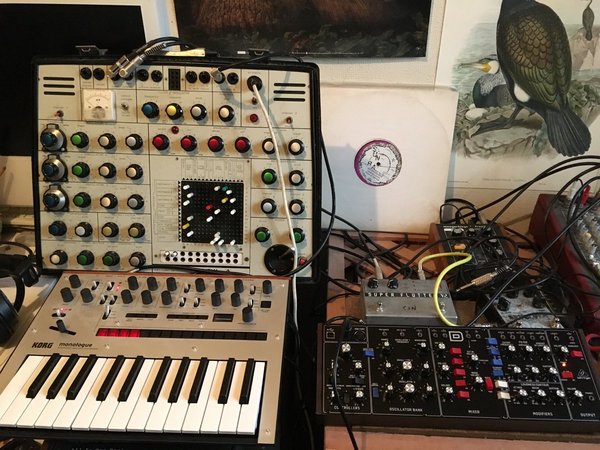
A Behringer Model D can be seen in this studio photo posted to Merzbow’s Twitter

.jpg)
In this photo on 12th Planet’s Instagram he has a Model D on top of his monitors.


Clay Parton uses the Behringer Model D synthesizer, as evidenced by a Twitter post from the account "thisisduster," where the gear is visible in the image shared.
.jpg?v=1785048584)

In his 2019 tour, he's using a Behringer Model D in his eurorack system.


At 8:42 (and various other points in the video) you can see the Behringer Model D in the bottom left corner of the screen.


In the MusicRadar article, Karl Bartos is shown using two Behringer Model D synthesizers while discussing his work with Kraftwerk and his latest album.


@2:12, compliments of this Telekom Electronic Beats video.




Shingo Nakamura utilizes the Behringer Model D synthesizer in his music creation process. This is evidenced by a tweet from Nakamura himself, where he shares, "On Saturdays and Sundays, I make music with this while drinking beer and sake," accompanied by a photograph showcasing the Behringer Model D synthesizer.
Album Usage
The Behringer Model D has been featured on the following albums:


Genre Usage
Based on how artists on Equipboard use this gear, it is most commonly found in the following genres.
Used With
Based on how musicians on Equipboard use Behringer Model D, it is most commonly used with the following gear.
-s.webp?v=1785164595)


-s.webp?v=1785164662)

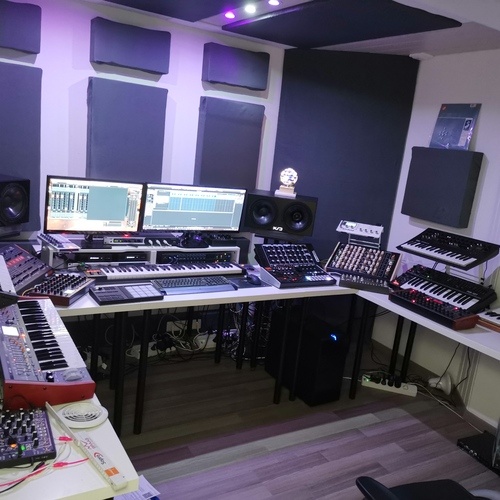
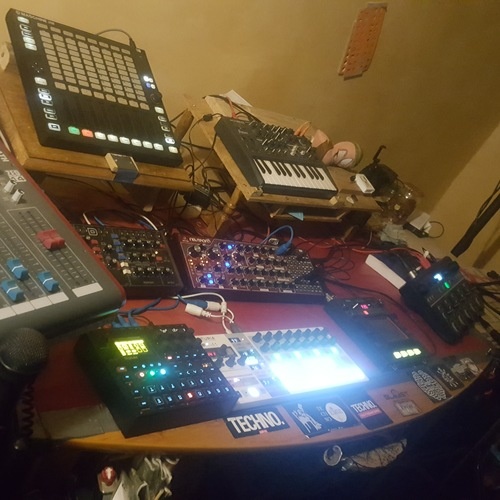
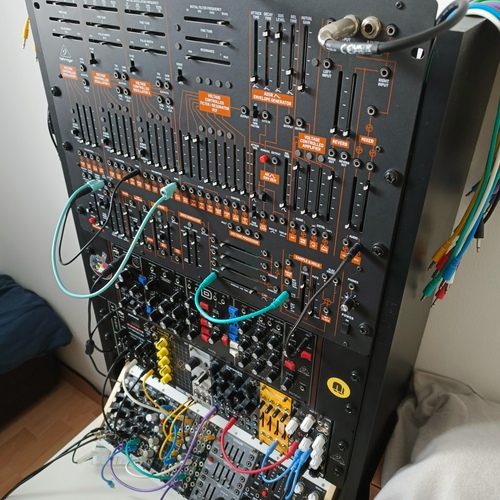
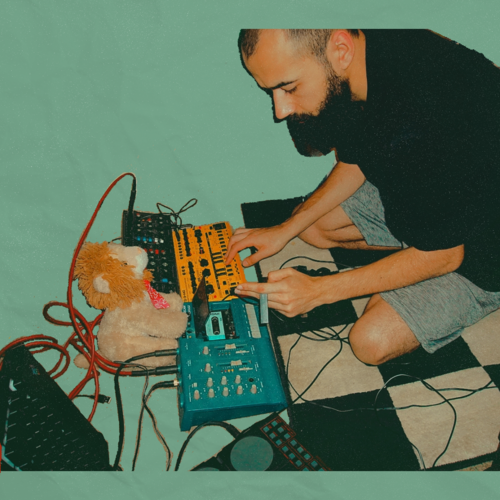
Community setups
Show yours


.jpg?v=1784584011)







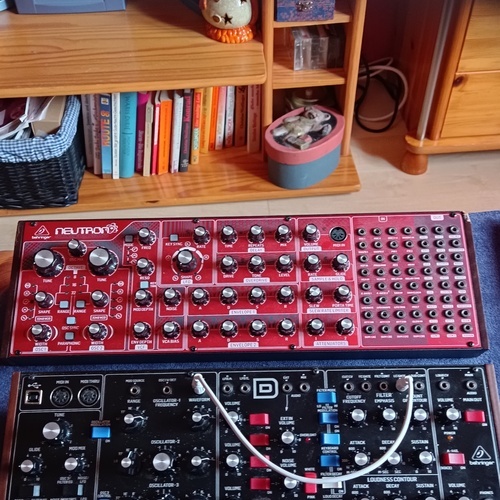


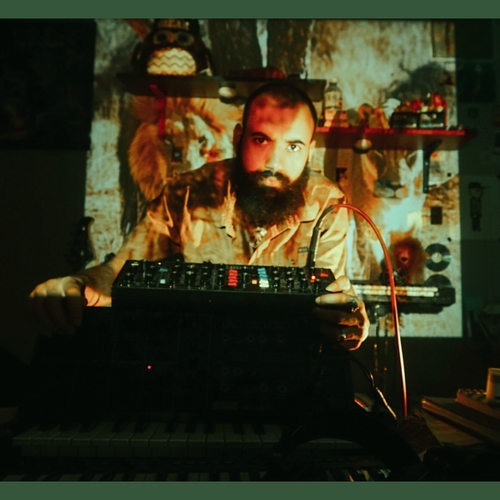
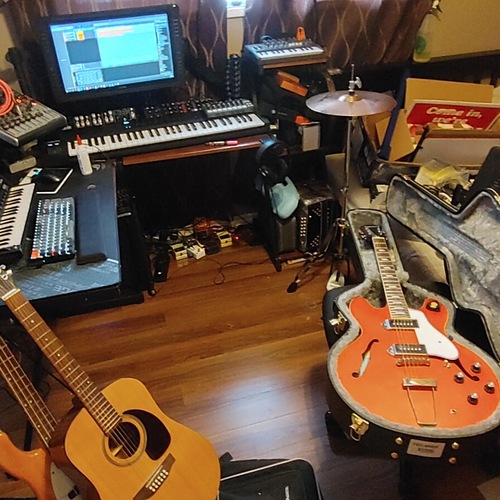
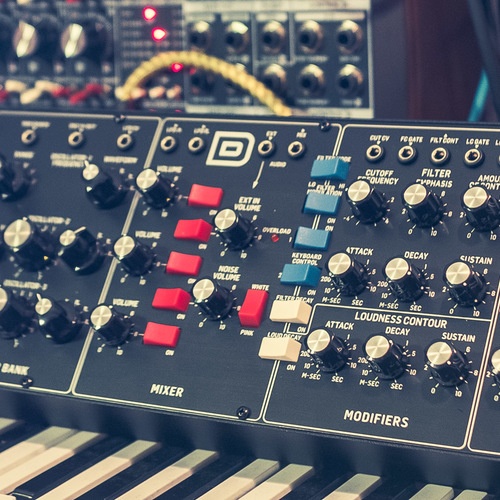

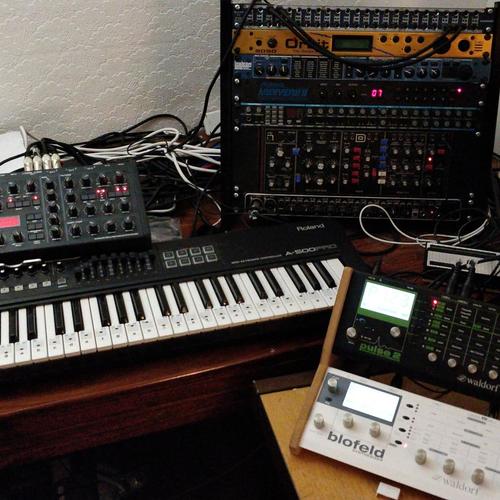

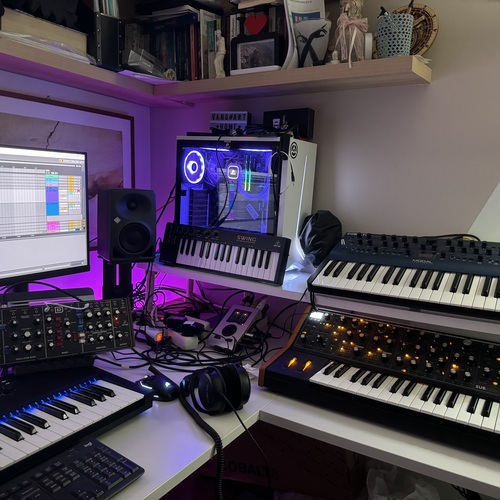

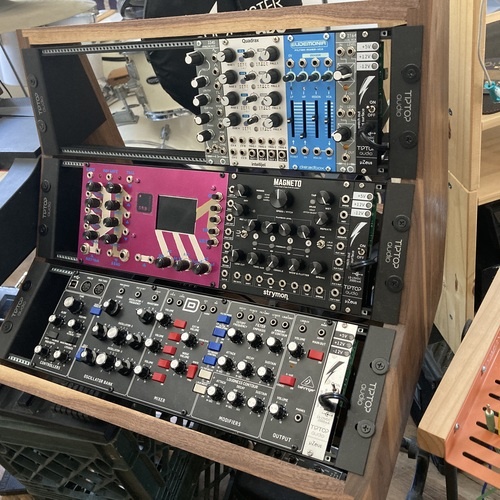

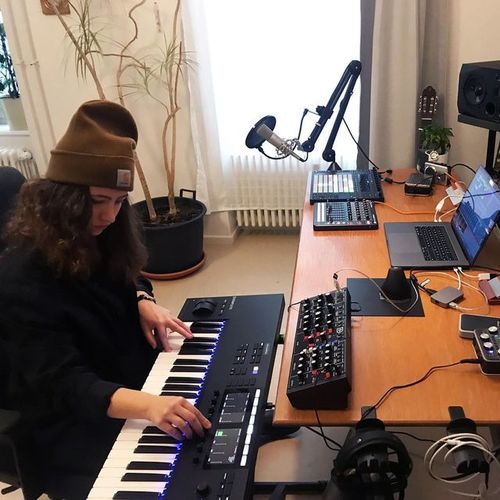
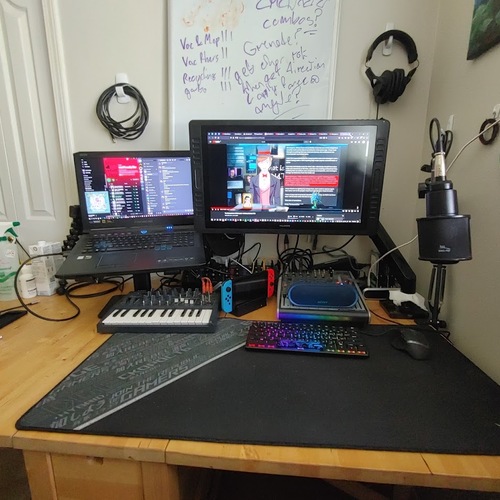


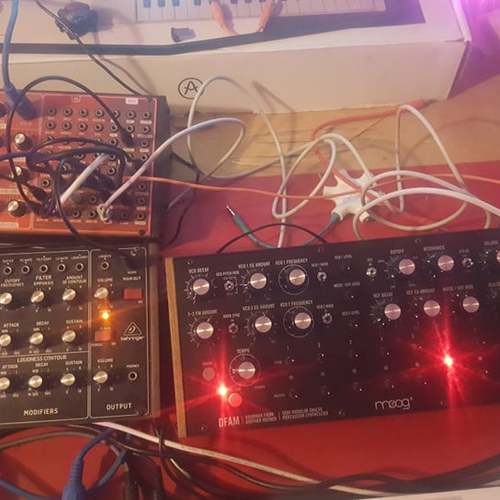


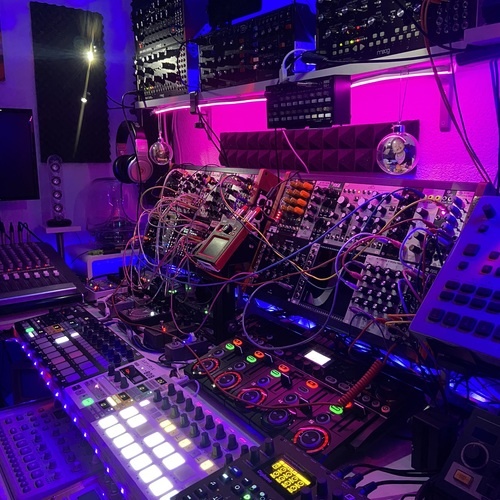

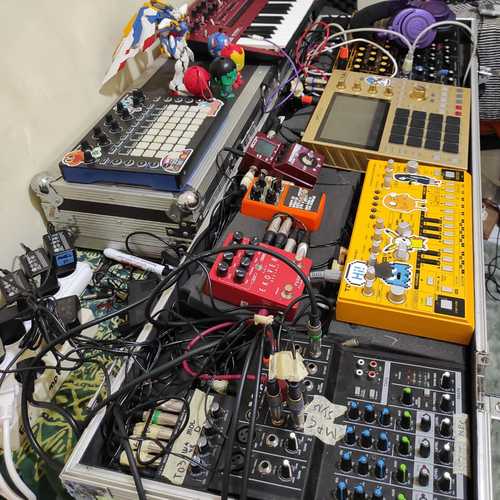


.jpeg?v=1785169415)

Similar
Add recommendation3 alternative and related items for Behringer Model D, curated by the Equipboard community.

$3,999.00 - $4,999.00

$3,999.00 - $5,932.53

$500.00
More Behringer Synthesizers


$599.00 - $899.00
in Synthesizers Rank


$269.00 - $489.00
in Synthesizers Rank


$219.00 - $395.00
in Synthesizers Rank


-m.webp?v=1785216984)
$437.00 - $1,830.00
in Synthesizers Rank


.png?v=1784984897)


-m.webp?v=1785216782)


$88.10 - $237.00


-m.webp?v=1785155696)


$155.00 - $239.00


$129.00 - $349.00
-m.webp?v=1785217604)


$859.00 - $1,299.00


-m.webp?v=1785217113)
-m.webp?v=1785216899)


$90.20 - $149.00


$82.00 - $689.00


$239.00 - $399.00


Accessories & Related Items


-s.webp?v=1785217604)




Gear Guides






.webp)

Most Popular Synthesizers
Most Popular Brands
-
Added to Equipboard on by
 mikeleebirds
GearIQ 76
-


