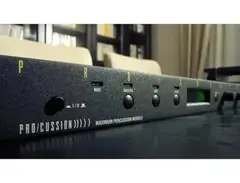


Pricing and availability
We compare 600+ stores and found this item at 1 store. Prices updated .
Store
Reviews
Price




* Product prices and availability are updated by Equipboard every 24hrs and are subject to change. Equipboard may receive compensation for purchases made at participating retailers linked on this site. This compensation does not affect what products or prices are displayed, or the order of prices listed. For more information, please refer to our affiliate disclosure.
Description
Step into the realm of dynamic electronic percussion with the E-mu Pro/Cussion, a versatile controller that brings a world of rhythmic possibilities to your fingertips. Designed for musicians who crave diversity in their sound palette, this unit is a staple for both studio sessions and live performances. The Pro/Cussion's onboard library boasts an extensive collection of high-quality samples, ensuring that you have a vast range of sounds at your disposal, from classic drum kits to exotic percussion instruments.
The intuitive interface and responsive pads make it easy to navigate through your sonic arsenal, allowing for seamless transitions between sounds and styles. With MIDI connectivity, the E-mu Pro/Cussion fits effortlessly into your existing setup, whether you're working with other electronic instruments or digital audio workstations. Its robust construction ensures durability, making it a reliable companion for the road or the home studio.
Whether you're a seasoned percussionist or an electronic music producer looking to expand your sonic horizon, the E-mu Pro/Cussion offers an ideal blend of flexibility and performance. Elevate your music with its responsive control surfaces and unleash your creativity with its extensive sound library.
Key Features:
- Extensive onboard sound library with diverse percussion samples
- Responsive pads for dynamic playability
- MIDI connectivity for seamless integration with other gear
- User-friendly interface for easy navigation and sound selection
- Durable construction suitable for both studio and live use
Product specs
| Brand | E-MU Systems |
| Model | Procussion 32-Voice Electronic Percussion Module |
| Finish | Black |
| Year | 1993 |
| Categories | Digital Synthesizers, Rackmount Synths |
| Analog / Digital | Digital |
| MIDI I/O | MIDI Input, MIDI Output, MIDI Through |
| Polyphony | 32 Voices |
FAQs
-
What type of sounds can I expect from the E-mu Pro/Cussion module?
-
The E-mu Pro/Cussion offers a wide range of electronic percussion sounds, including drum kits and percussion instruments. It's known for its high-quality digital samples and versatility in creating both traditional and experimental percussion sounds.
-
How many voices of polyphony does the E-mu Pro/Cussion support?
-
The E-mu Pro/Cussion supports 32 voices of polyphony, allowing for complex layering and sequencing of multiple percussion sounds without note dropouts.
-
Does the E-mu Pro/Cussion module integrate with MIDI setups?
-
Yes, the E-mu Pro/Cussion features MIDI Input, Output, and Through, making it easy to integrate into any MIDI setup for triggering and controlling percussion sounds.
-
Is the E-mu Pro/Cussion suitable for live performances?
-
The E-mu Pro/Cussion is well-suited for live performances due to its robust sound engine and MIDI connectivity, allowing musicians to access a wide range of sounds and control them in real-time.
-
Can the E-mu Pro/Cussion be used with modern DAWs?
-
While the E-mu Pro/Cussion is a product from 1993, its MIDI capabilities allow it to be used with modern DAWs that support MIDI, enabling integration into contemporary digital audio workflows.
Videos

VintageSynthShop
E MU PROCUSSION Demo
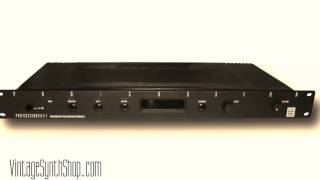
E MU PROCUSSION Demo
VintageSynthShop
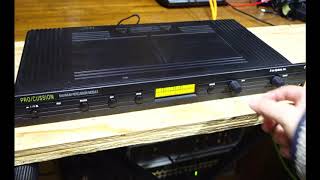
E mu PRO/CUSSION Preset Sounds

SUBTOKYOSHOP Music Gears
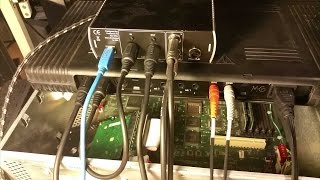
E-MU Procussion Drum Module - How to Setup Audio & MIDI in Mac OS X Logic Pro X

LogicProHacks
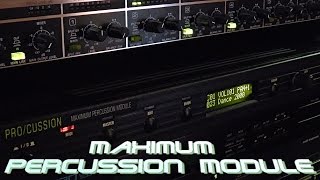
E-MU Pro/Cussion - Inside View and Sound Example

Frank Michael Lischka (soundadapter)
E-MU PROCUSSION PRESET DEMO

EMU Mania
Some 90's industrial (GoldenEye) goodness on the E-MU Pro/Cussion

Dangerous Connections
Reviews
PROS
-
Excellent sound quality with punchy kicks and snappy snares
-
Wide variety of drum and percussion sounds, including toms, bells, and gongs
-
Built-in airy reverb, no need for additional FX processing
-
Offers lo-res crunchy conversion for added texture
-
Used by iconic bands like KMFDM and FRONT 242
-
Compact rack-mounted design ideal for studio setups
-
Sounds remain fresh and relevant despite age
-
Affordable for the quality and versatility provided
-
Highly recognizable sound that stands out in tracks
CONS
Owner Insights
We analyzed real musician discussions from forums and Reddit to find what players love, question, and tweak about E-mu Pro/Cussion.
Software and compatibility
-
Direct ROM rips of the E-MU Procussion sounds are available for a 10 euro donation, offering unprocessed, unedited samples.
Source
Value and pricing
-
Potential buyers nearly purchased a $200 Procussion sound module from 1991, but found a more affordable ROM rip option instead.
Source
User experience
-
Users are advised to back up ROM rips to avoid disappointment from the provider, who emphasizes data backup in communications.
Source
Features and functionality
-
The Roland TR-8 can map directly to Pro/Cussion kits, providing a solid sequencer, scatter FX, and a sidechain processor for mix ducking on kicks.
Source
Comparisons
-
Roland TR-8 includes 808 & 909 kits, offering a notable enhancement over basic MIDI keyboard setups for controlling Pro/Cussion sounds.
Source
Critic Reviews
4.0 out of 5
Based on 1 Review and 7 Ratings

407
Party like its 1989!
What this single rack mounted percussion module may lack on the front plate, Looks are deceiving when this thing starts pounding out crushing beats straight out of the internal circuitry and that airy reverb is already applied with no internal or external FX processing at all.
Artist usage
Add artist
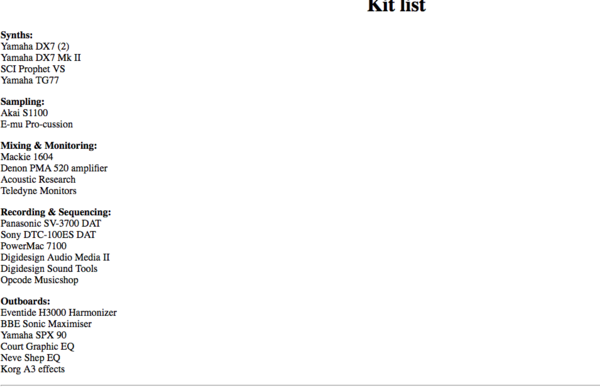


Per "Rock This Town" publication, special issue 1991:
In 1991, the setup was as follows: [Rock This Town special issue 1991]
Sound studio: Analog Synths: Roland System 100/100M/101 (+Roland Midi interface MPU-101);YAMAHA CS-40M (in the Take One video); Oberheim Matrix 1000; Digital Synths: Yamaha DX-7 (2); Ensonic VFX; Roland DDR30; Yamaha tg77; Korg Wavestation; Sequencer: Atari 1040 (Sequ. Cubase 2.0); Samplers: AkaiS9000 (2); AkaiS1000 (8Mg + Hard Drive Mfile 44); AkaiS1000PB (4Mg); Emulator II; akai 1100, e-mu Procussion, roland s-10 for live use @ the mixing desk; Effects: Lexicon 480L; Yamaha SPX90 II (2); Roland SRV-2000; Roland SDE-3000; Alesis Midiverb II; Alesis Quadraverb; ART DRX; spx 1000 (x2); Eventide h3000 se; Mixing: Table TAC Scorpion 32/16; Recorder TASCAM MS16 tracks; Recorder DAT Luxman; Speakers Yamaha NS 10M pro ATC SCM50; QUAD ampli (for NS-10M); Diverse: compressor/limiter, noise gate, parametric eq. Live: Backline: Akai S9000; Roland DDR30; Simons & Roland Pads; Emulator II; TASCAM238 8
Graphic Studio: Commodore Amiga 2500 (6Mg + Hard Drive 40Mg); Commodore Amiga 500; Digitizer SNAPSHOT; Camera Sony CCD V-200E; Laserprint NEC Silentwriter LC890; Monitor NEC Multisync 2A.


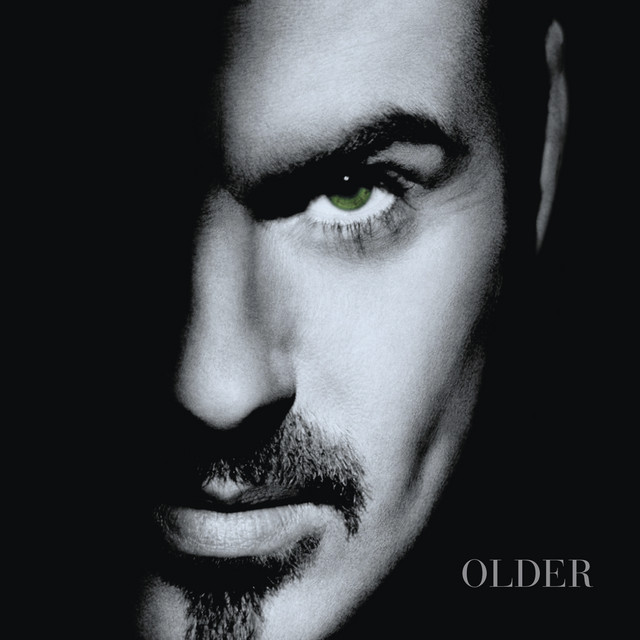
List of equipment in George Michael's studio, from the July 1996 issue of Sound on Sound:
RECORDING
AKG LSM50 cube monitors Aphex Expressor compressor Denon tape deck * Dynaudio Acoustics M1 monitors Lexicon PCM80 effects Lexicon LXP15 effects Mackie 32*8 32:8:2 8‑buss console Otari RADAR 24‑track hard disk recorders (x2) Tascam DA20 DAT * Yamaha NS10 monitors
SOUNDS
Akai S3000i samplers (x2) Akai S3200 sampler * Emu Procussion percussion module Emu Vintage Keys Plus module Emu Ultra Proteus synth module Korg Prophecy keyboard synth Korg Trinity Plus keyboard synth Kurzweil K2000 sampler/synth Roland JV1080 synth module Roland Juno 106 analogue keyboard synth Roland Vintage Synth MVS1 sound module Studio Electronics SE1 synth module * Yamaha SY77 keyboard synth Yamaha TG500 synth module
MISCELLANEOUS
DAC hard drive * Opcode Studio 4 MIDI interface (x2) Powermaster drive *


As cited in the gear list of this May '92 feature in Music Tech magazine


"This is a percussion sound module, but I use it mainly to get the click (metronome). There are alot of nice industrial-type sounds in here, but I've pretty much used it all up."


Moving on, a rack of modules provides a fair range of sounds to back up the Synclavier. One of the newest additions is an Emu Procussion, below which are a Roland MKS70, MIDIMoog ("it still goes out of tune; I was told it wouldn't"), Oberheim Matrix 6R, Korg DVP1, a slot for a Yamaha G10 guitar controller unit ("great with the TX802"), Roland D110, Roland P330, Yamaha TX81Z ("great for little clavs and so on"), and a Roland Planet P ("actually, I don't think I even turn that on any more").


"I think you got just about all of them. We also had the Procussion, and a Yamaha Digital Grand (which was under the VL1)"

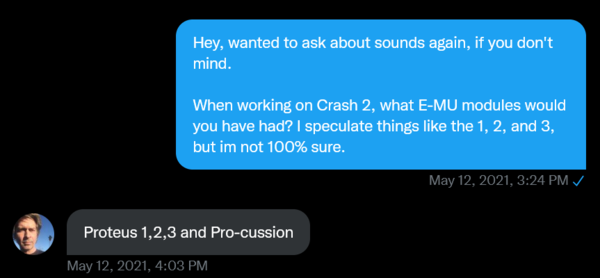
When asked in regards to the modules Josh used on Crash Bandicoot, he said he used a Proteus/1, 2, and 3, Pro-cussion, Vintage Keys, Morpheus, and the Carnaval. Recalls all of them being the standard version. Later replaced either a Proteus/1 or 2 with a Proteus 2000.


A UNIQUE OPPORTUNITY!
"Ex-BBC Radiophonic Workshop (Blake’s Seven, The Living Planet) and current film and TV composer Elizabeth Parker is selling the famous circular studio she took with her from the BBC when the RW was disbanded.
The studio is virtually complete, including nearly all the equipment she has been using on a regular basis in her profession - up to and including a film project she is finishing in the first half of November before the studio is dismantled. Just add a mother keyboard, mastering, monitoring, and video, and you have virtually the complete set- up used for prestigious projects like the BBC’s World Cup coverage, The Human Body, Weird Nature, Animal Olympics, the Monty Python Holy Grail DVD, Michael Palin TV series, etc.
The custom woodwork and cabling alone is believed to have cost £4500 in the late 1980s, and is probably one of the most famous studio designs in the world. When it was removed from the BBC, the installation and re-design at Liz's private studio was masterminded by Rupert Brun, one of the BBC's most highly respected engineers.
Full documentation is included in the sale. Removal and/or packing and shipping is a serious task, so please bear that in mind before bidding. VEMIA will assist at cost if you need."
The studio consists of:
The studio desk, custom made for the Radiophonic Workshop, out of limed Ash. (Buyer dismantles and collects). Complete with a vast quantity of high-quality cabling, with every cable, jack, phono and XLR numbered and labelled by Rupert Brun, with full diagrams, spreadsheets, etc. Roland XV 5080 with 8-voice expansion unit for sample playback Emu Proteus 2000 (with Proteus 1, 2, and 3 (World) Expansion Cards) Proteus 2 and Proteus 3 World Modules. Emu 4XT Ultra with maximum memory. Roland 760 Samplers (x3) with maximum sample and playback memory + mouse unit for 2 of them Emu Xtreme Lead 1 with MoPhat Card. Yamaha 01 Digital Mixer. Yamaha 01V Digital Mixer. Yamaha KM802 Mixer. Spirit Folio F1 100mm Fader Mixer. Peavey PC 1600X Midi Command Stations (x3) Alesis ADAT XT 8 track digital recorder + remote control. Denon DRM-550 Cassette Deck. Akai Professional rackmount DP3200 Routers (x3) 48-Way Patch Bays (x3) Iomega 250 Zip Drives (x2 - one still in box) CD Rom Players (x3) - one still in box. Emu Proformance Piano Module. Emu Procussion Module. Opcode Studio 4 Midi Interfaces (x2) [Opcode] Studio 5 Midi Interface. Apple 7600 computer with unused new RAM + 21 monitor Apple 8600 computer + monitor. PPM Meter - West German, made by RTW, Köln, and bought from the BBC. Magneto Optical 230 drive. Apple Mac G4, Dual Processor with 512MB RAM, 40GB hard drive in four partitions, extra internal 230GB hard drive."


Source: Interview with Michael Münzing and Luca Anzilotti about SNAP! mu:zines.co.uk - 1994: https://www.muzines.co.uk/articles/snap-to-tomorrow/8245

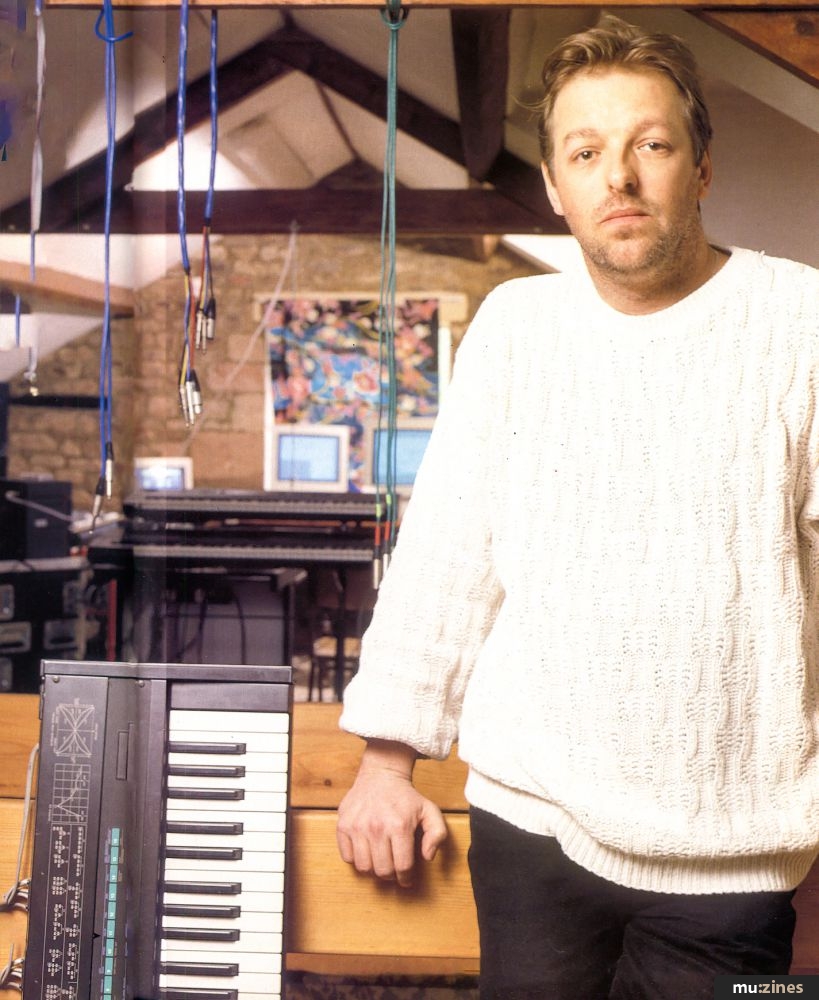
List of equipment at Chris Hughes' studio:
Desktop Apple Mac Quadra x 2 Digidesign SampleCell x 2 Digidesign ProTools Opcode Studio 3 Mac-MIDI interface
Tracking & mixing: Alesis ADAT digital multitrack recorder x 3 Alesis BRC remote controller Mackie 8-buss mixing desk
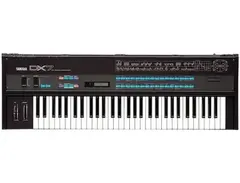
Sound sources: Roland S770 sampler Roland MKS20 piano module E-mu Procussion Casio CZ101 synth Fairlight CMI series II Korg M1 workstation Korg SG1D piano Korg Wavestation module NED Synclavier Sequential Prophet 5 synth Yamaha DX7 synth Roland CR78 beat box
Signal processing: Alesis Quadraverb Yamaha REV7 reverb


Included in his studio are synthesizers such as the Roland MKS-70, two MKS-50s, a MKS-80 and D-50; Yamaha TX-81Z; four Oberheim Matrix 1000s, E-mu Orbit and Morpheus, and a Casio VZ-10M. Sample players include Kurzweil 1000AX+, Roland U-110, Oberheim DPX-1, E-mu Proformance Piano and Proteus (as well as the Proteus 2 and 3), Alesis NanoBass and samplers, including a Casio FZ-10M, two Akai S-1000s and three Akai CD-3000s. He also turns to E-mu Procussion, Roland R-8M, Alesis DM-5, Roland BD-1 and a Roland SPD-11 for drum sounds.
Album Usage
The E-mu Pro/Cussion has been featured on the following albums:
Genre Usage
Based on how artists on Equipboard use this gear, it is most commonly found in the following genres.
Used With
Based on how musicians on Equipboard use E-mu Pro/Cussion, it is most commonly used with the following gear.




Community setups
Show yours.jpeg?v=1725818427)



More E-Mu Controllers

$533.67
in Controllers Rank


$958.49 - $1,478.00
in Controllers Rank


$1,649.99 - $1,948.00
in Controllers Rank


$94.23 - $345.95
in Controllers Rank


$549.00 - $599.00
in Controllers Rank


$108.75 - $197.99
in Controllers Rank

$587.00 - $1,030.54
in Controllers Rank


$869.00 - $899.99
in Controllers Rank


$369.00
in Controllers Rank


$819.99 - $1,649.99
in Controllers Rank

$495.00 - $1,937.49
in Controllers Rank


$2,248.00 - $2,899.99
in Controllers Rank

$100.00
in Controllers Rank


$1,539.99
in Controllers Rank
.jpg?v=1783396412)


$129.99 - $430.00
in Controllers Rank


$49.00 - $59.00
in Controllers Rank


-m.webp?v=1768421696)


Accessories & Related Items


Similar


Most Popular Controllers
Most Popular Brands
-
Added to Equipboard on by
 anthonydevito1
GearIQ 127
-


