This page about Hohner Clavinet I is a stub. You can help improve it:
-s.webp?v=1763019148)
-xl.webp?v=1763019148)
Pricing and availability




* Product prices and availability are updated by Equipboard every 24hrs and are subject to change. Equipboard may receive compensation for purchases made at participating retailers linked on this site. This compensation does not affect what products or prices are displayed, or the order of prices listed. For more information, please refer to our affiliate disclosure.
Description
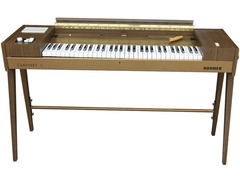
The Hohner Clavinet I is a distinctive electric piano renowned for its iconic sound that defined a generation of funk and rock music. Originally introduced in the 1960s, this keyboard is famous for its bright, percussive tone, making it a staple for musicians seeking that classic vintage vibe. The Clavinet I features a string-based sound mechanism that closely mimics the action of an acoustic piano, providing a tactile and responsive playing experience. Its unique design and sound have made it a favorite among legendary artists and modern musicians alike.
With its 60-key layout, the Clavinet I offers a wide range of expressiveness while maintaining the compact nature that made it so popular in live performances. The keyboard is equipped with multiple pickup settings, allowing players to tailor their sound to fit various musical styles. Additionally, the Clavinet I's rugged build ensures durability, making it a reliable companion for both studio sessions and on-the-road gigs. Whether you're looking to recreate classic hits or forge new musical paths, the Hohner Clavinet I remains an essential tool for capturing that authentic, vintage sound.
Key Features:
- Classic string-based sound mechanism for authentic tones
- 60-key layout for expanded musical range
- Multiple pickup settings for versatile sound customization
- Durable construction ideal for both studio and live performances
- Iconic bright and percussive tone perfect for funk and rock genres
Videos

Tastronauten
Sounddemo Hohner Clavinet I - Clavinet 1
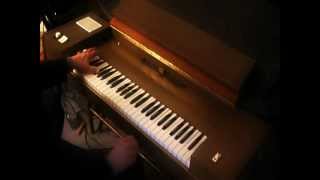
Sounddemo Hohner Clavinet I - Clavinet 1
Tastronauten

1960s Hohner Clavinet Demo Record Side 1 of 2

Andralyn de Bagschaghe
Reviews
Owner Insights
We analyzed real musician discussions from forums and Reddit to find what players love, question, and tweak about Hohner Clavinet I.
User experience
-
Users report that studio monitors like Yamaha HS8 may require an optimal listening space to avoid sounding "tinny" and "hollow."
Source -
Owners note that the Crumar Mojo 61 has a keybed that feels like a real instrument, with an ultra-light touch suitable for organ but requiring adjustment for Clavinet playing.
Source
Use cases and applications
-
The pitch bend feature on the Crumar Mojo 61 adds a novel element to Clavinet-style playing, offering a unique sonic twist.
Source -
It's noted that the Moog Sub 25 excels at producing funky bass sounds but falls short for authentic Clavinet emulation.
Source -
Combining a Clavinet D6 with a wah-wah pedal and phase shifter is popular for achieving classic funk sounds.
Source
Comparisons
-
Hammond SK1 is reportedly more responsive than the Nord Electro, though actual performance may vary based on the condition of used units.
Source -
The Crumar Mojo 61, based on the VB3 software engine, offers punchier and more satisfying play for Clavinet sounds compared to the Nord Electro, despite lacking synth capabilities.
Source -
A Yamaha Reface CP is recommended as a more suitable alternative for achieving Clavinet-like sounds compared to the Moog Sub 25.
Source -
Modern synths often have longer key throws than the Clavinet D6, requiring more nuanced playing.
Source -
The Nord Electro 3 offers a similar action feel to the Clavinet T, designed to emulate electro-mechanical keyboards.
Source
Features and functionality
-
The Nord Electro 4 introduced physical drawbars and additional storage, enhancing functionality over earlier models, while the Electro 5 allows for sound splitting and secondary MIDI keyboard setups.
Source -
The Crumar Mojo 61 features physical modeling rather than sampled sounds, distinguishing it significantly from other keyboards in its category.
Source -
The Clavinet D6 has a super light action with a very short throw, making it ideal for funk playing.
Source -
The Moog Sub 25 is monophonic, unlike the polyphonic Hohner Clavinet, affecting the ability to replicate the Clavinet's sound.
Source -
The D6 includes a mechanical slider for damping/muting strings, allowing for unique sound manipulation similar to a monophonic synth with short attack.
Source
Software and compatibility
-
Logic Pro offers a physical modeling plugin for Clavinet sounds, providing a more realistic alternative to sample-based options.
Source
Critic Reviews
Based on 0 Reviews and 0 Ratings
Artist usage
Add artist
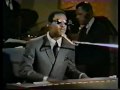
In a 1968 performance, Stevie Wonder can be seen using the Hohner Clavinet I on the song "Shoo-Be-Doo-Be-Doo-Da-Day." Stevie acquired the Clavinet I for his tenth studio album For Once in My Life, starting in 1968, as he was seeking a keyboard instrument with a guitar-like sound. According to Jim Allen on Reverb, "The jazz, funk and disco pedigree of the Clavinet is very well documented elsewhere; the earliest Stevie Wonder recordings are from 1968, notably ‘Shoo-Be-Doo-Be-Doo-Da-Day’, preceding the classic multitracked Clavinet milestone ‘Superstition’ by four years."

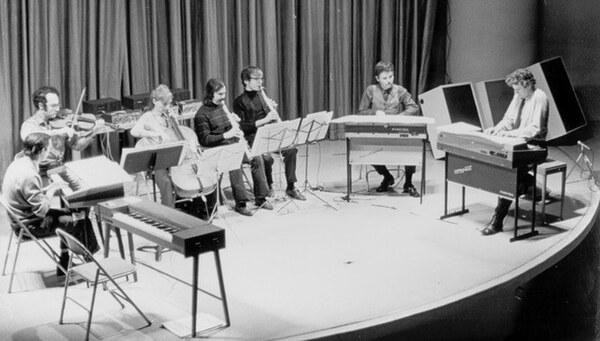
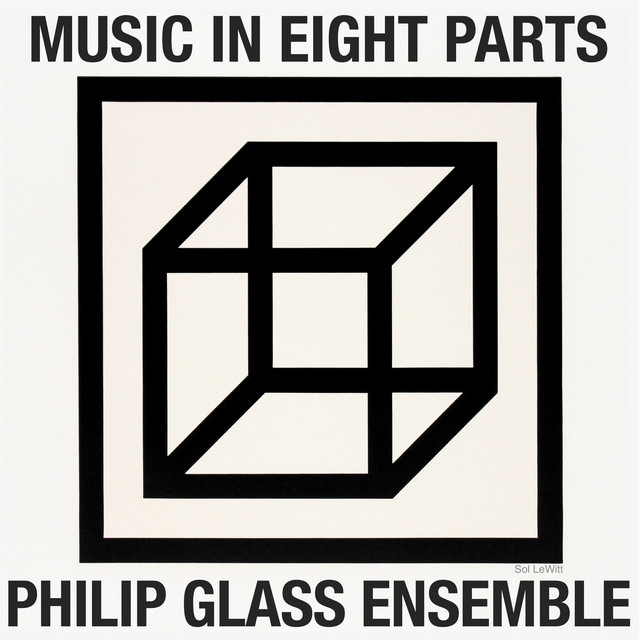
In this photo, a Hohner Clavinet I can be seen to the bottom left (empty chair) during the premiere of Philip Glass’s "Music in Eight Parts" in 1970.

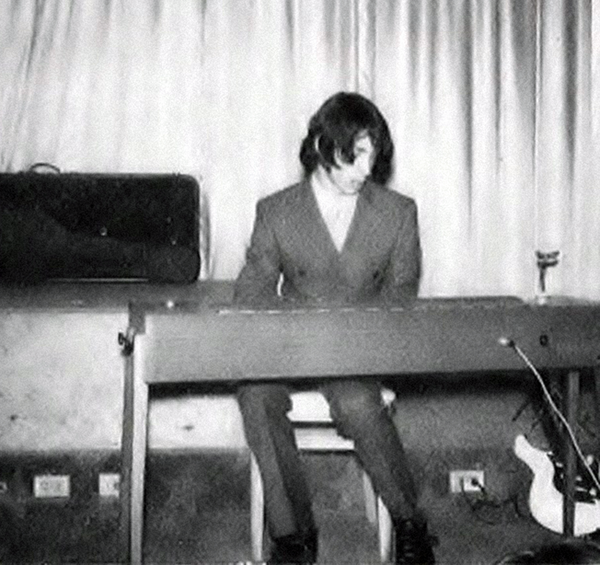
Michael Brown played one of the first prototypes of the Hohner Clavinet with the Left Banke. In this photo, he can be seen playing it at a gig in New England. Brown played a traditional acoustic harpsichord on most of the band's recordings, but the Hohner Clavinet was featured on "Evening Gown."

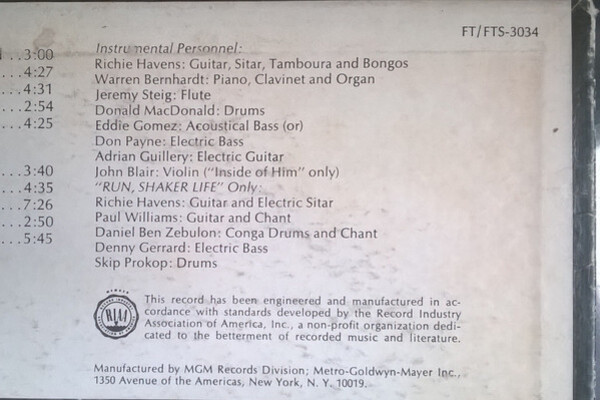
Album Usage
The Hohner Clavinet I has been featured on the following albums:



Genre Usage
Based on how artists on Equipboard use this gear, it is most commonly found in the following genres.
More Hohner Vintage & Electric Pianos

$3,457.92
in Vintage & Electric Pianos Rank


$61.85 - $912.90
in Vintage & Electric Pianos Rank


$4,100.00
in Vintage & Electric Pianos Rank


$912.90
in Vintage & Electric Pianos Rank
.jpg?v=1784510867)


$11,050.00
in Vintage & Electric Pianos Rank


-m.webp?v=1784333800)
$3,625.00
in Vintage & Electric Pianos Rank


$1,610.28
in Vintage & Electric Pianos Rank


$2,343.57
in Vintage & Electric Pianos Rank


$2,827.16
in Vintage & Electric Pianos Rank


$1,699.99
in Vintage & Electric Pianos Rank


$3,280.00
in Vintage & Electric Pianos Rank


$3,280.00
in Vintage & Electric Pianos Rank


$4,200.00
in Vintage & Electric Pianos Rank

.jpeg?v=1784571386)

$3,260.00
in Vintage & Electric Pianos Rank


$7,753.19
in Vintage & Electric Pianos Rank


$2,900.00
in Vintage & Electric Pianos Rank


$2,950.00
in Vintage & Electric Pianos Rank


$6,000.00
in Vintage & Electric Pianos Rank


$1,800.00
in Vintage & Electric Pianos Rank

.jpg?v=1782146465)


$5,000.00
in Vintage & Electric Pianos Rank


$3,000.00
in Vintage & Electric Pianos Rank


$2,988.88
in Vintage & Electric Pianos Rank


in Vintage & Electric Pianos Rank
.jpg?v=1784600210)


$29.99 - $1,850.00
in Vintage & Electric Pianos Rank


in Vintage & Electric Pianos Rank


Community setups


Similar


Most Popular Vintage & Electric Pianos
Most Popular Brands
-
Added to Equipboard on by
 bmw100997
GearIQ 3296
-


