Table of Contents

Equipboard
Equipboard is the world's largest community of artists and their gear. Read our review process.
We are reader-supported. When you buy through links on our site, we may earn an affiliate commission. Learn more.
Picture spending hours recording your podcast, only to discover your audio is riddled with keyboard clicks and room noise. Or imagine performing live, but your microphone keeps feeding back, disrupting your entire show. These scenarios stem from a single crucial decision: choosing the wrong microphone for your needs.
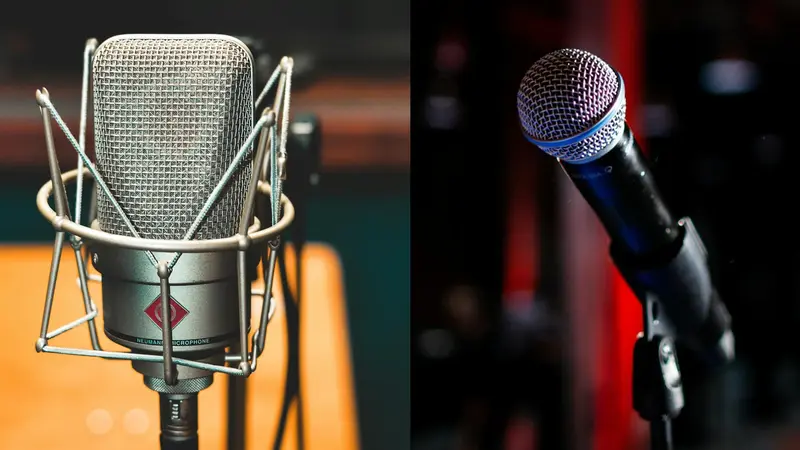
Microphones come in several types, but the two most common categories are dynamic and condenser microphones. They serve distinctly different purposes, and understanding these differences can transform your audio quality. While both types excel in their respective domains, using the right tool for the job can mean the difference between professional-grade audio and constant frustration.
The choice between dynamic and condenser microphones isn't about which is inherently better - it's about which one better serves your specific needs. Whether you're a musician preparing for live performances, a podcaster setting up your home studio, or a content creator looking to upgrade your setup, this guide will help you make an informed decision that aligns with your unique requirements.
The Fundamental Differences Between Dynamic and Condenser Mics
While both types convert sound into electrical signals, their internal mechanisms create distinct characteristics that make them suitable for specific uses.
Dynamic microphones operate like tiny generators, using a simple yet robust design. Sound waves move a diaphragm attached to a coil of wire suspended in a magnetic field. This movement creates the electrical signal, making them inherently durable and resistant to damage. Their design requires no external power, making them remarkably reliable in various conditions.
Condenser microphones, however, work on an entirely different principle. They use a lightweight, electrically-charged metal plate that moves when hit by sound waves, creating variations in capacitance to generate the audio signal. This design requires phantom power from an audio interface or mixer but allows for incredible sensitivity and detail in sound capture. The precise mechanism enables them to pick up subtle nuances that dynamic microphones might miss.
When a Dynamic Microphone Is the Right Choice
Dynamic microphones offer the perfect blend of durability and reliable performance in challenging audio environments. While often considered simpler than condensers, their robust design and specialized characteristics make them indispensable in situations where sound quality must meet practical usability.
For Live Performances & Stage Use
Ever had that heart-stopping moment when feedback tears through the PA system, or watched your voice disappear into a mix of guitars and drums? These are the real-world challenges that define live performance, where there's no room for second takes or post-production fixes. In the unpredictable world of live sound, your microphone needs to be more than just a piece of equipment - it needs to be your reliable partner through loud monitors, busy stages, and intense performances. This is where dynamic microphones truly shine, cutting through the mix while fighting off the feedback demons that haunt every live performance.
The Industry Standard Stage Mic: Shure SM58
.webp)
The SM58's reign as the definitive live performance microphone stems from its ability to handle the unique challenges of stage use. Its cardioid pattern provides exceptional feedback rejection precisely where it matters most - at monitor positions and common PA speaker angles. This characteristic allows performers to achieve higher volume levels before feedback, crucial for energetic live performances.
Stage reliability defines every aspect of the SM58's design. The frequency response specifically enhances live vocal clarity, with a carefully engineered presence boost that helps voices cut through full bands and loud stage volumes without requiring excessive EQ. The natural handling noise suppression proves invaluable during dynamic performances, allowing performers to move freely without introducing unwanted noise.
The microphone's legendary durability isn't just about surviving drops. Its internal shock mounting system maintains consistent sound quality even when grabbed, swung, or handled roughly during energetic performances. The multi-stage pop filter system handles everything from quiet verses to aggressive vocals without plosives or wind noise, while being robust enough to withstand years of intensive touring use.
Sound engineers particularly value the SM58's predictable performance under challenging live conditions. Whether dealing with humid outdoor festivals, cold outdoor stages, or hot spotlights, the microphone maintains more or less consistent frequency response and feedback rejection characteristics. This reliability extends to its polar pattern, which maintains integrity even when singers cup the microphone or use other technically challenging techniques common in live performance.
For Loud Sound Sources (Drums, Guitar Amps, Brass)
Standing in front of a cranked guitar amp or trying to capture the pure energy of a drum kit can push any microphone to its limits. When you're dealing with sound levels that you can feel in your chest, you need a microphone that can take the heat without flinching. It's not just about surviving the volume - it's about capturing that raw energy, the harmonics of a perfectly driven tube amp, the crack of a snare drum that cuts through any mix, or the brightness of brass instruments at full blast. These challenging sound sources demand a microphone that can handle extreme SPLs while maintaining clarity and character. In these high-volume scenarios, your choice of microphone can mean the difference between capturing power and presence or ending up with distorted, unusable recordings.
The Close-Miking Champion: Shure SM57

The SM57 has earned its reputation as the ultimate close-miking microphone by excelling at capturing high-volume instruments with exceptional clarity. This microphone excels at capturing high-SPL sources like guitar cabinets, snare drums, and brass instruments, maintaining clarity where other microphones would distort.
The carefully engineered presence boost adds definition to guitar amplifiers without creating harsh harmonics, while the controlled low-end prevents proximity effect buildup even when placed directly against speaker grilles. This makes it particularly valuable for capturing the full character of overdriven guitar tones or the crack of a well-tuned snare.
Close-miking expertise is evident in every aspect of the design. The uniform cardioid pattern maintains exceptional rejection of bleed from nearby instruments, crucial when recording drum kits or multiple guitar cabinets. The robust capsule design allows positioning mere inches from loud sources while capturing the power and immediacy that close-miking demands. The internal shock mounting system prevents mechanical vibration from transferring through stands or clip mounts, particularly important when attached directly to drum rims or amplifier grilles.
Sound engineers value the SM57's consistent performance in challenging recording scenarios. Whether pressed against a screaming guitar cabinet or positioned an inch from a snare drum, it maintains clear, detailed capture without distortion. This reliability extends to long recording sessions, where its durable construction stands up to repeated repositioning and the physical stress of close-miking applications.
For Podcasting & Broadcasting in Noisy Environments
Imagine you're recording the perfect take for your podcast when suddenly, a car honks outside, your AC kicks in, or your computer fan decides to spin up. These real-world interruptions can ruin a recording, unless you've got the right tool for the job. Professional broadcasting comes with its own set of challenges that most people never consider – the hum of equipment, the reflections in untreated rooms, and those countless little noises that seem to appear only when you hit record. Whether you're running a professional radio show, hosting a podcast, or conducting remote interviews, you need a microphone that can focus on your voice while keeping the world's unwanted soundtrack at bay. In these less-than-perfect acoustic environments, the right microphone becomes your first line of defense against the chaos of real-world broadcasting.
The Broadcaster's Choice: Shure SM7B

The SM7B has revolutionized broadcast recording by specifically addressing the unique challenges of professional podcasting and radio environments. Its sophisticated internal shielding makes it uniquely resistant to the electromagnetic interference that plagues most studios, eliminating noise from computer monitors, phones, and other electronic equipment that typically disrupt broadcast recording.
For long-form broadcasting, the microphone's frequency response proves invaluable. The smooth, natural presence rise enhances voice intelligibility without causing listener fatigue over extended periods. Its wide-range capsule captures the full character of different voice types while maintaining consistent clarity, particularly important for professional broadcasters who may host multiple guests with varying vocal characteristics.
Broadcast-specific features set the SM7B apart from standard studio microphones. The bass roll-off and presence boost switches provide precise control over voice reproduction without requiring external processing. The integrated pop shield eliminates the need for external pop filters that might compromise the natural sound quality, while effectively managing plosives and breath noise common in dynamic broadcast scenarios. This comprehensive internal acoustic treatment maintains professional sound quality even during animated discussions or varying microphone distances.
Professional broadcasters particularly value the SM7B's consistent performance during long sessions. Its excellent off-axis rejection maintains clean audio even with natural head movement or when guests shift position. The sophisticated internal shock mounting eliminates mechanical noise from desk bumps or adjustments, while the uniform cardioid pattern provides exceptional room noise rejection without requiring an acoustically perfect space. These characteristics have made it the go-to choice for professional broadcasters like Joe Rogan, who need reliable, professional-quality audio in real-world recording environments.
For Streaming & Gaming
The modern streaming setup is a battlefield of competing sounds: the click of mouse buttons, the whirr of computer fans, the sound of energy drinks being cracked open, and maybe even teammates chatting in the background. You need a microphone that can cut through all of this while maintaining broadcast-quality voice reproduction. Whether you're celebrating a victory or strategizing with your team, your audience shouldn't have to struggle to hear you over the chaos of your gaming setup. The right microphone in these situations isn't just about quality – it's about maintaining that crucial connection with your viewers without compromising your gaming setup or performance.
The Content Creator's Essential: Rode PodMic

The PodMic excels in modern streaming and gaming environments by specifically addressing the unique audio challenges content creators face. Its compact design delivers professional-grade streaming audio while naturally rejecting the multitude of background noises typical in gaming setups - from mechanical keyboards and mouse clicks to computer fans and ambient room noise.
For content creators, the microphone's frequency response is precisely tailored for gaming and streaming commentary. The carefully engineered presence boost enhances voice clarity without emphasizing harsh consonants or creating fatigue during long streaming sessions. Its controlled proximity effect maintains consistent tone even when creators move during intense gaming moments, ensuring viewers never miss crucial commentary.
Streaming-specific features demonstrate Rode's understanding of content creator needs. The internal shock mounting system eliminates vibrations from desk-mounted boom arms or sudden movements during gameplay. The integrated pop filter system effectively manages plosives and excitement during intense gaming moments without requiring external accessories that might block viewer sight lines. The small form factor keeps the microphone visible but unobtrusive in camera frames, perfect for maintaining professional stream aesthetics.
Professional streamers particularly value the PodMic's performance during extended sessions. Its exceptional rejection of side-address sound keeps keyboard and mouse clicks from overwhelming commentary, while the robust cardioid pattern maintains clean audio even with dual-monitor setups and multiple electronic devices. The durable all-metal construction ensures reliability during animated gaming moments, while requiring minimal adjustment once properly positioned. These characteristics have made it a favorite among content creators who need consistent, professional audio quality without constant technical adjustments during streams.
For Durability & Portability
The demands of field recording and mobile production require microphones that combine professional performance with exceptional reliability. Dynamic microphones excel in these applications through their inherent durability and resistance to environmental challenges. Their passive design eliminates the need for external power, while their robust construction ensures consistent performance in situations where careful handling isn't always possible. Built with no fragile internal components, they're specifically designed for on-the-go recording and field work, making them the perfect choice for situations where equipment reliability is as crucial as sonic performance.
When a Condenser Microphone Is the Right Choice
The precision and sensitivity of condenser microphones make them invaluable tools in controlled recording environments. While their sophisticated design requires more careful handling and setup than dynamic microphones, they reward users with exceptional detail and natural sound reproduction that captures the full character of the source. Their ability to capture subtle nuances and quick transients makes them essential in situations where sonic accuracy is paramount.
For Studio Recording & Professional Vocals
There's something magical about capturing the perfect vocal take - every breath, every nuance, every emotional detail preserved in pristine clarity. When you're in a professional studio environment, the pressure is on to capture not just the notes, but the soul of the performance. Whether it's a whispered verse or a powerful chorus, you need a microphone that can translate every subtlety of the human voice into sonic perfection. The recording studio is where compromises aren't an option – where the tiniest details matter and where the difference between a good take and a great one often lies in how faithfully you can capture those fleeting moments of vocal magic. In this critical environment, your microphone becomes the bridge between raw emotion and recorded perfection, between the artist's intention and the listener's experience.
The Vocal Standard: Neumann U87

The U87 has been defining the sound of professional music for over half a century. In controlled studio environments where every breath and nuance matters, this microphone's dual-diaphragm design delivers the kind of pristine vocal capture that turns good performances into timeless recordings.
Professional engineers particularly value the U87's transformative effect on vocals. Its carefully engineered capsule provides a distinctively natural presence boost that enhances intelligibility without introducing harshness. The microphone's sophisticated headbasket design creates controlled proximity effect that adds warmth to vocals while preventing plosives and sibilance from overwhelming the recording. This precise acoustic control allows vocalists to work instinctively with the microphone, focusing on their performance rather than technique.
What sets the U87 apart in studio vocal recording is its ability to adapt to different voices and styles. The switchable polar patterns provide creative solutions for any vocal challenge - cardioid for focused direct sound, omnidirectional for natural room ambiance, and figure-8 for rich proximity effect or vocal duets. The internal electronics maintain exceptional clarity even during highly dynamic performances, capturing everything from intimate whispers to powerful crescendos with equal finesse.
The U87's reputation as the ultimate studio vocal microphone comes from its ability to make voices sound both larger than life and utterly natural at the same time. Whether recording delicate jazz vocals or powerful rock performances, it maintains consistent character while complementing each vocalist's unique timbre. This combination of technical excellence and musical character explains why the U87 continues to be the first choice for professional studios and artists who demand the absolute best in vocal recording.
For Instruments That Need High Fidelity (Acoustic Guitars, Strings, Piano)
The delicate finger-picks on an acoustic guitar, the subtle harmonics of a concert piano, the rich overtones of orchestral strings - these intricate sounds tell their own stories, and missing even the smallest detail can change the entire narrative. In the world of acoustic instrument recording, we're not just capturing notes; we're preserving the unique voice of each instrument, the character of the wood, the resonance of the strings, and even the space around them. These instruments have been perfected over centuries to produce incredibly complex tones, and they deserve microphones that can honor that legacy. In these situations, your microphone choice becomes the lens through which listeners will experience every nuance of the performance.
The Studio Workhorse: AKG C414

Professional studios rely on the C414 when acoustic instrument recording demands both finesse and adaptability. In spaces where capturing the natural resonance and complex harmonics of instruments determines the quality of a session, this microphone's multi-pattern versatility transforms it from a precise spot microphone to a sophisticated ambient capture tool.
Studio engineers particularly value the C414's extraordinary capability with acoustic instruments. Its edge-terminated capsule design provides remarkable transient response, essential for capturing the initial attack of a piano note or the subtle fingerpicking of an acoustic guitar. The microphone's natural frequency response preserves the true character of wooden instruments, from the deep resonance of a cello to the sparkling harmonics of a concert harp.
What distinguishes the C414 in acoustic recording is its adaptability across different instruments and techniques. The nine selectable polar patterns offer unprecedented control over room ambiance and source isolation. The multiple pad settings (-6, -12, -18dB) allow precise gain staging for everything from delicate classical guitars to thunderous grand pianos. This flexibility extends to the switchable high-pass filters, providing options to manage proximity effect and control low-frequency room rumble without compromising the instrument's fundamental frequencies.
The C414's status as the go-to microphone for acoustic instruments stems from its ability to capture both the direct sound and the subtle nuances that give each instrument its unique voice. Whether positioned above a piano's hammers, near the sound hole of an acoustic guitar, or as part of a stereo pair for string ensembles, it maintains consistent tonal balance while preserving the natural space around the instrument. This combination of precision and versatility explains why top studios consider the C414 an indispensable tool for serious acoustic instrument recording.
For Voice-Over Work in Treated Spaces
Whether you're narrating an audiobook, voicing a commercial, or dubbing animation, your audience should focus on the story you're telling, not the quality of your recording. This is a world where technical perfection meets artistic expression, where the slightest mouth noise or breath can make or break a take. Voice-over artists spend years perfecting their craft, working in carefully treated spaces designed to eliminate any sonic distractions. In these controlled environments, you need a microphone that can capture every subtle inflection, every emotional nuance, while maintaining the kind of clarity that makes listeners forget they're hearing a recording at all. The right microphone in a voice-over booth becomes an extension of the artist, transforming carefully crafted words into an immersive listening experience.
The Voice Artist's Choice: Audio-Technica AT2020

The AT2020 redefines professional-grade vocal recording by bringing studio-quality performance to a broader audience of voice artists. Its precision-engineered capsule employs sophisticated low-mass diaphragm technology that captures vocal performances with remarkable accuracy. The microphone's extended frequency response ensures exceptional detail retrieval while maintaining natural warmth and presence across the entire vocal range.
Inside its sleek exterior, the AT2020 houses advanced circuitry that delivers exceptionally low noise performance. The carefully tuned acoustic chamber provides natural proximity effect without excessive bass buildup, crucial for maintaining consistent tone during long-form narration. The custom-designed element ensures excellent transient response, capturing the subtle inflections and emotional nuances that bring voice-over performances to life.
This microphone particularly excels in its handling of sibilance and plosives, achieving professional results without requiring extensive post-processing. The fixed cardioid polar pattern provides excellent off-axis rejection while maintaining consistent frequency response at varying distances. Professional voice artists appreciate its ability to capture intimate performances without adding coloration or artificial enhancement to the natural voice.
The AT2020's exceptional performance in acoustically treated spaces has established it as a trusted tool for audiobook narration, commercial voice-overs, and professional narration work. Its combination of technical excellence and practical reliability makes it an ideal choice for voice artists who demand professional quality for their recordings.
For ASMR, Foley, and Sound Design
From the gentle rustle of leaves to the subtle crinkle of paper, some sounds exist on the edge of silence, demanding a level of detail capture that pushes the boundaries of what's possible. The world of ASMR, Foley, and sound design is where ordinary sounds become extraordinary experiences. They're intimate sonic portraits that can transport listeners and create entire worlds of sensation. You could be capturing the delicate sounds of someone whispering, the precise footsteps for a film scene, or creating entirely new sound effects from everyday objects. To do this well, you need a microphone that can reveal layers of detail that most people never even notice.
The Detail Master: Rode NT1-A

When recording whispered vocals, delicate textures, or the subtle interactions of different materials, the Rode NT1-A's industry-leading low noise floor captures the finest details while maintaining an organic, natural character.
ASMR creators and sound designers tend to find the NT1-A's exceptional sensitivity to microscopic sounds very useful. Its precisely tensioned capsule responds to the gentlest acoustic events, from the soft crinkle of paper to the subtle tap of fingernails, without introducing self-noise that could break the intimate connection with listeners. The microphone's carefully engineered electronics preserve these delicate sounds while maintaining exceptional clarity, crucial for content that often plays with the threshold of perception.
What sets the NT1-A apart in detail-critical applications is its ability to capture complex textures without adding its own character to the sound. The internally shock-mounted capsule eliminates handling noise and vibration that could mask subtle details. Its transparent frequency response ensures that whether recording the gentle rustle of fabric or the intricate sounds of food preparation, the source material remains pure and uncolored.
It also has the ability to maintain this exceptional detail capture across long recording sessions. Whether recording hours of intricate Foley work or creating layered ASMR performances, it delivers consistent, noise-free results that require minimal post-processing. This combination of ultra-quiet operation and precise detail capture has made it the go-to choice for content creators and sound designers who work at the edges of audibility.
Dynamic vs. Condenser: A Quick Comparison Chart
Before exploring common misconceptions, let's break down the key differences between dynamic and condenser microphones in an easy-to-reference format. This comparison highlights the critical factors that influence microphone choice for specific applications.
| Feature | Dynamic Microphone | Condenser Microphone |
|---|---|---|
| Durability | Extremely rugged construction suitable for live use and rough handling | More delicate internal components requiring careful handling |
| Sensitivity | Lower sensitivity, ideal for loud sound sources and noisy environments | High sensitivity, perfect for capturing subtle details and nuances |
| Background Noise Rejection | Superior rejection of unwanted sounds and feedback | More prone to picking up room noise and ambient sounds |
| Power Requirements | No external power needed, works completely passively | Requires phantom power from an audio interface or mixer |
| Sound Detail | Captures fundamental sound character with natural smoothing of transients | Reproduces fine detail and quick transients with exceptional accuracy |
| Best Applications | Live performance, loud instruments, untreated spaces | Studio recording, acoustic instruments, voice-over work |
This comparison shows why choosing the right microphone type dramatically impacts recording quality. The differences aren't about better or worse, but rather about matching the right tool to specific recording needs.
Common Misconceptions
The world of microphones is filled with persistent myths that can lead to poor equipment choices and suboptimal recording results. Let's address some of these misconceptions with clear, factual information.
"Dynamic mics aren't good enough for studio recording"
This common belief ignores the successful use of dynamic microphones in countless professional recordings. The Shure SM7B, for instance, has been used on numerous hit records, including Michael Jackson's "Thriller." Dynamic microphones often provide exactly the right characteristics for recording aggressive vocals, guitar cabinets, and drums. Their natural compression and midrange focus can complement many sources better than condensers.
"Condenser microphones are always better than dynamic mics"
This oversimplification disregards the importance of matching tools to specific tasks. While condenser microphones offer superior detail and sensitivity, these characteristics can become disadvantages in challenging acoustic environments or with very loud sources. The choice between dynamic and condenser should always be based on the specific recording situation, not perceived quality hierarchy.
"You need expensive phantom power for professional sound"
Many assume that because condenser microphones require phantom power, they're automatically more professional. In reality, high-quality dynamic microphones can deliver exceptional results without any external power. The power requirement is simply a function of the microphone's operating principle, not its quality level.
"Dynamic microphones can't capture detail"
While dynamic microphones may not match the extreme sensitivity of condensers, many modern dynamic designs capture impressive detail. The controlled frequency response of quality dynamic microphones often provides a more focused, usable sound that requires less processing to sit properly in a mix.
"Condenser microphones are too fragile for serious use"
Though condenser microphones require more careful handling, quality models are built to withstand normal studio use. Their sensitivity to physical shock is often exaggerated, leading some to avoid these valuable tools unnecessarily. Professional condenser microphones routinely prove their reliability in daily studio operation.
"Dynamic microphones don't need acoustic treatment"
While dynamic microphones are more forgiving of room acoustics, they still benefit from proper acoustic treatment. Their reduced sensitivity doesn't eliminate room reflections entirely; it merely reduces their prominence in the recording. Proper acoustic treatment improves recordings with any microphone type.
"More expensive always means better"
Price often reflects features, build quality, and brand reputation rather than suitability for a specific task. Many industry-standard dynamic microphones are relatively affordable, while some expensive microphones might be poorly suited for particular applications. The key is matching the microphone's characteristics to the intended use.
Setup and Positioning Guide
Understanding proper microphone placement and setup can dramatically improve your recording quality. Even the finest microphone will underperform if positioned incorrectly or set up improperly.
Basic Positioning Principles
Distance from the source significantly impacts your recording quality. For dynamic microphones, the proximity effect increases bass response as you get closer to the source. While this can add warmth to vocals, it might overwhelm deeper voices. Condenser microphones generally benefit from slightly greater distance, allowing their natural frequency response to capture a more balanced sound.
The SM7B demonstrates these principles perfectly - its built-in air suspension and internal controls allow close-miking without excessive proximity effect, typically positioned 4-6 inches from the source. In contrast, the Neumann U87 achieves optimal performance at 8-12 inches, where its capsule can capture the full spectrum of vocal nuances.
Strategic Placement for Different Sources
Vocal recording requires careful attention to axis and angle. Position microphones slightly above nose level, angled down toward the mouth. This placement helps manage plosives and breathing noise while maintaining consistent tone. A Shure SM58 can be worked closer (6-8 inches) for live applications, while the AKG C414 needs more space (10-12 inches) to utilize its superior detail capture.
For instrument recording, each source demands specific consideration. The SM57 on guitar cabinets shows this clearly - placement directly on the grille, slightly off-center, captures the perfect balance of brightness and warmth. When recording acoustic guitars, the C414 excels when positioned 6-8 inches from where the neck meets the body, angled toward the sound hole.
Drum overhead techniques vary with microphone choice. A matched pair of Rode NT1-As works beautifully in ORTF configuration (110° angle, 17cm apart) above the kit. For room capture, spaced pairs of U87s can create stunning stereo images when positioned correctly.
Room Layout Optimization
Create a "dead space" behind the microphone by positioning acoustic treatment or absorption panels to minimize reflections. Keep computer monitors and other electronic equipment away from the microphone's rear pickup pattern to reduce interference. Consider the room's natural resonant points and avoid placing microphones near corners or parallel walls where standing waves occur.
The SM7B particularly benefits from this consideration in broadcast setups. Position it away from computer screens, with acoustic treatment behind the microphone. The U87, being more sensitive, requires even more careful placement - ideally in acoustically treated spaces with diffusion panels managing first reflections.
Professional Cable Management
Proper cable routing prevents interference and extends equipment life. Keep microphone cables separate from power cables to avoid electromagnetic interference. Use balanced cables for longer runs, and ensure all connections are secure and strain-relieved. Consistent maintenance of cable integrity significantly impacts audio quality.
For professional setups, consider this example: Running Mogami Gold Studio cables from a U87, maintaining at least 6 inches separation from power lines, through dedicated cable troughs. With the SM7B in broadcast settings, use star-quad cables for additional RF rejection when routing near digital equipment.
Microphone Combinations
Different microphones can work together effectively. Common combinations include: - SM57 and U87 on guitar cabinets - close and room perspectives - SM7B and C414 for vocals - intimate and airy qualities - NT1-A pair with SM57s on drums - overheads and close-miking - Multiple SM58s for live band vocals with consistent output levels
Advanced Applications

Modern recording often demands sophisticated microphone techniques that go beyond basic single-mic setups. Understanding these advanced applications can elevate your recording quality to professional levels.
Multiple Microphone Techniques
Layering different microphone types creates rich, complex recordings. Combine a dynamic microphone's robust close-miked signal with a condenser's room capture for guitar cabinets. This technique provides both direct power and ambient space in the recording. For vocals, a similar approach can blend a dynamic mic's warmth with a condenser's air and detail.
Stereo Recording Techniques
X/Y Configuration: Using matched condenser microphones in precise 90-degree alignment captures accurate stereo images. Mid-Side Recording: Combine a cardioid and figure-8 pattern microphone for adjustable stereo width. Spaced Pair: Position two condensers several feet apart for dramatic spatial effects.
Specialty Recording Scenarios
ASMR Production: Use multiple condenser microphones to create immersive binaural experiences. Position microphones to match ear spacing for realistic spatial reproduction.
Live Streaming: Create depth by combining a close-miked dynamic for voice with ambient condenser microphones for room tone. This provides professional production value while maintaining clear, consistent vocals.
Hybrid Studio Setups
Modern studios often combine multiple microphone types in permanent configurations. A dynamic microphone dedicated to vocal tracking can work alongside condenser microphones set up for room ambience or instrument capture. This approach provides maximum flexibility while maintaining consistent sound quality across different applications.
Frequently Asked Questions

Can I use a dynamic microphone for studio recording?
Absolutely. Many professional recordings use dynamic microphones, especially for powerful vocals or loud instruments. The Shure SM7B has become a studio standard, used on countless hit records including Michael Jackson's "Thriller." Dynamic microphones often provide exactly the right characteristics for aggressive vocals, guitar cabinets, and drums.
Why does my condenser microphone pick up everything in the room?
This is due to the condenser microphone's inherent sensitivity. While this sensitivity makes them excellent for capturing subtle details in treated spaces, it can become a disadvantage in untreated rooms. Consider using acoustic treatment or switching to a dynamic microphone if room noise is problematic.
Do I need an expensive audio interface to use a professional microphone?
Not necessarily. While quality preamps can enhance your recording, many affordable modern interfaces provide clean, reliable amplification. The key is matching your microphone's output level to your interface's input sensitivity. For example, the SM7B typically benefits from a preamp with higher gain, while most condenser microphones work well with standard interface preamps.
Which microphone type works better for live streaming?
Dynamic microphones typically excel in streaming setups due to their superior rejection of keyboard noise, computer fans, and room reflections. However, in well-treated rooms with controlled acoustics, condenser microphones can provide excellent results. Your choice should depend on your specific environment and setup.
How do I prevent feedback during live performance?
Position monitors behind the microphone's pickup pattern and use microphones with tight cardioid patterns like the SM58. Understanding your microphone's polar pattern and maintaining proper distance from speakers helps prevent feedback. Additionally, avoid pointing microphones directly at speakers or monitors.
Can I use the same microphone for different instruments?
Yes, versatile microphones like the SM57 and C414 work well across multiple sources. However, each microphone has strengths for particular applications. The SM57 excels on snare drums and guitar cabinets, while the C414 might better serve acoustic instruments and overheads.
How important is microphone placement compared to microphone quality?
Proper placement often matters more than the microphone's price tag. A well-positioned affordable microphone will typically outperform a poorly positioned expensive one. Understanding and implementing proper positioning techniques can significantly improve your recording quality regardless of your microphone choice.
Why do I need phantom power for some microphones but not others?
Condenser microphones require phantom power to energize their active electronics, while dynamic microphones use passive mechanical systems to generate signal. This difference doesn't indicate quality - it's simply a function of how each microphone type operates.
How to Choose the Right Microphone for You

Selecting the perfect microphone requires careful consideration of your specific needs and recording environment. Understanding a few key factors can help make this decision significantly clearer.
Assess Your Recording Space
The acoustic properties of your recording environment play a crucial role in microphone selection. Consider these factors:
Room Treatment: Untreated or acoustically challenging spaces generally favor dynamic microphones due to their superior noise rejection. Their focused pickup pattern helps minimize room reflections and background noise that might compromise your recording.
Ambient Noise Levels: If you're recording in an environment with computer fans, air conditioning, or outside noise, a dynamic microphone's natural noise rejection characteristics prove invaluable. However, in a well-treated, quiet studio space, a condenser microphone can capture superior detail and presence.
Consider Your Sound Source
Different sound sources have specific requirements that influence microphone choice:
High-Volume Sources: For drums, guitar amplifiers, or brass instruments, dynamic microphones offer natural compression and excellent high-SPL handling. Their robust construction and resistance to distortion make them ideal for close-miking loud sources.
Quiet or Detailed Sources: Acoustic instruments, detailed vocal work, or any source requiring capture of subtle nuances benefit from a condenser microphone's superior sensitivity and extended frequency response.
Think About Practical Requirements
Consider the practical aspects of your recording situation:
Durability Needs: If your microphone will face regular transport, frequent handling, or challenging environments, a dynamic microphone's robust construction provides peace of mind.
Power Availability: While most modern interfaces provide phantom power, if you're recording in the field or with minimal equipment, a dynamic microphone's ability to operate without external power might be crucial.
Final Decision Matrix
Match your primary requirements with these recommendations:
- Streaming and Gaming: Dynamic microphone for background noise rejection and durability
- Professional Vocal Recording: Condenser microphone in treated spaces for maximum detail
- Live Performance: Dynamic microphone for feedback resistance and durability
- Podcast/Broadcast: Dynamic microphone for consistency and background noise control
- Studio Instruments: Condenser microphone for detail and natural sound
- Field Recording: Dynamic microphone for reliability and no power requirements
In Conclusion
Some of the world's best-selling albums were recorded using relatively cheap mics while countless expensive condenser mics gathered dust in the corner. The right microphone isn't about price tags or specs - it's about understanding how sound works in your space.
Think of it this way: putting a $3000 condenser mic in an untreated room is like buying a Formula 1 car for your daily commute. Not only will you not access its full potential, but you might actually get worse results than with a more practical choice. That affordable SM57 that's been faithfully serving engineers since 1965? It might just be exactly what you need.
A dynamic mic in a bedroom studio will outperform a premium condenser in an untreated space. Other times, it means knowing when that high-end condenser is worth every penny. With this guide in hand, you're now equipped to make that choice with confidence.
Top Ranked Condenser Microphones on Equipboard


-m.webp?v=1784818695)


About the authors

S. Jino is an accomplished multi-instrumentalist and music producer based in Kolkata, India, distinguished by his self-taught mastery and unique blend of technical acumen and musical performance. His extensive experience was forged through hands-on dedication, starting with the full restoration of a broken guitar. Jino's capabilities span keyboards, pedals, and advanced digital production, reflecting a comprehensive skill set developed independently. As a significant contributor to the music scene, Jino regularly performs with worship bands and college ensembles. He has also established himself as a reliable and authoritative professional in freelance mixing, mastering, and original music creation. Inspired by the innovative sounds of Brian May and David Gilmour, and influenced by Kolkata's vibrant metal community, Jino is committed to the intricate art of vintage gear restoration and the continuous exploration of music and technology fusion. His current professional setup, featuring a meticulously restored nameless guitar, a Fender Player Strat, and a Boss Katana 50. Read more
New in Condenser Microphones and Dynamic Microphones

$4,799.00 - $5,099.00


$479.00 - $599.00

$3,799.00 - $4,999.00


$159.00 - $162.00
in Condenser Microphones Rank