The Invisible Orchestra: How Guitar Bracing Conducts Your Tone

By Gear Experts

By Gear Experts
Table of Contents

Equipboard
Equipboard is the world's largest community of artists and their gear. Read our review process.
We are reader-supported. When you buy through links on our site, we may earn an affiliate commission. Learn more.
Guitar bracing might not be the first thing you notice when admiring a beautiful acoustic guitar, but it's silently responsible for much of what makes that instrument special. Hidden beneath the soundboard, this intricate wooden skeleton shapes your guitar's voice while keeping it from collapsing under nearly 200 pounds of string tension. Whether you're a player seeking your perfect instrument or a budding luthier exploring guitar construction, understanding bracing offers insights into why guitars sound the way they do.
The Purpose of Guitar Bracing
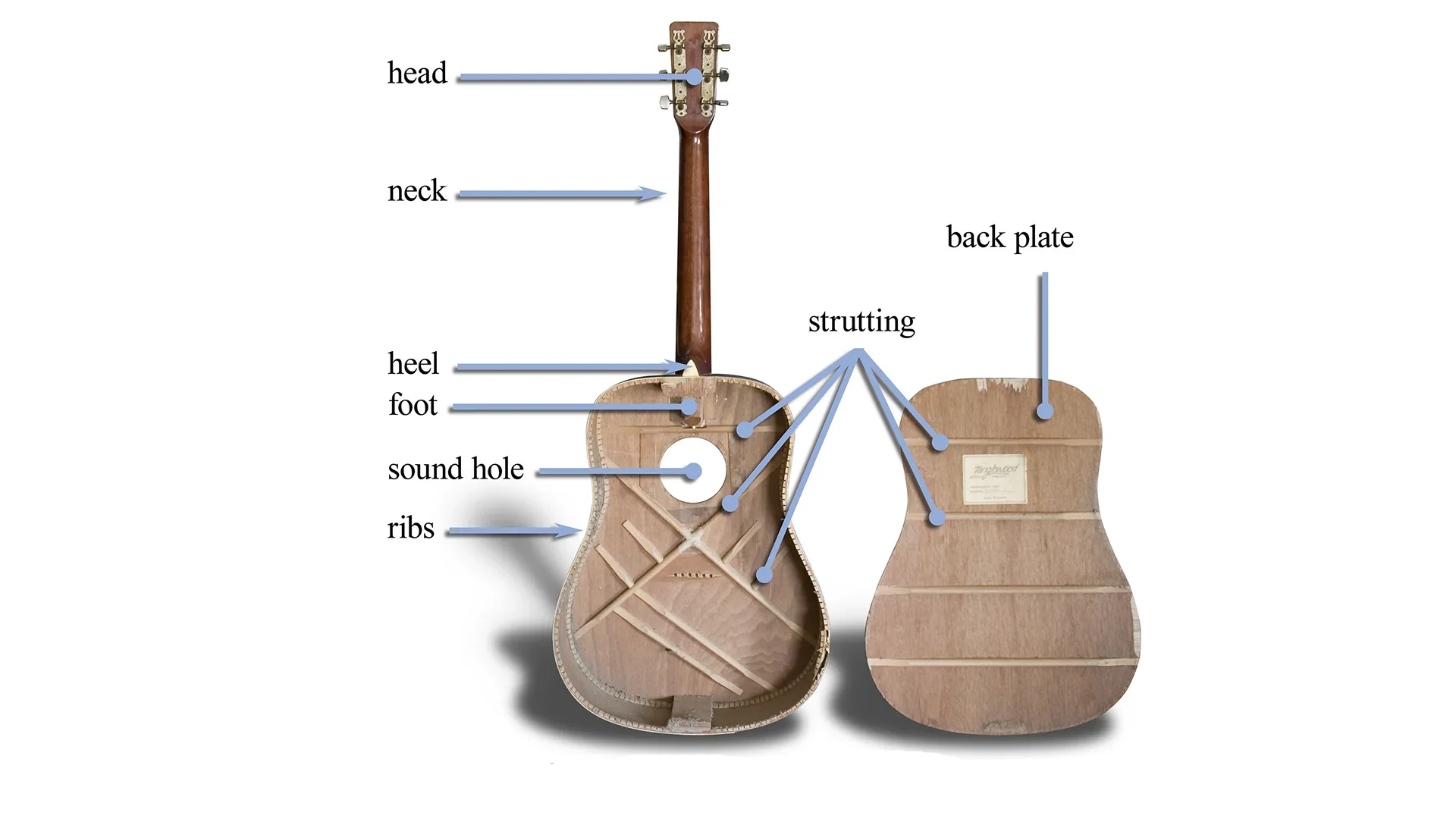
Imagine trying to stretch canvas over a frame without proper support. The same principle applies to guitars, but with the added complexity of needing that "canvas" to vibrate perfectly. Guitar bracing serves two critical functions that seem contradictory at first glance.
Bracing provides the structural integrity necessary to withstand the tremendous tension exerted by the strings. Without adequate bracing, the thin wooden soundboard would quickly warp and possibly crack under pressure. This support system allows luthiers to use thinner soundboards that can vibrate more freely while maintaining long-term stability.
Simultaneously, bracing shapes the guitar's voice by controlling how the soundboard vibrates. Different bracing patterns create unique vibration characteristics, influencing everything from bass response to treble clarity.
The relationship between bracing and tone is complex. Thicker, stiffer bracing typically produces focused, articulate tones with controlled sustain and excellent projection. Lighter bracing generally creates a more responsive guitar with greater dynamic range but potentially less focus and projection. This balance between strength and flexibility represents the fundamental challenge of acoustic guitar design.
Guitar makers have developed numerous bracing systems over centuries, each with its own tonal fingerprint. Modern luthiers continue to refine these traditional patterns and experiment with innovative approaches, seeking the perfect balance between structural support and optimal tone production.
Common Types of Guitar Bracing
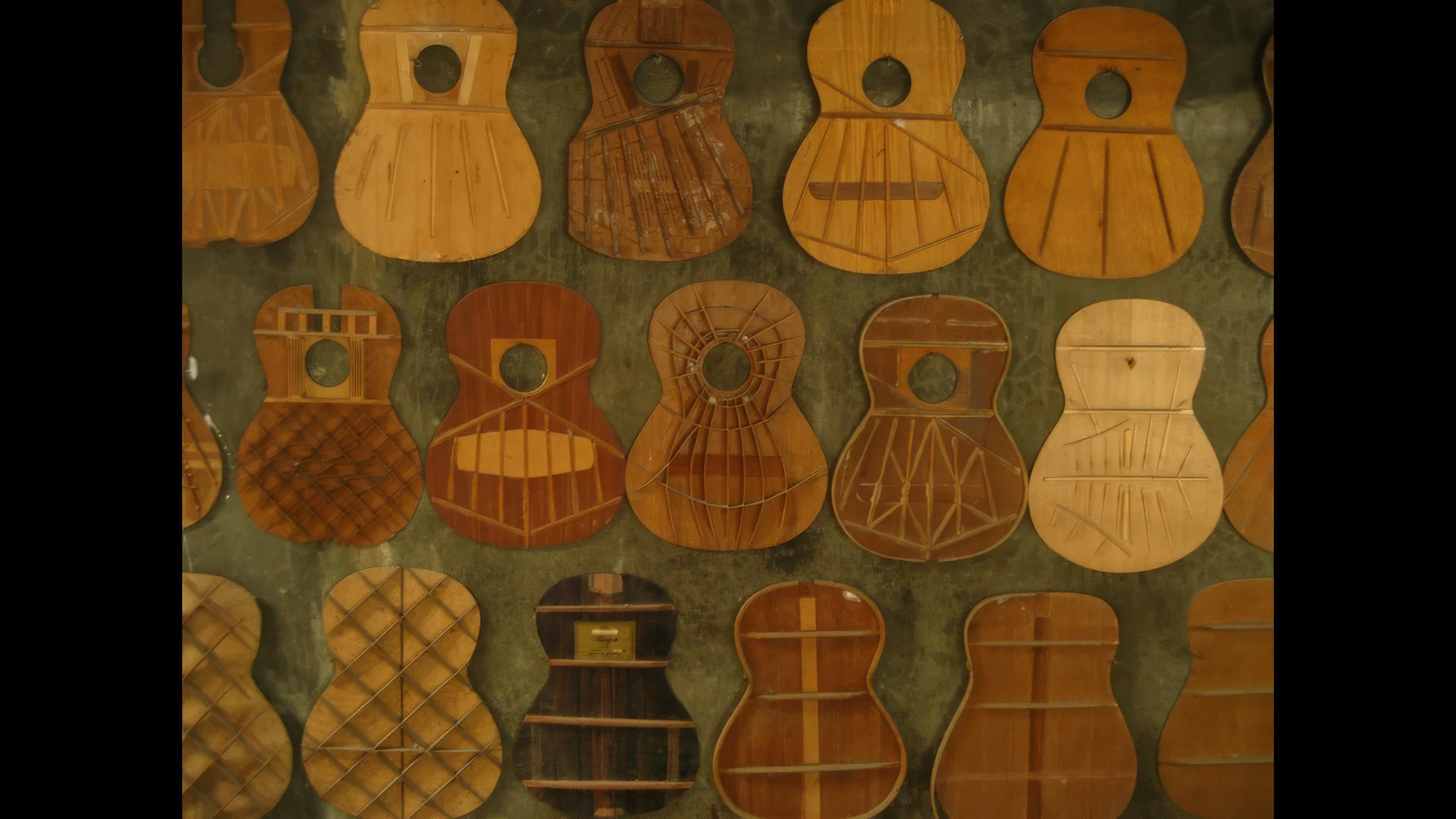
Different musical traditions and playing styles have driven the development of various bracing patterns, each with distinctive tonal characteristics. Let's explore the major bracing styles found in acoustic guitars today.
X-Bracing
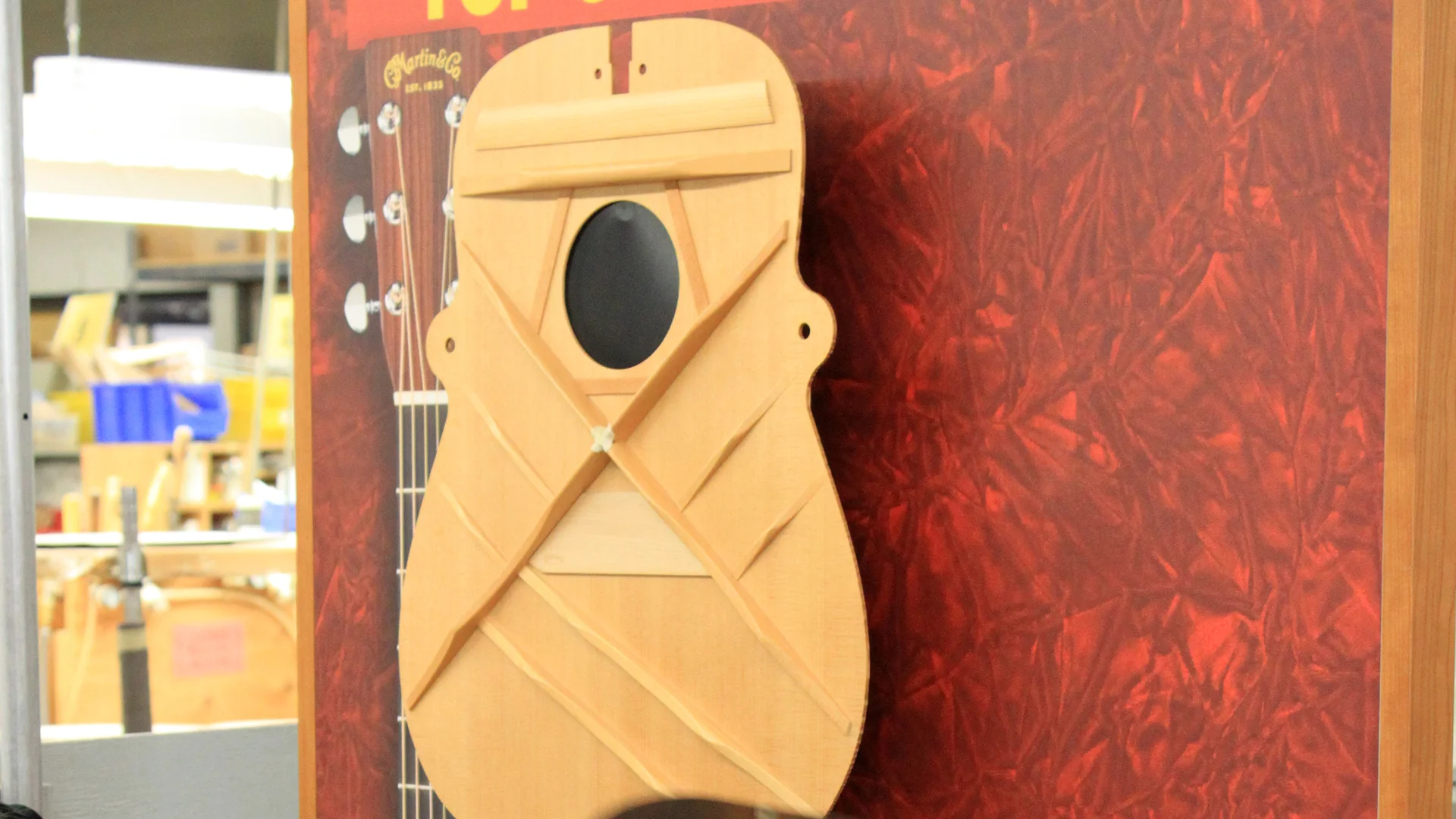
Developed by C.F. Martin in the 1850s, X-bracing has become the standard for steel-string acoustic guitars. The pattern features two braces that cross to form an "X" near the sound hole, with several tone bars running across the lower bout and finger braces reinforcing the upper bout.
This ingenious design efficiently distributes string tension across the soundboard while allowing controlled vibration. X-braced guitars typically deliver a balanced tonal profile with good note separation and projection. Traditional X-bracing excels at handling the increased tension of steel strings while maintaining tonal clarity across the frequency spectrum.
Martin's approach was revolutionary because it solved a fundamental problem: how to build a guitar strong enough for steel strings without sacrificing resonance.
Scalloped X-Bracing
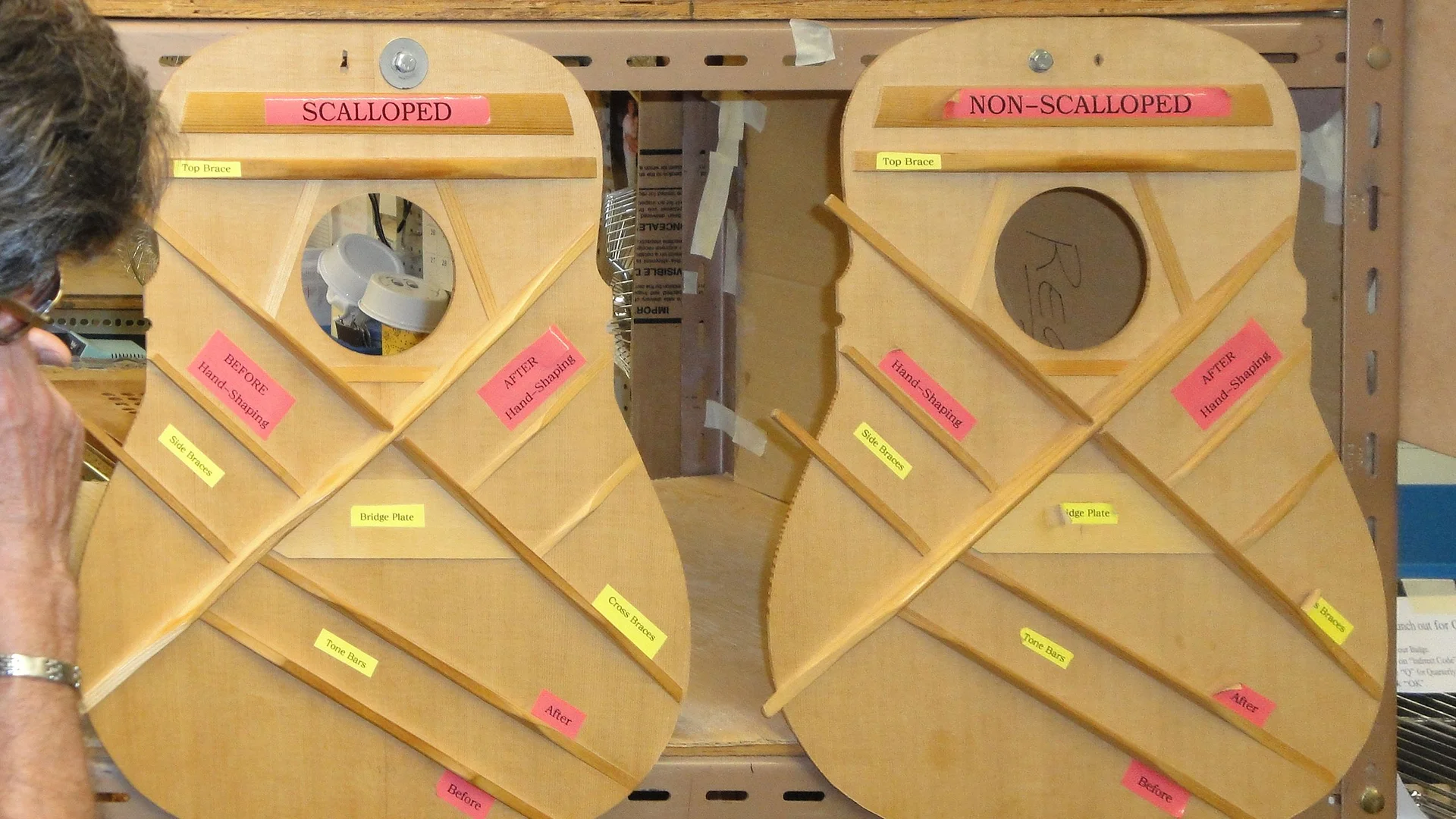
A refinement of standard X-bracing, scalloped bracing involves carving away portions of the X-braces to reduce mass while maintaining structural integrity. This modification increases the soundboard's flexibility and vibrational capacity.
Scalloped X-braced guitars generally produce stronger bass response and greater overall volume than standard X-braced instruments. The enhanced resonance makes them particularly suitable for fingerstyle players who value dynamic range and tonal complexity.
The degree of scalloping significantly impacts tone. Light scalloping adds warmth and complexity without dramatically changing the guitar's voice, while deep scalloping creates more dramatic bass response and volume potential at the expense of some focus and note separation.
Forward-Shifted X-Bracing
Another variation of X-bracing involves positioning the X-brace slightly closer to the sound hole than traditional placement. This "forward-shifted" approach changes how the guitar's top vibrates, particularly in the lower bout.
These characteristics have made it popular for guitars designed for vocal accompaniment and general-purpose playing.
Martin reintroduced forward-shifted bracing in their Vintage Series guitars, recreating elements of their pre-war instruments that players had come to treasure. The resulting tone tends to be warmer and more responsive than standard X-bracing, with greater dynamic range.
Fan Bracing
Developed for classical and flamenco guitars, fan bracing features multiple braces radiating like a fan from the sound hole area toward the lower bout. Spanish luthier Antonio de Torres refined this system in the 19th century, establishing it as the standard for nylon-string instruments.
The design allows the top to vibrate more uniformly, creating the characteristic "singing" quality prized in classical guitars. The fan bracing system contributes significantly to the expressive dynamic range that classical guitarists rely on for artistic interpretation.
The specific arrangement of fan braces varies considerably between makers and traditions. Spanish guitars often feature seven fan braces, while Torres-inspired designs might use five to nine braces arranged asymmetrically. Each variation yields subtle differences in response and tonal color.
Ladder Bracing
Among the oldest bracing patterns, ladder bracing features horizontal braces arranged like rungs on a ladder. This straightforward approach was common in early European and American folk guitars before X-bracing became dominant.
While generally less complex-sounding than X-braced instruments, they offer a direct, fundamental-rich voice that cuts through in ensemble settings.
Many affordable depression-era guitars featured ladder bracing, as did numerous parlor guitars from the late 19th century. Today, ladder bracing has experienced a revival among builders creating period-correct reproductions and players seeking that vintage "blues box" sound.
A-Bracing
Less common but gaining popularity, A-bracing (sometimes called "A-frame" bracing) features an A-shaped main brace below the sound hole, often combined with X-bracing elements. This hybrid approach aims to combine the best aspects of different bracing systems.
The design efficiently transfers vibration throughout the soundboard while maintaining structural integrity, creating an instrument with impressive volume and presence without sacrificing tonal balance.
Several contemporary luthiers have embraced A-bracing for its combination of traditional tonal qualities and enhanced projection. It represents one of many innovations as guitar makers continue to refine their craft.
Bracing Materials and Construction Techniques

The materials and construction methods used for bracing significantly influence a guitar's final voice. Let's examine what lies beneath the soundboard of well-crafted instruments.
Tonewood Selection for Bracing
While spruce generally dominates as the material of choice for guitar bracing, builders select specific tonewood varieties based on their weight, stiffness, and tonal properties. Sitka spruce provides excellent strength-to-weight ratio and produces clear, articulate tones, making it the standard for production instruments. Adirondack spruce (red spruce) offers even greater stiffness and tonal headroom, contributing to the powerful voice of many premium guitars.
Some builders use different woods for different braces within the same instrument. Mahogany braces might be selected for certain tone bars to add warmth, while cedar bracing might appear in guitars with cedar tops to maintain tonal consistency.
The bracing wood's age and quality matter tremendously. Quarter-sawn, properly dried spruce with straight, tight grain provides optimal strength and resonance. Many high-end builders age their bracing wood for years or even decades before use, allowing the cellular structure to stabilize fully.
Hand-Shaping Techniques
Traditional bracing construction involves carefully shaping each brace using hand tools to achieve the ideal profile and dimensions. This labor-intensive process requires considerable skill and experience.
Hand-shaped braces typically receive a parabolic or triangular profile, with the height and precise shape tailored to the specific instrument and desired tonal characteristics. The maker's expertise becomes evident in how they graduate each brace, creating subtle transitions that influence the soundboard's vibration patterns.
Final adjustments often involve tap-tuning, where the luthier tests the top's resonance and makes minute changes to brace height and mass. This iterative process continues until the soundboard produces the desired tonal response, representing the true art of guitar making.
Modern Manufacturing Approaches
Contemporary production guitars often employ computer numerical control (CNC) technology to cut and shape bracing with precise consistency. This approach ensures uniformity across instruments while reducing labor costs.
CNC-cut braces achieve remarkable precision, but still require hand-fitting and often receive final shaping and graduation by skilled workers.
Some innovative builders have explored alternative materials and manufacturing techniques, including carbon fiber reinforcement, composite bracing, and even 3D-printed internal structures. While traditional wooden bracing remains dominant, these experiments point toward potential future developments.
Bracing Thickness and Tension
The dimensions of bracing elements dramatically affect tone. Thicker, taller braces produce louder, more focused tones with less bass response and sustain. Thinner, lower braces allow greater soundboard movement, resulting in warmer tones with enhanced bass but potentially less projection and clarity.
Luthiers carefully tune the tension of the entire bracing system. Some builders "pre-tension" the soundboard by gluing braces with a slight bend, creating a dome or arch in the top. This approach increases structural stability while potentially enhancing certain tonal qualities.
How Bracing Affects Guitar Tone
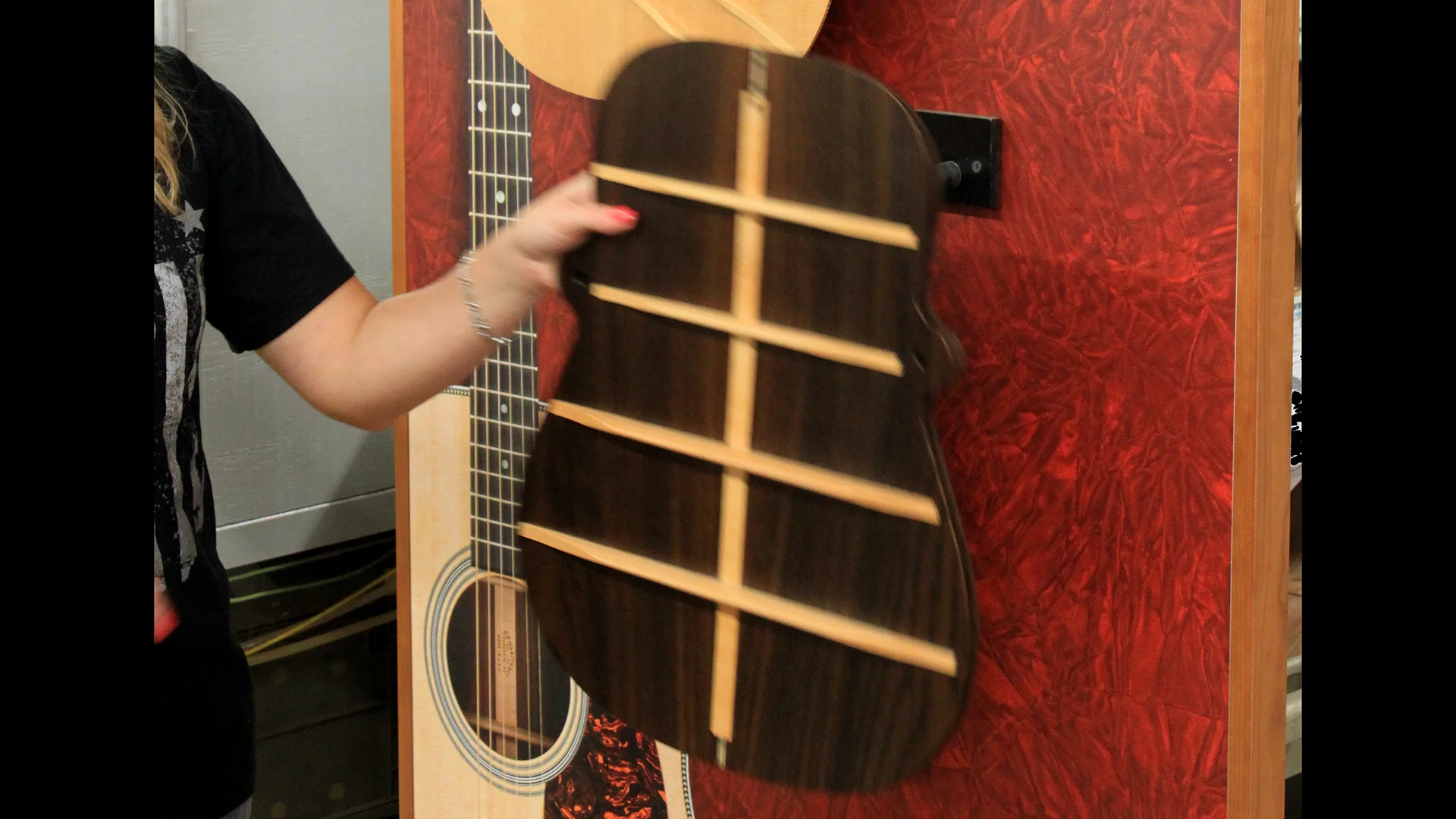
Understanding how various bracing patterns influence specific tonal characteristics helps players select instruments suited to their musical needs. Here's how bracing shapes the key elements of acoustic guitar tone.
Sustain and Resonance
Bracing directly controls how long notes ring out (sustain) and how readily the guitar responds to different frequencies (resonance). Heavier bracing typically produces shorter sustain but can enhance note definition, making it suitable for fast, articulate playing styles.
Lighter bracing generally increases sustain and resonance, creating instruments that bloom tonally as notes develop. This characteristic is particularly valued for fingerstyle guitar, where notes must ring clearly together to create the impression of multiple musical lines.
Different bracing patterns emphasize different overtone series. X-bracing tends to favor even harmonics, creating a tone often described as "American," while fan bracing typically enhances odd harmonics, contributing to the "European" classical guitar sound.
Volume and Projection
A guitar's volume potential and projection capabilities depend significantly on its bracing design. Scalloped X-bracing typically offers greater overall volume than standard X-bracing, as the reduced brace mass allows more soundboard movement.
Projection - how effectively the sound carries to listeners - sometimes differs from raw volume. Forward-shifted X-bracing often enhances projection by allowing more of the lower bout to vibrate freely, focusing sound energy outward. The bracing's interaction with the guitar's body dimensions creates its projection pattern.
Bass Response and Treble Clarity
The relationship between low-end and high-end response largely depends on bracing configuration. Ladder bracing typically produces pronounced midrange with somewhat limited bass, while fan bracing creates more balanced frequency response.
Scalloped X-bracing enhances bass response compared to standard X-bracing, sometimes at the expense of some treble definition. The degree of scalloping allows builders to fine-tune this balance, creating instruments with varying bass characteristics while maintaining treble clarity.
Different musical genres benefit from different bass/treble relationships. Flatpickers often prefer instruments with controlled bass and pronounced treble for clarity during fast passages, while fingerstylists might seek more complex bass response to support their arrangements.
Tonal Balance and Character
Beyond basic frequency response, bracing shapes a guitar's overall tonal character - the elusive combination of qualities that gives each instrument its voice. X-braced guitars typically sound "modern" with clear note separation and defined attack, while ladder-braced instruments often produce a more "vintage" voice with compressed dynamics and fundamental-focused tone.
Fan bracing creates the warm, complex voice associated with classical guitars, with excellent separation between bass, middle, and treble registers. This balance supports the polyphonic nature of classical guitar repertoire.
The interaction between bracing and other construction elements creates tonal synergy. A lightly braced instrument paired with a small body produces different results than the same bracing in a jumbo guitar, highlighting the holistic nature of guitar design.
Selecting the Right Bracing for Your Guitar
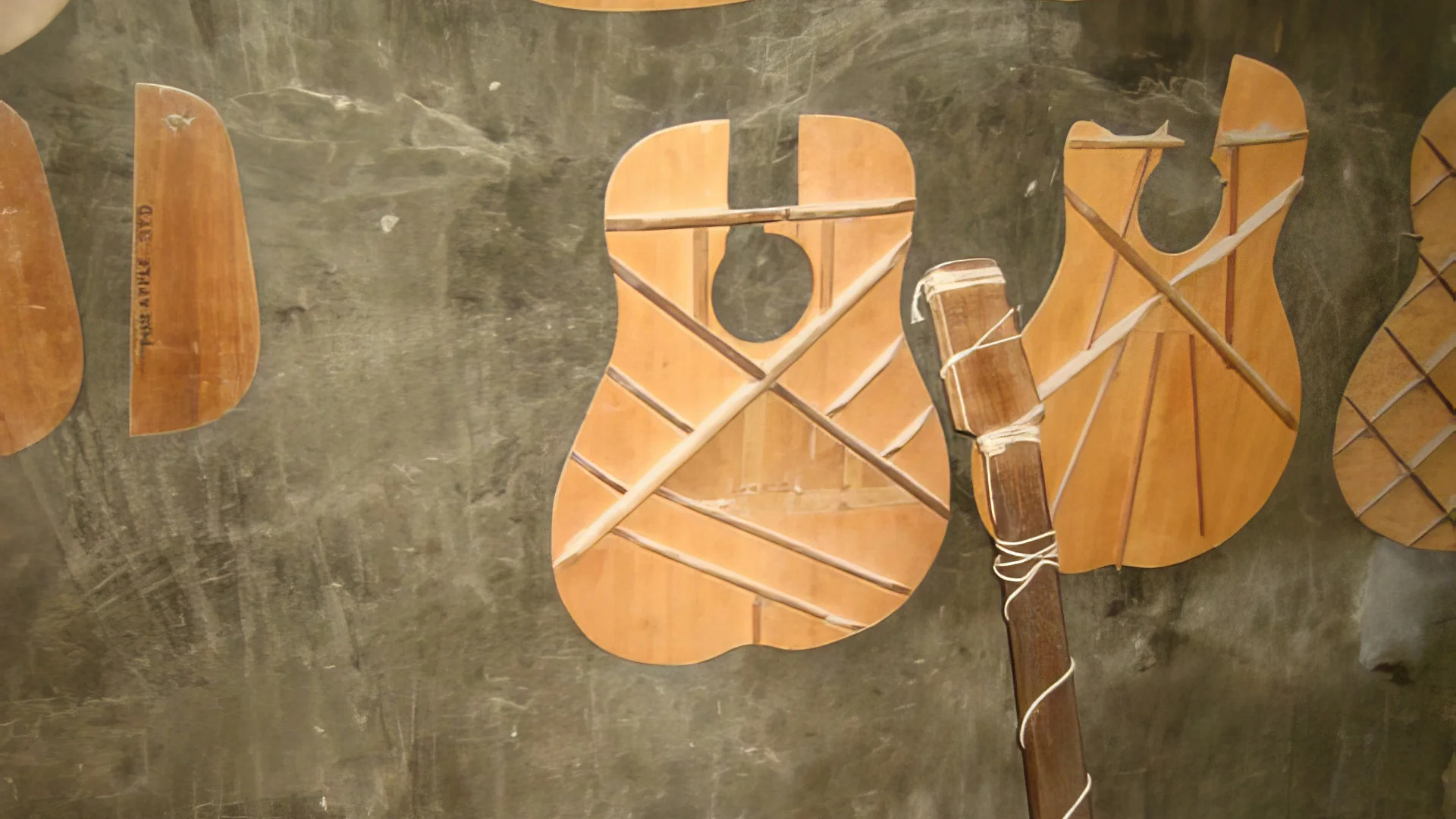
Choosing a guitar with appropriate bracing for your playing style can significantly enhance your musical experience. Different bracing patterns suit different applications, from solo fingerstyle to ensemble strumming.
For Fingerstyle Players
Fingerstyle guitarists typically benefit from instruments with responsive bracing that allows tonal complexity and dynamic range. Scalloped X-bracing often works well for this application, providing the necessary sustain and balanced response across all strings.
Forward-shifted X-bracing represents another excellent option for fingerstyle, offering enhanced bass response that complements thumb-played bass lines. The warm, complex tone of forward-shifted bracing supports the intimate nature of solo fingerstyle playing while providing sufficient projection for performance settings.
Classical fingerstylists naturally gravitate toward fan-braced instruments, which excel at producing the balanced, polyphonic voice needed for classical repertoire. The specific arrangement of fan braces influences the guitar's responsiveness to different right-hand techniques.
For Strummers and Flatpickers
Players who primarily strum or flatpick often prefer guitars with standard X-bracing, which provides excellent projection and articulation during faster passages. The controlled bass and focused midrange help these instruments cut through in group settings.
Some flatpickers favor scalloped bracing for its increased volume potential, particularly when playing without amplification. The enhanced dynamics allow for expressive playing with minimal effort, though some players find heavily scalloped instruments too responsive for aggressive techniques.
Bluegrass guitarists often seek instruments with modified X-bracing that emphasizes treble clarity and midrange punch. These guitars typically feature slightly heavier bracing in strategic locations to enhance their cutting power in traditional acoustic ensembles.
For Recording Applications
Studio guitarists often prefer instruments with bracing designed for tonal balance rather than maximum volume. Lightly scalloped X-bracing provides the complex overtone structure that records well, while standard X-bracing offers excellent note definition that helps guitars sit properly in mixed recordings.
Forward-shifted bracing can work beautifully for recording applications where warmth and natural compression are desired. These instruments often require less equalization during recording, as their natural tonal balance translates well to microphones.
The specific microphone technique interacts with the guitar's bracing-influenced projection pattern. Understanding your instrument's voice helps you position microphones optimally to capture its best tonal qualities.
For Versatile Performance
Many players need instruments that function well across multiple playing styles and venues. Modified X-bracing with moderate scalloping often provides this versatility, offering good response for fingerstyle while maintaining enough focus for strumming and flatpicking.
A-bracing and other hybrid approaches appeal to players seeking enhanced performance across various techniques. These modern designs often combine elements from traditional patterns to create instruments with broader tonal capabilities.
Understanding how a guitar's bracing influences its amplified sound also matters for performing musicians. Different bracing patterns interact differently with various pickup systems, potentially requiring different equalization approaches when amplified.
Bracing Patterns Comparison
| Bracing Type | Tone Characteristics | Best For | Common Applications |
|---|---|---|---|
| X-Bracing | Balanced, articulate, good note separation | All-purpose playing, strumming, flatpicking | Most steel-string acoustics, dreadnoughts |
| Scalloped X-Bracing | Enhanced bass, greater volume, richer overtones | Fingerstyle, solo performance, recording | Premium acoustics, vintage-inspired models |
| Forward-Shifted X-Bracing | Warmer bass, complex midrange, enhanced projection | Vocal accompaniment, recording, studio work | Vintage-style instruments, OM models |
| Fan Bracing | Warm, balanced, excellent string-to-string separation | Classical repertoire, fingerstyle, arpeggios | Classical and flamenco guitars |
| Ladder Bracing | Punchy midrange, limited bass, quick response | Blues, folk, vintage styles, recording | Parlor guitars, budget models, vintage replicas |
| A-Bracing | Enhanced projection, balanced response, good volume | Versatile playing, amplified performance | Contemporary boutique instruments |
FAQs about Guitar Bracing
How can I identify what type of bracing my guitar has?
Look through the sound hole with a small mirror and flashlight. X-bracing shows a distinctive X-pattern below the sound hole, while ladder bracing appears as parallel bars. For current models, manufacturers can provide bracing information based on your serial number. For older guitars, consult a qualified luthier during routine maintenance.
Can bracing be modified on an existing guitar?
Yes, but it's a major repair requiring specialized skills. Some luthiers offer "brace shaving" to enhance response, but these modifications carry structural risks and can be expensive. Best for higher-end instruments and only after consulting with an experienced luthier familiar with your specific guitar model.
Does bracing style affect guitar durability?
Yes. Traditional X-bracing offers excellent stability for steel strings. Lighter bracing approaches like heavy scalloping require more careful humidity control. Fan bracing works well for nylon strings but may not withstand steel-string tension. Overall durability also depends on materials quality, construction precision, and proper maintenance.
Can I order a custom guitar with specific bracing?
Many luthiers and some manufacturers offer custom bracing options based on your playing style and tonal preferences. This allows optimization for specific uses like fingerstyle or ensemble work. Expect higher costs and longer wait times compared to production models.
How does bracing work with different body sizes?
Builders adjust patterns to suit different body dimensions. Smaller guitars typically use lighter bracing to compensate for reduced air volume, while jumbos need stronger support. The arrangement of braces changes with body shape—dreadnoughts often feature asymmetrical bracing to enhance bass response. Modern luthiers often design specific bracing systems for particular body shapes rather than simply scaling traditional patterns.
Conclusion

Guitar bracing represents a fascinating intersection of structural engineering, acoustics, and musical tradition. The wooden skeleton beneath your guitar's top fundamentally shapes its voice, influencing everything from bass response to projection to overall tonal character.
For players, understanding bracing provides valuable context when choosing instruments. Recognizing how different bracing patterns complement various playing styles helps you select guitars that enhance your musical expression. Whether you prefer the balanced articulation of traditional X-bracing or the warm complexity of scalloped designs, matching bracing to your needs improves your playing experience.
For builders and enthusiasts, bracing embodies the ongoing evolution of the instrument. Today's luthiers build upon centuries of accumulated wisdom while employing modern tools and materials to refine traditional designs. Their work continuously expands our understanding of how these hidden structures shape the voices of our beloved instruments.
That hidden architecture represents generations of craftsmanship dedicated to creating the perfect balance between structural integrity and musical expression - the essential compromise at the heart of acoustic guitar design.
Top Ranked Steel-string Acoustic Guitars on Equipboard


-m.webp?v=1783695464)
-m.webp?v=1783721422)

About the authors
Michael R. Pierce is the co-founder of Equipboard and a lifelong musician with over 25 years of experience as a guitarist and gear enthusiast. He blends solid music theory chops (thanks to formal training in guitar, piano, and trumpet) with real-world experience, always exploring and experimenting across genres like rock, blues, and hip-hop. Michael launched Equipboard in 2013 after graduating from The University of Texas at Austin, leveraging his unique blend of musical passion, technological acumen, and community building. His current go-to rig features a Fender American Original ‘50s Telecaster, Analogman King of Tone, Strymon Flint, and a Fender ‘57 Custom Champ. Read more
New in Steel-string Acoustic Guitars

$2,111.00 - $2,299.00


$2,285.00 - $2,499.00


$14,999.99 - $19,490.00


$4,199.99 - $5,111.00


$3,996.00 - $4,199.99




.webp)