From Single-Coils to Humbuckers: Your Ultimate Guide to Guitar Pickups

By Gear Experts

By Gear Experts
Table of Contents

Equipboard
Equipboard is the world's largest community of artists and their gear. Read our review process.
We are reader-supported. When you buy through links on our site, we may earn an affiliate commission. Learn more.
Ever wondered how Eric Clapton coaxes that sweet, singing tone from his Stratocaster? Or how James Hetfield achieves the aggressive growl that defines Metallica's sound? The secret lies in one of the most crucial yet often misunderstood components of an electric guitar - the pickups.
These small but mighty devices are the heart and soul of your guitar's voice, transforming simple string vibrations into the electrifying sounds that have defined generations of music.
Yet for many guitarists, pickups remain mysterious devices shrouded in technical jargon and conflicting opinions.
In this comprehensive guide, we'll pull back the curtain on electric guitar pickups, taking you on a journey from the basic principles to the finest nuances of pickup technology.
What Are Electric Guitar Pickups?
At their core, pickups are essentially microphones for your guitar strings, but they work in a completely different way than traditional microphones. Instead of capturing sound waves in the air, pickups harness the power of electromagnetic induction to transform your string vibrations into electrical signals that your amplifier can process and turn into sound.
This process begins the moment your pick strikes a string. As the string vibrates, it disturbs a magnetic field created by the pickup's magnets. This disturbance generates a tiny electrical current in copper wire coils wrapped thousands of times around those magnets.
The resulting signal carries not just the pitch of the notes you played, but also captures the nuances of how you played them - the attack of your pick, the subtle vibrato of your fretting hand, even the way the string's vibration changes as the note decays.
From Telephone Parts to Tone Machines – A Historical Perspective
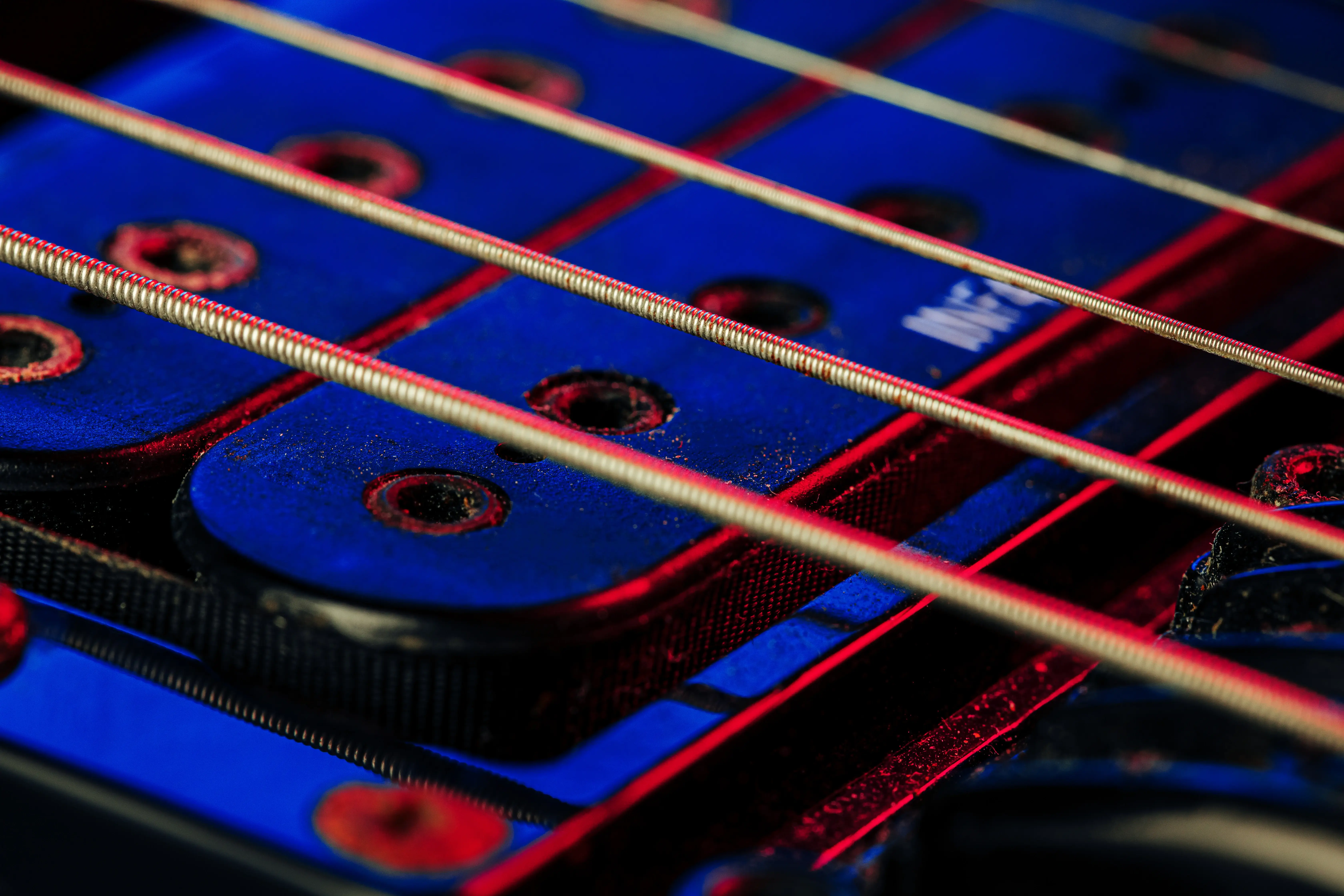
The story of guitar pickups is a testament to human ingenuity and the never-ending quest for better sound.
George Beauchamp and Adolph Rickenbacker, working with what were essentially modified telephone parts, developed the first commercially successful electric guitar pickup for their "Frying Pan" lap steel guitar in 1932. This horseshoe-shaped pickup set the stage for a revolution in guitar design and popular music.
By the late 1940s, Leo Fender had refined the single-coil pickup design, leading to the iconic Telecaster and Stratocaster guitars. But these pickups had a significant drawback - they hummed annoyingly when near electrical interference. Enter Seth Lover at Gibson, who in 1955 developed the humbucker, a pickup that used two coils to cancel out the noise while producing a fatter, warmer tone.
This innovation effectively split the guitar world into two camps - the bright, clear single-coil devotees and the thick, powerful humbucker advocates. Both designs have their place, and understanding their differences is key to finding your ideal tone.
The Building Blocks of Tone: Understanding Pickup Components

At first glance, a guitar pickup might seem simple—just a few magnets wrapped in wire. However, each component plays a crucial role in shaping your guitar's voice. Let's break down the essential parts that work together to create your tone:
1. Magnets
The magnet is quite literally the core of your pickup, creating the magnetic field that interacts with your strings. Different types of magnets produce distinctly different tones:
- Alnico Magnets (Aluminum-Nickel-Cobalt)
- Alnico II: Soft, warm tone with sweet highs
- Alnico III: Similar to II but slightly stronger
- Alnico V: Stronger, brighter with more output
- Alnico VIII: Highest output, aggressive tone
- Ceramic Magnets
- Stronger magnetic field
- Typically produce higher output
- Known for tight bass and aggressive midrange
2. Copper Wire Coil
The copper wire coil is a key component in electric guitar pickups, as it’s responsible for converting the vibrations of guitar strings into electrical signals. This coil is made by wrapping copper wire around the pickup’s magnets thousands of times.
The thickness of the wire, measured in American Wire Gauge (AWG), plays a significant role in determining the pickup’s output and tone.
Generally, thinner wire, such as 41-44 AWG, allows for more turns around the magnet, which increases the pickup's output. Conversely, thicker wire enables fewer turns, resulting in lower output but often a cleaner, more transparent tone.
The number of turns in the coil also influences the pickup’s sound characteristics.
More turns lead to higher output and a strong midrange response, making the sound fuller. On the other hand,fewer turns produce lower output, emphasizing clarity in the higher frequencies.
3. Pole Pieces
Pole pieces are metal screws or rods within electric guitar pickups that focus the magnetic field on each string, helping shape the pickup's response to individual strings. These pole pieces can be either adjustable or fixed, offering different levels of customization.
Adjustable pole pieces allow players to fine-tune the balance between strings, while fixed pole pieces provide a consistent, pre-set balance suited for a more uniform response across strings.
The material used for pole pieces also impacts the pickup’s tone and magnetic properties. Plain steel offers a neutral tone, giving a balanced response across frequencies. Threaded steel, on the other hand, creates a slightly stronger magnetic field, which can enhance output and focus.
Alnico, an alloy often used in pickups, serves as both a magnet and a pole piece, offering a warmer, more vintage-inspired tone while simplifying the pickup’s construction. These material choices give pickups varied tonal characteristics to suit different musical styles.
4. Bobbin
The bobbin serves as the framework around which the copper coil is wound in an electric guitar pickup. This structure holds the coil in place and plays a subtle role in the pickup's overall characteristics. Most commonly, bobbins are made from plastic, which has a neutral effect on tone and provides durability and consistency.
Other materials, though less common, include fiber bobbins, which are often used in vintage-style pickups, as they replicate the construction of classic pickups and can contribute to a more traditional tone.
Some boutique pickup makers occasionally use wood for bobbins, lending a distinct aesthetic and potentially adding a subtle warmth or resonance to the pickup’s sound.
5. Base Plate
The base plate, typically made of metal, is a foundational part of an electric guitar pickup, serving multiple functions. It provides essential structural support for the pickup components and can subtly influence the pickup's magnetic field.
Various metals are used for base plates.
Steel base plates are common, slightly focusing the magnetic field to enhance output and clarity. Brass, often found in Telecaster bridge pickups, offers a different tonal response, contributing to the characteristic “twang” of these pickups. Then there is nickel silver, which is frequently used in humbucker pickups, providing a balanced effect that helps preserve a clear and open sound.
6. Wiring
The hookup wire and lead wire link the pickup to the guitar's electronics. The hookup wire, typically made from 22-24 AWG tinned copper, connects the coil to the internal circuit, ensuring reliable conductivity and signal flow.
The lead wire serves as the final output connection from the pickup to the rest of the guitar’s electronics. Often covered in waxed cloth, especially in vintage-style pickups, this lead wire provides an authentic look and feel that appeals to players seeking a classic aesthetic.
7. Pickup Covers
Pickup covers, though optional, provide both aesthetic and functional benefits for electric guitar pickups. These covers protect the pickup components while contributing to the guitar’s visual appeal. Like most other guitar components, they come in various materials.
Nickel silver covers are a classic choice, offering a traditional look with a slight reduction in treble response. Plastic covers, on the other hand, have no impact on tone and are often chosen for their durability and neutrality.
How Do Guitar Pickups Work?
The Magic of Magnetic Induction
At its core, a guitar pickup is an elegant application of a fundamental principle of physics: electromagnetic induction, first discovered by Michael Faraday in 1831. But don't worry - you don't need to be a physicist to understand how your pickups create tone.
Let's break it down:
Your pickup's magnets create an invisible magnetic field that extends through and around your guitar strings. This field magnetizes the steel strings, effectively turning them into weak magnets themselves. Even when stationary, your strings are already part of a complex magnetic system influenced by the pickup's field, ready to interact with any movement.
When you pluck a string, it vibrates within the magnetic field, causing fluctuations in the field around it. According to Faraday's Law, this changing magnetic field induces an electrical current in nearby conductors. Here, that conductor is the copper wire coil wrapped around the magnets. The resulting current from this interaction forms the signal that is then sent to your amplifier, capturing the vibration and tone of your strings.
From String Vibration to Electrical Signal
The journey from physical movement to an electrical signal happens in mere microseconds, capturing the essence of each note.
When you play a note, the string vibrates at a specific frequency. For instance, a standard A string vibrates 440 times per second (440 Hz), setting the foundation for the note’s pitch.
As the magnetized string moves up and down, it rapidly alters the pickup's magnetic field. The closer the string moves toward the pickup, the stronger the magnetic interaction becomes, intensifying the field disturbance and setting the stage for signal creation.
These magnetic fluctuations induce electron movement in the copper coil, generating an electrical current. This current mirrors the string’s vibration exactly, in both frequency and amplitude. The result is a precise transformation of your physical playing into an electrical signal, ready for amplification and expression.
The Technical Side: Understanding Signal Characteristics
Impedance is a critical factor in electric guitar pickups, as it represents the resistance to alternating current (AC), which affects how the pickup interacts with the guitar's signal chain.
High impedance pickups, those greater than 7kΩ, are more sensitive to cable length, which can impact their clarity over longer distances. In contrast, low impedance pickups, typically below 7kΩ, maintain their clarity even with extended cable runs.
Common impedance values for vintage single-coil pickups range from 5.5 to 6.5kΩ, known for their bright and clear tones. Modern humbuckers usually have a higher impedance, falling between 8 to 11kΩ, producing a warmer and thicker sound. Active pickups are distinct, operating at much lower impedance, often around 100 to 200Ω, which helps preserve signal integrity and reduces loss.
Output level refers to the strength of the electrical signal produced by the pickup, typically measured in millivolts (mV). This strength can significantly influence the tonal characteristics of the guitar.
- Low output pickups generate signals around 100 to 150mV, resulting in a cleaner sound with more headroom for dynamic playing.
- Medium output pickups, with levels between 150 to 300mV, provide a balance between clarity and fullness.
- High output pickups produce signals exceeding 300mV, which can push the amplifier harder, leading to earlier breakup and a more saturated tone.
3. Frequency Response
Frequency response refers to how a pickup responds to different frequencies, which is crucial for shaping its tonal character. A key concept within frequency response is the resonant peak, which is the frequency at which the pickup naturally boosts output.
For single-coil pickups, this resonant peak typically occurs between 3-7kHz, enhancing the brightness and clarity of the tone. In contrast, humbucker pickups often have a lower resonant peak, around 2-4kHz, contributing to a warmer, thicker sound.
The frequency response of a pickup can be divided into three main ranges: the low end (20Hz to 100Hz), which captures the fundamental notes of the sound; the midrange (100Hz to 1kHz), which embodies the body of the tone; and the high end (1kHz to 20kHz), which includes overtones and articulation.
Putting It All Together: An Example
Let's say you play an A note (440 Hz) on your guitar:
The string vibrates 440 times per second
This creates fluctuations in the magnetic field 440 times per second
The pickup generates an electrical current that oscillates at 440 Hz
This signal travels through your cable to your amp
Your amp converts this electrical signal back into sound waves
Your ears hear the A note!
Types of Electric Guitar Pickups

Single-Coil Pickups: Bright, Bold, and Beautiful
When you think of the quintessential Fender Stratocaster tone—the glassy, bell-like clarity that made Jimi Hendrix's "Little Wing" so distinctive or the tones of Eric Clapton's "Wonderful Tonight" you’re experiencing the magic of single-coil pickups.
These pickups are renowned for their bright, articulate sound that cuts through any mix, their strong presence in mid and high frequencies, and their dynamic response that rewards subtle playing techniques. They can deliver both sparkling clean tones and aggressive bite when pushed.
Single-coils achieve this distinctive sound through their relatively simple construction: a single coil of wire wrapped around magnets or magnetic pole pieces. This straightforward design allows for excellent string-to-string definition and a response that many players describe as more "immediate" or "open" compared to humbuckers.
However, this simplicity comes with a trade-off. Single-coils are susceptible to electromagnetic interference, resulting in an audible hum that can be particularly noticeable with high-gain amplifier settings. They also typically have lower output than humbuckers, which means they might not drive your amp into natural overdrive as easily.
Despite these limitations, countless guitarists have embraced single-coils for their unique characteristics. From the chicken-pickin' country players who rely on the Telecaster bridge pickup's twang to indie rockers who love the versatility of a Stratocaster's three-pickup configuration, single-coils have left an indelible mark on popular music.
Humbuckers: The Sound of Power
On the other side of the tonal spectrum, we have humbuckers. When you hear the thick, creamy tones of Jimmy Page's Les Paul or the fluid sustain in Carlos Santana's solos, you’re experiencing the magic of humbucker pickups.
These pickups utilize two coils wired in opposite directions to cancel out interference while producing a thicker, more powerful sound. Their key characteristics include a warm, fat tone with enhanced midrange frequencies, a higher output that easily pushes amplifiers into natural overdrive, and excellent noise cancellation for quiet operation. They also offer a smooth sustain that is perfect for lead playing.
The humbucker's dual-coil design not only cancels unwanted noise - hence the name "hum-bucker" - but also results in a fundamentally different tone compared to single-coils. The increased wire mass and dual-coil configuration produce a sound that many describe as "thicker" or "fatter," featuring enhanced midrange frequencies and a slight attenuation of high-end sparkle.
This makes humbuckers particularly well-suited for heavy rock and metal, where their higher output and fuller sound contribute to thick, saturated tones. They are also favored in jazz, where their warm character complements the genre's typically mellower sound, and in any style where noise-free operation is crucial, especially in high-gain situations.
However, the trade-off is that humbuckers can sacrifice some of the top-end clarity and dynamic response that single-coils are known for. Some players find them too "dark" or "muddy" for styles that require pristine clean tones. Despite this, their powerful and warm sound has made them a staple in various musical genres.
The Best of Both Worlds: P90 Pickups and Modern Innovations
Sitting between traditional single-coils and humbuckers, P90 pickups offer a unique tonal palette that has earned them a devoted following. Originally developed by Gibson in the 1940s, P90s are technically single-coils, but their different construction yields a sound that is thicker and warmer than typical single-coils and more raw and aggressive than humbuckers. They are rich in midrange frequencies, featuring a slight upper-midrange snarl that makes them perfect for genres like blues, punk, and indie rock.
Notable players such as Pete Townshend of The Who and Tony Iommi from Black Sabbath's early days utilized P90s to craft some of rock's most distinctive tones. These pickups provide a "best of both worlds" approach, combining the articulation of single-coils with the warmth and power characteristic of humbuckers. As a result, P90 pickups remain a versatile choice for musicians seeking a blend of clarity and richness in their sound.
Other Pickup Variants
While single-coils and full-sized humbuckers dominate the pickup landscape, a world of fascinating alternatives exists, each offering distinctive tones and characteristics that have earned their place in guitar history.
Mini-Humbuckers
Originally introduced by Gibson in the late 1960s, mini-humbuckers pack the noise-canceling benefits of standard humbuckers into a more compact package. These pickups are approximately two-thirds the size of standard humbuckers, resulting in a lower output due to their smaller coils and a tighter focus on string vibration.
In terms of tonal qualities, mini-humbuckers are brighter and more focused than their full-sized counterparts. They produce a sound that is less "thick" in the midrange, offering excellent note definition and clarity.
Famous Users:
- Johnny Winter (Gibson Firebird)
- Richie Sambora (Gibson Les Paul Deluxe)
- Paul Stanley (Gibson Les Paul Deluxe)
Popular Models:
- Gibson Original Mini-Humbucker
- Seymour Duncan SM-1n and SM-1b
- DiMarzio Mini PAF
Lipstick Pickups
Lipstick pickups are named for their distinctive chrome covers, originally made from actual lipstick tubes, and were first used in Danelectro guitars in the 1950s. These pickups feature Alnico rod magnets encased in a chrome-plated steel tube, a relatively low number of wire turns, and are often potted in wax for stability.
Sonic characteristics of lipstick pickups include a bright, jangly tone and a lower output than traditional single-coils. They are known for their strong upper midrange presence and a "twangy" quality that is especially beloved in surf and indie rock.
Famous Users:
- Jimmy Page (Led Zeppelin's "Kashmir")
- Mark Knopfler (early Dire Straits recordings)
- Jack White (The White Stripes)
Gold Foil Pickups
Originating in budget Japanese guitars of the 1960s, gold foil pickups have seen a resurgence in popularity in recent years. These pickups are characterized by their unique visual appearance, with gold or silver foil visible through the cover. They often feature multiple pole pieces per string and generally have a lower output than traditional single-coils.
The tonal profile of gold foil pickups includes a clear, articulate sound with a strong midrange presence and excellent dynamic response. Their lo-fi character is especially beloved by indie and alternative musicians.
Modern Interpretations:
- Lollar Gold Foil
- Curtis Novak Gold Foil
- Seymour Duncan Antiquity Gold Foil
Filter'Trons
Developed by Ray Butts for Chet Atkins in the 1950s, Filter'Tron pickups feature a dual-coil design that predates Gibson's PAF humbucker. These pickups are renowned for their clarity and twang while remaining noise-free, making them a popular choice among musicians.
Famous Users:
- Chet Atkins
- Brian Setzer
- Malcolm Young (AC/DC)
Charlie Christian Pickups
Charlie Christian pickups are among the first electric guitar pickups ever made. They feature a single blade pole piece instead of individual poles, resulting in a unique midrange-focused tone that is often associated with jazz guitar. This distinctive design allows for a smooth and warm sound that complements jazz styles beautifully.
DeArmond Dynasonic
Popular in the 1950s, particularly on Gretsch guitars, the DeArmond Dynasonic pickup is known for its innovative features. It has adjustable pole pieces mounted on a movable rack, allowing for enhanced customization. These pickups are celebrated for their rich, acoustic-like tone and high output, making them an excellent choice for players seeking a vintage-style sound with more presence.
Modern Boutique Variants
Today’s pickup makers continue to innovate, creating new variants that blend classic designs with modern improvements. One such example is the Fralin P-92, which combines the distinctive tone of a P90 with the size of a humbucker. This design allows for noise-canceling features while still maintaining the characteristic sound of a P90.
Another noteworthy option is the Bareknuckle Bootcamp Series, which offers modern interpretations of classic pickup designs. These pickups focus on capturing the "old wood" tone, providing players with a vintage feel enhanced by contemporary craftsmanship.
Lastly, the Fishman Fluence pickups feature multiple voices within a single pickup, providing versatility for various playing styles. Their active design allows for an extended frequency range, delivering a wide array of tonal options that cater to modern musicians' needs.
Active vs. Passive Pickups: The Electric Guitar's Power Struggle
Imagine two guitarists on stage: one wielding a vintage Stratocaster and the other brandishing a modern metal machine. The secret to their contrasting tones lies not just in their playing styles, but in the very heart of their instruments - the pickups.
Passive Pickups
These pickups represent the original design, relying solely on the magic of magnetic induction. When the strings vibrate, they disturb the magnetic field, creating a small electrical current without the need for batteries—just pure, unadulterated string-to-signal conversion. The tone produced by passive pickups is reminiscent of the warm, woody sounds of a vintage blues record or the bell-like chime of a country twang.
They offer an organic, dynamic response that many players believe captures the true voice of the guitar, being sensitive to playing dynamics and allowing for expressive nuances in performance. You'll find passive pickups in most traditional electric guitars, making them the go-to choice for genres like blues, rock, jazz, and country, where tonal authenticity and touch sensitivity are highly valued.
Active Pickups
In contrast, active pickups come with a built-in preamp, powered by a 9-volt battery. This setup boosts and shapes the signal before it even leaves your guitar, akin to having a mini sound engineer working inside your instrument. The tone delivered by active pickups is characterized by the tight, aggressive punch of a metal riff or the crystal-clear articulation of a technical lead.
They provide higher output and more consistent performance across the fretboard, with an extended frequency range that ensures clarity. Additionally, active pickups are less affected by cable length or signal chain, making sure your tone remains intact from guitar to amp. This modern design offers players the reliability and power needed for today’s demanding musical styles.
Conclusion
The world of electric guitar pickups is rich and diverse, offering countless possibilities for shaping your sound. Whether you're chasing the bell-like clarity of single-coils, the thick warmth of humbuckers, or something in between, understanding pickups empowers you to make informed choices about your tone.
While technical specifications and expert recommendations are valuable, it’s essential to trust your ears above all else. The perfect pickup is the one that inspires you to play and helps you express your musical voice.
About the authors
Michael R. Pierce is the co-founder of Equipboard and a lifelong musician with over 25 years of experience as a guitarist and gear enthusiast. He blends solid music theory chops (thanks to formal training in guitar, piano, and trumpet) with real-world experience, always exploring and experimenting across genres like rock, blues, and hip-hop. Michael launched Equipboard in 2013 after graduating from The University of Texas at Austin, leveraging his unique blend of musical passion, technological acumen, and community building. His current go-to rig features a Fender American Original ‘50s Telecaster, Analogman King of Tone, Strymon Flint, and a Fender ‘57 Custom Champ. Read more
Comments
Sign Up or Log In to add comments
30
There are some mistakes in the description of the pickup's DC Resistance and AC Impedance. DC Resistance is just a part of AC Impedance, and it just partly describes pickup parameters/potential tone. It is important to note the resonance peak's frequency and the AC Impedance on it. Pickup's Impedance on the resonance peak frequency can be over 100k (!), and it is why the shunting signal potentiometer value affects the pickup's brightness.