By Gear Experts
Table of Contents

Equipboard
Equipboard is the world's largest community of artists and their gear. Read our review process.
We are reader-supported. When you buy through links on our site, we may earn an affiliate commission. Learn more.
Our Picks

Gretsch G5260 Electromatic Jet Baritone
The Gretsch G5260 is a great option for players seeking a versatile and affordable baritone guitar. It offers solid tone, good playability, and a classic Gretsch vibe, making it a strong choice for multiple musical styles.
Read more


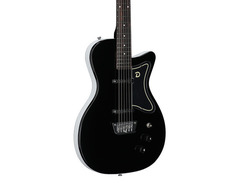
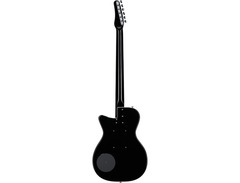
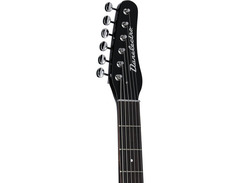
The Danelectro '56 Baritone offers a unique blend of vintage charm and modern playability, making it a great choice for players seeking a distinctive baritone guitar with a twangy tone and lightweight design.
Read more
Squier Paranormal Series Baritone Cabronita Telecaster
The Squier Paranormal Baritone Cabronita Telecaster offers a surprising level of quality and playability for its price, making it a great choice for exploring lower tunings without breaking the bank.
Read more

The PRS SE 277 Baritone is a powerful tool for heavy music. Its extended scale length and humbucking pickups deliver crushing low-end and clear high-end, perfect for metal and hard rock.
Read moreIntroduction to Baritone Guitars
Ever felt the need for a guitar that combined the oomph of a bass guitar and the versatility of a standard guitar? A baritone guitar would be the answer to your prayers. Baritone guitars offer musicians an expanded tonal palette and creative possibilities.
With their longer scale length and lower tuning, these instruments have become essential tools for artists seeking to explore deeper sonic territories. Baritone guitars typically feature a scale length between 27 and 30 inches (compared to the standard 24.75 to 25.5 inches) and are usually tuned significantly lower than regular guitars. This design allows them to produce rich, resonant low-end frequencies while maintaining the playability and flexibility of a standard guitar.
The history of baritone guitars dates back to the 1950s, with the Danelectro Company being one of the first to manufacture them commercially. Initially popular in country and surf music, these instruments have since found their way into virtually every genre, from metal to jazz, thanks to their adaptability and unique tonal characteristics.
Differences Between Baritone and Standard Guitars
Scale Length and Construction
The most obvious difference between standard and baritone guitars lies in their scale length. This increased distance between the nut and bridge necessitates several design modifications:
- Longer necks to accommodate the extended scale
- Reinforced neck construction to handle increased string tension
- Larger body sizes in some models to balance the instrument's proportions
- Modified bridge and nut designs to accommodate thicker strings
- Specialized pickups optimized for lower frequencies

The longer scale length affects not just the physical construction but also the playing experience. Guitarists need to adjust to:
- Wider fret spacing, requiring different fingering techniques
- Increased string tension, which can affect bending and vibrato
- Different harmonics positions along the neck
Tuning and String Gauge
Baritone guitars are typically tuned lower than standard guitars:
- Common tunings include B to B (a perfect fourth below standard E tuning)
- Some players prefer A to A or even G to G for ultra-low sounds
- String gauges are usually heavier, often starting at .013 or .014 for the high string
The lower tuning and longer scale length require strings with increased tension to maintain proper playability. Most baritone guitarists use sets specifically designed for these instruments, with gauges typically ranging from .013-.062 or even heavier.
Common Baritone String Gauges:
- Light Baritone Set: .013, .017, .026, .036, .046, .062
- Medium Baritone Set: .014, .018, .028, .038, .048, .064
- Heavy Baritone Set: .015, .019, .030, .040, .052, .068
Sound and Tone Characteristics
The sound of a baritone guitar is distinctly different from a standard electric guitar, mainly due to its lower tuning and longer scale length. When you first hear one, you'll notice the deeper, fuller sound right away. It sits nicely between a regular guitar and a bass guitar in terms of frequency range.
Playing clean, baritone guitars have a warm, rich tone with excellent note definition. Even in lower registers where regular guitars might sound muddy, baritones stay clear and articulate. They have great sustain too . Notes tend to ring out longer, which can be really useful for certain playing styles.
When you add distortion or overdrive, baritones really shine. They produce a thick, heavy sound that's perfect for metal and hard rock. Palm-muted riffs have serious impact, and power chords sound massive without getting muddy. This is why many metal and rock guitarists go for baritones when they want to play in lower tunings - you get the low end without losing clarity.
In the studio, baritone guitars are incredibly useful. They're great for adding depth to recordings, especially when layered with standard-tuned guitars. Producers often use them to beef up choruses or add weight to certain parts of a song. The unique frequency range means they can fill out the sound of a track without competing with the bass guitar or making the mix muddy.
One interesting thing about baritones is how they respond to effects. Due to their lower frequencies:
- Delay and reverb effects can create massive soundscapes
- Overdrive and fuzz pedals might need to be adjusted differently than with standard guitars
- EQ pedals become really important tools for shaping the tone
Some common ways guitarists use baritones:
One of the biggest hurdles when working with baritone guitars is getting your amp settings just right. Baritones produce more low-end frequencies than standard guitars, which can quickly overwhelm your mix if not handled carefully. That extra low-end presence can easily lead to a muddy or indistinct sound, especially if you’re using the same settings you would for a regular guitar.
A good place to start is by adjusting your EQ. Pulling back on the low frequencies and giving a slight boost to the mids or highs can help maintain clarity, allowing the baritone’s unique tonal qualities to shine without overpowering the other instruments. The goal is to retain the richness of the baritone while avoiding a boomy mess.
Another thing to consider is your gain settings. With baritone guitars, too much gain can blur the distinction between notes, especially in complex chords or fast passages. You might need to dial back the gain compared to what you’d use with a standard guitar to keep things tight and articulate. Experimentation is key here. Different amps and effects may respond in surprising ways to the baritone’s extended range.
Finally, think about your speakers or amps. In some situations, a traditional guitar amp might not handle the low frequencies as well as you'd like. Some players even run their baritone through bass amps or pair it with bass cabinets for a cleaner, punchier low end. The right combination of gear will depend on the sound you’re after, but tweaking your setup can make all the difference in bringing out the full potential of a baritone guitar.
Genres and Artists Associated with Baritone Guitars

Metal and Hard Rock
- Stephen Carpenter (Deftones) - Uses baritone guitars extensively for their signature heavy sound
- Jerry Cantrell (Alice in Chains) - Employs baritones for added heaviness in songs like "Black Gives Way to Blue"
- James Hetfield (Metallica) - Has used baritones on several records for added depth
- Matt Pike (High on Fire) - Known for his massive baritone guitar tone
Alternative and Indie Rock
- Pat Smear (Foo Fighters) - Uses baritones to add thickness to the band's guitar arrangements
- Robert Smith (The Cure) - Incorporated baritone guitars in various recordings for atmospheric effect
- Brian Molko (Placebo) - Often uses baritone guitars for their signature sound
- Jack White - Experiments with baritones in his solo work and with The White Stripes
Surf Rock
- Duane Eddy - Pioneer of the "twangy" baritone guitar sound in early rock and roll
- Link Wray - Used baritone guitars for his influential instrumental work
Country and Americana
- Junior Brown - Known for his custom "guit-steel" hybrid instrument featuring a baritone neck
- Brad Paisley - Incorporates baritone guitars in his recording and live performances
- Dave Gonzalez - Uses baritone guitars with The Paladins for their roots rock sound
Notable Songs Featuring Baritone Guitars
- "Black Hole Sun" - Soundgarden
- "Passenger" - Deftones
- "Peter Gunn Theme" - Duane Eddy
- "Hysteria" - Muse
- "Seven Nation Army" - The White Stripes (although achieved with an octave pedal, often replicated live with a baritone)
Construction and Design of Baritone Guitars
Baritone guitars offer a variety of body types, each shaping the instrument’s tone and playability in unique ways. Solid body baritone guitars are the most common, known for their excellent sustain and minimal feedback, making them ideal for high-gain and heavy music styles. Popular woods like mahogany, alder, and ash are frequently used to craft these instruments.
Semi-hollow body baritones blend the qualities of both solid and hollow designs, producing a warmer tone with added resonance. These are perfect for clean or moderate gain settings and often feature a center block to minimize feedback. On the rarer side, hollow body baritone guitars offer a highly resonant, acoustically rich sound, though they can be difficult to control with high gain due to feedback issues, making them better suited for distinctive clean tones.
When it comes to pickup configurations, different styles yield varied tones. Humbuckers are the go-to choice for baritone guitars, delivering full, noise-reduced tones that excel in high-gain settings. Single-coil pickups provide a brighter, more articulate sound, often favored in surf and country music, though noise reduction may be necessary. For a more aggressive tone, P90s strike a balance between humbuckers and single coils, offering raw, gritty sounds popular in indie, blues, and alternative rock.
Finally, the neck profile plays a critical role in the feel and playability of the guitar. While thicker necks provide stability for the increased string tension, they may be more challenging to play. Many players prefer the modern C shape for comfort and speed, and some baritone models even feature multi-scale or fanned frets for optimized string tension and intonation. Additionally, carbon fiber reinforcement is becoming more common, ensuring long-lasting neck stability under the higher tension typical of baritone strings.
Price Ranges and Buying Considerations
When shopping for a baritone guitar, consider the following price brackets:
Entry-Level ($300-$600)
- Guitars like the Danelectro Baritone or a Gretch G5265
- Good for beginners or those experimenting with baritone guitars
- May have cheaper hardware and electronics
- Still capable of delivering the essential baritone experience
Mid-Range ($600-$1200)
- Higher quality construction and components
- Guitars like the ESP LTD SC-607B 7-String or the Hagström Viking Deluxe Baritone Guitar
- Better tuning stability and playability
- More diverse options in terms of style and features
High-End ($1200+)
- Premium materials and craftsmanship
- Custom options often available
- Models like the Fender Jaguar Baritone or the Gibson Explorer
- Professional-grade instruments for serious players
Buying Tips
- Consider your primary genre and playing style
- Try different scale lengths to find what's comfortable
- Check the guitar's setup, especially string height and intonation
- Consider the weight, as baritones can be heavier than standard guitars
- Ensure your amp can handle lower frequencies effectively
Conclusion
Baritone guitars offer a unique and powerful tool for musicians looking to expand their sonic palette. Whether you're a metal guitarist seeking earth-shaking riffs, a studio musician looking to add texture to recordings, or an experimental player pushing the boundaries of your music, a baritone guitar can open up new creative possibilities.
While they present some challenges in terms of playability and amplification, the distinctive sound and versatility of baritone guitars make them a worthy addition to any guitarist's arsenal. As music continues to evolve and players seek new ways to express themselves, the baritone guitar stands ready to deliver those deep, powerful tones that can transform a good song into a great one.
From their origins in the 1950s to their current status as a staple in modern music production, baritone guitars have proven their worth time and time again. Whether you're just starting to explore these fascinating instruments or are looking to add another to your collection, the world of baritone guitars offers endless possibilities for sonic exploration and musical creativity.
Gretsch G5260 Electromatic Jet Baritone






Average Price: $596
Standard/Professional
$400
$1501+
Budget
Standard
High-end
- Handles very low tunings without muddiness, ideal for modern metal and doom.
- Smooth playability with rounded fret ends and well-maintained action.
- Versatile sound from clean tones to heavy chuggs; suitable for diverse genres.
- Excellent tuning stability even with heavy use.
- See 5 more
- Stock pickups may lack tightness for certain hard rock styles.
- High E tuner and other minor hardware may have imperfections.
- Plastic nut requires replacement for better long-term performance.
- String length issues with certain setups due to V-shaped tailpiece.
- See 1 more
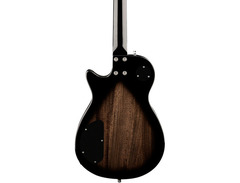
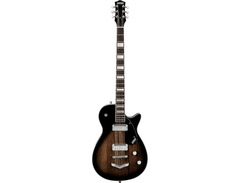
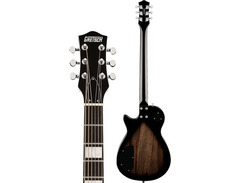
The Gretsch G5260 Electromatic Baritone offers a lot of character for players looking to explore lower tunings without breaking the bank. Known for its distinctive retro styling, Gretsch delivers on both aesthetics and performance with this model. Let's break down what makes this baritone guitar a solid choice for players seeking something different.
The G5260 excels in delivering rich, deep tones thanks to its 29.75" scale length, which allows it to handle lower tunings with ease. The dual Gretsch mini humbuckers provide a balanced sound that is surprisingly versatile. Whether you're diving into surf rock, jazz, or even doom metal, this baritone holds its own. The pickups keep the low end tight and clear, avoiding muddiness even when you crank up the gain.
In terms of build quality, the G5260 is what you would expect from a mid-range Gretsch model. The solid mahogany body and bolt-on maple neck offer durability and a comfortable playing experience. The neck has a comfortable C-shape, which makes it easy to navigate the longer scale without feeling cumbersome. The hardware is solid and reliable, though it might not compare to more expensive models. Still, it feels like a well-built instrument designed to last.
Aside from its sleek design, the G5260 keeps things simple. You get two volume knobs, a master tone knob, and a 3-way pickup selector. It's a straightforward setup that lets you focus on your playing without overcomplicating things. The fixed bridge adds to the guitar’s stability, ensuring solid tuning even when playing heavier or downtuned styles.
For its price point, you’re getting a unique instrument with reliable performance, great playability, and a classic Gretsch vibe. While it may not have the premium feel of higher-end models, it’s hard to beat if you’re looking for a versatile, well-built baritone guitar.
The Gretsch G5260 Electromatic Baritone is a fantastic entry into the baritone world, offering solid tone, good construction, and an attractive price tag. Whether you're adding depth to your music or simply exploring new sonic possibilities, this guitar is well worth considering.
See how artists use this





Danelectro '56 Baritone
4.5 (14)

Average Price: $557
Standard/Professional
$400
$1501+
Budget
Standard
High-end
- Unique and distinct tone, especially with both pickups engaged
- Inspires creativity and songwriting with its unique sonic palette
- Tunable bridge allows for heavier strings and alternative tunings
- Lightweight and well-balanced, easy to handle during long sessions
- See 6 more
- Electronics may require upgrading for professional use
- Some pickup settings can sound weak or anemic
- Requires careful setup for optimal performance, especially with heavier strings
The Danelectro '56 Baritone is a guitar that effortlessly blends vintage charm with modern playability, making it a standout option for players looking to experiment with lower tunings. Known for its quirky designs and unmistakable tone, Danelectro delivers a unique instrument that packs both style and substance.
The '56 Baritone shines with its distinctively twangy and retro tone, making it a favorite for surf rock, country, and even alt-rock. The lipstick pickups are a defining feature, delivering a bright, snappy sound that cuts through the mix while still maintaining enough low-end warmth to handle the baritone's extended range. Tuned to B-to-B, the guitar delivers a punchy, clear tone that holds up well in clean settings and cuts through nicely with light overdrive. If you’re after a guitar with vintage flair, the ‘56 Baritone delivers in spades.
Danelectro guitars are known for their lightweight, semi-hollow quality construction, and the '56 Baritone is no exception. The masonite and plywood body keeps the guitar relatively light for a baritone, making it comfortable to play for extended sessions. The maple neck is fast and comfortable, with a slim profile that suits both rhythm and lead playing. While the materials might not scream "premium," the build quality is surprisingly solid and dependable, especially for the price point.
The '56 Baritone sticks to a minimalist design, with just a three-way pickup selector, and individual volume and tone controls. The dual lipstick pickups give it that signature Danelectro sound, but it’s the guitar’s simplicity that makes it appealing. The fixed bridge provides excellent tuning stability, even with the thicker baritone strings, and the overall setup is straightforward—just plug in and play.
At its price point, the Danelectro '56 Baritone offers great value for players looking for a distinct tone and style. It’s not packed with high-end features, but what it does deliver is a unique voice and solid playability. If you’re after a baritone with a bit of vintage flair that won’t break the bank, this is a solid choice.
In conclusion, the Danelectro '56 Baritone is a guitar for players who want to stand out, both sonically and visually. With its twangy tone, lightweight design, and retro aesthetics, it offers a distinct playing experience at a very reasonable price. If you’re looking to add something different to your collection, the '56 Baritone is definitely worth a look.
See how artists use this


.jpg)



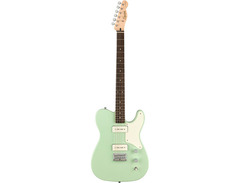
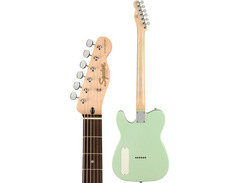
Squier Paranormal Series Baritone Cabronita Telecaster
5.0 (6)

Average Price: $440
Standard/Professional
$400
$1501+
Budget
Standard
High-end
- Fantastic sustain, offering long-lasting notes and rich sound quality
- P-90 pickups provide powerful, versatile tones for various music styles
- Excellent value for money, especially for a baritone guitar
- Comfortable and substantial feel, even for experienced players
- See 6 more
- Input jack issues, often loose or misaligned, requiring replacement
- Clear coat on neck might be off-putting for serious players
- Single ply pickguard perceived as cheap and flimsy
- Some models have very tight tuning pegs, affecting ease of tuning
- See 5 more
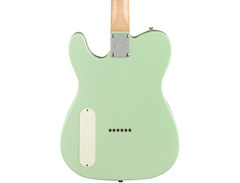
The Squier Paranormal Series Baritone Cabronita Telecaster offers an impressive combination of quality, playability, and affordability that stands out in the baritone guitar market. Designed to bring a classic Fender-inspired design into a baritone form, this guitar blends vintage and modern appeal, making it a compelling choice for musicians looking to explore lower tunings without compromising on style or sound.
Squier has built a reputation for delivering solid craftsmanship at an accessible price point, and the Baritone Cabronita Telecaster lives up to this standard. It features a poplar body and a sleek maple neck with a “C” shape profile, a combination that’s comfortable to play even for longer sessions. The 27” scale length is ideal for baritone tunings, providing enough tension to keep the strings from feeling too loose, even at lower pitches. With a high-gloss polyester finish, the guitar has a classic, durable aesthetic that feels more premium than one might expect from a guitar in this price range.
One detail worth noting is the weight, which is substantial yet manageable, adding a sense of solidity that feels reassuring in the hands. The hardware is serviceable, with vintage-style tuners that, while not the most premium, are stable and reliable. For musicians on a budget, the quality here offers excellent value.
Equipped with dual Fender-designed Alnico single-coil pickups, the Cabronita Baritone offers a rich tonal range, covering everything from deep, resonant lows to clear, articulated highs. It’s an ideal setup for genres that thrive on a thick, midrange-heavy tone, such as rock, metal, and even jazz or blues. The pickups provide a distinctive clarity, allowing individual notes to ring out even when chording, and they respond well to both clean and distorted settings.
The Cabronita design gives this Telecaster a unique twist, offering a tonal character that sits between classic Tele sparkle and a deeper, darker sound signature, courtesy of its baritone setup. Rolling back the tone knob yields a warmer, almost jazzy quality that could suit ambient or experimental playing styles, while cranking it up brings out a more aggressive punch. Despite the longer scale length, the neck is comfortable and accessible, even for players not accustomed to baritone guitars. The 9.5” radius is familiar to Telecaster players, with medium-jumbo frets that allow for smooth bending and clean, accurate fretting. The factory setup may require minor adjustments for players who prefer a lower action, but the guitar is playable right out of the box for most musicians.
At its price point, the Squier Paranormal Baritone Cabronita Telecaster is an exceptional value. It offers the low-tuning range and unique tone of a baritone without the typical high cost associated with many other baritone models on the market. For musicians interested in exploring baritone without a significant investment, this guitar delivers on all fronts - sound quality, build, and aesthetic appeal.
The Squier Paranormal Series Baritone Cabronita Telecaster is an excellent entry point for those new to baritone guitars or for experienced players looking to expand their tonal palette. With a unique blend of vintage Fender-inspired looks, versatile sound, and solid build quality, it offers exceptional value. While it may not rival the hardware and finishing touches of higher-end models, it’s a fantastic option for musicians who want a reliable, great-sounding baritone guitar on a budget. Whether you’re exploring heavy, downtuned styles or just want to add a new voice to your guitar collection, this Squier baritone Telecaster is hard to beat in terms of value and playability.
See how artists use this






PRS SE 277 Baritone
4.5 (3)


Average Price: $762
Standard/Professional
$400
$1001+
Budget
Standard
High-end
- Excellent playability, especially with smaller gauge strings
- Versatile sound with coil tap switch for humbucker to single-coil change
- Great intonation and setup right out of the box
- Longer neck enhances down-tuning and playing comfort
- See 6 more
- Stock pickups may lack clarity and sound muddy
- Sharp fret edges may require additional filing
- Baritone strings are more expensive and often need special ordering
The PRS SE 277 Baritone is a standout instrument in the baritone guitar category, offering professional-level quality and a versatile tonal palette that’s hard to match. PRS is known for crafting high-quality guitars, and the SE 277 brings that reputation to a more accessible price point, making it a go-to choice for musicians looking for a reliable, well-rounded baritone guitar without breaking the bank.
The SE 277 features a sturdy mahogany body and maple top, a combination that gives it a robust yet balanced tonal foundation. The neck, crafted from maple with a rosewood fingerboard, sports a wide-fat profile that feels substantial yet comfortable in the hands, even for those new to baritone guitars. The scale length, set at 27.7 inches, is slightly longer than some other baritones, allowing for stable low-end tones with less floppiness in the strings. This extended scale also makes it more adaptable for lower tunings, a great advantage for players experimenting with deep, resonant tones.
PRS’s attention to detail is evident in the SE 277’s craftsmanship, with clean fretwork and smooth finishing that feel like they belong on a higher-end guitar. The build quality is solid across the board, and the guitar holds tuning well, thanks to the PRS-designed tuners and the stable, fixed bridge.
The SE 277 is equipped with PRS 85/15 “S” humbuckers, which are versatile and responsive, catering to a wide range of tones from clean and warm to heavy and aggressive. The humbuckers offer clarity and punch, especially in the low end, making this guitar well-suited for genres like rock, metal, and blues. Clean tones are full-bodied and resonant, with a warmth that’s enhanced by the mahogany body.
A notable feature is the coil-splitting capability, activated by a push/pull tone knob, which adds flexibility by offering single-coil tones. This allows players to dial in a brighter, more focused tone that’s ideal for layering or creating contrast, making the SE 277 adaptable to a variety of musical contexts, from metal to jazz to ambient soundscapes.
While the SE 277’s longer scale may initially feel different for those used to standard guitars, the wide-fat neck profile is comfortable and accommodating, making it easy to transition between regular and baritone scales. The 10-inch fingerboard radius and medium frets are optimized for smooth playability, whether you’re riffing on low-end power chords or navigating complex, melodic lines.
With PRS’s attention to design, solid construction, and high-quality pickups, it competes with more expensive options while offering a lot of flexibility and durability. Musicians who want a professional-quality baritone guitar without the premium price will find a lot to love in the SE 277, as it can easily serve as a primary instrument for gigging and recording.
With its blend of quality construction, versatile sound, and thoughtful design, this guitar is equally suitable for heavy riffing, deep atmospheres, or punchy single-coil tones. While it may come at a slightly higher price point than entry-level baritones, the SE 277 justifies every dollar with its performance, reliability, and musical adaptability. For musicians ready to venture into the baritone world, the PRS SE 277 Baritone is a top-tier option that doesn’t disappoint.
See how artists use this





Top Ranked Extended Range Guitars on Equipboard

$2,299.00 - $3,599.00
4.5 (49)
4.5 (49)

$549.00 - $629.00
4.5 (30)
4.5 (30)


About the authors
Juan Spinelli is a multi-instrumentalist musician, but more of a guitarist than anything else. Based in Buenos Aires, Argentina, he started playing at a very early age and learned various instruments such as flute, clarinet, percussion, didjeridoo, cavaquinho, bass and more. Today, he also works as a music producer and sound engineer, collaborating in several projects in his city and with artists from all over the world. Read more


.jpg)