By Gear Experts
Table of Contents

Equipboard
Equipboard is the world's largest community of artists and their gear. Read our review process.
We are reader-supported. When you buy through links on our site, we may earn an affiliate commission. Learn more.
Guitar finishes have come a long way since the early days when simple varnishes were pretty much the only options. Traditionally, finishes were merely meant to protect the wood from the elements, with little consideration given to look and feel.
That’s not the case anymore!
As time went on, finishes increasingly became a key part of a guitar’s look and feel, and the player’s style. Whether glossy and shiny or a smooth matte surface, the finish has become integral to a guitar’s vibe.
In this article, we’ll dig deep beneath the surface of guitar finishes and explore the many different types available today.
The 7 Most Common Guitar Finishes
Choosing the right guitar finish isn’t just about looks. It can also affect the instrument’s sound, durability, and feel. Here’s a breakdown of the seven most common guitar finishes, each offering its own unique blend of aesthetics and function.
1. Nitrocellulose Lacquer
Nitrocellulose lacquer is made from a plant-based material called “cellulose”. Combined with nitrocellulose solvents and resins, cellulose produces the classic guitar finish commonly referred to as “nitro”.
Nitro is known for its thin, breathable layer that allows the wood to resonate freely, enhancing your guitar’s natural tone. Although highly flammable, nitro is favored by luthiers and players for its unique aging characteristics and tone-enhancing properties.
Nitrocellulose lacquer is a classic mid-20th-century finish, often seen in instruments from the 1950s to the 1970s. Many of the most iconic guitars from this period‒including most Fender and Gibson models‒featured nitro finishes.
The most notable characteristic of nitro is how it ages.
Over time, these finishes tend to fade and turn yellow, and even develop fine cracks. But many players and collectors actually consider this a desirable trait, as the aged patina gives vintage guitars a distinct, road-worn, and well-loved appearance.
Finishing a guitar in nitro involves applying multiple thin coats of nitrocellulose lacquer. As each coat is applied, the guitar’s surface is meticulously sanded to create a smooth, glossy finish. It’s a painstaking process that requires a lot of patience, especially since nitro takes longer to cure than other finishes.
Despite its fragility and tendency to chip and become scratched, nitrocellulose lacquer continues to be a favorite finishing option. Many players love its tone-enhancing qualities and its relatively easier-to-repair character. Even today, some of the most sought-after guitars feature nitro finishes, as a testament to the material’s tonal characteristics and timeless beauty.
2. Polyurethane
Polyurethane has been a popular guitar finish since it was introduced in the late 1960s. A synthetic polymer, polyurethane is made from a blend of chemicals that create a tough, protective coating.
Polyurethane is much more durable and robust than nitrocellulose. It is generally applied in thicker coats, providing better protection against wear, scratches, and environmental factors.
Guitars finished in polyurethane are more resistant to chemicals, moisture, and physical damage than their nitro-finished counterparts. While nitro allows the wood to “breathe,” which can enhance the instrument’s tone, polyurethane is much more effective at preserving the guitar’s appearance over time.
There is a tradeoff to this increased protection. Some players feel that the thicker coatings of polyurethane-finished guitars dampen the wood's natural vibrations, resulting in a somewhat subdued tone.
Applying polyurethane is a relatively quick and simple process compared to nitro finishing. Each layer is thicker, so fewer coats are necessary, and the material itself dries fairly quickly.
The downside is polyurethane finishes are more difficult to repair if damaged.
Even minor chips and cracks may require professional attention, as the material is harder to blend seamlessly compared to nitrocellulose.
Despite its drawbacks, polyurethane remains a popular option due to its durability. Top manufacturers such as Fender and Ibanez use polyurethane finishes on most of their current production models, guaranteeing their instruments’ optimum condition and appearance even with years of heavy use.
3. Polyester
Polyester is another guitar finish known for its durability and robustness.
This synthetic material is made from polyester resins that dry to a thick, hard shell over the guitar’s surface. One of the most protective coatings available, polyester gives your guitar an extremely glossy, almost glass-like finish that enhances any instrument’s visual appeal.
Applying polyester to a guitar involves spraying multiple layers, each of which cures fairly quickly under UV light. Some manufacturers utilize chemical catalysis for curing. Regardless of which process is used, the result is a durable finish that is extremely resistant to scratches and dings.
As with all finishes, there is a downside to polyester.
For one thing, the chemicals that make up the material can be harmful to the environment. And like all finishes applied in thick coats,it can dampen the wood’s natural resonance, resulting in a less lively tone.
Despite these drawbacks, polyester is one of the most commonly used finishing materials, particularly on mass-produced guitars. It is used almost exclusively on Fender’s Squier line and many of the company’s Mexican-made models, providing a long-lasting and attractive finish that requires very little maintenance.
4. Water-Based Finishes
Water-based finishes are an eco-friendly alternative to the traditional guitar finishes we’ve covered so far. As the name suggests, they consist primarily of water mixed with mild solvents.
Unlike most other finishes whose primary purpose is to protect the wood, water-based finishes are specifically designed for reduced environmental impact. Because they release fewer volatile organic compounds (VOCs) into the air than other finishing materials, they are much safer for the environment as well as for people applying them.
Applying a water-based finish is a fairly straightforward process. The material is applied in multiple thin coats, each of which dries very quickly, allowing for fast turnaround times. Aside from their low toxicity, water-based finishes are known for being easy to clean up, requiring only water rather than harsh chemicals.
The downside is that water-based finishes are generally less durable than polyurethane or polyester finishes. Even with careful handling, your guitar’s surface will likely develop worn spots and scratches over time.
Even so, water-based finishes are becoming more popular in the guitar community, especially among manufacturers and players looking for sustainable options. One such company is Taylor Guitars, whose GT Urban Ash acoustic guitar line features a water-based finish.
5. Oil and Wax Finishes
Oil and wax finishes are made from materials like tung oil, linseed oil, and beeswax. Favored for their natural feel and organic appearance, these finishes seep into wood instead of merely coating the surface. This has the effect of emphasizing the grain and enhancing the guitar’s natural appearance.
Applying an oil or wax finish involves rubbing the substance into the wood and letting it soak in for a bit. The guitar’s surface is then buffed to a soft sheen.
Although fairly simple, the process requires multiple coats of finish and a great deal of patience to get the best results. The good news is that oil or wax-finished guitars are pretty low maintenance. However, you may have to take your guitar to a luthier for periodic refinishing to protect the wood and maintain its appearance.
Like nitro, oil and wax finishes allow the guitar’s wood to resonate freely, keeping its natural tone intact. But just like nitro, they also provide less protection against moisture, dings, and scratches than other finishes.
Oil and wax finishes are by far the best options if your primary objective is to showcase your instrument’s natural wood grain. Brands like Warwick and PRS feature oil and wax finishes on some of their best-selling models, and the results are often quite striking.
6. Natural Finishes
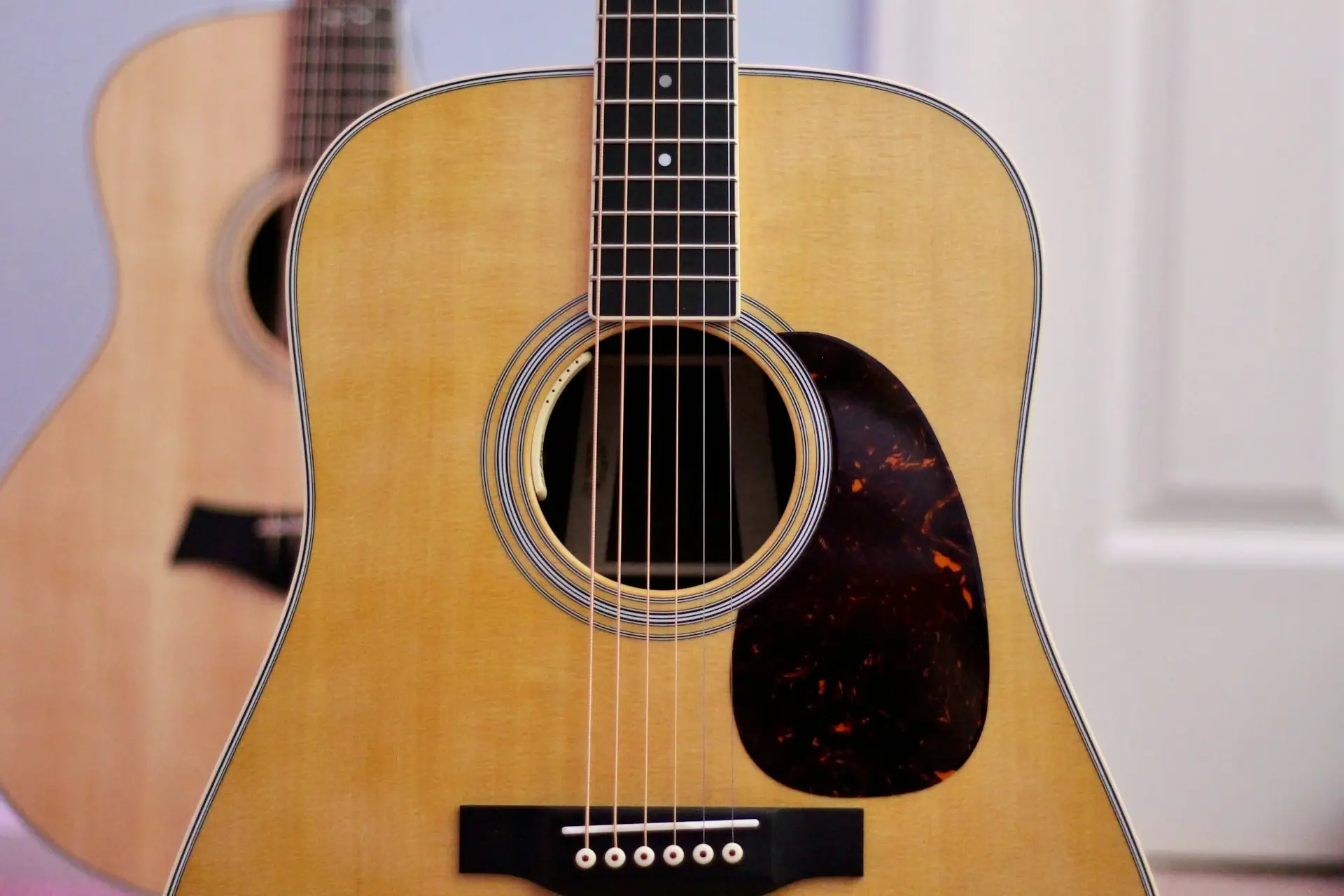
So-called “natural” finishes use organic materials to protect and enhance wood without creating the thick, artificial layer typical of traditional finishes. Common examples include Tru-Oil, Danish oil, and shellac, all of which are known for enhancing wood grain while allowing the guitar to “breathe.”
Applying natural finishes involves hand-rubbing the material into the wood, allowing it to soak in and penetrate deeply. As with other types of finishes, multiple coats are applied, with the surface sanded lightly between applications.
Natural finishes can produce anything from a smooth matte surface to a semi-glossy appearance. They are a favorite among DIYers because they are so easy to apply and repair.
Like the best finishes, natural finishes enhance the guitar’s wood grain and resonance. Unfortunately, they provide less protection than synthetic finishes like polyurethane, requiring more frequent maintenance and reapplication.
Natural finishes are especially popular among boutique and custom guitar builders and acoustic guitar manufacturers. Martin and Taylor are particularly renowned for their timeless guitars that feature solid craftsmanship and gorgeous natural finishes.
7. Satin and Matte Finishes
Satin and matte finishes are generally more subdued than other finishes, with a non-reflective appearance instead of the familiar high-shine gloss. The two differ slightly from each other, with satin having a soft sheen and matte being completely flat with no perceptible shine.
Satin and matte finishes employ pretty much the same application techniques as glossy finishes. But the guitar’s surface goes through an additional sanding or buffing process that reduces the shine.
If you prefer a relatively understated and subdued look to your instruments, satin and matte finishes are well worth considering.
And if you’re tired of having to wipe off fingerprints and smudges from your guitar, you’ll be happy to know that satin and matte-finished guitars are practically immune from such markings.
One thing you should be aware of is that satin and matte surfaces can become worn over time. This will be most apparent on high-contact areas, which will become shiny from friction.
Fender’s American Professional series and Gibson’s Les Paul Studio models are a few examples that feature satin and matte finishes. These instruments are favored for their sleek looks and comfortable feel, which are due in large part to the understated finish.
The Impact of Finishes on Tone
Does a guitar’s finish affect its tone?
This has been a hotly contested debate among players and luthiers for decades. Even today, there are fervent believers in the tone-influencing properties of guitar finishes and just as many others who claim that they don’t make a difference.
Scientific studies haven’t helped settle the debate, with most being limited and ultimately, inconclusive. While some researchers admit that a guitar’s finish may affect its tone somewhat, they emphasize that it’s less of a factor than wood type and construction.
In theory, thinner finishes like nitrocellulose will allow wood to vibrate more freely, potentially enhancing‒or at least preserving‒a guitar’s tone. Conversely, finishes that are typically applied in heavy coats‒polyurethane, for example‒could potentially dampen vibrations, resulting in a less lively tone.
Ultimately, the choice of finish is a personal decision, with factors such as durability, aesthetics, and tone deserving of equal consideration.
Maintenance and Care
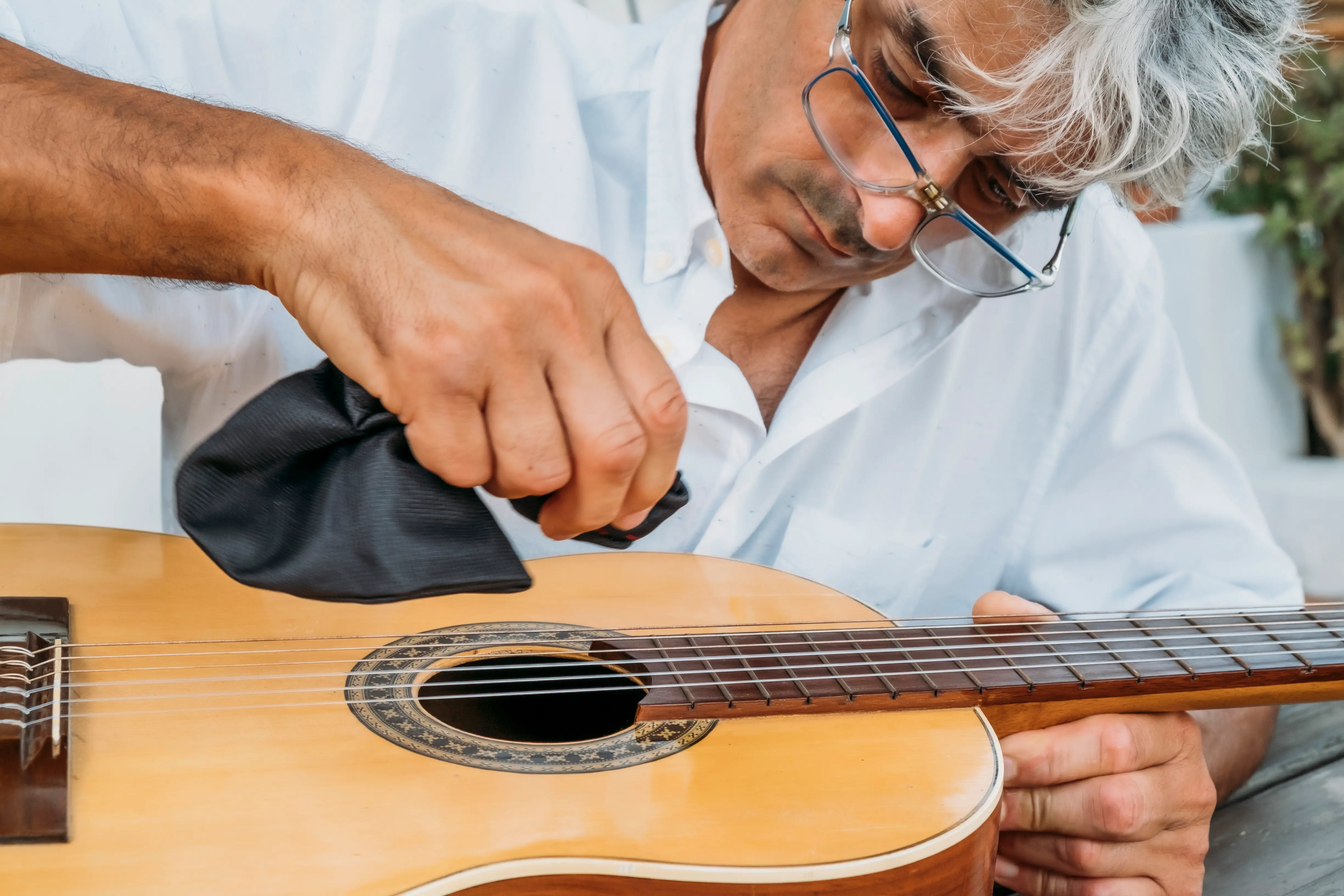
Regardless of what type of finish you decide on for your guitar, regular care and maintenance will help preserve its appearance and condition. To remove dust and fingerprints, wiping the surface with a soft, dry cloth is often all you need to do.
Gloss finishes generally benefit from a mild guitar polish, but try to avoid harsh chemicals that can damage the finish. Polishes aren’t recommended for satin and matte finishes, as they can create unwanted shine on your guitar’s surface.
If you opted for an oil or wax finish on your guitar, remember to reapply the same finish periodically to keep your guitar protected. Avoid products containing silicone or abrasive cleaners, as these can harm the finish.
Despite your best efforts to take care of your guitar, the surface may develop signs of wear or damage over time. If significant damage to the finish affects your instrument’s appearance or condition, consider taking it to a professional for refinishing.
Choosing the “Perfect” Guitar Finish
Understanding the different guitar finishes helps you appreciate their effect on aesthetics, protection, and tone. But choosing the right finish is often a personal matter and everyone’s needs are different. So rather than trying to decide on that elusive “perfect” guitar finish, you might be better off finding one that resonates with your personal style and sound.
Of course, each finish has its pros and cons. Consider factors such as how much wear and tear you place on your guitar, your aesthetic sensibilities, and your tonal preferences. Figuring out which of these factors is most important will help you decide on the right guitar finish for you.
About the authors
Juan Spinelli is a multi-instrumentalist musician, but more of a guitarist than anything else. Based in Buenos Aires, Argentina, he started playing at a very early age and learned various instruments such as flute, clarinet, percussion, didjeridoo, cavaquinho, bass and more. Today, he also works as a music producer and sound engineer, collaborating in several projects in his city and with artists from all over the world. Read more