.jpg)


By Gear Experts
Table of Contents

Equipboard
Equipboard is the world's largest community of artists and their gear. Read our review process.
We are reader-supported. When you buy through links on our site, we may earn an affiliate commission. Learn more.
Our Picks

Sleek, minimal, feature-laden tuner with the best and brightest screen around.
Read more


Looking a bit dated compared to competitors' big LED screens, but still a dependable tuner that's near indestructible.
Read more

Walrus Audio Canvas Tuner Pedal
A bit pricey, but worth it. TuneAssist mode is awesome, as is being able to customize colors, upload a photo, and adjust its orientation on your pedalboard.
Read more
Donner DT-1 Guitar Chromatic Auto Pedal Tuner
The Donner DT-1 is a robust, reliable, and affordable option for guitarists and bassists looking for a tuner pedal.
Read more
Sonic Research Turbo Tuner ST-300
Boutique strobe pedal tuner. Very customizable, +/- .02 cents accuracy and extremely quick... but it'll cost you a premium.
Read more

Accurate and has an awesome display. It’s relatively inexpensive and small enough to take anywhere. Since not everyone plays electric guitar or has a pedalboard, this is the best bet for most people.
Read more-l.webp?v=1785217383)
Giant multi-color LCD display and endless customization potential make this the ultimate premium guitar tuner pedal.
Read more
Snark ST-8 Super Tight Clip-on Chromatic Tuner
Not as precise as the rest of the bunch, but it gets the job done and is DIRT. CHEAP.
Read more

In an ocean of guitar tuner smartphone apps, GuitarTuna stands out with a great reputation, great design, and the basic version is free.
Read more
TC Electronic PolyTune 3
5.0 (122)
The PolyTune 3 is the new gold standard due to its accuracy, legible screen, and features.









Average Price: $66
Standard/Professional
$50
$101+
Budget
Standard
High-end
- Ultra-accurate strobe tuning feature (+/- 0.1 cent) for precise tuning
- Offers both true bypass and buffer options, enhancing signal path flexibility
- Polyphonic tuning feature allows quick check of all strings' tuning simultaneously
- Built-in Bonafide signal buffer improves signal integrity through pedal chains
- See 6 more
- Polyphonic tuning feature not as accurate as single-string tuning
- Screen resolution and flexibility not as high as some competitors
- Some users find the tuner overwhelming with too many options initially
- Limited color options available
- See 2 more
| Tuner Type | chromatic, polyphonic |
| Current Draw | 100ma |
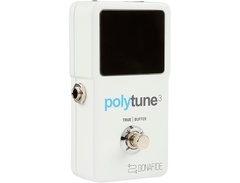
TC Electronic has really taken the fight to Boss when it comes to an industry standard tuner pedal. The PolyTune 3 has a sleek minimal design, impressively bright screen, and all the tuning features you could want in a tuner pedal.
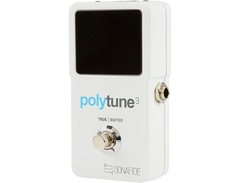
The PolyTune 3 is slightly narrower than a Boss stompbox, taking up a bit less real estate on your board. It’s got a solid metal enclosure and is definitely road-worthy (evidenced by the many big names that take this pedal with them on tour). The soft-click footswitch is always appreciated.
This pedal sports True Bypass , meaning when it's off it won't influence your tone at all. You can also set the pedal to Buffered Bypass via 2 DIP-switches underneath the bottom plate (might be necessary if you have a super long cable between your guitar and first pedal, or you have a ton of pedals on your board). When the PolyTune 3 is on, the output is muted so you can tune up quietly.
The input/output jacks are on the left & the right, and on the back you have a 9V DC power input (power supply not battery are included) and a power output, so you can use the PolyTune 3 to daisy-chain and power other pedals (current draw of other pedals not to exceed 2000 mA).
Here's one of our favorite features - on the back is a micro USB port for firmware updates from TC Electronic. This isn't critically important, but it shows TC wants to make updates and improvements available for guitarists who make the investment in this pedal.
We’ve established the pedal looks and feels good, but the big question is how well does it tune? The answer is extremely well. The DISPLAY button on the back of the pedal cycles through guitar needle -> guitar strobe -> bass needle -> bass strobe. The inclusion of a strobe tuner is great for touring pros and if you need hyper accuracy ( +/- 0.1 Cent tuning accuracy to be exact). A TUNING switch cycles through various tuning modes from standard, to alternate, to capo (first through seventh fret), and holding down the foot switch for 3 secs puts you in drop D. Your settings are recalled when you turn the pedal off and on again, which is nice.
One of the biggest reasons to buy this pedal is the phenomenal display. It's big, bright, and in Needle mode it's super easy to tell when you're in tune (the needle does not bounce all over the place like in cheaper tuners). The display also adjusts its brightness depending on lighting conditions, which is awesome if you're gigging.
The marquee feature of the PolyTune line of tuners is polyphonic mode. This feature is automatically engaged when you strum all your strings at once. It analyzes all of them and shows you which of your strings are sharp, flat, or right on the mark all at the same time. While that sounds neat, in practice it's hit and miss. It might get you in the ballpark of accurate tuning but let's face it, if you're buying a tuner as good as this, you want to be as accurate as possible.
Bottom Line : The only reasons we can think of not to buy this tuner is if you have an affinity for Boss, or your budget won't allow. The PolyTune 3 looks and feels really nice, is true bypass, can power other pedals via daisy-chaining, has an extremely accurate strobe tuner mode, supports a variety of tunings, and has an amazing display. Sure the polyphonic feature isn’t perfect, but your milage may vary with it. Tuning with the PolyTune 3 is as good as can be - crisp, swift, and accurate.
See how artists use this








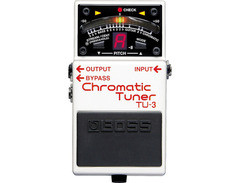
Boss TU-3 Chromatic Tuner
5.0 (881)
The Boss TU-3 has built a well-earned reputation for being a rock solid reliable pedal.



Average Price: $99
Standard/Professional
$50
$101+
Budget
Standard
High-end
- Incredibly accurate and easy to use
- Mute function useful for silent tuning
- Offers daisy chain power out for other pedals
- Versatile, with different tuning modes
- See 6 more
- Sensitive to power supply quality, may hum with non-isolated power
- Side-mounted jacks increase pedalboard footprint
- Flimsy switch construction under durable exterior
- Power adapter not included
- See 6 more
| Bypass | buffered bypass |
| Power | 9V |
| Tuner Type | chromatic |
| Current Draw | 30ma (standard), 85ma (high brightness mode) |
In 1998 Boss released the TU-2, which ended up being the top selling tuner of all time. With legendary Boss reliability and several different tuning modes for guitar and bass, the Boss TU-3 does everything the TU-2 did, only slightly better! Though that's not to say it's perfect...
It's hard to debate that this is one of the most durable, dependable, tour-worthy pedals money can buy. Like any Boss stompbox you press down on the black rubber portion to turn it on/off. Instrument input is on the right, and on the left are two outputs: OUTPUT and BYPASS. When you turn on the TU-3, the OUTPUT is muted, so you can tune without everyone hearing you. The BYPASS output does not get muted, and in fact you can use this pedal as a splitter to send your signal to two different places (two amps for instance).
To power it you plug in a 9V DC power supply to the jack on the back, and the TU-3 can also supply power to other pedals via daisy-chain (maximum current draw being 200 mA or 500 mA, depending on which adaptor you use).
The design is definitely busier than the likes of a PolyTune or Korg Pitchblack. The main functions can be cycled through using a STREAM/CENT button and a MODE button on the top. STREAM/CENT lets you switch between CENT mode - the standard “get close to the center” display - or STREAM with LED lights that “flow” more slowly as you get closer to pitch (kind of strobe-ish).
MODE button cycles through 6 different tuning modes: Chromatic -> Chromatic flat -> Guitar -> Guitar flat -> Bass -> Bass flat. The TU-3 has you covered no matter if you’re playing guitar or bass, use various tunings, or have a 7 string guitar or 6 string bass.
Boss hasn't changed their 21-segment LED tuner display in ages and we can't help but feel it seems a bit dated compared to the bright big screens of the competitors. Not that it's hard to use - as you get closer to pitch you get indications with yellow arrows and red and green markers. There is also a High Brightness mode you can switch too (we kind of wish that was the default).
Boss cites a tuning accuracy of +/-1 cent which is inferior to the competition. It's still a reliable tuner, but just something to think about. The Boss TU-3 is not true bypass. On one hand that's disappointing, but on the other hand you can use this tuner pedal as a buffer at the beginning of your chain, which essentially can strengthen your somewhat weak high-impedance guitar signal if you’re sending your signal over long cable lengths.
Bottom Line : The TU-3 is a stalwart tuner pedal for your guitar or bass. Honestly, we prefer the big bright LED screens the competitors offer, as the Boss interface can feel a bit cluttered to navigate and see from a distance. We also value a higher tuning accuracy and True Bypass, both of which the TU-3 lacks. That said, Boss tuners are found on more pro pedalboards than any other pedal in history. If you are partial to the Boss form factor or place indestructibility above all else, pick up a TU-3.
See how artists use this







Walrus Audio Canvas Tuner Pedal
4.5 (3)
A pedal tuner for the modern musician.

Average Price: $137
High-end/Boutique
$50
$101+
Budget
Standard
High-end
- Large, easily visible screen enhances usability for all ages
- Customizable font color and screen saver add personalization
- TuneAssist feature offers clear indication when in tune
- Offers both true and buffered bypass for flexibility
- See 4 more
- Notable audible noise in bypass mode
- Requires isolated power supply to avoid buzz
- Can only upload one picture at a time
- Occasional malfunction and signal passing issues reported
- See 1 more
| Bypass | true bypass, buffered bypass |
| Power | 9V |
| Tuner Type | chromatic |
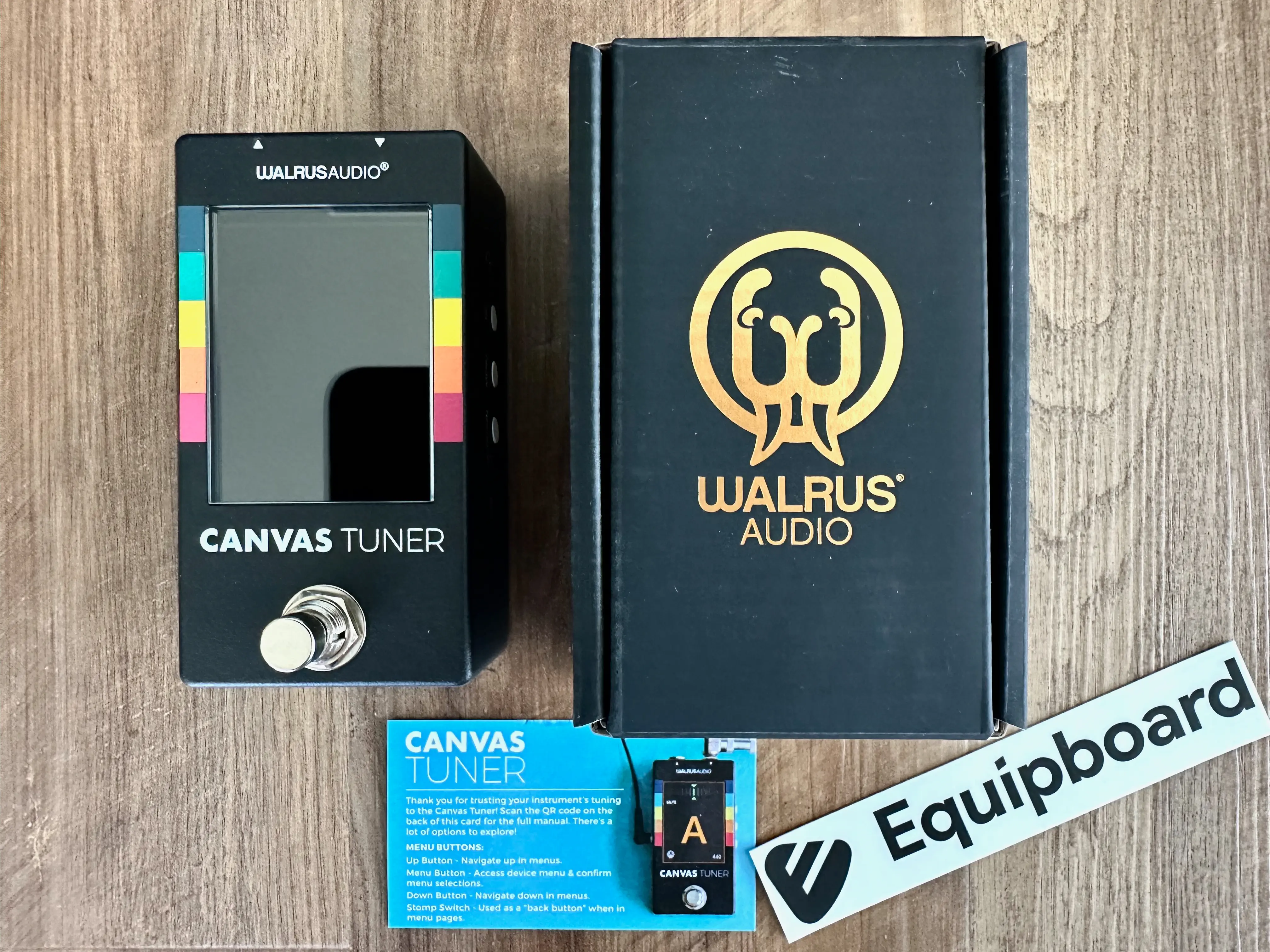
We were excited to try out the Walrus Audio Canvas Tuner Pedal. Just by the looks of it, it seems like a more modern (perhaps even more fun) take on traditional tuner pedals. Walrus has a stellar reputation for producing high-quality pedals, so the question is, did they nail it? Or do the bells and whistles get in the way of the most important thing, which is to tune your guitar quickly and accurately?
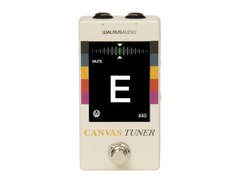
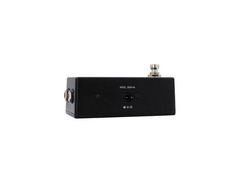
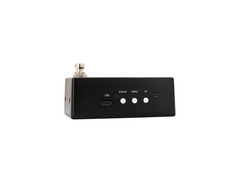
Out of the box, the Canvas impressed us with its sleek design and solid build quality. The pedal feels robust underfoot. And the screen? Absolutely top-notch. Large, bright, full-color, and incredibly easy to read even in dim settings - a feature that's invaluable during live gigs.
The controls and features of the Canvas Tuner are where this pedal really shines. The screen isn’t just bright; it’s highly customizable. We loved that you can upload pictures (literally like a screen saver, your setlist... or Equipboard's logo), change screen orientation, and tweak display options to your liking. Navigating through its options is truly a pleasure, it's almost an app-like experience in a pedal due to the awesome large LCD screen.
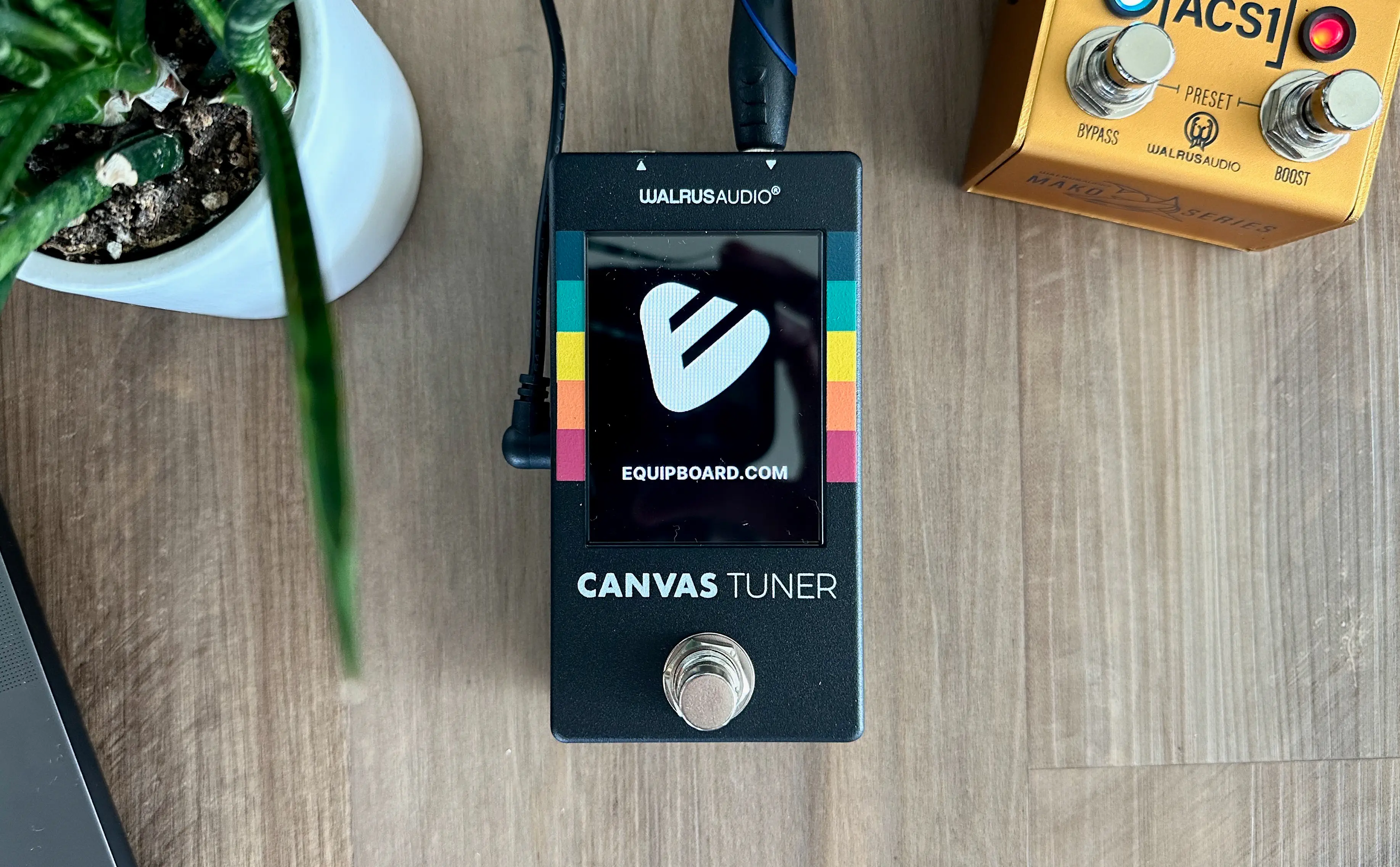
OK, and how about actually tuning? The tuning is precise, accurate, and reactive (±0.1 cent). No issues there. The intuitive TuneAssist feature made tuning a breeze during our tests. Basically, you can set a IN-TUNE THRESHOLD that determines how close you consider "in tune" to actually be (we set it to ±2 or ±3 cents). Then, when you get within that range, the display blinks to make it very obvious you've reached said threshold. It's VERY cool.
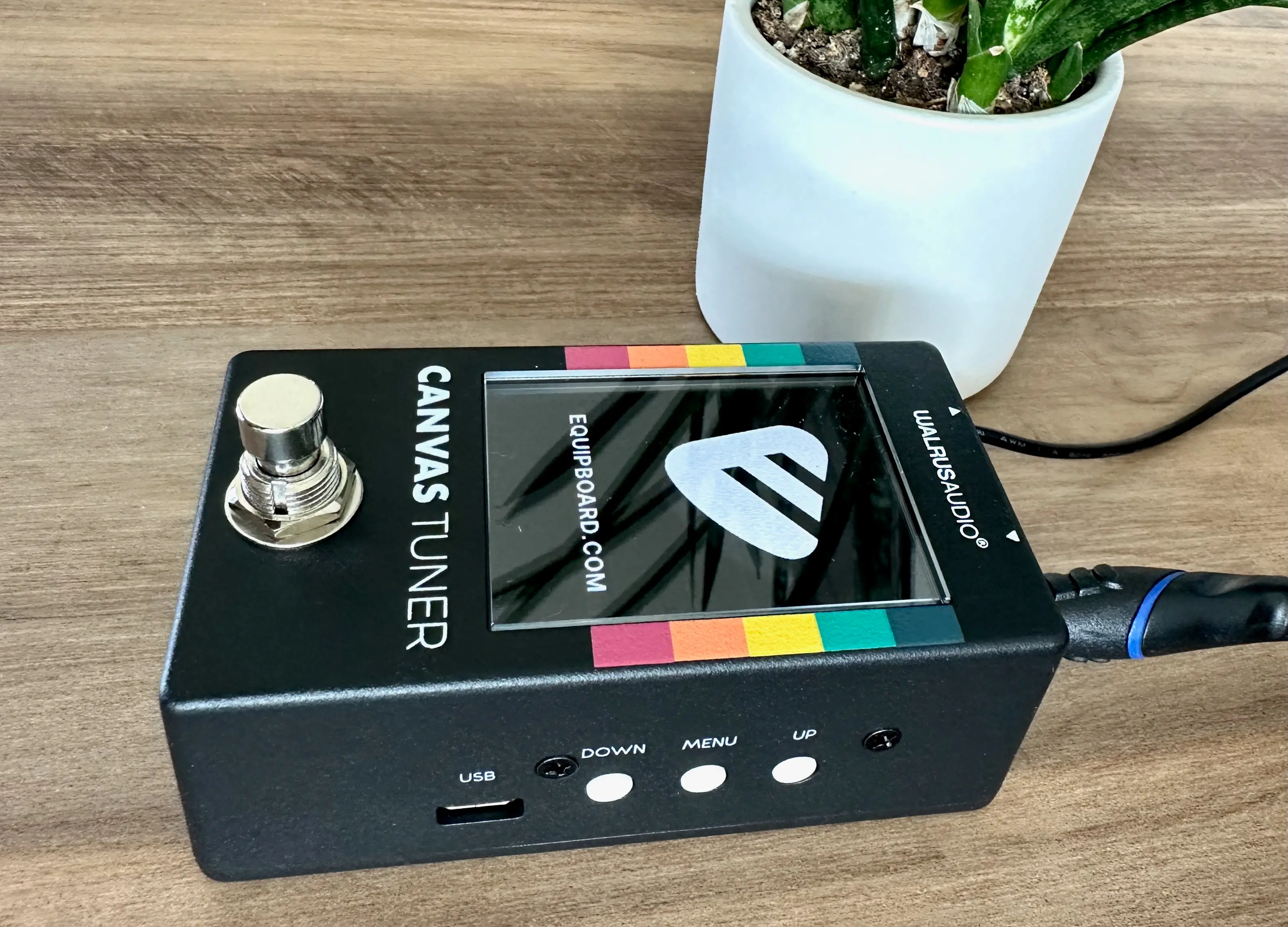
The pedal also offers both Needle and Strobe tuning modes, as well as multiple bypass options, allowing you to choose between true or buffered bypass depending on your setup.
Bottom line: The Walrus Audio Canvas Tuner Pedal is perfect if you prioritize precision, but also want a modern tuner with a large display that can be customized. Its robust features justify the price (especially TuneAssist), making it worth every penny. If you’re a touring musician or someone who plays in various lighting conditions, this pedal is a no-brainer. If customizing the colors or changing the orientation feels like a gimmick to you, then fair play - skip this one and grab a PolyTune for less money.
See how artists use this

.jpg?v=1785199462)





Donner DT-1 Guitar Chromatic Auto Pedal Tuner
4.0 (33)

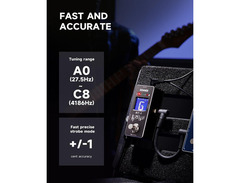
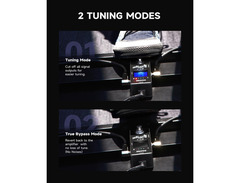

- Compact and sturdy metal housing for durability
- Accurate and fast tuning response
- True bypass ensures no signal loss
- Chromatic functionality supports various tunings
- See 3 more
- Small size might be awkward for some users
- Occasional "pop" sound when engaging the pedal
- Some users may find it lacks advanced features
- Can be slightly difficult to see in low light conditions
| Bypass | true bypass |
| Tuner Type | chromatic |
The Donner DT-1 Pedal Tuner has made quite an impression in the guitar community, and after thorough testing, we can see why. Initially, the DT-1 strikes us with its compact and solid build, fitting seamlessly onto any pedalboard. Its sturdy metal construction feels reassuringly durable, promising to withstand the rigors of frequent gigs and practices.
In terms of controls, the DT-1 is straightforward. The single footswitch is responsive, and the bright LED display is a standout feature. We found the display highly visible under various lighting conditions, which is crucial for live performances. The true bypass functionality ensures that your tone remains unaltered when the tuner is not in use, a detail that tone purists will appreciate.
When it comes to operation, the DT-1 is impressively accurate and fast. It locks onto notes quickly, making tuning between songs a breeze. We particularly appreciated its chromatic tuning mode, which offers versatility for different tunings. However, we noticed a slight delay when tuning lower strings, which might be a minor inconvenience for bassists (check out our video review to see the tuning speed in real time).
For the price, the quality and reliability of the DT-1 are hard to beat. It’s an excellent choice for budget-conscious musicians looking for a reliable pedal tuner without compromising on essential features. However, those who demand ultra-precision or additional features like a buffer might find it lacking. Musicians with more specialized needs or those requiring the fastest response times will want to explore higher-end options.
Overall, the Donner DT-1 Pedal Tuner is a robust, reliable, and affordable option for guitarists and bassists. It's perfect for those seeking a no-fuss, durable tuner for regular use.
See how artists use this




.jpg)

.jpg)


Sonic Research Turbo Tuner ST-300
5.0 (18)
Boutique strobe pedal tuner. Very customizable, +/- .02 cents accuracy and extremely quick... but it'll cost you a premium.

Average Price: $220
High-end/Boutique
$50
$101+
Budget
Standard
High-end
Available Stores
Average Price: $220
High-end/Boutique
$50
$101+
Budget
Standard
High-end
- Exceptional accuracy and precision in tuning
- Strobe display enhances speed and readability
- Instant note recognition, even for low B strings
- True bypass with no pop when engaging/disengaging
- See 6 more
- Initial adjustment period for new users due to high accuracy
- True bypass only, lacking a buffer bypass option
- No polyphonic tuning capability
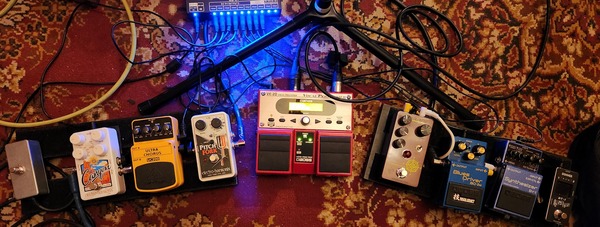
The Sonic Research Turbo Tuner ST-300 is the boutique option of guitar tuners. It’s a “true stroboscope” tuner, made in the USA, not very widely available, and extremely accurate.
Just to get the terminology straight, a mechanical strobe tuner works when the input guitar signal drives a strobe light, which illuminates a rotating disk. When the frequency of the signal matches the speed of the rotating disk, the rotating pattern will appear to stand still which means the tuning of that note is spot-on. A strobe tuner shows even the slightest discrepancy between the note you’re playing and the reference frequency, so it’s more accurate than a needle-type tuner. The ST-300 does not have any moving parts, so there’s no actual rotating disk.
The ST-300 looks and feels rugged and utilitarian and sports a die-cast aluminum housing. It's certainly not as pretty as a PolyTune. It's True Bypass and has instrument input and output jacks on the sides (output is muted when the tuner is active). On the back there's a jack for a 9V DC power supply (not included), and a power output to daisy-chain other pedals and power them (current passed through the daisy chain should be limited to 2000 mA). There is also a micro USB port so you can customize tunings on your computer.
Accuracy is the name of the game with the ST-300, and you get +/- .02 cents accuracy which is phenomenal and about as good as it gets for a pedal tuner. The display is bright, with the LED pattern rotating to the right if you are sharp and left if you are flat. The strobe-style display might take a little getting used to. It's a bit disconcerting at first, since it's very difficult to get the rotating pattern to be stationary, which initially makes you think you're not in tune. However, we were told by both the folks at Sonic Research and the manual that so long as the pattern is moving slowly, you are within a fraction of a cent.
You can use the CAL button to change the 440 Hz reference frequency. This tuner is extremely customizable , and has support for multiple temperaments (equal, just, Pythagorean) and alternate tunings (chromatic, drop D, DADGAD, open A, open D, bass, bass drop D, 5 string bass, violin, cello & more). Making adjustments to the settings might take you a little time, as you have to press the mode buttons as the pedal is powering up and remember the correct sequence of button presses. Thankfully once you set it up how you want, it remembers your settings after you power it off.
One final note is that this tuner is super responsive, meaning you can play a fast lick, and the notes will immediately appear on the screen with zero lag. It’s pretty fascinating to see this in action.
Bottom Line : The Sonic Research Turbo Tuner ST-300 is probably the most accurate tuner you can buy in pedal form , due to it being a true stroboscope. Because of that and a more limited production it’s pricier than most tuner pedals. If that's what you want and you can live with its utilitarian aesthetic and you don’t mind forgoing a needle-type tuner, this is the one to get.
See how artists use this


.jpg)






TC Electronic PolyTune Clip
4.5 (72)
The PolyTune clip is small, versatile, and delivers several different tuning modes in a convenient clip-on format.



- Highly accurate tuning
- Visible LED display in bright and low light
- Polyphonic mode for tuning all strings at once
- Strobe feature for super accuracy
- See 6 more
- Struggles with low B and A strings, especially in polyphonic mode
- Plastic parts feel flimsy and may break easily
- Auto-shutoff is inconsistent and often too quick
- Buttons are small and difficult to press
- See 4 more
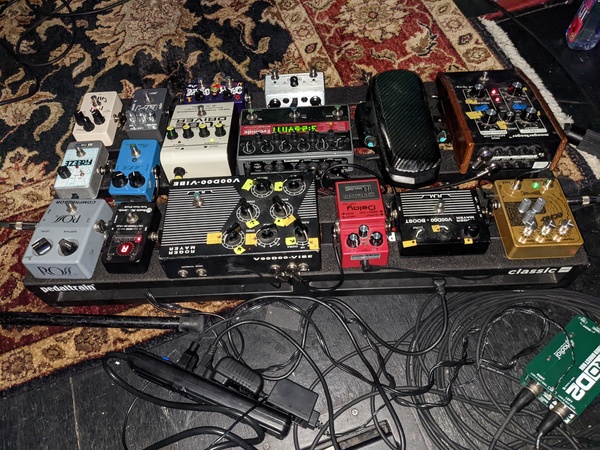
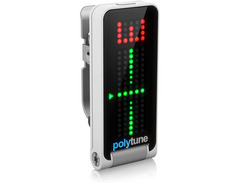
If a clip-on guitar tuner is more of what you're looking for and you don't mind paying a little bit of a premium, the TC Electronic PolyTune Clip is an amazing tool. TC managed to pack every feature from their impressive pedal tuners into this little thing , and it works beautifully.
Design-wise, the PolyTune Clip is pretty. It's about as big as your thumb and the whole thing is a display. It unfortunately does have a plastic casing, but the clip is metal and feels very solid. The display pivots back and forth so you can see it.
The larger top button powers it on and off (it auto shuts off after 3 mins to conserve battery, which is good for ~18 hrs of use ). The Tuning Mode button cycles through all he tuning modes (same ones as the PolyTune 3 pedal). The Display Mode button switches between Needle and Strobe, which again is like its pedal counterpart. Pressing and holding this button toggles between Guitar and Bass modes.
Polyphonic tuning is there as well, and just like we said with the pedal it's a cool feature albeit a little hit and miss. The accuracy on this thing is outstanding. +/-0.5 Cent in Chromatic mode which is quite as good as the pedal... and +/-0.02 Cent in Strobe mode!
Like it's big pedal sibling, it's all about the gorgeous screen. Tuning with the PolyTune Clip is a pleasure; crisp clean and fast. The display is very bright and easy to see, and even auto-rotates to the right orientation for you.
Bottom Line: The PolyTune Clip's only downside is the premium price tag ; you could pick up a Korg Pitchblack for roughly the same. Impressively, almost every feature of the PolyTune 3 pedal is present in the Clip. If a clip-on is best for you, look no further. We think the TC Electronic PolyTune Clip is the best clip-on guitar tuner out there.
See how artists use this

.jpg)





Peterson StroboStomp HD
5.0 (23)
Giant multi-color LCD display and endless customization potential make this the ultimate premium guitar tuner pedal.
-s.webp?v=1785217383)
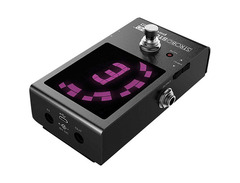
Average Price: $139
High-end/Boutique
$50
$101+
Budget
Standard
High-end
- Exceptionally accurate, ideal for setting intonation
- Large, easy-to-read display visible under various lighting conditions
- Features "sweetened" tunings for enhanced musicality
- Durable build with metal jacks and silent switching
- See 6 more
- Slight delay in muting when activated
- Slower tracking compared to some competitors
- Does not display the exact cents off pitch
- Stroboscopic display may confuse some users initially
- See 3 more
| Bypass | true bypass |
| Power | 9V |
| Tuner Type | strobe, chromatic |
| Current Draw | 80ma |
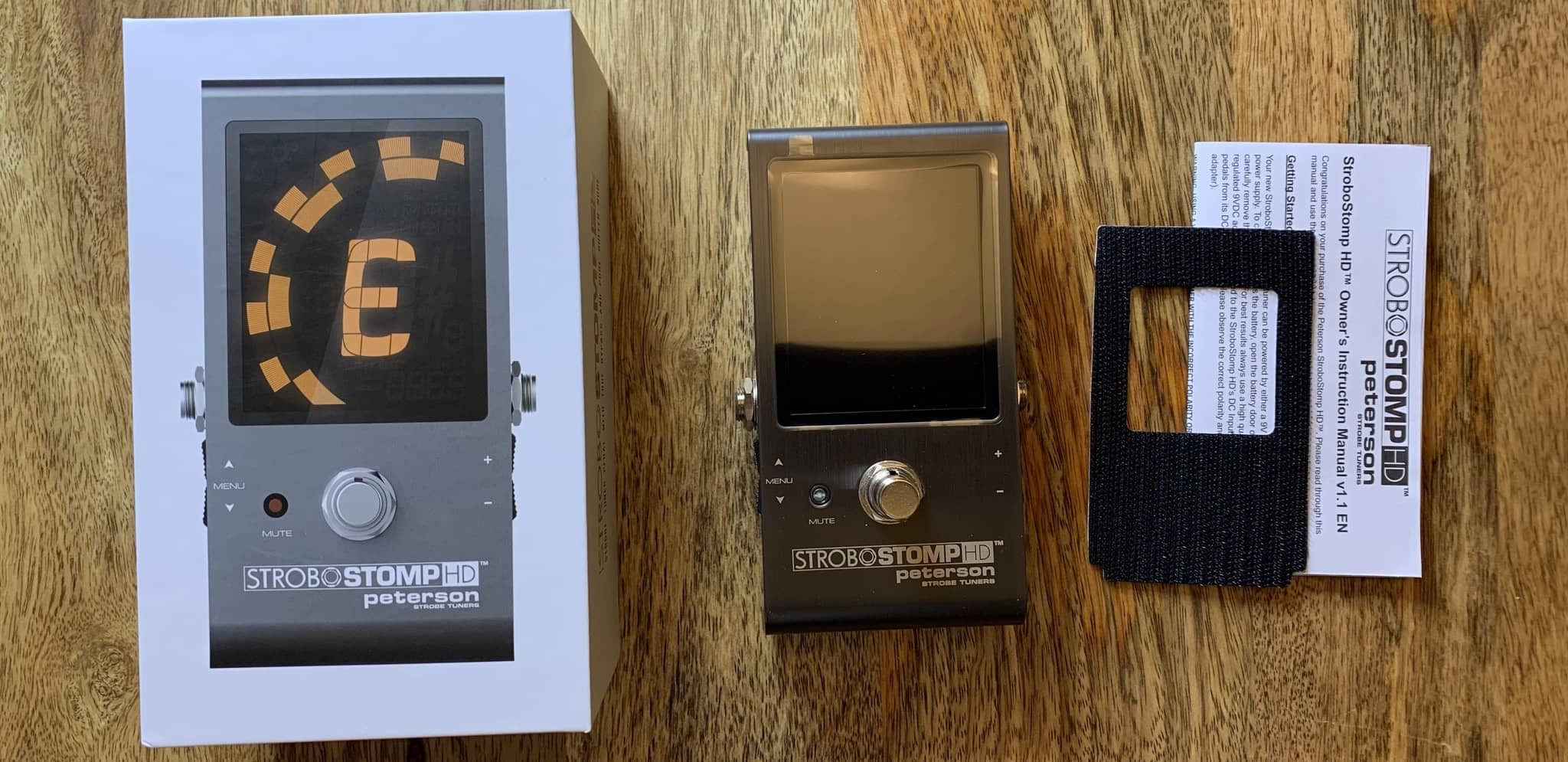
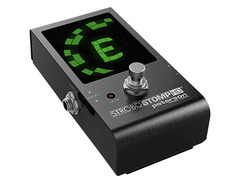
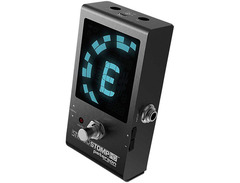
The Peterson StroboStomp HD was introduced in 2019 and immediately captured the attention of guitar players worldwide. The large bright display and sleek stainless-steel chassis feel like a breath of fresh air in a tuner pedal market that still has many of the same designs since the 1990s. The LCD w/ LED backlight screen is gorgeous, easy to read, and you can change the color to match ambient conditions or your personal preferences.
But the beauty of the StroboStomp HD is more than just what meets the eye. The ergonomics are well thought out. Menus and adjustments can be easily selected using the selector buttons located on the side of the pedal enclosure. And that is a great thing because the StroboStomp HD is the most customizable tuner on this list. Modes are easily selectable and tuning presets are a breeze to navigate and can even be grouped by custom display colors.
Where the customization gets deep is with what Peterson calls “Sweetened Tunings.” These are tiny tuning intonation adjustments that are calibrated to the type of instrument you play and can only be done with a tuner possessing a very high degree of accuracy. Peterson offers 135 of these specialty tunings that you can download to the pedal. And speaking of downloads, the StroboStomp HD can receive Peterson’s firmware updates through the micro-USB port, so the tuner is likely to stay up to date for the foreseeable future.
The Peterson can operate in either true bypass or a buffered mode. Also worth mentioning, you have the choice of muting or always having the tuner displaying a readout.
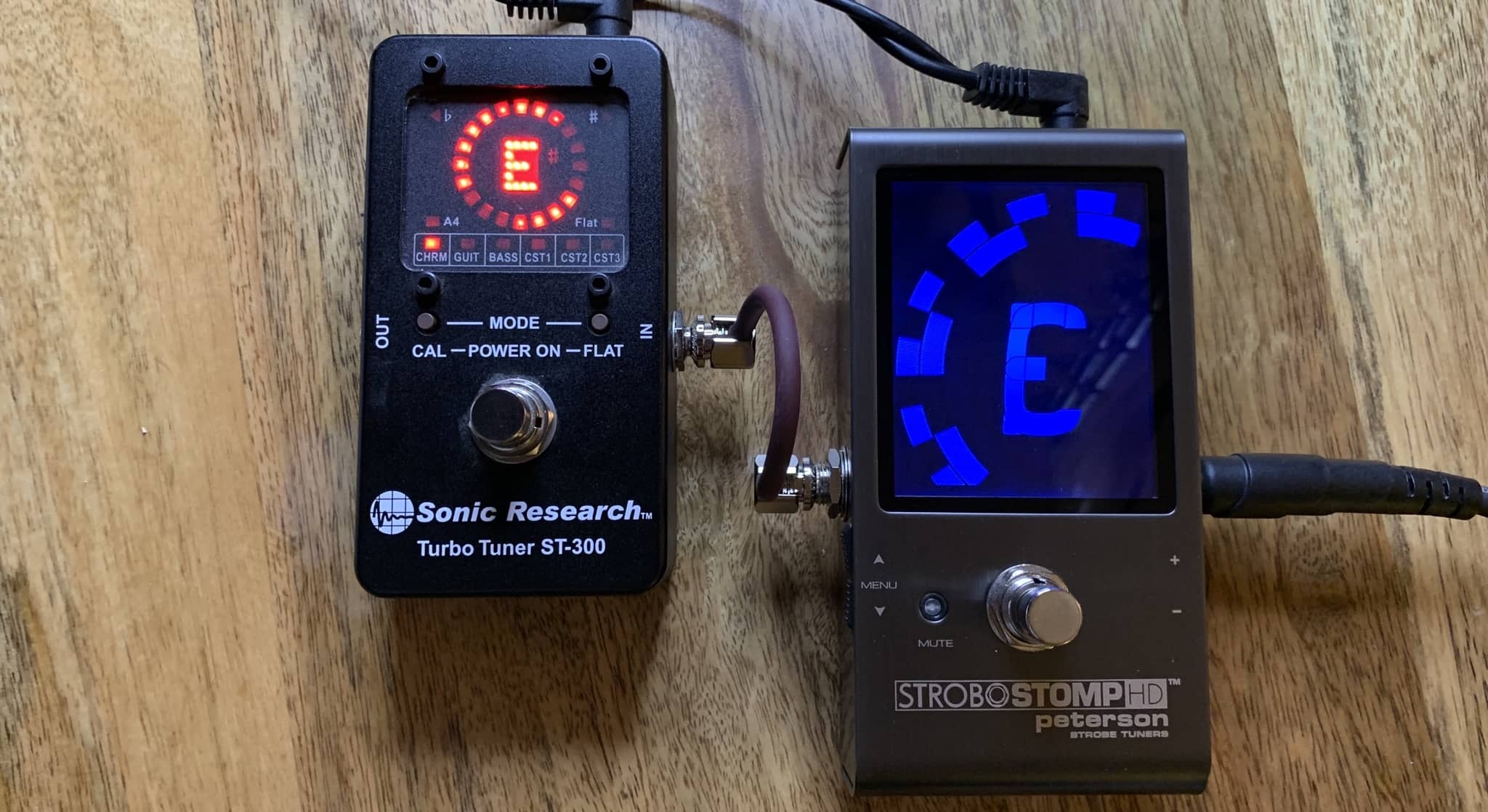
The pedal is powered by 9V and includes a 9V 1000mA power out as well, which is a convenient feature I didn’t know I wanted until this was on my board. But who doesn’t want a power supply for one more pedal? Good thinking, Peterson!
The StroboStomp HD is backed by a 3-year warranty from Peterson. It has been on my board for months with zero issues, but it is nice to know that it is covered and the company stands behind its products.
Bottom Line: If you want the Cadillac of pedalboard tuners, take a look at the Peterson StroboStomp HD. The +/- 0.1 cent accuracy is solid, the display is quick and responsive, it has tunings specific to different instruments, and the form factor is beautiful. If you have the budget for it, you won’t be disappointed in this premium tuner.
See how artists use this







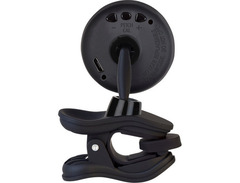
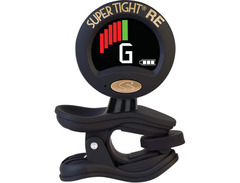
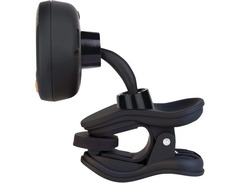
Snark ST-8 Super Tight Clip-on Chromatic Tuner
4.5 (13)
The Snark ST-8 Super Tight can't be beat for the price. If you are on a budget and need an simple bright tuner this is a great option.

- Long battery life, typically over 2-3 years
- Quick and easy tuning for different guitars
- Responsive and precise tuning
- Robust construction with a rubber cover for durability
- See 6 more
- Can damage guitar finish if left on too long
- Imprecise for recording or playing complex chords
- Does not work well on high strings of a Celtic harp
- Build quality may feel cheap to some users
- See 1 more
We wanted to test a tuner that can be had for dirt cheap, yet still does a solid job tuning up, and the Snark ST-8 Super Tight clip-on tuner fits the bill.
It's hard not to immediately compare it to the PolyTune Clip, but let's quickly run through the Snark's features. The whole thing is made out of a matte rubber material that feels like it can take some abuse. The clip feels secure (but there are warnings in the manual about instrument finishes which is kind of worrying).
The "banana" arm is a little awkward and we had to mess with it for a while before getting a good angle. Fortunately the display is pretty easy to see.
The power button is on the front, and a PITCH CAL button on the back lets you change pitch reference from 415 to 466 Hz. It's also capo-friendly up to the 4th fret (use the up and down arrow buttons).
Tuning with the Snark's display is nice and easy. There's no strobe mode, only needle mode. You're in tune when the green needle in the middle lights up.
For the price of the ST-8 there has to be a catch, and it's tuning accuracy. It doesn't say in the manual what the accuracy actually is, but side-by-side with the PolyTune Clip it's clear that the PolyTune will show much more fine-grained pitch inaccuracies, whereas the Snark seems to say "good enough." The display features 12 bars that are either fully on or off, which decreases your ability to fine tune to a perfect pitch.
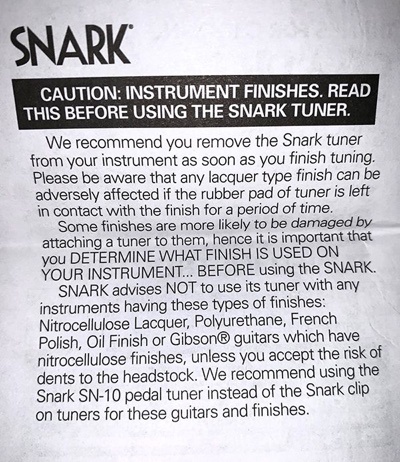
Bottom Line: Look, you can get 3 or 4 Snarks for the price of a PolyTune Clip, so it's silly to expect it to be the same quality. All in, the Snark gets the job done and even gives you some alternate tuning modes (and weirdly a silent tap tempo metronome). We would say the ST-8 is the best Snark clip-on tuner out there, and the one to go with if all you do is play your guitar or bass occasionally at home.
GuitarTuna
4.0 (1)
In an ocean of guitar tuner smartphone apps, GuitarTuna stands out with a great reputation, great design, and the basic version is free.
Finding a good tuner app for your smartphone is not easy; if you type "guitar tuner" in the App Store or Google Play you get a million results.
In the end, we tested 3 reputable apps: GuitarTuna (free), Fender Tune (free), and iStroboSoft (paid). With the limitations of a guitar tuner app - i.e. being limited to your acoustic instrument in a quiet space - it doesn't make sense to buy any overcomplicated or expensive app.
To that end, our choice is GuitarTuna , made by the folks behind Yousician. Fender Tune looks clean but we had some trouble picking up sound from plucking electric guitar strings. iStroboSoft is great, but honestly not worth the $10 price of admission if all you need is standard guitar tuning. GuitarTuna loads quickly and works flawlessly , even with the more quiet sound of an electric guitar unplugged.
Tuna uses your device's mic and even has noise cancellation technology to eliminate some background noise while you tune. This chromatic tuner supports loads of instruments from guitar to bass, ukulele and orchestra instruments.
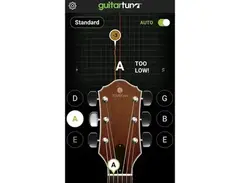
The main screen has a photo of the headstock of whatever instrument you selected which is cool, with the tuning pegs labeled with the note names. As you strum, what looks like an oscilloscope at the top moves around and tells you a friendly "TOO LOW!" or "TOO HIGH!" and a satisfying checkmark and green strip when you are dead on.
Guitar standard tuning (EADGBE) is included in the free version of the app. If you're interested in alternate tunings, you got tons of em, but you have to pay for them as in-app purchases. If you upgrade to GuitarTuna Pro you get everything.
Bottom Line : At the risk of oversimplifying, in the sea of guitar tuner apps go with a proven one that offers a free version, and paid upgrades if you want to get crazy with tunings. GuitarTuna has a beautiful design and simply works.
How Does a Guitar Tuner Work?
A guitar tuner simply compares the pitch of a single note you play on your guitar or bass to the reference pitch stored in the tuner, generally A440. The display then shows you if the string you are tuning is too low (flat) or too high (sharp).
Pedal, Clip-On, or App?
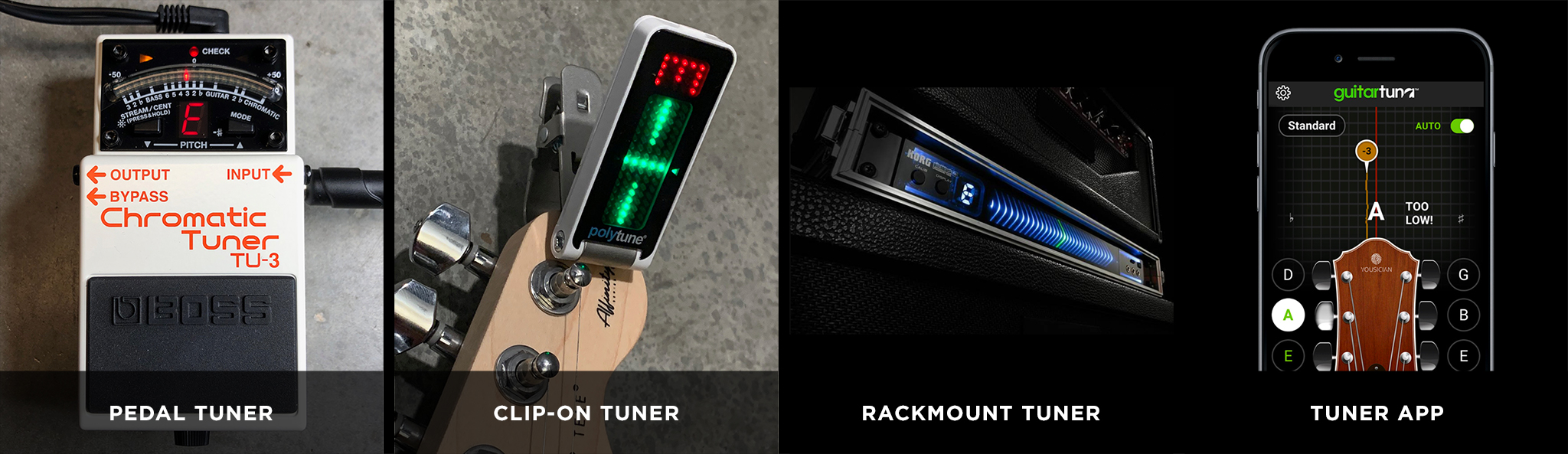
When looking for the best guitar tuner you can go one of 4 ways - pedal, clip-on, rackmount, or a smartphone app.
» PEDAL TUNERS go on the floor or your pedalboard. They work with electric instruments, and read the pitch based on the signal that comes from your guitar. They're great for playing live because of their durability. They are discreet and will mute the signal of your instrument when active. Pedal tuners are also generally more sophisticated and more accurate.
On the downside they only work with electric instruments, take up space on the floor/pedalboard, are pricier, and you have to deal with more cables.
» CLIP-ON TUNERS are clipped onto the headstock of your guitar, and they read the pitch of your instrument based on the vibrations that transfer there when you play. They are great if you play acoustic instruments, but we use ours with electric guitars all the time. Snark popularized these and you can pick up a Snark pretty dirt cheap.
On the downside they can be a bit cumbersome to use live. They’re best for “quick and easy” tuning, like if you play casually around your house. They tend to not be quite as accurate as their pedal counterparts, and they’re more easily lost/misplaced and tend to break more easily. They are also reliant on batteries.
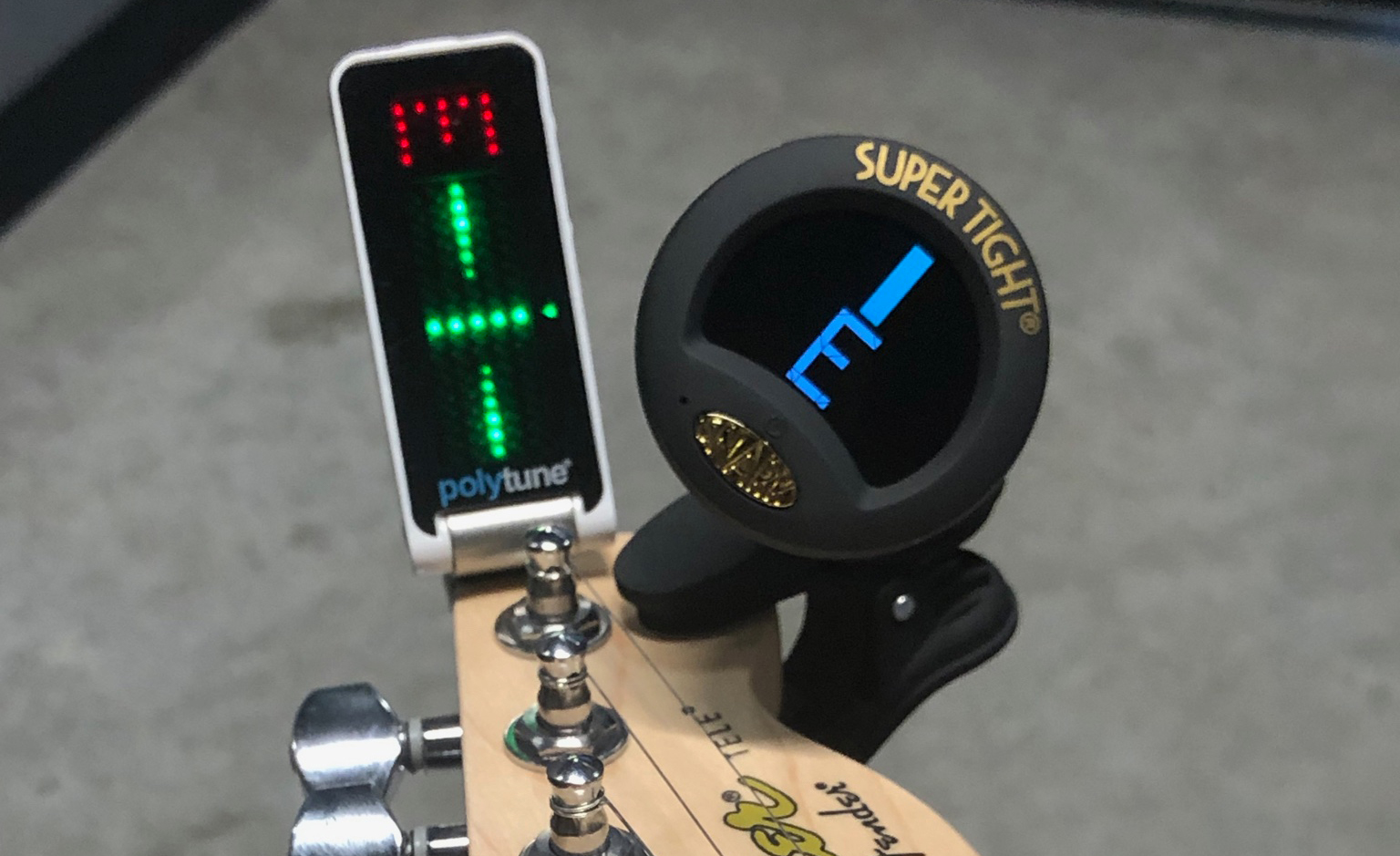
» RACKMOUNT TUNERS are, as the name implies, guitar tuners that fit in a rack. Rack-mounted gear is more popular in pro touring rigs and pro studios. A rackmount tuner’s display is larger than most other tuner formats, and it may offer more bells and whistles.
On the downside, on average they are pricier than their pedal counterparts.
» SMARTPHONE TUNER APPS allow you to use your smartphone's built-in microphone to pick up the pitch of your instrument. They're very convenient since we have our phones with us at all times. Accuracy is surprisingly good (this of course depends on the quality of the app you choose). If you own a phone already tuning apps are the cheapest way to get tuned up.
On the downside any external noise can mess with the tuning process. An unamplified electric guitar might be too quiet to be picked up by the phone's mic. Tuning apps are best if it's just you in a quiet room with an acoustic guitar.
What Are the Types of Guitar Tuners?
Keep in mind that a tuner - whether a pedal, clip-on, or app - doesn't have to be just one of these types. In fact many manufacturers try to cram in as many tuning modes as possible.
And just to clear up any confusion, yes, guitar tuners DO also work for bass guitar.
Conventional Tuner
A conventional tuner lets you tune your guitar based on the standard EADGBE tuning. If your tuner doesn't at least do this, you should be worried.
Chromatic Tuner
The difference between a chromatic tuner and a regular guitar tuner is that the chromatic scale has 12 pitches, and a chromatic tuner lets you tune your strings relative to the nearest one (as opposed to just the standard six pitches EADGBE). This is important if you:
- use alternate tunings or
- need to tune up instruments other than guitar.
Polyphonic Tuner
TC Electronic pioneered the polyphonic tuner, which allows you to strum your open guitar strings at the same time and quickly and easily see on the display if any of them are out of tune.
Strobe Tuner
Strobe tuners are the most accurate guitar tuners due to the way they work. It's a little complicated but basically there's a rotating disc with a pattern on it, and when the frequency of the input matches the speed of rotation, it looks like the pattern stands still. That's how you know you're perfectly tuned up.
Modern strobe tuners don't have moving parts that tend to wear out over time, but they simulate this rotation electronically.
How to Best Tune Your Guitar
If you’re going to get a good tuner, it’s worth learning the most proper way to tune your guitar. It’s hard to believe but even some veteran guitarists don’t know these guidelines, since tuning a guitar is not something that’s normally taught!
- Mute the strings that are not being tuned by resting your fingers on them. Multiple notes ringing at the the same time will generate sympathetic vibrations, which can throw off even the best tuners.
- If you’re tuning an electric guitar, do so using the pickup closest to the neck, and turn up the volume on that pickup to maximum. You should also back off the tone control to give the clearest signal to the tuner.
- Pluck your string with the side of your thumb instead of a pick.
- Don't hold on to the tuning peg the entire time.
What Should You Look for in a Guitar Tuner?
There are hundreds of tuners out there to choose from. Today even cheap manufacturers of no-name Asian imports have models that will do an acceptable job.
However, for a piece of gear that you use this much, you really should invest in a tuner that’s going to be consistently reliable and accurate. Think of it like a good pillow or mattress; It's not exactly the most thrilling purchase to make, but you use it so often that you will be doing yourself a disservice in the long run if you skimp on quality. Here are some things to look out for:
- Most amps don’t have built in tuners, and even those that do are not the most accurate. If you’re even thinking of starting to put together a pedalboard, there’s no question that you should start with a solid tuner pedal.
- You can use a tuner to mute your guitar signal. Most tuner pedals will mute the output when engaged, so your audience and bandmates don’t have to listen to you tuning up. Muting the output is also handy if you need to switch instruments.
- Some tuner pedals are much more accurate than others. Accuracy is measured in cents, so you’ll see things like “+/- 1 cent,” or “+/- 0.1 cents.” The smaller that number is, the greater the accuracy.
- Display brightness matters! While most tuner pedal manufacturers tend to not reinvent the wheel when it comes to showing you how close your notes are to the correct pitch, displays do tend to vary in size and brightness. The best guitar tuners will let you adjust brightness (or automatically adjust) to remain visible even in harsh lighting conditions.
- Keep in mind the power and battery life. Most tuners that are not “mini” or “compact” format can be powered using a battery. If you care about this option, make sure to read about the battery life. If you opt for a pedal tuner as opposed to a headstock clip-on, you can add it to your pedal power supply/daisy-chain and never have to worry about battery life.
- Many tuner pedals can power other pedals. In addition to a power input jack they include a power output so that you can daisy-chain other pedals. You’ll need to mind that the combined current draw of your other pedals doesn’t exceed what’s available.
How We Picked and Tested
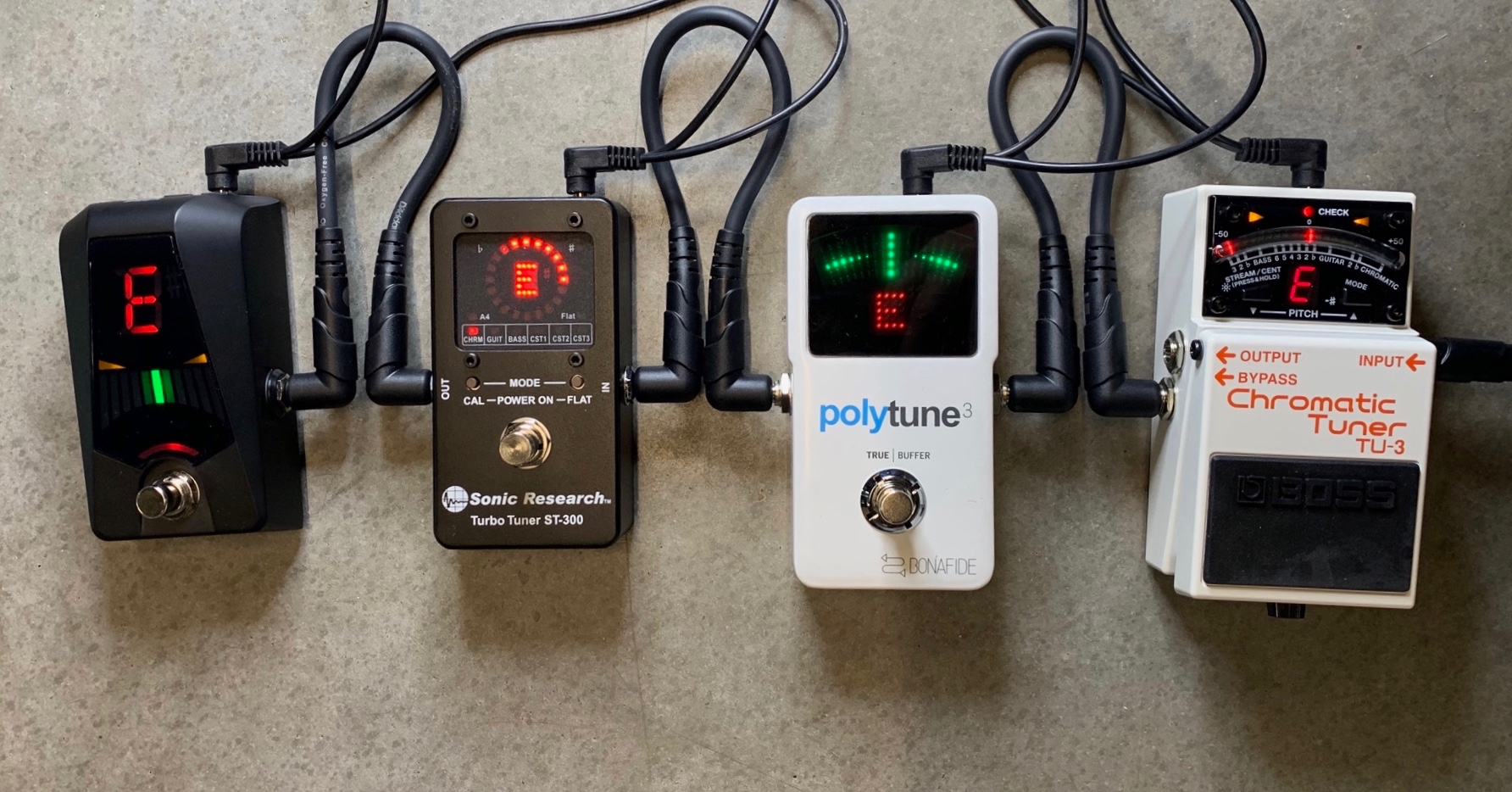
We tested several tuners at Equipboard HQ and did many hours of research. Testing tuners is pretty straightforward. We plugged into each one and tuned up various tunings, and cycled through all the features. We also tuned with the lights on and off to test out the displays. Gear we used in this test:
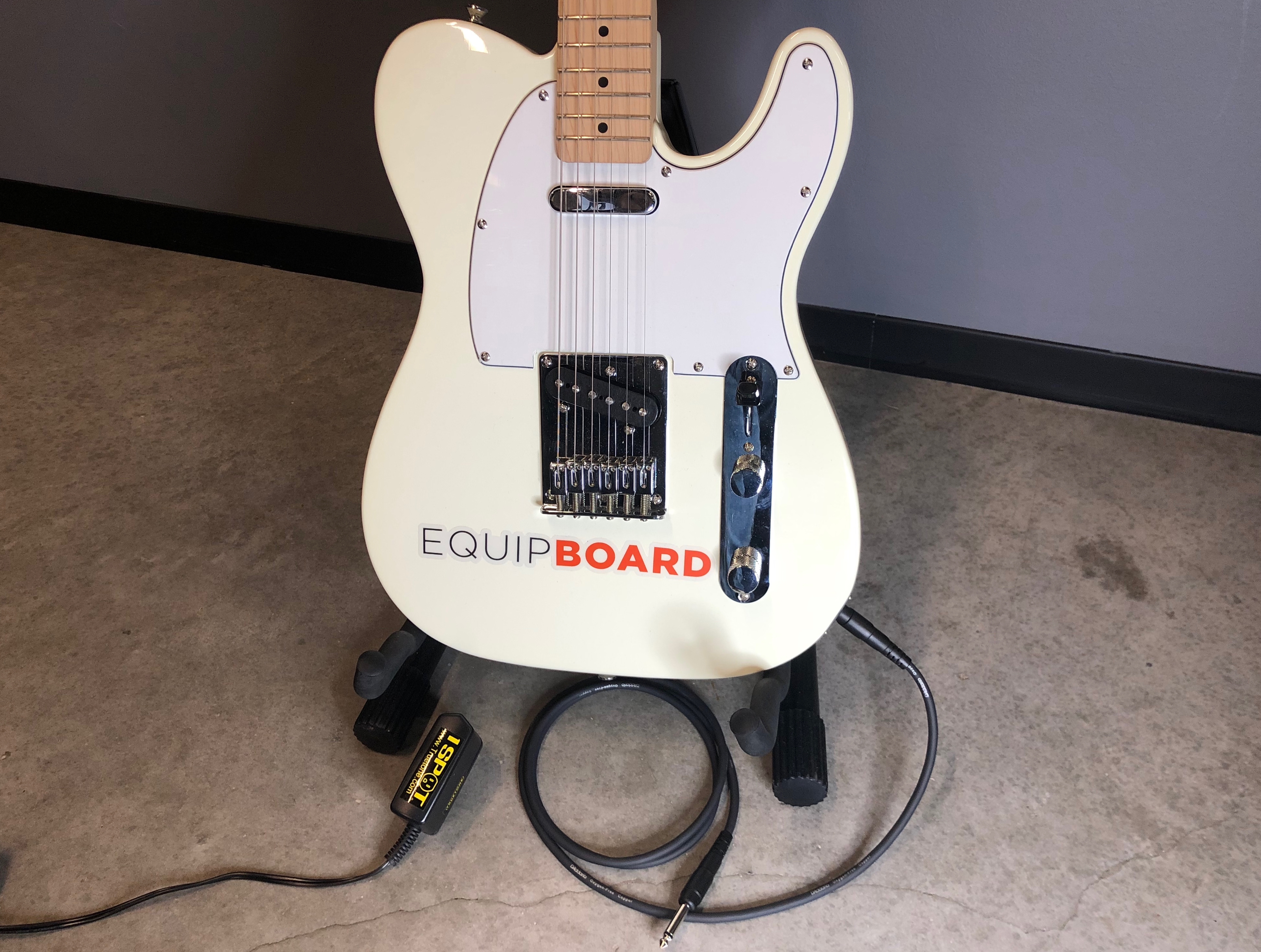
Top Ranked Pedal Tuners on Equipboard


Recent updates
Jun 20, 2024
Since the Korg Pitchblack Advance is no longer available, we replaced it with the Walrus Audio Canvas Tuner Pedal which we tested and deemed worthy of inclusion.
About the authors
Michael R. Pierce is the co-founder of Equipboard and a lifelong musician with over 25 years of experience as a guitarist and gear enthusiast. He blends solid music theory chops (thanks to formal training in guitar, piano, and trumpet) with real-world experience, always exploring and experimenting across genres like rock, blues, and hip-hop. Michael launched Equipboard in 2013 after graduating from The University of Texas at Austin, leveraging his unique blend of musical passion, technological acumen, and community building. His current go-to rig features a Fender American Original ‘50s Telecaster, Analogman King of Tone, Strymon Flint, and a Fender ‘57 Custom Champ. Read more
Giulio Chiarenza is the co-founder of Equipboard and a lifelong multi-instrumentalist with a deep passion for music gear. Born in Italy and raised in the U.S., he holds a Computer Science degree from The University of Texas at Austin and blends technical acumen with decades of hands-on experience across guitar, piano, drums, and electronic production. Early in his career, Giulio was signed to a San Francisco-based EDM label, releasing both remixes and original tracks. These days, he helps steer Equipboard’s vision while personally testing and reviewing gear. He's never too far from his go-to guitar: a vintage 1978 Fender Telecaster Custom. Read more
Comments
Sign Up or Log In to add comments

47
I have been playing and teaching guitar for over 40 years and highly recommend using the SNARK SN8 electronic guitar tuner. Low price and easy to use.

45
Guitar Tuna (free/advertising included)is a remarkably easy & user friendly app to use. Just my preference for easier alternate tuning scales for my guitars & even intonation checks & set up, Pro Guitar Tuner (Free) & their Premium (ad free) apps are my recommendation(s). I do like Guitar Tuna's interface & features for standard tuning, that's if all I'm doing is standard E2,A2,D3,G3,B3,E4. Guitar Tuna virtually tells you when you dial it in. But for alternate tunings (1/2 step, full step, Drop D & any others) with intonation checks or setup you're going to need the flexibility of a needle style tuner app that not only indicates the notes/subnotes as well as their flat & sharp vesrsions, but cents too. That's where Pro Guitar Tuner is the more powerful app to use of the free/ad versions. Try both and judge for yourself. Just me, but the Drop D & 1/4 & 1/2 step down are really my favourite alternate tunings. And the needle & cents of Pro Guitar Tuner is the easiest for me.

4934
Since the Korg Pitchblack Advance is no longer available, we replaced it with the Walrus Audio Canvas Tuner Pedal which we tested and deemed worthy of inclusion.
New in Pedal Tuners

$139.00
in Pedal Tuners Rank

$98.00 - $129.99
in Pedal Tuners Rank

$56.22 - $69.00
in Pedal Tuners Rank









.jpg)