The Yamaha DX7 Digital Revolution: How the Yamaha DX7 Conquered Music and Killed the Analog Monarchy


By Gear Experts
.webp)
By Gear Experts
Table of Contents

Equipboard
Equipboard is the world's largest community of artists and their gear. Read our review process.
We are reader-supported. When you buy through links on our site, we may earn an affiliate commission. Learn more.
Our Picks

The original: The Yamaha DX7 isn't just a synthesizer; it's a cultural artifact that redefined electronic music production. Released in 1983 at a groundbreaking price point, this six-operator FM powerhouse became the best-selling synthesizer in history by delivering sounds that analog circuits couldn't dream of producing.
Read more


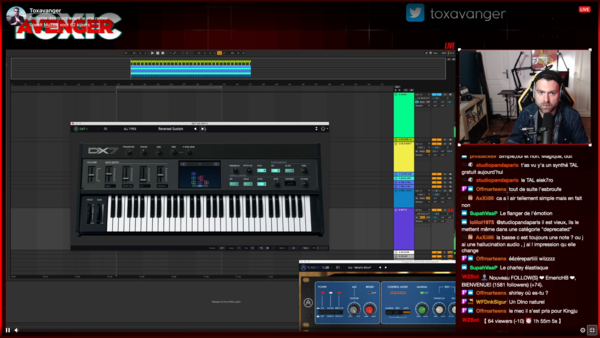
Best Software Recreation: The Arturia DX7 V offers the most complete software recreation of the original DX7, combining authentic FM synthesis with modern enhancements. It maintains the classic six-operator, 32-algorithm architecture while adding features that make programming accessible rather than intimidating.
Read more

-l.webp?v=1782900005)
Best Modern FM Powerhouse: Native Instruments FM8 takes FM synthesis beyond DX7 emulation, offering an expanded feature set designed for contemporary sound design. While rooted in the DX7's legacy, FM8 pushes the boundaries of what FM can accomplish through enhanced modulation, filtering, and effects processing.
Read more

Best Free Option: Dexed offers a remarkable achievement: an accurate, open-source DX7 emulation that costs nothing. For musicians exploring FM synthesis on a budget or needing a DX7 sound without financial commitment, Dexed delivers authentic tones and practical functionality.
Read more
Yamaha MODX M8 88-key Performance Synthesizer
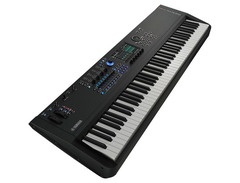
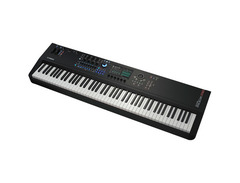
Modern FM Flagship for the Stage: The Yamaha MODX M8 brings together three powerful synthesis engines in a performance-ready 88-key package. As the spiritual successor to the DX7's legacy, it combines classic FM-X synthesis with modern AWM2 sample playback and the new AN-X analog modeling engine for unprecedented sonic versatility.
Read more

FM Synthesis Reimagined: The Korg Opsix takes the DX7's fundamental six-operator architecture and transforms it through "Altered FM" synthesis, incorporating wave shaping, filtering, and modulation routing that breaks traditional FM boundaries. It's an instrument designed to make FM synthesis approachable while expanding its sonic possibilities far beyond classic digital tones.
Read more

Sequencer-Driven FM Synthesis: The Elektron Digitone pairs four-operator FM synthesis with Elektron's legendary sequencer architecture, creating an instrument optimized for electronic music production and live performance. While its four-operator engine is less complex than the DX7's six-operator design, the Digitone's workflow and sequencing capabilities make FM synthesis immediate and groove-focused.
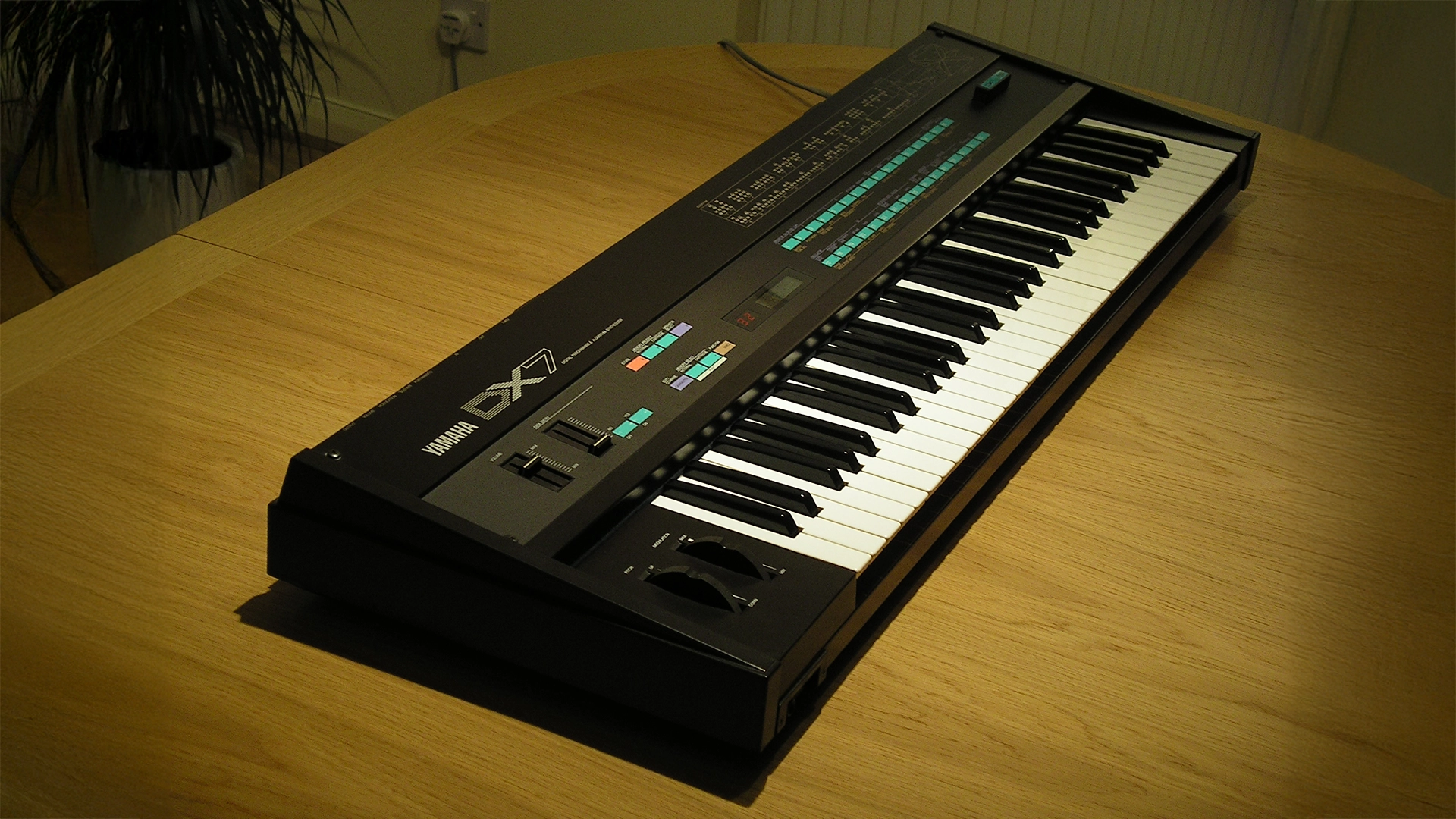
Read moreWhen the Yamaha DX7 landed in 1983, it didn't politely ask for a seat at the synthesizer table. It flipped the table over. This 16-voice, MIDI-equipped digital polysynth arrived with sounds analog machines couldn't dream of producing: glassy electric pianos, metallic bells, percussive basses that cut through dense mixes like a laser through fog. Within months, it became the sonic signature of an entire decade. Within years, it became the best-selling synthesizer of all time, moving over 200,000 units and fundamentally altering what musicians expected from their keyboards.
The DX7 is one of the most influential and misunderstood synthesizer ever built. It was loved for its pristine clarity and hated for its sterile perfection. It was celebrated as the future and dismissed as the death of warmth. Producers reached for it instinctively, yet few ever learned to program it. Decades later, its sounds trigger instant nostalgia for some and visceral fatigue for others.
The Digital Dawn: Why the DX7 Hit Like a Meteor
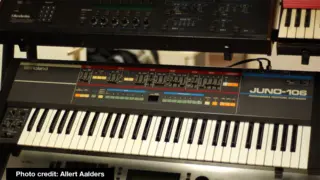
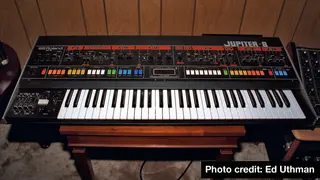
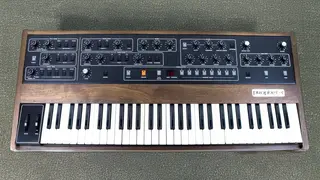
By 1982, the analog synthesizer market had reached a plateau. Instruments like the Sequential Prophet-5 and Roland Jupiter-8 were undeniably gorgeous, but they carried serious baggage. These flagship polysynths typically cost between $5,000 and $6,000, weighed enough to require roadies, and suffered from tuning instability that demanded constant attention. Their sounds were lush and organic, but they struggled to deliver realistic timbres like electric pianos, metallic percussion, or bright brass. Players wanted more polyphony, better reliability, and access to timbral territories analog circuits couldn't reach.
Yamaha, Stanford, and the FM Revolution
Enter Yamaha, the world's largest musical instrument manufacturer, and Stanford University researcher John Chowning. Throughout the 1970s, Chowning developed frequency modulation synthesis, a technique where one oscillator modulates the frequency of another to create complex harmonic structures. Yamaha licensed this technology around 1975 and spent years industrializing it, developing custom chips that could handle FM calculations in real time. This wasn't a gimmick cooked up in a garage. This was serious research and development from an industrial giant determined to rewrite the rules of what a synthesizer could be.
The DX7's arrival represented the culmination of that work. It offered 16-voice polyphony, velocity sensitivity, aftertouch, 32 patch memories, MIDI connectivity from day one, and touring-grade reliability. The synthesizer debuted at approximately $1,995, roughly half the cost of analog flagships like the Jupiter-8. For working musicians and studios operating on tight budgets, the value proposition was staggering. You could afford two DX7s for the price of one Prophet-5, and you'd get sounds neither the Prophet nor the Jupiter could touch.
John Chowning & FM in Five Sentences
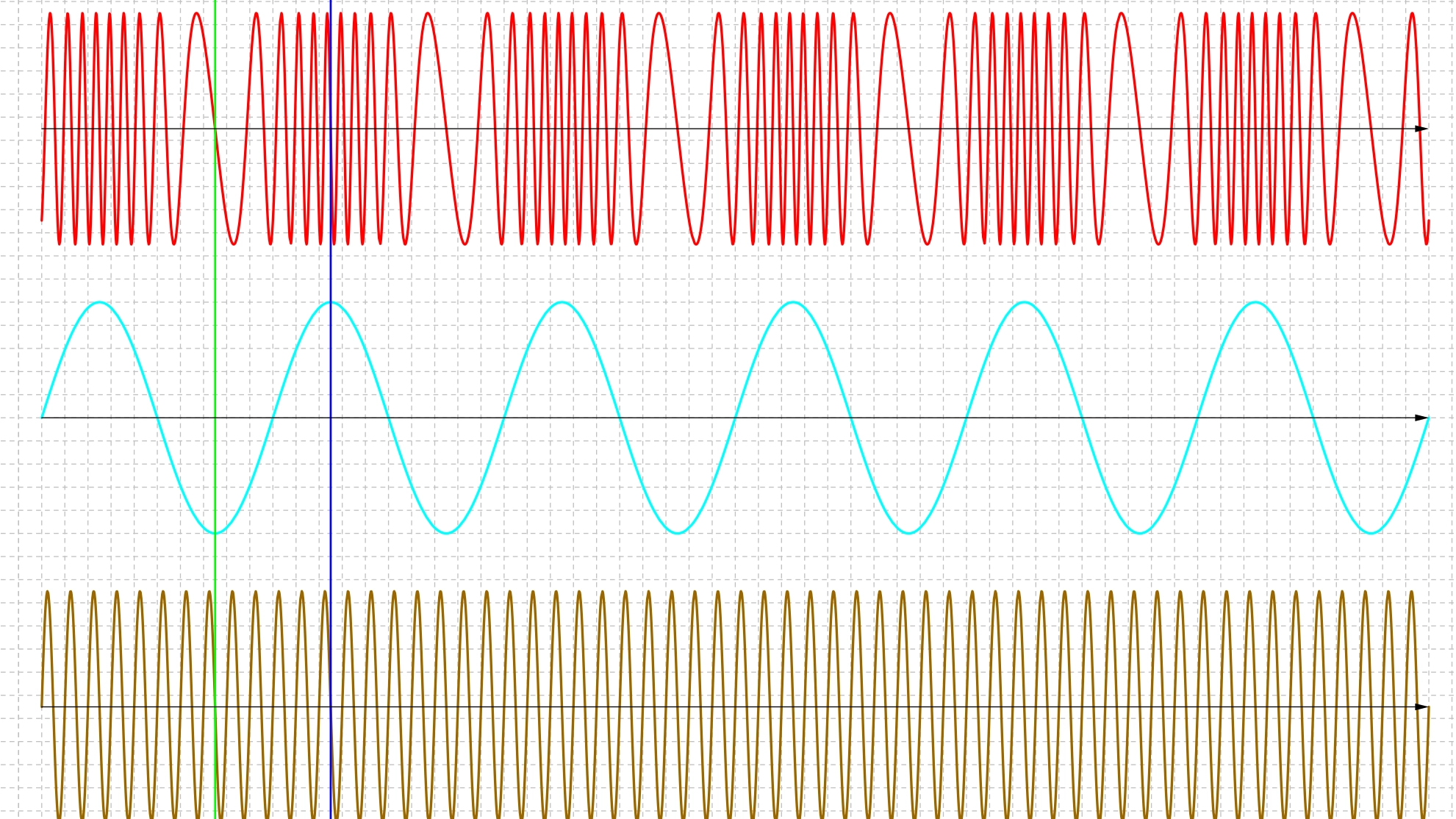
Frequency modulation synthesis uses sine waves as its building blocks. In FM, one oscillator (the carrier) produces the audible tone, while another oscillator (the modulator) alters the carrier's frequency at audio rates. This process generates sidebands, additional frequencies that create complex harmonic content far beyond what subtractive synthesis can achieve with filters. By adjusting the modulation index (how much the modulator affects the carrier) and the frequency ratios between operators, FM can efficiently produce electric pianos, bells, metallic timbres, and glassy textures that would require dozens of oscillators in analog systems.
Inside the Machine: How FM Made a New Sound
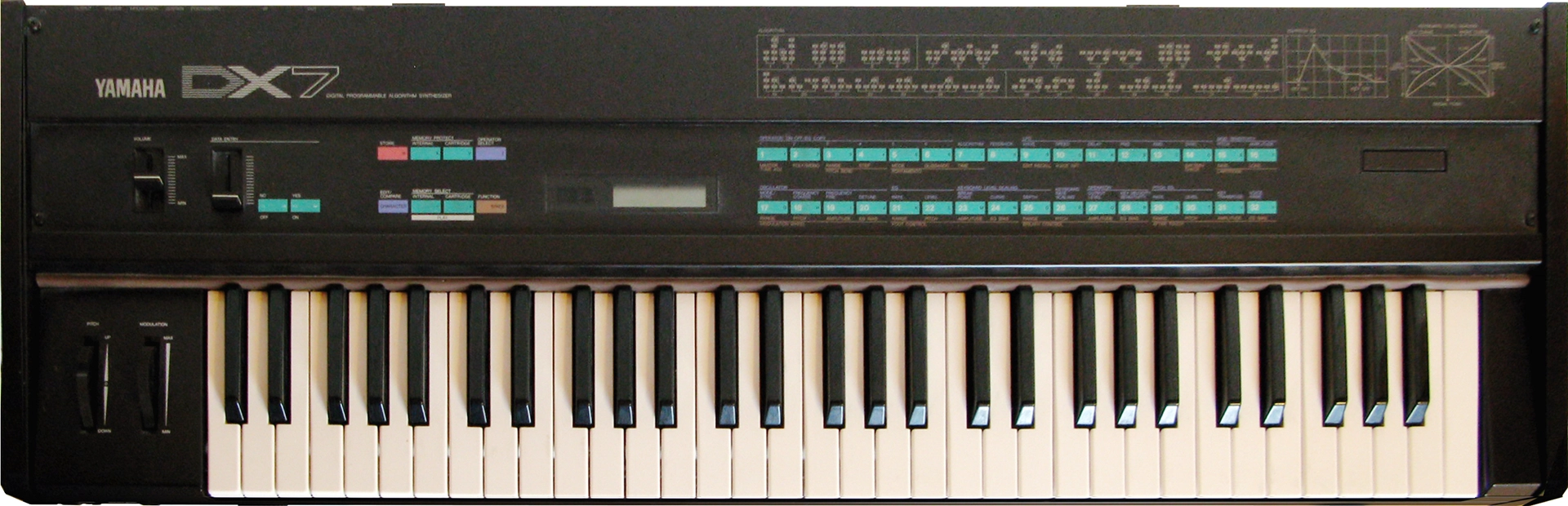
The DX7's architecture revolves around six operators, each a sine wave generator capable of acting as either a carrier (audible sound source) or modulator (frequency shaper). These operators connect through 32 algorithms, predefined routing configurations that determine how operators interact. Some algorithms stack operators in series for maximum harmonic complexity, others arrange them in parallel for cleaner tones, and many combine both approaches for hybrid textures. The algorithm structure is the DX7's sonic engine, the blueprint that determines whether you're crafting a bell, bass, or brass patch.
Signature Characteristics
The DX7 became famous for specific sonic qualities. Its electric pianos possessed a crystalline clarity that analog synths couldn't match, bright and articulate without the warmth-blurring characteristics of oscillator drift. Its bells and metallic textures had an unmistakable digital sheen, percussive attacks that cut through mixes with surgical precision. Bass sounds were snappy and defined, with transients that locked perfectly to drum machines. The overall character was one of clinical perfection, every note precisely where it should be, every harmonic exactly in tune.
Why It Felt Alien
Musicians accustomed to analog synthesis found the DX7 disorienting. There were no sawtooth or square waves, no resonant filters sweeping through the spectrum, no oscillator sync creating tearing harmonics. All timbral complexity emerged from modulation index adjustments and frequency ratios. It felt like programming math rather than sculpting sound. The philosophical shift was jarring: subtractive synthesis removes harmonics from harmonically rich waveforms, while FM synthesis builds harmonics from simple sine waves through modulation relationships.
The Programming Wall
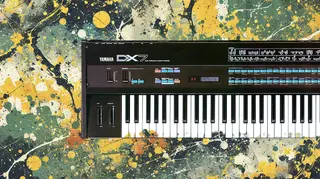
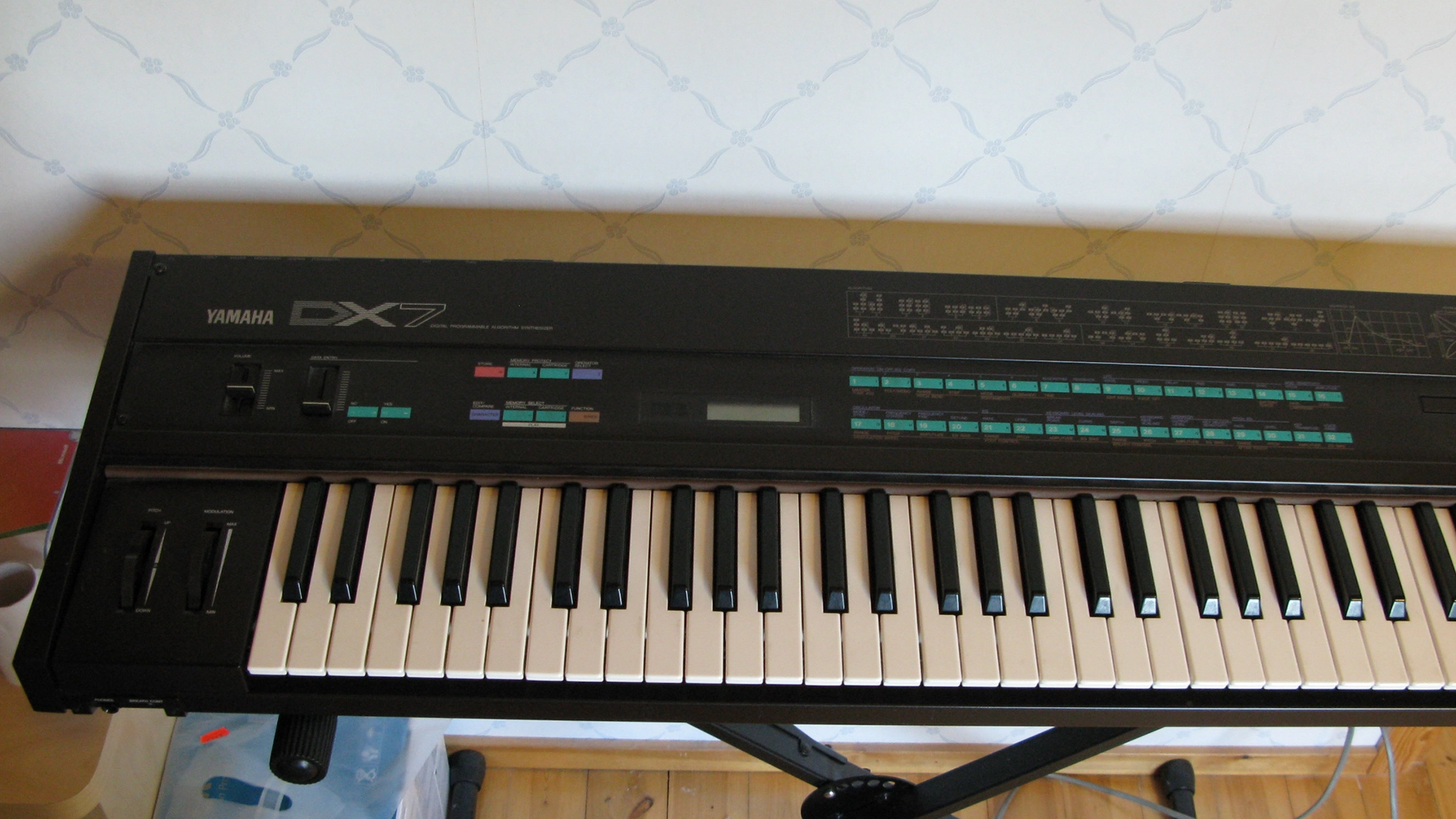
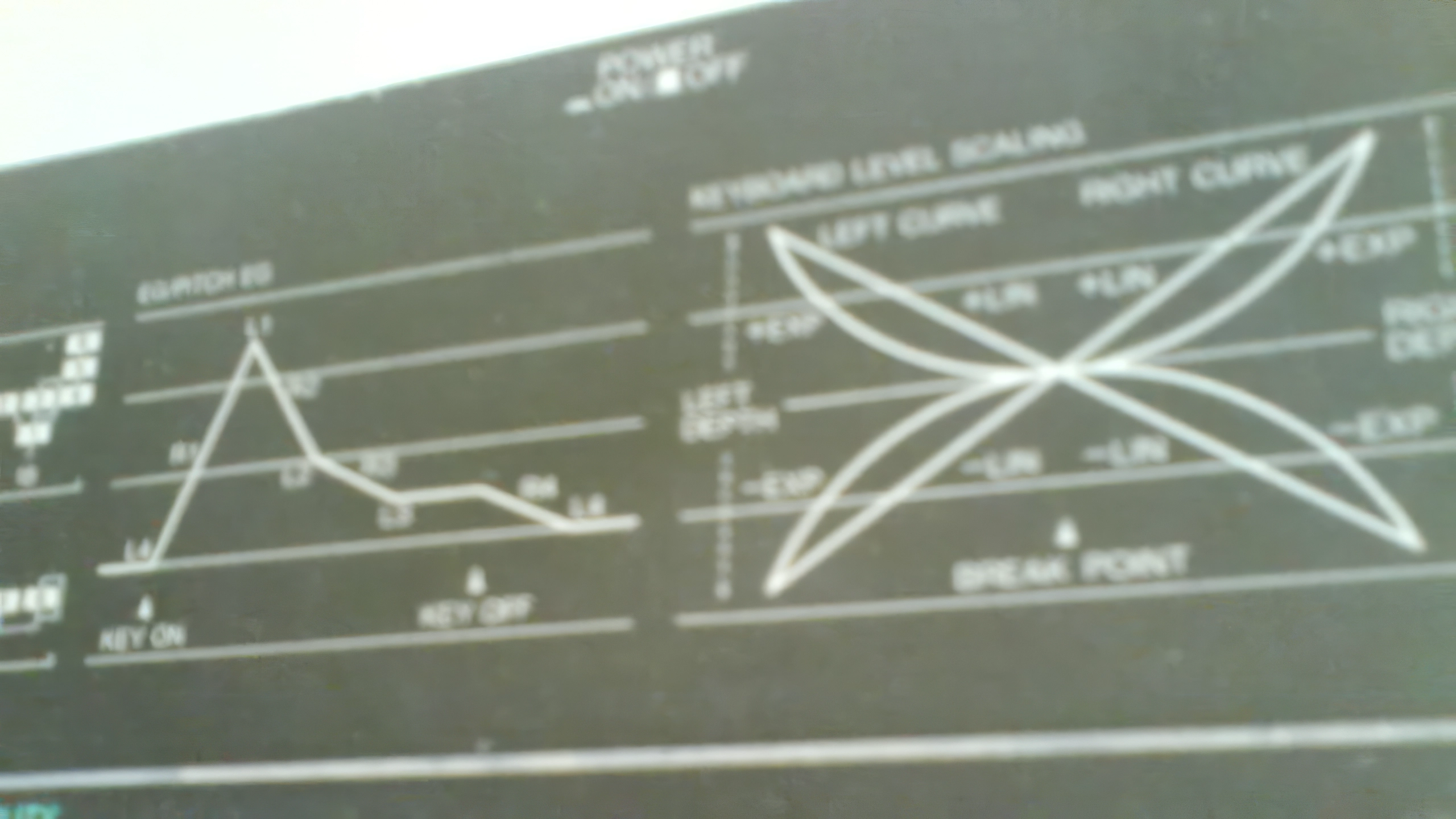
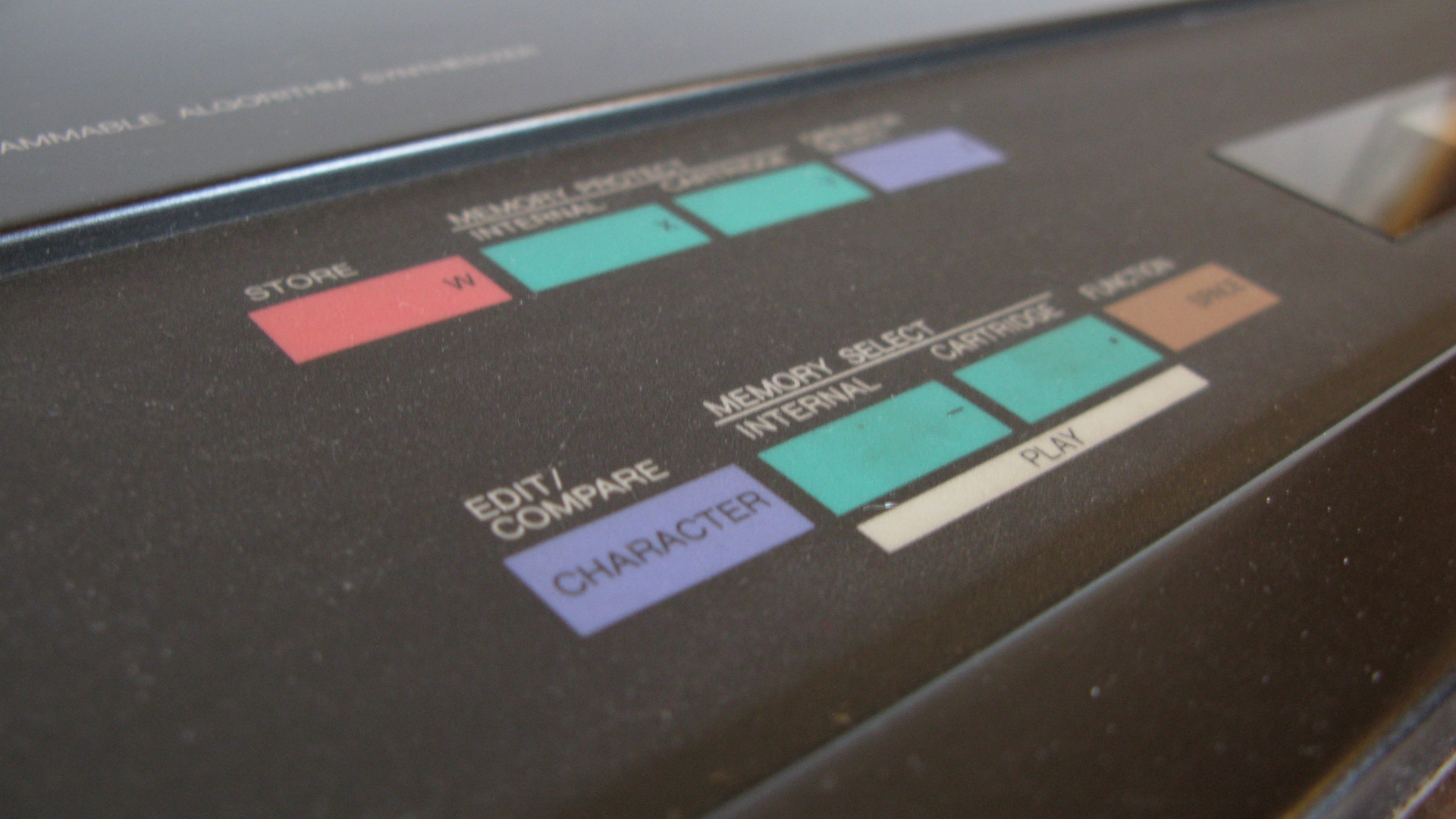
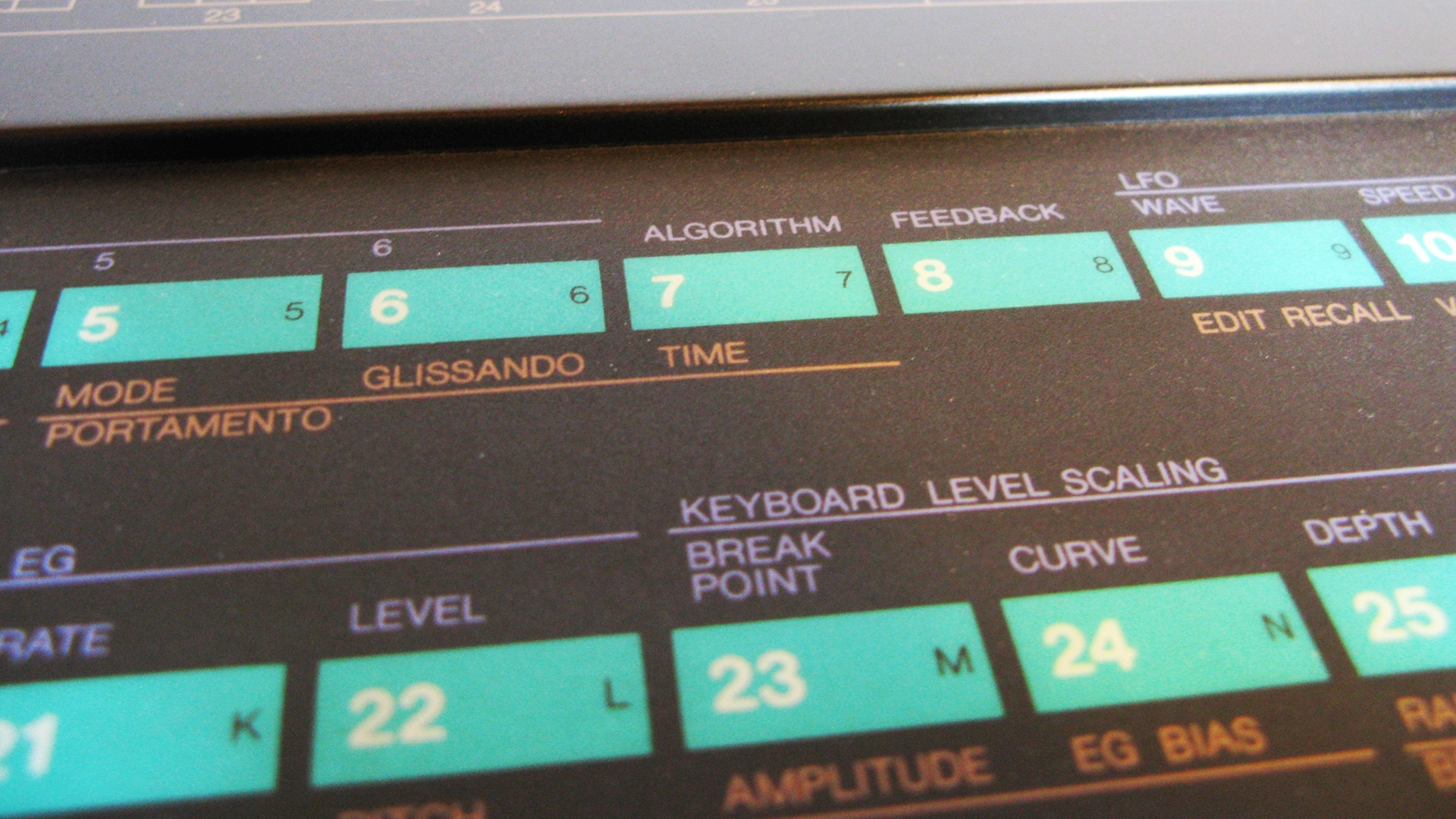
The DX7's interface became legendary for all the wrong reasons. A small LCD screen displayed parameter names and values. Membrane buttons (not physical switches) selected functions. A single data entry slider adjusted every parameter, from envelope rates to modulation depths. There was no visual signal flow diagram, no color coding, no tactile feedback that helped users understand what they were changing.
The Data Entry Experience
The DX7's programming interface felt like editing a spreadsheet with a volume knob. Users navigated nested menus to adjust parameters whose sonic impact wasn't immediately obvious. Want to change operator 4's envelope decay time? Press the EDIT button twice, select operator 4 with numbered buttons, navigate to the envelope section, scroll to the decay parameter, then nudge the data slider until you hit the right value. The membrane buttons provided no physical click, making it easy to lose track of how many times you'd pressed them.
The result was predictable: most players never programmed the DX7. They relied on factory presets and third-party cartridge sounds. This dependency wasn't laziness; it was pragmatism. Learning FM synthesis required understanding carrier-to-modulator ratios, envelope scaling, keyboard rate scaling, and other concepts that had no analog equivalent. For musicians focused on writing songs rather than studying synthesis theory, the factory sounds were good enough.
MIDI Standard Bearer: The DX7 in the New Connected World
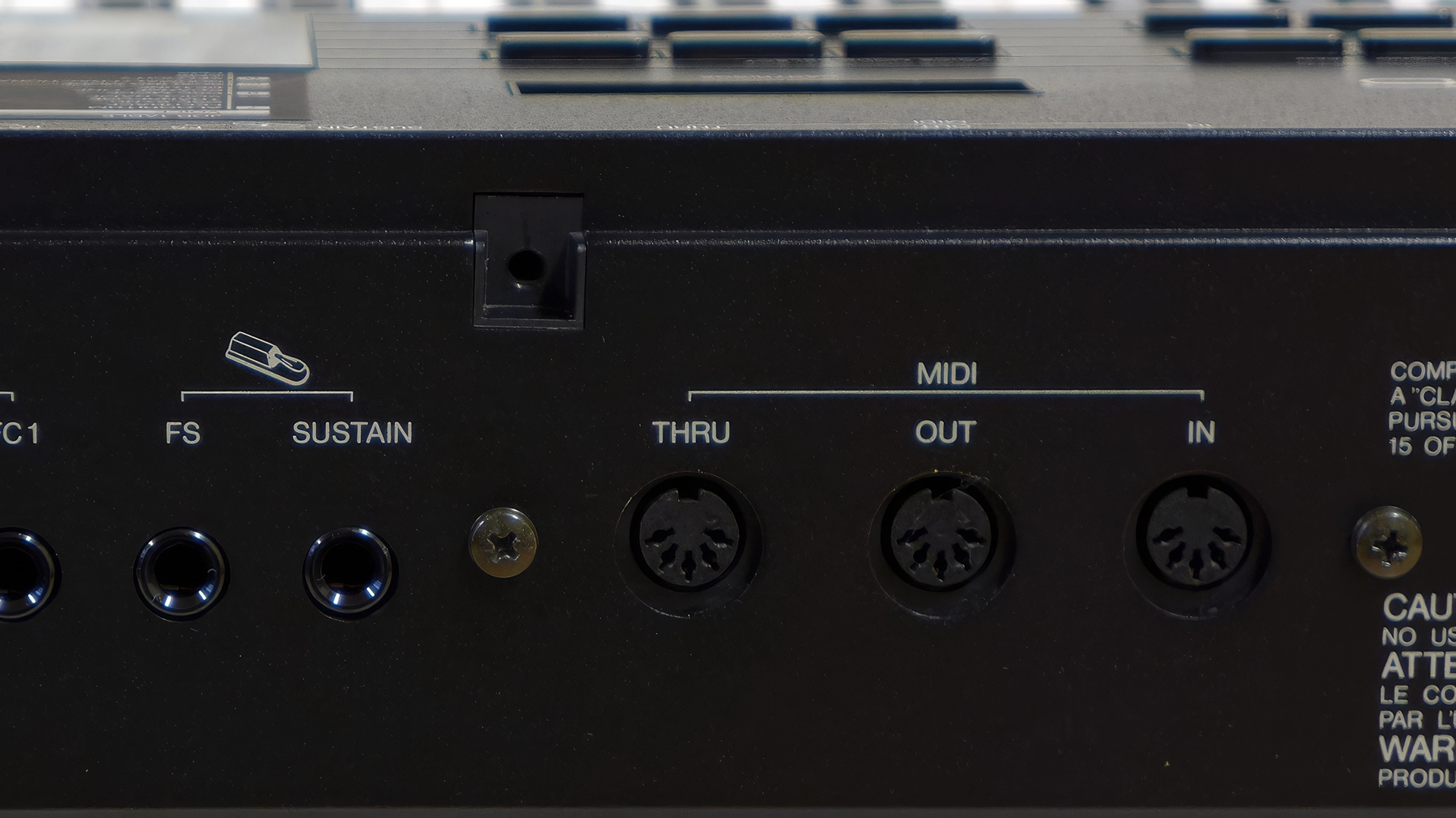
While Dave Smith and Ikutaro Kakehashi were the architects of the MIDI specification, the DX7 became its first mass-market ambassador. The synthesizer shipped with MIDI ports as standard equipment, not as an expensive add-on or retrofit. This integration meant the DX7 could function as a master keyboard controlling other MIDI devices, receive program changes from sequencers, and exchange patch data via System Exclusive messages. MIDI felt integral to the DX7's design, not bolted on as an afterthought.
Use Cases and Ecosystem Impact
Studios quickly adopted the DX7 as a master keyboard for controlling modular setups and rack modules. Its velocity-sensitive keyboard and MIDI implementation made it an ideal controller for layering sounds across multiple devices. The TX7 and TX816 rack modules (essentially headless DX7 engines) allowed studios to stack FM sounds without filling every surface with keyboards. The TX816 could house up to eight TF1 modules, offering the equivalent of eight DX7s in a 4U rack space, a configuration that became standard in high-end production facilities.
The DX7 also normalized the concept of patch librarians and third-party sound developers. Companies created software editors that replaced the membrane button interface with graphical parameter displays. SysEx dumps circulated on floppy disks, allowing users to build vast sound libraries without programming a single patch themselves. This ecosystem established workflows that persist today: buying preset packs, using software editors for hardware, and treating sound design as a separate discipline from performance.
The Sound of an Era: Cultural Dominance
For several years in the mid-1980s, you could turn on a radio and hear a DX7 within minutes. The synthesizer's sonic fingerprint appeared on pop ballads, R&B slow jams, adult contemporary hits, smooth jazz records, television themes, film scores, and commercial jingles. It wasn't just popular; it was unavoidable.
E. Piano 1: The Preset That Defined a Decade
Preset 11, known as "E. Piano 1" or "Full Tines" on later models, became the single most recognizable synthesizer sound in history. This bright, bell-like electric piano appeared on countless ballads, wedding songs, worship tracks, and smooth jazz records. Its clarity made it perfect for radio production; its velocity sensitivity gave it expressive range; its digital precision meant it sounded identical in every studio on earth.
Genre Imprint
The DX7 left its mark across multiple genres. In pop and adult contemporary, acts like Chicago, Phil Collins, Whitney Houston, and Tina Turner used DX7 sounds to create polished, radio-ready productions. The synthesizer's electric pianos and pads provided the harmonic foundation for power ballads and uptempo pop tracks alike. In R&B, producers working with Luther Vandross, Anita Baker, and Freddie Jackson built entire arrangements around DX7 basses and electric pianos, creating a smooth, sophisticated sound that defined the genre's commercial peak.
Fusion and jazz artists like Herbie Hancock and Chick Corea experimented with the DX7's clarity and precision, finding ways to integrate digital tones into improvised contexts. Television and film composers embraced the synthesizer for its reliability and timbral range, using it for everything from network news themes to corporate video soundtracks. The DX7 became the sonic wallpaper of the decade, present but often unnoticed, defining the texture of public space.
Listening Guide
The following tracks showcase the DX7's range and cultural penetration:
| Track | Artist | DX7 Sound Use | Notes |
|---|---|---|---|
| "Careless Whisper" | George Michael | DX7-style electric piano | Defines mid-80s ballad gloss |
| "Hard Habit To Break" | Chicago | Full Tines preset | Classic DX7 ballad palette |
| "Saving All My Love For You" | Whitney Houston | E. Piano 1 with chorus | Adult contemporary template |
| "Danger Zone" | Kenny Loggins | FM bass and bright keys | High-octane 80s production |
| "Out of Touch" | Hall & Oates | DX7 bass and synth stabs | Radio-perfect DX presence |
Backlash, Fatigue, and Reappraisal
By the late 1980s, the DX7's ubiquity had become a liability. Because programming was difficult and factory sounds were so recognizable, the synthesizer's timbres became sonic clichés. Musicians grew tired of hearing the same electric piano on every ballad, the same bass on every pop track, the same bells on every commercial. The DX7 became shorthand for a specific kind of overproduced, sterile perfection that felt increasingly dated as musical tastes shifted.
The Warmth Problem
Many producers and players complained that the DX7 sounded cold and clinical compared to analog synthesizers. The digital precision that made it reliable also robbed it of the subtle imperfections that gave analog instruments character: oscillator drift, filter resonance self-oscillation, the slight timing variations between voices. The DX7 was too perfect, and that perfection felt lifeless to ears accustomed to analog warmth. This critique fueled the analog revival of the 1990s, as musicians sought out vintage instruments that offered the organic textures they felt digital synthesis lacked.
Reappraisal in the Modern Era
Contemporary listeners hear the DX7 differently. What once sounded sterile now sounds distinctly retro, a timbral fingerprint of a specific historical moment. Genres like vaporwave, synthwave, hyperpop, and retro R&B deliberately embrace DX7 sounds as aesthetic choices, not compromises. Modern producers appreciate the synthesizer's precise electric pianos, unique bells and clavs, and basses that cut through dense mixes without mud. The DX7 has been recontextualized from a dated relic to a vintage classic with its own distinct character.
The DX7 Today
Artists and sound designers now use the DX7 or its emulations as deliberate aesthetic choices. The synthesizer's sounds signal a specific era and production style, making them valuable tools for music that either recreates or references 1980s culture. Contemporary electronic producers layer DX7 patches with modern production techniques, using the synthesizer's digital clarity to create contrast against warm analog basslines or lo-fi drum samples. The availability of software emulations and modern FM hardware has made these sounds more accessible than ever, allowing new generations to explore FM synthesis without hunting for aging hardware.
Legacy and Modern Echoes: FM Everywhere
The DX7's influence extends far beyond its production years. Its commercial success proved that digital synthesis could dominate the market, paving the way for sample-based synthesizers like the Korg M1 and software instruments that eventually replaced most hardware. The synthesizer also established FM as a permanent fixture in the sonic palette, inspiring decades of hardware and software that build on Chowning's original concepts.
Yamaha DX7
4.5 (162)
The Legend That Started It All




- Iconic, classic 80s sounds that defined a generation of music
- Capable of both cool, crisp patches and warm, organic tones
- Solid, professional key-bed feels like a real acoustic piano
- Durable, well-made instrument with a gritty, present sound
- See 5 more
- Programming can be notoriously difficult and unintuitive
- Original models can have issues with membrane buttons and broken keys
- Generates noticeable noise, which may require noise gates
- Limited in live performance due to single variable slider
- See 1 more
Released at approximately $1,995, this six-operator FM powerhouse delivered 16-voice polyphony, velocity sensitivity, aftertouch, and built-in MIDI when analog flagships cost twice as much and offered half the features. The six operators routed through 32 algorithms created crystalline electric pianos, metallic bells, and snappy basses that analog circuits couldn't produce. Its legendary "E. Piano 1" preset became the sonic signature of 1980s pop and R&B, appearing on countless radio hits. The notorious programming interface (small LCD screen, membrane buttons, single data slider) meant most users never ventured beyond factory sounds, but the rugged metal chassis and digital reliability made it the workhorse keyboard for touring professionals. By the late 1980s, its ubiquity bred fatigue, but contemporary producers now embrace those distinctive timbres as deliberate aesthetic choices in synthwave, vaporwave, and retro R&B. Finding a working vintage unit requires careful shopping, as membrane buttons degrade over time, making software emulations more practical for modern workflows while the hardware remains a tangible connection to music history.
See how artists use this








Arturia DX7 V
5.0 (16)
The DX7 Without the Data Entry Nightmare



- Impressive sound quality replicating the original Yamaha DX7 experience.
- Offers a vast array of undiscovered or unused sounds.
- Ease of programming compared to original hardware.
- Authentic DX FM sound for a classic 80s vibe.
- See 4 more
- Users with a Yamaha Reface DX may find overlapping sound capabilities.
- Some may prefer the tactile experience of hardware over software.
Sound Engine and Architecture
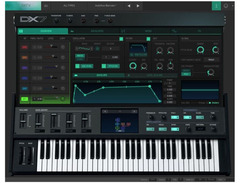
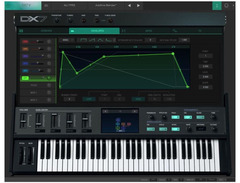
The DX7 V's synthesis engine faithfully recreates the original's FM characteristics, supporting all 32 algorithms and offering the same operator routing possibilities. The plugin extends the original's capabilities with 25 available waveforms per operator, compared to the single sine wave of the hardware. This expansion allows for timbres that move beyond classic DX sounds while maintaining the fundamental FM character. The plugin imports original DX7 SysEx data, meaning decades of carefully crafted patches remain accessible without translation or compromise.
Interface and Workflow
Where the hardware frustrated with its single slider and membrane buttons, the software shines with visual clarity. Each operator displays its role in the signal flow through color coding and graphical envelopes. The modulation matrix reveals connections between operators at a glance, eliminating the guesswork that plagued hardware programming. The resizable GUI adapts to modern high-resolution displays, and the four FX slots (routable in parallel or series) add processing possibilities unavailable in 1983.
Performance and Integration
The DX7 V functions as both a standalone application and a plugin in VST2.4, VST3, AAX, and AU formats, integrating seamlessly into modern production workflows. The step sequencer and dual LFOs with six waveforms each provide modulation options that extend far beyond the hardware's capabilities. Users consistently praise the plugin's sonic accuracy and ease of programming, noting that it makes FM synthesis finally approachable for musicians who never mastered the original's interface.
See how artists use this








Native Instruments FM8
4.5 (287)
Eight Operators of Pure FM Chaos
-s.webp?v=1782900005)
- Great for FM bass, digital sharp synth noises, and evolving pads
- Simplifies complex FM synthesis, making it more accessible
- Extensive modulation options with FX-Rack and Modulation-Matrix
- Excellent for creating aggressive and gritty dubstep basses
- See 6 more
- Interface and sound quality are seen as outdated by some users
- Initially challenging and complex to learn, especially for beginners
- Some find the presets lacking, requiring significant tweaking
- Seen by some as in need of a refresh or update
- See 1 more
Synthesis Capabilities
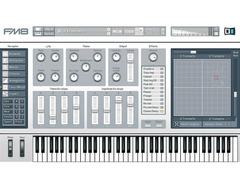
FM8 provides eight operators instead of six, along with a massive library of waveforms that extends beyond sine waves into sawtooth, square, and sample-based options. The synthesis engine combines FM with subtractive and additive techniques, allowing hybrid approaches that were impossible on vintage hardware. This flexibility makes FM8 particularly effective for aggressive electronic music, with users praising its ability to create screaming leads and growling basses that define dubstep and EDM production.
Ease of Use
The "Easy Edit Page" simplifies sound design by grouping related parameters into logical sections, making FM synthesis less intimidating for beginners. The FM matrix provides clear visual feedback about modulation routing, while the operator editing pages offer granular control over every parameter. Over 1,200 presets provide starting points that range from classic electric pianos to experimental textures, covering both nostalgic recreation and forward-looking sound design.
Effects and Modulation
Twelve high-quality effects (from overdrive to talk wah) process sounds at the output stage, adding character and movement unavailable in vintage FM synths. The revolutionary Morph Square allows real-time morphing between four different patches, enabling dynamic timbral shifts controlled by XY pad movements. The arpeggiator transforms simple MIDI input into complex patterns, with options to split the keyboard for simultaneous play of different sounds. Users note that FM8 rewards patient exploration, revealing sonic possibilities that justify its complexity.
See how artists use this






.jpg)
Digital Suburban Dexed
4.5 (78)
Zero Dollars, Maximum Authenticity

- Authentic DX7 sound emulation, almost indistinguishable from the original.
- Free to use, making it accessible for all.
- Light on CPU resources, ensuring smooth performance.
- Can communicate with real DX7 units and load/save patches.
- See 6 more
- Interface can be confusing and cluttered for beginners.
- Lacks some advanced features found in paid alternatives like Arturia's DX7 plugin.
- Notes can stick when using certain MIDI controllers.
- Default patches may not showcase the best sounds.
- See 1 more
Authenticity and Compatibility
Dexed uses the music-synthesizer-for-android engine, which closely models the original DX7's characteristics. The plugin supports DX7 input and output SysEx messages, meaning it can function as a patch editor and librarian for actual DX7 hardware. Users with vintage Yamaha gear appreciate this bidirectional communication, which makes Dexed a practical tool rather than just a nostalgic emulation. The plugin loads and saves DX7/TX7 SysEx programs, and the internet hosts thousands of DX7 patches available for free download.
Interface Design
All 144 DX7 parameters appear on a single panel, with DAW automation available for each. Each operator includes a realtime VU meter showing which operators are active, providing visual feedback that helps users understand what's happening inside the patch. The interface maintains the vintage Yamaha aesthetic while incorporating modern GUI controls like virtual knobs and graphical displays borrowed from popular DX7 MIDI patch editors.
Practical Considerations
Users consistently note that Dexed sounds remarkably close to actual DX7 hardware, with some claiming 98% accuracy. The plugin runs extremely light on CPU, using only a few percent on modern systems. While the interface can feel busy (some users wish for tabbed navigation), the free price and authentic sound quality make any workflow compromises easy to accept. Musicians using Korg Volca FM or other DX7-compatible hardware particularly value Dexed's ability to prototype and send patches to their physical instruments.
See how artists use this





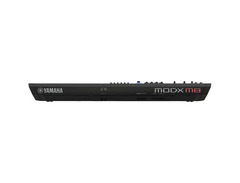
Yamaha MODX M8 88-key Performance Synthesizer
Three Engines, 88 Keys, One Stage-Ready Monster


Average Price: $2,044
High-end/Boutique
$500
$1501+
Budget
Standard
High-end
- Responsive 88 weighted keys offer excellent control and playability
- "Super Knob" allows real-time sound transformation during performances
- Incredible sound quality, highly praised by users
- Intuitive navigation even for synthesizer beginners
- See 3 more
- Touchscreen may not register touches accurately
- Requires a DI box for balanced XLR outputs
- Uses a 2-pin wall wart adapter, which may be inconvenient
Three-Engine Architecture
The MODX M8's synthesis capabilities revolve around three distinct sound engines working in concert. The FM-X engine offers eight operators and 88 algorithms, expanding beyond the DX7's six-operator, 32-algorithm architecture while maintaining the essential character of Yamaha's FM heritage. The AWM2 (Advanced Wave Memory 2) engine provides 10.7 GB of sampled waveforms with up to 128 elements per part, delivering realistic acoustic instruments and layered textures. The AN-X engine adds analog modeling with three oscillators, two filters with 10 types, pulse width modulation, and wave folding capabilities that simulate vintage synthesizer behavior through voltage drift and aging settings.
This multi-engine approach delivers 268 notes of total polyphony: 128 notes for AWM2 parts, 128 notes for FM-X parts, and 12 notes for AN-X parts. The architecture allows musicians to layer all three engines within a single performance, creating hybrid sounds that combine FM precision, sampled realism, and analog warmth.
Performance Control and Workflow
The MODX M8 prioritizes live performance through its physical interface. Eight faders provide direct control over part levels, AWM2 elements, or FM-X operators, while dedicated Part Select buttons access all eight parts instantly without menu diving. The Super Knob serves as a macro controller that can simultaneously adjust multiple parameters across all active parts, enabling dramatic timbral shifts with a single gesture. High-resolution controllers including the pitch bend wheel, modulation wheel, control sliders, and display knobs offer smooth, precise parameter changes that surpass previous MODX models.
The 7-inch color touchscreen simplifies navigation and sound editing, while the graded hammer standard (GHS) keyboard action provides weighted, piano-style response across all 88 keys. For producers, the MODX M8 functions as a USB audio interface with 10 output and 4 input channels at 44.1 kHz, plus MIDI 2.0 support for high-resolution velocity, pitch bend, and modulation data.
Studio Integration
The forthcoming Expanded Softsynth Plugin (ESP), scheduled for January 2026, will replicate the MODX M8 entirely within DAWs, allowing sound design and performance creation without the physical hardware. A dedicated DAW remote button enables hardware control of mixer, transport, and plugin parameters in Cubase, Logic, Pro Tools, and Ableton Live. The MODX M8 ships with Cubase AI for recording and production, establishing a complete hardware-software ecosystem for stage and studio work.
Korg Opsix
5.0 (4)
When Six Operators Learn New Tricks


- Granular control with knobs and sliders for all operators and algorithms
- Ability to import and use old DX7 patches
- Versatile sound engine with 21 oscillator waveforms, 11 filter types, and 30 effects
- Intuitive interface for FM synthesis, making sound design accessible and fun
- See 6 more
- Reliability issues with reports of defective screens
- Limited to three octaves, which may not suit all users
- UI still involves some menu diving, despite improvements
- Lack of dedicated knobs for specific parameters limits tactile control
- See 3 more
Altered FM Architecture
Traditional FM synthesis routes operators through fixed algorithms, but the Opsix introduces six distinct operator modes that extend beyond pure frequency modulation. Each operator can function as a standard FM carrier or modulator, but also as a wave folder, ring modulator, filter, wave shaper, or sample-based oscillator. This flexibility transforms FM from a strictly mathematical synthesis method into a hybrid approach that combines FM precision with subtractive, additive, and even granular techniques.
The synthesis engine provides 40 preset algorithms plus custom routing through a visual modulation matrix. Users can select from 21 oscillator waveforms per operator (far beyond the DX7's single sine wave) and process the results through 11 filter types including the aggressive Korg MS-20 low-pass/high-pass filter and the smooth Korg Polysix low-pass filter. Three blocks of 30 effect types add further processing, allowing for sound design that ranges from pristine DX7 recreations to aggressive modern electronic textures.
Operator Mixer and Interface
The Opsix's front panel features an Operator Mixer section with six faders and six knobs that provide direct, hands-on control over each operator's output level and feedback amount. The faders and knobs illuminate red when an operator functions as a carrier (audible sound source) and blue when functioning as a modulator, providing instant visual feedback about signal flow. This design choice eliminates much of the confusion that plagued DX7 programming, where users had to mentally track operator relationships through text-based parameter lists.
The high-definition OLED display syncs with six data entry knobs, offering focused, intuitive control over sound parameters. A randomize feature generates unexpected sonic starting points, encouraging experimentation and discovery. The 37-key keyboard with synth action provides 32 voices of polyphony, sufficient for complex chord voicings and layered sequences.
Sequencing and Modulation
The Opsix incorporates Korg's Polyphonic Motion Sequencing, a flexible step sequencer that records parameter changes per step and per voice. This approach allows for evolving patterns where individual notes within a chord can have different modulation depths, filter settings, or operator configurations. The sequencer supports trig conditions and parameter locks similar to Elektron workflows, making it effective for both composed sequences and live performance improvisation.
The Opsix's ability to import and use original DX7 patches provides backward compatibility with decades of FM sound design, while its expanded architecture allows users to enhance those vintage sounds with filtering, wave shaping, and effects processing unavailable in 1983.
See how artists use this







Elektron Digitone
5.0 (44)
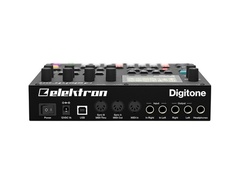
Four Operators Meet Sweden's Sequencer Masters




Average Price: $769
High-end/Boutique
$249
$700+
Budget
Standard
High-end
- Incredible soundbanks with pure FM synthesis
- Simplified FM makes it user-friendly for everyday use
- Powerful sequencer for composing complex patterns
- Comes with a useful dust cover for protection
- See 6 more
- Reports of defective units raise concerns about quality control
- Steep learning curve, especially for those new to FM synthesis or Elektron products
- Workflow and interface may be too complex for some users
- Limited to four FM tracks and four MIDI tracks
- See 3 more
Four-Operator FM Engine
The Digitone's synthesis engine employs four operators arranged through eight algorithms, each defining how carrier and modulator signals combine. This streamlined architecture makes FM synthesis more accessible by reducing the number of possible operator interactions, allowing users to grasp the cause-and-effect relationship between parameter changes and sonic results. Instead of dealing with complex frequency ratios, the Digitone provides straightforward pitch controls and modulation amount dials that respond predictably to adjustment.
The engine includes resonant filters with multiple types, LFOs with various waveforms, and envelopes that shape both amplitude and modulation parameters. This combination produces a wide sonic palette: ambient pads, crystalline leads, aggressive basslines, and percussive plucks all emerge from the same four-operator architecture through different algorithm and modulation choices.
Elektron Sequencer Integration
The Digitone's sequencer is its defining feature, implementing Elektron's parameter lock system where each sequencer step can have unique values for any synthesis parameter. This approach enables evolving patterns where notes change timbre, filter cutoff, modulation depth, or effects settings on every step. Trig conditions add probability and randomness, allowing sequences to vary on each repetition without manual intervention.
Eight voices of polyphony split across four tracks provide sufficient voice allocation for chord-based music and layered sequences. The sequencer can play chords automatically, making it accessible for users with limited keyboard skills or music theory knowledge. Pattern chaining and song mode allow for complete track arrangement within the hardware, eliminating the need for external DAW control during live performance.
Workflow and Character
The Digitone emphasizes speed and immediacy in sound design. Its interface makes it easy to achieve usable patches quickly, with intuitive parameter grouping that guides users toward musical results rather than technical dead ends. The compact desktop form factor and internally sequenced operation make it ideal for producers working in small spaces or performing live without laptop support.
While the four-operator architecture limits timbral complexity compared to six or eight-operator designs, this constraint encourages focused sound design and prevents the option paralysis that can accompany more complex instruments. Users consistently praise the Digitone for making FM synthesis feel natural and musically immediate rather than mathematically abstract.
See how artists use this



Why FM Matters Now
FM synthesis remains relevant because it occupies a distinct sonic territory. Its efficiency at creating complex tones from simple building blocks makes it ideal for sounds that need definition and edge: punchy basses, glassy pads, metallic percussion, and bright leads that cut through dense arrangements. FM complements analog synthesis rather than competing with it, offering timbres that analog circuits struggle to produce.
For genres where clarity and presence matter more than warmth and vintage character, FM synthesis provides tools that subtractive approaches can't match. The mathematical precision that once made the DX7 feel cold now makes it valuable for creating space in crowded mixes. Where analog synths bloom and spread across the frequency spectrum, FM sounds stay focused and defined, occupying specific frequency ranges without bleeding into neighboring elements. This characteristic makes FM particularly effective in modern electronic music production, where dense arrangements require every sound to occupy its own sonic niche.
The resurgence of FM hardware and software also reflects a broader appreciation for synthesis methods that offer alternatives to the analog revival. After decades of chasing vintage warmth, producers have rediscovered that digital precision has its own aesthetic value.
Gear Evolution Table
| Model | Year | Polyphony | Engine | Key Points | Legacy |
|---|---|---|---|---|---|
| DX7 | 1983 | 16 voices | 6-op FM | Affordable, MIDI, velocity | Best-selling synth, 80s icon |
| DX9 | 1983 | 8 voices | 4-op FM | Cut-down engine | Entry-level cousin |
| DX1 | 1983 | 32 voices | Dual 6-op FM | Luxe build, deep control | Rare flagship |
| TX7 / TX816 | 1985 | Module | 6-op FM | Rack versions, mega-stacks | Studio staples |
| DX7II Series | 1987 | 16 voices | Improved 6-op | Better keyboard, more control | Refined DX experience |
FAQs
Why was the Yamaha DX7 so popular?
The DX7 combined affordable pricing, reliable construction, built-in MIDI, and instantly usable factory sounds that fit radio production perfectly. It offered sounds analog synthesizers couldn't produce (bright electric pianos, metallic bells, glassy pads) at roughly half the cost of competing flagships, making professional-quality synthesis accessible to far more musicians.
What is FM synthesis in simple terms?
FM synthesis modulates the frequency of one oscillator (the carrier) with another oscillator (the modulator) to create complex harmonics and bright, evolving tones. Unlike subtractive synthesis which filters harmonically rich waveforms, FM builds complexity from simple sine waves through modulation relationships that generate sidebands and additional frequencies.
Why do people say the DX7 is hard to program?
The DX7's deep parameter set required navigating abstract, math-like controls through a small screen and single data entry slider. The membrane button interface provided no tactile feedback, and the lack of visual signal flow made it difficult to understand how parameter changes would affect the sound. Programming required understanding concepts like modulation ratios and envelope scaling that had no analog synthesis equivalent.
Should I buy a real DX7 or a plugin?
Hardware offers authenticity and tactile feel, along with the experience of using a historically significant instrument. Plugins provide convenience, instant recall, extended features like additional waveforms and effects, and modern workflow integration. Software options like the Arturia DX7 V make programming far easier than the original hardware while maintaining sonic accuracy.
Conclusion
The Yamaha DX7 did more than sell 200,000 units and define the sound of 1980s pop, R&B, and adult contemporary music. It proved that digital synthesis could dominate the market, that MIDI integration could become standard rather than optional, and that FM synthesis could create timbres analog circuits couldn't touch. The synthesizer's factory presets became the sonic wallpaper of an era, instantly recognizable decades later as markers of a specific cultural moment.
Modern tools like the Arturia DX7 V, Native Instruments FM8, and Digital Suburban Dexed make FM synthesis more accessible than ever, eliminating the programming frustrations that limited the hardware's creative potential. Contemporary hardware like the Yamaha MODX M8, Korg opsix, and Elektron Digitone continue the FM tradition with modern workflows and expanded capabilities.
About the authors
S. Jino is an accomplished multi-instrumentalist and music producer based in Kolkata, India, distinguished by his self-taught mastery and unique blend of technical acumen and musical performance. His extensive experience was forged through hands-on dedication, starting with the full restoration of a broken guitar. Jino's capabilities span keyboards, pedals, and advanced digital production, reflecting a comprehensive skill set developed independently. As a significant contributor to the music scene, Jino regularly performs with worship bands and college ensembles. He has also established himself as a reliable and authoritative professional in freelance mixing, mastering, and original music creation. Inspired by the innovative sounds of Brian May and David Gilmour, and influenced by Kolkata's vibrant metal community, Jino is committed to the intricate art of vintage gear restoration and the continuous exploration of music and technology fusion. His current professional setup, featuring a meticulously restored nameless guitar, a Fender Player Strat, and a Boss Katana 50. Read more
Giulio Chiarenza is the co-founder of Equipboard and a lifelong multi-instrumentalist with a deep passion for music gear. Born in Italy and raised in the U.S., he holds a Computer Science degree from The University of Texas at Austin and blends technical acumen with decades of hands-on experience across guitar, piano, drums, and electronic production. Early in his career, Giulio was signed to a San Francisco-based EDM label, releasing both remixes and original tracks. These days, he helps steer Equipboard’s vision while personally testing and reviewing gear. He's never too far from his go-to guitar: a vintage 1978 Fender Telecaster Custom. Read more