Mastering Synthesizers: Unlock the Full Potential of Sound Design

By Gear Experts
By Gear Experts
Table of Contents

Equipboard
Equipboard is the world's largest community of artists and their gear. Read our review process.
We are reader-supported. When you buy through links on our site, we may earn an affiliate commission. Learn more.
Synthesizers are one of those things that, even if you’re not totally familiar with them, you’ve probably heard them more times than you can count. Whether it’s the iconic bassline in Michael Jackson’s “Billie Jean,” the futuristic sounds of Daft Punk, or the eerie scores in your favorite sci-fi movies, synths are everywhere - making them one of the coolest tools in a musician's toolkit.
Some of the sounds these machines produce can leave you scratching your head, wondering how they were even made. From massive, atmospheric pads to snappy basslines and digital weirdness, synths are capable of creating just about anything.
In this guide, we’re going to break down everything you need to know about synthesizers - what they do, how they work, and why they’ve had such a huge impact on modern music. Whether you're a producer or musician, you’re about to get well-acquainted with the magic behind those crazy sounds. Let’s get started!
Going Beneath the Surface of the Synthesizer
At first glance, a synthesizer might look like a regular keyboard - just a bunch of keys lined up in a neat little row. But once you dig in, you realize it’s so much more than that.
Unlike a piano that gives you one kind of sound per key, a synth is like having a mini sound factory at your fingertips.
Here’s the basic idea: Instead of just playing a note, a synth generates sound waves electronically. You can tweak everything from the pitch to the tone, the shape of the sound, and even how it evolves over time. So instead of just getting a standard piano or string sound, you can create anything from a warm, smooth pad to a wild, screeching lead that sounds like it came straight from outer space.
Synths can mimic real instruments or invent totally new ones. With the right settings, your synth can be a full orchestra, a haunted spaceship, or even something that doesn’t exist in the real world.
The Evolution of Synthesizers
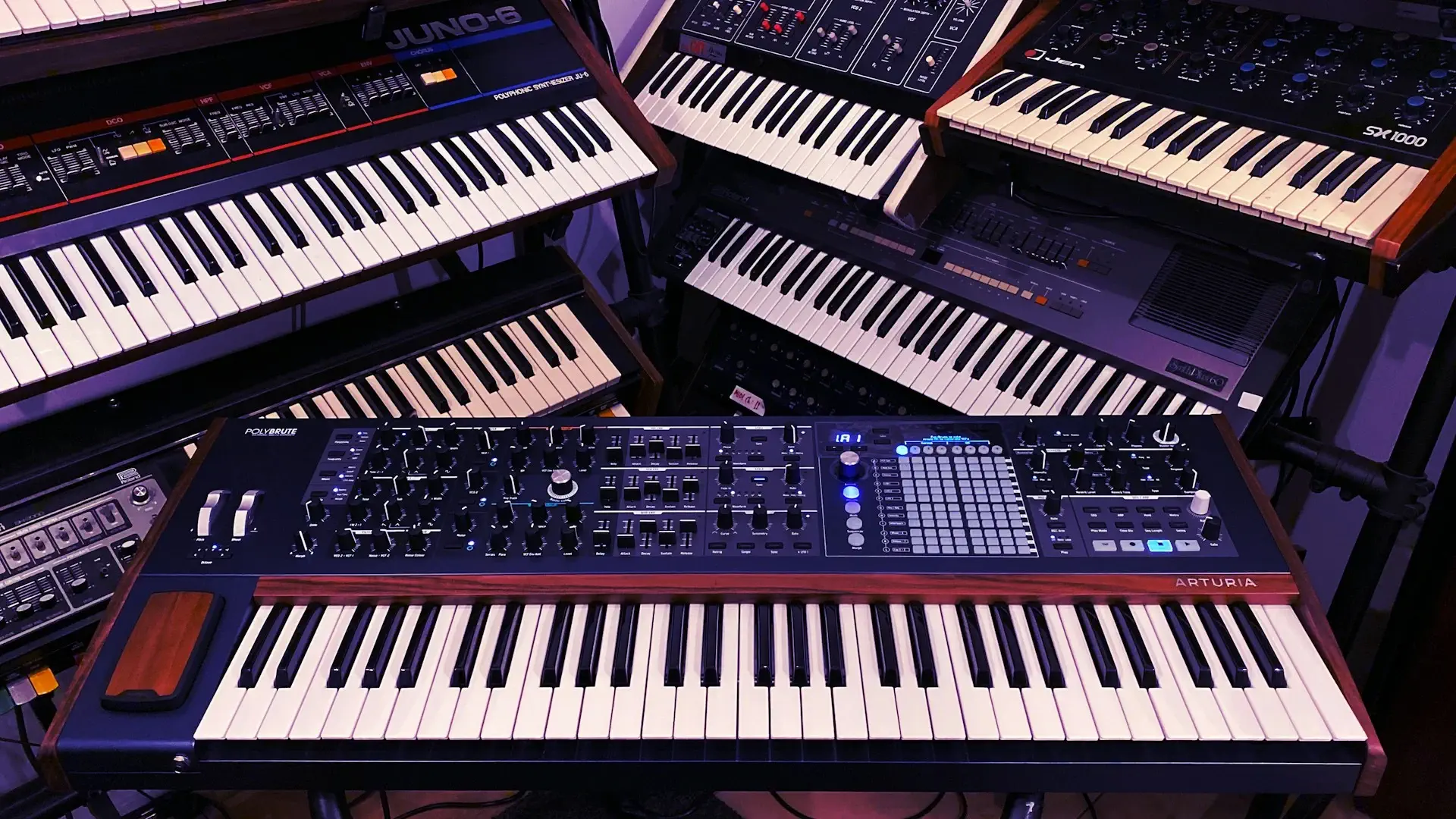
Synthesizers didn’t just appear out of nowhere. They’ve gone through decades of development to become the powerful tools we have today. In the next few sections, we’ll take a look at how they were born, how they evolved, and the tech that got us from those early analog beasts to the sleek digital synths we use now.
The Pioneers
Before Bob Moog became the poster child of synthesizers, there were plenty of mad scientists tinkering away in their labs, dreaming of how to make machines that could produce music. Two of the earliest pioneers were Leon Theremin and Maurice Martenot, who were making waves long before synths became mainstream.
Leon Theremin gave us the theremin, an eerie instrument that you play without even touching it. It sounds like something from a 1950s sci-fi movie, and in fact, it was!
Meanwhile, Maurice Martenot created the ondes Martenot, an instrument that looked like a keyboard but had a sliding ring to change pitch, allowing for some seriously haunting and expressive sounds.
These two visionaries were paving the way for what would eventually become the synthesizer, showing that electronic music wasn’t just possible - it was the future.
The Birth of the Modern Synthesizer
In the 1960s, Bob Moog changed the game with the arrival of the Moog synthesizer. This was the first synthesizer that really made waves in the world of music. Built like a modular puzzle, the Moog had various components that could be linked together to create sounds like no one had ever heard before.
Here’s what the Moog was made of:
- Oscillators: These generated the sound waves.
- Filters: Shaped the sound by cutting or boosting certain frequencies.
- Amplifiers: Controlled the volume of the signal.
- Envelope generators: Defined how the sound evolved over time (like how long it took to fade in or out).
- Controllers: Like keyboards or ribbon controllers, these let musicians play the thing!
The magic happened when you connected all these parts with patch cables, letting you sculpt the sound in countless ways.
But one of the key features that set the Moog apart was that it could be tuned to standard musical pitches, which meant musicians could actually use it in real songs alongside traditional instruments.
And use it they did! Wendy Carlos took the Moog into the spotlight with her album Switched-On Bach, where she reimagined classical music using only the Moog. It blew people’s minds.
Meanwhile, Keith Emerson of Emerson, Lake & Palmer made it a rock star by using it onstage. With these artists leading the way, the Moog helped the synthesizer go from a niche invention to a serious instrument in popular music.
The Synth Revolution: From Room-Sized to Road-Ready
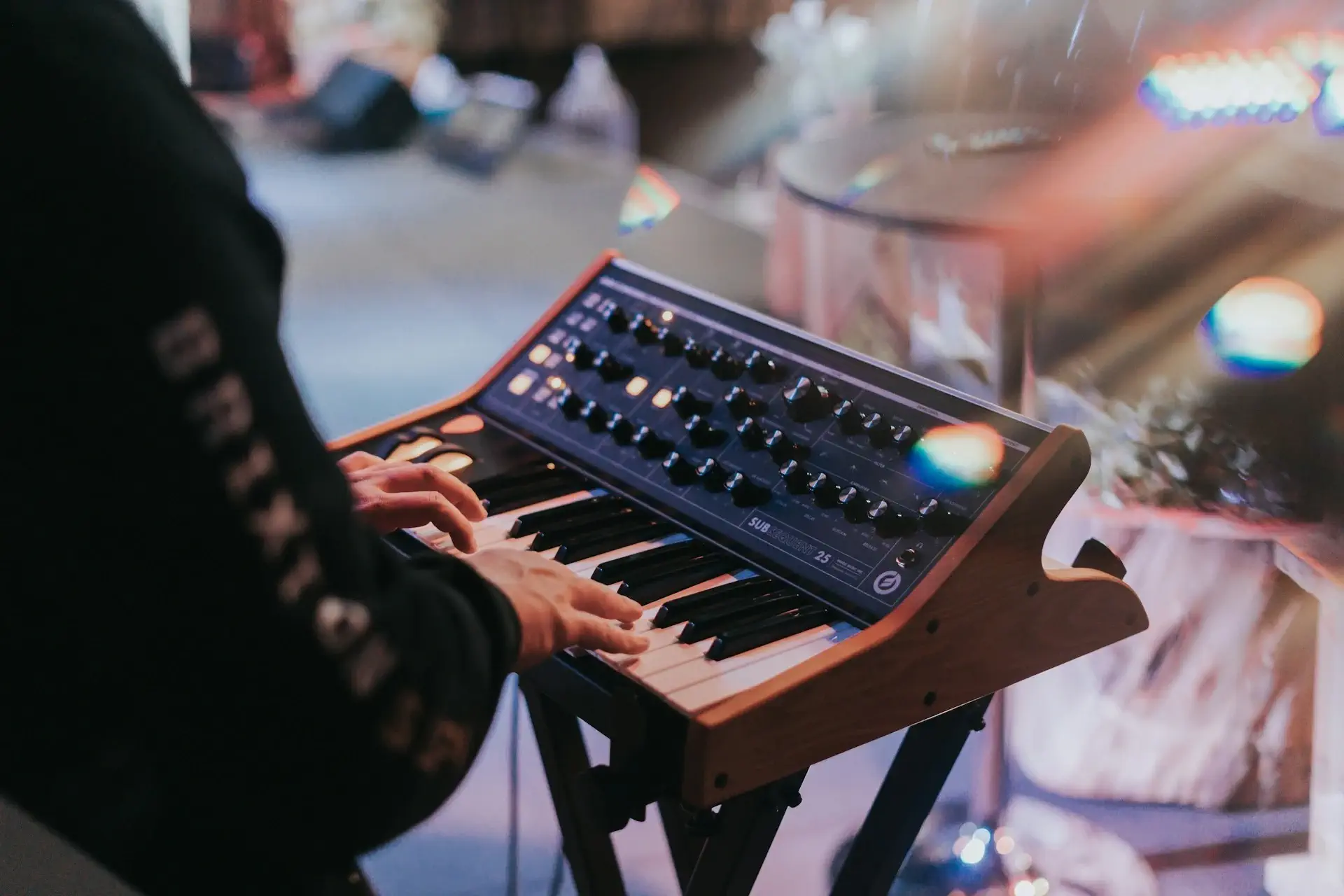
By the 1970s, synthesizers were starting to slim down - thankfully. Early models, like the original Moog, were massive, taking up entire rooms and requiring an engineer's patience to set up. But then came the Minimoog, a true game-changer.
It took all the power of those room-sized synths and packed it into a portable, suitcase-sized unit that musicians could take on the road.
The Minimoog wasn’t the only star of the ’70s, though. The ARP Odyssey became another favorite, known for its versatile sound and ease of use. Yamaha’s CS-80 also made waves with its rich, expressive tones, becoming a go-to for film scores (you’ve definitely heard it in Blade Runner).
The Digital Dawn: Welcome to the Matrix
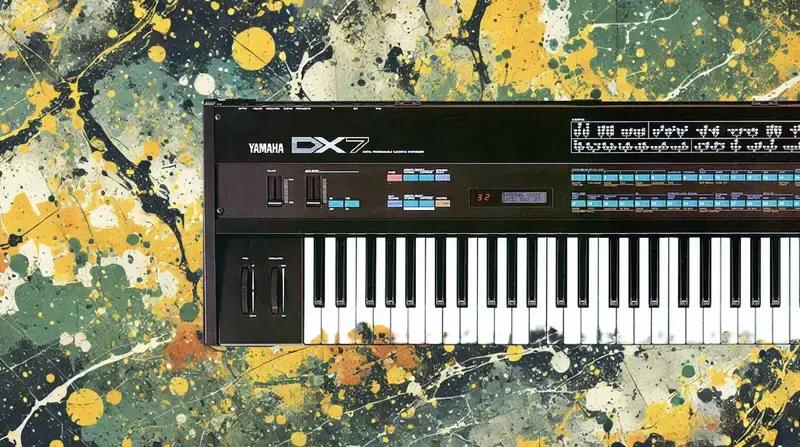
The '80s said, "Hold my beer," and ushered in the digital age. The Yamaha DX7 dropped, armed with FM synthesis that could make sounds so clean they'd make your ears sparkle.
Sure, programming it was like solving a Rubik's cube blindfolded, but that didn't stop it from defining the sound of the decade. New Wave, synthpop, and power ballads would never be the same.
The Software Synthesis Era: Bedroom Producers Unite
The '90s and 2000s brought the synth revolution to your desktop. Suddenly, anyone with a halfway decent computer could run circles around those hardware behemoths of yore.
Virtual analog? Check. Granular synthesis? Why not. The ability to make sounds that would make your cat question reality? Absolutely. The democratization of music production was in full swing, for better or for worse.
The Modern Synthesizer
Today, we're living in a synth utopia (or dystopia, depending on who you ask). Want the warm, imperfect charm of analog? There's a boutique synth maker hand-soldering your dreams into reality. Prefer the infinite possibilities of digital? Software synths have you covered, with more options than you can shake a MIDI controller at.
And let's not forget the weird and wonderful world of hybrid synths, blending analog warmth with digital precision. From Eurorack modules that let you build your own sound-mangling monster, to AI-powered VST synths that might just become sentient and start composing on their own, the synthesizer landscape is wilder and more diverse than ever.
How Synthesizers Work
To understand synthesizers, we need to break them down into their core components.
Oscillators: The Sound Sources
At the heart of every synthesizer lies the oscillator, often abbreviated as VCO (Voltage Controlled Oscillator) in analog synths. These are the raw sound generators, creating electric signals that form the basis of all synth sounds.

Oscillators typically produce several basic waveforms:
- Sine Wave: The purest tone, containing only the fundamental frequency. It's the sonic equivalent of a primary color, simple yet essential.
- Square Wave: Characterized by its harsh, hollow sound. It's rich in odd harmonics, making it great for punchy bass lines and retro video game sounds.
- Sawtooth Wave: Named for its jagged shape, this waveform is harmonically rich, containing both odd and even harmonics. It's a go-to for thick, buzzy leads and basses.
- Triangle Wave: Softer than a square wave but with more harmonics than a sine, triangle waves offer a middle ground, useful for mellow pads and flute-like sounds.
Filters: Shaping the Sound

If oscillators are the source of the sound, filters are the sculptors. The most common type is the VCF (Voltage Controlled Filter), which selectively removes certain frequencies from the audio signal.
Key filter types include:
- Low-Pass Filter: Allows low frequencies to pass while attenuating high frequencies. It's the secret behind those smooth, rounded synth sounds.
- High-Pass Filter: The opposite of a low-pass, it lets high frequencies through while cutting the lows. Great for creating thin, piercing sounds.
- Band-Pass Filter: Allows a specific range of frequencies to pass while attenuating those above and below. It can create phone-like or nasal qualities in a sound.
- Notch Filter: Also known as a band-reject filter, it removes a narrow range of frequencies. It's less common but can create interesting, hollowed-out tones.
Amplifiers: Controlling Volume
If oscillators are the heart of a synthesizer, then amplifiers are its lungs - controlling the breath of each sound, determining when it speaks and when it falls silent.
The Voltage Controlled Amplifier (VCA) might seem simple at first glance - after all, it's "just" controlling volume - but in practice, it's an incredibly nuanced and vital component that brings synthesizer sounds to life.
Envelope Generator: The Sound Sculptor

A musical note doesn't just appear out of the blue. it has a shape, a life cycle. It springs to life quickly, reaches its peak, holds for a moment, and then gradually fades away. This shape, this journey from silence to sound and back again, is what envelope generators control.
In the world of synthesis, this journey is broken down into four main stages, known as the ADSR envelope:
- Attack: How quickly the sound reaches its peak volume when a key is pressed.
- Decay: How rapidly the sound falls to the sustain level after the initial peak.
- Sustain: The volume level maintained while the key is held down.
- Release: How long it takes for the sound to fade out after the key is released.
By tweaking these parameters, you can create everything from sharp, percussive plucks to long, evolving pads.
Adding Movement: LFO (Low-Frequency Oscillator)
LFOs are the secret weapon for adding life and movement to synthesizer sounds. Operating below the range of human hearing (typically under 20 Hz), LFOs modulate other parameters to create effects like vibrato, tremolo, or rhythmic filter sweeps.
Bringing It All Together: The Signal Path
In a typical subtractive synthesis setup (the most common type), the signal flows like this:
- Oscillators generate the raw sound
- This signal passes through the filter, which removes unwanted frequencies
- The filtered signal is then shaped by the amplifier and envelope generator
- Various modulation sources (like LFOs and envelopes) can be applied at different points in this chain to create more complex, evolving sounds
Understanding this signal flow is key to mastering synthesizer programming.
Key Synth Terminology: Speaking the Language
Like any specialized field, the world of synthesizers has its own vocabulary. Let's decode some essential terms:
Monophonic vs. Polyphonic
- Monophonic: A synth that can play only one note at a time. Think of a trumpet or a human voice.
- Polyphonic: Capable of playing multiple notes simultaneously, allowing for chords and complex harmonies.
Paraphonic
A paraphonic synthesizer sits between monophonic (single-note) and polyphonic (multi-note) synthesizers. While it allows the player to play multiple notes or pitches at the same time, all these notes share the same filter and amplifier. This means that while you can play chords, the shared filter and envelope mean each note will be affected identically when changes in tone or volume are applied.
This differs from polyphonic synths, where each voice has its own filter and amplifier, allowing for more independent articulation of each note. Paraphonic synths are often used to create layered, slightly less complex but harmonically rich sounds.
Modulation
In synthesis, modulation is where the magic truly happens. It's the difference between static, lifeless tones and rich, evolving soundscapes. Think of modulation as the animator in a film studio, bringing still drawings to life with movement and character.
Just as an animator can make a character walk, run, or dance, modulation can make a sound wobble, sweep, pulse, or transform in countless ways.
The Basic Concept
At its core, modulation is simple.
One signal (the modulator) influences another signal (the carrier).
But from this simple concept springs a universe of possibilities. Imagine a singer's vibrato - their pitch oscillates slightly, adding warmth and expression to the note. In a synthesizer, this same effect can be achieved through pitch modulation, with an LFO (Low-Frequency Oscillator) acting as the modulator and the main oscillator as the carrier.

The Language of Movement
Different types of modulators create different kinds of movement in sound design.
Periodic modulation, often using low-frequency oscillators (LFOs), generates regular, repeating changes. These LFOs come in various wave shapes such as sine, triangle, square, and sawtooth, each producing a distinct type of movement. The speed of an LFO can range from ultra-slow, around 0.1 Hz, to audio rates exceeding 20 Hz, creating different rhythmic or tonal effects.
For example, a sine wave LFO modulating pitch results in a vibrato effect, while a square wave LFO controlling amplitude creates a tremolo. When a triangle LFO modulates a filter, it produces a wah-like effect, adding sweeping motion to the sound.
On the other hand, envelope modulation introduces one-shot changes that follow a specific contour, shaping the sound over time. Traditional envelopes use the ADSR (Attack, Decay, Sustain, Release) model, though more complex, multi-stage envelopes are also common. Envelopes are great for mimicking the natural behaviors of instruments.
For instance, a filter envelope can create a “wowing” effect by gradually opening and closing the filter. A pitch envelope might produce a drum-like pitch drop, giving percussive elements more punch. Similarly, a pulse-width modulation (PWM) envelope can guide the evolution of a sound’s timbre, adding rich texture as it unfolds.
Common Modulation Techniques

1. Vibrato (Pitch Modulation)
Vibrato is a technique where an LFO (low-frequency oscillator) modulates the pitch of an oscillator, creating a wavering pitch effect. This effect mimics the subtle pitch variations that occur naturally in acoustic instruments and can add a lot of expression to synthesized sounds.
To achieve a natural-sounding vibrato, it’s best to start with a sine wave LFO. Set the speed to around 5-7 Hz for a subtle effect and keep the depth relatively low so the pitch modulation remains tasteful. For more control, many synthesizers allow you to map the mod wheel to the vibrato, letting you bring in more or less modulation as you play.
2. Tremolo (Amplitude Modulation)
Tremolo happens when an LFO modulates the gain of a voltage-controlled amplifier (VCA), causing rhythmic changes in volume. This effect can range from a gentle pulsing to a dramatic, choppy stutter, depending on how it's set up.
For a smooth, natural tremolo, use a sine wave LFO. If you're looking for a more pronounced, rhythmic effect, try a square wave LFO for a gated sound. For something more unpredictable, a random LFO can create uneven volume changes that keep things interesting.
3. Filter Modulation
Filter modulation is a powerful way to add movement and evolution to your sounds by adjusting the filter cutoff frequency over time. There are several approaches to this, each offering unique effects.
Using an LFO to modulate the filter creates sweeping effects, similar to a wah-wah pedal, and works beautifully for pads and evolving textures. Envelope modulation, on the other hand, is perfect for making dynamic, punchy sounds, especially with basses and leads.
If you're feeling adventurous, audio-rate modulation of the filter can produce wild harmonic interactions, often resulting in vocal-like or metallic tones that push the boundaries of traditional sound design.
4. Pulse Width Modulation (PWM)
Pulse width modulation (PWM) involves modulating the duty cycle of a square wave, which creates a rich, chorusing effect. This technique is famous for its use in classic string and pad sounds, giving them a lush, evolving quality.
To get the most out of PWM,try using slow LFO rates for subtle movement. You can also layer multiple detuned PWM oscillators to create a huge, wide sound that fills the stereo field. For even more dramatic shifts in timbre, apply an envelope to the pulse width, adding an extra layer of depth to your sound.
Patch
A patch refers to a saved configuration of synthesizer settings that represent a specific sound or timbre. This term comes from early modular synthesizers where physical patch cables were used to connect different modules, routing signals to shape the sound.
Today, modern synthesizers use the term "patch" or "preset" to describe stored sounds created by adjusting oscillators, filters, envelopes, and effects. Patches are crucial in live performances or studio work because they allow musicians to recall complex sound settings instantly without having to manually reprogram the synthesizer.
MIDI (Musical Instrument Digital Interface)
MIDI is a standardized protocol that allows electronic instruments, computers, and other digital musical devices to communicate and synchronize with each other. It doesn’t transmit audio signals but instead sends information about musical notes, velocity (how hard a key is pressed), timing, and control changes, such as volume or pitch bend.
MIDI is vital in digital music production because it enables seamless interaction between hardware and software, making it possible to control multiple instruments from a single device or automate entire performances using a sequencer. MIDI has been the backbone of digital music production since the 1980s and continues to be a universal language in studios and live performances.
Arpeggiator
An arpeggiator is a tool that automatically sequences the notes of a chord into a rhythmic pattern, often cycling through notes in ascending, descending, or random orders. Instead of playing a chord simultaneously, the arpeggiator breaks the chord into individual notes and repeats them in a looped pattern.
This feature is especially popular in electronic music genres like dance, house, and trance, where it adds rhythmic drive and melodic complexity without needing to manually play each note in rapid succession. Arpeggiators are great for generating catchy, hypnotic, and repeating patterns from a simple chord.
Unison
The unison feature in a synthesizer duplicates the same note across multiple oscillators and plays them simultaneously. This technique thickens the sound by slightly detuning each oscillator, resulting in a fuller, richer, and more complex tone. Unison is frequently used to create powerful lead sounds, deep basses, or lush pads.
The slight detuning creates a sense of movement and depth, as the oscillators' waveforms slightly drift in and out of phase with each other, adding a layer of warmth and character to the sound.
Beyond the Basics: Types of Synthesis
Subtractive Synthesis
Subtractive synthesis is one of the most common and intuitive methods of sound design used in synthesizers. It starts with a harmonically rich sound, usually generated by oscillators producing waveforms like sawtooth, square, or pulse waves. These raw waveforms are full of overtones, giving them a dense, complex character.
The next step is where the "subtractive" part comes in: filters are applied to shape the sound by removing specific frequencies. For example, a low-pass filter might cut out the higher harmonics, leaving behind a smoother, deeper tone. This method allows for precise control over the texture and timbre of the sound, making subtractive synthesis great for creating everything from warm, analog basses to shimmering pads.
Additive Synthesis
Additive synthesis builds sounds by layering individual sine waves of different frequencies and amplitudes. Each sine wave represents a pure tone with no harmonics, and by combining them, you can create complex waveforms and rich harmonics.
This approach allows for very precise control over the harmonic content of a sound. In essence, it's the opposite of subtractive synthesis, which starts with a complex waveform and then removes frequencies. Additive synthesis is like constructing a sound one harmonic at a time, offering a high level of control for crafting unique timbres and overtones.
FM (Frequency Modulation) Synthesis
FM synthesis involves using one oscillator, known as the modulator, to change (modulate) the frequency of another oscillator, called the carrier. This process creates complex waveforms, resulting in sounds that are rich in harmonics.
FM synthesis excels at producing bell-like tones, metallic timbres, and evolving textures. It became popular in the 1980s with the Yamaha DX7, a synthesizer that revolutionized digital synthesis. FM synthesis can generate a wide variety of sounds, from crystalline digital clarity to harsh, distorted timbres, depending on how deeply the modulator affects the carrier.
Wavetable Synthesis
In wavetable synthesis, instead of generating sound through traditional oscillators, short, pre-recorded waveforms (wavetables) are stored and can be cycled through or manipulated to create a sound.
Wavetables are often arranged in tables, where each waveform can represent a different harmonic structure. The ability to scan through or morph between waveforms over time enables wavetable synths to produce rich, evolving sounds. This synthesis method is highly versatile and can blend digital precision with warm analog-like textures, making it a favorite for sound designers seeking complex, moving sounds.
Granular Synthesis
Granular synthesis breaks down audio samples into tiny, overlapping fragments called grains, which are typically 1–100 milliseconds in length. These grains can then be reassembled, layered, or stretched to create entirely new sounds or textures.
By manipulating parameters such as grain size, pitch, and playback speed, granular synthesis can transform ordinary sounds into ethereal textures, drones, or otherworldly effects. It’s an incredibly powerful tool for sound designers, allowing for the creation of ambient soundscapes, glitchy textures, or time-stretched effects.
Physical Modeling
Physical modeling synthesis uses mathematical algorithms to simulate the physical properties and behaviors of real-world instruments. By recreating the physics of how an instrument vibrates and resonates (such as a plucked string or a blown wind instrument), physical modeling can produce highly realistic and expressive sounds.
This method is often used in virtual instruments that aim to emulate acoustic instruments but with greater control and flexibility. Though complex, physical modeling offers some of the most lifelike and responsive synthetic sounds available, making it an advanced yet powerful synthesis technique.
Factors to Consider When Choosing a Synth
Choosing the right synthesizer can feel like picking a paintbrush for an artist—each one offers a different way to create, and the right choice depends on what kind of sound you're aiming to craft.
Here are some key factors to guide you in making the best decision:
- Purpose and Use Case: First, ask yourself, "What do I want to create?" Synths come in all shapes and sizes, and some excel in specific areas. If you're aiming for thick bass lines or searing leads, you'll want a synth that specializes in those tones. On the other hand, if you're creating lush soundscapes or ambient pads, you'll need something that can handle a wide range of textures.
- Analog vs. Digital: The analog vs. digital debate is a big one in the synth world. Analog synths are prized for their warm, organic tones, with a slightly unpredictable character that many find inspiring. However, they often come with fewer sound-shaping options. Digital synths, on the other hand, bring versatility to the table, offering a massive range of sounds, more precise control, and often the ability to store presets, making them perfect for those who want to explore different sonic territories without sacrificing convenience.
- Polyphony: Do you need to play multiple notes at once or just one at a time? Monophonic synths are perfect for punchy basses or screaming lead lines, focusing all their energy into one note. b give you the ability to play chords and more complex arrangements, ideal for creating pads and intricate harmonic layers. Paraphonic synths offer the best of both worlds.
- Interface and Controls: Are you a hands-on tweaker, or do you prefer to scroll through presets? Some synths offer a plethora of knobs, sliders, and buttons for ultimate control, allowing you to sculpt sounds in real time. Others offer a more streamlined interface with pre-programmed sounds for quick creativity without the manual work.
- Modularity: If you're up for a challenge and want total flexibility, a modular synth might be your best bet. These allow you to customize your signal path and add components to your heart's content, but they come with a steeper learning curve. For the true sound sculptors, though, the possibilities are endless.
By considering these factors, you'll be well on your way to choosing a synthesizer that fits your creative vision and workflow perfectly.
The Future of Synthesis: Where Do We Go From Here?
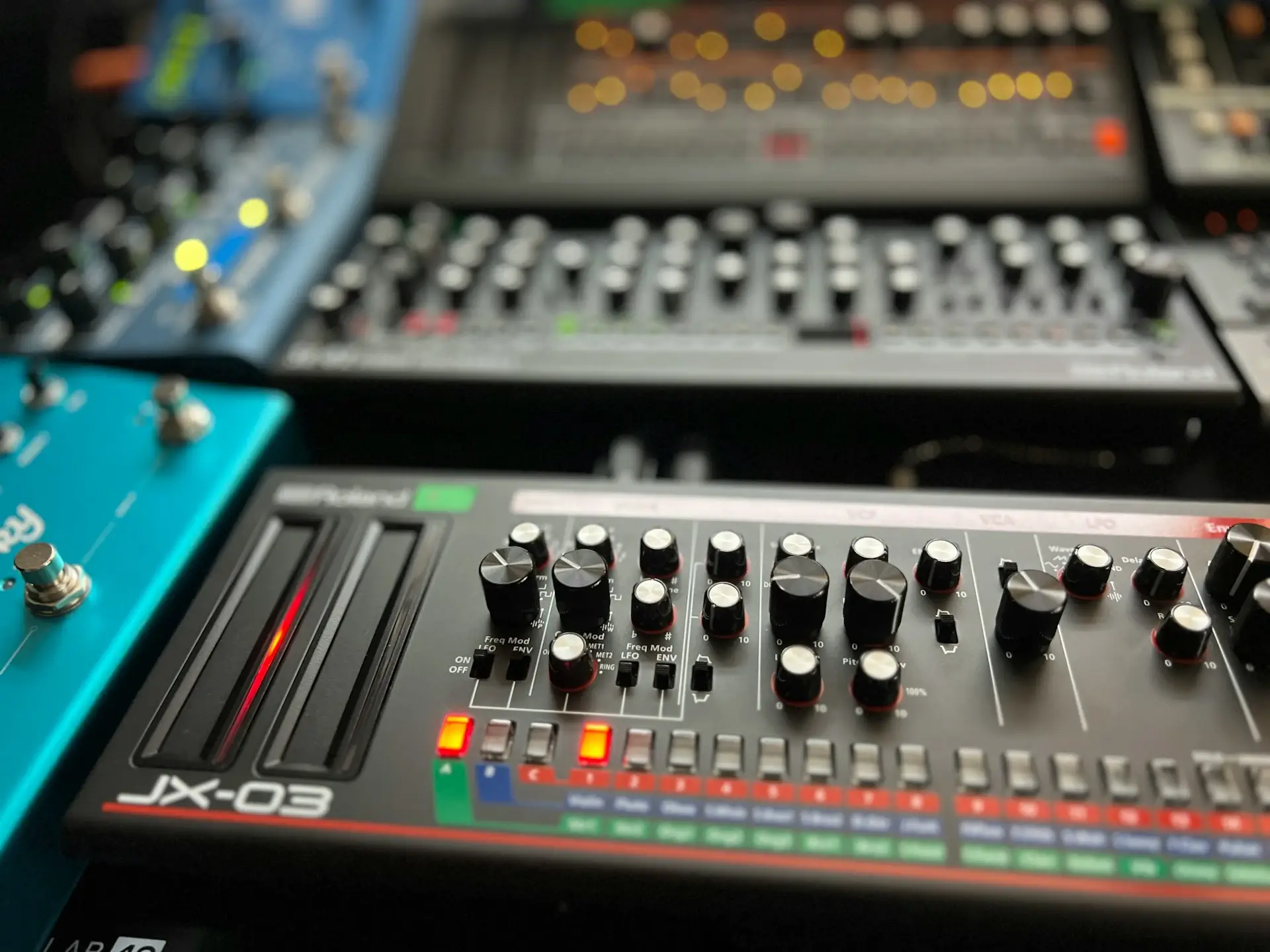
As we look to the horizon, the world of synthesis continues to evolve at a breakneck pace. Here are some trends and technologies shaping the future of synthesizers:
AI-Assisted Sound Design
Machine learning algorithms are being employed to help create new sounds and even entire compositions. Some synthesizers now offer AI-powered preset generation, helping musicians quickly find inspiration.
Increased Accessibility
The democratization of music production continues, with powerful synthesis tools becoming available on smartphones and tablets, including FL Studio Mobile and Korg Gadget. This trend is likely to accelerate, putting professional-grade sound design capabilities in everyone's pocket.
Haptic Feedback and New Control Interfaces
As our interactions with technology become more sophisticated, so too do the ways we control synthesizers. Expect to see more innovative control surfaces, possibly incorporating haptic feedback for a more tactile experience.
Integration with Virtual and Augmented Reality
Imagine designing sounds in a 3D space, manipulating waveforms with your hands in virtual reality. This could open up entirely new paradigms for sound design and performance.
Conclusion: Your Journey into the World of Synthesis Begins Here
We've traveled through the history of synthesizers, unraveled their inner workings, decoded their language, and peered into their future. But this is just the beginning. The world of synthesis is vast and ever-expanding, offering endless possibilities for sonic exploration.
Whether you're a musician looking to expand your palette, a producer aiming to craft the perfect sound, or simply a curious listener wanting to understand the sounds of modern music better, synthesizers offer a fascinating realm to explore.
Top Ranked Synthesizers on Equipboard


About the authors
Juan Spinelli is a multi-instrumentalist musician, but more of a guitarist than anything else. Based in Buenos Aires, Argentina, he started playing at a very early age and learned various instruments such as flute, clarinet, percussion, didjeridoo, cavaquinho, bass and more. Today, he also works as a music producer and sound engineer, collaborating in several projects in his city and with artists from all over the world. Read more
New in Synthesizers


$2,269.00 - $3,699.00


$2,499.00 - $2,875.00


$152.79 - $1,999.99


$1,079.00 - $1,299.00

$399.00 - $579.99


$1,899.00 - $1,999.00










.webp)