
Andy Gill
guitarist and record producer
Role
Genre
Group
Role
Genre
Group
Andy Gill's Gear


This page of Magneto Guitars' website lists Andy as an endorsing artist, and depicts him holding a Sonnet.
Find it on:


Carlsbro magazine advertisement from 1981 which features Gang of Four, specifically Andy Gill endorsing the Stingray: http://www.ebay.com/itm/retro-magazine-advert-1981-CARLSBRO-gang-of-four-/360382210692
Andy can be seen playing a Carlsboro Stingray with built-in chorus on The Old Grey Whistle Test. Possibly called the "Professional" model this Stingray had both built-in chorus and reverb. You can tell this because the effects section of the amp has four distinct knobs on the far right hand side.
Find it on:
-m.webp?v=1781867167)
In this article on the making of Gang of Four's "Content" album, it is explained that "Gill’s dry, rhythmic, and cutting sound... doesn’t rely on compression or many pedals, though he will use the Boss SL-20 Slicer. His only 'vice,' as he describes it, is tremolo, especially the effect on the Boss pedal. He can lock to the track via MIDI and program different rhythms within the tremolo."
Find it on:

In this Premier Guitar Rig Rundown feature, Gill states that the Strat Ultra has been his main instrument since the 1980s.
Find it on:


In this 1982 live image from a Gang of Four performance at NYC's the Pier, Andy is playing a Magpie (which appears to have had the badge removed from the headstock).
Find it on:
-m.webp?v=1781881436)
In this article about the making of Gang of Four's "Content," it's explained that "Gill played through transistor amps, as he did on 1979’s Entertainment and 1981’s Solid Gold (in this case, either a Peavey Classic 50 Combo or Blackstar Artisan 30)."
Find it on:

In this Premier Guitar Rig Rundown feature, Gill states that he runs two of these 4x10" combos. One is angled toward stage right, while the other is aimed at stage left.
Find it on:

Andy Gill is seen playing a Yamaha SBG2000 Double Cutaway Neck-Thru Electric Guitar in the video "Gang of Four - He'd Send In The Army (1980)," uploaded by cpunctn on YouTube. However, this is incorrect; the correct guitar is the Ibanez 2681 Bob Weir Artist Signature Professional, which has been updated on his Equipboard profile.
Find it on:

In one of the last pictures taken of Andy, we can see him strumming a semi-hollowbody Thineline Telecaster.
Find it on:


In this image from the April 2015 issue of Guitar World, Andy is depicted playing an ES-335.
Find it on:


-m.webp?v=1781881190)
In this 2019 interview with Premier Guitar magazine, Andy discussed his then-current use of physical guitar effects versus VSTs. "Having said all of that, there’s still some pedals I find it hard to give up, and they’re fiddly to use, like, for example, the Electro-Harmonix MicroSynth. I love that thing. The trouble is, you can’t play it and move the faders at the same time, and that’s kind of what you need to do. You can set it in one position, and it does some pretty great stuff, but when you start moving it around when it’s being played, it goes to another level."
Find it on:


In this article on the making of Gang of Four's album "Content," it is explained that "Gill played through transistor amps, as he did on 1979’s Entertainment and 1981’s Solid Gold (in this case, either a Peavey Classic 50 Combo or Blackstar Artisan 30)."
Find it on:
-m.webp?v=1781868459)
In this Premier Guitar Rig Rundown feature, Gill indicates that the has been using the Double Agent on Gang of Four's recent tours.
Find it on:


"The 'modern' part of Gill's rig is centered around these two Macbook Pro computers running Apple's MainStage. For each song in the set, Gill has a specific patch that will cover the tones he needs. The signal chain is rather complicated, but here's a quick overview: it starts with a Boss TU-2 tuner before splitting out into a pair of Focusrite Scarlett 2i4 audio interfaces. Those interfaces are connected to their own computer via USB. The 2i4s then each feed a Radial ProD2 DI which gives the FOH a MainStage-only mix. Each of the DI boxes also are connected to individual Radial ProRMPs, which feed the Peaveys."
Find it on:

Andy Gill is mistakenly linked to the 1976 Ibanez Artist 2619. The correct instrument associated with him is the Ibanez 2681 Bob Weir Artist Signature, as shown in the user-uploaded photo on Futurecdn. A request for correction has been submitted to the moderation team.
Find it on:

This 2019 interview with Premier Guitar magazine features a sidebar with a list of Andy's then-current guitar rig. It lists the Ernie Ball 2222 Hybrid Slinky (.009–.046) as his prefered strings.
Find it on:

In this article, Andy's amp micing technique is explained. "On the Peavey, for example, he normally places Latvian-made JZ mics such as the uniquely-shaped Black Hole or the BT201 as a pair in front of the amp, and then maybe a Neumann U67 in the back for room sound."
Find it on:

This article talks about Andy Gill's vocal recording techniques. "The album was rounded out with King’s vocals, captured on a Shure 57 or Neumann 67 and given a touch of delay and reverb with the PCM 70 or 80 and Logic reverb, 'to help the vocals sit in the track.'"
Find it on:

In this 2019 interview with Premier Guitar magazine, Andy explained, "My favorite bits of sound destruction are done with Dubstation and Replicant by Audio Damage, CamelPhat by Camel Audio, FabFilter stuff, Trash from iZotope, and the Movement delay by Output."
Find it on:


In this article, Andy's amp micing technique is explained. "On the Peavey, for example, he normally places Latvian-made JZ mics such as the uniquely-shaped Black Hole or the BT201 as a pair in front of the amp, and then maybe a Neumann U67 in the back for room sound."
Find it on:

In this article, Andy's drum micing technique is explained. "The kick drums and snare were close-miked from various angles and sent through a variety of compressors (UREI 1176, dbx 160, and a PYE model from the ’60s)."
Find it on:

Andy's drum micing technique is explained in this article. "The kick drums and snare were close-miked from various angles and sent through a variety of compressors (UREI 1176, dbx 160, and a PYE model from the ’60s),"
Find it on:

According to this article, in which Andy discusses his drum micing technique, "For the snare, I use an SM57 or Beyerdynamic M88, an SM85, and a KSM44."
Find it on:

According to this article, in which Andy discusses his drum micing technique, "For the snare, I use an SM57 or Beyerdynamic M88, an SM85, and a KSM44."
Find it on:



Andy discusses his drum micing technique in this article and states, "For the snare, I use an SM57 or Beyerdynamic M88, an SM85, and a KSM44."
Find it on:

In this article, Andy says this about his drum micing technique: "For the snare, I use an SM57 or Beyerdynamic M88, an SM85, and a KSM44."
Find it on:

While discussing his drum micing technique in this article, Andy Gill says, "The kick had a D112 inside and either a Neumann 47 or 67 outside, usually placed about one-and-a-half or two feet away."
Find it on:

In this article, while talking about his drum micing technique, Andy says, "The kick had a D112 inside and either a Neumann 47 or 67 outside, usually placed about one-and-a-half or two feet away."
Find it on:

Andy's amp micing technique is explained in this article. "On the Peavey, for example, he normally places Latvian-made JZ mics such as the uniquely-shaped Black Hole or the BT201 as a pair in front of the amp, and then maybe a Neumann U67 in the back for room sound."
Find it on:

In this article, Andy discusses his drum micing technique. “'For the snare, I use an SM57 or Beyerdynamic M88, an SM85, and a KSM44,' says Gill. 'The 44 I usually put close and send through [a] Transient Designer for more whack and crack; it gives it character.'”
Find it on:
This is a community-built gear list for Andy Gill.
- Find relevant music gear like Guitars, Amplifiers, Effects Pedals, and other instruments and add it to Andy Gill.
- The best places to look for gear usage are typically on the artist's social media, YouTube, live performance images, and interviews.
- To receive email updates when Andy Gill is seen with new gear, follow the artist.
Album Credits
-

Therapy? · 2009
Engineer Producer -

I Heart Hiroshima · 2009
Mixing Engineer -
![Weekends and Bleak Days [Hot Summer]](https://images.equipboard.com/uploads/album/image/34587/weekends-and-bleak-days-hot-summer.jpg)
Weekends and Bleak Days [Hot Summer]
Young Knives · 2007
Mixing Engineer -
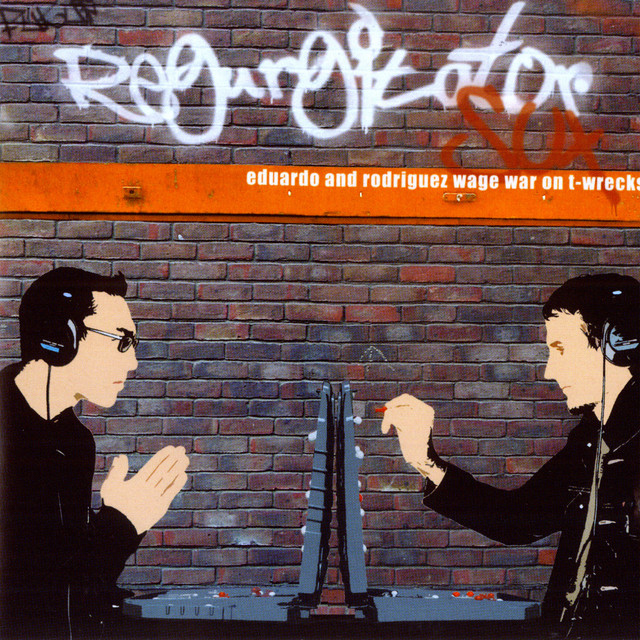
Eduardo And Rodriguez Wage War On T-Wrecks
Regurgitator · 2001
Mixing Engineer -
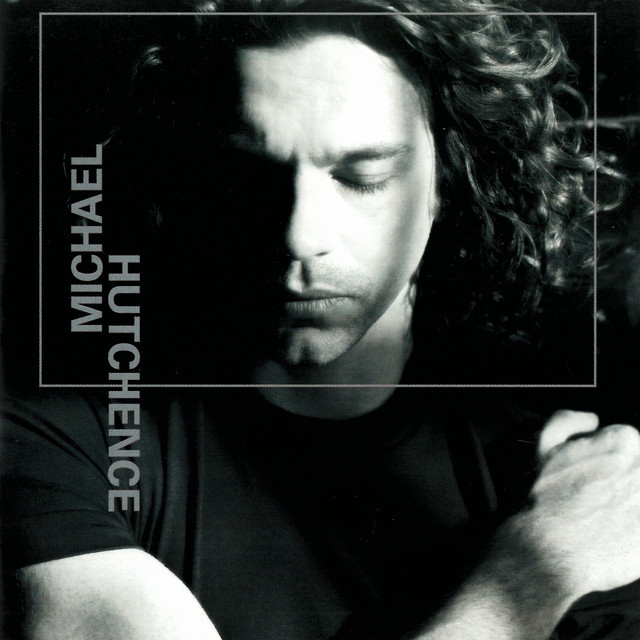
Michael Hutchence · 1999
Producer -

The Stranglers · 1998
Mixing Engineer Producer -
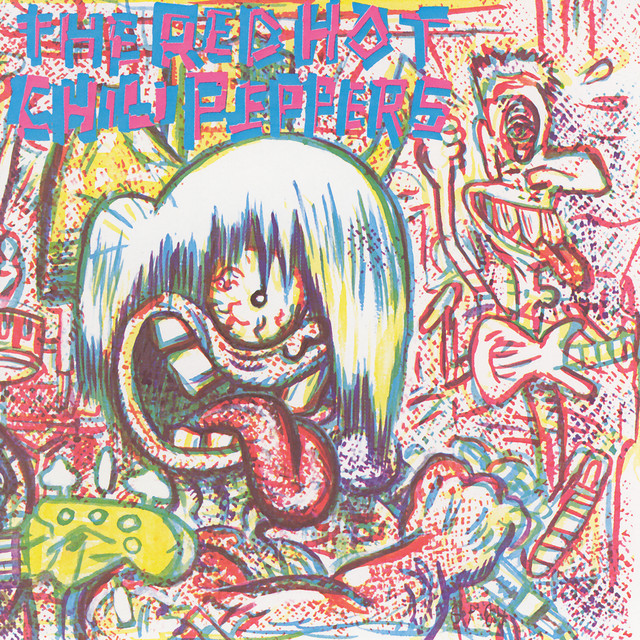
Red Hot Chili Peppers · 1988
Producer


