



Pricing and availability
We compare 600+ stores and found this item at 1 store. Prices updated .
Store
Reviews
Price




Average Price: $445
Standard/Professional
$100
$501+
Price Tier
Budget
Standard
High-end
* Product prices and availability are updated by Equipboard every 24hrs and are subject to change. Equipboard may receive compensation for purchases made at participating retailers linked on this site. This compensation does not affect what products or prices are displayed, or the order of prices listed. For more information, please refer to our affiliate disclosure.
Description
The Lexicon PCM 80 is a distinguished member of the effects processor family, celebrated for its legendary reverb algorithms that have set a benchmark in the audio industry. Ideal for both seasoned professionals and budding enthusiasts, this processor brings studio-quality effects to your fingertips. Its intuitive interface and robust construction make it a reliable companion in any studio setting, ensuring you have the tools needed to craft your unique soundscapes.
Equipped with a comprehensive suite of effects, the PCM 80 offers more than just reverb. Dive into an array of delays, modulation, and pitch-shifting capabilities that let you experiment with and perfect your sonic signature. This unit stands out for its patented Lexicon DSP technology, which ensures pristine audio quality and unparalleled versatility. The PCM 80 also features multiple I/O options, allowing seamless integration into any studio setup, whether digital or analog.
With the Lexicon PCM 80, you're not just purchasing a piece of equipment; you're investing in a heritage of sound excellence and innovation. Its user-friendly interface, combined with an expansive preset library, makes it an essential tool for anyone serious about music production.
Key Features:
- Legendary Lexicon reverb algorithms
- Patented Lexicon DSP technology
- Extensive effects library including reverb, delay, modulation, and pitch-shifting
- User-friendly interface with easy navigation
- Multiple I/O options for seamless integration
- Robust build quality for reliable performance in professional settings
Product specs
| Brand | Lexicon |
| Model | PCM 80 Digital Effects Processor |
| Finish | Black |
| Year | 1990s |
| Made In | United States |
| Categories | Multi-Effect, Reverb |
| Bit Depth | 18-bit |
| Digital Input Format | S/PIDF |
| Digital Output Format | S/PIDF |
| Electronics | Analog, Digital, Solid State |
| Format | 19-inch Rackmount |
| Number of Analog Inputs | 2 |
| Number of Analog Outputs | 2 |
| Number of Channels | 2 |
| Number of Digital Inputs | 2 |
| Number of Digital Outputs | 2 |
| Number of Headphone Outputs | 0 |
| Number of MIDI Inputs | 1 |
| Number of MIDI Outputs | 1 |
| Sample Rate | 48 khz |
FAQs
-
What types of effects can the Lexicon PCM 80 produce?
-
The Lexicon PCM 80 is renowned for its high-quality reverb effects, but it also offers a variety of other effects including delays, modulation, and pitch shifting, making it a versatile choice for enhancing audio tracks.
-
Is the Lexicon PCM 80 suitable for live performances?
-
Yes, the Lexicon PCM 80 is suitable for live performances due to its robust build and reliable performance in generating high-quality effects in real-time.
-
How does the Lexicon PCM 80 connect to other audio equipment?
-
The Lexicon PCM 80 features both analog and digital connections, including S/PDIF for digital audio, and standard 1/4" jacks for analog input and output, ensuring compatibility with a wide range of audio gear.
-
Can the Lexicon PCM 80 be used with MIDI controllers?
-
Yes, the Lexicon PCM 80 includes MIDI input and output, allowing it to be controlled by MIDI controllers for more dynamic and integrated performance setups.
-
What is the sample rate and bit depth of the Lexicon PCM 80?
-
The Lexicon PCM 80 operates at a sample rate of 48 kHz with an 18-bit depth, providing professional-grade audio quality suitable for studio and live environments.
Videos

shnobel
Lexicon PCM 80
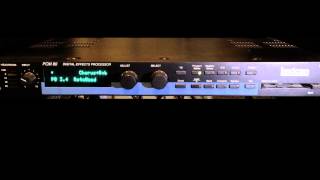
Lexicon PCM 80
shnobel
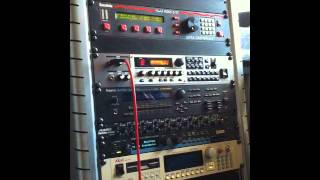
Rack demo - Lexicon PCM 80 + Eventide H3000

Nickstermc
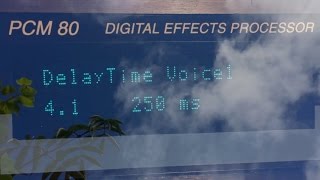
Lexicon PCM 80 EFFECTS DEMO, by Pulse Emitter

Pulse Emitter
Tc Electronic Hall of Fame vs Lexicon PCM 80
shnobel
Lexicon PCM 80 Electric Guitar Boogaloo

Clifton Wright
Lexicon PCM 80 - Quick Demo

Audiobitz Collector
LINE6 HX EFFECTS VS LEXICON PCM-80

Kan Lyd
Reviews
Owner Insights
We analyzed real musician discussions from forums and Reddit to find what players love, question, and tweak about Lexicon PCM 80.
Setup and maintenance
-
The PCM 80 requires careful attention to power supply compatibility, as using an incorrect power source may lead to serious malfunctions like sparking or smoke.
Source
User experience
-
Owners report that the PCM 80, despite its age, generally maintains reliability; however, caution is advised with older units to prevent electrical issues.
Source -
Owners emphasize the importance of upgrading to MPX-1 OS V1.10, as it addresses significant sound and workflow issues present in earlier versions.
Source -
Owners have noted the MPX-1's lack of modulation inside the reverb compared to the PCM 80's Concert Hall algorithm, though it maintains some elements like a preset amount of "Spin".
Source
Comparisons
-
The MPX-1 shares reverb algorithms with the PCM 80 but offers a more limited parameter set, providing a similar but not identical sound character.
Source -
The Dynacord Reverb reportedly uses the same Lexicon chip as the PCM-70, creating a lush sound reminiscent of Lexicon's signature reverb.
Source -
PCM80's Concert Hall algorithm features unique internal modulation, providing deep, mystifying reverb textures unmatched by MPX models.
Source -
MPX-G2's modular effects blocks allow insertion into delay feedback loops, offering flexibility not available in PCM80.
Source
Features and functionality
-
The MPX-1 includes a comprehensive MIDI input/output with a MIDI arpeggiator, adding complexity to its interface on a small screen.
Source -
The MPX-1 utilizes a dedicated Lexichip2 to run its reverb algorithms, similar to the PCM series, which enhances its sound quality.
Source -
PCM80 excels at creating dynamic soundscapes with its Pitch expansion card, offering cavernous reverbs and real-time chord tuning changes.
Source -
PCM80's surround processor offers 3D spatial effects, manipulating reverb and effects to create a spinning room sensation.
Source -
PCM80 allows multiple preset variations within a single "register," enabling seamless transitions and crossfades during live performances.
Source
Critic Reviews
4.5 out of 5
Based on 0 Reviews and 5 Ratings
Artist usage
Add artist
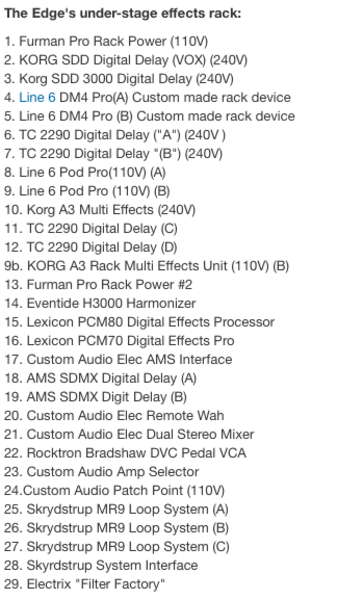
In this article, Music Radar interviews Edge's guitar tech Dallas Schoo and details his touring rig for 2009's "360° Tour." It lists the PCM-80 among his effects.

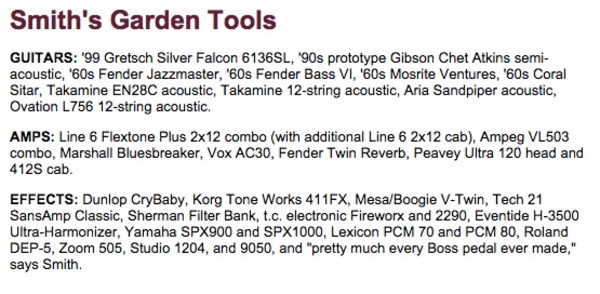
The April 2000 issue of Guitar World, lists the PCM-80 as one of Robert's effects. An archived version of this article can be seen here. This article from the venerable Sound on Sound website also lists the PCM-80 among Robert's outboard equipment.

This rig diagram from 2003 shows the Lexicon PCM 80.

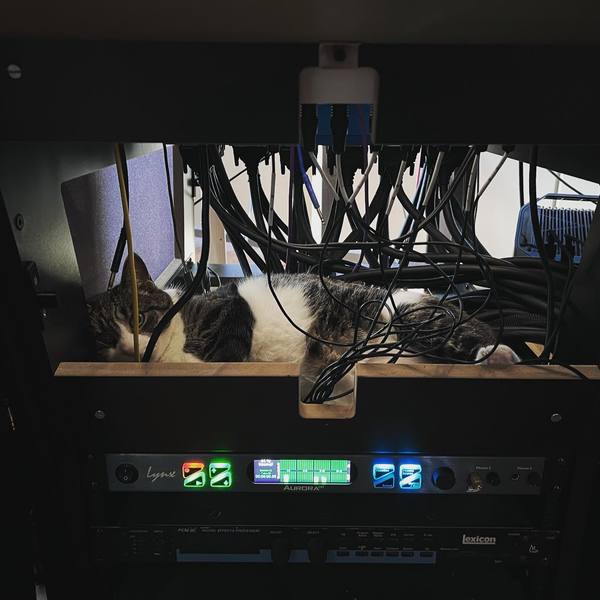
can be seen in this post from January 10, 2022


The article is from an engineer on APC's tours, he explains that he uses two of these.

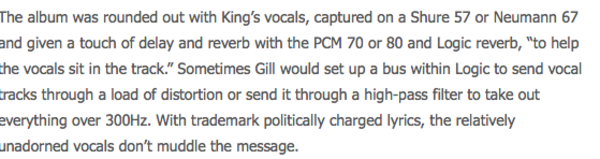
This article talks about Andy Gill's vocal recording techniques. "The album was rounded out with King’s vocals, captured on a Shure 57 or Neumann 67 and given a touch of delay and reverb with the PCM 70 or 80 and Logic reverb, 'to help the vocals sit in the track.'"


Harry Gregson-Williams's LA studio complex, Wavecrest Music, commenced operations in Venice Beach in August 2003, and comprises three floors of editing suites, mix rooms and a live room, as well as Harry's own studio on the top level. This houses the following gear:
Sequencing and digital audio
*Steinberg Cubase SX and Ableton Live running on dual 3.6GHz Xeon server with 4GB RAM, two RME HD*SP 9652 soundcards, 75GB mirrored SATA system drives and 400GB mirrored SATA audio/sample storage drives. MIDI is streamed over LAN to Gigastudio PCs, and an Emagic Unitor 8 and AMT8 are used for hardware synths. *Pro Tools HD Accel system running on dual 2GHz Apple G5, with one 192 Analog and seven 192 Digital interfaces.
Samplers
*14x Emu E4X. *24x Roland S760. *7x 3.0GHz Pentium 4 PCs with 80GB SATA system drives, RME HDSP 9652 soundcards and 250GB SATA sound drives with custom and commercial sound libraries, running Tascam Gigastudio 3.
Software synths and plug-ins
*Arturia ARP 2600, Minimoog V and CS80. *Antares Filter and Auto-Tune. *Applied Acoustics Lounge Lizard. *Gmedia Imposcar and Oddity. *GRM Tools. *Korg Legacy Collection. *Native Instruments Absynth 3, Battery 2, FM7, Kontakt 2, Pro 53, Reaktor 4. *Ohm Force Ohm Boyz. *Spectrasonics Stylus RMX, Atmosphere and Trilogy. *Steinberg D'Cota, X-Phraze, Virtual Guitarist, VG Electric Edition, Groove Agent and Halion.
Hardware synths
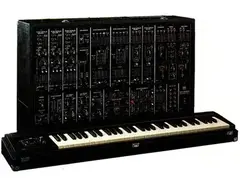
*Access Virus, Indigo 2 and Redback. *Clavia Nord Rack, Nord 3 KB and Nord Modular. *Korg Trinity Pro X, Wavestation A/D and M1R. *Novation Supernova II Pro. *Roland JP8080, JD990, JV1080 and MKS80. *Studio Electronics SE1, ATC1 and Omega 8. *Waldorf Q, Microwave II, Microwave XT and Pulse.
Recording, mixing & outboard
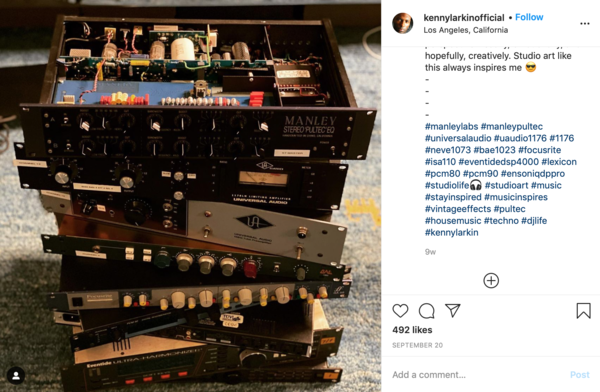
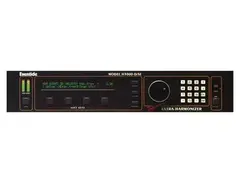
*Avalon 727 preamp. *Eventide DSP4000 effects. *Lexicon PCM80 and 90 reverbs. *Quested HQ108 speakers in 5.1 setup. *5x Yamaha 02R digital mixers.


On current projects "Most audio that is recorded at Labrinth's studio passes through either the Avalon VT737SP voice channel (top) or the Neve Portico 5032 (centre) and into the Apogee Rosetta converter. Other outboard includes two Roland SDE2000 delays, Lexicon PCM80 reverb, BBE 422A Sonic Maximizer, MXR Digital Time Delay, Control Synthesis Deep Bass Nine and Drawmer DS201 gate."


In an interview with Sound on Sound, Daniel Miller is noted for using the Lexicon PCM 80 effects processor in his studio setup.


List of equipment in George Michael's studio, from the July 1996 issue of Sound on Sound:
RECORDING
AKG LSM50 cube monitors Aphex Expressor compressor Denon tape deck * Dynaudio Acoustics M1 monitors Lexicon PCM80 effects Lexicon LXP15 effects Mackie 32*8 32:8:2 8‑buss console Otari RADAR 24‑track hard disk recorders (x2) Tascam DA20 DAT * Yamaha NS10 monitors
SOUNDS
Akai S3000i samplers (x2) Akai S3200 sampler * Emu Procussion percussion module Emu Vintage Keys Plus module Emu Ultra Proteus synth module Korg Prophecy keyboard synth Korg Trinity Plus keyboard synth Kurzweil K2000 sampler/synth Roland JV1080 synth module Roland Juno 106 analogue keyboard synth Roland Vintage Synth MVS1 sound module Studio Electronics SE1 synth module * Yamaha SY77 keyboard synth Yamaha TG500 synth module
MISCELLANEOUS
DAC hard drive * Opcode Studio 4 MIDI interface (x2) Powermaster drive *


"I have a Lexicon PCM80. I programmed what I believe was the first commercially available version of what people now call “Shimmer.”"

Album Usage
The Lexicon PCM 80 has been featured on the following albums:
Genre Usage
Based on how artists on Equipboard use this gear, it is most commonly found in the following genres.
Used With
Based on how musicians on Equipboard use Lexicon PCM 80, it is most commonly used with the following gear.

-s.webp?v=1784559513)


Community setups
Show yours
Similar
Add recommendation1 alternative for Lexicon PCM 80, curated by the Equipboard community.

$2,095.00 - $2,445.37
Lexicon PCM92 is a repackaged version of the PCM80/81 series that remasters the effects into a more modern package. However, those who are looking to program the PCM92 will be on their own due to lack of tutorials or users who specialize in using PCM92.
More Lexicon Effects Processors

$894.83 - $1,799.95
in Effects Processors Rank


$163.65
in Effects Processors Rank


$66.00
in Effects Processors Rank


in Effects Processors Rank


$3,411.45
in Effects Processors Rank


$1,799.99
in Effects Processors Rank


$226.69 - $1,016.83
in Effects Processors Rank


-m.webp?v=1784333964)


-m.webp?v=1784387206)


-m.webp?v=1784386698)


$1,093.69 - $4,120.00


Accessories & Related Items




Most Popular Effects Processors
Most Popular Brands
-
Added to Equipboard on by
 richardsalay
GearIQ 149
-


