
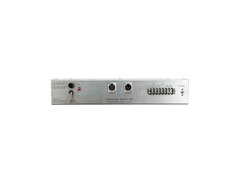


Pricing and availability
We compare 600+ stores and found this item at 6 stores. Prices updated .
Store
Reviews
Price








Average Price: $3,041
High-end/Boutique
$100
$501+
Price Tier
Budget
Standard
High-end
Price History
Based on price data from 5 merchants for "Urei Universal Audio 1176LN Rev. H Limiting Amplifier". Prices shown reflect NEW condition. Tracking began Apr 2, 2026.
* Product prices and availability are updated by Equipboard every 24hrs and are subject to change. Equipboard may receive compensation for purchases made at participating retailers linked on this site. This compensation does not affect what products or prices are displayed, or the order of prices listed. For more information, please refer to our affiliate disclosure.
Description
Renowned for its iconic sound, the Urei 1176 is a staple in the world of professional audio recording. Originally introduced in 1967 by Bill Putnam, this legendary FET compressor/limiter has shaped the sound of countless records across decades. Musicians and producers alike cherish its ability to deliver ultra-fast attack times, as swift as 20 microseconds, making it ideal for dynamic control on various instruments and vocals. The 1176 offers a unique blend of transparency and character, with four push-button-selectable ratios (4:1, 8:1, 12:1, 20:1) that allow for versatile sound shaping.
One of the most intriguing features is its "Nuke Mode," activated when all four ratio buttons are pressed simultaneously. This mode is perfect for adding dramatic flair to drum room mics or other sources, creating explosive and colorful results. Whether you're looking to add a subtle sheen or a bold, aggressive punch, the Urei 1176 ensures your tracks stand out with a sonic signature that is both warm and vibrant.
Handcrafted with precision, the Urei 1176 is built with the same dedication and quality as the original units, ensuring it remains a vital tool in any studio setup. With its distinct ability to impart tone without active compression, it's a must-have for any serious audio engineer.
Key Features:
- Legendary FET compressor/limiter design
- Ultra-fast attack time as low as 20 microseconds
- Push-button-selectable ratios: 4:1, 8:1, 12:1, 20:1
- "Nuke Mode" for dramatic, explosive effects
- Faithful reproduction of the original 1176 in design and performance
- Handcrafted in Scotts Valley, California
- Ideal for guitars, bass, drums, vocals, and more
- Custom Class A output transformers for enhanced sound quality
Product specs
| Brand | Urei |
| Model | Universal Audio 1176LN Rev. H Limiting Amplifier |
| Year | 1970s |
| Made In | United States |
| Categories | Compressors and Limiters |
| Electronics | Analog, Solid State |
| Format | 19-inch Rackmount |
| Number of Analog Inputs | 1 |
| Number of Analog Outputs | 1 |
| Number of Channels | 1 |
FAQs
-
What type of compression does the Urei 1176 use?
-
The Urei 1176 utilizes a solid-state, FET-based compression design, known for its fast attack and release times, which makes it ideal for adding punch to vocals and drums.
-
Is the Urei 1176 suitable for vocal recording?
-
Yes, the Urei 1176 is highly regarded for vocal recording, providing a distinctive punch and presence that enhances vocal tracks, making them stand out in a mix.
-
How many channels does the Urei 1176 have?
-
The Urei 1176 is a mono compressor with one analog input and one analog output, designed for processing a single channel at a time.
-
Can the Urei 1176 be used for stereo applications?
-
While the Urei 1176 is a mono unit, it can be used in stereo applications by linking two units together, allowing for consistent compression across both stereo channels.
-
What is the main advantage of using a Urei 1176 for drum processing?
-
The Urei 1176 is renowned for its ability to add punch and character to drum tracks, thanks to its fast attack and release times, which help emphasize transients and enhance the overall impact.
Videos

Doctor Mix
Urei 1176 Compressor In Action
Urei 1176 Compressor In Action
Doctor Mix
The UREI 1176 LN makes your guitar sound instantly Classic, Vintage and Amazing!!

Johan Segeborn
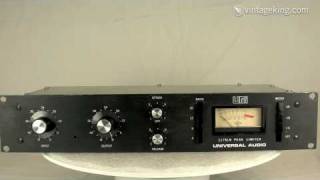
Vintage Urei 1176LN Peak Limiter | VintageKing.com

Vintage King
Reviews
Owner Insights
We analyzed real musician discussions from forums and Reddit to find what players love, question, and tweak about Urei Universal Audio 1176LN Rev. H Limiting Amplifier.
Features and functionality
-
The 1176's unique attack and release settings can make drum transients pop, enhancing brightness and punchiness in snares when set to slow attack and fast release.
Source -
A combination of 1176 and dbx160 compressors, used in parallel, is favored for its ability to provide both "smash" and "grab" compression effects on drum tracks.
Source -
The 1176's attack and release knobs operate in reverse, with 1 being slowest and 7 fastest, which is unique compared to most compressors.
Source -
The 1176 naturally biases its compression ratio against transient sustains, allowing the initial attack to remain punchy while compressing the tails more heavily.
Source -
The 1176 has a faster attack for transients/high frequencies due to a resistor and capacitor in parallel, allowing transients to pass through quickly.
Source -
The threshold of the 1176 increases with the ratio, impacting how it handles different materials, providing a distinctive compression effect.
Source
Use cases and applications
-
The "all-in mode" is praised for parallel compression, allowing for enhanced snap on drums and other instruments without overwhelming the mix.
Source -
The 1176 is celebrated for its ability to make vocals and bass tracks sit well in a mix, providing smooth dynamic control and enhancing track presence.
Source -
Engaging all ratio buttons on the 1176 can create a unique "all buttons mode," causing distorted, pumping effects, particularly effective on drum rooms.
Source
Comparisons
-
Users note that modern 1176 units can have variations in sound due to different components, but they retain the classic characteristics that are beloved in the original model.
Source -
Users find the UAD 1176 plugin to closely replicate the hardware sound, especially compared to the MC77, offering similar tonal characteristics across channels.
Source
User experience
-
Owners report that the 1176 excels in quick setup scenarios, achieving desired compression effects rapidly without the need for extensive parameter adjustments.
Source
Mods and upgrades
-
The addition of a high-pass filter in the sidechain of newer FET compressors like the Black Lion Seventeen is seen as a beneficial enhancement over the original 1176 design.
Source -
Half-pushing one of the buttons to disengage all ratios allows using the 1176 for saturation without compression, offering a unique tonal option.
Source
Critic Reviews
5.0 out of 5
Based on 0 Reviews and 3 Ratings
Artist usage
Add artist
Used for vocals on Continuum, as stated by recording engineer Chad Franscoviak in this October 1, 2006 Mix Online interview.
For Mayer's vocal chain, Franscoviak says that most of the songs were recorded with a Neumann U47. For a couple of songs, he sang into a Neumann M269c, and on “I'm Gonna Find Another You,” which was recorded at Royal Studios in Memphis, he sang into Al Green's RCA 77 ribbon mic. From there, the chain included a Neve sidecar stocked with 1073 mic pre's and then a UREI silver-face 1176. “On a couple of songs, we did experiment with splitting his vocals into two channels — one of them would be kind of a clean and one of them would be kind of a gritty — and we would take the second channel and put it through a Fairchild 670 and really crush it,” Franscoviak explains. “Then we would either blend it together or choose one or the other for the mix.
“[Mayer] loves hearing his vocals really compressed, so he can be as dynamic as he wants to and it always sounds present to him,” he continues. “He likes way too much reverb when he's tracking, and then when we proceed into the mix, it will be reeled in a little bit. Generally, I will compress lightly going to tape or Pro Tools, and then in Pro Tools cream it with usually the Renaissance Vox.”


Used for the guitar on Icky Thump, as stated by recording and mixing engineer Joe Chiccarelli in this October 1, 2007 Mix Online interview.
The Twin was one of two amps that Jack White used, the other being a rare Silvertone piggyback amp. Chiccarelli used an assortment of ribbon mics on the amps, including an AEA R84, a Royer 121 and a Coles. He would also put a Neumann 67 back in the room for ambient tracks. As far as outboard gear, Neve 1073 preamps and UREI 1176 compressor/limiters were typically used, with a Fairchild compressor also being employed occasionally.
Chiccarelli was careful with the track's loudness. “I don't record extra-hot levels to tape,” he explains. “I like to have headroom and the openness, so stuff was not overly distorted to tape. I prefer having the transience left intact, and if I need to overdrive something, I'll do it with an outboard box.”

Used for vocals on OK Computer, as stated by producer Nigel Godrich in this interview from the August 1997 issue of The Mix (as archived by Radiohead fansite Citizen Insane).
Vocals were recorded alternately with a Neumann valve 47, and an Australian Rode valve mic, through a Urei 1176 compressor, and a Pultec valve EQ on a few things.
"With months of hindsight, I actually think the Australian mic is a bit too bright, but if it's a good performance, that's it. Maybe the vocal sound suffered from the fact that it was occasionally just thrown down, but I don't think so."

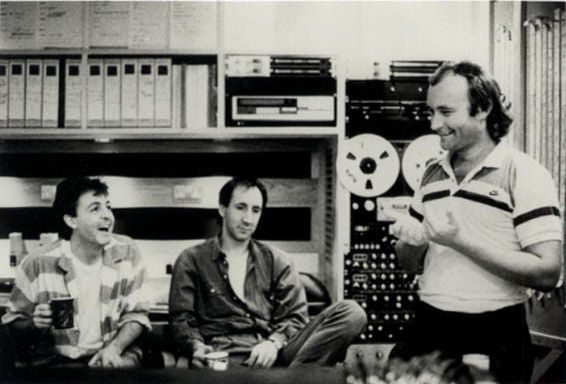
the Urei 1176 Peak Limiter is listed in this blog


Used for Albarn's vocals on Gorillaz's "Clint Eastwood", as mentioned by producer Tom Girling in the September 2001 Sound on Sound article "Recording 'Clint Eastwood'".
''We used the Neumann TLM170 for Damon's vocal, and we hired some gear when we went to Jamaica, so I think he probably went through an 1176 as well, or perhaps a Distressor," explains Tom. "We used a Neve 1073, which is an EQ with a mic amp on as well, so the mic was plugged straight into that, and then after that I think it was the 1176 and straight into Logic."


Used on the vocals for “Every Breath You Take” and Brand New Day. The former is mentioned by producer Hugh Padgham in this March 2004 Sound on Sound interview.
Back in the control room, Sting recorded his vocals with an AKG 414, compressed through a UREI 1176, to attain a brighter top end. "His voice was always fairly dull," Padgham explains, "and I was never totally happy with his vocal sound until we came upon the Sony C800 tube mic much later on. Recording him in the studio was always quite hard — generally, rather than doing takes, he'd just sing along, and then if he messed up or didn't like something we'd just stop, drop in and build a vocal that way. On things like choruses, where there are loads of harmonies, the actual lead track gets watered down to the point where you don't really need as much of a performance. In those days there was no such thing as tuning, so if a harmony was out of tune, it was my job to stop and redo it — to police the recording, so to speak."
The latter is mentioned by recording engineer Simon Osborne in this transcribed October 1, 1999 Audio Media interview on Sting's official website.
When it comes to recording Sting's vocals, Simon has a standard way of operating, too: "I always go straight to tape rather than through the desk. I use AMS Neve 31105s and a Demiter valve mic amp, which I've used for a long while. I've also got all the usual stuff like Urei 1176s and such. I'll start with a general setting, so a 4:1 ratio, not too fast, with a quick release as a guide. His voice obviously changes depending on the key and dynamic of the tune, so it's important to have an initial set-up that can be tweaked as necessary. In terms of mics, we normally use the Sony C800G, it just works well with Sting's voice."


Mentioned by mixing engineer Michael Brauer as being used on "Violet Hill" in this Sound on Sound interview about the production of Viva la Vida & Death and All of His Friends, erroneously transcribed as a Neve 1176. The Urei 1176 is mentioned earlier as having been used on Coldplay drummer Will Champion's drums.
Vocals: Waves Renaissance & Digidesign de–essers, AMS reverb, Zoom 1202, Lexicon PCM81, Watkins Copicat, Empirical Labs Distressor, Federal, Gates, Fairchild 666, EAR 660, Neve 1176 & Awa G7201 compressors
"I used two Renaissance de–essers on Chris's voice that were doing different things, and then a stock Digidesign de-esser. That was it for the plug–ins I added on this session. The Sonnox Oxford and the Eoisis were not out yet at the time.
"The analogue things I did on the lead vocal are really interesting. As I said, I initially mixed the songs on my own, because the band was in England re–recording some songs, so I knew I might have to recall each song. But on this song I pretty much nailed it, apart from that Chris wanted the vocals to be more exciting and different. In the end the vocal had some AMS non–linear reverb on it, while the main sound came from an old Zoom 1202 reverb and a Watkins Copicat delay, plus a special patch that I created in the PCM81, which is a much bigger reverb. So it's a combination of things, but you don't really notice them, all you notice is that Chris is in a very present, big room. When I had found that combination 'Violet Hill' really became a song, it really came alive, because his voice was able to fight through all the stuff that was going on and make it personable. There's no reverb on the rest of the track, which is another reason why the lead vocal sounds so huge: it's not fighting another bunch of reverbs. If you send everything to reverb, you don't hear it, but if you send only one thing to reverb, it'll be huge.
"For the main part of the song I had a Distressor on the insert of the lead vocal, and I sent this to another five compressors: the Federal, the Gates, the Fairchild 666, the Neve 1176 and another Distressor in Nuke mode. They're all coming back individually on the board, and it was a matter of blending those compressors. As usual in my way of working, the compressors are there to give attitude and tone, and don't necessarily compress. For the end bit of the song, where it's just Chris and the piano, I used the Awa G7201 limiter/compressor. It's an Australian compressor and it has an incredible air and presence. It's a unique sound that you can clearly hear at the end, as it's the only effect on the vocal on that point. Finally, the church group background vocals are sent to the same combination of reverbs as the main vocals. No other effects, no EQ. It means that all the vocals in the main section blend together."


Used for the drums on Echoes, Silence, Patience & Grace, as stated by mix engineer Rich Costey in this March 2008 Sound on Sound interview.
Drums: Quad 8 310, Pultec EQP1, API 550a, Neve 33609, API 2500, Lexicon 960, Urei 1176, Smart C2, SPL Transient Designer, room mics
"I had just gotten some Quad 8 310 EQs before I began the Foo Fighters project, and I found that cranking the s[**]t out of the mid-range with the Quads helped the drums quite a lot. On most of the album the bass and snare drum went through the Quad 8s, with severe amounts of mid-range added. Quad 8 grew out of Electrodyne and was very popular in the 1970s, particularly with film companies. I obtained some channels that came out of the Motown Sunrise console and they're basically three bands of EQ and a mic pre and output level, and the Q gets tighter as you push it up. The Quad 8s are a little bit rounder and warmer-sounding than similar API modules. I also used the Pultec EQP1 and API 550a on the bass drum.
"I had a bunch of different side-chain compressors on the drums that would change from song to song. On some songs it would be the Smart C2, medium ratio and fast recovery, on others the Neve 33609, the Urei 1176, the API 2500 or the Empirical Labs Distressor, and the SPL Transient Designer on toms. You can use the SPL to lengthen the sound of the toms. I don't compress all the drums at the same time, I'll compress individual parts and mix the compressed sound in with the natural sound of the drums. There was relatively little compression implemented on the drums in this song, because the band didn't care for it. They wanted the drums to sound more raw.
"Throughout the album mix I might have used a bit of Lexicon 960 on the drums for reverb, but the room mics — amongst them a heavily compressed foldback microphone — were so good that I tended to use those. I tend to like room mics that are on the darker side. If they're too bright, you can't turn them up very loud because you then also get all kinds of messy cymbal noises. One other thing to note is the drums that come in after the intro of the song. When the whole band is slamming accents like that, you want to make the drums sound very aggressive, and this meant pushing room mics, pushing compression mics and so forth. As I said, there were a lot of rides."


Used "occasionally" for the electric guitar on Only by the Night, as stated by producer Jacquire King in this December 2008 Sound on Sound interview.
"We had five or six guitar amplifiers available for each guitar, and again, we picked the ones that were most appropriate for the song. Angelo and I would listen to the guitar parts and mix and match amplifiers. Sometimes we'd put reverb on one amp and a delay on another, or effect pedals on both. We had all kinds of combinations, although we kept it to two amplifiers per performance for each player. I'd put an SM57 in front of one amp and a U67 in front of the other. The guitars went through API mic pres, an API 550A EQ, and I also used some APSI parametric EQs. Occasionally I'd put an 1176 in the signal chain, but in general I don't use much compression on distorted electric guitars going to tape, because there's not a lot of dynamic range to them as it is. The synth–like reverb you can hear on the guitar was done at Blackbird on an Eventide DSP4000 and added during the transfer to Pro Tools.
(...) **Guitars: **Massenburg DesignWorks EQ, Sound Toys Echoboy, Cooper Time Cube, Digidesign delay, Audio Ease Altiverb
(...) "I also used an Echoboy for delay on certain sections, like in the choruses. There was a little bit of bus compression on the guitars and a little bit of EQ, all very minor stuff, because I had already recorded what I wanted. The only radical EQ is on the Cooper Time Cube delay, which I described above, and which I applied to Caleb's guitar. I took out everything below 861Hz to get rid of the darker tone that was obscuring the source tone a bit. There's also a bit of Digirack delay on Caleb's guitar, to give it a bit more dimension by panning it to the other side than the track itself."


Used for vocals on Volta and (initially) Biophilia, as stated by mix engineer Damian Taylor in this October 13, 2011 SonicScoop interview.
“When I’m recording Björk, I try to compress as little as possible. Basically never. I do have a little something there on the chain just as a safety net, but basically I ride her performances the whole way in. Her dynamic range is just insane. Fortunately, I’ve gotten to know her pretty well, so I can start to feel when she’s about to take a breath and ride my output gain knob. This way, we’re not getting a squished sound going in, but we’re still getting consistent levels.”
(...) Originally, Taylor plugged the SM58 into a Neve 1084, with a Urei 1176 as his safety net. “That worked really well for Volta, where the voice had a more rock and roll sound.” But for this record, he realized the voice “would be a more delicate kind of thing”, and he came to prefer Björk’s Focusrite ISA 430 Producer Pack, while largely avoiding its built-in EQ and compression.

Used for Timbaland's vocals on Justin Timberlake's "SexyBack", as stated by mix engineer Jimmy Douglass in this July 2007 Sound on Sound interview.
Lead vocals: Universal Audio 1176, MXR flanger, Izotope *Trash*
"The signal chain for Justin's vocals was an Audio-Technica 4060 mic, into a Presonus ADL600 mic pre, and then a Universal Audio 1176 limiter. I normally use the U87 for recording vocals, but I was curious about the AT and I had both mics in front of Justin. The effects I used on his vocals seemed to work better with the AT. I used the U87 on Timbaland's vocals and went straight into the desk. I like using the Neve VR mic pre. It's a little crunchy, it's not quite the 1072 or 1073, but it works.
"Justin then said 'Man, can you put some effect on the vocal? Something crazy, like a distorted kind of thing?' So I put the Trash plug-in on [Izotope's distortion, filter, delay and amplifier modelling plug-in]. I just happened to have it. To give you my exact settings would be silly. But I'll give you one clue: it wasn't something that I worked really hard to get. Just by using the plug-in the setting almost came up.
"The Trash plug-in wasn't the only thing I used on the lead vocals. I also had an outboard MXR flanger on it. Plus there was an outboard compressor, the Urei 1176. I used the same three effects on Timbaland's vocals, just less than on Justin's. But you can hear the flanger and compressor acting in the spaces, like just before Justin sings 'dirty baby'. There's no hiding it, and it creates a whole other dimension of sound."


Used "occasionally" for the electric guitar on Only by the Night , as stated by producer Jacquire King in this December 2008 Sound on Sound interview.
"We had five or six guitar amplifiers available for each guitar, and again, we picked the ones that were most appropriate for the song. Angelo and I would listen to the guitar parts and mix and match amplifiers. Sometimes we'd put reverb on one amp and a delay on another, or effect pedals on both. We had all kinds of combinations, although we kept it to two amplifiers per performance for each player. I'd put an SM57 in front of one amp and a U67 in front of the other. The guitars went through API mic pres, an API 550A EQ, and I also used some APSI parametric EQs. Occasionally I'd put an 1176 in the signal chain, but in general I don't use much compression on distorted electric guitars going to tape, because there's not a lot of dynamic range to them as it is. The synth–like reverb you can hear on the guitar was done at Blackbird on an Eventide DSP4000 and added during the transfer to Pro Tools."
Album Usage
The Urei Universal Audio 1176LN Rev. H Limiting Amplifier has been featured on the following albums:

Hackney Diamonds
The Rolling Stones (2023)
Superwolves
Bonnie 'Prince' Billy & Matt Sweeney (2021)
Beam Me Up Scotty
Nicki Minaj (2021)

LONER
Caroline Rose (2018)

Biophilia (Live)
Björk (2014)

Every Breath You Take (KHURSOR Remix)
Sting & Sting (2014)
Volume 3
She & Him (2013)

Havoc and Bright Lights
Alanis Morissette (2012)
Duets II
Tony Bennett (2011)

The Seldom Seen Kid (Live At Abbey Road)
Elbow (2009)

Only By The Night
Kings of Leon (2008)
Sleep Through The Static
Jack Johnson (2008)
Violet Hill
Coldplay (2008)

Viva La Vida or Death and All His Friends
Coldplay (2008)

Echoes, Silence, Patience & Grace
Foo Fighters (2007)
Icky Thump
The White Stripes & Jack White & Jack White (2007)

Volta
Björk (2007)
Continuum
John Mayer (2006)

Demon Days
Gorillaz (2005)

Gorillaz
Gorillaz (2001)
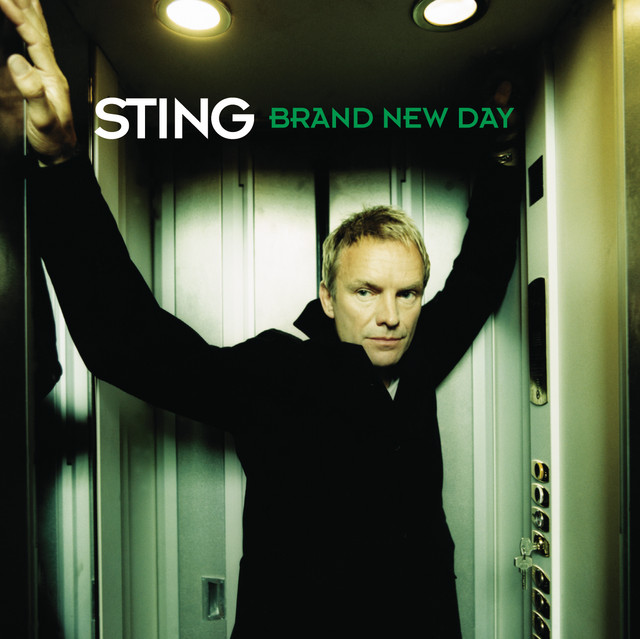
Brand New Day
Sting & Sting (1999)

OK Computer
Radiohead (1997)
My Life
Mary J. Blige (1994)
Mosquitos
Stan Ridgway (1989)
Who Are You
The Who (1978)
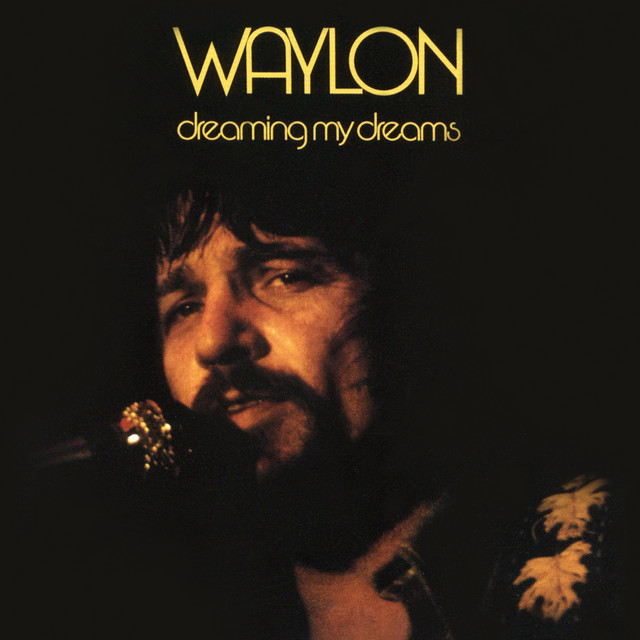
Dreaming My Dreams
Waylon Jennings (1975)
Genre Usage
Based on how artists on Equipboard use this gear, it is most commonly found in the following genres.
Used With
Based on how musicians on Equipboard use Urei Universal Audio 1176LN Rev. H Limiting Amplifier, it is most commonly used with the following gear.
-s.webp?v=1784372514)




Similar
Add recommendation2 alternative and related items for Urei Universal Audio 1176LN Rev. H Limiting Amplifier, curated by the Equipboard community.

$1,549.00

More Urei Effects Processors

$2,999.00
in Effects Processors Rank


$2,999.00 - $9,950.00

$2,999.00 - $9,000.00


-m.webp?v=1784339190)


.jpeg?v=1784346853)


$1,430.00
in Effects Processors Rank


-m.webp?v=1784333059)
$624.00
in Effects Processors Rank


$204.49
in Effects Processors Rank


$1,799.00
in Effects Processors Rank


$1,549.00
in Effects Processors Rank


$1,999.00
in Effects Processors Rank


$749.99 - $834.96
in Effects Processors Rank


$140.00
in Effects Processors Rank


$1,450.00
in Effects Processors Rank


$3,799.00 - $4,725.00
in Effects Processors Rank


-m.webp?v=1784372491)
$40.00 - $2,999.00
in Effects Processors Rank

$5,777.00 - $6,999.00
in Effects Processors Rank

.jpg?v=1784328262)

$1,153.00 - $2,635.00
in Effects Processors Rank


$896.71 - $1,799.95
in Effects Processors Rank


$4,543.32 - $4,777.00
in Effects Processors Rank


$250.00
in Effects Processors Rank


$620.00
in Effects Processors Rank

Accessories & Related Items

-s.webp?v=1784352660)


-s.webp?v=1784372528)




-s.webp?v=1784353058)





-s.webp?v=1784372491)
Community setups


Most Popular Effects Processors
Most Popular Brands
-
Added to Equipboard on by
 grp0429
GearIQ 41
-


