Billy Bragg
Genre
Genre
Billy Bragg's Gear


The Steer was originally developed in 1979, only 40 were made and the guitar was never reviewed at that time. It was endorsed by International artist BILLY BRAGG and it is still his favourite guitar to this day.
Find it on:


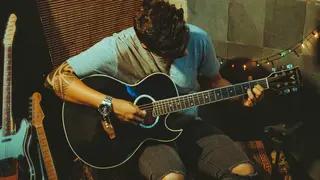
Billy is using a slope shouldered Tanglewood Dreadnaught in this performcance
Find it on:

Bragg uses a gibson J-45 for the entirity of this NPR Tiny Desk concert
Find it on:


https://youtu.be/J7d6ZwAp28Y?t=44
Bragg’s main stage guitar, the Jim Dyson Tone Deluxe, a Tele-type guitar that feels light due to the chambering, but no less meaty in the hands with its flat but wide neck that sits comfortably in your grip. So how did it find its way into Bragg’s possession?
“I was playing with my band at the time, The Blokes... So Jim came down to the soundcheck one day carrying this Tone Deluxe and gave it to me to try out and I kind of liked it.”
“It’s a utilitarian-type guitar based on a Fender Telecaster but with four positions, giving me a bit more crunch, which are controlled by a chicken head dial selector knob. The sort of guitar I need is like a Kalashnikov; you can drop it in a puddle and it still works. Something I can walk out with, plug it in and beat the shit out of it and it more or less stays in tune. I’ve got quite heavy strings on it, 52s, so I can give it some right old punishment and it can handle it.”
Find it on:

Amp Settings? - https://guitar.com/wp-content/uploads/2015/11/L1740128.jpg “Basically, I need an amplifier that has two channels for a clean and a dirty sound. I need a way of changing channels, so a footswitch or a button on the amp and an inline tuner and I’m ready to rock. I like the Fender Hot Rod Devilles, but I can use any two-channel amp.”
“I started off last night with the dirty channel for the songs Levi Stubbs’ Tears, The World Turned Upside Down and Why Do We Build The Walls, and the clean channel is on for Must I Paint You a Picture, Distant Shore and the ballads. If I was at a festival I’d keep the dirty channel on all the time to cut through the sibilance and leakage from other stages. I’m more of a dirty-channel than a clean-channel guy if left to my own devices.”
Find it on:


On Facebook post, Billy says "40 years ago today I carried my trusty Arbiter guitar and Roland Cube 60 amp into the demo studio at the offices of Chappell Music near Marble Arch in London and over three intense days recorded my debut album Life's A Riot with Spy vs Spy."
Find it on:

From https://guitar.com/features/interview-billy-bragg-the-bard-of-barking/
"The stage was lit starkly in white and purple, with a solitary vocal mic, two dual-channel amps (one acting as a back-up), his custom-made Jim Dyson Tele-type guitar and just two pedals (trusty Boss TU-3s – one for acoustic and one for electric) at his feet.
This economy of stage craft is the antithesis of modern-day performances that rely on the extreme to capture the hearts and minds of their audiences. Bragg clearly doesn’t need trinkets to connect to his audience. His well-travelled and distinctive vocals, heavy percussive playing style – with his amps set clean and full with a hint of overdrive on the second channel – is direct and engaging."
Find it on:


From the Guitar.Com interview - https://guitar.com/features/interview-billy-bragg-the-bard-of-barking/ The DI is not discussed but it is listed at the end of the article and appears in this interview picture - https://guitar.com/wp-content/uploads/2015/11/L1740134.jpg
Find it on:

In his official Facebook page, Billy mentions his first resonator "Propped up in the background is a National Reso-phonic model 1133 student guitar, a semi-solid three-quarter length instrument that was produced during the US folk boom. This one's serial number T42215 suggests that it dates from 1960." He also mentions it here: https://www.facebook.com/billybraggofficial/posts/i-fell-in-love-with-resonator-guitars-when-i-saw-ronnie-lane-playing-a-wooden-bo/10151466790057471/
Find it on:

On his facebook page, Billy mentions "This photo, taken by Wiggy at Los Angeles Airport at the end of my first US tour in 1984, show me with a couple of guitars that I picked up along the way. I'm playing a 1959 Guild T 100 the so called 'Slim Jim' serial number 11942. The scratchplate is missing, but it still has the original G for Guild control knobs."
Find it on:

On his Facebook page he talks about his Fender Telecaster "A 1965 Fender Telecaster serial number L70580. I don't seem to have any record of where or when I bought this beauty, but it was likely I picked it up on tour in the USA during late 1987. It provided the defining sound of the 'Workers Playtime' album - it's the guitar that I'm playing on 'Must I Paint You A Picture', Valentine's Day Is Over', 'The Price I Pay', 'The Only One' and 'Waiting for the Great Leap Forwards'. It was one of those guitars that are very easy to find tunes on and the songs that emerged had a more soulful sound, moving away from the chop and clang of my previous albums. I was in a reflective mood after the Red Wedge campaign and the break-up of a tumultuous relationship and the Telecaster seemed to fit that sensibility in a way that the Burns and the Arbiter could not. Suffice to say that 'Workers Playtime' would have been a completely different album without this guitar."
Find it on:

Talks on his Facebook page about his O Style Resonator: "I bought this National 'O' Style resonator from a friend in 1986. Its serial number is S788 which suggests it dates from 1930, when the model was first introduced. I keep it tuned to open D. It can be heard on a number of my performances from the Mermaid Avenue sessions such as 'Black Wind Blowing', 'Bug Eyed Jim' and 'Eisler On The Go'" You can see him use it in "The Man in the Sand" documentary also
Find it on:


On his facebook page Billy mentions "I used to have the classic black and white Silvertone 1449 model along with the original case with the little amplifier in the lid, but for some reason I sold it"
Find it on:

From Billy's Facebook: "This Gibson ES-335 serial number 813503 played a big role during the 'Don't Try This At Home' sessions. I played it on 'Cindy Of A Thousand Lives', 'Accident Waiting To Happen', 'Sexuality' and 'Body of Water'" Looking at the serial, sounds like this was built in the Kalamazoo Plant, MI, USA in 1969
Find it on:



In a YouTube video by Ian Corbridge titled "Billy Bragg - Waiting For The Great Leap Forwards - Network, Sheffield - 8 May 2024," Billy Bragg is seen playing a Duesenberg Alliance Series Jeff DaRosa Signature Electric Guitar in Catalina Green Burst. This specific finish and inlay on a "Senior" style single pickup Duesenberg is exclusive to this model, confirming its use by the artist.
Find it on:


Billy Bragg's first guitar was a copy of a Gibson Les Paul Junior Double-Cutaway, made by the company Arbiter. He played this guitar on the EP Life's a Riot with Spy vs Spy, as confirmed by a post from Billy Bragg on Facebook.
Find it on:
This is a community-built gear list for Billy Bragg.
- Find relevant music gear like Microphones, Guitars, Amplifiers, Effects Pedals, and other instruments and add it to Billy Bragg.
- The best places to look for gear usage are typically on the artist's social media, YouTube, live performance images, and interviews.
- To receive email updates when Billy Bragg is seen with new gear, follow the artist.
Discography
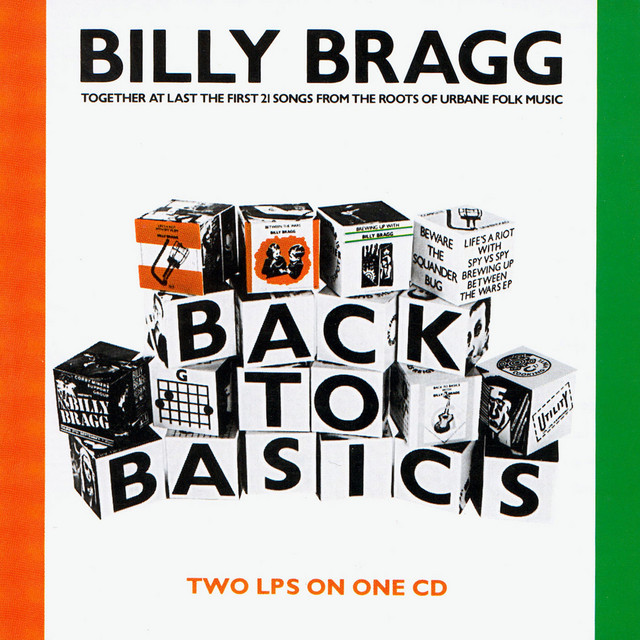
Back to Basics
1987
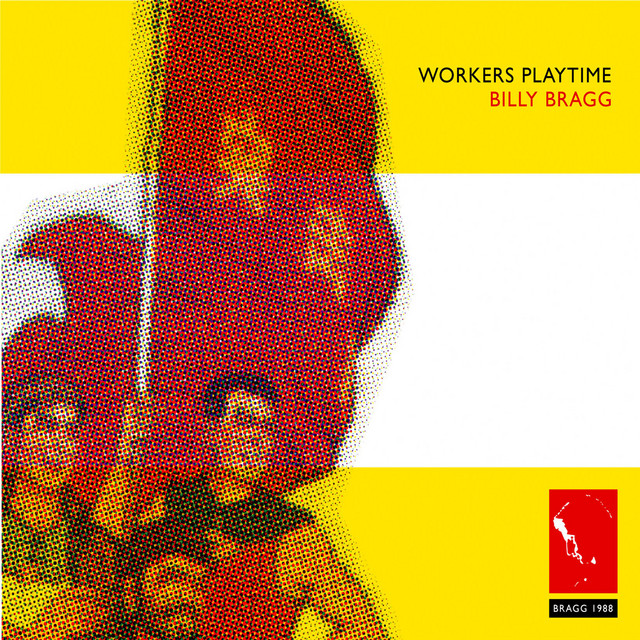
Workers Playtime
1988
Bloke on Bloke
1997
Mermaid Avenue
1998
Reaching to the Converted
1999
Mermaid Avenue Vol. II
2000
England, Half English
2002
Brewing up With
2006
Talking with the Taxman About Poetry
2006
William Bloke
2006
Don't Try This at Home
2006
Mr Love & Justice
2008
Album Credits
-
Mermaid Avenue: The Complete Sessions
Wilco & Billy Bragg · 2012
Producer -
Wilco & Billy Bragg · 2012
Producer -
Wilco & Billy Bragg · 2000
Producer -
Wilco & Billy Bragg · 1998
Producer