Brian Eno
Role
Genre
Role
Genre
Brian Eno's Studio Equipment


This blog about the recording of the Eno/Karl Hyde album Someday World discusses Eno's setup during the sessions. "The remaining inputs included a spare channel, plus ones for Karl’s guitar, the stereo feed from a Mackie Micro Series 1202 sub mixer, and Brian’s laptop computer from which he fed a number of pre-prepared loops. The mixer’s two send channels were assigned to the Kaoss Pad’s left and right inputs respectively so any combination of the main mixer inputs could be fed into it (and the Air FX), and an auxiliary channel was used for the return."
Find it on:


-m.webp?v=1783177031)
In this article, on the making of the Brian Eno sound, it read, "Kevin Killen, answering a question about the signal flow on the U2 song “4th of July” on Gearslutz, described the signal path as follows:
'The delay and modulation was derived from the AMS 1580. On its fader return, some hi frequencies were rolled off, then it was fed into a 224 Hall setting, probably 5 seconds but with a rolloff in the top and bottom. This return may have been equalised also. We may have added a second delay but then the delays have to be timed to the track as the net effect is blurring the chord progression… Our last tweak would be to play with the sends on all of the returns to the point that its almost recirculating out of control, which in turn is creating a layer upon layer effect.'"
Find it on:

“I don’t think there were that many things that would surprise people who work in studios. My studio is fairly basic... an Eventide H3000 processing thing — that’s very good indeed," Eno says, in this transcribed interview from the October 1990 issue of Sound On Sound magazine, after being asked what gear was used in the studio during the making of Wrong Way Up, his collaboration with John Cale.
Find it on:

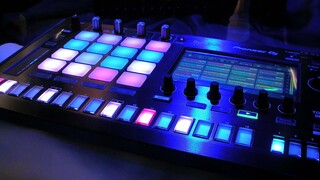
So what is exciting to Brian in terms of gear? "These [points to the KAOSS Pads] without any doubt. I think these represent the other side of the electronic revolution. I thought these were just the most brilliant new idea in electronic music because of what happened with computerisation. The computer thing is one side of it and it encourages a kind of cerebralness... is that a word?," he laughs. "This has brought some things to music and really filtered other things out. These things [the KP2s] catch what was filtered out for me by the computer revolution and they suddenly bring us back to the idea of physicality and motion and muscular intelligence and expressiveness, so these have been very important to me. As you see, I have them all over the place.
"The things that are made for DJs in general have been very exciting to me. That's because DJs have to get results immediately... they're dancing, they have to be physical and the equipment has to be robust enough to stand that and they don't want to sit programming something for hours; they want something that works now."
And the KP2s are being used to great effect in Brian's new work as he demonstrates to us by chaining three together and using them to control, distort and rhythmically trigger some vocal samples from some old '30s and '40s a cappella tracks. In fact, the vocal side of things is going to be very important in Eno's forthcoming new album, as he explains...
"I'm very surprised because I suddenly got interested in singing again. One of the issues I've always been interested in is what you can do with singing, not only lyrically but also sonically. The next innovation is the voice and what we do with voices and trying to straddle this area between natural voice and synthesized voice.
"I have a couple of songs that sound confusingly slightly inhuman. But I haven't made them like those R&B things where they go very inhuman, very vocodery. What I've tried to do is keep it like a human, but a rather over-perfect human in one case and in another I've made it extremely frail. I found a way of making the voice almost fall apart so it almost turns to breath some of the time and it's a very, very tender, sensitive sound."
And the KP2s look like providing the backbone to many of the tracks on the album. "There is actually a lot to get into with these KP2s," Eno explains. "As you can see, I use them in a chain so what I'm always thinking is that I have groups of programs that work together and then I'm kind of doing this [demos triggering a KP2]. It's really something new in terms of instruments I think, especially when you group them together so you're cross-fertilising them, as it were. I can do amazing things with these. Really, I think I've got these down in a way that nobody else has."
And what about other Korg gear? Korg Magazine spies a Triton in the corner on one of Brian's keyboard stands. What does he think? "I've looked at it enough to know that it's fairly complex," he laughs, revealing at a stroke the hidden depths of this do-it-all workstation. "There are a couple of the stock sounds on it that are brilliant and that I really like using," he adds with a smile.
Find it on:

In this undated image of Eno in his then-studio, a Studio Quad rack unit is visible behind him (it's the fifth one down from the top, and despite the blurriness of the photo, it can be easily identified by the large Digitech STUDIO logo on the left side of the faceplate, as well as the large green menu screen in the center).
Find it on:

In this article in the December 1995 issue of Future Music magazine, the SPX90 is named in the "Kit List" as being one of Eno's effects.
Find it on:

In an article in Future Music (Issue 38, December 1995), a Mackie 1604 is included in Eno's "kit list."
Find it on:

In this video of a conversation between Eno and Johnson, Eno is playing an Oxygen 49 (identifiable as the MK III version based on the position of the pitch and mod wheels) starting at the 0:37 mark.
Find it on:

Per this interview in a 1981 issue of Keyboard:
Since I'm normally working in studios I'm liable to use two or three echoes at once. For instance, the Roland, and then a Lexicon Prime Time, and then maybe a long digital reverb as well, a Lexicon 224 or something like that, or the plate reverb or whatever they have in the studio.
Find it on:

In this article in the December 1995 issue of Future Music magazine, the Sonic Maximizer is named in the "Kit List" as being one of Eno's effects.
Find it on:


-m.webp?v=1783177069)
In this blog about the recording of the Eno/Karl Hyde album Someday World, Eno's then-recent studio upgrades are described as follows:
"To make all this possible, Peter installed two Focusrite Octopre preamps, and a Liquid Saffire 56 multichannel Firewire interface. The Liquid Saffire acted as the computer interface for the audio, but also passed the raw signals on to a Mackie CR-1604..."
Find it on:

In this undated image of Eno in his then-studio, a 1201 rack unit is visible behind him (it's the fourth one down from the top, and despite the blurriness of the photo, it can be easily identified by the large dot-matrix style font on the left side of the faceplate).
Find it on:

In this article in the December 1995 issue of Future Music magazine, the S1100 is named in the "Kit List" as being one of Eno's samplers.
Find it on:

In this blog about the making of Eno & Hyde's 2014 album Someday World, Brian's setup is described as involving an Oxygen 61 controller.
Find it on:


According to this Sound on Sound article, Eno used the Studio Vocalist unit extensively when recording his album Another Day on Earth.
Find it on:

In this image, we see Eno setting up for an installation at the Great Gallery of the Palace of Venaria Reale. Among his gear is a DM1000 mixer.
Find it on:

A PowerMac 7100 is featured in Eno's "kit list."
Find it on:

Two modified ones were used for No Pussyfooting, as stated in this interview.
Find it on:

In this undated image of Eno in his then-studio, an H3000 rack unit is visible behind him (it's the bottom unit on the rack just over his right shoulder).
Find it on:

In this article in the December 1995 issue of Future Music magazine, the A3 is named in the "Kit List" as being one of Eno's effects.
Find it on:

At minute 1:00 you can see the LPD8 on Brian's desk, next to the computer keyboard. There's some tape near the pads, probably to remind what they control.
Find it on:





The studio is based around two Apple Mac G4 computers running Logic, plus a selection of outboard including (right) the Digitech Studio Vocalist used extensively on Another Day On Earth, a Lexicon Jam Man loop sampler and an Eventide H3000 Harmonizer.
Find it on:

This transcription of a* Future Music* article](http://music.hyperreal.org/artists/brian_eno/interviews/futmus95.html) includes a list of gear Eno was using at the time of writing, which includes an SV-3700 DAT machine.
Find it on:
-m.webp?v=1782227096)
Per this interview in a 1981 issue of Keyboard:
Since I'm normally working in studios I'm liable to use two or three echoes at once. For instance, the Roland, and then a Lexicon Prime Time, and then maybe a long digital reverb as well, a Lexicon 224 or something like that, or the plate reverb or whatever they have in the studio.
Find it on:

In this article on the making of Eno's album Another Day On Earth, Eno says, "When I was playing parts live into the computer I would do processing through external boxes. I'd also sometimes feed stuff out of my computer through the Kaoss Pads. There's a lot of plugin processing going on. I'd usually print the processed track inside of the computer, and then push it back in time, because when there's a lot of processing you get latency problems. I like working like that, because I can do different things with the already-processed track."
Additionally, the article's sidebar lists both the Kaoss Pad Mk I and II among his equipment.
Find it on:

This image shows Eno at his PC-180A.
Find it on:

The studio is based around two Apple Mac G4 computers running Logic, plus a selection of outboard including (right) the Digitech Studio Vocalist used extensively on Another Day On Earth, a Lexicon Jam Man loop sampler and an Eventide H3000 Harmonizer.
Find it on:

Eno's Apple Macintosh G5 sits behind the stage generating the images that make up his morphing 77 Million Paintings exhibit.
Find it on:

"Two pieces, 'Bottomliner' and 'Under', were started before my computer days, about six years ago, on a DA88," he explains. "For a while I was in this very awkward inbetween land, working partly on DA88 and partly on computer, and this was an awfully clumsy period. I really despise digital tape recording, it's so fragile. So then over the years I went through various versions of Logic, from 4 to 7.1. There's still quite a lot of hate going on for me in working with computers, but I think programs have improved a great deal. The objections I used to make have been taken on board more by programmers. Programs are less menuintensive than they used to be, and Logic is a very evolved program. I also think that plugin instruments today are very much better than the early ones."
Find it on:

A Mac Pro tower can be seen in Brian Eno's studio during the recording of Someday World (to his left, first photo).
Find it on:
This is a community-built gear list for Brian Eno.
- Find relevant music gear like Microphones, Pianos, Keyboards and Synthesizers, Software Plugins and VSTs, Instruments, Studio Equipment, Headphones, and other instruments and add it to Brian Eno.
- The best places to look for gear usage are typically on the artist's social media, YouTube, live performance images, and interviews.
- To receive email updates when Brian Eno is seen with new gear, follow the artist.
Discography
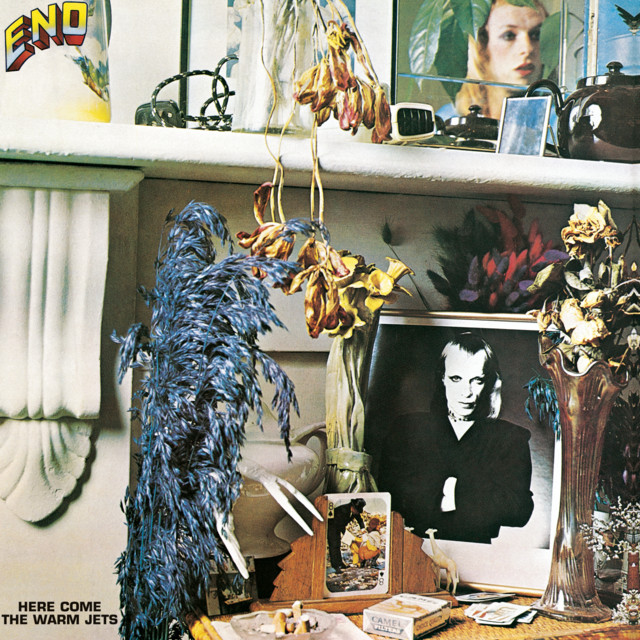
Here Come The Warm Jets
1973
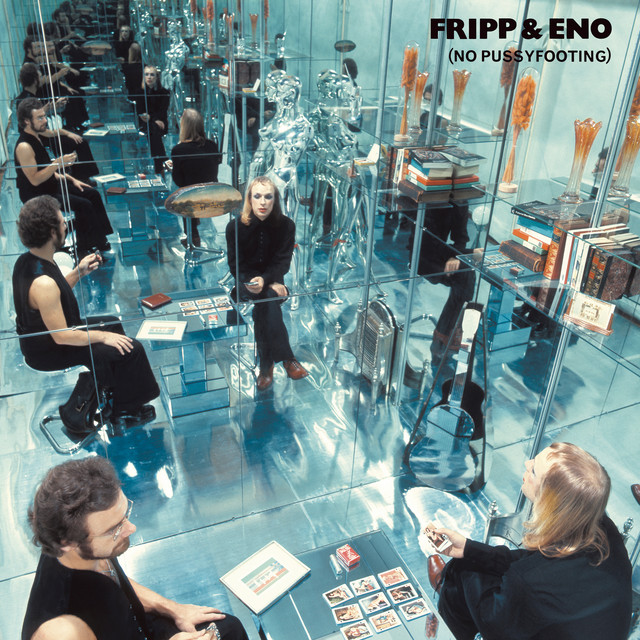
No Pussyfooting
1973
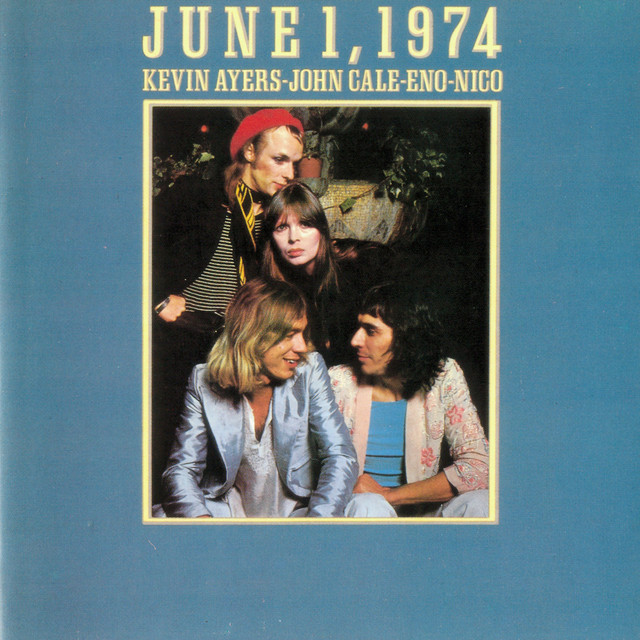
June 1, 1974 (Live At The Rainbow Theatre / 1974)
1974
![Taking Tiger Mountain (By Strategy) [2004 Remaster] album cover](https://images.equipboard.com/uploads/album/image/274230/taking-tiger-mountain-by-strategy-2004-remaster.jpg)
Taking Tiger Mountain (By Strategy) [2004 Remaster]
1974
Another Green World (2004 Remaster)
1975
Evening Star
1975
Discreet Music
1975
Cluster & Eno
1977
Before And After Science
1977
Ambient 1: Music For Airports (Remastered 2004)
1978
Ambient 2: The Plateaux Of Mirror (Remastered 2004)
1980
Ambient 3: Day Of Radiance
1980
Album Credits
-
Producer
-
Beatie Wolfe · 2025
Producer -
Brian Eno & Beatie Wolfe · 2025
Producer -
Eno (Original Motion Picture Soundtrack)
Brian Eno · 2024
Mixing Engineer Producer Recording Engineer -

Coldplay · 2024
Programmer -

Live and Let Live (Dark-Side Mix)
Peter Gabriel · 2023
Programmer -

Live and Let Live (Bright-Side Mix)
Peter Gabriel · 2023
Programmer -

50 Years of De-Evolution 1973–2023
Devo · 2023
Producer -
Four Kinds of Horses (Dark-Side Mix)
Peter Gabriel · 2023
Programmer -
Four Kinds of Horses (Bright-Side Mix)
Peter Gabriel · 2023
Programmer -
Peter Gabriel · 2023
Producer Programmer -
Brian Eno & Fred again.. · 2023
Producer